
English Edition
- By CNI
- Category: English Section
- Hits: 249
CNI News
16 January 2026
In Myanmar, Part 1 of the election was held on December 28, 2025, and Part 2 was completed on January 11, 2026. The remaining Part 3 of the election is scheduled to proceed on January 25.
Daw Nan Khin Aye Oo, Chairperson of the Karen Peoples Party (KPP), told CNI News that while the KPP competed only in the Ayeyarwady Region during Parts 1 and 2—and cannot yet confirm their specific vote counts—the National Unity Party (NUP) has shown significant strength in Part 2 of the election.
She stated: "The areas where Part 2 was held—Pantanaw, Wakema, Kangyidaunt, and Kyaunggon—are regions with high Karen populations. The exact percentages haven't been finalized yet. In Kangyidaunt, the NUP ranked second. They also ranked second in Kyaunggon, and reportedly third in Wakema. In Einme, the NUP has won in many locations for the Ethnic Affairs Representative seats.
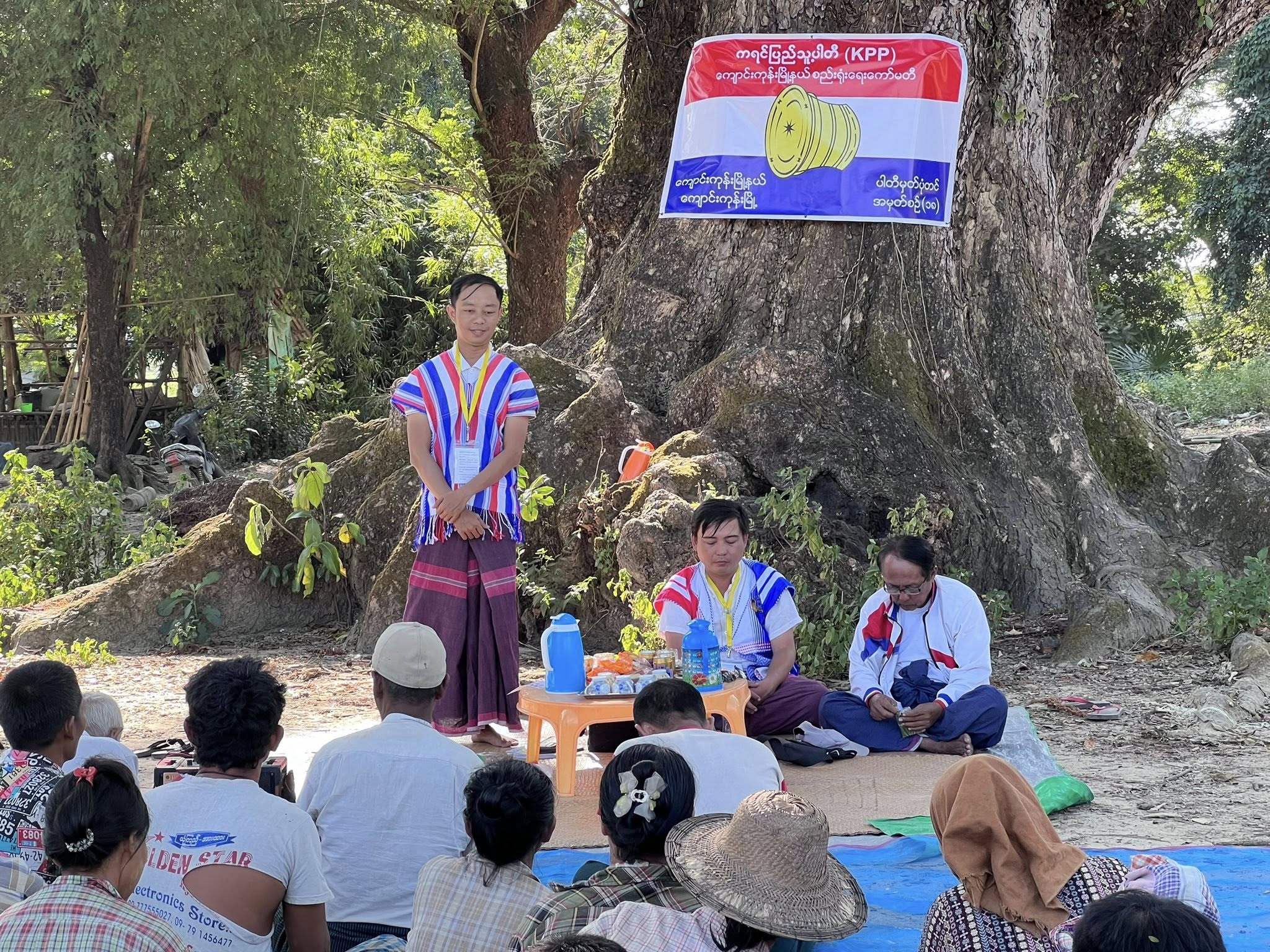
The Karen Peoples Party (KPP).
In Part 2, the NUP candidate for Ethnic Affairs won by a landslide. Yesterday, the NUP received an unexpectedly high number of votes. Pantannaw is traditionally NUP territory. We thought we would mainly be competing against the USDP (Union Solidarity and Development Party), but now we are competing against the NUP as well. The NUP is strong in urban areas. Both the USDP and our party lost in two polling stations, though we heard we won in two others."
U Sai Naing Naing Kyaw, Chairman of the Shanni Solidarity Party (SSP), told CNI News that the NUP is gaining strength because it is an established, long-standing party with a pre-existing base of hardcore members.
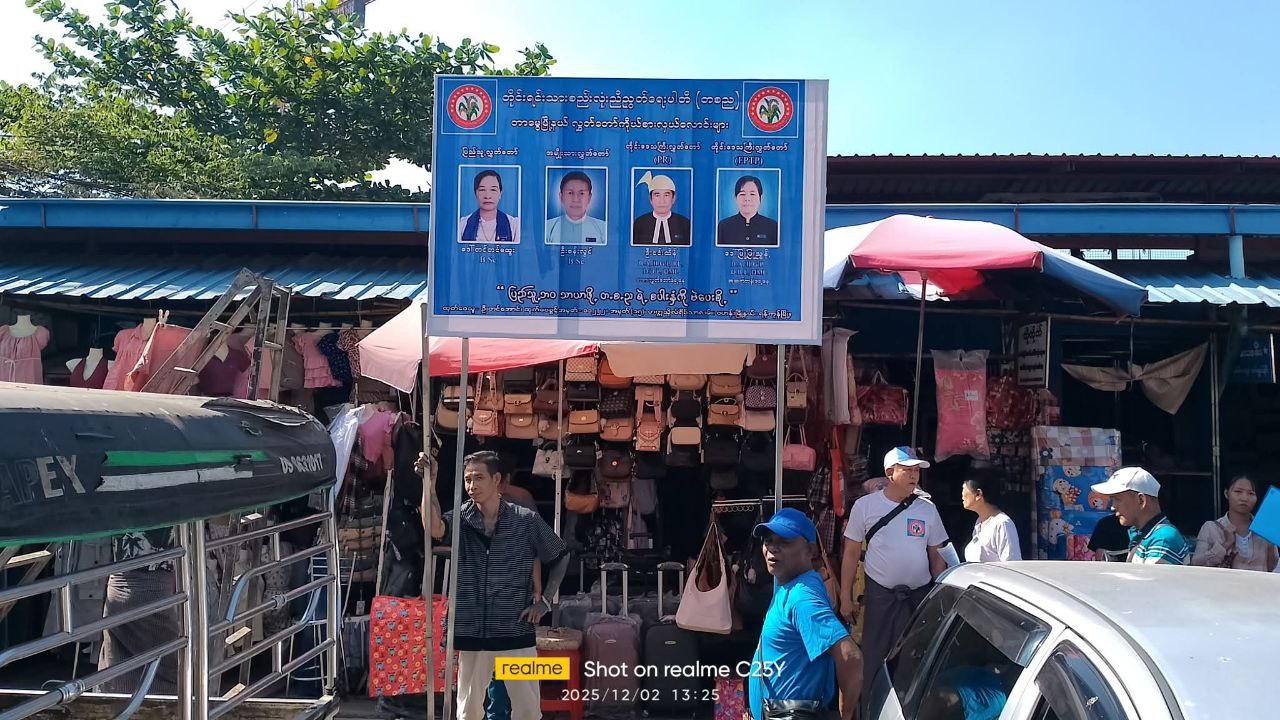
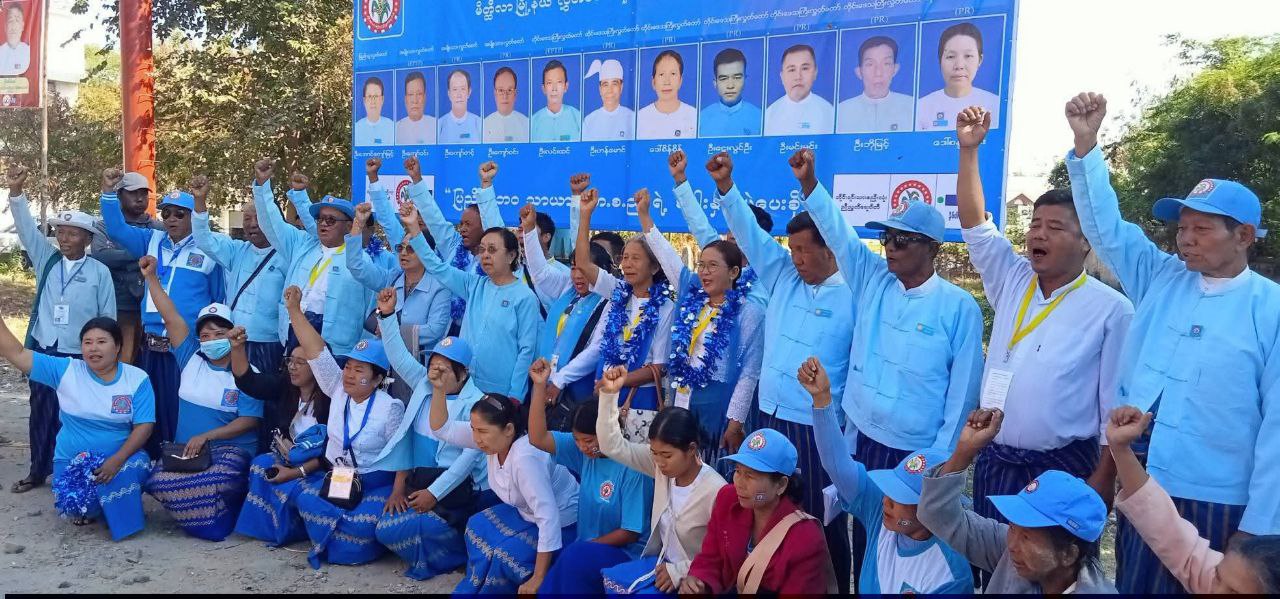
Candidates from the NUP.
He commented: "The National Unity Party is an old, established party. They already have their own loyal party members. Therefore, under the current changes to the electoral system, I believe the NUP is becoming even stronger."
According to available data, the Union Solidarity and Development Party (USDP) has secured over 80% of the vote nationwide across Part 1 (held December 28, 2025) and Part 2 (held January 11, 2026).
Following the USDP, the National Unity Party (NUP) ranked second in Part 1. The Pa-O National Organization (PNO), Naga National Party, Mon Unity Party, Arakan Front Party, and the Shanni Solidarity Party ranked third in terms of victories.
- By CNI
- Category: English Section
- Hits: 233
CNI News
15 January 2026
Following the conclusion of Phase 2 of the elections held on January 11, 2026, the Shanni people are closely monitoring the voting results of the Shanni (Tai Leng) Solidarity Party (SSP), commonly known as the "Tiger King" (Kyar Min) party.
Currently, Myanmar is conducting elections in phases: Phase 1 was completed on December 28, 2025, and Phase 2 on January 11, 2026. The remaining Phase 3 is scheduled to take place on January 25.
U Sai Naing Naing Kyaw, Chairman of the Shanni (Tai Leng) Solidarity Party (SSP), told CNI News that in Phase 2, the party contested under the First-Past-The-Post (FPTP) system only in Phaungbyin Township. According to ground data, the party lost in all seats within that township.
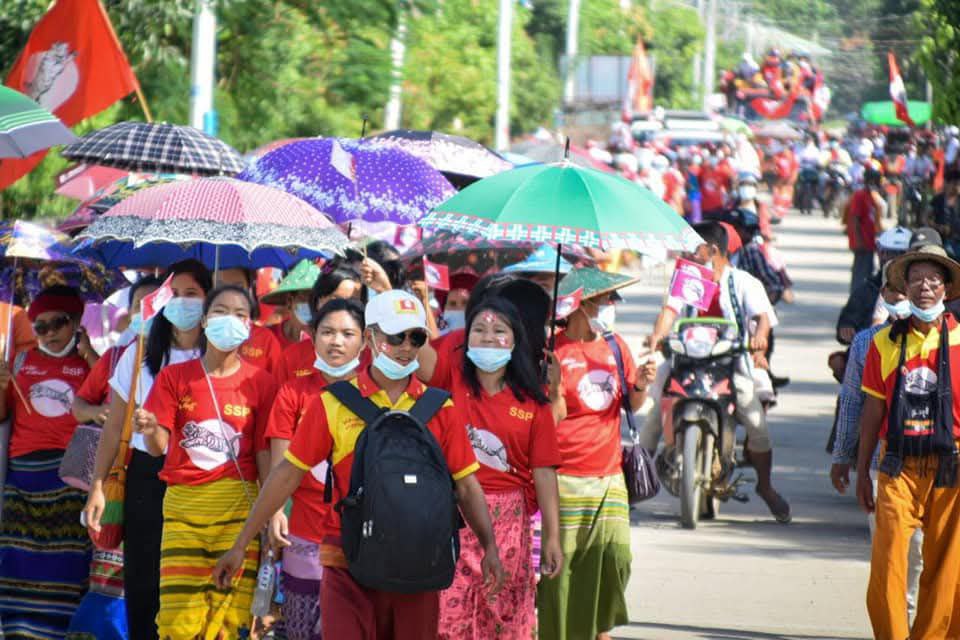
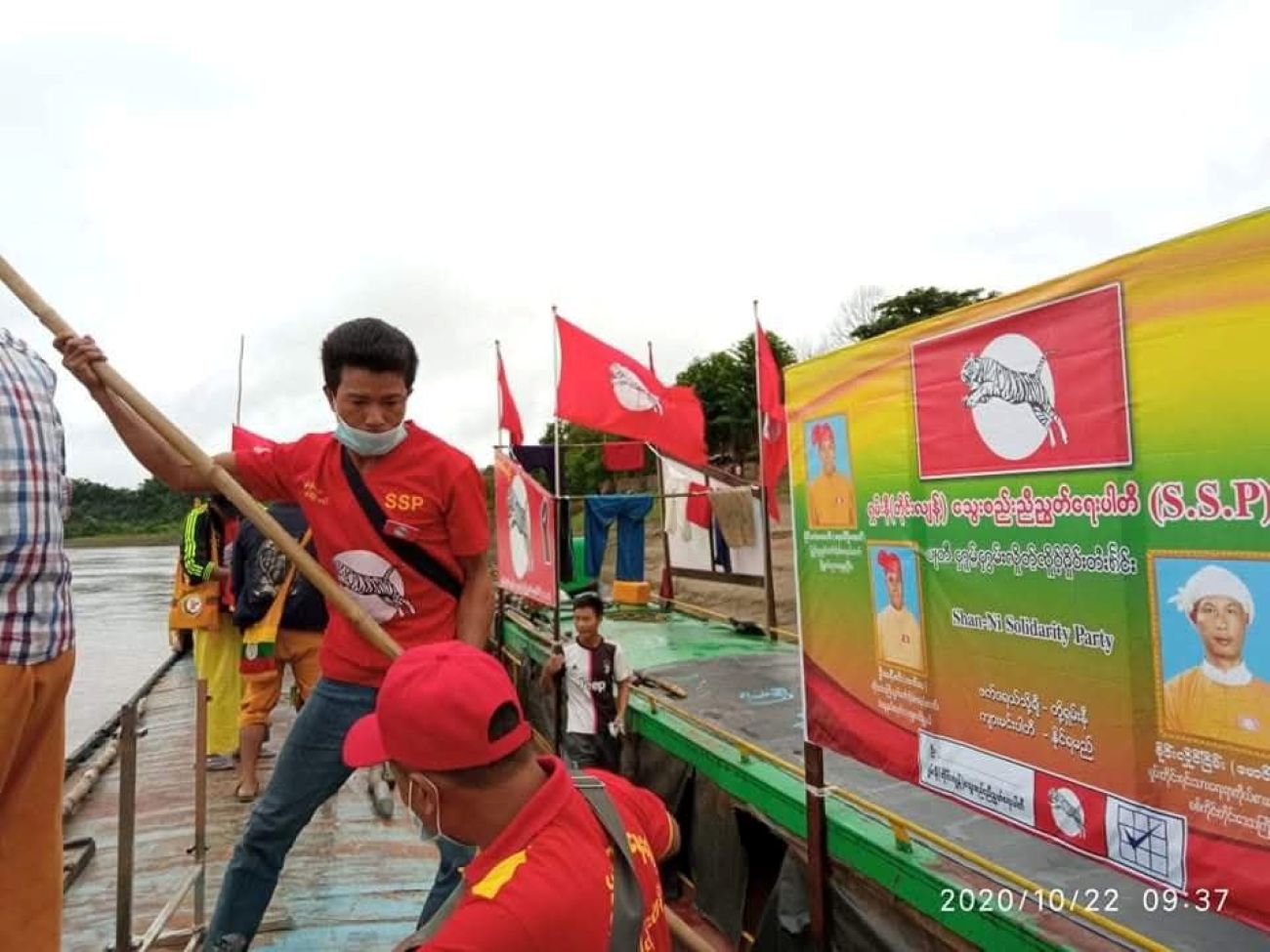
Supporters of the Shanni (Tai Leng) Solidarity Party (SSP).
He stated: "In Phase 2, our Shanni party only competed in Phaungbyin Township. We lost the election there for the Amyotha Hluttaw (Upper House) under the FPTP system. It appears the Union Solidarity and Development Party (USDP) won everything in Phaungbyin. Our Shanni party is in approximately third place, with the National Unity Party (NUP/Ta Sa Nya) running in second. Based on the statistics, voter turnout in Phaungbyin seems to be over 70%. Our analysis shows that in Phaungbyin, our party received only about one-third of the votes the NUP received, and only about one-tenth of the votes the USDP received."
In Phase 1 of the election held on December 28, 2025, many parties lost to the USDP due to advance votes. Similarly, following Phase 1, some political parties have criticized a lack of transparency regarding the advance voting process.
However, U Sai Naing Naing Kyaw told CNI News that he did not see major issues regarding advance votes in the townships where they competed, such as Homalin and Phaungbyin.
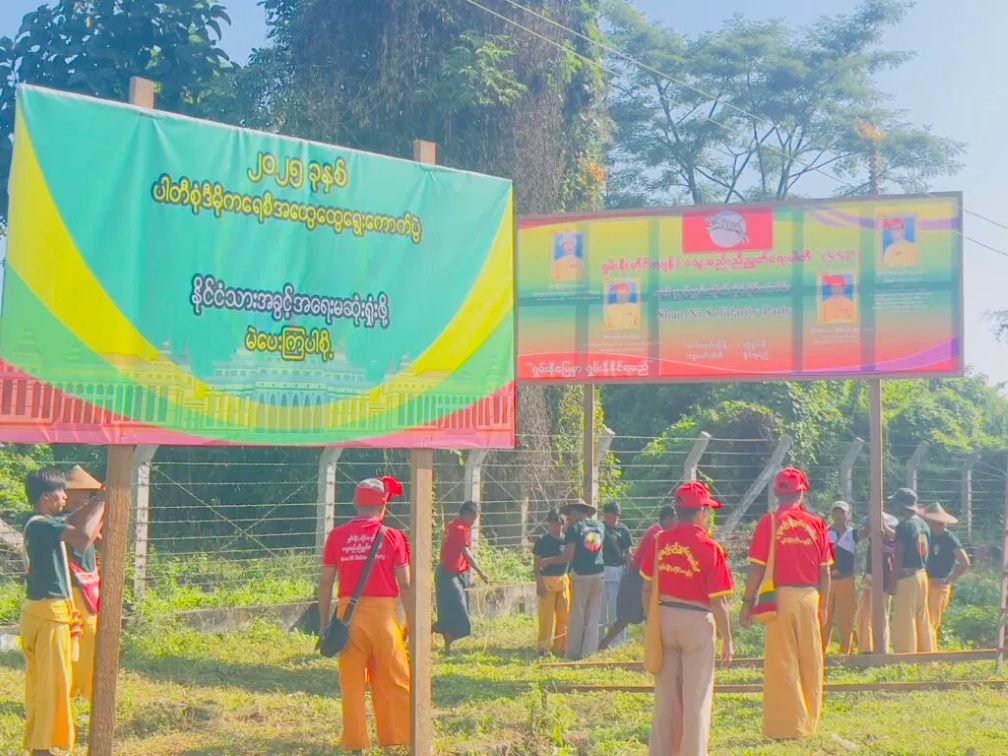
The Shanni (Tai Leng) Solidarity Party (SSP).
He added: "Regarding advance votes, I’ve only seen reports of issues online. In the Homalin area, there were no major problems with advance voting. Since I live in Homalin myself, it’s hard to speak exactly for the situation in Phaungbyin, but it seems there weren't massive issues there either."
The Shanni Party (SSP), known locally as the "Tiger King" party, secured wins in Phase 1 for seats in the Pyithu Hluttaw (Lower House), Amyotha Hluttaw (Upper House), and Regional Hluttaw within Homalin Township.
Specifically, for the SSP in Homalin Township, Sai Naing Naing Kyaw won the Pyithu Hluttaw seat, and Sai San Hla Soe won a Regional Hluttaw seat.
- By CNI
- Category: English Section
- Hits: 203
CNI News
15 January 2026
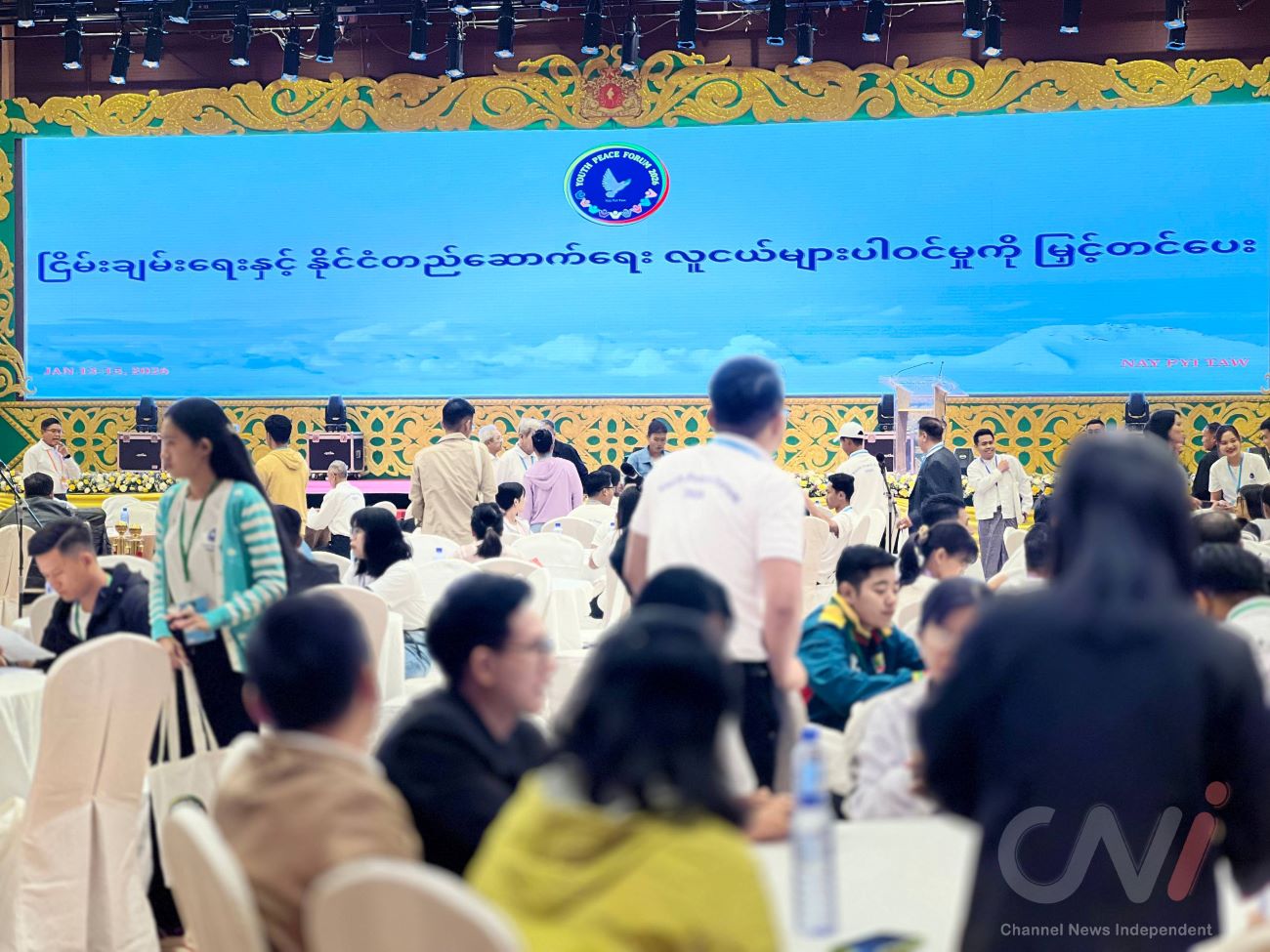
The second day of the Youth Peace Forum being held in Nay Pyi Taw, Myanmar, was observed on January 14, 2026.
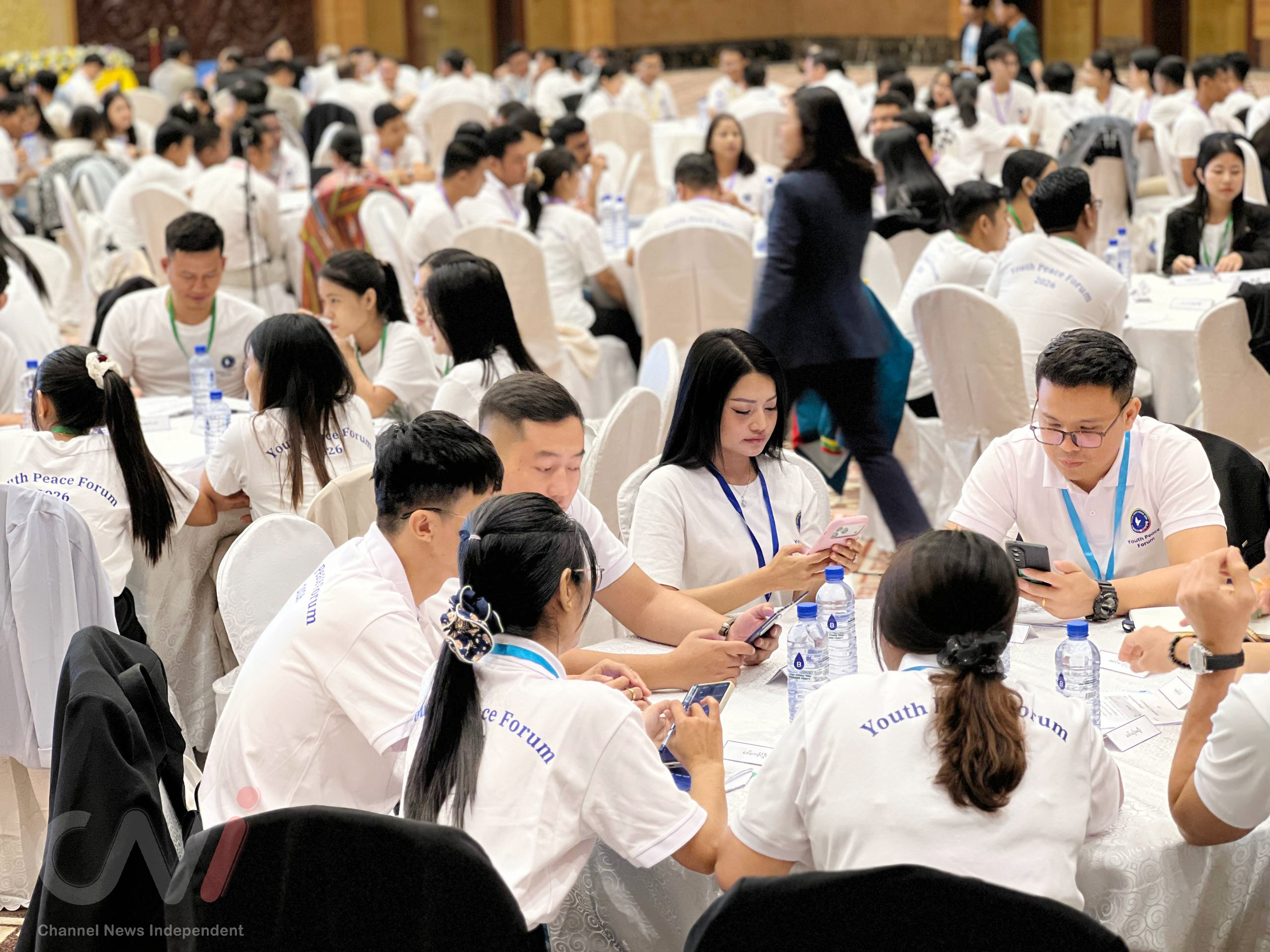
The forum is scheduled to take place from January 13 to 15, 2026. It is organized and led by the National Solidarity and Peacemaking Negotiation Committee (NSPNC), with youth representatives from various regions and states in attendance.
- By CNI
- Category: English Section
- Hits: 308
CNI News
15 January 2026
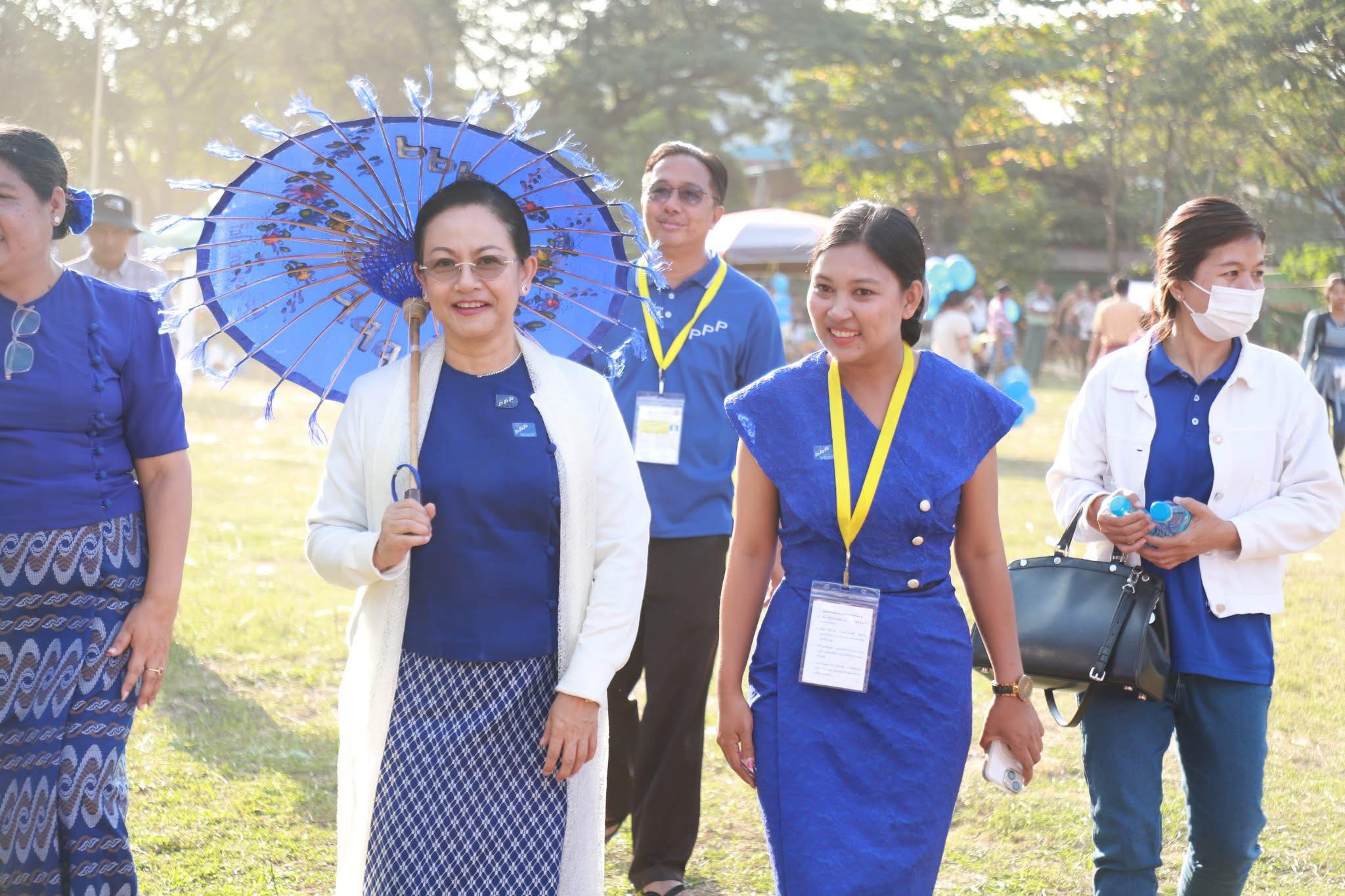
The Union Election Commission (UEC) has announced that legal action will be taken against Daw Thet Thet Khine, Chairperson of the People's Pioneer Party (PPP), and Central Executive Committee member Daw Htet Htet Hlaing.
The move follows reports of a clandestine meeting between the two party leaders and officials from a foreign embassy.
While the UEC has confirmed that action "in accordance with the law" will be taken, the specific charges and the exact nature of the penalties have not yet been disclosed.
On December 18, 2025, Daw Thet Thet Khine and Daw Htet Htet Hlaing reportedly held an unauthorized and secret meeting with individuals from a foreign embassy at a restaurant on Nat Mauk Road, Bahan Township, Yangon.
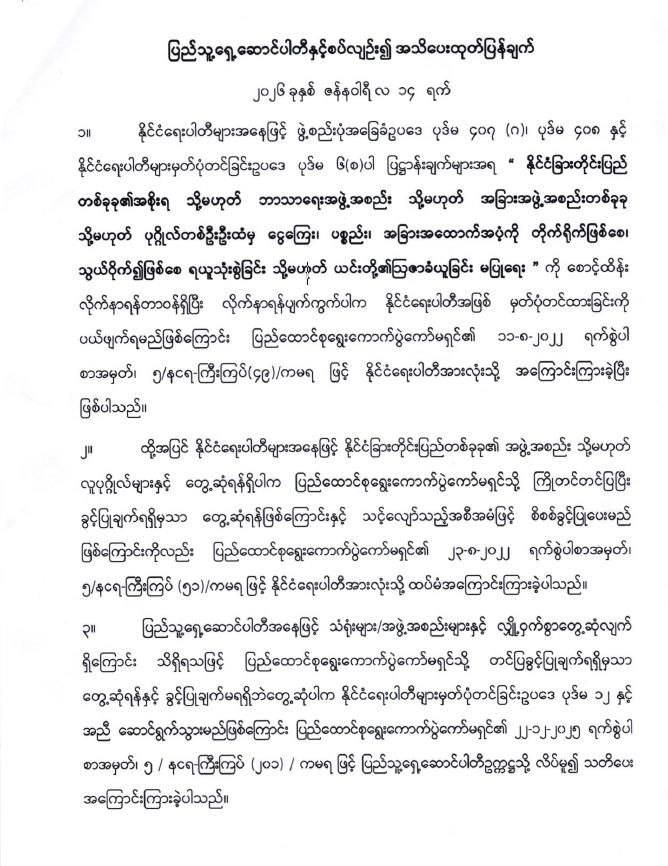
Following a tip-off, the UEC conducted an investigation and determined the report to be true. According to the UEC statement, both Daw Thet Thet Khine and Daw Htet Htet Hlaing have confessed to the meeting.
The UEC highlighted that under Section 407(c) and 408 of the Constitution, as well as Section 6(f) of the Political Parties Registration Law, political parties are strictly prohibited from:
Accepting direct or indirect financial, material, or other support from foreign governments, religious organizations, or other foreign entities/individuals.
Being under the influence of foreign entities.
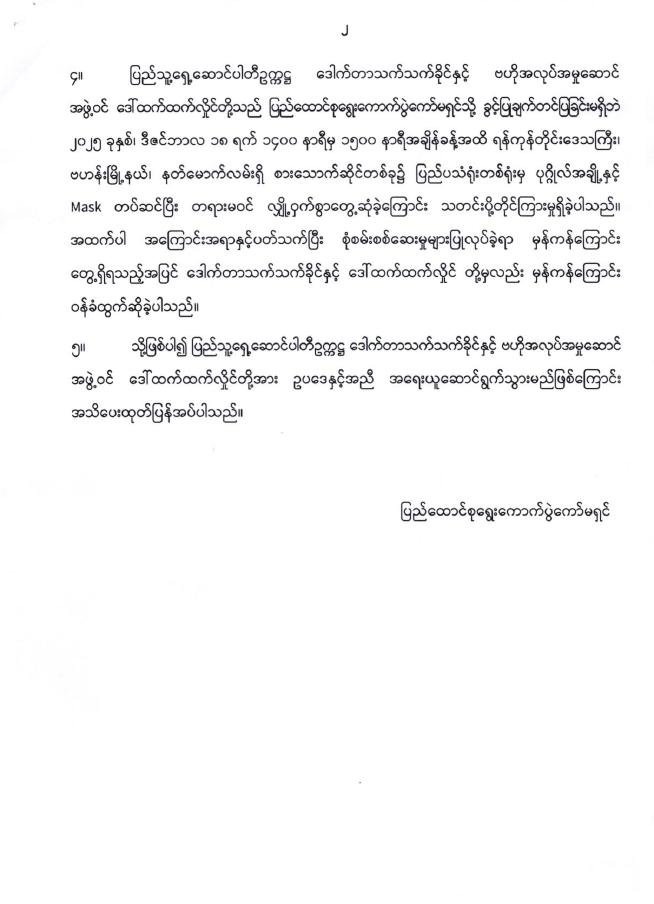
Consequences: Failure to comply with these regulations can lead to the cancellation of a party's registration.
This legal trouble comes at a sensitive time for Daw Thet Thet Khine. In October 2025, she was already disqualified by the UEC from running as a parliamentary candidate due to "unresolved financial liabilities" (specifically a large bank loan).
Furthermore, recent reports indicate that following this embassy meeting incident, Daw Thet Thet Khine was detained for questioning at her residence in Sanchaung Township on the evening of January 13, 2026.

- By CNI
- Category: English Section
- Hits: 244
CNI News
14 January 2026
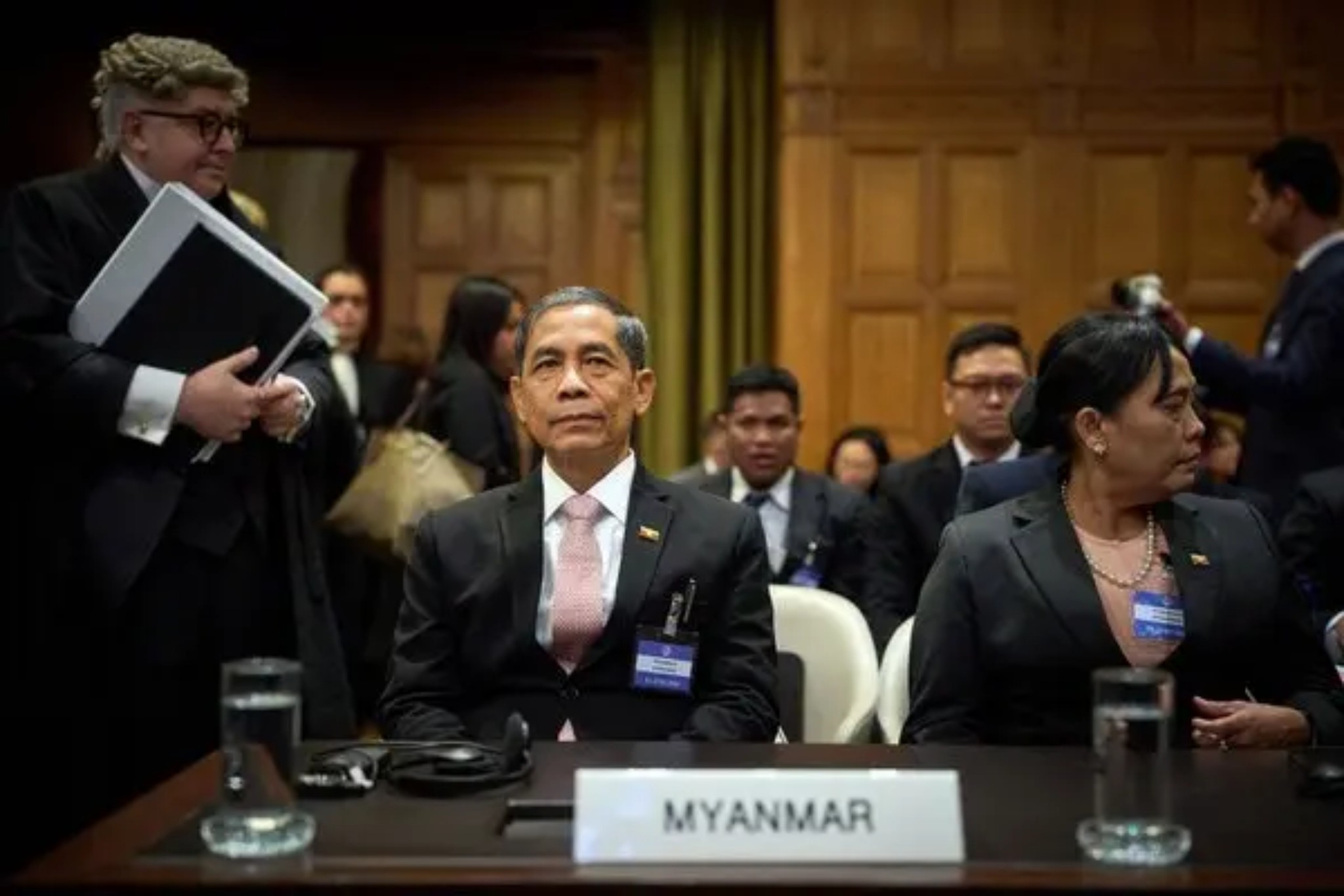
Myanmar Narrative stated on January 12, 2026, that it fully supports the Myanmar delegation that will travel to plead Myanmar’s case at the International Court of Justice (ICJ) in The Hague, Netherlands.
The hearings at the ICJ in The Hague concerning the so-called “Bengali issue” will be led by a Myanmar delegation headed by U Ko Ko Hlaing, Union Minister of the Ministry (2) of the President’s Office.
It is reported that Union Attorney General Dr. Thida Oo, Union Minister of the Ministry of Legal Affairs, is also accompanying U Ko Ko Hlaing, and that the Myanmar delegation departed for the Netherlands on January 9, 2026.
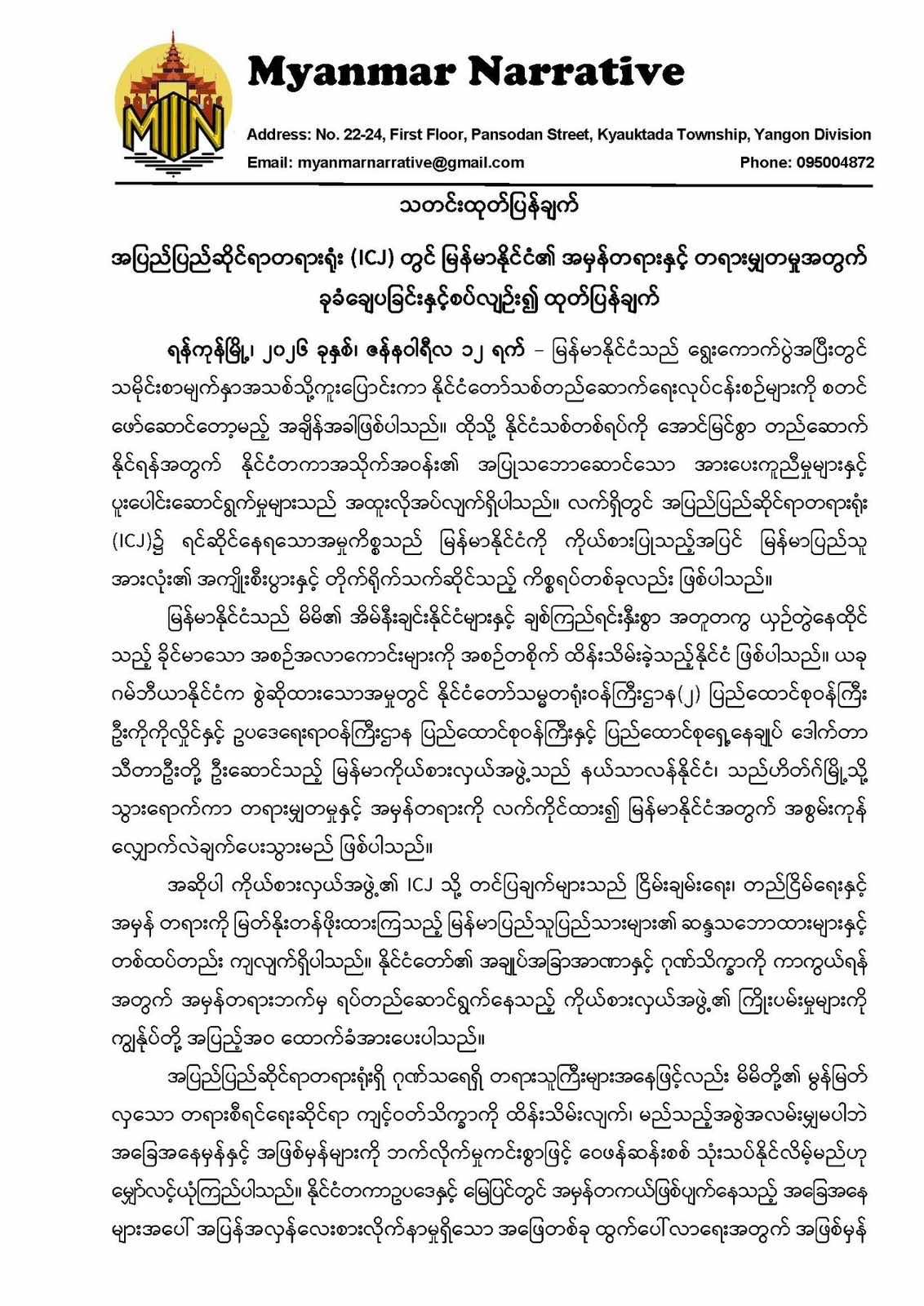
The statement issued by Myanmar Narrative being seen
The ICJ hearings will be held from January 12 to January 29. Myanmar is scheduled to present its pleadings twice: once from January 16 to January 20, and again from January 28 to January 29.
Myanmar Narrative said: “The submissions presented by the Myanmar delegation to the ICJ are fully in line with the wishes of the people of Myanmar who value peace, stability, and truth. We fully support and encourage the efforts of the delegation, which is standing on the side of truth in order to protect the sovereignty and dignity of the State.”
The group further stated that Myanmar is a country with a strong tradition of peacefully coexisting in friendship with its neighboring countries, and that it has consistently upheld these good traditions.
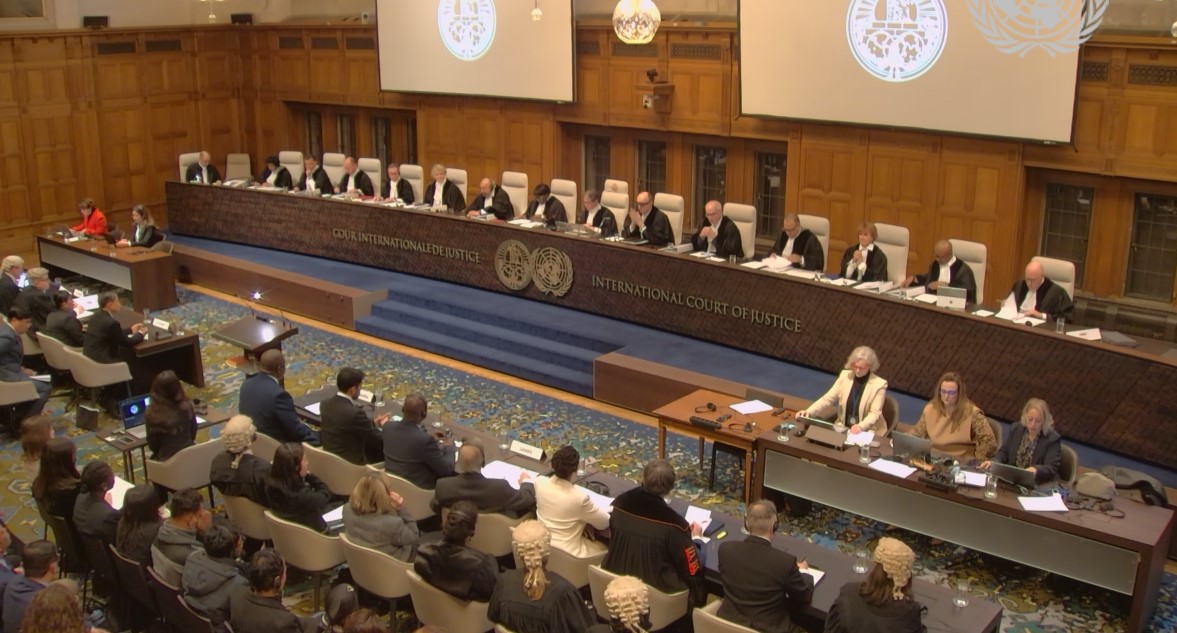
During an ICJ hearing
Myanmar Narrative also expressed hope and confidence that the honorable judges of the International Court of Justice will uphold their noble judicial ethics and be able to impartially assess and analyze the true circumstances and facts. It emphasized that, in order for an outcome to emerge that is based on mutual respect for international law and the realities actually occurring on the ground, it is extremely important to fairly and justly examine and decide upon the facts.
The ICJ case originated from allegations of genocide following coordinated attacks by the ARSA terrorist group on 30 border guard police posts in Rakhine State on August 25, 2017, during the tenure of the National League for Democracy (NLD) government.
As a result of these allegations, The Gambia filed a case against Myanmar at the ICJ on charges of genocide, requiring Myanmar to respond and defend itself before the court.
The delegation led by Minister U Ko Ko Hlaing had previously also represented Myanmar at the ICJ in February 2022.
- By CNI
- Category: English Section
- Hits: 273
CNI News
14 January 2026
Colonel Khun Okkar, Chairman of the Pa-O National Liberation Organization (PNLO-NCA/S), a signatory of the Nationwide Ceasefire Agreement, told CNI News that Myanmar can defend itself at the International Court of Justice (ICJ) by arguing that its actions were a response to ARSA terrorism and did not constitute genocide.
A Myanmar delegation led by Minister for the Ministry (2) of the President's Office, U Ko Ko Hlaing, will present the defense at the ICJ hearings in The Hague, Netherlands, regarding the Rohingya (Bengali) issue.
The delegation, which includes Union Attorney General and Minister for the Ministry of Legal Affairs Dr. Thida Oo, departed for the Netherlands on January 9, 2026.
The ICJ hearings are scheduled from January 12 to January 29. Myanmar is slated to present its oral arguments twice: first from January 16 to 20, and again from January 28 to 29.
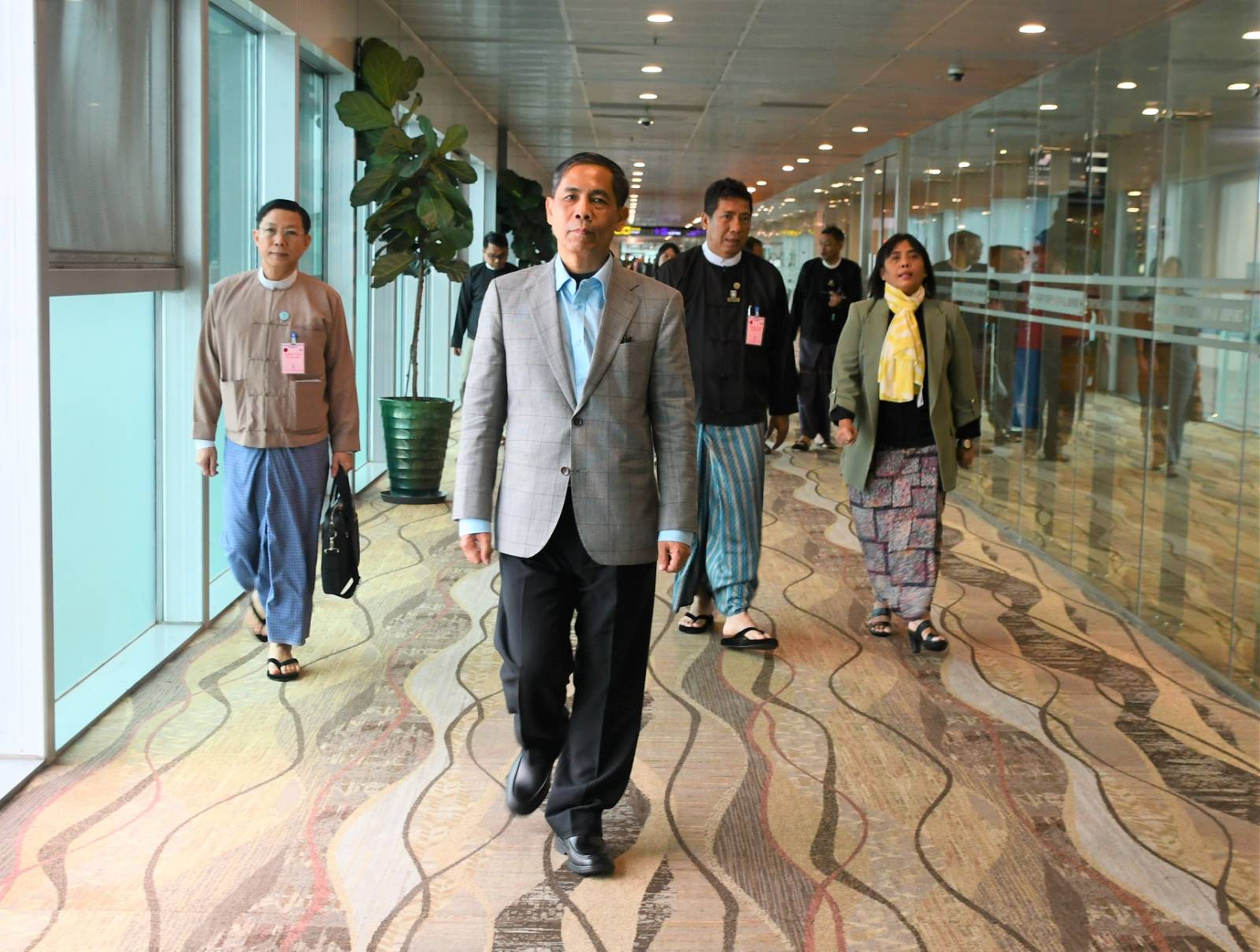
U Ko Ko Hlaing and Dr. Thida Oo seen at the airport.
Colonel Khun Okkar suggested that the Myanmar representatives could approach their defense from two primary legal angles, emphasizing the lack of genocidal intent.
"From what I understand, there are two ways to argue from a legal perspective," he said. "First, by highlighting these terrorist organizations. When groups like ARSA attacked police stations at that time, human rights violations might have occurred during the crackdown on such terrorist groups. However, they can defend themselves by stating there was no 'Genocide Intention.'"
Colonel Khun Okkar further explained that the Myanmar representatives might challenge whether the Gambia can provide sufficient and solid evidence for its allegations.
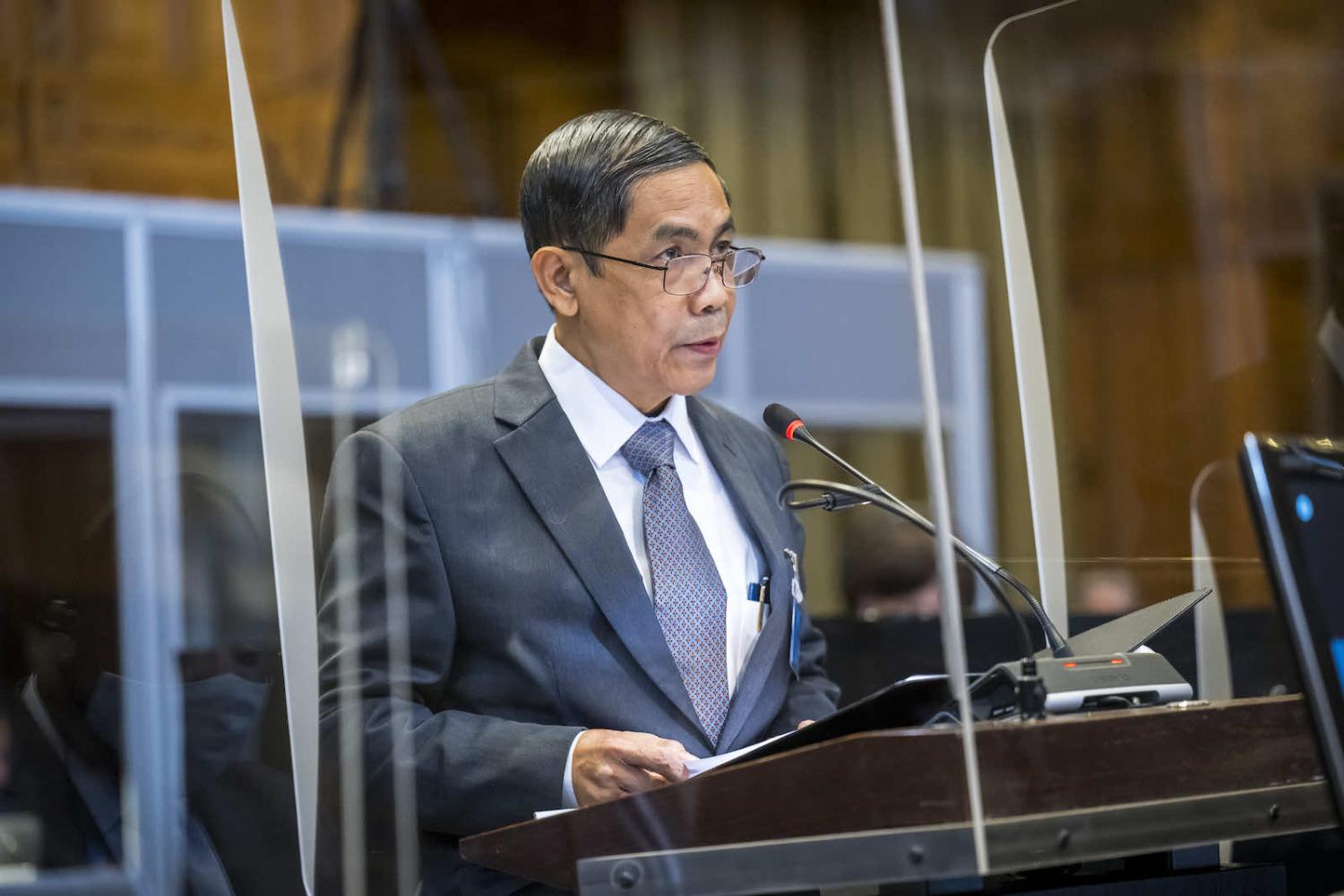
U Ko Ko Hlaing presenting oral arguments at the ICJ.
"Secondly, the accuser must provide sufficient evidence. Can they provide enough solid proof? You cannot prosecute a case without adequate evidence. Therefore, the next question is whether the Gambia can prove a 'Material Breach.' The second point is that there was no genocidal intent; it happened during counter-terrorism operations. While there may be suspicions of genocide because of that, it does not mean genocide actually occurred. In law, if there is a 'benefit of the doubt' regarding whether genocide happened, that benefit goes to the defendant. If our country receives that benefit of the doubt, it would mean the actions do not amount to genocide. I believe they will approach the case with these two questions: whether the accusing side can present full evidence."
The ICJ case stems from allegations of genocide following coordinated attacks by the ARSA terrorist group on 30 border guard outposts in Rakhine State on August 25, 2017, during the National League for Democracy (NLD) government's tenure.
The Gambia filed the lawsuit against Myanmar at the ICJ based on these allegations, leading to Myanmar's ongoing legal defense.
The team led by Minister U Ko Ko Hlaing previously represented Myanmar at the ICJ in February 2022.
- By CNI
- Category: English Section
- Hits: 278
CNI News
14 January 2026
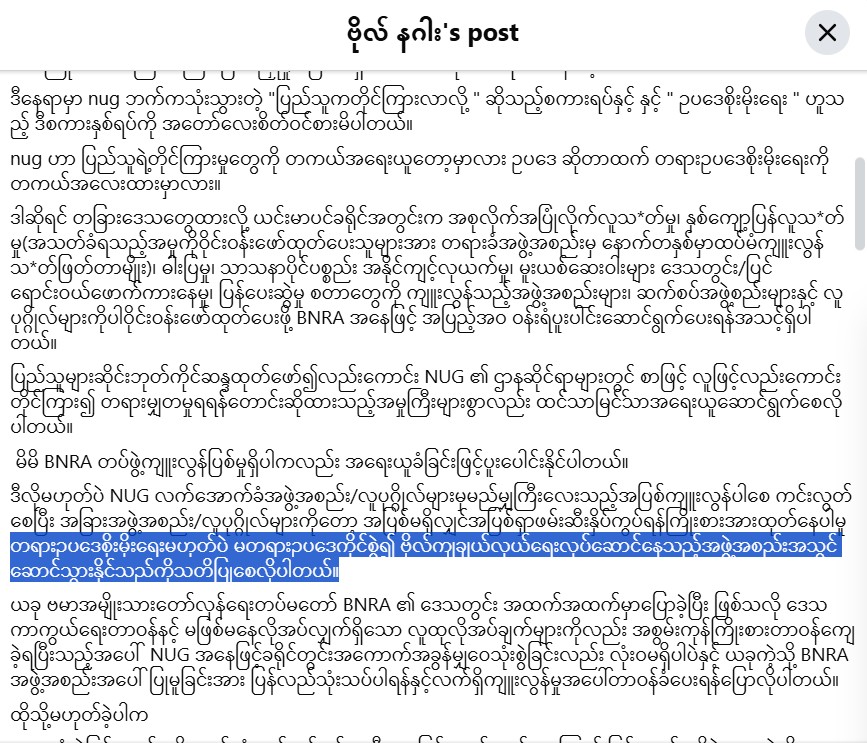
The National Unity Government (NUG) needs to be cautious that it does not take on the appearance of an organization engaging in bullying and manipulation if it attempts to arbitrarily apply laws, search for faults where none exist, and arrest or suppress other organizations or individuals who are not guilty, BNRA leader Bo Nagar said via his social media page.
Both sides have confirmed that on January 9, NUG’s Yinmabin District command forces raided two BNRA operational checkpoints in Pale Township, Sagaing Region, which are led by Bo Nagar.
Bo Nagar wrote that the Bamar National Revolutionary Army (BNRA), from its top leadership down to ordinary fighters, has not sought personal gain under the pretext of the revolution. He explained that, like fighters from other armed groups, BNRA members face shortages of food and other necessities, and therefore decided to begin collecting taxes starting in early 2026.
A post written by Bo Nagar
He said that NUG forces justified their actions as law enforcement based on public complaints, but carried out the raids using force without prior notice or consultation.
According to a statement, if the NUG genuinely takes public complaints seriously and truly intends to take action, the BNRA is fully ready to cooperate and provide support.
Bo Nagar stated on his social media page: “If my BNRA forces have committed offenses, we are willing to cooperate by accepting accountability and punishment. However, if organizations or individuals under the NUG are granted impunity no matter how serious their crimes may be, while other organizations or individuals are subjected to fault-finding, arrest, and suppression even when they are not guilty, then this is not the rule of law. Rather, it risks turning into an organization that applies unjust laws and practices warlord-style manipulation. I urge caution.”
He further said that the NUG does not share or redistribute district-level tax revenues at all, and that its treatment of the BNRA requires review. He added that accountability is necessary for these violations.
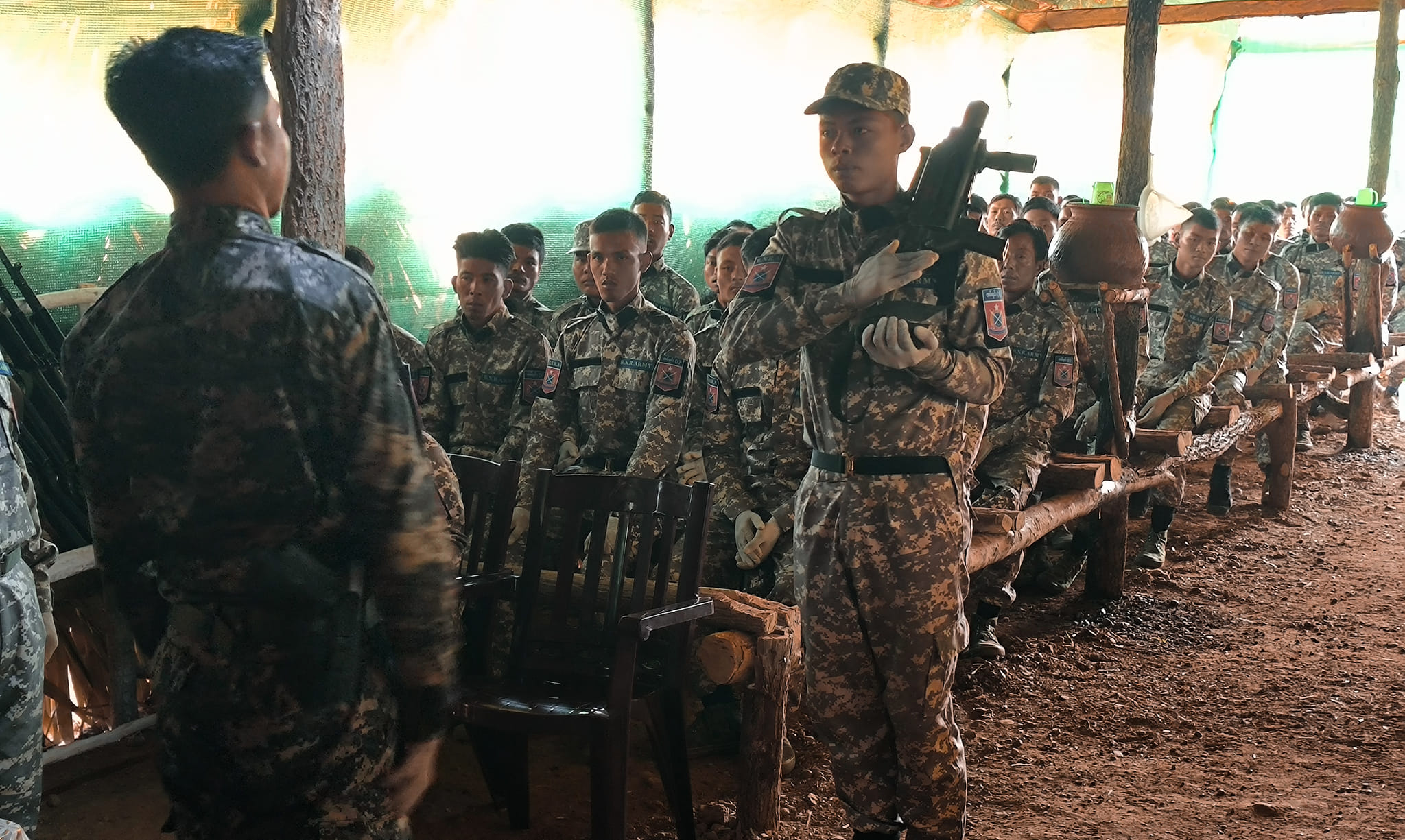
BNRA forces being seen
If there is no accountability for such actions, Bo Nagar warned that the NUG government would appear to be engaging in acts of oppression and insult against revolutionary fighters who love their country and people, and who have risked their lives and endured great hardship along the revolutionary path.
The BNRA, led by Bo Nagar, emerged from the Spring Revolution forces that have been primarily active in the Pale area of Sagaing Region, and is known to have gained local public support.
- By CNI
- Category: English Section
- Hits: 177
CNI News
14 January 2026
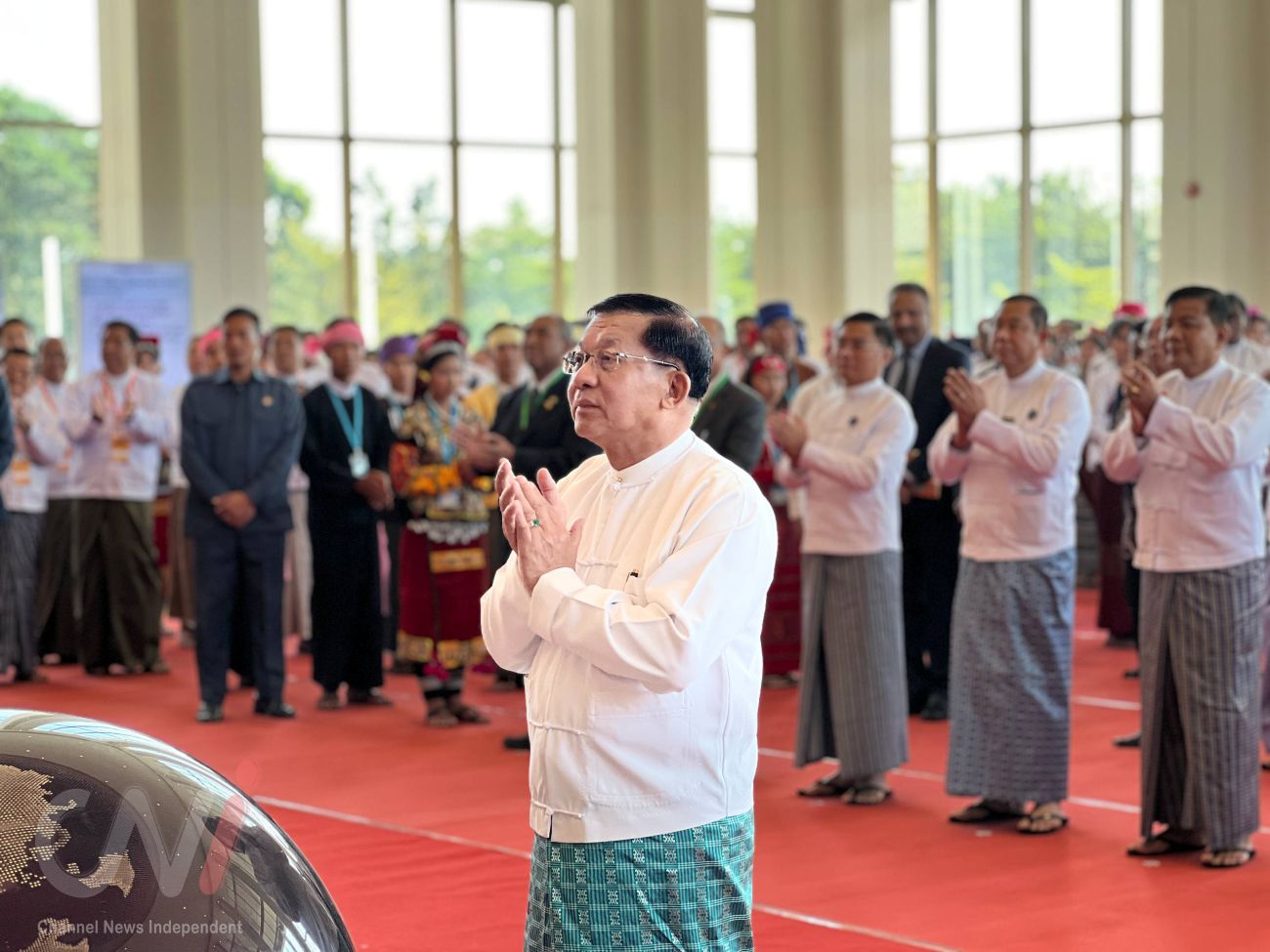
The "Youth Peace Forum" is currently being held at the Myanmar International Convention Centre-2 (MICC-2) in Myanmar's administrative capital, Nay Pyi Taw, from January 13 to 15, 2026.
Acting President Senior General Min Aung Hlaing attended the opening ceremony and delivered the keynote address.
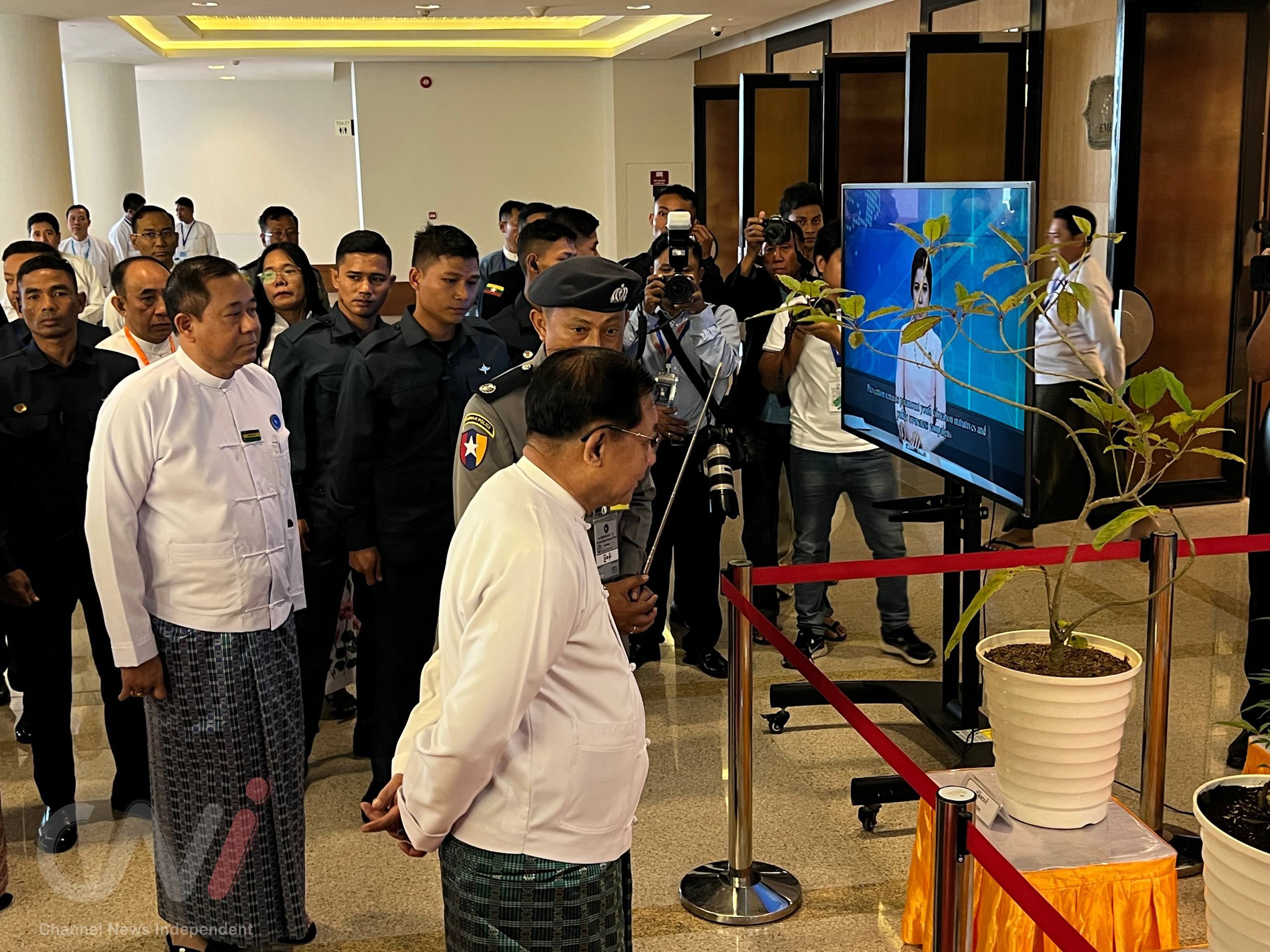
It is reported that youth representatives from various regions and states across the country were invited to participate in the forum.
The event is being spearheaded and organized by the National Solidarity and Peacemaking Negotiation Committee (NSPNC).
- By CNI
- Category: English Section
- Hits: 285
CNI News
13 January 2026
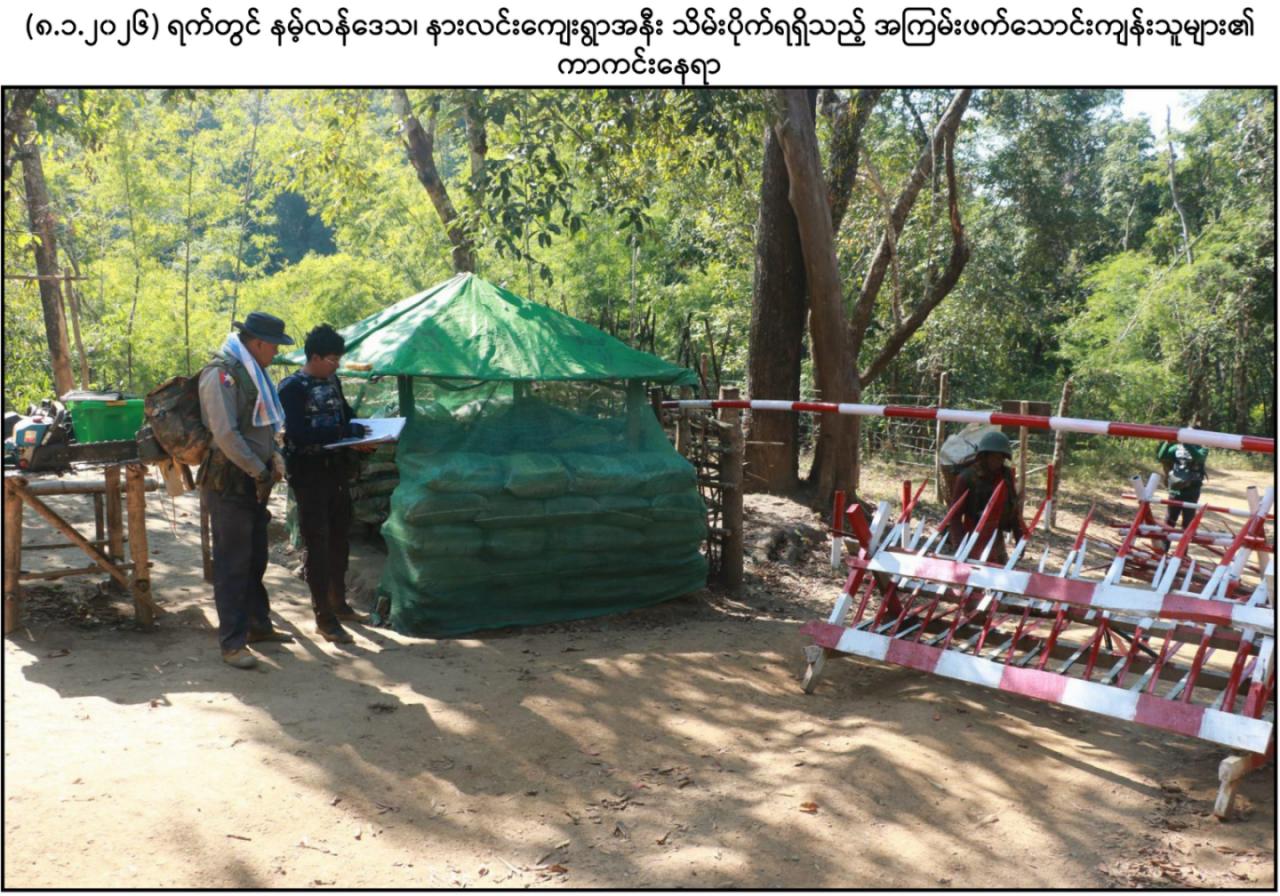
Authorities in Nay Pyi Taw announced on January 11, 2026, that equipment used for drug manufacturing and "Zha Pian" (online scam) operations was seized in Hsipaw and Mongyai townships of northern Shan State.
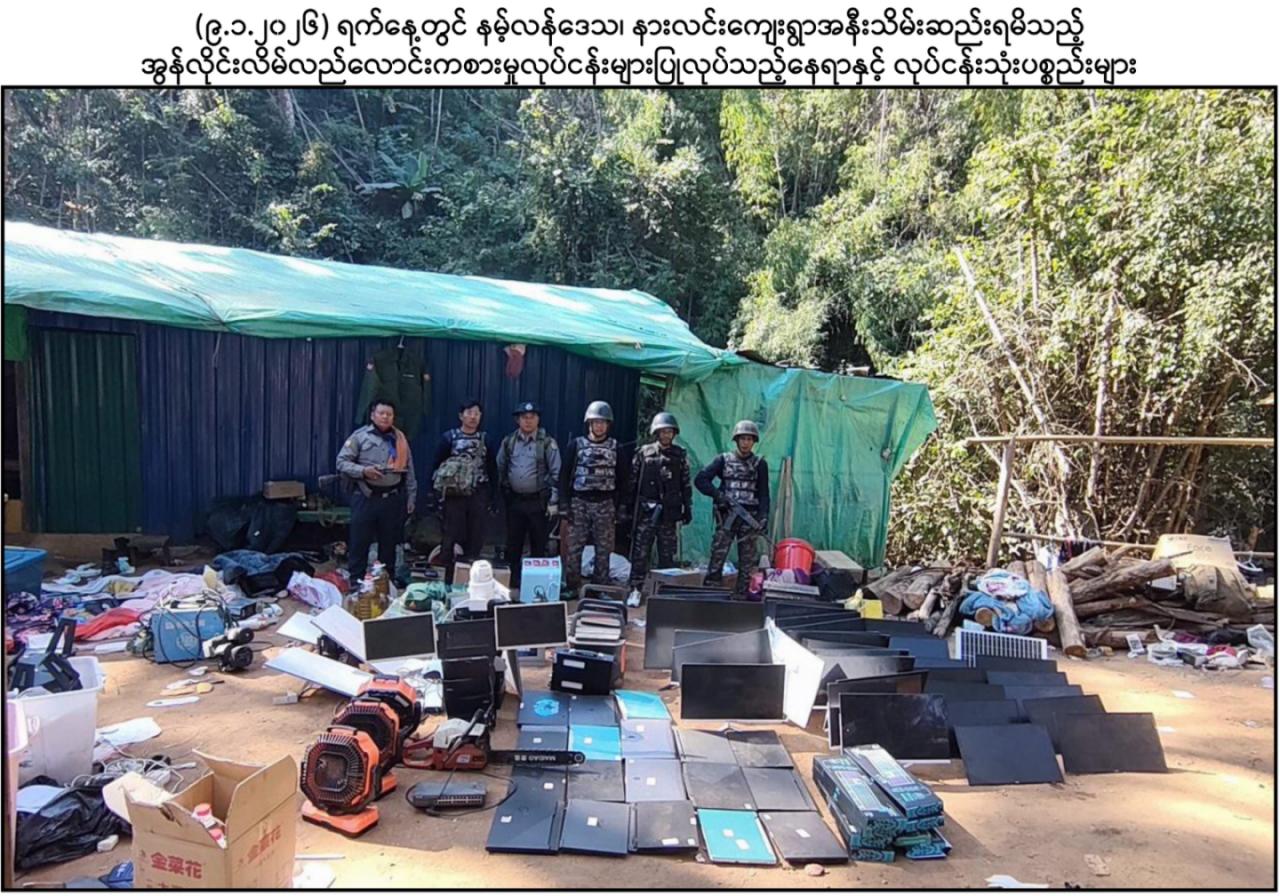
On January 9, 2026, security forces seized 18 laptops, 35 desktop computers, 11 mobile phones, and 5 Starlink devices in two buildings (40'x30') used for online scams and gambling operating approximately 9,000 meters northwest of Nalin Village in Hsipaw Township.
Later that afternoon, about 800 meters east of the first location, authorities made further seizures, including:
11 laptops, 6 desktop computers, and 3 Starlink devices.
Two tablet-pressing machines, one drug-stirring machine, and one tablet-counting machine.
2 kg of "Ice" (methamphetamine) and a 10 kg bucket of drug-mixture paste.
25 kg of caustic soda and thirty 25 kg buckets of sodium powder.'
One vehicle, two generators, and one backhoe.
Uniforms and insignia bearing the SSA (Shan State Army) logo, including a green uniform, a pair of two-star shoulder badges, and a green cap.
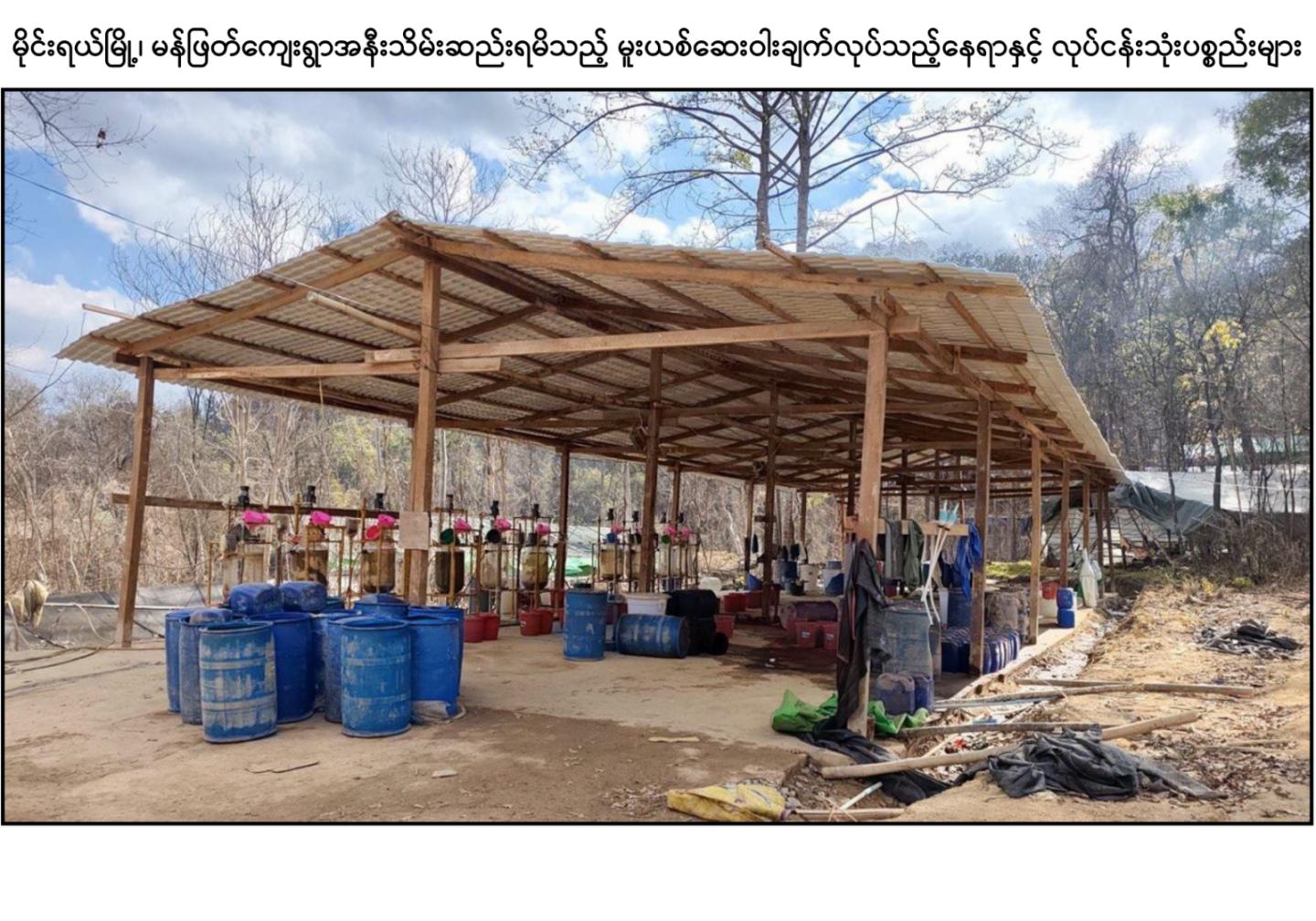
On January 10, 2026, near Man Phyat Village, approximately 26,000 meters southwest of Mongyai, forces uncovered a large-scale production site consisting of 14 temporary tents and six large buildings. They seized 120 empty plastic barrels, 20 iron barrels containing chemical solutions, 30 empty iron barrels, 60 gas cylinders, 4 large steel steamers, 2 large engines, 67 plastic barrels of acid, and other refining accessories.
The operations continued on January 11, approximately 20,000 meters southwest of Mongyai. Seizures at this site included:
50 plastic-walled buildings used for drug refining and 15 destroyed buildings.
600 gas cylinders, 10 refrigerators, 3 generators, 3 large steamers, and 3 tablet-pressing machines.
500 barrels of chemical solutions, 300 bags of white powder (suspected drug powder), 300 clear plastic bags, and 300 five-gallon acid containers.
6 large steel trays, 30 cardboard boxes of an unidentified white powder, and 300 packages of white powder.
5 motorcycles and 6 suspects, including individuals allegedly linked to the SSA, along with more SSA-branded uniforms and badges.
Additionally, seven primary drug manufacturing sites were discovered 19,000 meters southwest of Mongyai. During the clearance of these areas, 33 warehouses containing drug labs and related materials were found. Items seized there included 443 gas cylinders, 1,312 fiber barrels, 336 iron barrels, two 3-wheel motorcycles, 85 bags of caustic soda, 21 barrels of sulphonic acid, 525 small glass jars, 10 large glass steamers, 40 barrels of ethanol, and 150 steel bowls containing white drug paste.
The Nay Pyi Taw report concluded by stating that during 2025, drugs and precursor chemicals worth over 1,761 billion Kyats were seized across Myanmar.
Page 21 of 331
Connect with us