English Edition
- By CNI
- Category: English Section
- Hits: 366
CNI Interview
5 December 2025
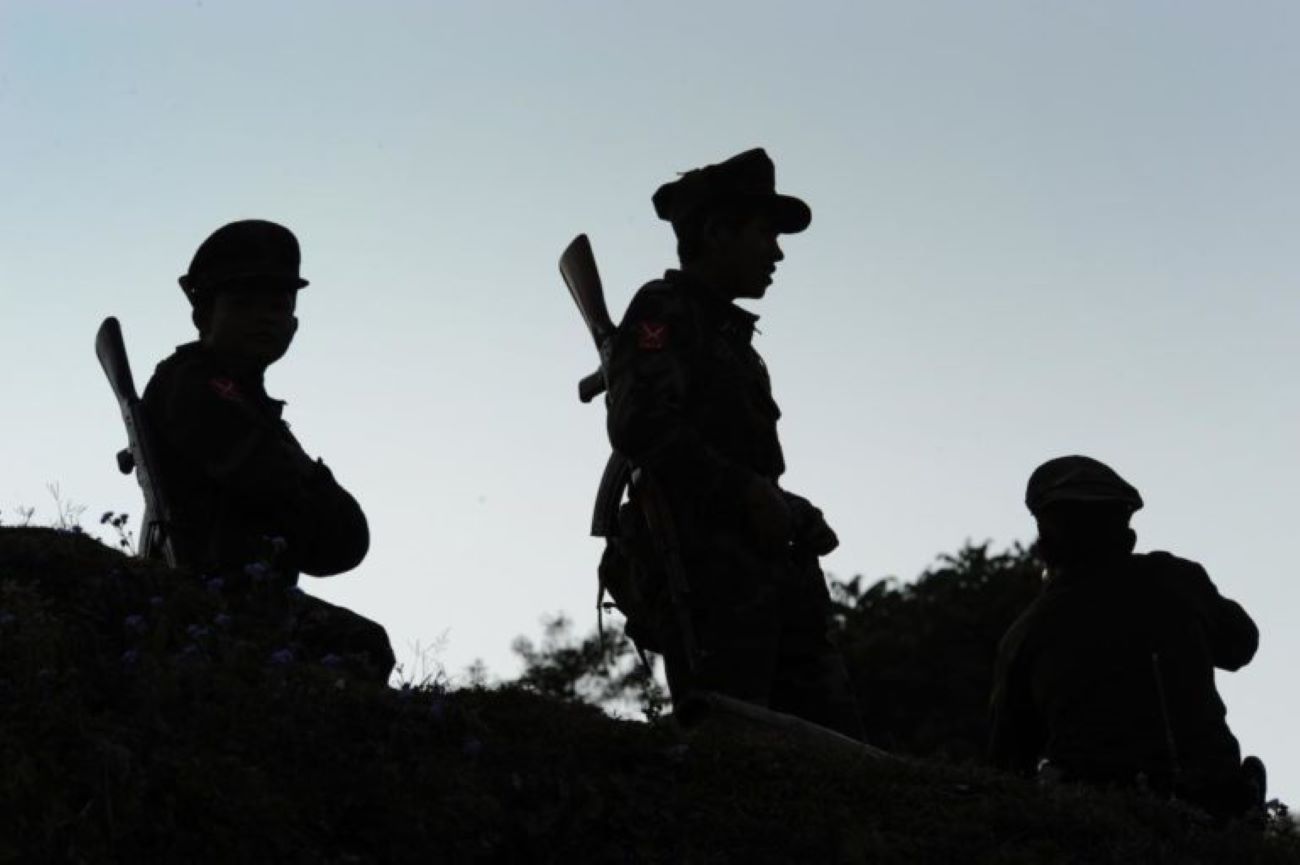
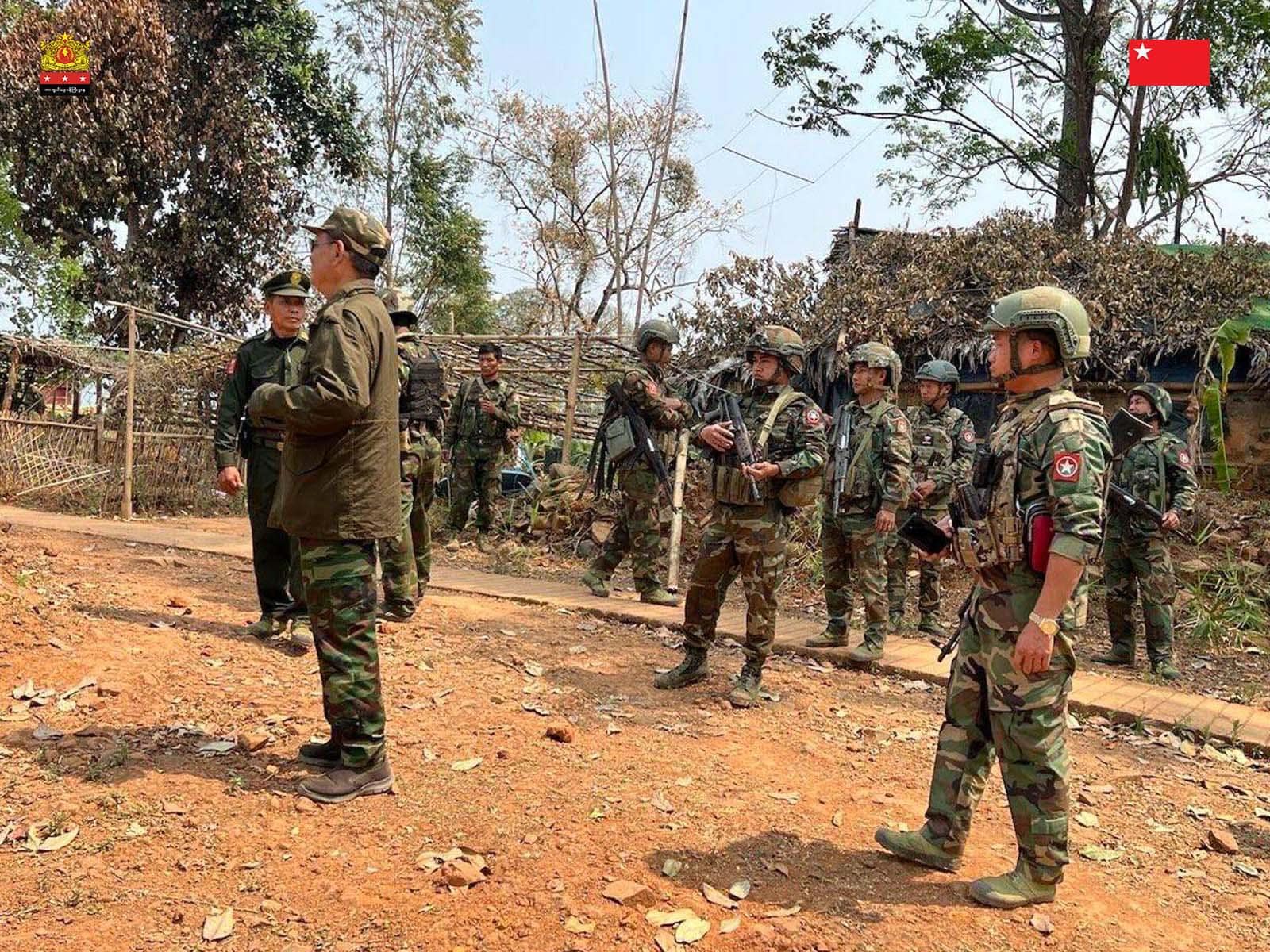
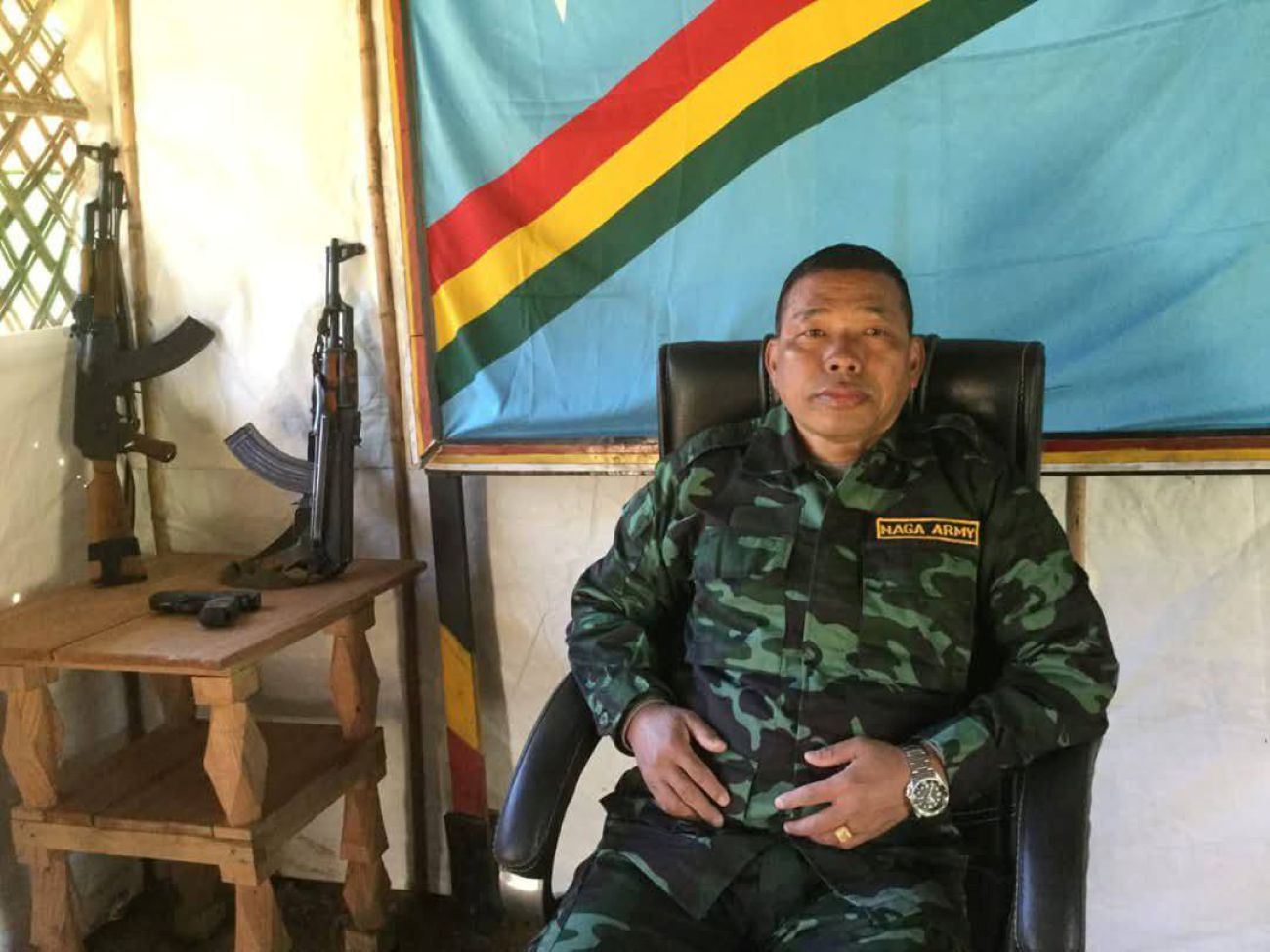
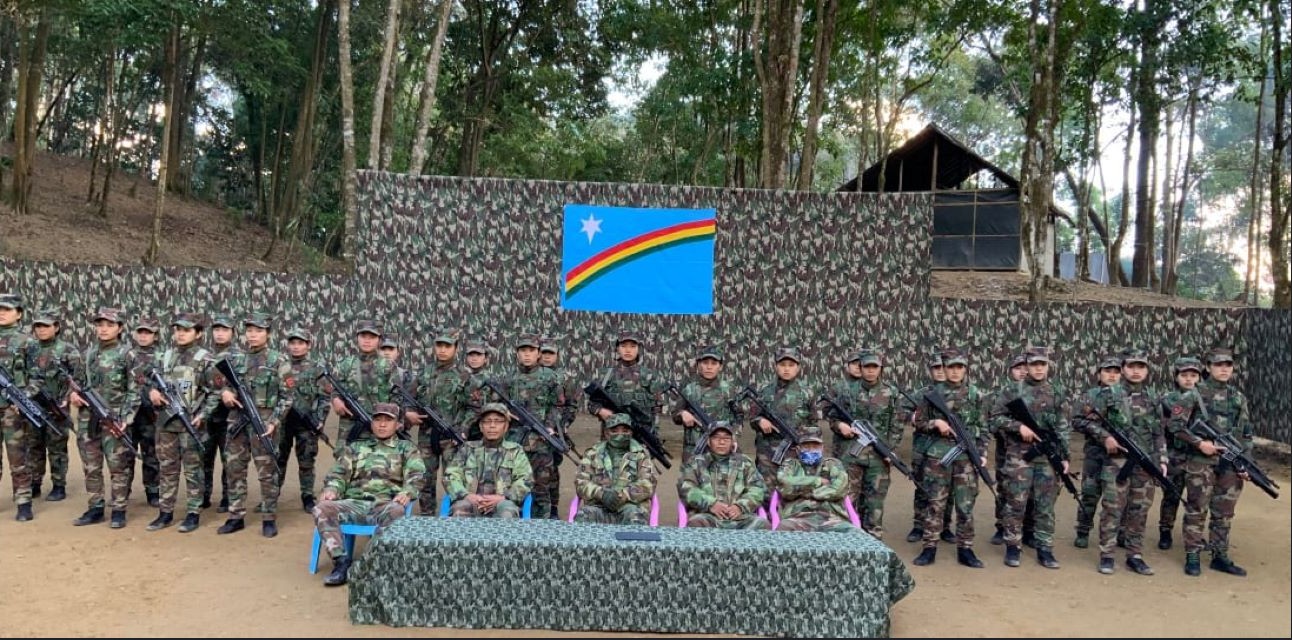
The Kachin Independence Army (KIA) is trying to gain control over the Sagaing Region. If KIA can control Sagaing Region, it will be able to connect Rakhine State, Chin State, Sagaing Region, and Kachin State—ultimately extending influence across the entire northwestern corridor of Myanmar.
Afterward, they may apply military pressure toward Mandalay and Magway Regions to block Tatmadaw offensives from reaching them.
With land access stretching from Kachin to Rakhine, KIA would also be able to use Rakhine’s coastline to expand trade and diplomatic relations with Western countries.
Meanwhile, the Myanmar military (Tatmadaw) is trying to open a political exit by holding elections. Because of this, people are increasingly interested in the prospects for Daw Aung San Suu Kyi’s release.
CNI interviewed U Khun Sai, who is involved in peace processes, regarding these matters.

KIA–PDF operational areas in Sagaing Region
Q: The U.S. ended TPS for Myanmar citizens, saying Myanmar has stabilized. Does this mean a policy shift toward the Myanmar military?
A: Everyone is thinking about this. People don’t understand why the U.S. did this. The U.S. knows exactly what’s happening in Myanmar—they have an embassy in Yangon constantly observing everything. There’s no way they don’t know.
So we can only guess. I could be wrong, maybe very wrong.
One possibility is that U.S. policy toward Myanmar is fundamentally tied to China. They say: “Washington’s Burma policy is Washington’s China policy.” So this TPS decision likely has something to do with China.
Another point is that the U.S. has been observing the pro-resistance forces for more than five years now. Even until today, they haven’t shown a clear, unified capability.So although the U.S. doesn’t like Min Aung Hlaing, they may have to deal with him for now. And that may be influencing this decision.
I recall something: this year ASEAN countries were asked about their key security partners. Surprisingly, many said China.
But among ASEAN members that still consider the U.S. as a strategic partner, the top ones were Cambodia and Myanmar.
This is surprising because Cambodia relies heavily on China.Myanmar under Min Aung Hlaing was also listed.So, to counter China’s influence over these two countries, the only powerful force they can use is the US. So that might be part of the reason.
Q: “Wa” forces allegedly halted weapons support due to Chinese pressure. MNDAA and TNLA also lost support and so revolutionary forces seem to be aligning more with KIA. Why can’t the military suppress KIA?
A: KIA has a few unique advantages.
Geographically – Unlike the Wa, who rely entirely on China, KIA lies between China and India. That makes full Chinese pressure more complicated.
Dual-track approach – They fight the military, yet at the same time maintain channels for talks through intermediaries.
Since the 1990s, the Peace Talks Creation Group (PCG) in Kachin has acted as a mediator. So even while fighting, they’re always in dialogue.
Relationship with NUG – They cooperate with the resistance but KIO as an organization doesn’t fully merge with them. They keep diplomatic flexibility. Because they aren’t 100% anti-Naypyidaw, they can maneuver more easily.

Geographic connections among Kachin, Rakhine, and Chin States and Sagaing Region
Q: If the military cannot sign a ceasefire with the KIA, how dangerous could the situation become?
A: I haven’t fully evaluated that yet, so I won’t make a statement.
Q: It appears KIA wants not only Kachin but also Sagaing Region. If KIA gains Sagaing Region, what could happen?
A: If KIA controls Sagaing Region, they will be closer to India.
Through Sagaing → Chin → Rakhine, they could improve international trade and foreign relations.
Kachin, like Shan, is a landlocked state, so access to the west would be advantageous.
I don’t think they will stop at Sagaing Region—they will likely continue seeking influence in surrounding territories to improve their strategic position.
Q: If KIA takes Sagaing, would they become even stronger than now?
A: Yes, they could. KIA is not only politically cautious but also experienced in diplomacy.
If they maintain relations with China while also engaging India, the U.S., and others, their position could strengthen further.
Instead of envying them, we should learn from their approach.
Q: In the past, under U Thein Sein, even without the NLD in government, progress was made—including Daw Aung San Suu Kyi’s release according to the agreement that the NLD would protest the by-election under the 2008 Constitution and the NCA talks.
According to the estimation of most people, the post-election government will include the current authorities only. If the NLD is no more, what kind of change might emerge in these armed conflicts?
A: The struggle nationwide isn’t yet 100% unified. Many people still have hopes pinned on Daw Suu, which is why they aren’t fully participating.
If Daw Suu were gone and NLD disappeared, the revolution could either grow stronger or psychologically weaken.
We’ll have to wait and see which outcome happens.

Senior General Min Aung Hlaing meeting with political parties
Q: After the election, what should the new government do regarding Daw Aung San Suu Kyi and NLD?
A: What should be done is already known—U Thein Sein demonstrated it before.
But most likely, the situation will resemble the Than Shwe era: Daw Suu will only be released after the election.
If released beforehand, the election might become chaotic or collapse entirely.
So currently, it’s unlikely they will release Daw Suu or NLD before the election.
And in any case, the military-backed party is almost guaranteed to win.
However, after the election results come out, there are various analyses about what might happen. One such analysis says the people of Myanmar might be fortunate—because a reform-minded government, similar to President Thein Sein’s administration, could come to power, one that has a strong desire to implement reforms.
If that happens, some say the country could begin to improve again.
The second possibility is that Senior General Min Aung Hlaing himself might not take the leadership role in the government, choosing instead to remain as Commander-in-Chief, while appointing someone he fully trusts to lead the government on his behalf. In that case, it could be somewhat good. But it's not better than the first possibility.

Daw Aung San Suu Kyi meeting KIA leader Lt-Gen Gun Maw
The third scenario is that Min Aung Hlaing himself takes the leading role in government. If that happens, he would be holding both the military and political power at the same time. In such a case, our revolutionary side would have to continue fighting. Most people believe that this would push our revolution into an even more self-reliant situation. Unlike before, support from Myanmar people living abroad decreased, and if international assistance or recognition would become even more difficult to obtain, that would put tremendous pressure on us. It seems Min Aung Hlaing and his circle have already calculated these factors.
So, in this matter, we pray for the first scenario to happen. And we pray that the second and third scenarios do not occur.
Q: If, as many analysts believe, the third scenario eventually happens, would it be easy for the country to become stable?
A:If so, the struggle and conflict would have to continue.
Q: Regarding the current issue of Zha pian (telegram fraud), have you studied anything about it?

Some people involved in Zha pian
A: Not yet. But speaking simply, the issue of Zha pian also stems from our political failures—failures to reach agreements or to implement agreements. In 1947, we decided to administer the country under a federal system. But after General Aung San was assassinated, the federal idea existed only in name, and the country was practically ruled under a centralized system.
Because of that, the country became unstable and civil war began. With that came many consequences.
If we look generally, the first major issue was opium—groups building up their strength through opium trading. Later, not only opium but heroin production became a source of power. After that came methamphetamine, and now Zha pian is the latest development.
Therefore, unless we are able to implement the political agreements we originally made, these consequences will continue. Opium is harmful. Heroin is worse than opium.
Methamphetamine is worse than heroin. And Zha pian is even worse. If we leave things as they are, something even more dangerous than Zha pian could emerge in the future.
That is why, before it gets to that point, we must quickly work together to build the federal union we agreed upon in 1947.
- By CNI
- Category: English Section
- Hits: 242
CNI News
5 December 2025
A land plot owned by the late Acting President U Myint Swe—located in Mandalay City, Maha Aung Myay Township, Plot No. (Ma-59), Ownership No. (31), with an area of 0.1102 acres—was sold by his son-in-law, U Tar Yar Myint Swe.
After the sale, U Myint Swe’s widow, Daw Khin Thet Htay, published an objection announcement in state-run newspapers.
According to the announcement, the land in question is solely owned under the name of the late Acting President U Myint Swe, and it had never been granted or transferred to anyone as inheritance. Since the land grant had expired, a power-of-attorney letter was issued to U Tar Yar Myint Swe solely to process the extension of the land grant period. However, using that power-of-attorney, U Tar Yar Myint Swe sold the land.

It is stated that Daw Khin Thet Htay, their son, and other family members had no knowledge of the sale. In relation to this matter, U Tar Yar Myint Swe and any individuals involved were instructed to come forward and resolve the issue within seven days from the date of the newspaper announcement. Failure to do so and evading responsibility would result in legal action against all parties involved, in accordance with existing laws.
U Tar Yar Myint Swe is the husband of Daw Khin Thet Htar Swe, who is the daughter of the late Acting President U Myint Swe and Daw Khin Thet Htay.
- By CNI
- Category: English Section
- Hits: 237
CNI News
4 December 2025
The public needs to avoid mistakenly voting for people who pretend to love the country but in reality seek only their own personal interests, said Sai Htay Aung, Chairman of the Tai Leng (Shanni) Nationalities Development Party (TNDP), in an interview with CNI News.
In Myanmar, the 2025 election will be held in three phases — Part (1) on December 28, 2025, Part (2) on January 11, 2026, and Part (3) in the last week of January.
Sai Htay Aung said that a true politician must be able to engage and communicate with anyone if it benefits their people and their country, and that voters should not cast their ballots for those who pretend to love the country while pursuing personal profit.

Election Commission meeting with political parties
He said:“A politician is someone who must be able to turn an enemy into a friend. As for us, we prioritize the country’s interests, and we want voters to choose those who work by looking at the face of the country and the people — no matter who they work with.Why is this important? Because right now, our country is in a very critical moment. We will need to work on reconstruction. Some people, however, are pretending to love the country while actually seeking personal gain. People need to avoid voting for such individuals.This is based on the experiences we have gone through. A politician must help build a better country. And if it benefits your people and your country, you must be able to cooperate with anyone. That’s why, as I said earlier, there are those who can harmonize with the military and so on.The military loves the country as well. If we all share this love for the country, then everyone can unite and work together on nation-building.”
Chairman of the State Security and Peace Commission, Senior General Min Aung Hlaing, also said that voters should choose candidates who can serve the interests of the country and their region, who can uphold and protect the Our Three Main National Causes, and who can cooperate in harmony with the military.

Senior General Min Aung Hlaing with political party representatives
Political analyst U Htay Aung Kyaw told CNI News that prioritizing national interests should not rest solely on the military, but must include businesspeople, industrialists, and all groups working together.
He said:“If an organization that disagrees with the military were to govern the entire country, it would be difficult because the military is the country’s backbone.If this backbone clashes with the administration, things will not run smoothly.Not only with the military — business owners, traders, industrialists — everyone must cooperate smoothly. Everything must be fair and balanced.Only when everyone prioritizes national interests and works together in development can the country truly progress. If all groups move forward fairly and in unity, the country’s development will not take long — that’s what I believe.”
Senior General Min Aung Hlaing has said that the upcoming election will bring a turning point for the country, and voters should choose those who protect the Our Three Main National Causes.
- By CNI
- Category: English Section
- Hits: 344
CNI News
4 December, 2025
The United States, under President Donald Trump, appears to be trying to adjust its policy toward Myanmar, according to Colonel Khun Okkar, Chairman of the Pa-O National Liberation Organization (PNLO-NCA/S), who spoke to CNI News.
On November 24, the U.S. Department of Homeland Security announced that it would terminate the Temporary Protected Status (TPS) previously granted to Myanmar nationals, citing Myanmar’s preparations for elections and visible administrative improvements.
Colonel Khun Okkar said,“It looks like they’re trying to change their policy. They haven’t actually changed it yet. Fundamentally, it hasn’t changed. But the US sees the way the State Security and Peace Commission is handling things now such as the election process, the political scope being expanded again. So, the US seems to show that they think adjustments may be necessary. Because of that, I believe they issued this statement to signal that they want to observe more before making a decision.”

U.S. announcement on TPS termination for Myanmar
The U.S. stated that the situation in Myanmar has improved to a level where Myanmar nationals could safely return home, which is why TPS was terminated.
It added that there have been significant improvements in administration and stability in Myanmar, that the State of Emergency had been lifted, and that preparations were underway for free and fair elections. Successful ceasefire agreements and better local governance were leading to improved public services and national reconciliation, according to the U.S. government.
As a result, the U.S. said conditions had now improved enough for Myanmar nationals to safely return.
Approximately 4,000 Myanmar nationals currently live in the United States under TPS. With no further extensions available, TPS holders will only be allowed to remain for up to 60 more days.
TPS is commonly used by people who do not wish to apply for asylum but need temporary permission to stay in the U.S., and it also provides eligibility for legal work authorization.
TPS was first granted to Myanmar people after the 2021 political crisis under former President Joe Biden’s administration.

Senior General Min Aung Hlaing
Colonel Khun Okkar of PNLO-NCA/S said the U.S. government under President Donald Trump does not appear to be directly endorsing Myanmar’s military, but views Myanmar as “stabilizing,” and that changes may follow after the election.
He explained:“Even though they’re not openly endorsing the military, the upcoming election could bring a turning point. There is already a certain level of stability before the election. Afterward, a parliament and a government will emerge. If those institutions function properly, it may be seen as improved stability. So this early termination of TPS could be based on an expectation of political changes after the election — a belief that things will move in a more positive direction. It’s like allowing TPS holders to return home if they wish, based on that expectation.”
Myanmar will hold Part 1 of the election on December 28, 2025, in 102 townships, and Part 2 on January 11, 2026, in 100 townships. Part 3 is expected in the final week of January 2026.
The upcoming election is expected to bring political change to the country, and the government says it wants citizens to vote. Senior General Min Aung Hlaing, Chairman of the State Security and Peace Commission, said people should vote for those who will protect the Our Three Main National Causes and promote economic development.
He stated that after the election, power will be transferred to the winning party, and the military will only handle national defense responsibilities.
- By CNI
- Category: English Section
- Hits: 239
CNI News
4 December 2025
Myanmar, where the social situation has fallen to an extremely low state, needs politicians and businesspeople to cooperate and establish a strong economic system to move the country forward, economic and political analysts say.
Economic analyst U Htay Aung Kyi told CNI News that no country exists without politicians and businesspeople, and what truly matters is how they think. Therefore, politicians and businesspeople must collaborate for national development.
He said:“Honestly speaking, there is no country without politicians and businesspeople. The important thing is their mindset. For example, in South Korea, Park Chung-hee created cronies — but why did the country still develop? In Myanmar, cronies were also created. So why did none of these cronies reach the international level? The way they were nurtured is important.Another thing is that business people look for profit. For national development, you have to look at the entire national economic system. Something may benefit cronies a lot, but if it harms the national economy, it should not be done. If the country collapses, everything collapses — I can guarantee that.In South Korea, Japan, and Singapore, the major transformation was called the ‘democratic transition’. We must understand that. Democracy is about understanding how the national economic system and public administration system work, and how to clearly explain this to the politicians. That is crucial.In reality, we lack genuine experience. We have weaknesses. We don’t have a habit of listening. That is our main problem. Democracy requires thinking for the country’s future, and we need to be able to explain firmly and clearly so that politicians understand.”

grassroots communities
In Myanmar, each time a new government takes office, a new group of cronies tends to emerge. Although no crony has ever completely collapsed due to U.S. sanctions, the public continues to bear the indirect impact of sanctions. Additionally, the country’s financial and economic sectors continue to suffer from second-hand effects and long-term damage.
Sai Htay Aung, Chairman of the Tai Leng (Shanni) Nationalities Development Party (TNDP), told CNI News that in Myanmar, no matter how much politicians claim to love the country, they cannot operate without financial backing.
He said:“In Myanmar, if you want to run a political party, no matter how much you love the country, you cannot do anything without support. Some political parties do have genuine political intentions. But when they need money, they turn to businesspeople. When they do that, the businessperson will not help unless they see personal benefit. If the businessperson supports them, it is with the expectation of profit — and when that happens, the politician becomes tied up by them. In such a situation, the country is the one that fails.”

armed groups and political parties
On January 31, 2023, the political party registration law was enacted in Myanmar. Under this law, any party wanting to register at the Union level must open offices in more than 100 townships, gather 50,000 party members, and pay a 100 million kyat registration fee to the Union Election Commission (UEC).
Furthermore, when parties participate in elections, they also need funding for campaign expenses for their candidates. Because of these conditions, political parties and politicians have come to rely heavily on financial support from business people — which has allowed businesspeople to gain increasing control over political parties.
- By CNI
- Category: English Section
- Hits: 425
CNI News
4 December 2025
If the new government cannot work back-to-back( stand together) with the Myanmar military (Tatmadaw), it will certainly collapse the next day, said Union Solidarity and Development Party (USDP) Chairman U Khin Yi.
He said this during political campaign speeches delivered while meeting with USDP supporters in Pathein, Ayeyarwady Region, on November 26 and 27, 2025.
U Khin Yi said, “A vote from the heart is good, but we value the vote that comes from the brain. You must think carefully about what kind of person deserves your vote. Vote for the person you like. But there are points you must consider. Number one: in our country, there are many violent extremists. If the new government does not work back-to-back with the Tatmadaw, it’s certain that this government will collapse the next day. Keep this in mind when you choose.”
On 1 February 2021, the Myanmar military removed the NLD government, accusing it of attempting to form a government without resolving disputes over the 2020 general election voter list, and subsequently took state power. After that, a state of emergency was declared, which has continued until 2025.

Currently in Myanmar, ethnic armed organizations and Spring Revolution forces are cooperating to try to remove the military, and heavy fighting is ongoing.
The military announced that it will hold Part (1) of the election on December 28, 2025, Part (2) on January 11, 2026, and Part (3) in the last week of January.
The military has said that it will transfer state power to whichever political party wins the election, and that it will serve only in a defense role, according to Commander-in-Chief Senior General Min Aung Hlaing.
Political and military analysts, however, point out that although the USDP is expected to win the election without serious competition, the new government may be formed under the leadership of the military, not the USDP.
- By CNI
- Category: English Section
- Hits: 201
CNI News
3 December 2025
To achieve lasting peace in Myanmar, the public should protest through nonviolent means and make their demands known, said Sai Htay Aung, Chairman of the Tai Leng (Shanni) Nationalities Development Party (TNDP), speaking to CNI News.
Military and political analysts point out that in peace-building processes, there are many differing viewpoints, ideologies, and approaches being attempted.
In Myanmar, every time a new government comes to power, the people, policies, and institutions involved in the peace process also change. As a result, the political foundations built by previous governments lose credibility, leading to continued deadlocks.
Sai Htay Aung of the TNDP told CNI that if peace cannot be achieved through negotiations with armed groups, then the public must resort to peaceful protest:

Armed groups, government officials, and political parties in discussion
“If an organization refuses to pursue peace, then people should protest against it.The government must have genuine goodwill.The desire for peace must come from within their hearts.There are many people who say they want peace, but in reality they don’t want it. Why? Because the longer peace is absent, the more freedom they have to conduct business.They are acting like warlords.If peace is achieved, they will have to live under the law — many groups don’t want that.So the public needs to be united.To overcome these challenges, people must protest peacefully against these armed groups.”
Analysts also note that peace cannot be achieved without considering the root causes of conflict — historical grievances, ideological disputes, and political beliefs.
Sai Htay Aung further said that in order to achieve lasting peace in Myanmar, the issue must be addressed through social and economic means:

Public protesting to demand an end to the fighting
“I believe peace will have to be achieved through the people.Our peace process started back in 1989.From 1989 onward, armed groups made peace.At that time, the government told them: first take peace, and then you can do business.When a new government later discussed political matters with them, armed groups began operating businesses openly.Town and rural areas became interconnected, and they were given mineral concessions and special zones.So people came to believe that only those with arms could succeed — armed groups received privileges, while ordinary people did not.Because of that, many people tried to take up arms.They bought weapons and recruited members.This is why the country's biggest problem today stems from the peace process itself.To achieve lasting peace, we must address it through social and economic reforms.”
Military and political analysts also note that ideas such as establishing a single national army, officially recognizing ethnic armed groups, or granting them autonomous territories are approaches based on a “security perspective,” and cannot be implemented in a short time.
Currently, heavy clashes continue between the Myanmar military(Tatmadaw) and armed groups across the country, and peace efforts remain stalled.
- By CNI
- Category: English Section
- Hits: 318
CNI News
3 December 2025
Because the public is still not alert or engaged regarding the upcoming multi-party democratic general election, the Mon Unity Party (MUP) is facing difficulties in conducting its election campaign, according to the party’s spokesperson, Naing Than Shwe, who spoke to CNI News.
He said:“It’s election campaign season now. We are also going out to campaign. But we can’t gather large crowds of people. The public is not very aware or energized yet. So our party members go around in small groups of one or two, gather around 30 people at a time, explain the voting system, and show them how to cast their votes.We also explain what rights they will lose if they do not vote.There are difficulties.In Mon State, especially, many people work in rubber plantations.Because of that, they wake up very early—around midnight—then go to work.During the hot season, rubber tapping starts even earlier, so they don’t have time to attend our events.”
Currently in Mon State, the parties preparing to contest the election include the Union Solidarity and Development Party (USDP), People’s Pioneer Party (PPP), People’s Party (PP), Shan and Nationalities Democratic Party (SNDP), the National Unity Party (TaSaNya), the Myanmar Farmers Development Party, the Mon Unity Party (MUP), and the Pa-O National Development Party.

Members of the Mon armed group, New Mon State Party (NMSP)
Under the present political situation in Myanmar, where armed conflicts are widespread and escalating, ethnic political parties are reportedly facing more difficulties than major mainland parties during the campaign period.
Senior General Min Aung Hlaing stated during his visit to Maubin, Ayeyarwady Region, on November 23 that whether people choose to vote or not is entirely their own decision.
Naing Than Shwe of the Mon Unity Party also told CNI:“Especially for small parties, it is a struggle.

Senior General Min Aung Hlaing and members of the NMSP
It’s not that they are weak, but for this election, what we want to tell the voters is simply: please go and vote.Choose whoever you like.You can vote for whomever you prefer.This is the right of the voters.We just want to urge them not to lose this right.”
It is also learned that the New Mon State Party (NMSP), the Mon armed group, is not exerting pressure on political parties contesting the upcoming election nor on Mon voters.
The election will be held in three phases—on December 28, 2025; January 11, 2026; and in the final week of January 2026. Senior General Min Aung Hlaing has stated that the government formed as a result of the election will receive a transfer of state power.
- By CNI
- Category: English Section
- Hits: 365
CNI News
3 December 2025
Daw Aung San Suu Kyi is a figure who should rightfully be involved in discussions and negotiations aimed at resolving Myanmar’s ongoing national crises and armed conflicts, said Colonel Saw Kyaw Nyunt, spokesperson for the 7 EAO Alliance, speaking to CNI News.
He said that when addressing political issues and working to overcome the country’s challenges, the future of Myanmar can only be shaped through coordinated negotiations among all groups that ought to participate in such efforts.
He stated:“With Daw Aung San Suu Kyi’s release, it’s difficult for me to say exactly how the situation in our country might change.But when we are trying to overcome the political and national crises we face, all individuals and organizations that must be part of the solution should necessarily be involved.Only through cooperation, negotiation, and consensus among all these essential stakeholders can we shape the future of our country.
Anyone—individuals or organizations—who has committed to addressing the nationwide crisis from a broader perspective should also include DASSK as a key stakeholder.”

Former KNU Chairman Mutu Say Poe, Daw Aung San Suu Kyi, and Senior General Min Aung Hlaing
Meanwhile, whether or not the government releases Daw Aung San Suu Kyi should only be considered based on the situation after the election, said Colonel Khun Oakkar, Chairman of the Pa-O National Liberation Organization (PNLO–NCA/S).
He stated:“From what I see, I don’t think they will release DASSK before the election.
They will consider it only depending on the situation that arises after the election.
If they release her before the vote, everything will become chaotic.If the post-election environment is more relaxed and brings positive change, then a new approach could emerge — one that more people might be able to accept.But if nothing changes after the election and the same people remain in control, then stability will be difficult.In any case, no one can say for sure whether she will be released or not.Even after the election, if they don’t want to release her, they won’t.If they do release her, it will most likely be after the election.”
On February 1, 2021, the Myanmar military (Tatmadaw) removed the National League for Democracy (NLD) government led by Daw Aung San Suu Kyi, claiming unresolved issues regarding alleged irregularities in the 2020 general election.
Following the coup, the military detained Aung San Suu Kyi, U Win Myint, and other senior officials.
Armed conflict subsequently escalated between the military and resistance groups, and the country has since faced severe political, economic, social, health, and education crises.