
English Edition
- By CNI
- Category: English Section
- Hits: 280
CNI News
March 11, 2026
U Khun Sai, a participant in the peace process, told CNI News that there is no need to worry if the natural principle of the Panglong Agreement is applied: collective management for matters concerning everyone, and management by the relevant state officials for matters specific to their own state.
Following the political shifts in 2021, the goals of Ethnic Armed Organizations (EAOs) have evolved beyond Federalism, with some now aspiring toward a Confederal status.
Regarding these aspirations, military and political analysts point out that while the government accepts Federalism, it does not accept Confederation. Furthermore, the government is unlikely to accept a form of Federalism that involves very little central control.
Currently, the mention of "Panglong" is often misunderstood as synonymous with secession. However, U Khun Sai explained to CNI that the true essence of the Panglong Agreement is not about secession, but about the right to manage one's own state independently.
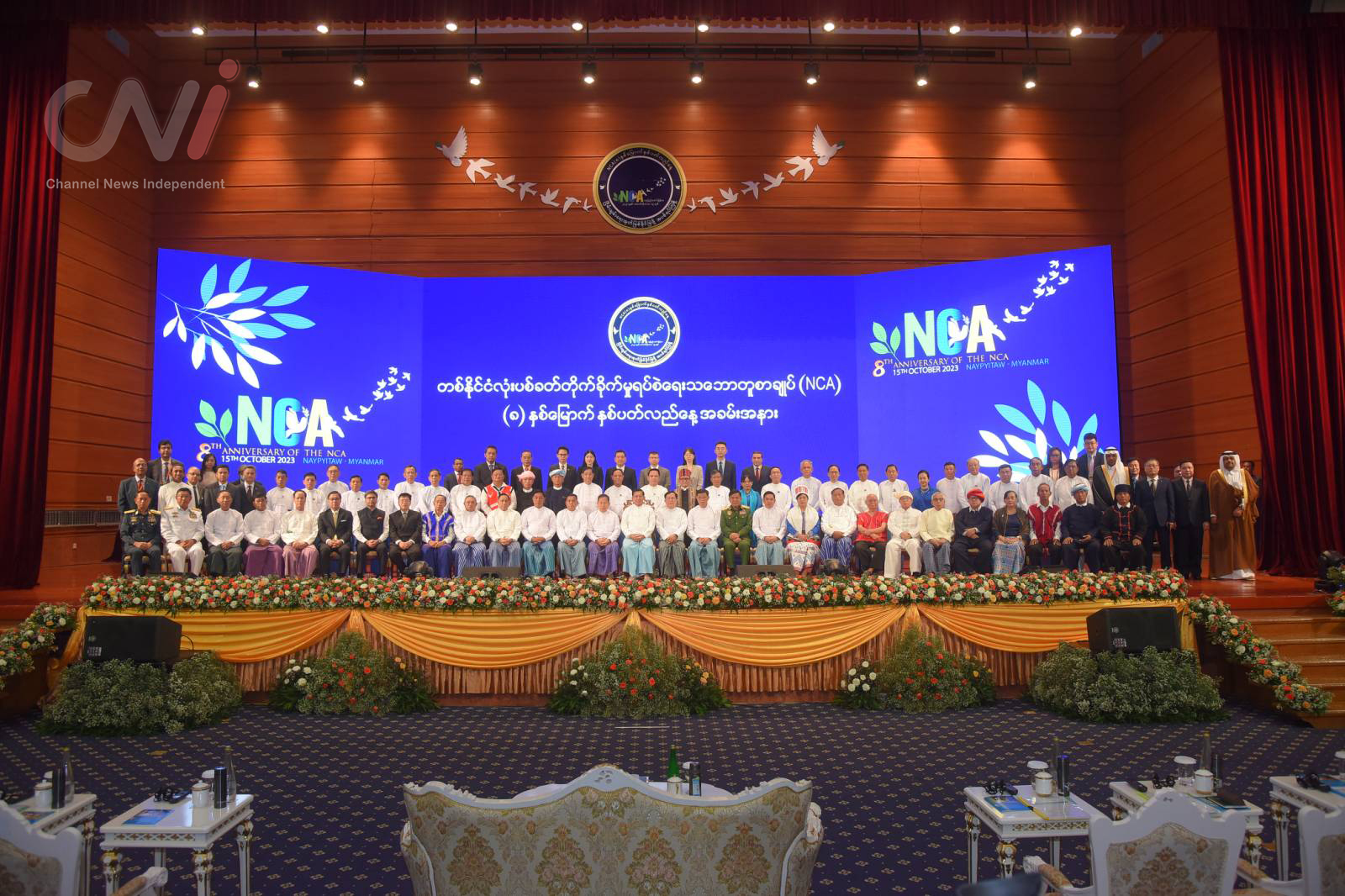
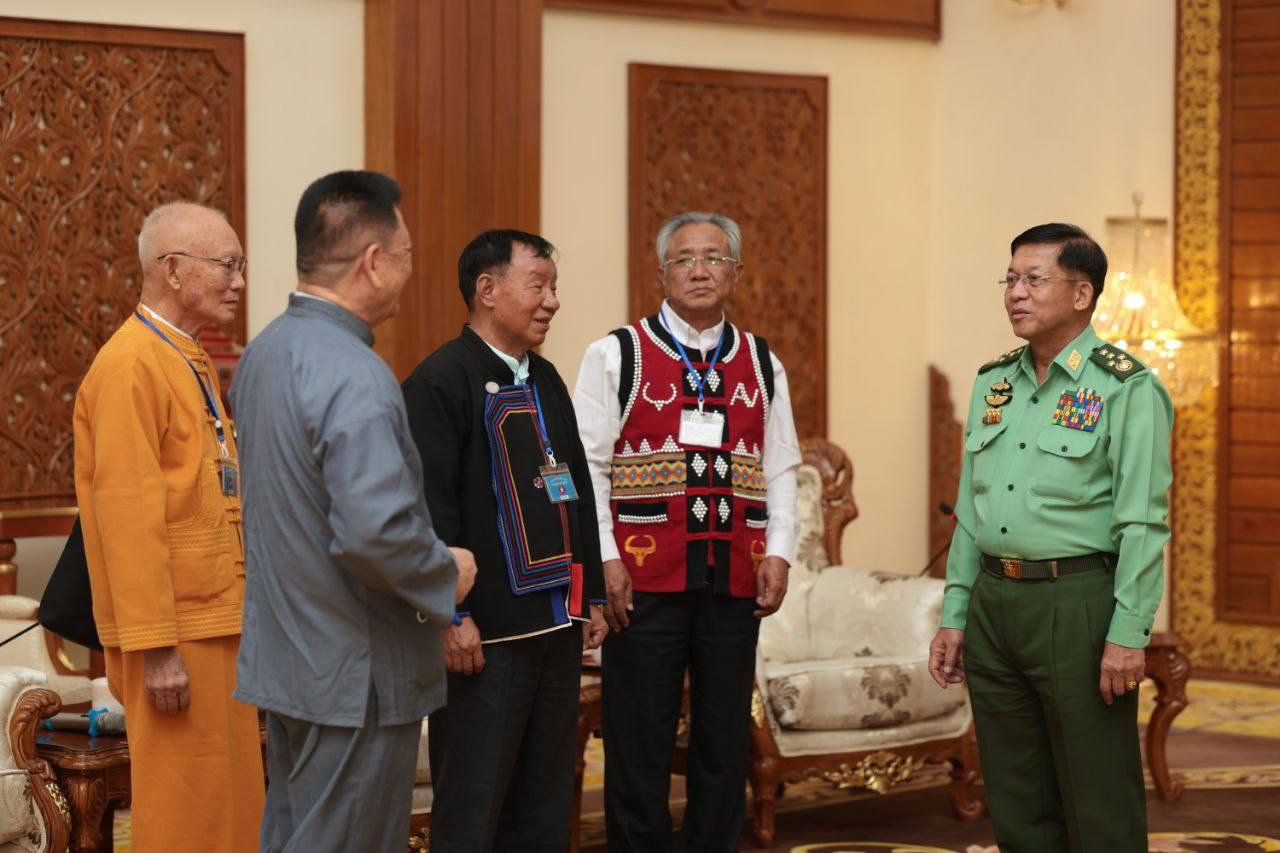
Leaders from ethnic armed groups, the Tatmadaw and the government seen.
He stated, "According to the Panglong Agreement and subsequent accords, the central government would handle matters concerning everyone. However, matters specific to a state would be handled by that state. When phrased this way, it can be interpreted as the 'Burman' government handling central affairs while non-Burmans only handle their own states. Many understand it that way. In reality, the leaders who drafted and implemented the Panglong Agreement did not define it like that. The central government wouldn't consist only of Burmans; it was intended to include ethnic and minority leaders as well. If you look at the Panglong Agreement, points 1 through 4 concern the central government, and you can see ethnic leaders participating in that central body. Since ethnic leaders themselves are involved, there is nothing for the central government to fear, even if they are governing their states separately. Why is there no need to worry? Most people now think 'Panglong' means secession or a desire for independence. Actually, Panglong wasn't created for that. It was so you could govern your own state independently."
The Panglong Agreement, signed on February 12, 1947, included a total of nine points, including five main agreements aimed at the Hill Regions and Mainland joining together to gain independence and achieve ethnic unity.
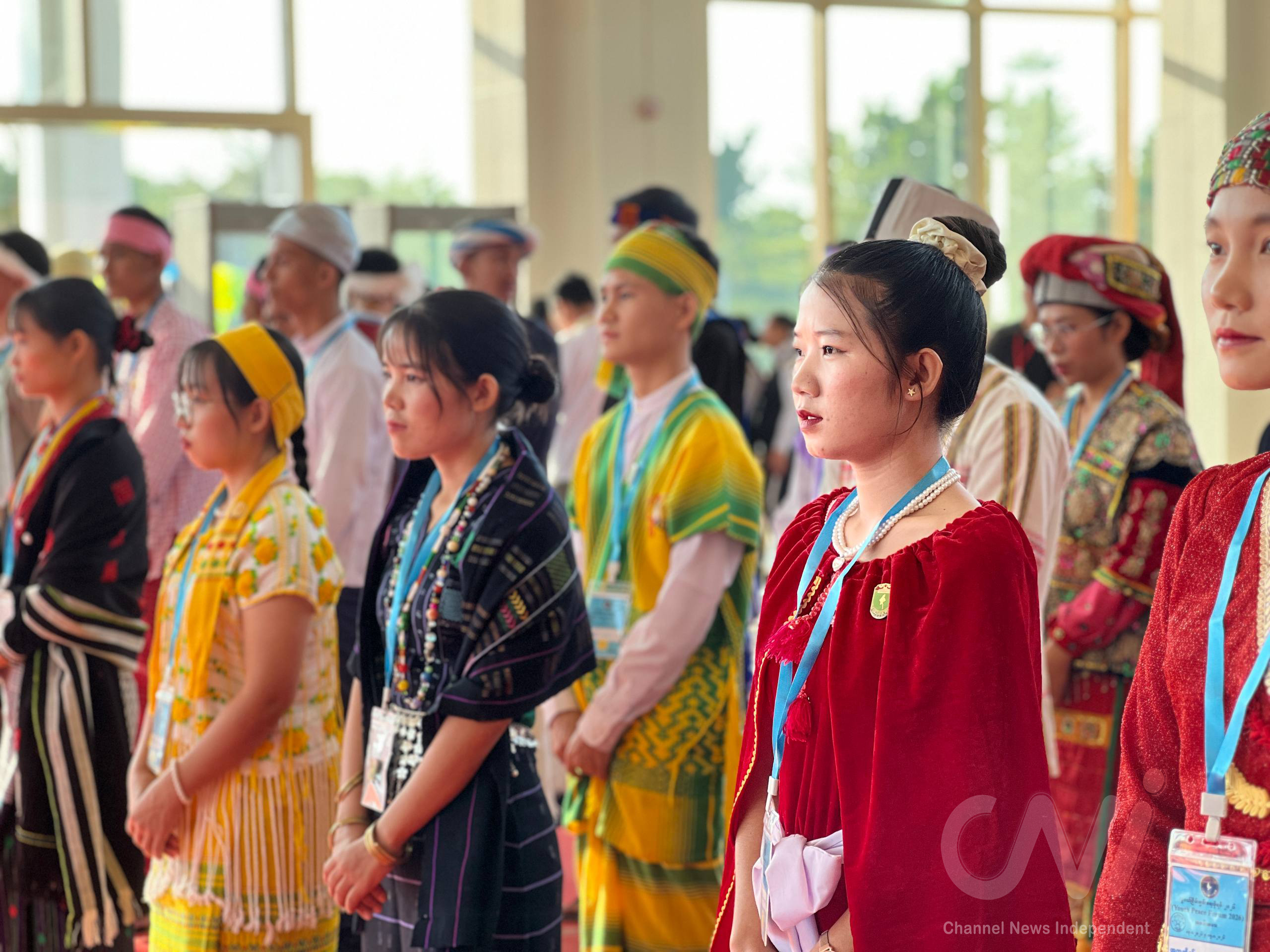
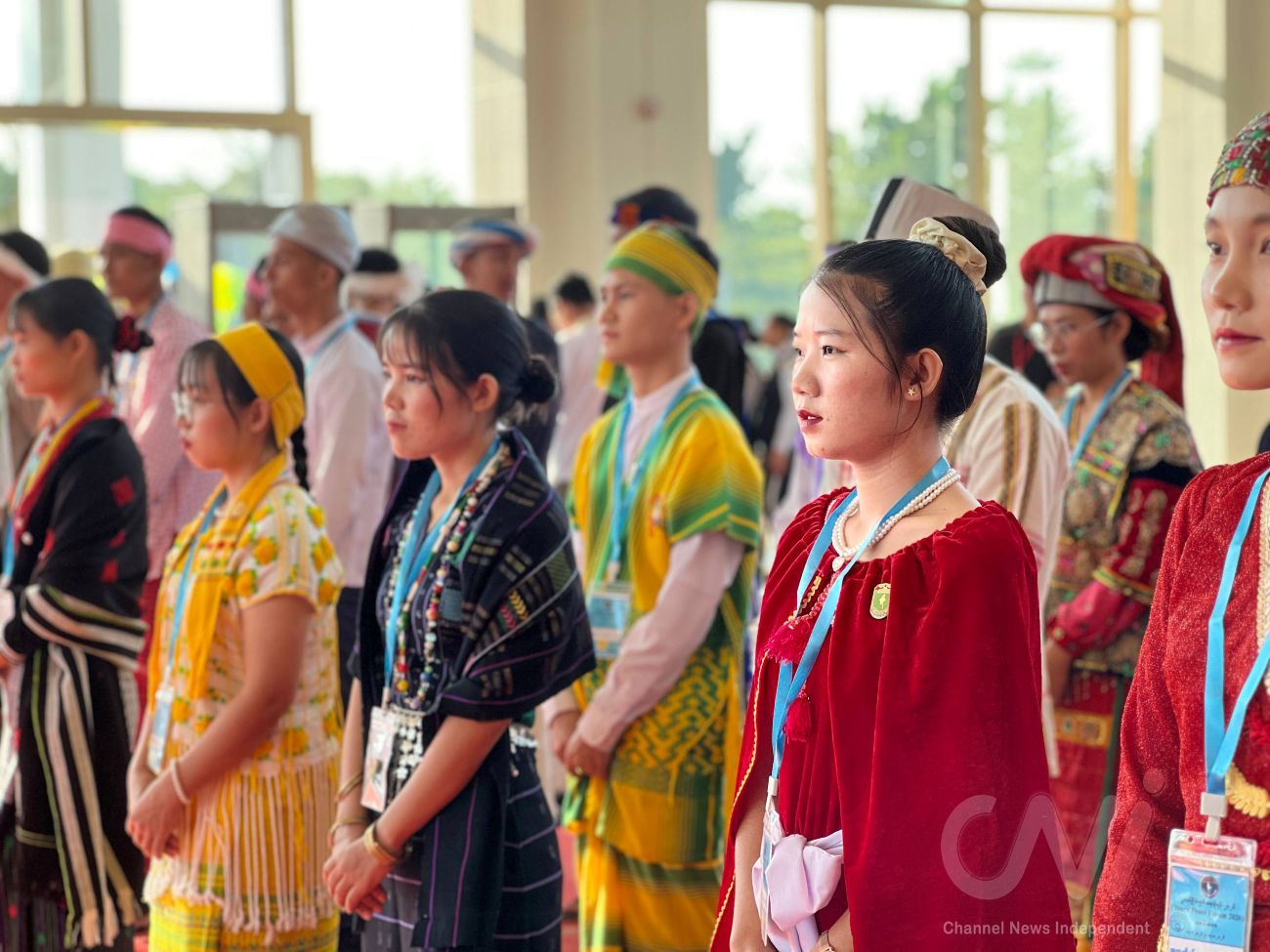
Ethnic youths seen.
The five main agreements are: The Council which is made up of representatives from the Hill Regions shall be included in the mainland government and cooperate in administration.The Hill Regions shall enjoy full autonomy and administrative powers over internal affairs.A separate Kachin State shall be established for the Kachin Hill tracts.The Hill Regions shall receive financial and administrative rights and privileges equal to those of the Mainland.The Hill Regions and the Mainland shall remain united and live in solidarity after gaining independence together.
Since the 2021 political changes, the number of armed organizations in the Myanmar political landscape has increased, and armed conflicts have grown larger and more widespread.
Furthermore, Ethnic Armed Organizations and the NUG-PDF are collaborating on operations to seize territories. In this landscape, some EAOs have seized territories beyond their previously designated self-administered zones.
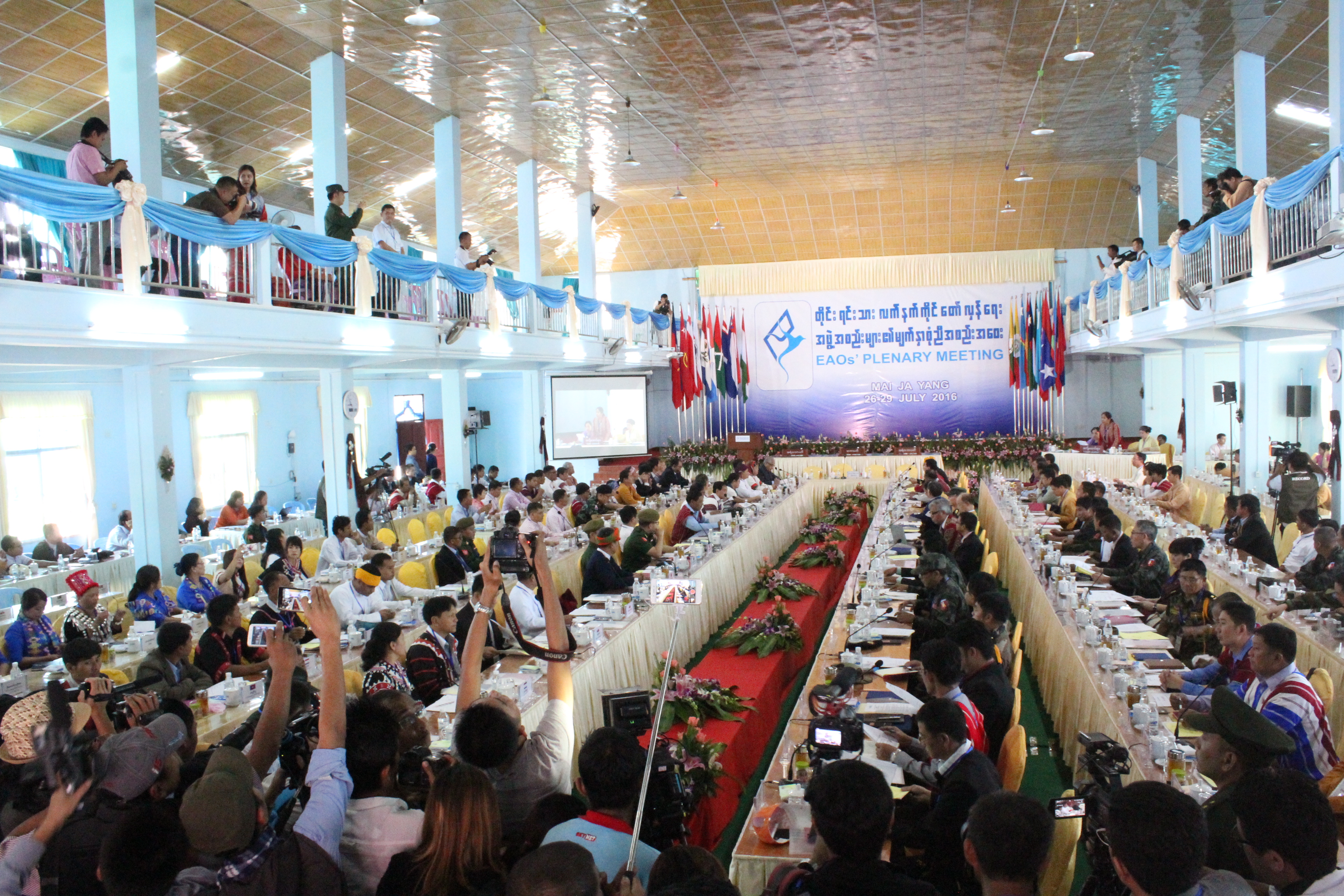
Ethnic armed organizations holding a conference.
A political analyst told CNI News that if the state allows them to keep the territories they have captured as they are, problems could arise in some state regions.
He said, "If we give [MNDAA and TNLA] the territories as they’ve seized them now, groups like the SSA and other groups in Shan State won't be satisfied. Also, in Rakhine, there is a conflict with the Chin—possibly regarding the Paletwa issue in Chin State. Since such problems exist, it will be difficult for other ethnic groups to accept. It would be best to discuss and get them to accept a process where territorial boundaries are decided by the will of the local people. The central government must propose this. If this is proposed and China also likes and agrees with it, then implement it and designate the territories accordingly. Once designated, then self-administration must be granted."
Military and political analysts observe that the goals of Ethnic Armed Organizations have diverged following the removal of the NLD government.
The original goal of the EAOs is to build a Federal Union and achieve full self-determination for states. But analysts point out that groups gaining a military advantage have begun to envision goals higher than a Federal Union.
- By CNI
- Category: English Section
- Hits: 270
CNI News
March 10, 2026
Military and political analysts are raising questions regarding which path and method should be used to initiate the formation of a Federal Army in Myanmar.
U Ko Ko Gyi, Chairman of the People’s Party (PP), told CNI News that if a Federal Army is to be formed, the military (Tatmadaw) and winning parties should operate within the framework of the 2008 Constitution. He emphasized that efforts must be made within Parliament to effectively amend the 2008 Constitution.
"Currently, we are considering solving this within the 2008 framework involving the military, the current winning party, and all registered political parties. On the other hand, there is an approach that suggests the 2008 Constitution must be completely abolished and rewritten. As political parties, we need to implement practical and timely reforms when amending the constitution. Therefore, there have been discussions regarding constitutional amendment, and some are still ongoing. I believe we must strive in Parliament to achieve effective reforms. Fundamentally speaking, there are two types of structures: a Union based on ethnicity and a Union based on territory. Furthermore, there are considerations for symmetric federalism, where everyone is treated equally, and asymmetric federalism. Talking about 'Federalism' is easy, but the details require extensive discussion. The current 2008 Constitution already has state structures based on ethnicity and regional structures based on territory. So, if we start talking about federal units, there is much to say. However, practically, we cannot solve certain issues immediately while conflict is intense. Therefore, our primary effort right now is to return to a path of stability, rule of law, and political solutions," said U Ko Ko Gyi.
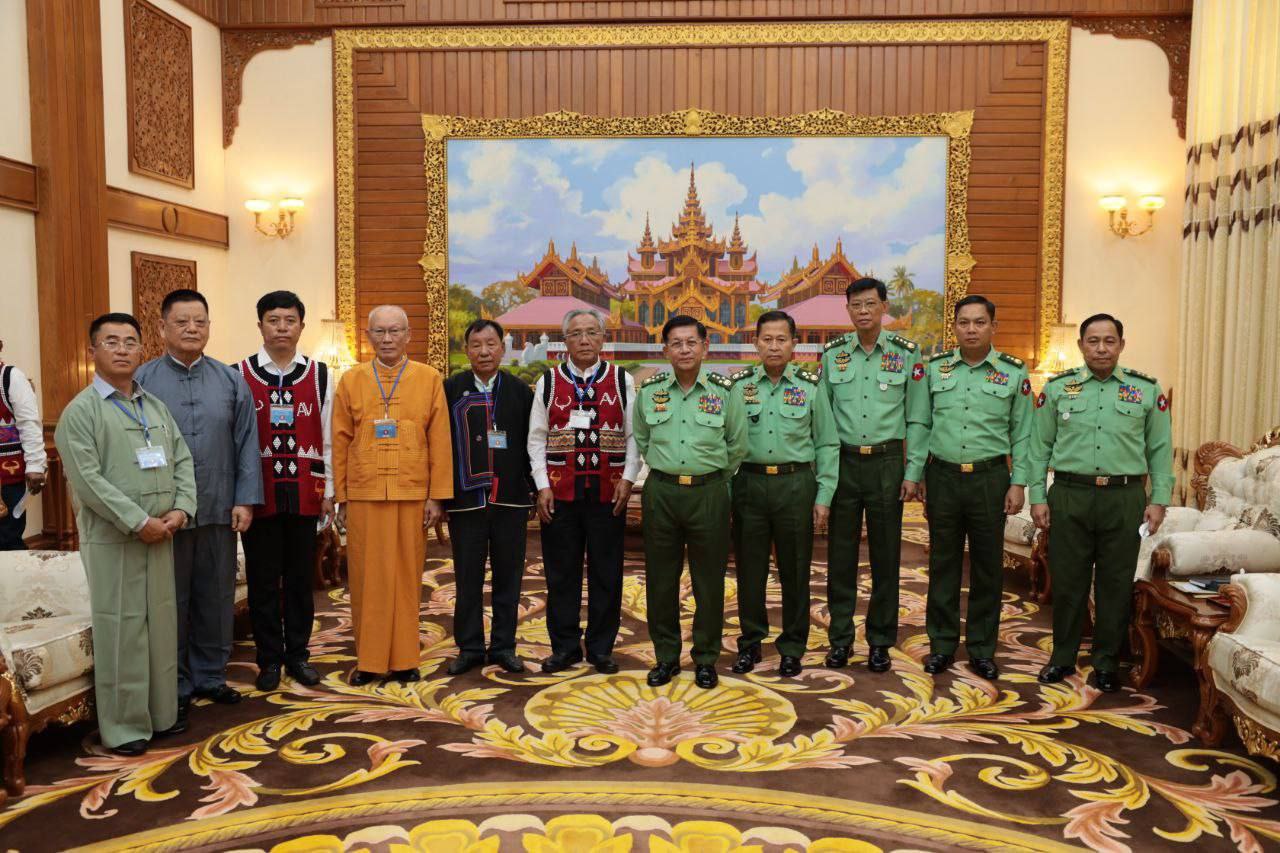
Photos showing Senior General Min Aung Hlaing and leaders of armed organizations.
Military and political observers point out that the federal issue has existed since the 1947 Panglong Agreement or 1962. They highlight that ethnic groups and all citizens must first create a stable and secure environment.
U Thein Tun Oo, Executive Director of the Thayninga Institute for Strategic Studies, told CNI News that rather than focusing on which method to use, an answer will emerge if work is done based on the actual attitudes on the ground and how cooperation is managed.
"First, we need to clarify what should be included under the model of a 'Federal Army' and how it will function. Rather than just the method, the desires, remarks, and aspirations of those involved are important if a Federal Army is to be formed. It is better to move forward with a model that is appropriate and feasible. For the Federal Army model, what have the current military and the groups following the peace path via the NCA (Nationwide Ceasefire Agreement) prepared? That point is crucial. It must depend on that. It would be better to work based on the points agreed upon by the people who will actually participate. Therefore, the best solution will come by working based on the actual attitudes on the ground, what they want to do, and how they will cooperate," he said.
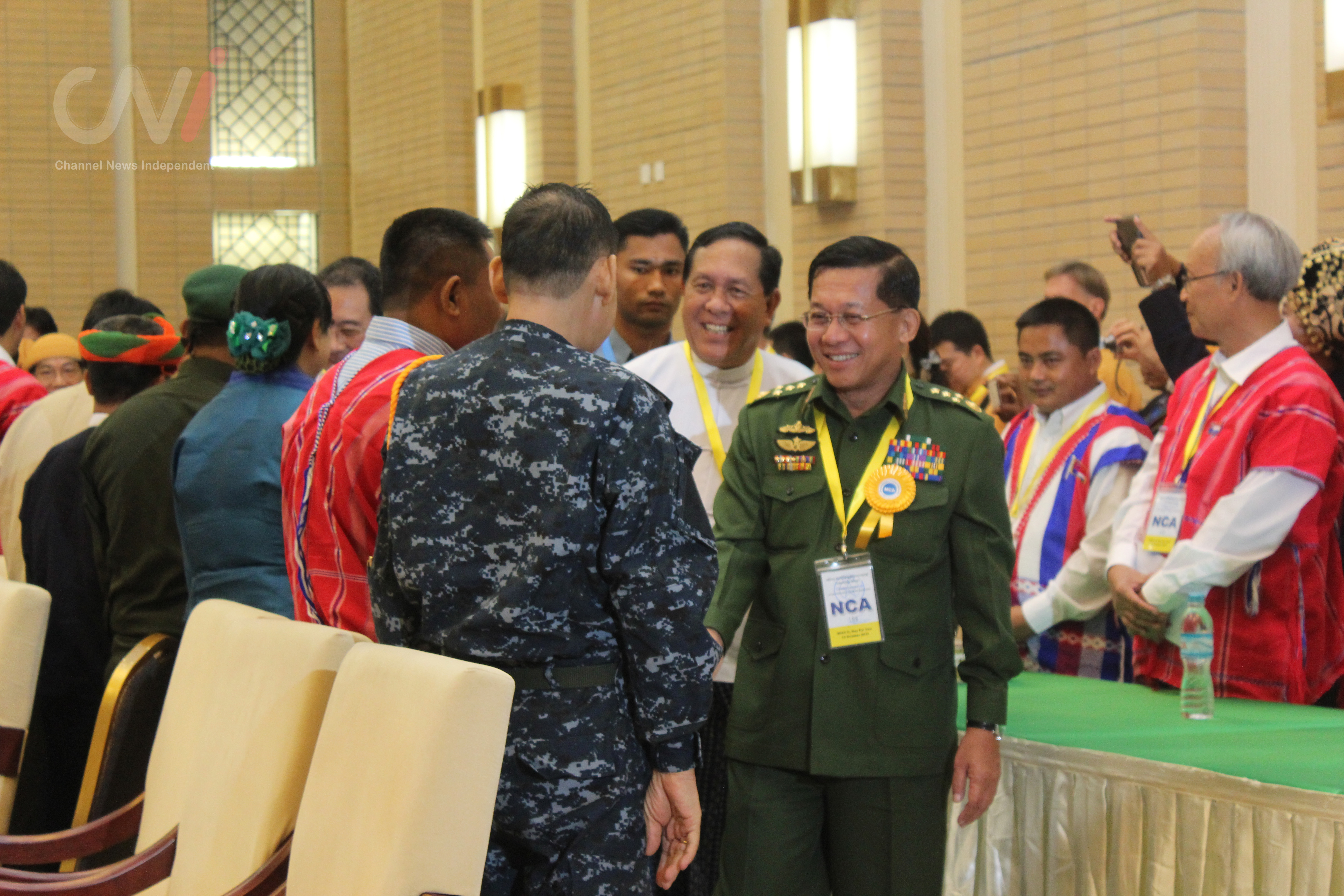
Photos showing Senior General Min Aung Hlaing and leaders of armed organizations.
The current landscape shows two primary stances on military integration: The Military's (Tatmadaw) Stance: They lean toward transforming armed groups into Border Guard Forces (BGF) or People’s Militia Forces (PMF) to cooperate with the Tatmadaw, followed by the formation of political parties to compete in elections.
The Armed Groups' Stance: Many ethnic armed organizations (EAOs) stand for forming National Guard or State Guard forces first. After building trust, they would then integrate with the central Myanmar military step-by-step to transition into a Federal Army.
Political circles analyze that establishing a Federal Union Army may be difficult due to the existence of numerous ethnic armed groups and the hundreds of armed organizations that emerged following the political shifts of February 2021.
- By CNI
- Category: English Section
- Hits: 292
CNI News
March 10, 2026
Political analysts and business leaders are pointing out that the upcoming new government should work to develop peace and the economy in tandem and with balance.
Political parties and observers noted that the civilian government emerging after the election should prioritize the cessation of armed conflict and focus on peace. They suggested that forming a structure similar to a national unity government could resolve the current political and military crises.
On the other hand, the economy is currently declining due to instability, which has led to weak security and rule of law, insufficient electricity, labor shortages, and international economic sanctions.
Business leaders emphasized that the new government and parliament, set to be formed in April 2026, need to establish checks and balances and implement sound policies to revitalize the Myanmar economy.
Economic analyst U Htay Aung Kyi told CNI News that current economic difficulties stem from the failure to build a solid economic system. He noted that since politics and the economy are intertwined, economic hardship can shift people's perspectives and ideologies.
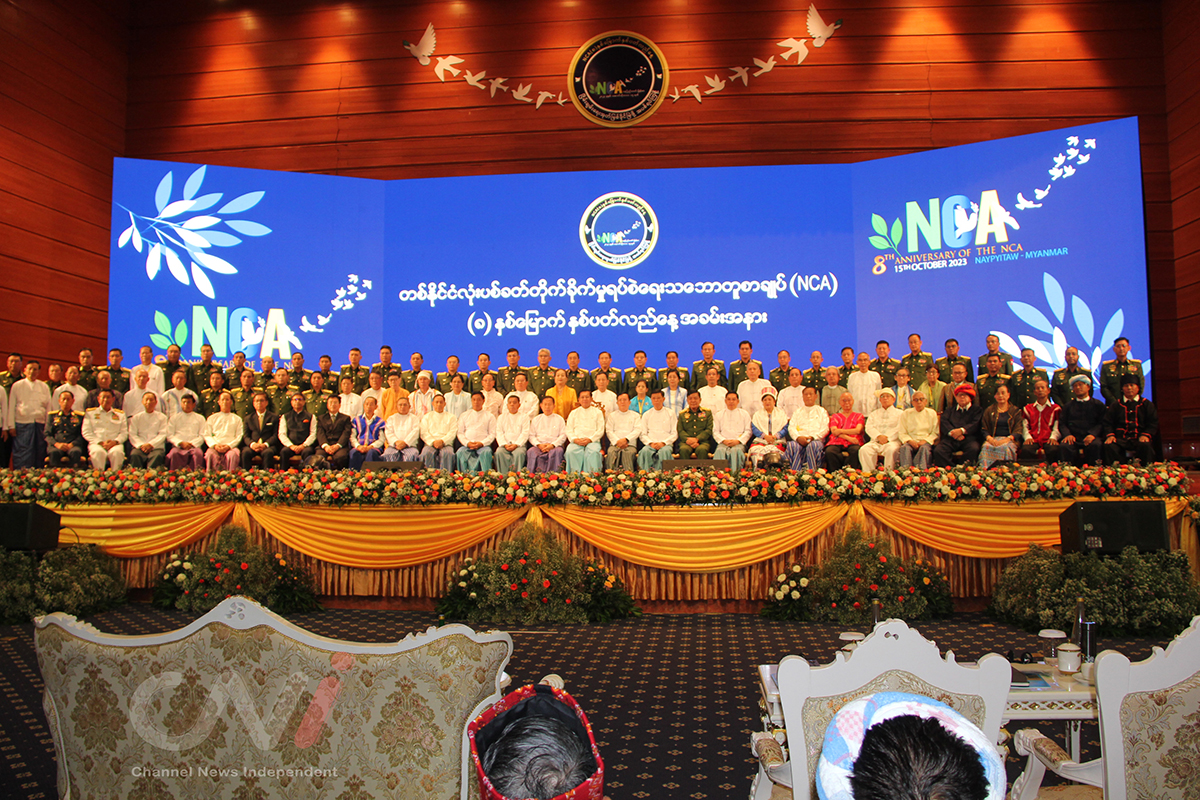
An anniversary ceremony of the NCA (Nationwide Ceasefire Agreement).
"It can be solved, but the main thing is to have a Conceptual Framework. Peace includes economic aspects and perspectives. The views of ethnic groups have changed over the last 5 to 15 years. They need to understand that their interests will only be served if this country is united and prosperous. That is point number one. Point number two is how the government will 'educate' them so they understand this. The government side must have a proper framework—for example, regarding the distribution of natural resources. Openly speaking, the government needs to believe in a fair ratio. Politics and the economy are linked. If we could have developed areas like Sagaing, Mandalay, Magway, Bago, Ayeyarwady, Yangon, and Mon, there would be much less to complain about today. The main problem is the economy didn't work. When the economy is bad, perspectives change. Theoretically, you need money to get an education, which leads to better human capital. The economy must improve. We should start where we can, but the system must be correct. Currently, about 70% of the entire national economy is centered in Yangon; we need to rethink this."
Political analyst U Kyaw Htet told CNI News that the new government must consistently carry out peace processes while striving for economic stability. He suggested that to regain international trust, the government should be formed as a broad-based unity government.
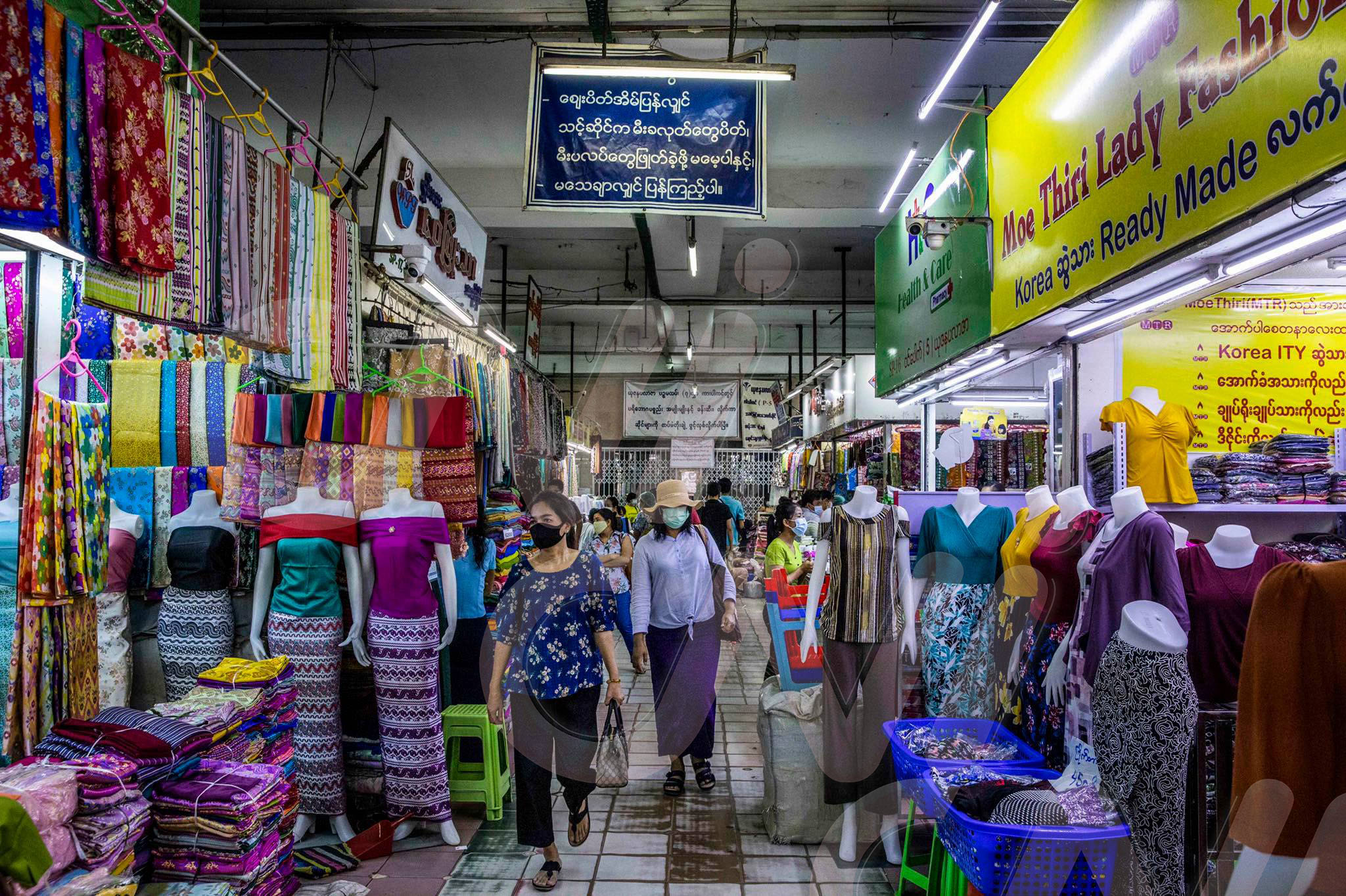
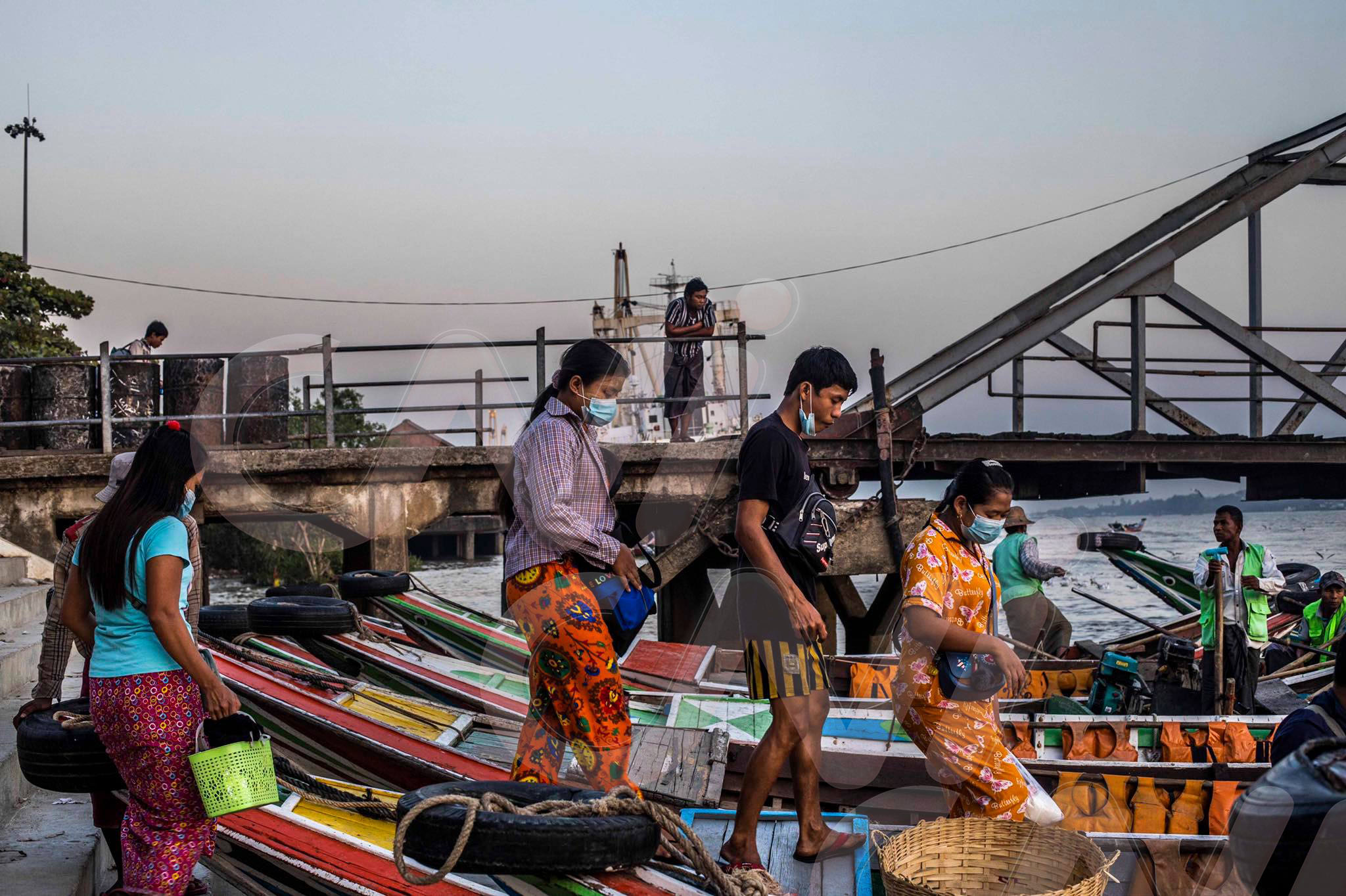
Bogyoke Market.
"Due to current conflicts, the peace process needs to be worked on continuously. Additionally, the new government must strive for economic stability. There must be political stability. Priority must be given to getting sanctions lifted. To achieve economic stability, we must look toward Foreign Investment while also developing domestic products. We lack the energy resources needed for production. If we want everything to rise again, we must strive for energy sufficiency.
The economy will only truly recover once sanctions are lifted. We can't expect too much immediately, but we can reach a livable condition. Therefore, if the government can demonstrate an inclusive setup—including ethnic leaders and political opposition groups in a national unity government—international trust can be regained."
While the incoming government may issue peace invitations and attempt to jumpstart the economy, everyone agrees that economic and peace policies must be accurate, upright, and subject to thorough review.
- By CNI
- Category: English Section
- Hits: 275
CNI News
March 10, 2026
U Soe Htet, Chairman of the New Chin State Congress (NCC), told CNI News that although Chin State—the westernmost state in Myanmar—lacks mineral resources, its development could be achieved in a short period if electricity can be generated.
He noted that while previous governments attempted to implement hydropower projects in Chin State, they have not been fully realized to date. If permission is granted to resume these projects, there would be "nothing to worry about" regarding the state's future.
U Soe Htet stated: "Myanmar is currently facing an electricity shortage. Between Gangaw and Kalay, there is a hydropower project capable of producing 380 MW. Work began in 2008–2009 and was about 21% complete. However, it was halted during President U Thein Sein's administration at the same time the Myitsone project was suspended. If that can be implemented, we'd have 380 MW of hydropower.
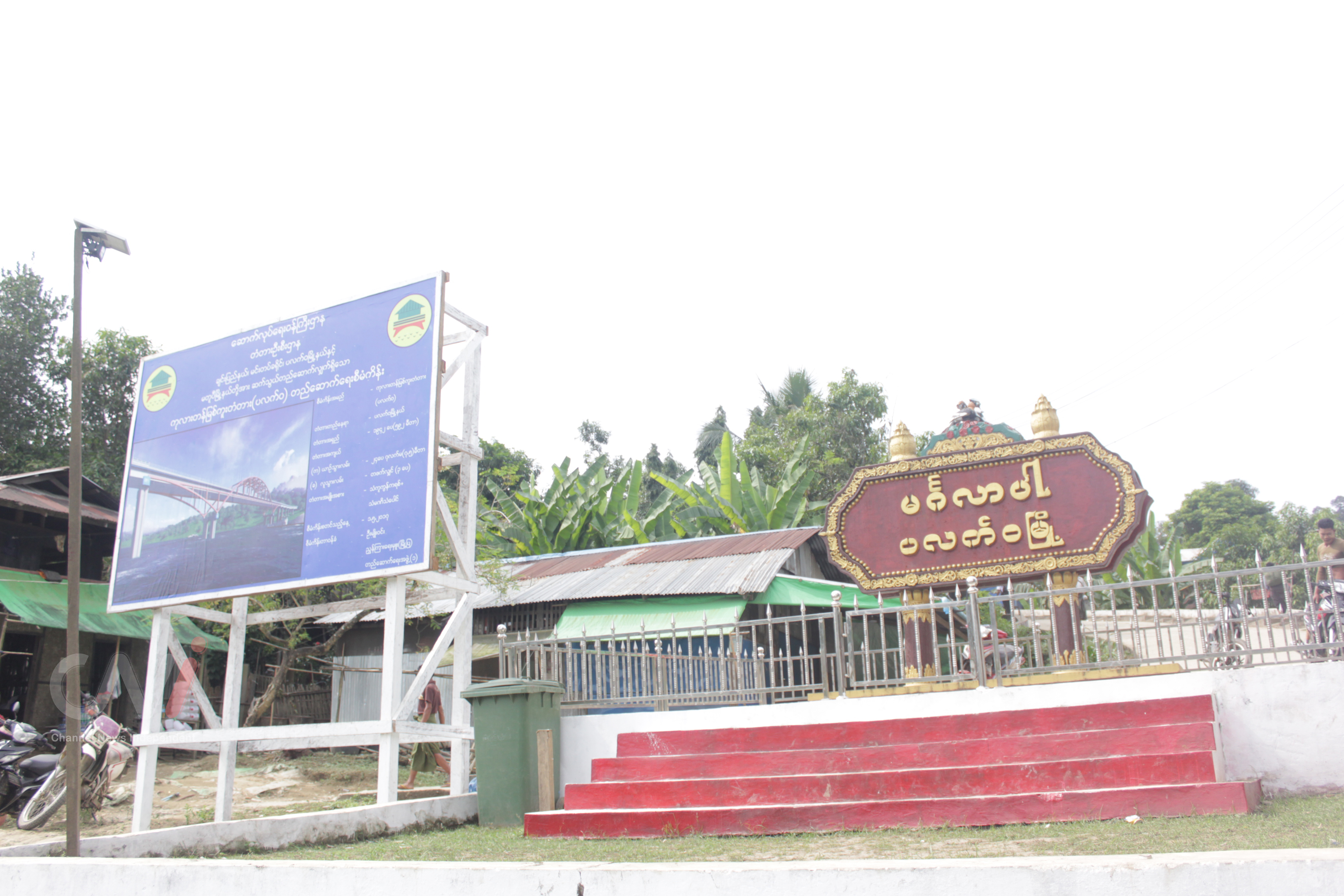
View of Paletwa Town, Chin State.
Furthermore, in Paletwa, a survey was conducted by a French company on the Lemro (Lay Myoh) River about four or five years ago. There is a project there expected to yield 611 MW. If that is developed, the power could be sold to neighboring countries like Bangladesh and India, as well as within Myanmar. That is 'Lemro 1.' 'Lemro 2' could produce over 300 MW. It's just that we haven't received the authority to operate yet. If we get electricity, we can develop the entire state in a very short time."
Although Chin State lacks minerals, it possesses natural resources such as mountainous landscapes and scenery, which can be leveraged for tourism to drive local development. Additionally, the presence of rivers and creeks allows for hydropower generation that could serve not only Chin State but the entire country and international markets.
U Soe Htet also mentioned that the Falam Airport, which remains closed due to the current political shifts despite being 100% complete, could be reopened under a new government.
"Falam Airport is 100% finished," he said. "With the political changes, it remains closed, but we believe if a new government takes over, it can be reopened soon. Additionally, the Kaladan River project in Paletwa hasn't opened yet. There are many state projects and mutual aid projects with the Indian government, like the Yagyi road. We believe these can be implemented under a new administration."
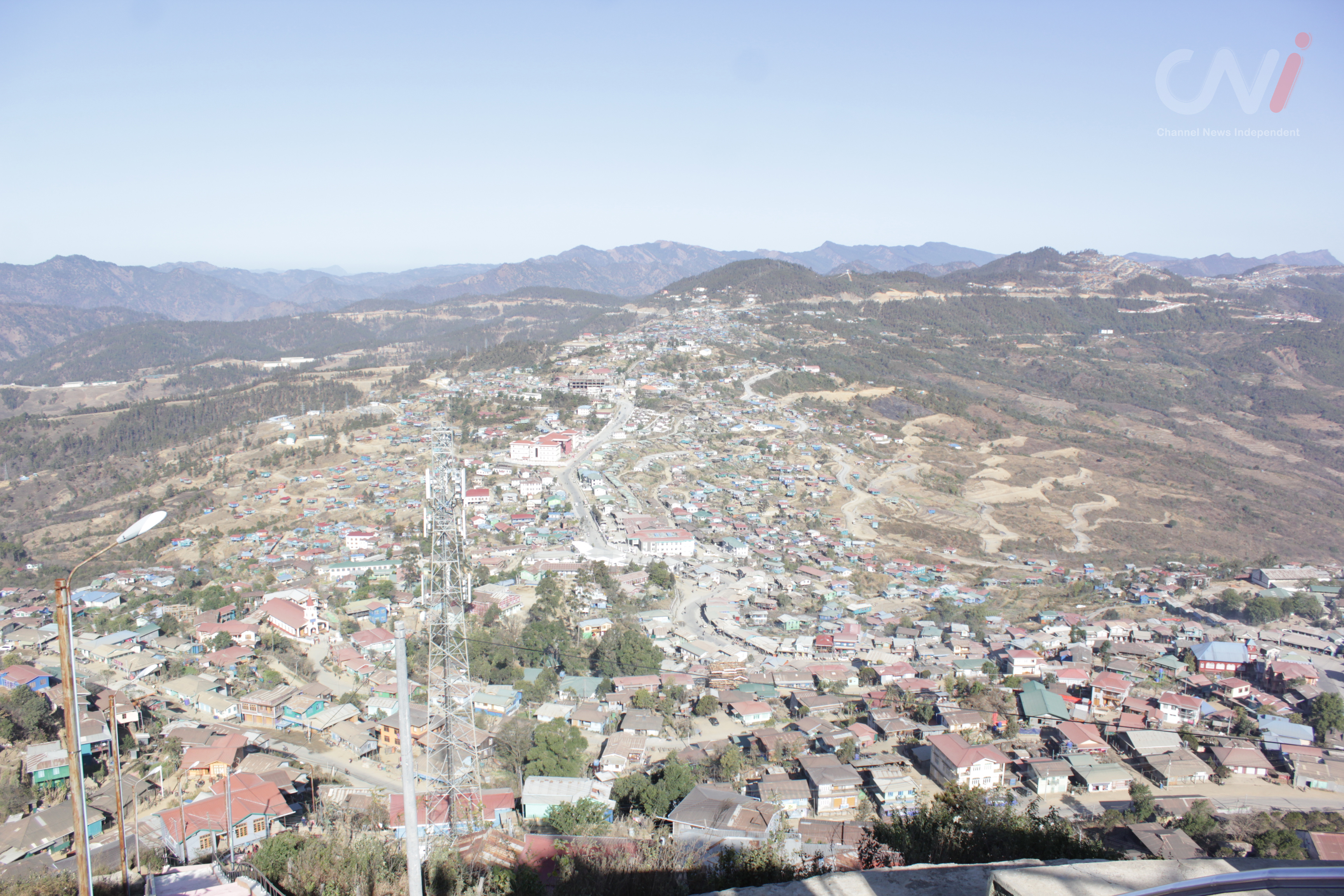
View of Hakha City, Chin State.
Political and Strategic Significance
Military and political analysts point out that Chin State is vital in the current Myanmar political landscape because it borders India and Bangladesh, serving as a "Western Gate."
Since 2021, Chin State has become a major stronghold for the Spring Revolution. The resistance from the Chinland Defense Force (CDF) and the Chin National Front (CNF) plays a crucial role in Myanmar’s political turning point.
Analysts suggest that the situation in Chin State significantly impacts the military and political state of the entire country and is essential for the success of India's "Act East Policy." If Chin State is unstable, Myanmar's western gateway will effectively remain closed.
On February 5, 2026, Lieutenant General Gun Maw of the KIA stated that they are prioritizing efforts regarding Chin State affairs. He expressed belief that Chin State's resources could lead to nationwide success and that they are working diligently for the liberation of the entire state.
- By CNI
- Category: English Section
- Hits: 296
CNI News
March 9, 2026
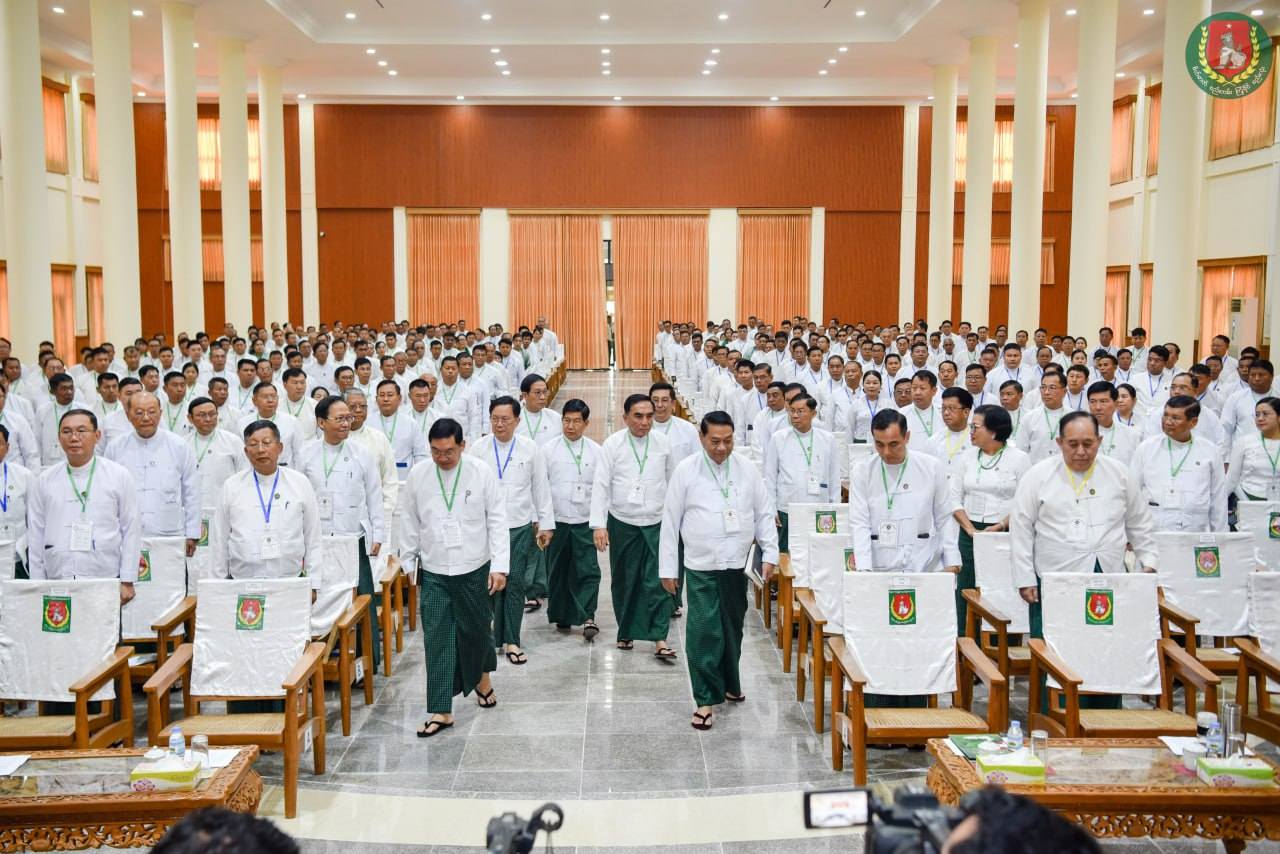
A meeting for the winning representatives of the Pyithu Hluttaw (House of Representatives) and Amyotha Hluttaw (House of Nationalities) who contested on behalf of the Union Solidarity and Development Party (USDP) in the 2025 General Election was held in Nay Pyi Taw on March 9, 2026.
The meeting was attended by Prime Minister U Nyo Saw, Executive Secretary of the National Defence and Security Council Office U Aung Lin Dwe, and Union Ministers including U Mya Tun Oo, U Maung Maung Ohn, Dr. Thet Khaing Win, U Tin Aung San, U Tun Ohn, and U Maung Maung Tint.
Additionally, Nay Pyi Taw Mayor U Than Tun Oo and Daw Dwe Bu, who served as a member and advisor to the State Administration Council (SAC), were also in attendance.
- By CNI
- Category: English Section
- Hits: 329
CNI News
March 9, 2026
Military and political analysts are weighing in on whether peace in Myanmar should be built by incentivizing and organizing Ethnic Armed Organizations (EAOs) as National Guard or State Guard forces, rather than the previous models of Border Guard Forces (BGF) or People’s Militia Groups.
During the negotiations for the Nationwide Ceasefire Agreement (NCA), the government maintained a stance of wanting a single unified military, while EAOs stood firm on becoming State Guard forces for their respective states, according to U Khun Sai, a figure involved in the peace process, who spoke to CNI News.
He noted that a step-by-step transition from these independent State Guards toward a single Union Army had been previously agreed upon. Had the political changes of 2021 not occurred, this process would have already reached a significant milestone.
"Now, following the coup and the takeover, the previous talk of having a 'single military' has become even harder to accept. There is a sense that it will take more time and require more regulations and restrictions," U Khun Sai said. "However, these are not insurmountable issues. Currently, let them maintain their own State Guards. Switzerland did the same; for hundreds of years, they operated with state-level forces. When it came to collective matters, they joined forces; otherwise, they managed their own state troops. Eventually, they became a Union Army. We don’t need to wait hundreds of years like Switzerland—it could take a decade—but we need serious discussion. To truly establish security, we must realize we cannot do it as a single state or a single ethnic group alone. If everyone accepts that we must work together, this is entirely possible."
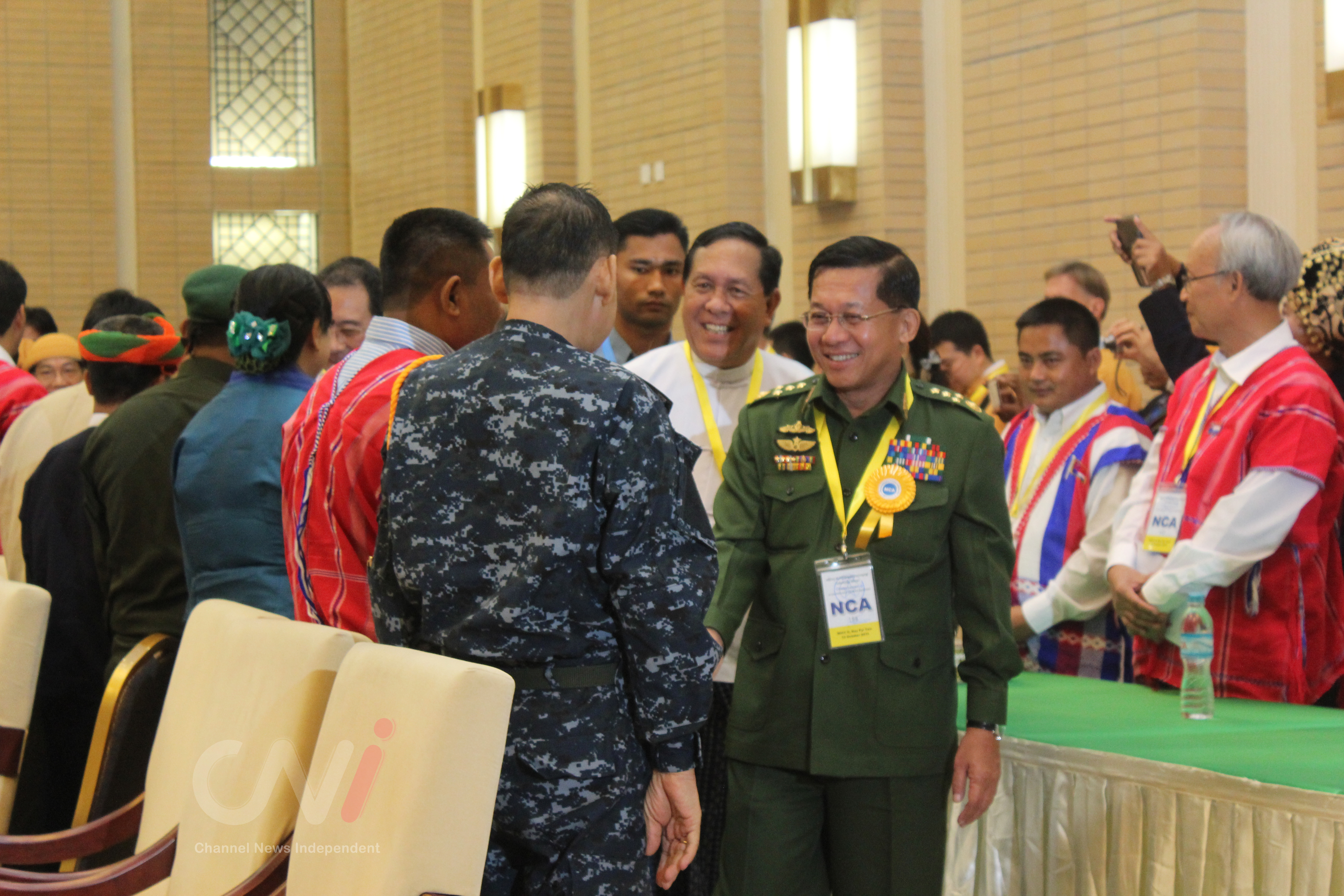
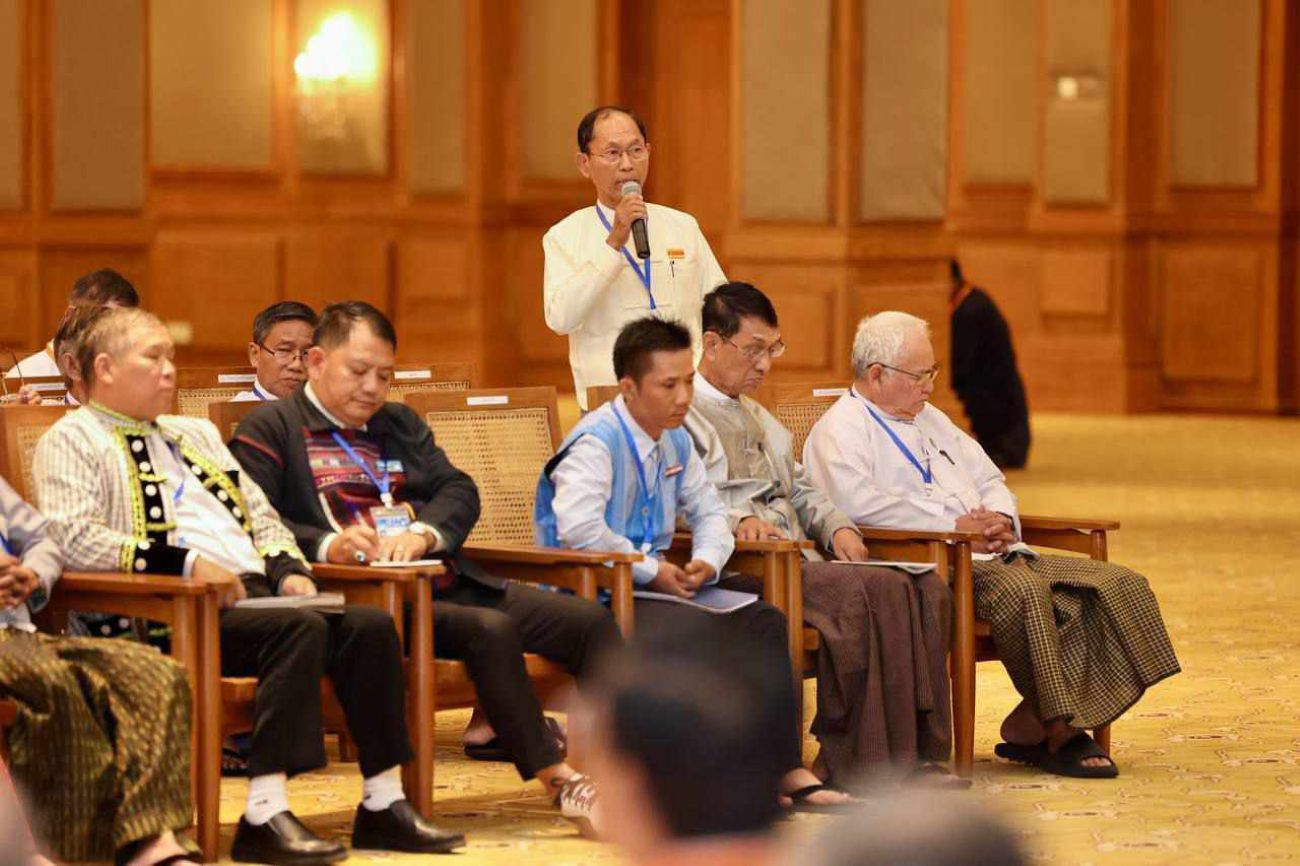
Ethnic armed leaders and Senior General Min Aung Hlaing.
Section 338 of Myanmar’s 2008 Constitution stipulates that all armed forces in the country must be under the command of the Defense Services (Tatmadaw).
During a government meeting in Naypyidaw on August 22, 2022, Senior General Min Aung Hlaing previously stated that after signing the NCA, ethnic armed groups wishing to remain armed would be allowed to serve in Border Guard Forces (BGF) alongside the Tatmadaw. He also mentioned that ethnic and regional rights should be debated in the political arena (Parliament), and EAOs wishing to engage in business would be permitted to do so in accordance with the law.
Recently, however, Senior General Min Aung Hlaing has been inviting armed groups to resolve political problems through political means, specifically by entering the path of party politics or elections.
A political analyst told CNI News that since EAOs already refer to themselves as "State Forces," it is questionable whether they would satisfy or accept the "BGF" label. He suggested that, under current circumstances, the BGF model is no longer ideal.
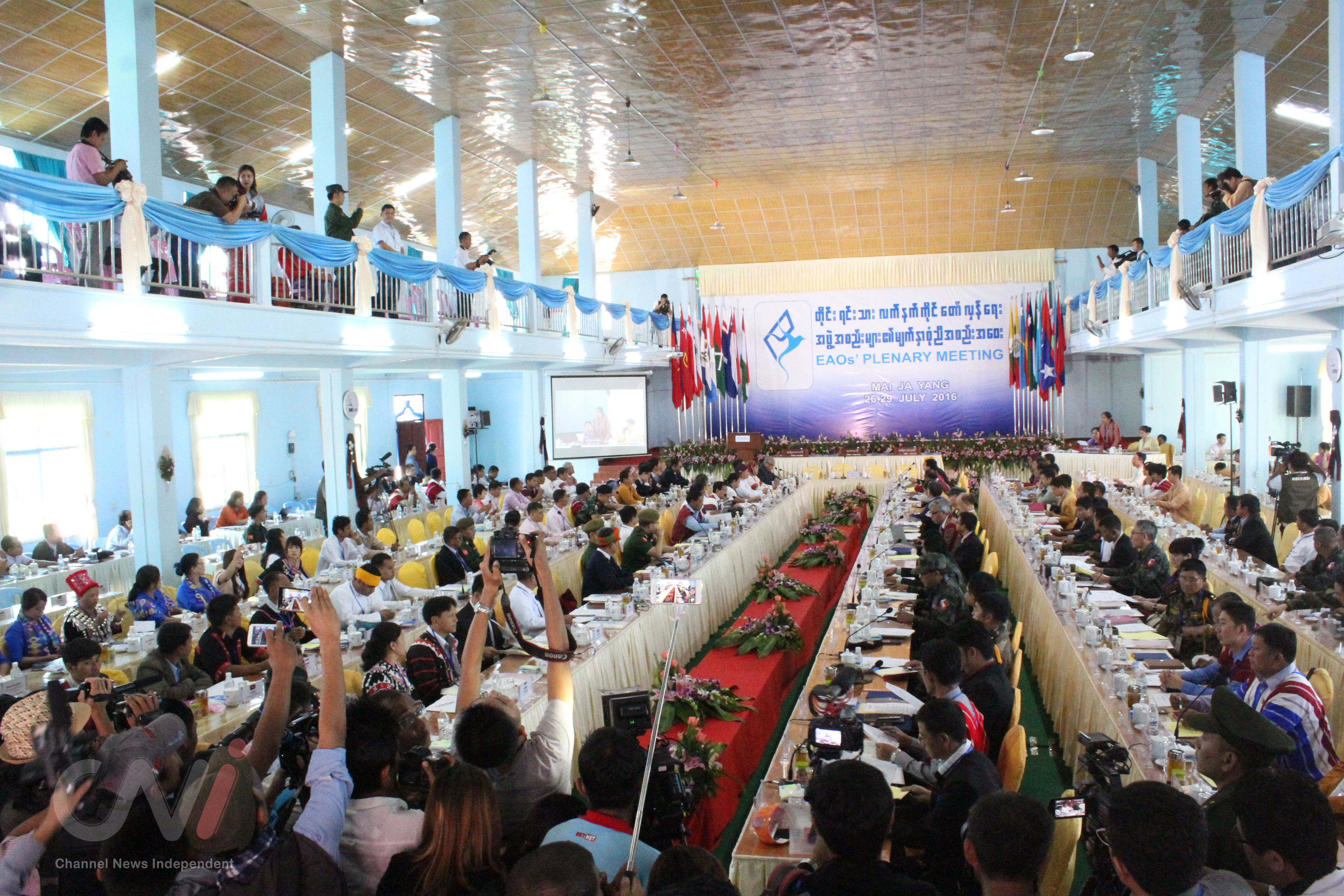
A conference of Ethnic Armed Organizations in progress.
"A major problem now, compared to pre-2021, is that groups like the Kokang (MNDAA) and TNLA have seized territories beyond their designated Self-Administered Zones," the analyst said. "These seized areas sit on the China-Myanmar trade routes, which is the primary issue to solve. If we insist they withdraw based strictly on the Constitution, we don't currently have the leverage to enforce that since we haven't reclaimed those areas. They argue their people live there. We should decide through a democratic and free referendum. In the interim, with China acting as a mediator to prevent forced relocations, a fair democratic decision should be made. Other groups like the SSA and SSPP would likely accept a decision based on a public referendum."
The National Guard system is used in the United States, where forces serve both the state and the federal government, unlike a traditional regular army. At the state level, they are commanded by the respective state governors. At the federal level, the President can call them into federal service for national needs or even international conflicts.
- By CNI
- Category: English Section
- Hits: 364
CNI News
March 9, 2026
U Ko Ko Gyi, Chairman of the People’s Party (PP), told CNI News that resolving Myanmar's ongoing armed conflicts and peace process requires a departure from old methods in favor of new conceptual approaches.
Myanmar has been embroiled in civil war since March 1948, shortly after gaining independence on January 4 of that year. Despite peace efforts under successive administrations—including those of U Ne Win, U Than Shwe, U Thein Sein, Daw Aung San Su Kyi, and the current government led by Senior General Min Aung Hlaing—a lasting solution remains elusive. U Ko Ko Gyi emphasized that the incoming government must adopt fresh perspectives to tackle these long-standing issues.
"In some matters, precise actions are required, while others demand flexibility," U Ko Ko Gyi said. "Peace negotiations, for instance, need flexible dialogue. Decisions must be based on the specific context and situation rather than a rigid 'all-or-nothing' approach. We need a total reassessment. The civil war is nearly 80 years old; the problem isn't new, but it is certain that old thinking cannot solve it. We must create new ways of thinking and approaching the issue."
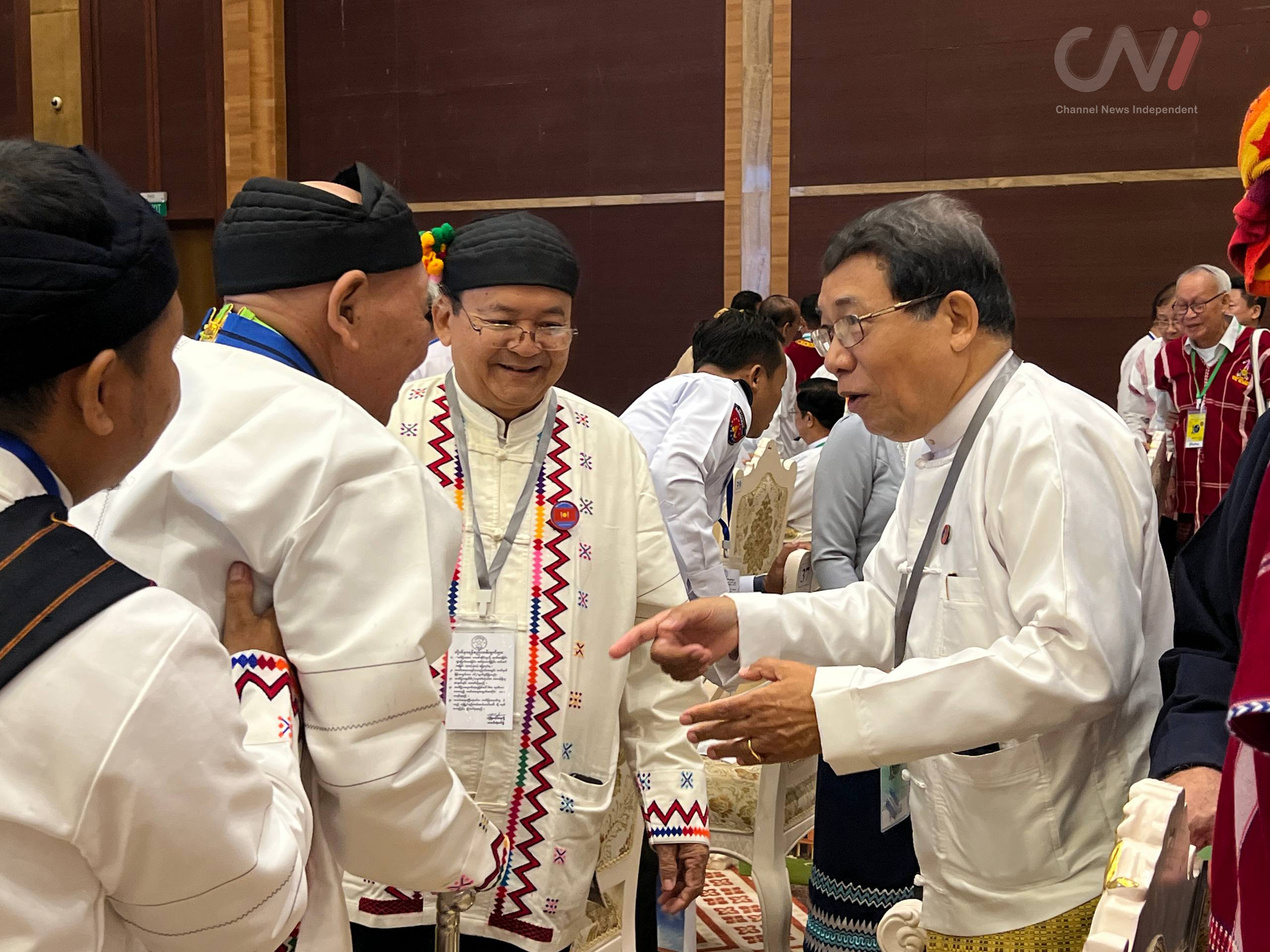
Dr Aye Maung, Chairman of the Arakan Front Party
Myanmar recently conducted its 2025 General Election in three phases, spanning from December 28, 2025, to January 25, 2026. The third sessions of the Pyithu Hluttaw and Amyotha Hluttaw are scheduled for March 16 and 18, 2026, with a new government expected to form in April.
U Ko Ko Gyi noted that the new government is expected to issue peace invitations. He stressed the need for practical discussions on power-sharing and resource management.
Federalism was once viewed as a crime or a precursor to the disintegration of the Union, even serving as a justification for military intervention.
While federalism is now accepted in principle, the technical details remain unresolved.
Practical negotiations on the specific structures of federalism and how power and resources will be managed.
Military and political analysts suggest that the new civilian government must prioritize national reconciliation and unity by changing the format of negotiations. Dr. Aye Maung, Chairman of the Arakan Front Party (AFP), told CNI that the new government should learn from historical lessons and move forward with a spirit of compromise.
"The government's steps will be crucial," Dr. Aye Maung said. "The incoming government will likely be experienced and has already navigated peace processes. We must learn from the history of Myanmar politics. To achieve national reconciliation, we need flexibility, a sense of timing (short, medium, and long-term goals), and a balance of firmness and gentleness. To achieve a win-win situation, we must build a political and peaceful solution through mutual give-and-take."
Since February 1, 2021, the scale of armed conflict in Myanmar has expanded significantly, with an increase in the number of armed groups.
The Myanmar military and government have faced territorial losses.
Ethnic armed organizations (EAOs) are focused on consolidating territorial control.
Some groups are now looking beyond federalism, aiming for confederation or total independence.
- By CNI
- Category: English Section
- Hits: 257
CNI News
March 9, 2026
Bamar (Burman) politicians assert that the Bamar people do not practice "Great Race" chauvinism or racial discrimination, suggesting that the focus should instead remain on how to build national ethnic unity.
However, they noted that non-Bamar ethnic groups continue to accuse the Bamar of chauvinism. These politicians raised the question of how to address similar accusations of chauvinism occurring among non-Bamar ethnic groups themselves if such allegations are to be made.
Political analyst Dr. Aung Myo told CNI News that Bamar people do not discriminate based on race. He argued that the perception of chauvinism stems from the historical failure of successive state administrations to consider the perspectives of ethnic minorities.
"We do not practice chauvinism. A Bamar person doesn't refuse to eat at the same table with a Naga or a Chin person, said Dr. Aung Myo."Chauvinism doesn't exist [among the people], and neither does racial discrimination. In reality, it is the ethnic groups who are discriminating. They say things like 'He’s Bamar, so I don't trust him.' Look at the AA, the Kokang (MNDAA), or the Chin—they don't trust the Bamar. That is racial discrimination. The Bamar don't do that. However, there is one issue, but it isn't chauvinism; it’s a failure at the individual and administrative levels. Successive rulers of the state failed to look at things from the ethnic perspective. For instance, these groups ruled themselves independently for centuries. When we entered their regions, they felt their territory was being dominated. We weren't intentionally oppressing them; we were just operating within the framework of the modern era. We simply failed to take them into account. There are flaws on the State’s part regarding power sharing, but that has nothing to do with the 'chauvinism' they speak of."
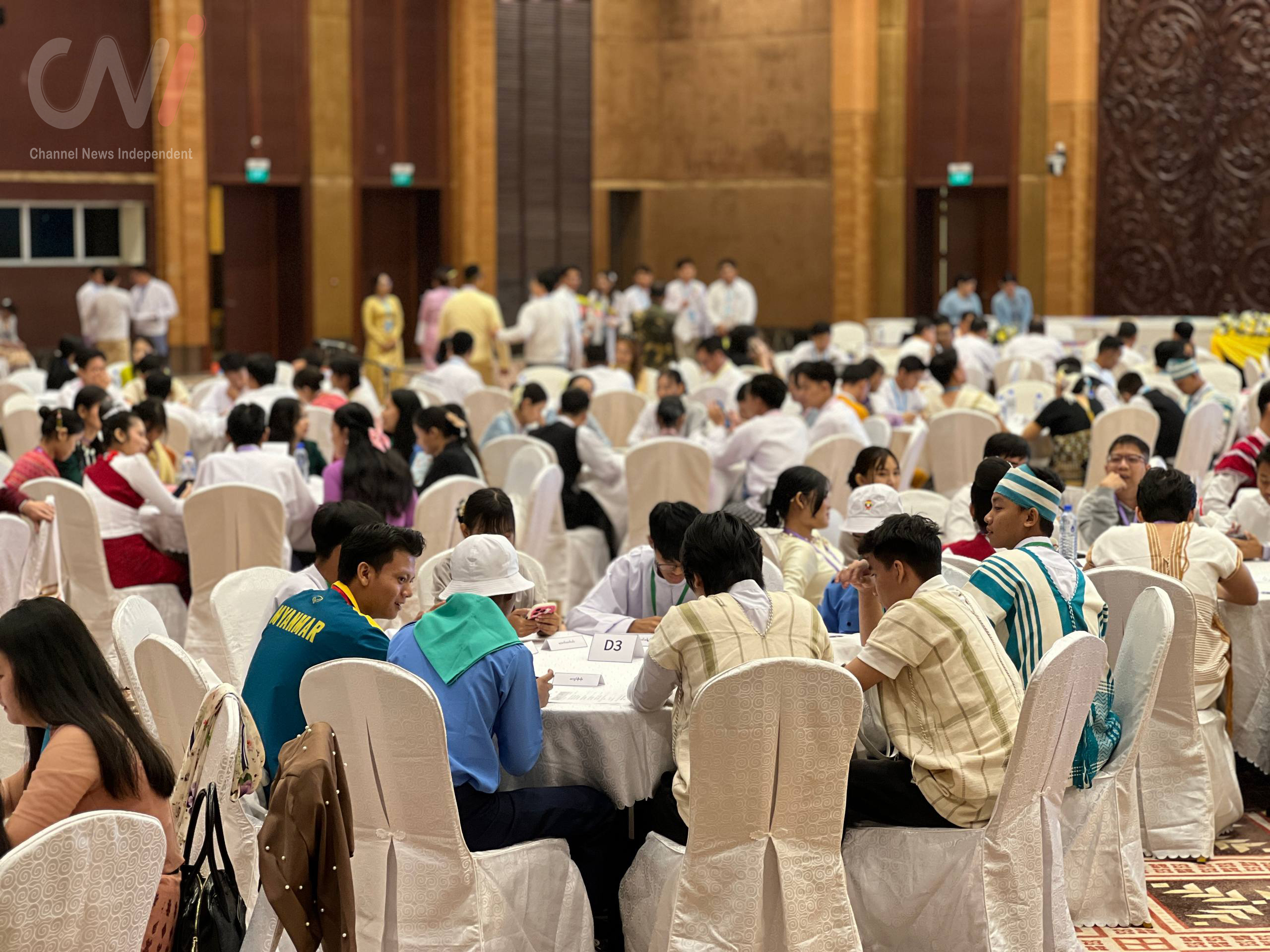
Youth from various ethnic groups pictured together.
Political analysts point out that "Great Race" chauvinism is a toxic mindset that denies equal human dignity and operates on the principle of "If you aren't like me, you are my enemy" or "I am inherently superior."
Political analyst U Htet Aung Kyaw told CNI News that when people talk about chauvinism, they usually refer to it in a negative sense—of being belittled or treated unfairly. He suggested that the concept of being a "Great Race" could be reframed in a positive light.
"The term 'chauvinism' itself isn't very clear. To me, being a 'Great Race' should mean having a 'greater culture.' If your culture is greater, your behavior should be better," U Htet Aung Kyaw said. "Whenever 'Great Race' chauvinism is mentioned in Myanmar, it’s almost always used in a negative political framing—to say 'these people are unfair' or 'they are doing wrong.' There isn't much clear discussion on why it shouldn't be practiced. My view is that a 'Great Race' should exist in the sense of being more civilized and helping those with less power. It’s about how you shape the image of a 'Great Race.' It would be better to frame it as a positive attribute rather than a negative one."
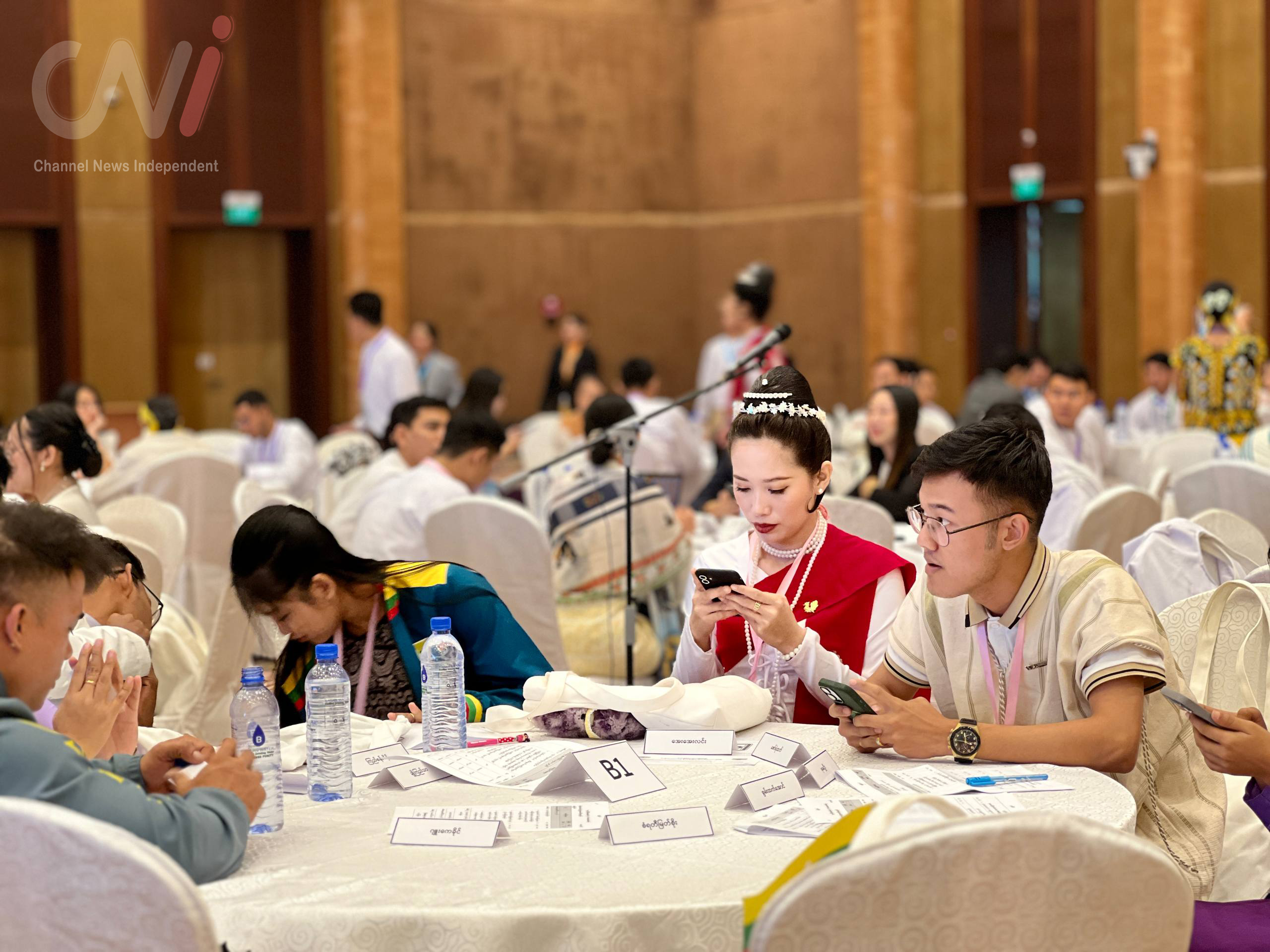
Youth from various ethnic groups pictured together.
While other ethnic groups accuse the Bamar of chauvinism, some subgroups have also pointed out that groups like the Kachin and the KIA (Kachin Independence Army) are practicing "Kachin Chauvinism" against smaller minorities.
Military and political observers point out that instead of mutual accusations, an answer should be sought on how to cooperate and build a nation based on federalism and democracy.
Similarly, observers noted that the term "Ethnic Nationalities" (Tine-Yinn-Thar) needs a broader and clearer definition. There needs to be clarity on whether the Bamar are considered an "Ethnic Nationality" or not. If the Bamar are considered such, they should avoid referring to other groups as "The Ethnicities" as if they are separate. Conversely, non-Bamar groups should avoid using "Ethnic Nationalities" to refer only to themselves while excluding the Bamar.
The 2008 Constitution stipulates that the state is composed of various ethnic groups living together and mandates that national unity must be built and protected from disintegration.
- By CNI
- Category: English Section
- Hits: 435
CNI News
March 8, 2026
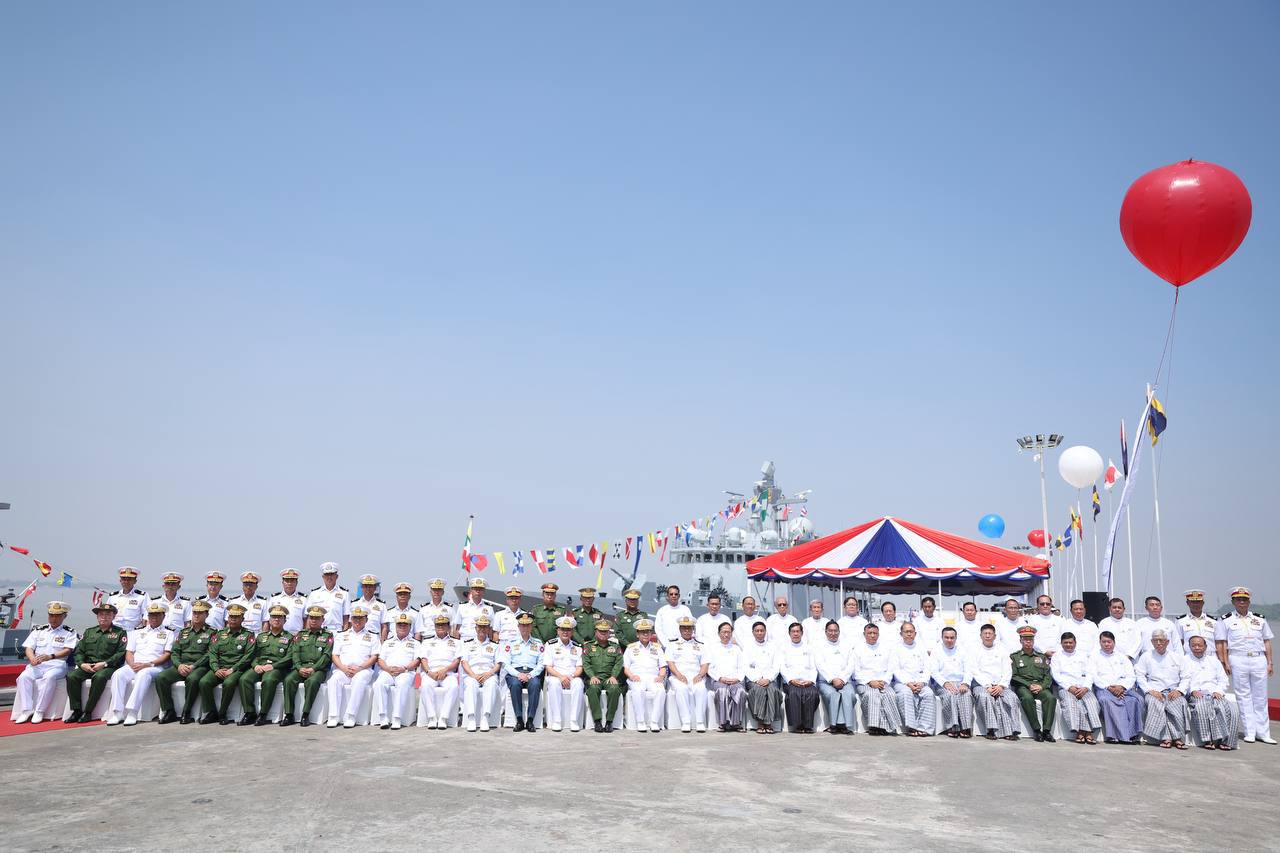
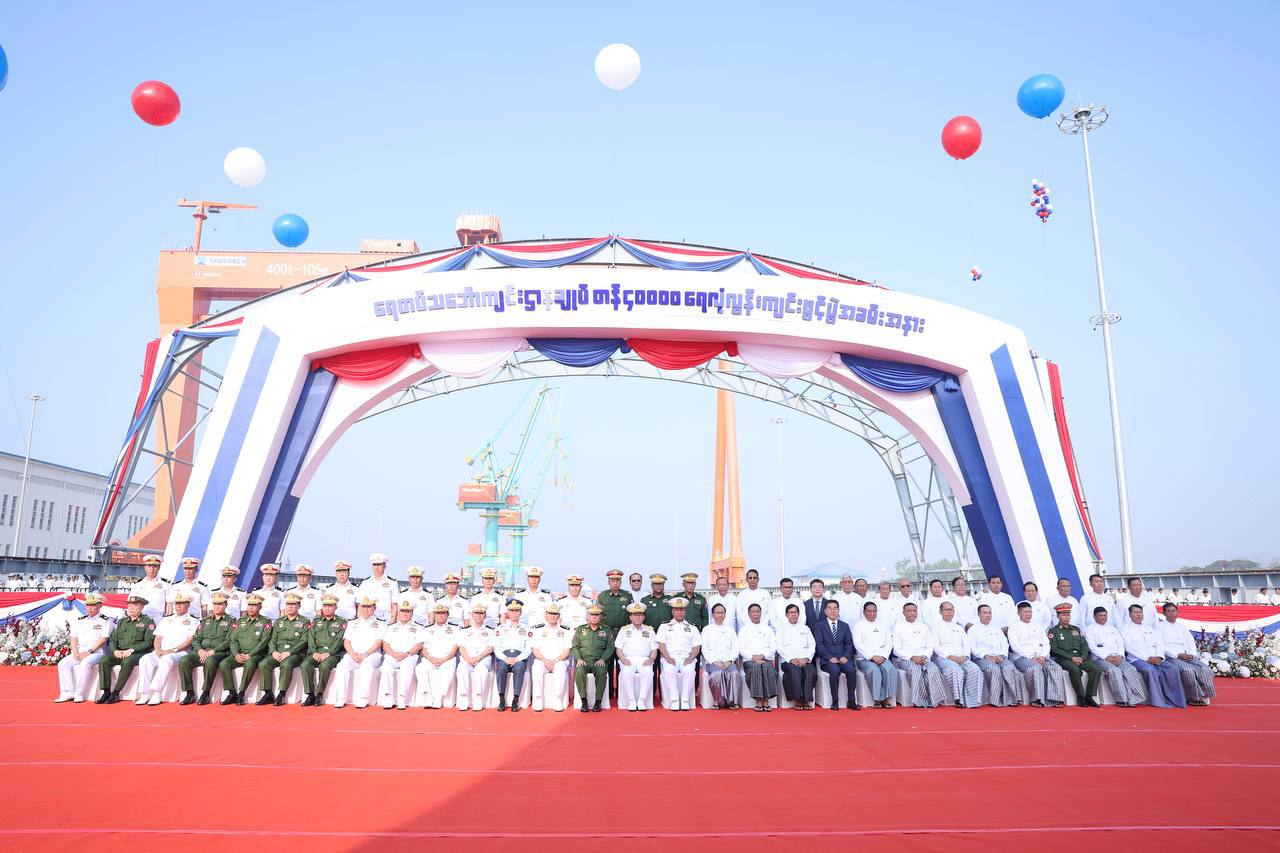
The opening ceremony of a 40,000-ton dry dock and the keel-laying ceremony (Ayakhinn Mingalar) for two 63-meter anti-submarine vessels for the Myanmar Navy was held in Yangon on March 8, 2026.
The ceremony was attended by Senior General Min Aung Hlaing, Chairman of the National Security and Peace Restoration Commission.
It is reported that the Naval Dockyard Headquarters project was implemented in three distinct construction phases:
Phase 1: Constructed and opened between 1998 and 2002.
Phase 2: Constructed and opened between 2009 and 2013.
Phase 3: Completed to enable the construction and repair of naval vessels, as well as departmental and private vessels.
Page 28 of 352
Connect with us