
English Edition
- By CNI
- Category: English Section
- Hits: 265
CNI News
14 March 2026
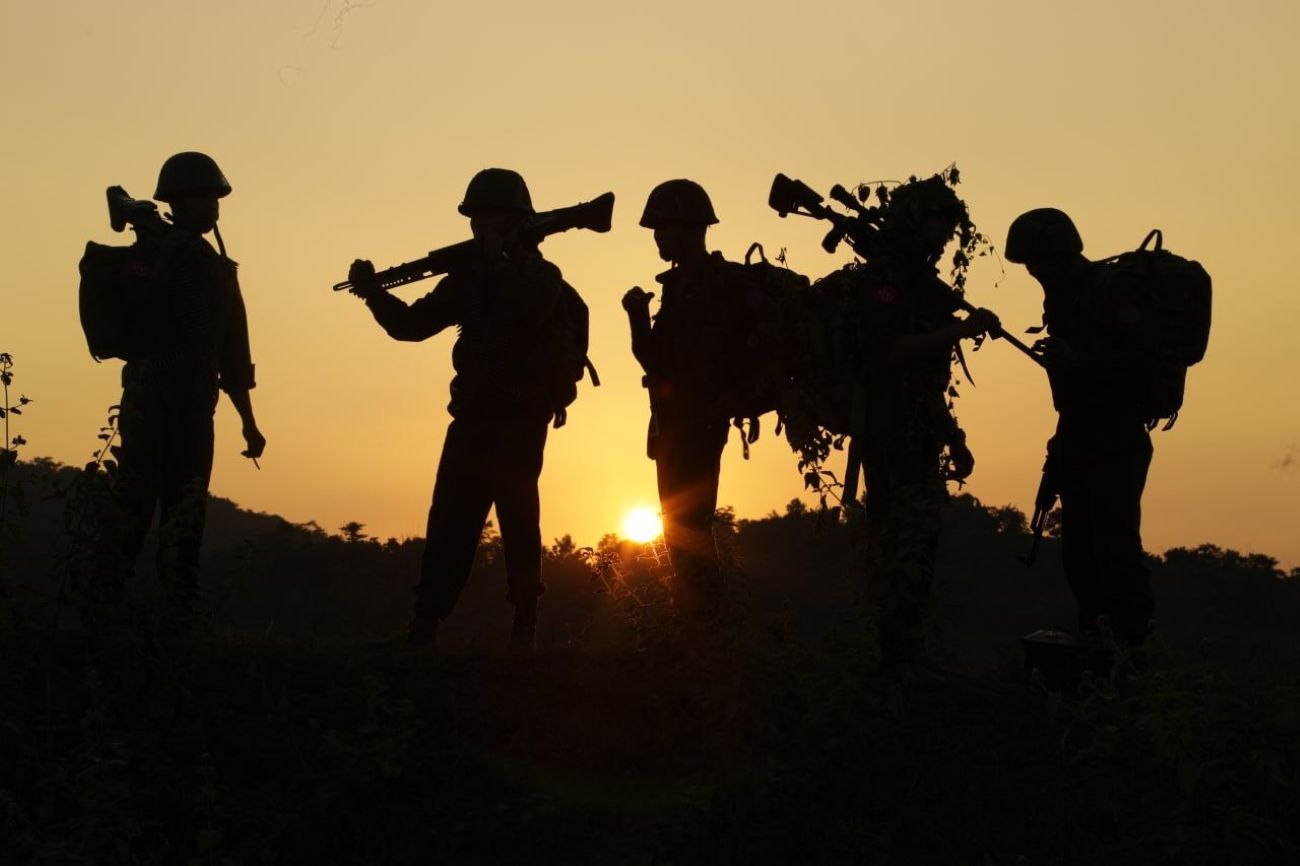
Political analyst U Htet Aung Kyaw told CNI News that while armed organizations and the general public in Myanmar claim to dislike military dictatorship, the country is practically facing "multiple military dictatorships."
He stated: "The revolutionary forms of the various armed groups in Myanmar likely do not share the exact same vision. Because the problems in Myanmar have persisted for so many years, the original core issues sometimes seem to have lost their shape. However, it’s not that they cannot be solved. While we all claim to oppose military dictatorship, almost all these groups have become dictatorships themselves—some small, some large. It is an undeniable fact that the public, while rejecting a single dictatorship, is now facing many."
If it were otherwise, building an army wouldn't be about making money; it’s an expensive venture. This has become a vicious cycle: are they raising armies to make money, or making money to raise armies? This problem continues without end."
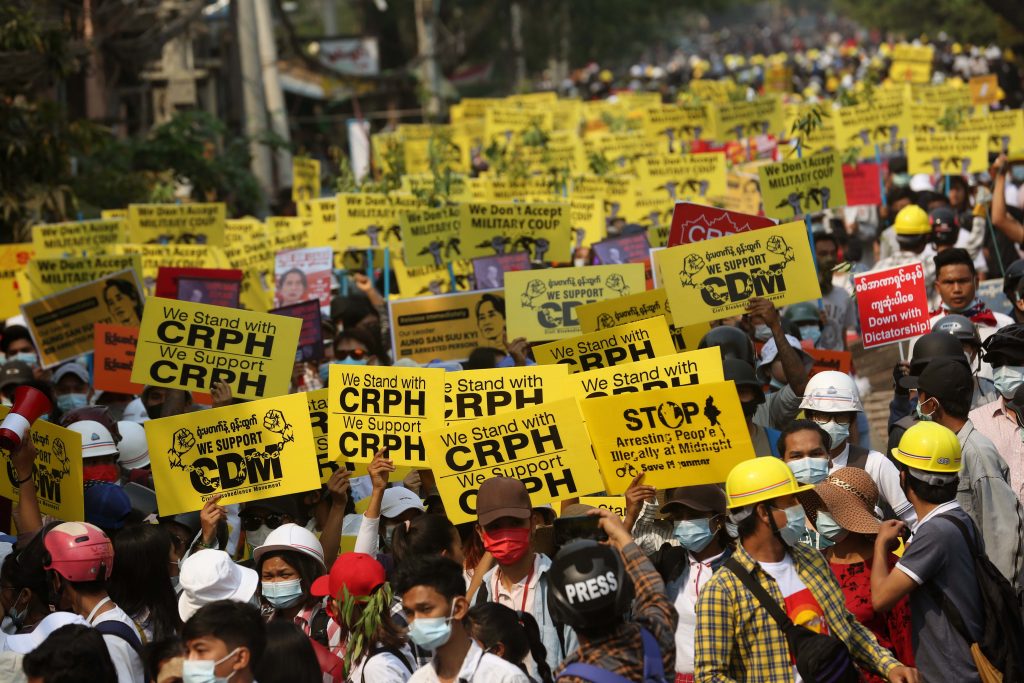
The public protesting in 2021
Myanmar has faced internal conflict since March 1948, shortly after gaining independence on January 4, 1948, and the issue remains unresolved to this day. Successive administrations—including those of U Ne Win, U Than Shwe, U Thein Sein, Daw Aung San Suu Kyi, and the current administration of Senior General Min Aung Hlaing—have held peace talks with armed groups, yet success remains elusive.
U Khun Sai, who is involved in the peace process, told CNI News that trust must first be established with the nearest armed organizations before more distant groups will feel confident enough to join the process.
He explained: "Currently, if they (government) want to move forward, they must build trust with the nearest armed groups and political parties. If they can achieve this, the groups further away will gain confidence and participate. This includes political parties close to the government, CSOs, and Ethnic Armed Organizations (EAOs) that are in regular contact. They need to be kept 'satisfied,' meaning their rights must be granted and their demands negotiated.
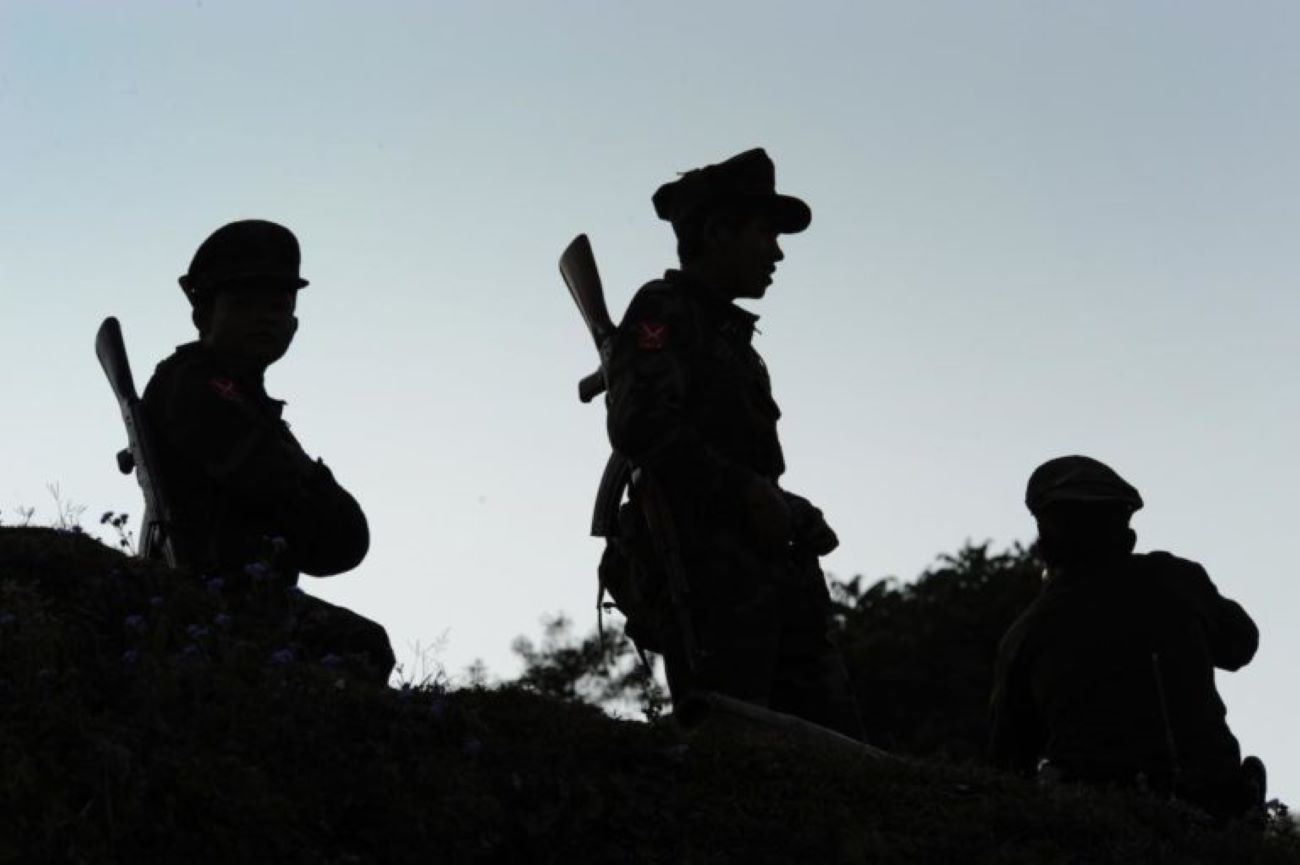
Discussions regarding the NCA (Nationwide Ceasefire Agreement)
These negotiations must also be made public. We need to show the people that we aren't just leading unilaterally, but that we are actively considering and valuing the thoughts, needs, and reasons of the other side. If those who aren't ready to talk yet see this and feel it is reliable, they will join. If we cannot satisfy or build trust with those closest to us, others will not come."
Military and political analysts pointed out that Myanmar's armed conflict is a problem involving all parties. Issues regarding democracy, federalism, peace, security, and ethnicity concern every organization and must be discussed equitably between all sides.
The armed conflict in Myanmar has expanded significantly following the political shifts after February 1, 2021, leading to a proliferation of armed groups. Currently, while the Myanmar military and the government are experiencing territorial losses, ethnic armed groups are increasingly focused on securing territorial control.
- By CNI
- Category: English Section
- Hits: 780
CNI News
March 13, 2026
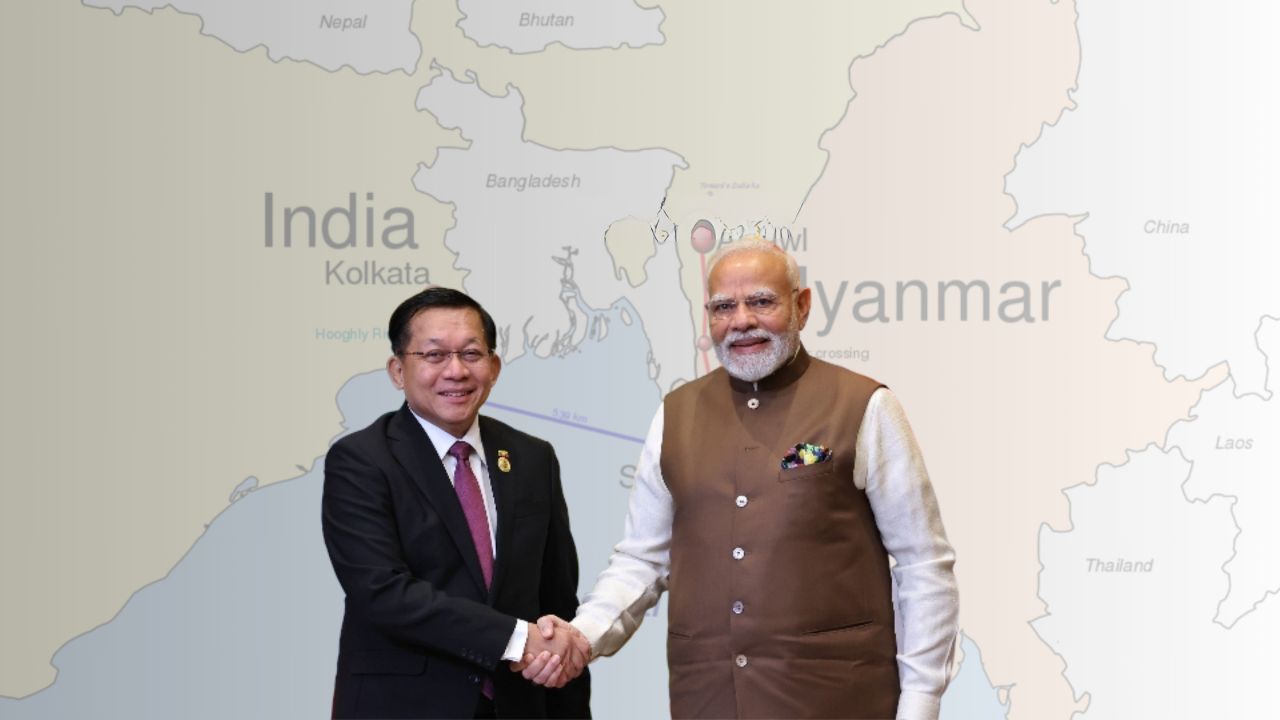
If the Kaladan Multi-Modal Transit Transport Project, jointly implemented by India and Myanmar, is completed in 2027, it could bring peace and stability to Chin State and Rakhine State, according to U Soe Htet, chairman of the New Chin Congress Party (NCC).
He told CNI News that the project is part of India’s policy toward its northeastern region and is intended to provide those landlocked areas with access to the sea.
U Soe Htet said: “The Kaladan project is part of India’s northeastern policy. It is intended to provide sea access for India’s northeastern states such as Mizoram, Nagaland, and Manipur. From Mizoram’s Aizawl, the route will pass through the Lawngtlai area and then connect to Paletwa by road. From Paletwa, it will reach the deep-sea port there and then continue down to the Sittwe port. Through this route, India will be able to transport goods, both toward its own territories and to Southeast Asia. This project has been carried out since 2008 through agreements between the governments of India and Myanmar. It is effectively India’s sea outlet. It is also a sea outlet for our Chin State and for India’s landlocked states. Just as some of China’s inland regions can access the sea through Myanmar, India is also trying to gain sea access through Paletwa in Chin State and Sittwe in Rakhine State. I do not know how the countries involved are coordinating with one another, but we understand that the Kaladan project is planned to be completed in 2027. It started in 2008, and the main reason it has not been completed yet is due to armed conflicts. Since it is a project jointly implemented by the governments of Myanmar and India, if it is successfully completed, it will improve connectivity and create economic opportunities. It will benefit Chin people, benefit Rakhine State, and bring development for local communities. I believe the region will also become more peaceful.”
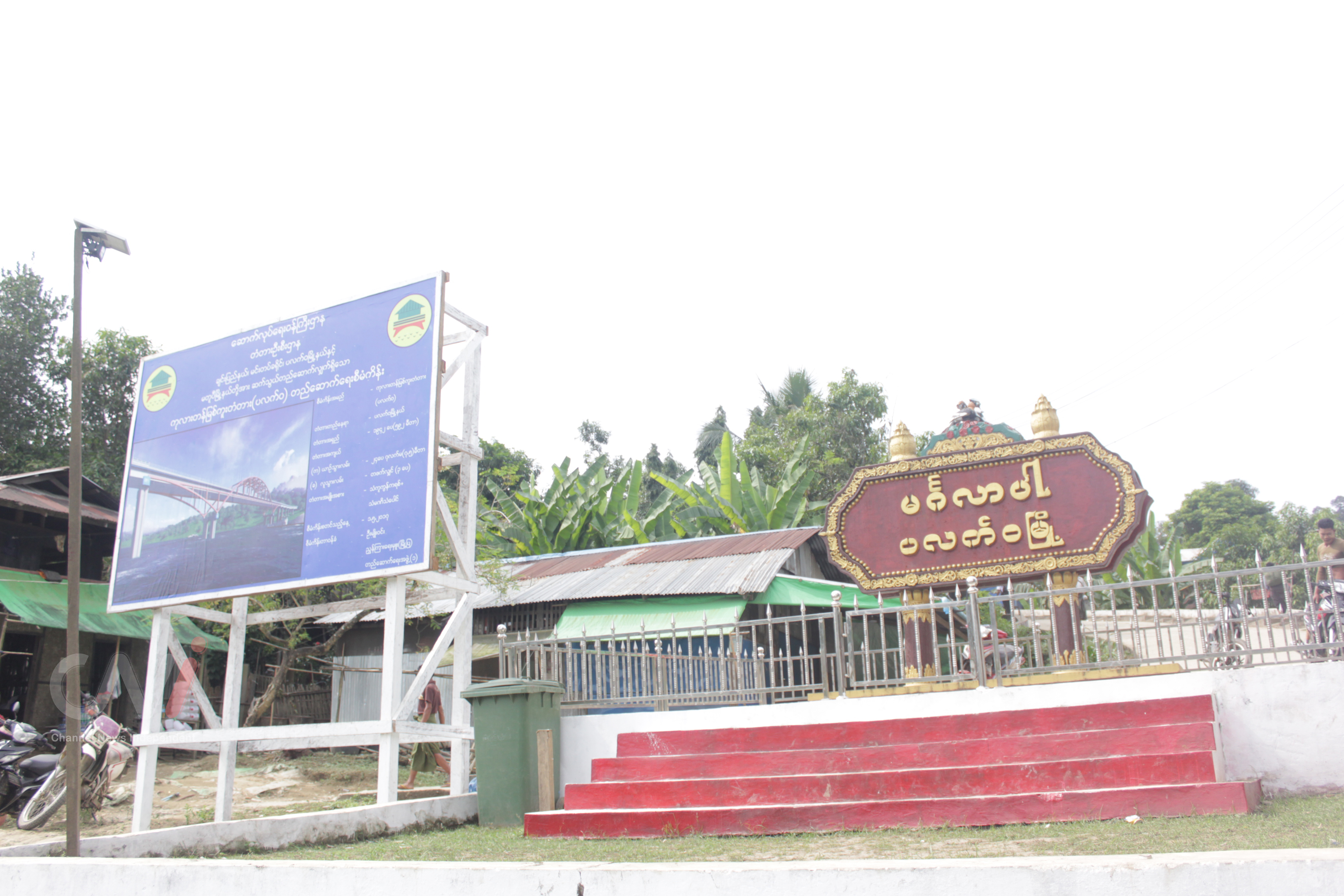
The Kaladan River project site in Paletwa
The Kaladan Multi-Modal Transit Transport Project agreement was signed between India and Myanmar in 2008, and implementation began in September 2010.
India has reportedly invested about US$484 million in the project.
The project is part of India’s Act East Policy, aimed at linking Kolkata with Mizoram State through Myanmar.
The route is expected to reduce the distance between Kolkata and Mizoram by about 1,000 kilometers, while also reducing transport time to around three to four days.
U Soe Htet also said that relations between the Indian government and the Myanmar military are currently positive and that India’s approach toward Myanmar appears to be peaceful.
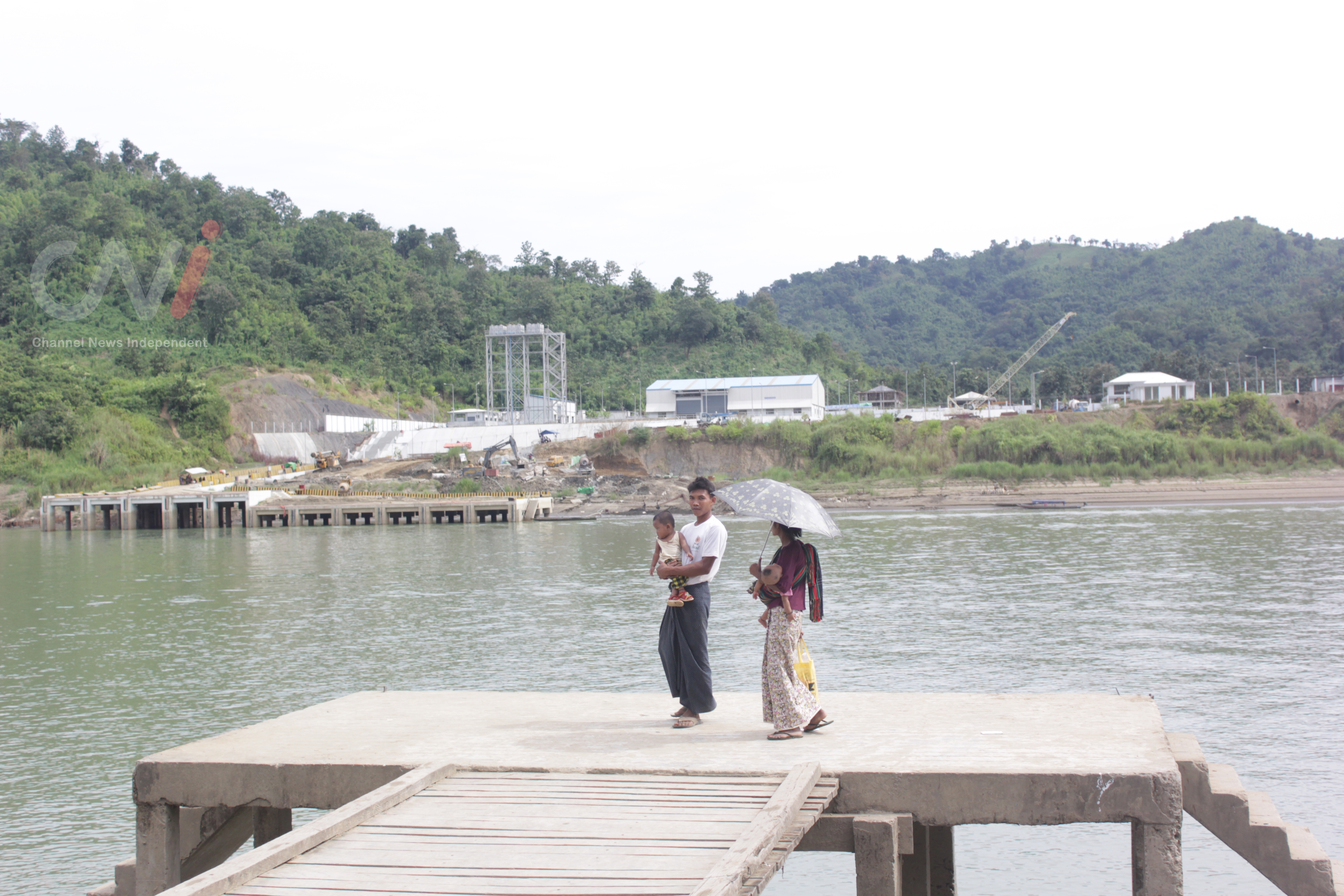
A port jetty in Paletwa
He said: “Our northwestern region is closely connected with our neighboring areas such as Manipur and Mizoram, where many Chin people also live. Because of this shared background, the Indian government has implemented development programs under its Look East policy. They are also working to secure sea access routes, so relations are good. The relationship between the Indian government and the Myanmar government is also positive. India’s stance toward Myanmar appears constructive. The Indian ambassador in Yangon frequently holds discussions with our government. We have also heard that India wants to complete the Kaladan project by 2027 and is continuing discussions toward that goal. Therefore, in terms of relations with Myanmar’s northwestern region and India’s attitude toward us, I believe their approach is generally peaceful.”
According to reports published in July 2025 by IDRW, a media outlet linked to India’s RAW intelligence agency, India’s Union Minister for Ports, Shipping and Waterways Sarbananda Sonowal stated that the Kaladan river transport project is expected to become operational in 2027.
The Kaladan Multi-Modal Transit Transport Project includes the expansion of Sittwe Port, dredging of the Kaladan River to allow international vessels to operate, and construction of a road linking Paletwa in Chin State to Mizoram State in India.
Under the project, goods from India will be transported by water along the Kaladan River from Sittwe to Paletwa, while goods from Myanmar will be transported by truck from Paletwa to Mizoram.
The Kaladan project is expected to improve trade connectivity between India’s northeastern states and Myanmar’s Rakhine and Chin states.
- By CNI
- Category: English Section
- Hits: 278
CNI News
March 13, 2026
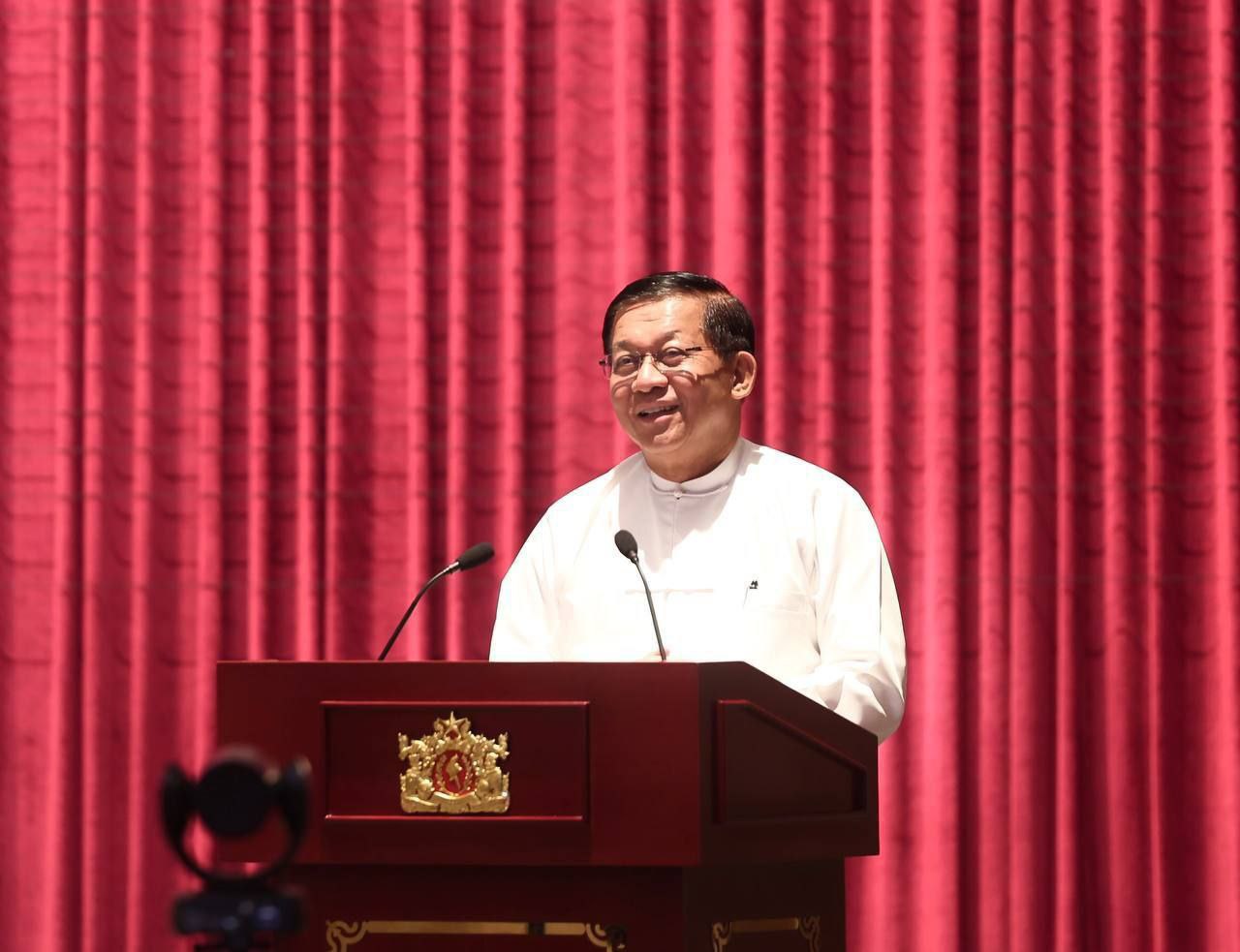
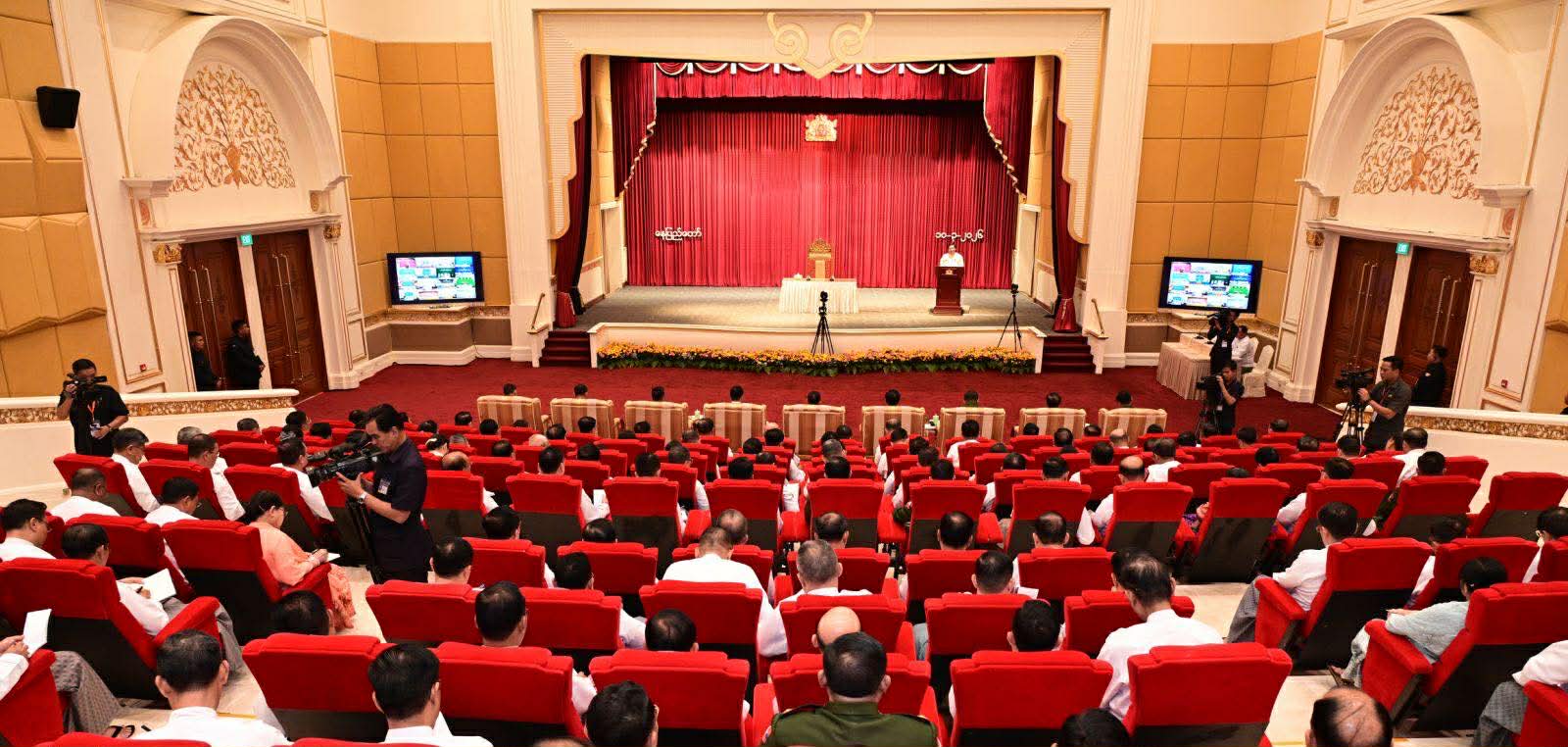
For the sake of the public interest in Myanmar’s peace process, Senior General Min Aung Hlaing, Chairman of the State Security and Peace Commission, stated that stakeholders should focus on "what should be done" rather than "what they want to happen."
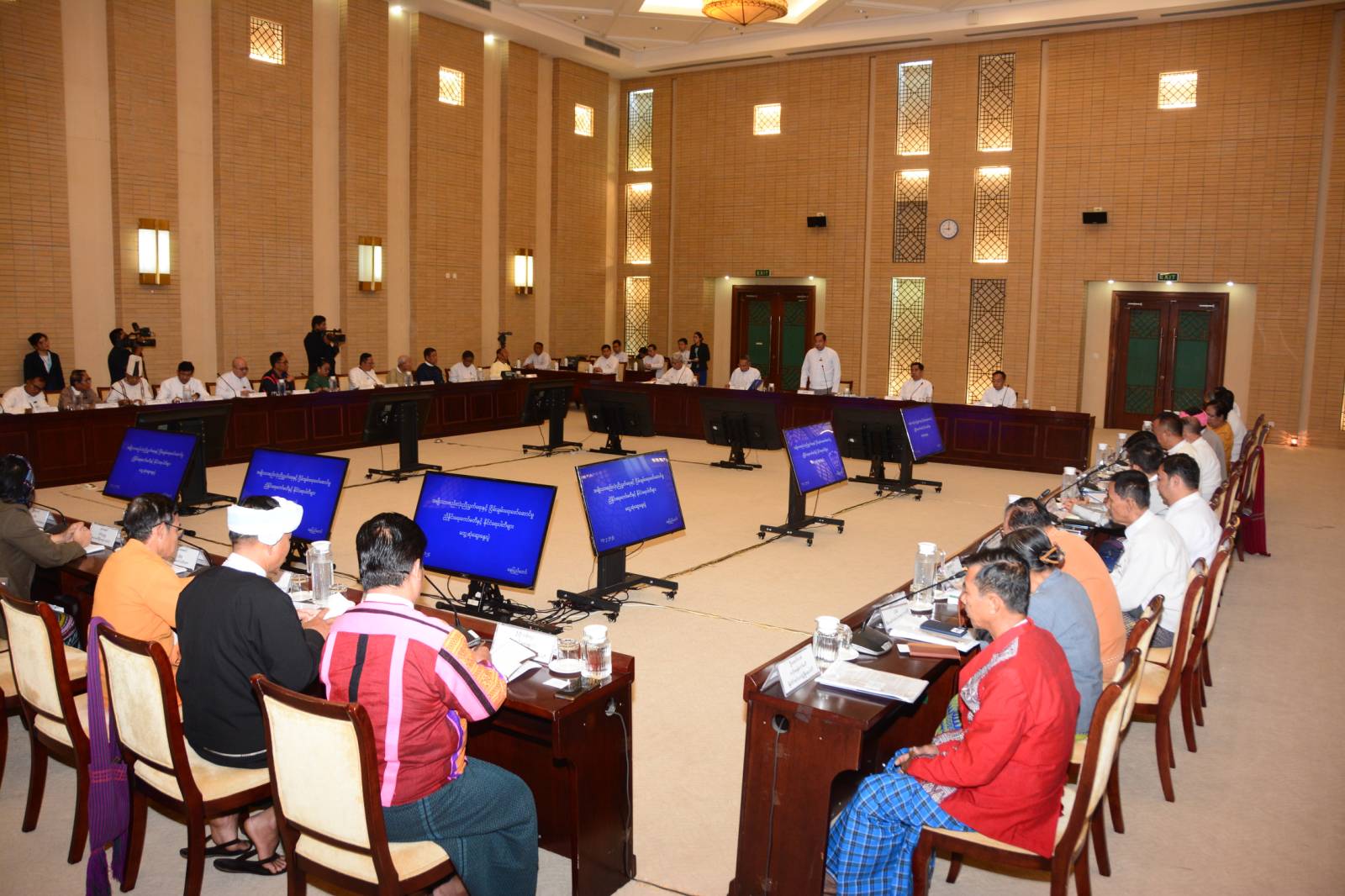
He made these remarks during a review meeting held on March 10, 2026, regarding the government’s performance and national development efforts between 2021 and 2025.
Senior General Min Aung Hlaing stated: "Regarding internal peace, progress must be achieved without fail. We must act on what should be done rather than what we want, while prioritizing the public interest. The Tatmadaw is firmly following the path of the Nationwide Ceasefire Agreement (NCA). To enhance peace efforts, 2022 was designated as the Year of Peace, and we have held 149 meetings with peace mediators across 13 sessions."
U Saw Han Aye, Chairperson of the People's Pioneer Party (PPP), told CNI News that he believes more progress will be made if flexibility is shown by prioritizing "what should be" over personal desires.
Senior General Min Aung Hlaing
"People have many different aspirations, but decisions should be based on the country’s current situation and what is most necessary. Each issue should be assessed individually rather than applying a broad approach. Economic development requires revising some existing procedures and laws, and with parliament expected to convene soon, further policy adjustments could be made. If more relaxation measures are implemented by prioritizing what is necessary over what is merely desired, the economy could see greater progress,” he said.
On the other hand, Daw Nant Khin Aye Oo, Chairperson of the Karen Peoples Party (KPP), emphasized that the most urgent "should be" is solving the economic crisis for grassroots citizens and farmers.
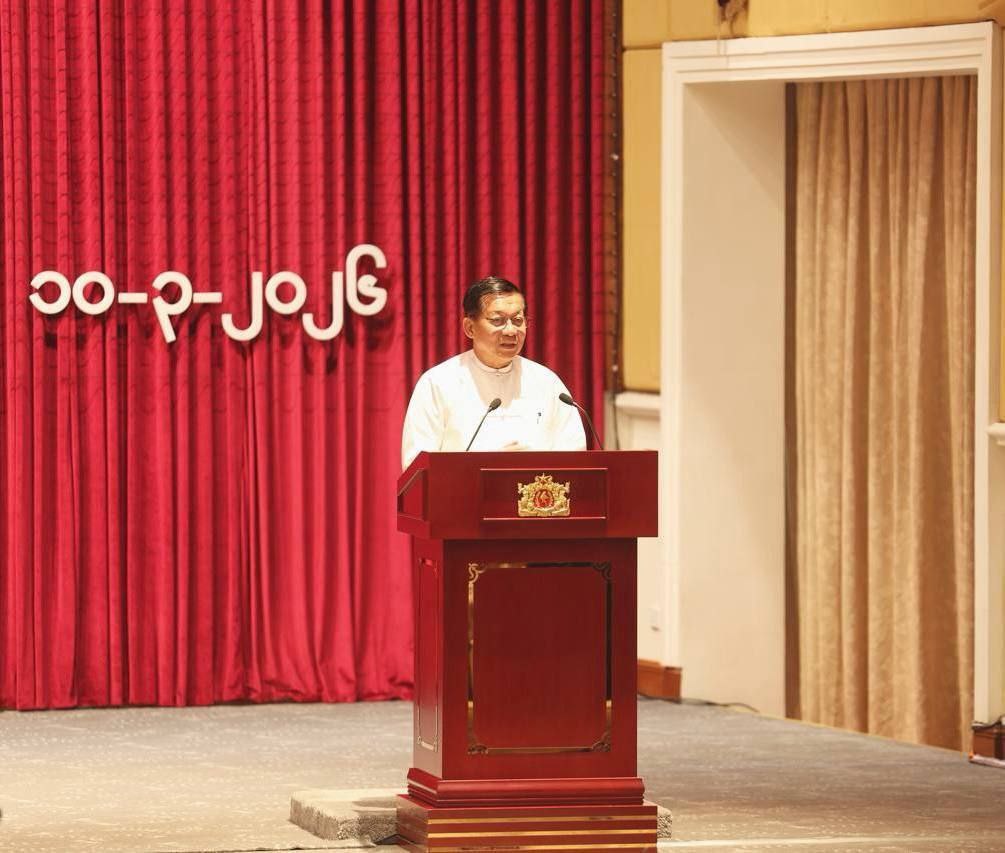
Senior General Min Aung Hlaing
"What you want might not always be what is best. If what we want isn't possible right now, we must look at what is necessary for the country," she told CNI. She highlighted that farmers are currently facing significant losses in paddy production and that the gap between income and expenditure is unsustainable. "Peace must be pursued, but looking at the current situation, it still feels a long way off. We must keep trying," she added.
Senior General Min Aung Hlaing also mentioned that Peace Forums and Youth Peace Forums have been organized to create an all-inclusive national peace framework and to encourage youth participation.
He noted that the discussions from these forums would significantly support peace efforts and constitutional amendments. By increasing youth involvement in national affairs, he claimed, the future of the country can be improved.
- By CNI
- Category: English Section
- Hits: 365
CNI News
March 13, 2026
The 43 points agreed upon between the National Solidarity and Peacemaking Negotiation Committee (NSPNC) and political parties regarding amendments to the 2008 Constitution could be prioritized for discussion in the upcoming parliament(Hluttaw), according to Sai Htay Aung, chairman of the Tai-Leng (Shanni) Nationalities Development Party (TNDP).
He told CNI News that when those issues are discussed in parliament, there would likely be limited objections from military representatives. He also said there is a possibility that the 43 agreed points could be implemented within the next five years.
Sai Htay Aung said: “Rather than calling them demands, I see them as agreements that have already been reached. Regarding the constitution, these are points that the Tatmadaw has already agreed to. Therefore, when they are discussed in parliament, there will likely be fewer objections from military representatives. These should not be seen as demands but as matters that will be placed among the priorities. All 43 points have already been agreed to by the Tatmadaw. They will be resubmitted in parliament, and according to parliamentary procedures, they could lead to constitutional amendments. Once the amendment process begins, these 43 points will likely be among the priorities. I believe they can be implemented within five years because the Tatmadaw has already agreed to them. The members of parliament who attend will discuss them collectively and then make decisions.”
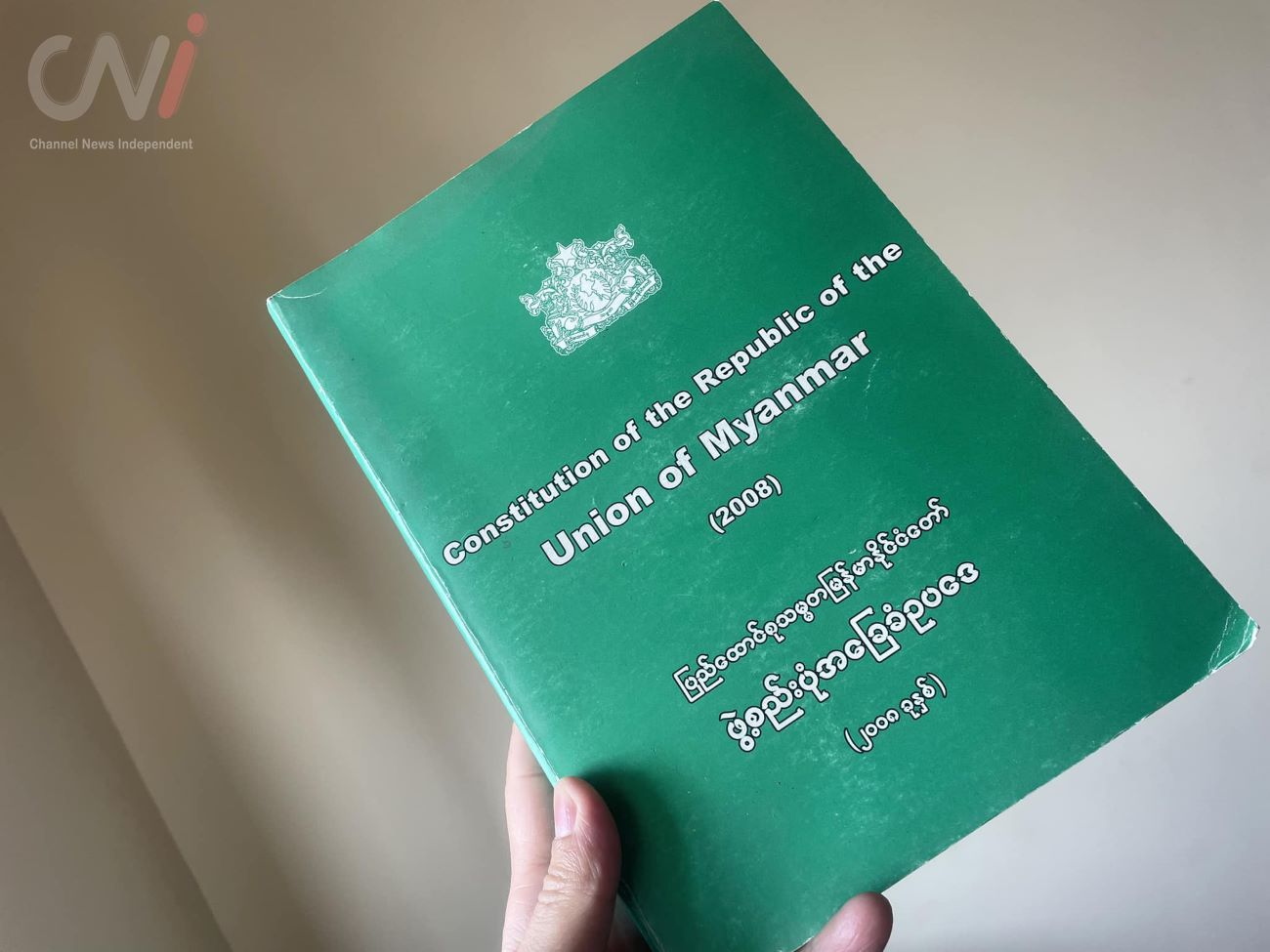
The 2008 Constitution of MyanmarThe 2008 Constitution of Myanmar
Senior General Min Aung Hlaing also said that the demands of ethnic armed organizations (EAOs), constitutional amendment issues, and agreements and discussions necessary for the regions and the country would be revisited and discussed in the upcoming parliament.
He made the remarks on March 10, 2026, during an event reviewing the government's efforts to promote national development between 2021 and 2025.
He said: “We were able to thoroughly discuss the demands of ethnic armed organizations, matters related to amending the 2008 Constitution, and issues that are genuinely necessary and appropriate for the regions and the country. The points that were discussed will be presented and debated in the upcoming parliament, and further actions will be carried out in accordance with parliamentary decisions.”
U Li Paw Reh, chairman of the Lisu National Development Party (Dulei Party), told CNI News that if those discussions are rejected in parliament, the government, ethnic armed groups, and political parties would need to renegotiate them to produce points that parliament could approve.
He said: “The agreements currently reached between political parties and the Tatmadaw (through the NSPNC) appear incomplete, because EAOs are not included, and parliament has not yet been involved. Therefore, the parliamentary side will discuss them independently. There could be rejections because that is how parliamentary procedures work. Since not all parties under the NCA are included, parliament could reject or debate them. They would not take effect without parliamentary approval. What I mean is that if we strictly follow the NCA process, parliament should not reject them but only approve them. According to the NCA, another Union Peace Forum should be convened, bringing together EAOs, political parties, and experts. Now that a parliament and a government will be formed, these issues should be discussed again comprehensively. If there are objections, the points that can gain parliamentary approval will need to be revised through further discussions.”
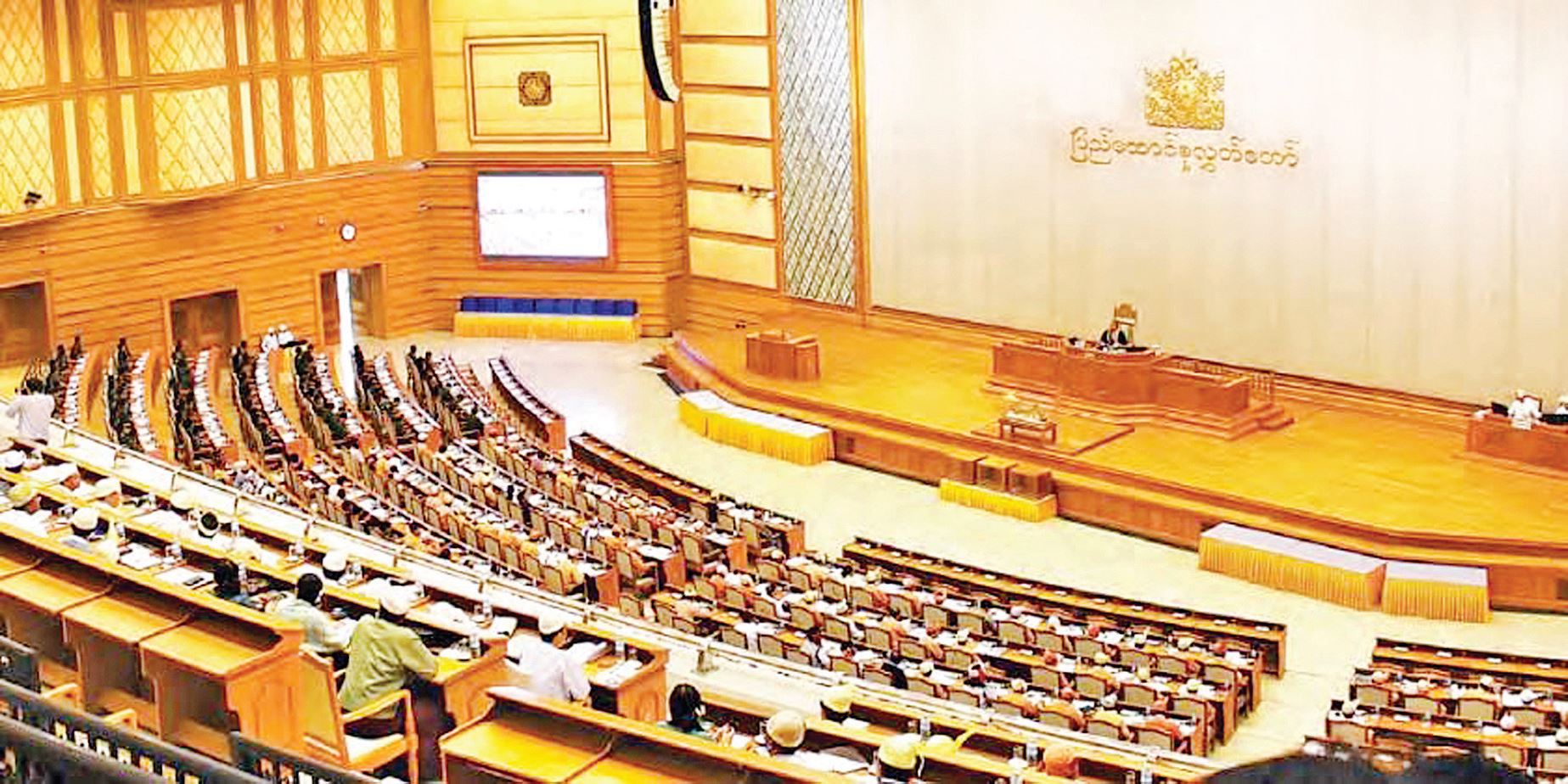
A previous Hluttaw session
Myanmar held its 2025 general election in three phases from December 28, 2025, to January 25, 2026.
The third-term sessions of the Pyithu Hluttaw (Lower House) and Amyotha Hluttaw (Upper House) are scheduled to convene on March 16 and March 18, 2026, respectively, and a new government will be formed in April.
During discussions between the NSPNC and political parties in January 2025 on constitutional amendments, agreements were reportedly reached on several points, including 10 points related to Chapter 1 of the Constitution, 7 points related to legislative matters, 3 points concerning state leaders, and about 10 points related to administrative matters.
During the 2020 parliamentary term, the National League for Democracy (NLD) proposed amendments to nearly the entire 2008 Constitution. However, the amendments failed because constitutional changes require the support of more than 75 percent of parliamentary representatives.
Political and military analysts have pointed out that Myanmar needs to revise and draft a constitution that aligns with the modern technological era, the evolving thinking of younger generations, geopolitical conditions in neighboring countries, and the country’s socio-economic situation.
- By CNI
- Category: English Section
- Hits: 271
CNI News
March 12, 2026
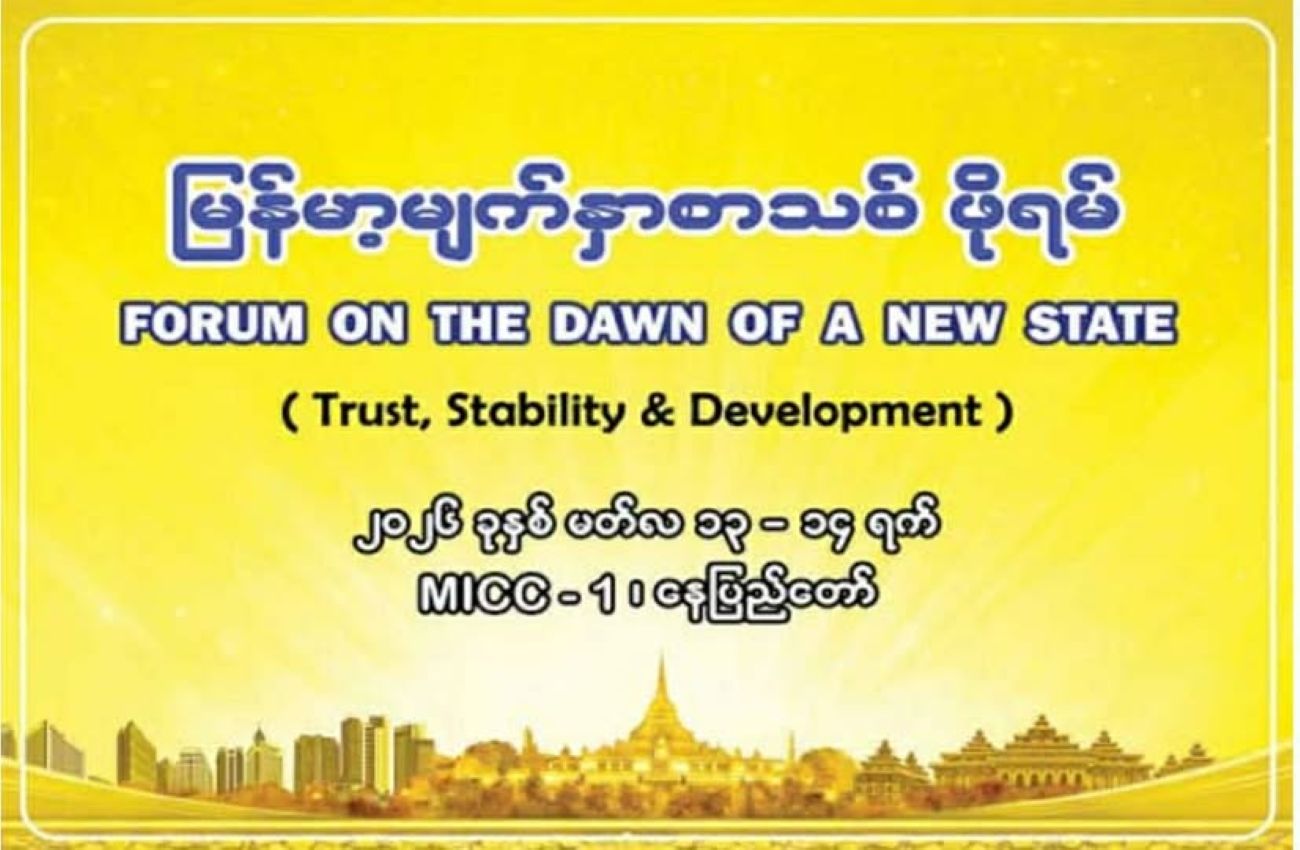
The "New Myanmar Arena Forum," featuring Members of Parliament (MPs) who won the 2025 General Election, will be led by Myanmar Narrative and held in Naypyidaw.
The forum is scheduled to take place at the Myanmar International Convention Centre-1 (MICC-1) in Naypyidaw from March 13 to 14, 2026.
Sai Htay Aung, Chairman of the Tai-Leng (Shanni) Nationalities Development Party (TNDP), told CNI News that organizing the "New Myanmar Arena Forum" is a positive step, as it could provide new ideas and perspectives for those without prior parliamentary experience.
"Representatives from our party will be attending this forum. Their organization primarily invited party representatives. Actually, holding this forum is a good thing. Before the parliament sessions begin, there will be people with past parliamentary experience and those without. Since they are holding this two-day forum (March 13–14), I believe those without experience will benefit by discussing matters they will encounter inside the Hluttaw (Parliament). Myanmar is about to open a new chapter. Since the elected representatives from this post-election period are the first to enter this new frontier, it is important for things to be systematic. By holding this forum just before the parliament starts, I see that they will gain new thoughts and perspectives," he said.
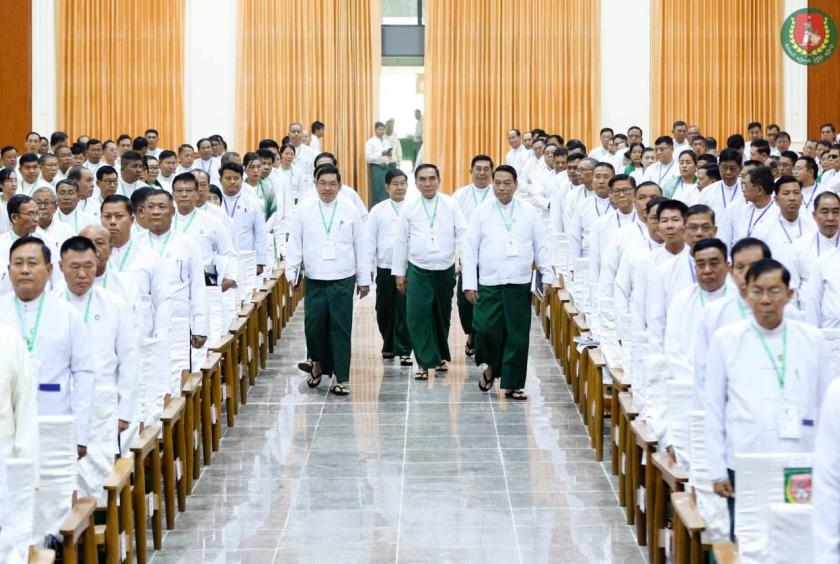
USDP Members of Hluttaw
Exclusions and Criticisms Sai Htay Aung further noted that the forum specifically invited MPs from the Pyithu Hluttaw (House of Representatives) and Amyotha Hluttaw (House of Nationalities), excluding regional and state parliamentary representatives, as well as political party leaders.
"Through these discussions, MPs who haven't entered parliament yet will gain more knowledge. I believe it will support their future actions. However, a weakness is that if party leaders were also invited—with some speaking inside parliament and party leaders/activists working outside—they could move in harmony. If they can act in sync, I believe we could reach a better 'New Myanmar Frontier,'" he added.
Over 500 MPs are expected to attend the forum in Naypyidaw, the majority of whom are from the Union Solidarity and Development Party (USDP). It remains unclear whether military (Tatmadaw) appointees in parliament will attend.
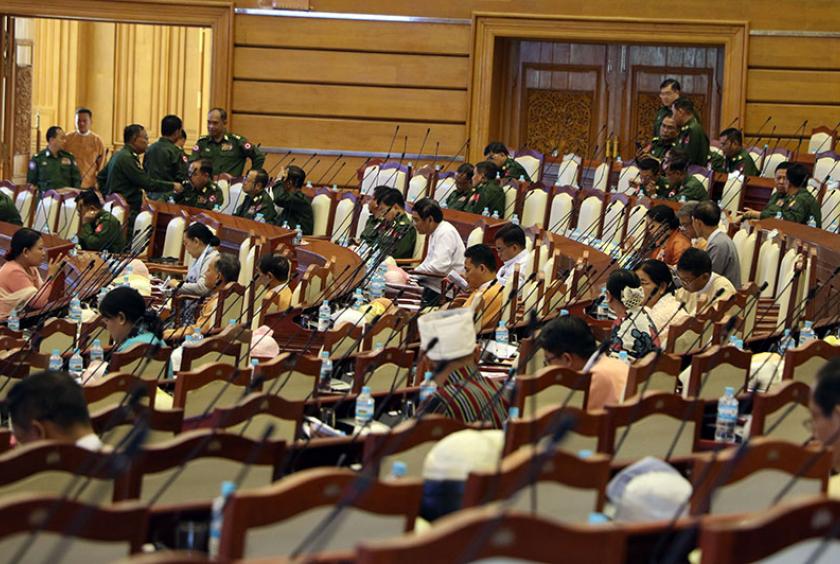
Military (Tatmadaw) Members of Hluttaw
Notably, several political party leaders were not invited because they did not win their respective seats in the election. These include: U Ko Ko Gyi, Dr. Aye Maung, U Ba Shein, Sai Htay Aung, U Kyaw Swar Soe. Sai Aik Paung, Dr. Aye Maung, Chairman of the Arakan Front Party (AFP), raised questions to CNI News regarding the nature of the forum. He questioned whether it was necessary to exclude party chairs who weren't elected and whether the organizing group was positioning itself "above" the elected representatives.
"When organizing events for political discussion, the leading organization must have an objective. Why are they only inviting elected MPs? Some party leaders will be among them, but others are not elected. Is it not necessary to invite them? What is the purpose of inviting only the MPs? Why do they feel the need to 'advise' them? One could say the MPs have already met or are about to meet. Is it appropriate to hold this 'New Myanmar Arena Forum' when these discussions should happen within the Parliament itself? A question arises: Is this an organization positioned above the MPs? Is it necessary to invite them like school teachers giving lessons to students?" Dr. Aye Maung said.
The "New Myanmar Arena Forum," running from March 13 to 14, 2026, is described by proponents as a trust-building program for the upcoming term of the new government and the future of the country.
- By CNI
- Category: English Section
- Hits: 280
CNI News
March 12, 2026
Military and political analysts have pointed out that economic and educational development are necessary for the success of peace processes and the end of armed struggle in Myanmar.
Since 2021, armed conflicts in Myanmar have become more severe, and among the youth there has been a growing strong inclination toward resolving issues through armed struggle.
Meanwhile, armed groups including the Myanmar Armed Forces (Tatmadaw), Ethnic Armed Organizations (EAOs), and the People’s Defence Force (PDF) have been recruiting new members and engaging in intense fighting against one another.
Former Member of Parliament Daw Sandar Min told CNI News that peace, the economy, and education are interconnected, and that while peace is essential, economic and educational sectors must also be strengthened simultaneously. She added that the current severe lack of education has contributed to the rise of violence.
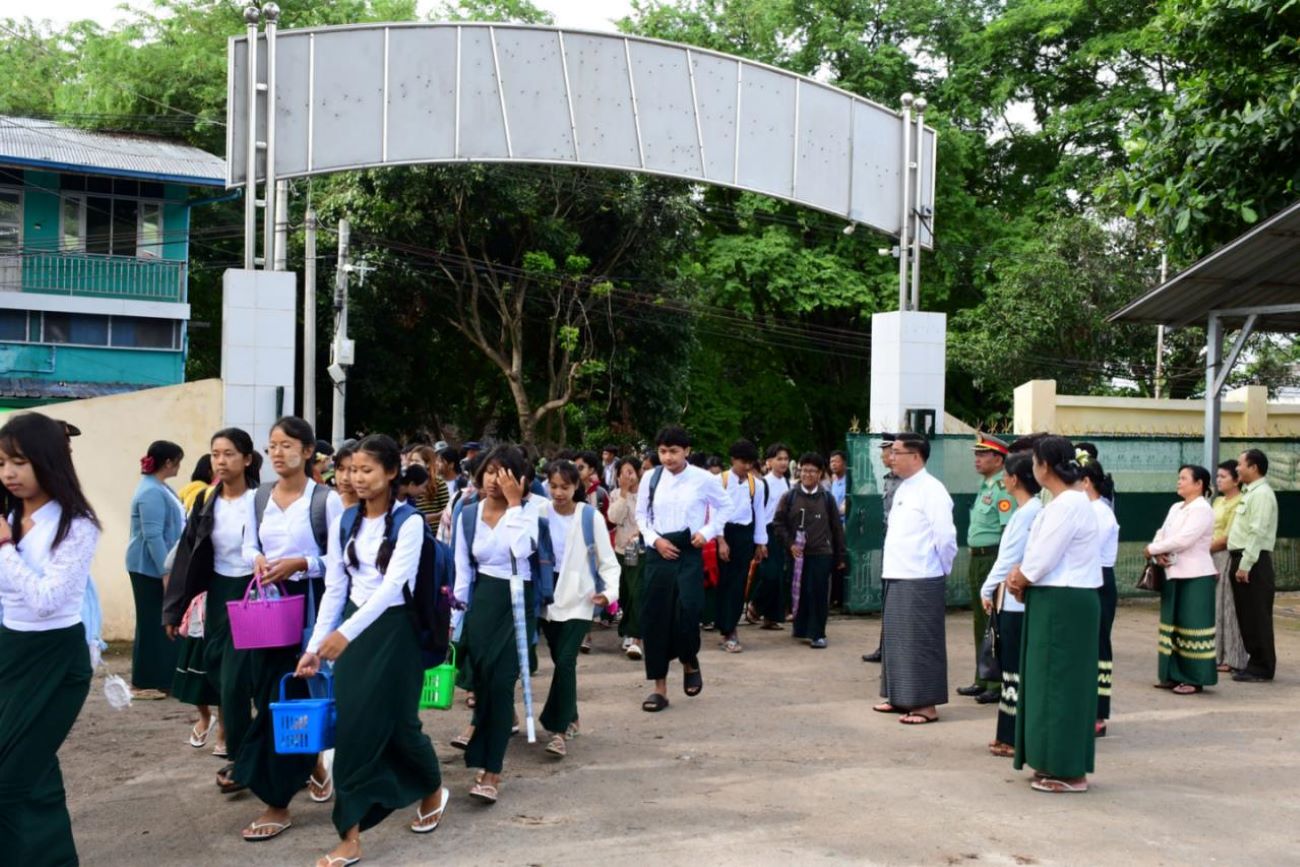
Students studying in school
She said: “During the time of our NLD government, at first we prioritized peace, saying that peace was the most important issue. Later, we realized that peace and the economy must be worked on simultaneously. Then Daw Aung San Suu Kyi said that both peace and economic development would be carried out at the same time.Because the economy is not doing well, it has created difficulties in education, resulting in lack of education and illiteracy. That in turn leads to economic problems again. In reality, all of these issues are interconnected. Since we are in a nation-building period, while peace is necessary, the roles of the economy and education must also be strengthened simultaneously. These issues are linked. Due to the lack of education, people are unable to think and make decisions wisely, which has led to increased violence and limited access to the rule of law. Therefore, all these efforts must be carried out together. Peace and the economy must progress simultaneously.”
Myanmar has fallen behind in sectors such as politics, the economy, education, healthcare, and social life, and analysts say that improving citizens’ education levels is essential for national development. They also point out that the current political instability and armed conflicts are partly the result of weaknesses in the country’s education system.
Dr. Nyo Nyo Thin, founder of the Yangon Watch Group, told CNI News that completely ending armed struggle within the next five years will be extremely difficult, and that even if armed conflict ends, it does not necessarily mean peace will immediately be achieved.
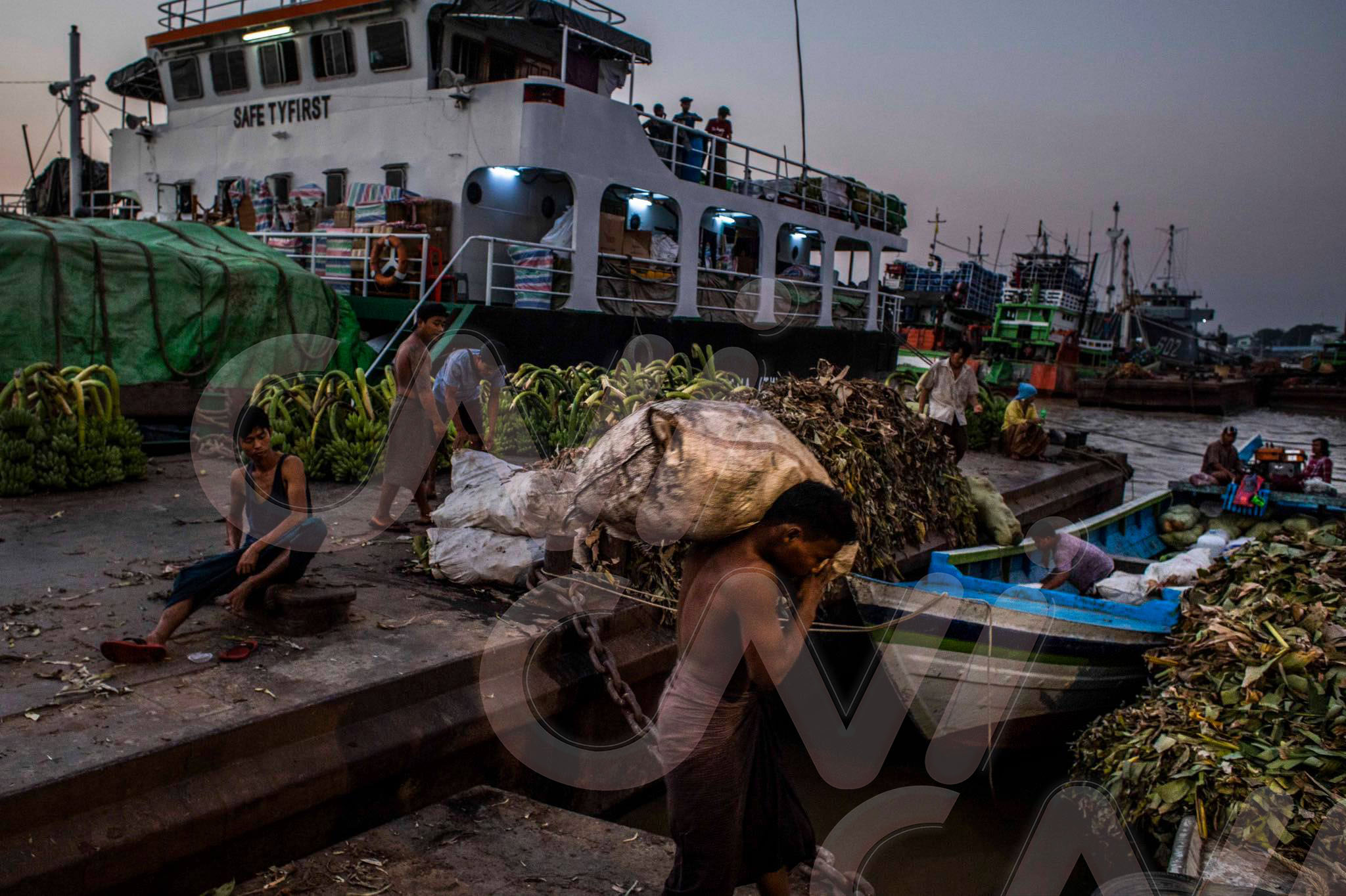
People from the grassroots population
She said: “The process of building peace does not mean peace will automatically exist just because armed struggle ends. The meaning of peace is very broad. Even if armed groups no longer exist, it does not necessarily mean peace has been achieved. Therefore, completely ending armed struggle in this country within the next five years will be extremely difficult. Temporary ceasefires may occur. If we expect armed struggle to completely end within five years, that would be unrealistic. Because it will be very difficult to end armed struggle within that time frame, nation-building efforts cannot be neglected, and other development work must continue simultaneously.”
Currently, armed conflicts are occurring across Myanmar, with more than 3 million people displaced, while hundreds of thousands of homes and buildings have been burned and destroyed.
Analysts also say that the new government and parliament expected to be formed in April 2026 must make strong efforts to advance the peace process, while also taking a comprehensive approach to developing political, economic, and educational sectors.
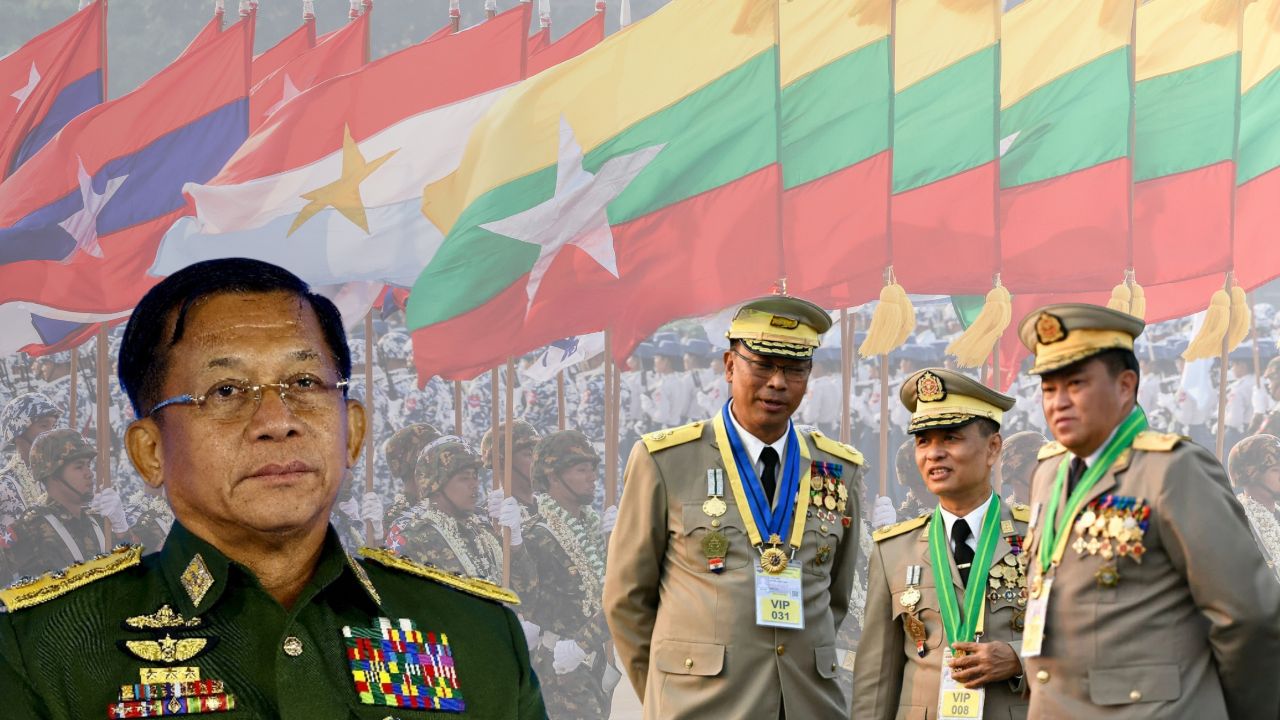
- By CNI
- Category: English Section
- Hits: 256
CNI News
March 12, 2026
In the effort to place the military under a civilian government in Myanmar, one should approach the military only after understanding both the theoretical standards and the practical realities, Dr. Nyo Nyo Thin, founder of the Yangon Watch group, told CNI News.
She stated that while democratic standards dictate that a country’s military must be under the administration of a civilian government, this standard is not always met in practice across various global democratic reforms. Dr. Nyo Nyo Thin added that when considering a country’s history, human resources, and practical political conditions, there are countries where the military is not under civilian control at all.
"Therefore, by standard, the military must be under a civilian government. However, in reality, does it happen like that? In many countries, it does not. This might be possible in countries with over 100 or 200 years of democratic experience. But in fragile democracies, it takes a long time for this to happen," she said.
She further explained, "When does the military come under civilian administration? It happens when the citizens' understanding of democratic standards increases, when the level of education in the country rises, and when human resources reach a top-tier level compared to other countries. In such conditions, the military naturally falls under civilian rule. As long as those conditions are absent—for instance, if education is very low, human resources are scarce, and neighboring major powers are not democratic—it is not easy for the military to be under civilian administration."
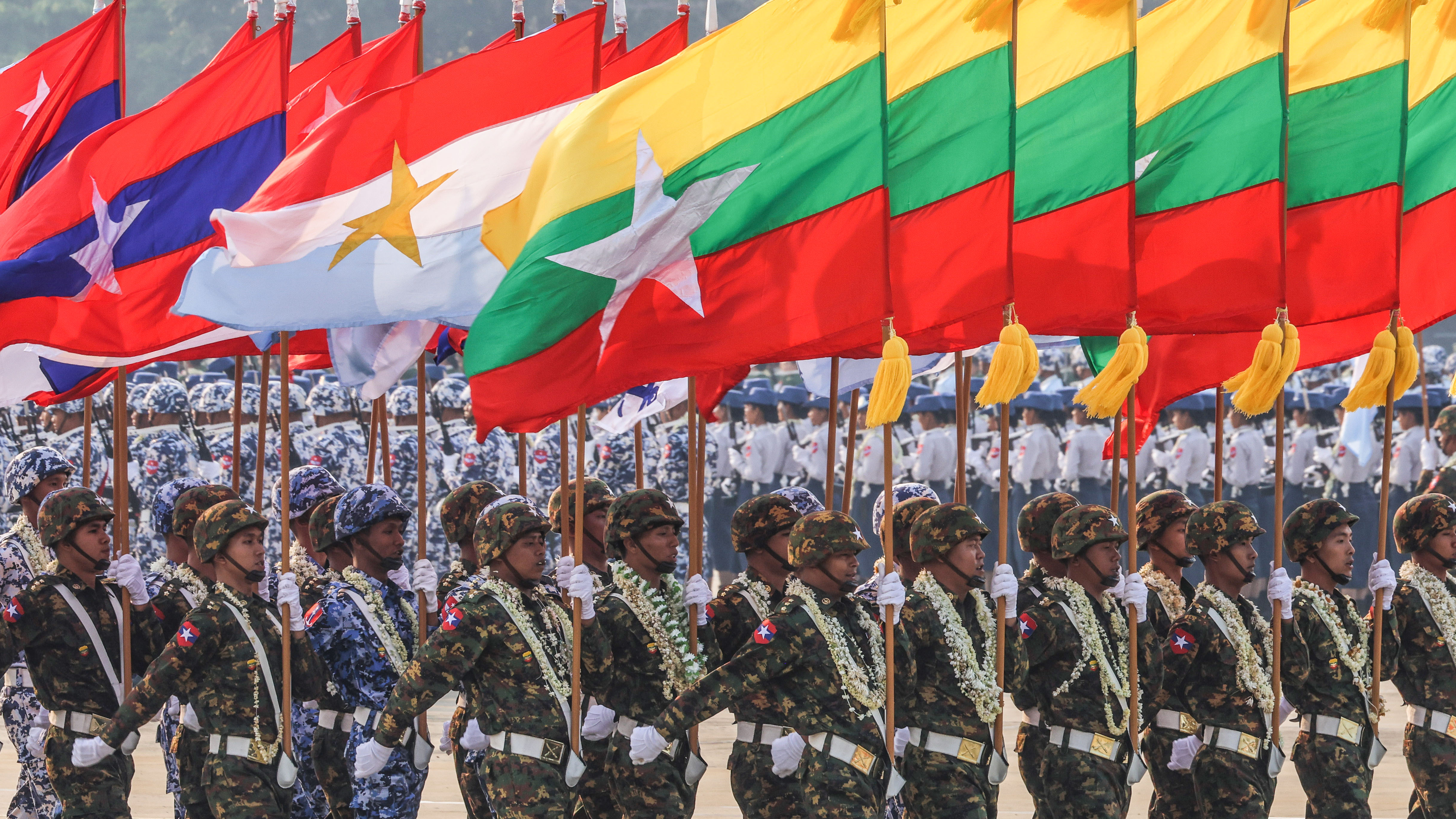
Members of the Myanmar Tatmadaw
There are several countries in the world where the military is not fully under a civilian government, exists as a separate power, or exerts influence over the government:
Pakistan: Despite having an elected government, the military remains the primary decision-maker in foreign policy and security matters and has carried out numerous coups.
Thailand: The military has always played a significant role, with a history of multiple successful coups.
Egypt: The military not only controls the government but also owns a large portion of the country's economy. The current President, Abdel Fattah el-Sisi, is himself a former military chief.
Africa (Mali, Guinea, Burkina Faso): These nations have experienced military coups in recent years and are currently under military rule with no civilian government.
North Korea: The situation is slightly different; while the military is under the leadership of the Party, it remains the lifeblood of the state, and all national resources are prioritized for the military.
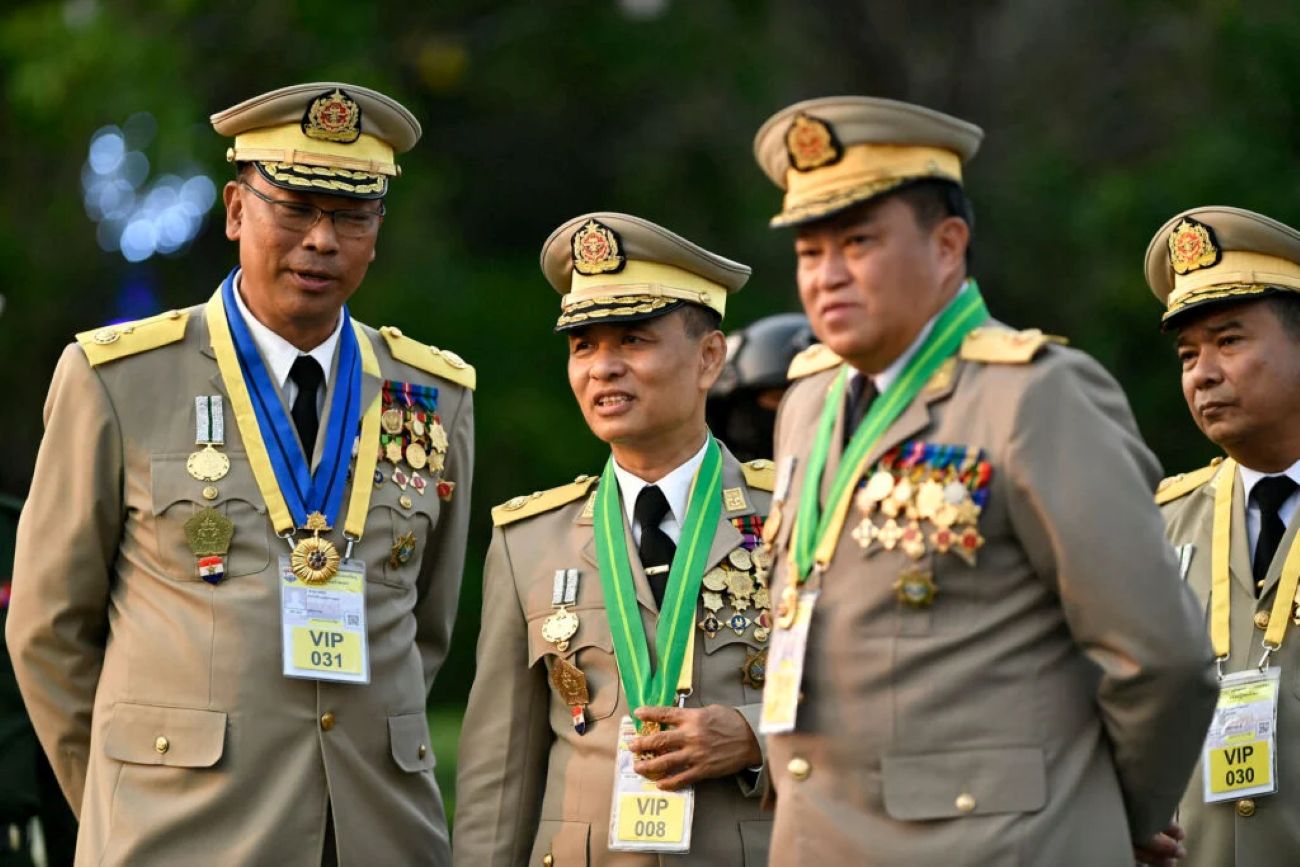
Generals of the Myanmar Tatmadaw
U Khun Sai, who is involved in the peace process, told CNI News that while it is correct that a military should be under a civilian government, there are countries where generals have become presidents. However, when they become president, they should not rule the country like a military organization.
"Even George Washington became a president. I’m not saying it shouldn’t happen here. But when George Washington became president, he did not rule the United States like a military. This should be noted," U Khun Sai said.
He continued, "When the military is not under a civilian government, it is inconsistent with the traditions of our elders and is difficult to sustain in the long run. The main reason our country has reached this state of decline is that the military has maintained a dominant position since 1962. We must not forget that our country went from being very wealthy to being very poor because of this."
In Myanmar, all three phases of the 2025 Multi-party Democratic General Election were completed by January 25, 2026. It has been announced that this March, the third sessions of the Pyithu Hluttaw, Amyotha Hluttaw, and Regional/State Hluttaws will commence to elect Speakers and the President.
- By CNI
- Category: English Section
- Hits: 879
CNI News
March 11, 2026
Criticism is mounting against the "Odd/Even" day vehicle restriction system aimed at solving Myanmar's fuel shortage, with observers pointing out that the policy favors a privileged class while exacerbating hardships for the general public.
On March 3, the National Defense and Security Council announced that, starting March 7, 2026, motor vehicles and motorcycles must operate on an alternating odd/even day schedule to conserve fuel.
Former lawmaker Daw Sandar Min told CNI News that the restriction creates an unfair advantage for EV (Electric Vehicle) users and places an unjust burden on ordinary citizens.
"The goal is to save fuel nationwide, so they split cars into odd and even days. However, EVs are exempt from these restrictions because they don't use fuel. This essentially turns into a promotion to sell EVs," she said. "It makes it seem like only EV owners have the upper hand. Are people with regular cars supposed to go to school or work only every other day? That is simply not fair."
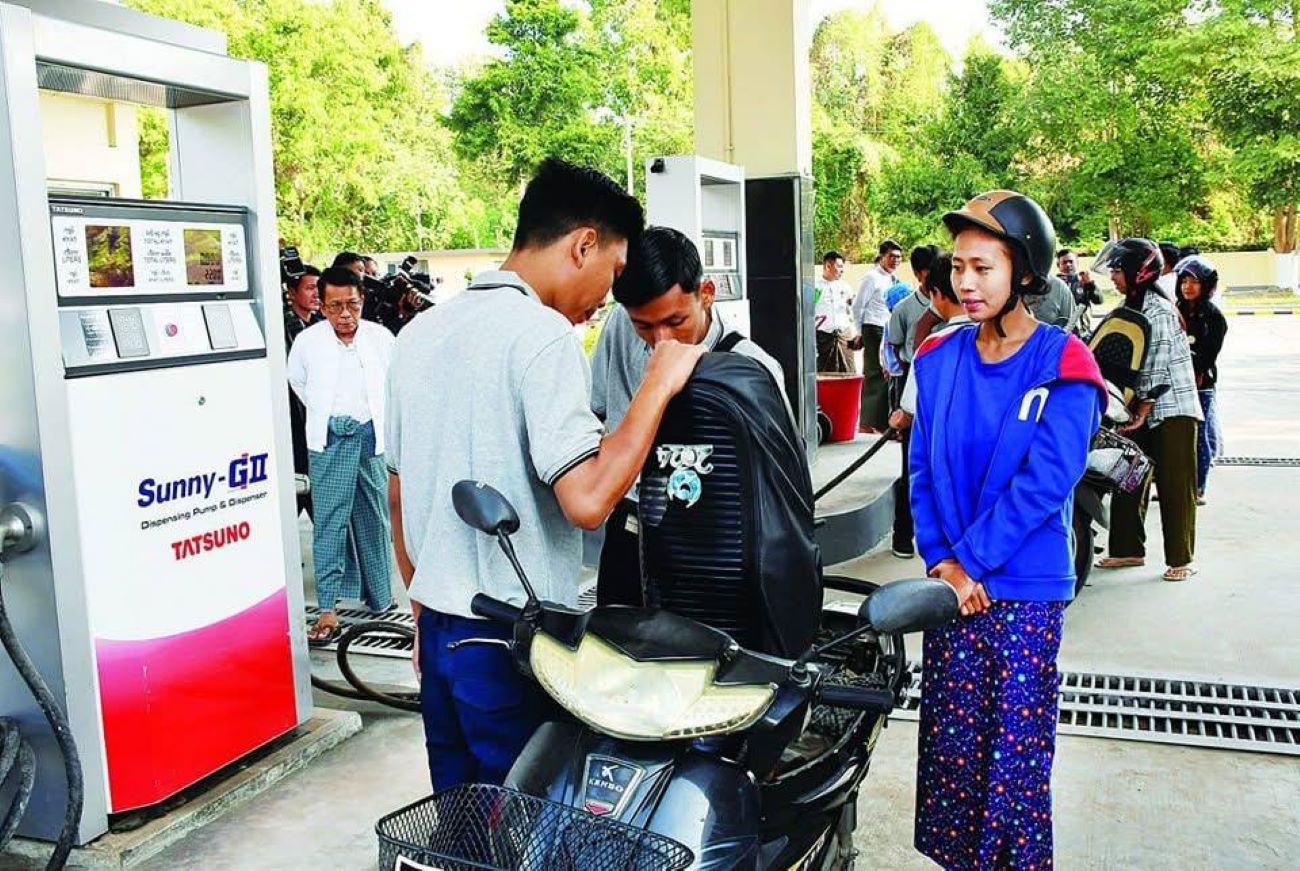
People are seen refueling their vehicles.
Daw Sandar Min further warned that some individuals might exploit these regulations for personal gain.
"Secondly, if the state issues a decree for the sake of fuel conservation, it's disheartening to see people taking advantage of it. Truthfully, many traffic police are not on the streets for safety or traffic flow; about 90% are out there looking for ways to support their own livelihoods [through bribes]. This is not okay. If the goal is to save fuel, they should implement a system that actually addresses fuel conservation without missing the mark so widely," she added.
Violators of the odd/even system will face legal action starting March 14 under Section 188, which carries a penalty of one month in prison, a 20,000 Kyat fine, or both.
Traffic Police Officer Deputy Superintendent Kyaw Soe Lwin posted on social media that specific details regarding the enforcement would be provided before the penalty phase begins.
Dr. Nyo Nyo Thin, founder of the Yangon Watch group, told CNI News that the inclusion of prison sentences is inappropriate and could cause the public to resent the government.

Rows of cars at a petrol station.
"This system isn't entirely bad in theory—it's a suitable measure for air pollution and fuel conservation. However, it isn't a perfect plan because it can lead to corruption among enforcement authorities. This needs systematic control," she said. "Furthermore, if those responsible for law enforcement view this as a way to punish the public, it will be difficult to build a partnership between the government and the people. During this period of national reconstruction, that partnership is vital."
She continued, "I do not support the use of prison sentences. A one-month jail term makes the public misperceive the government's intentions. It feels like there is a strong desire to punish the citizens rather than help them. This is impractical and breeds hatred. The government should reconsider the prison sentence; even if they don't want to revoke the law, those implementing it should choose not to impose jail time."
Currently, private sector employees and parents are facing significant hurdles due to the restrictions, alongside travelers and those whose businesses require daily mobility.
Critics suggest that instead of restricting road access, the government should consider a system where fuel is sold to odd/even license plates on alternating days, which would be a more balanced solution for both parties.
- By CNI
- Category: English Section
- Hits: 291
CNI News
March 11, 2026
Military and political analysts have pointed out that the new government emerging in Myanmar should simultaneously implement security, peace, federalism, and democracy.
Following the 2025 General Election, which was held in three phases from December 28, 2025, to January 25, 2026, the new government is set to be formed in April.
U Khun Sai, an active participant in the peace process, told CNI News that for the upcoming new government, peace, federalism, and democracy are interconnected issues that must be addressed together, emphasizing that the people are the true masters of the country.
He stated, "Security, peace, federalism, and democracy are all linked. I don’t think it’s practical to do them one after another; they must be worked on together. However, where we place our focus is more important. For instance, if we focus on security, can it be reliable without peace? Can there be peace without democracy? Or democracy without federalism? They are intertwined. Therefore, we cannot say yet which one should be prioritized right now."
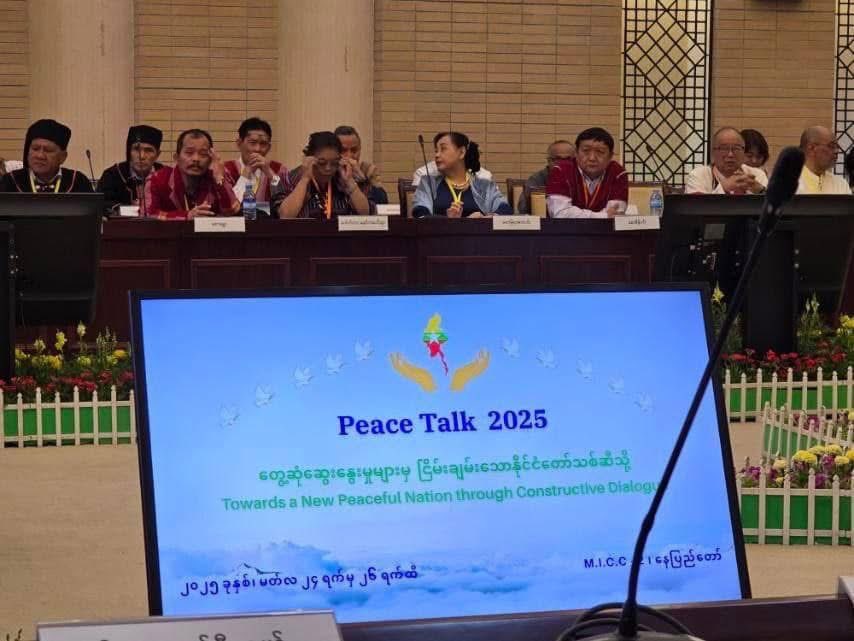
During a Peace Talk session.
He continued, "The main thing is they need to have the mindset of: 'We come from an election; an election is a choice by the people. The people are the true owners and masters of this country. We are not the masters. Whatever we do, we must obtain the consent of these masters.' If they have this mindset, though we may face difficulties initially, in the long run, we will achieve a country that is secure, peaceful, democratic, and federal. If they operate without this foundation—thinking 'We own the country, we will do as we please, and the people must accept it'—then it won't be possible. I hope the current leaders governing the country understand this."
Some observers suggest that during the new government's five-year term, the first two and a half years should prioritize peace and federalism, while the remaining two and a half years should focus on socio-economic development.
However, other military and political analysts argue that the new government needs to build the economy and education alongside the peace process.
Sai Htay Aung, Chairman of the Tai-Leng (Shanni) Nationalities Development Party (TNDP), told CNI News that if the new government strives for peace, federal issues must be the primary topic of discussion.
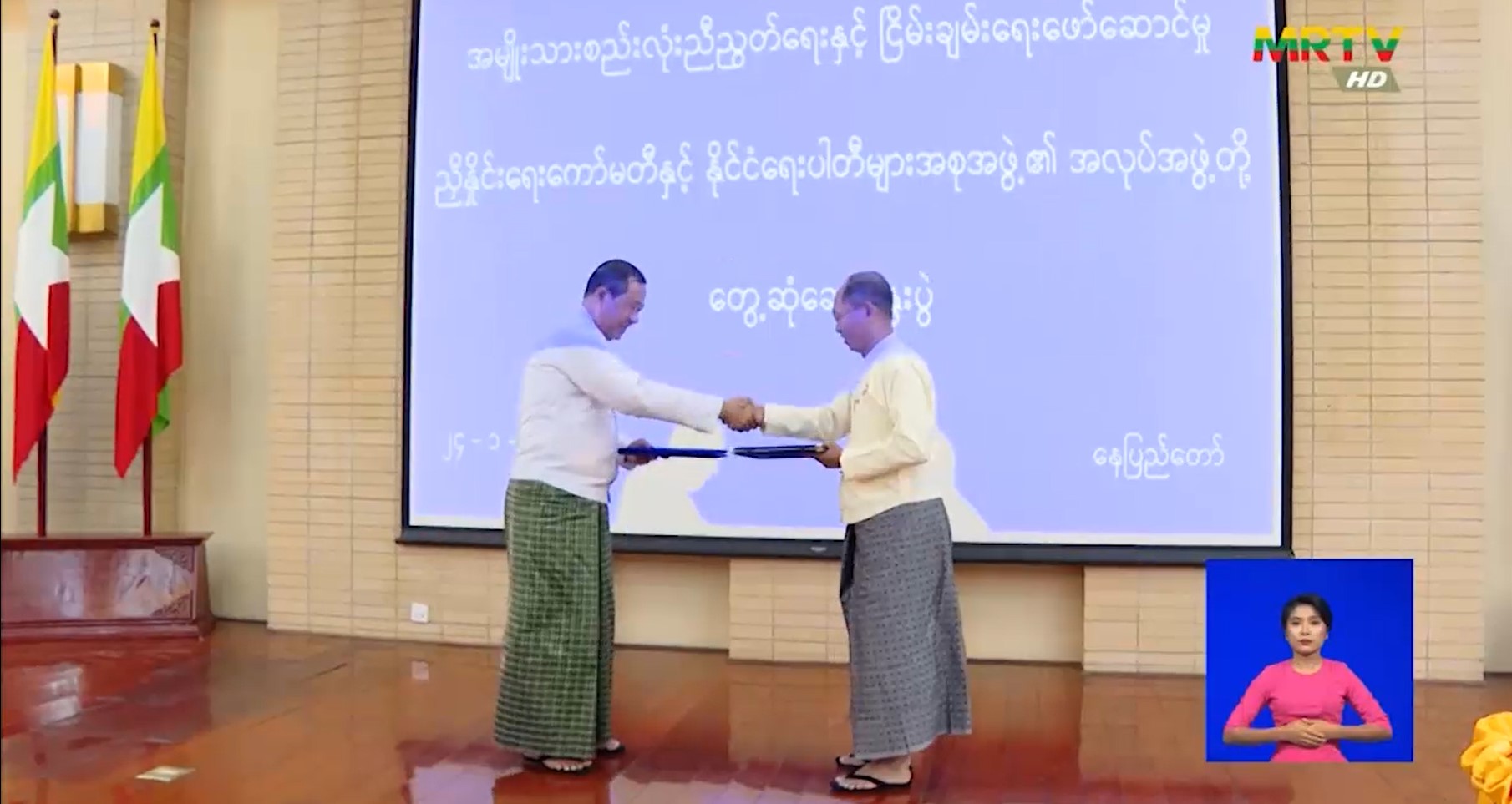
While reaching political agreements.
He said, "Democracy, federalism, and peace are intertwined like two sides of a coin. I don't think a sequential approach—doing one after the other—will work well. To strive for peace in the first two and a half years, federal issues must be the core of those discussions. Ethnic groups have demanded the federalism they desire since independence. Therefore, peace and federalism will move forward together. Regarding methods, some things should be presented to the public, while others should continue as internal implementations. Currently, we have the NCA (Nationwide Ceasefire Agreement). We must review its strengths and weaknesses."
He added, "If armed organizations are fighting, the current NCA is weak. The government should accept amendments of the NCA that benefit the people. We will move toward peace via the NCA. Since Paragraph 26 of the NCA states that constitutional amendments and other laws can be amended or supplemented, this must be discussed in parliament and the NCA path must be implemented from one side."
Political parties have pointed out that the post-election government should be formed as a national unity government style to accelerate political dialogues.
However, military and political analysts noted that the incoming government might manage the executive, legislative, and judicial branches by taking lessons from the various administrative eras of U Than Shwe, U Thein Sein, and Daw Aung San Suu Kyi. Therefore, the new government's policies on peace and socio-economics remain to be seen.
Page 27 of 352
Connect with us