
English Edition
- By CNI
- Category: English Section
- Hits: 251
CNI News
March 7, 2026
Political analyst Dr. An Kaw La told CNI News that there are two major weaknesses in the Nationwide Ceasefire Agreement (NCA).
According to him, the first major weakness concerns territorial issues, while the second is the inability to effectively implement national-level political dialogues.
Dr. An Kaw La said:
“Regarding the peace process, the NCA was implemented as much as possible. However, there are two main weaknesses in the NCA. The first concerns territorial issues. There is a certain assumption that groups must have territory. That is one issue. The second is that the NCA was actually designed to gain legitimacy through national-level political dialogues based on ethnicity and region, followed by conferences. The weakness is that these two points have not worked well. National-level political dialogues have not been conducted widely or effectively. That is one issue. The other issue is the territorial question. For example, I will explain. The Arakan Liberation Party (ALP) led by Saw Mra Razar Lin no longer has territory, even though it signed the NCA. So it has become stuck in a difficult position. Because the process is restricted by territorial conditions, what happens is that armed groups start thinking they must fight to gain territory. The original idea was that groups would sign the NCA, stop fighting, and continue political dialogue from their existing positions. If necessary, they could withdraw from certain areas. But another problem is that national-level political dialogues have not been held. The frameworks intended to organize such dialogues have many weaknesses. These issues need to be carefully reviewed and corrected.”
Military and political analysts have also pointed out that the negotiation frameworks of the NCA should be revised, because continuing the process exactly as it was in the past may no longer be effective.
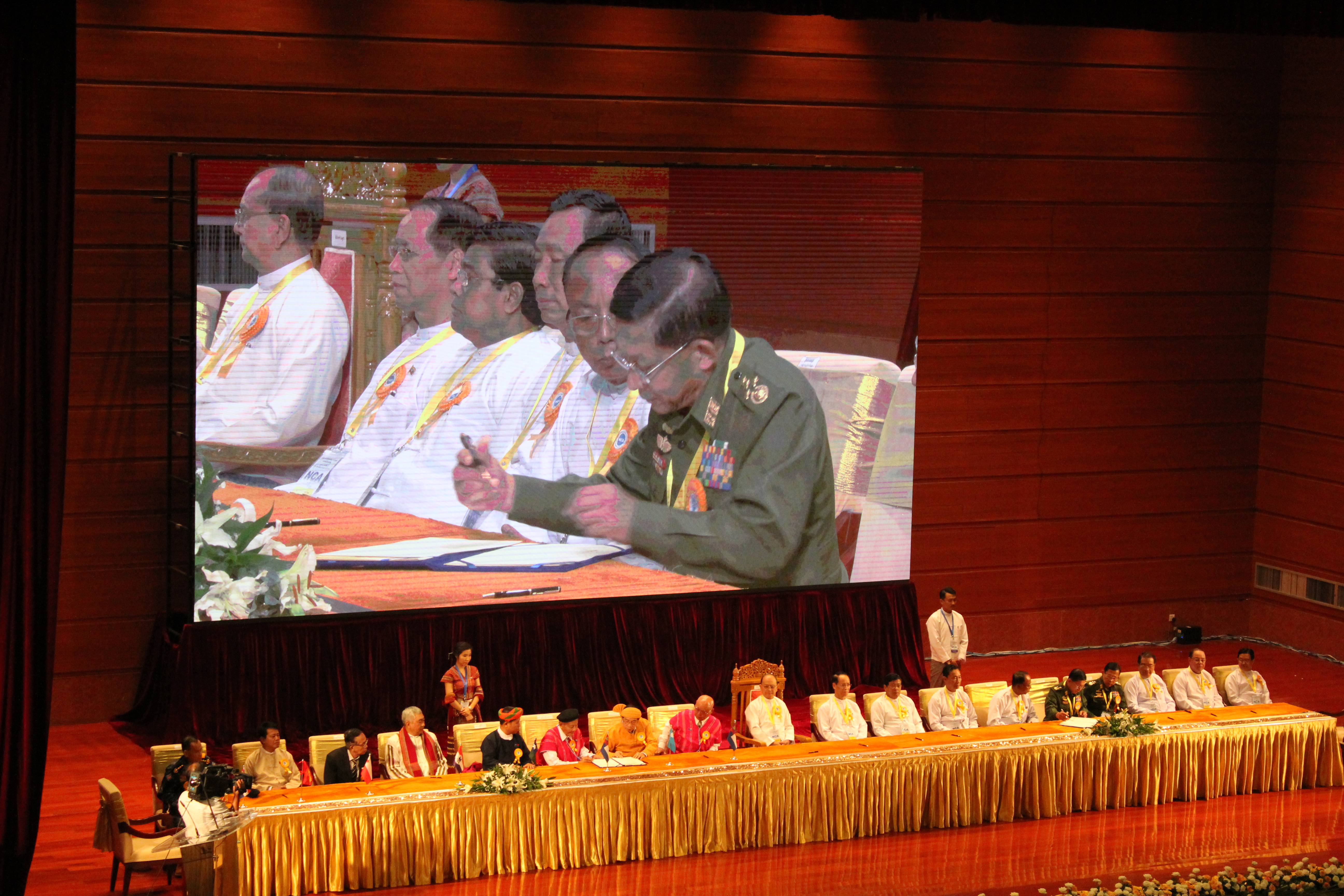
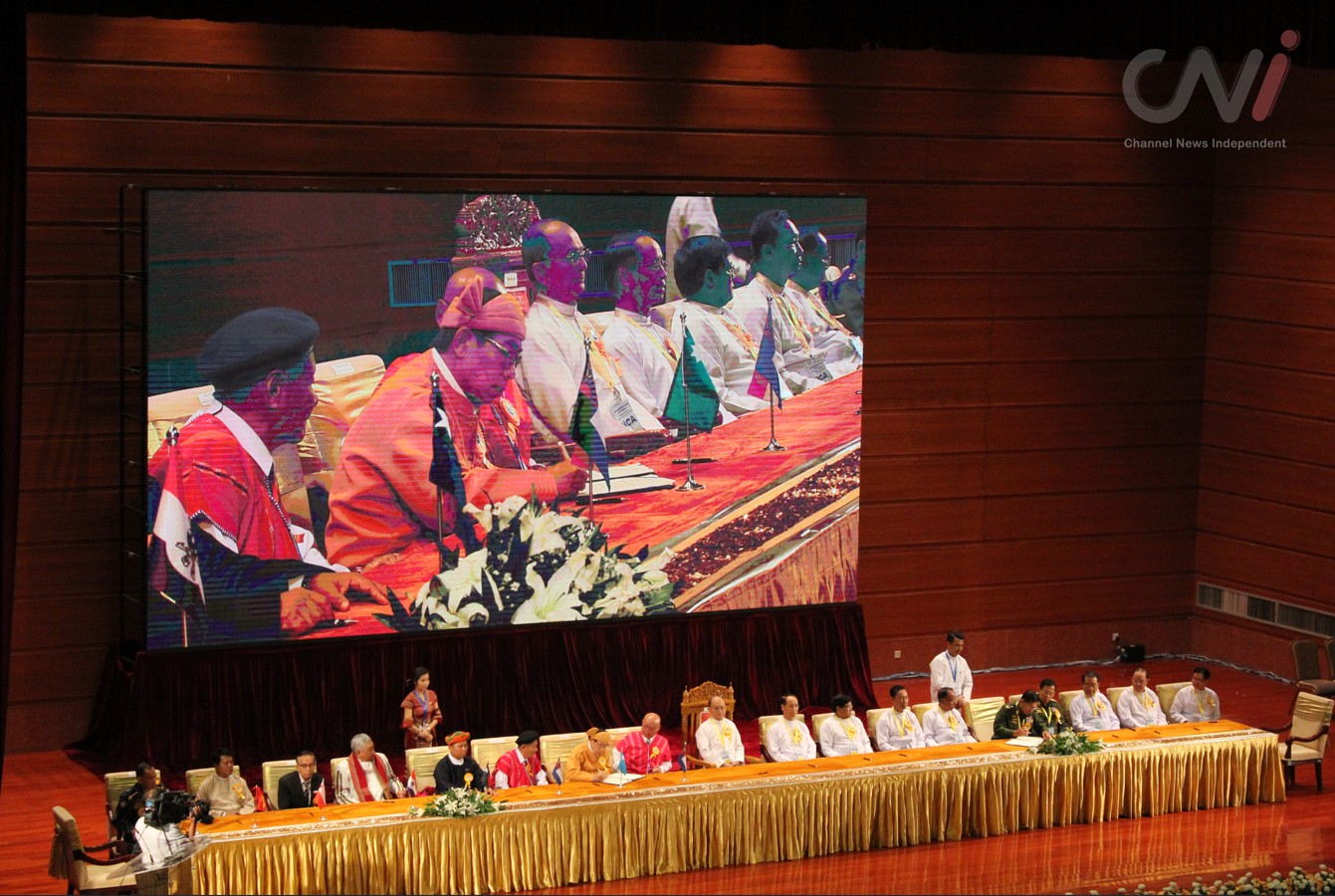
Signing the NCA in 2015 seen
Sai Htay Aung, chairman of the Tai-Leng (Shanni) Nationalities Development Party (TNDP), told CNI News that although the NCA may have weaknesses, the new government could still use the NCA pathway to discuss peace.
He said:
“It is true that there may be weaknesses. The NCA process started during the time of President U Thein Sein. The agreement went through several stages, and later the government revised some points it wanted. In fact, about 90 percent of the proposals came from the EAO side. Of course weaknesses may exist; no agreement can ever be completely perfect. But for the moment we still have to proceed based on the NCA. There are still groups that continue to follow the NCA path. However, this does not mean we must rigidly follow it without change.We can revise strategies and negotiate many aspects. Therefore, I believe the government will still pursue peace through the NCA framework.The NCA was signed in front of the international community with eight EAOs. For that reason, the government will likely continue following the NCA agreement. Even if there are weaknesses, they can be improved along the way.”
The Nationwide Ceasefire Agreement (NCA) was signed on October 15, 2015, by the following groups: Karen National Union (KNU),Restoration Council of Shan State (RCSS),KNU/KNLA-PC,Democratic Karen Benevolent Army (DKBA),Arakan Liberation Party (ALP),All Burma Students’ Democratic Front (ABSDF),Chin National Front (CNF),Pa-O National Liberation Organization (PNLO).
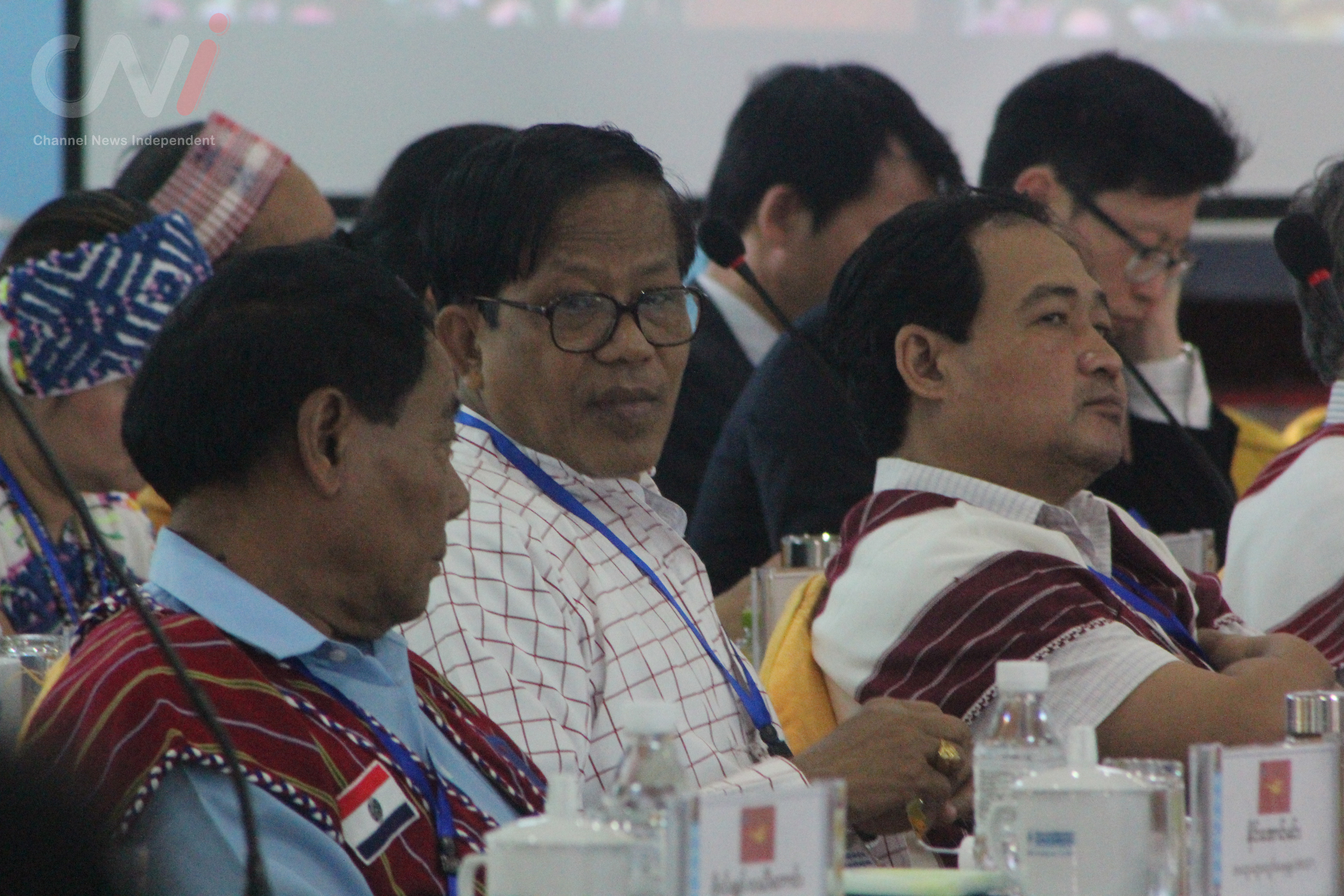
Leaders of Mon, Karen and Karenni
Later, on February 13, 2018, the following groups also signed: New Mon State Party (NMSP),Lahu Democratic Union (LDU).
Currently, KNU, CNF, and ABSDF have withdrawn from the NCA and are engaged in fighting against the Myanmar military (Tatmadaw). Meanwhile, ALP, PNLO, LDU, and NMSP have split into two factions each.
- By CNI
- Category: English Section
- Hits: 246
CNI News
March 7, 2026
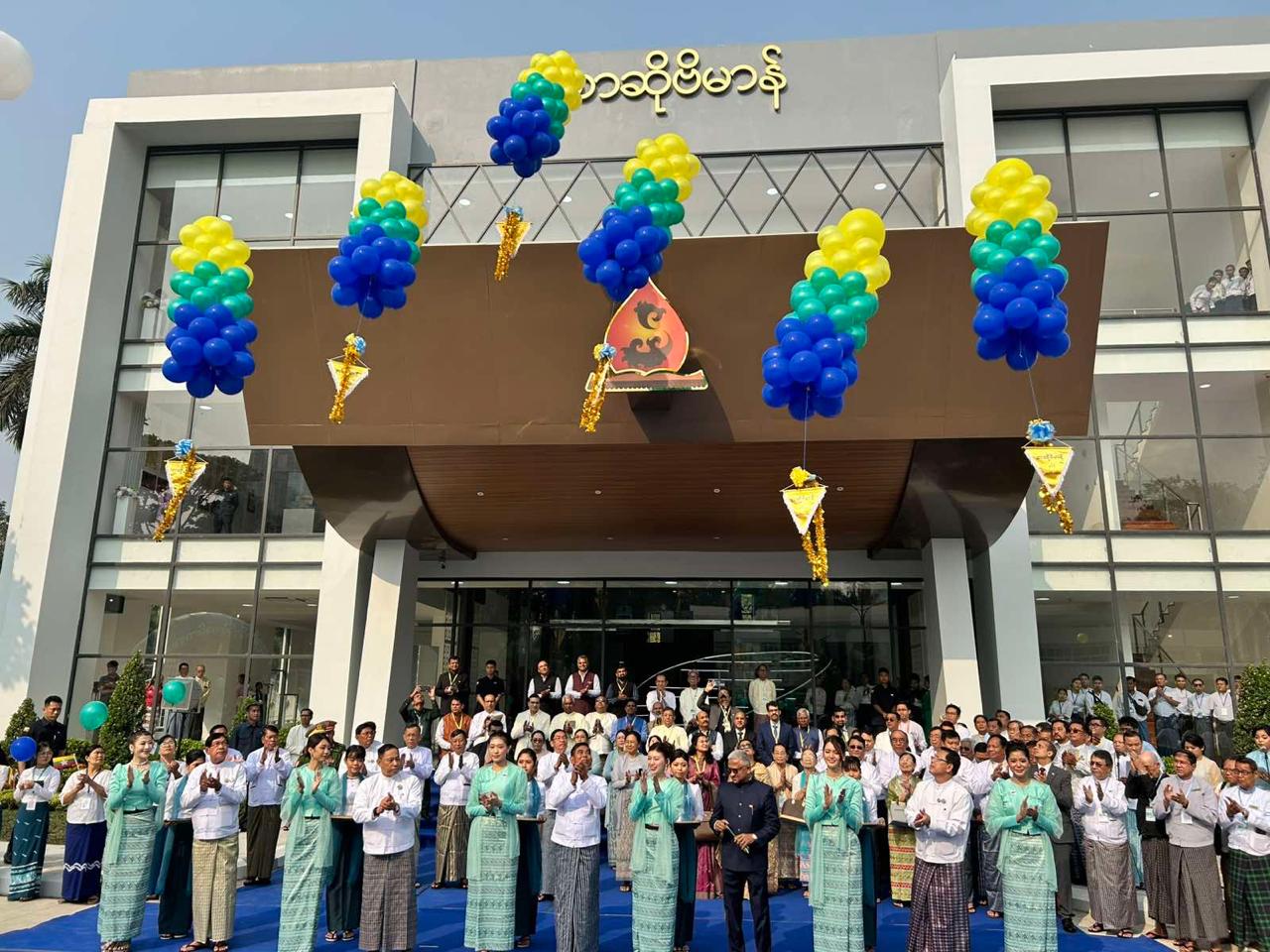
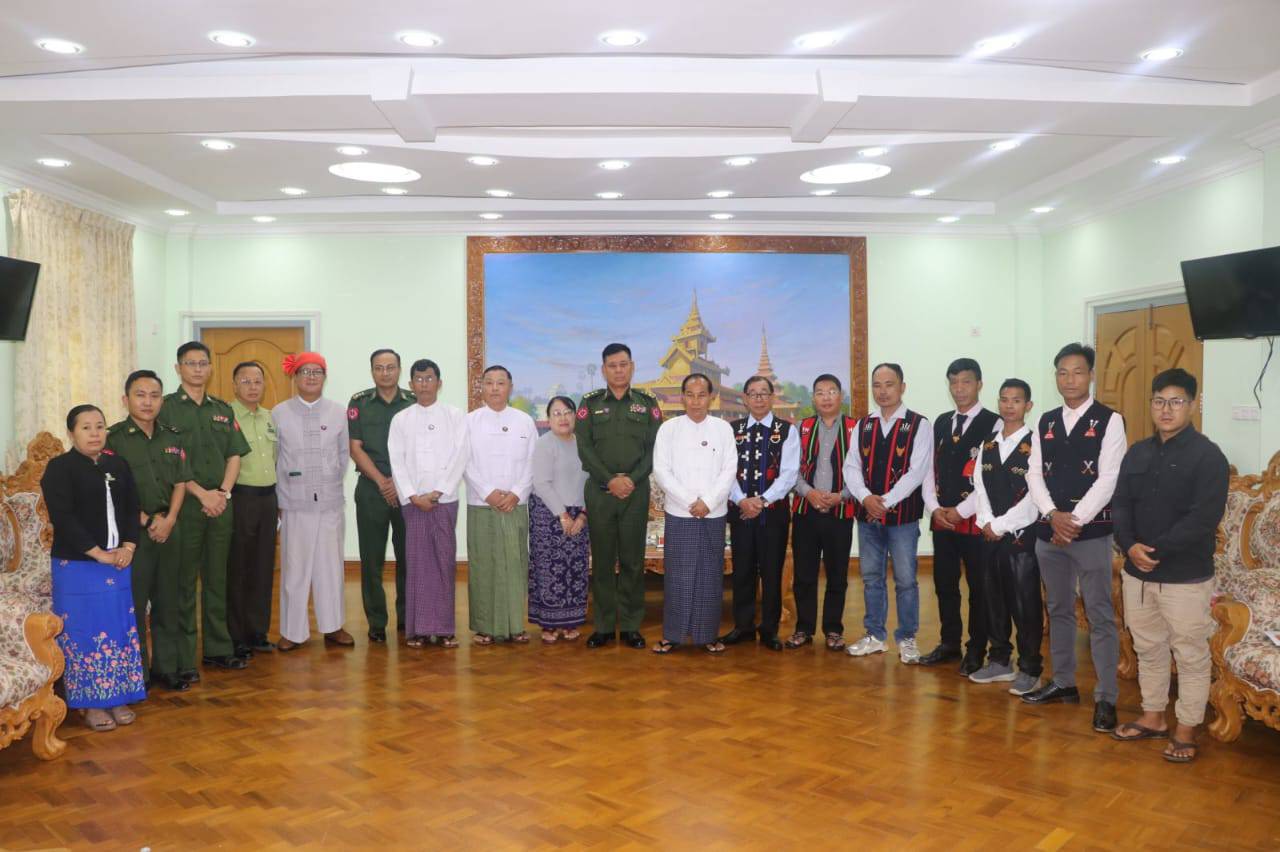
A new Sarso Beikman (Literati Building) has been constructed on Bo Min Gaung Road, Mingala Taung Nyunt Township, Yangon, with the assistance of the Indian government.
The opening ceremony, organized by the Printing and Publishing Department under the Ministry of Information, was held on March 4, 2026.
The event was attended by:
U Nyo Saw, Prime Minister,Lt-Gen Yar Pyae, Minister for Border Affairs,Lt-Gen Phone Myat, Minister for Home Affairs,U Maung Maung Ohn, Minister for Information,U Soe Thein, Chief Minister of Yangon Region, Mr. Abhay Thakur, Indian Ambassador to Myanmar, and other embassy officials.
It is reported that the Indian government provided over $3.7 million in aid for the construction of the Sarso Beikman as a symbol of Myanmar-India friendship.
- By CNI
- Category: English Section
- Hits: 578
CNI News
March 7, 2026
The National Socialist Council of Nagaland–Khaplang/Ang Mai (NSCN-K/AM) said it wants to hold discussions with the Myanmar military(Tatmadaw)/government to achieve peace for the development of the Naga region and the Naga people, according to U Ching Maung, chairman of the group’s Peace-making Committee, speaking to CNI News.
Senior General Min Aung Hlaing, chairman of the State Security and Peace Commission, said the government will carry out necessary work for the development of the Naga Self-Administered Zone in Sagaing Region, which remains one of the least developed areas in Myanmar.
He made the remark on February 16, 2026, during meetings with departmental officials and local elders in Lahe and Leshi towns in the Naga Self-Administered Zone.
NSCN-K/AM is currently an armed organization engaged in a peace process with the Myanmar military and said it will prioritize the development of the Naga region, according to U Ching Maung.
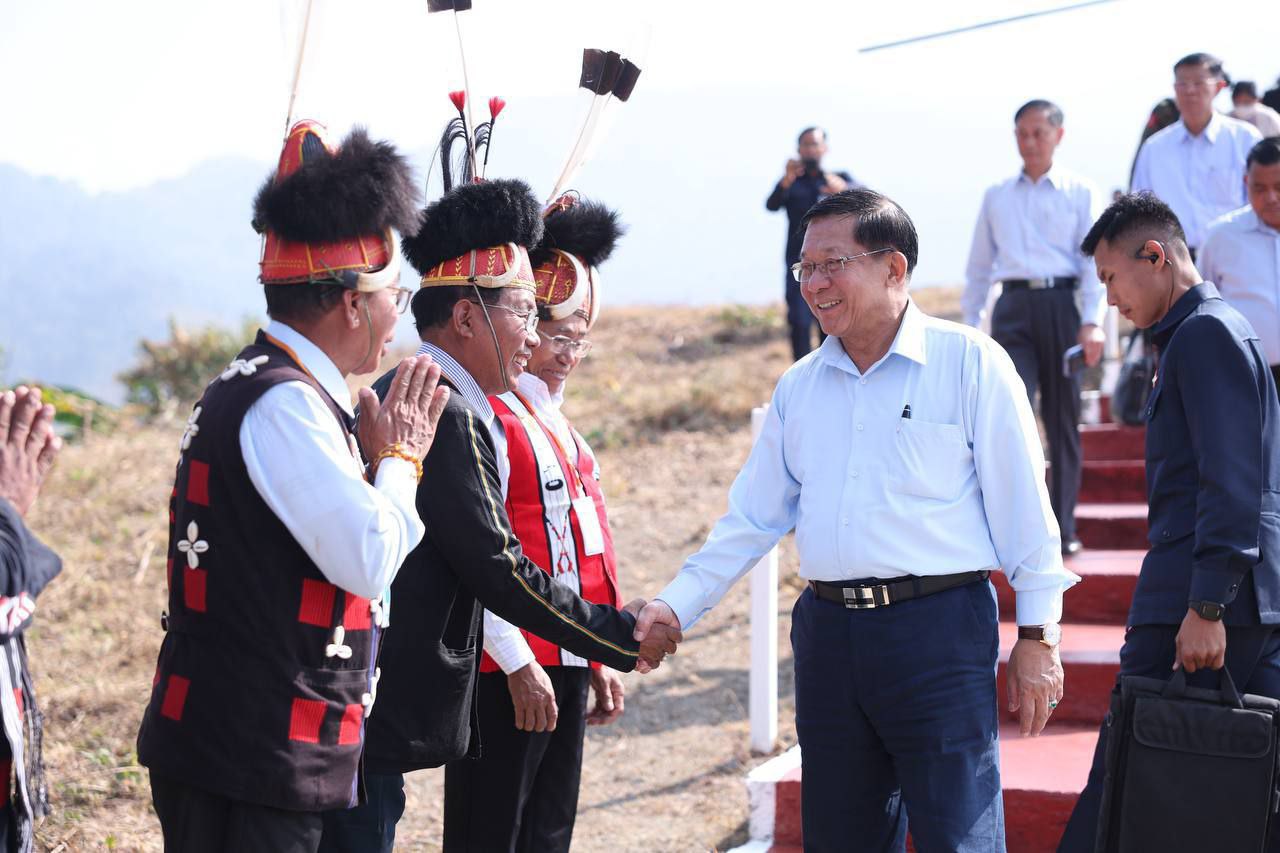
Senior General Min Aung Hlaing and Naga tribe
He said:
“There are many organizations within our society. In any case, we are moving toward independence. At present, we are carrying out a peace process with the Myanmar government. The purpose of the peace process is mainly to ensure regional stability, regional development, and improvement of people’s livelihoods.Our Naga region is indeed very underdeveloped. Because development has lagged so much, we will prioritize regional stability. We will work together with the government on regional development matters. That is the path we are following.We have many proposals for the peace process. Discussions with the regional government have already taken place. After the formation of the new government following the election, we will proceed to the Union-level discussions. At that time we will know what exactly will be discussed.”
NSCN-K/AM held meetings in 2024 with the Sagaing Region government and the Northwest Command.
However, the group is now preparing to hold Union-level peace talks.
Chairman U Shu Maung of the Naga National Party (NNP) told CNI News that peace efforts would be better if the root causes and issues related to the organization’s survival could be clearly discussed.
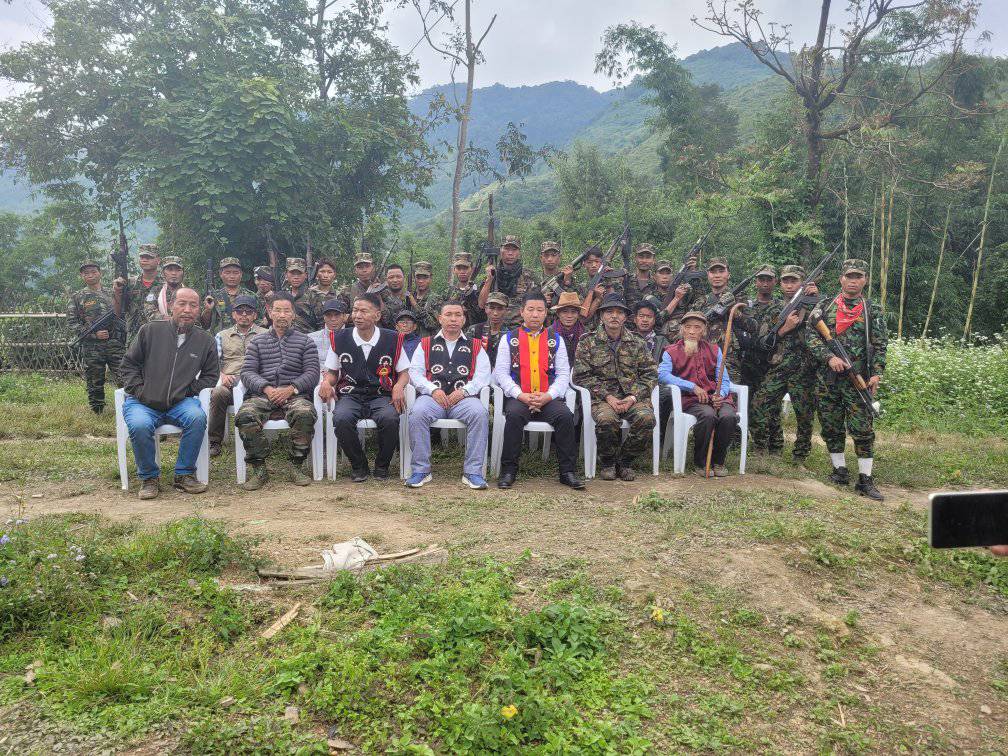
Some members of the NSCN-K/AM
He said:
“First of all, pursuing peace is a good thing. But the question is what the fundamental reasons behind the peace process are. When we talk about regional development, is it mainly for the organization’s survival or based on the needs of the people? There are organizations connected to the public that understand the people’s needs. Therefore, it is necessary to meet and discuss properly with those organizations as well. If discussions are also held at the grassroots level and the needs of the people can be presented, that would be better.The country already has a peace framework. The National Solidarity and Peacemaking Negotiation Committee (NSPNC) has been leading efforts to implement peace. If they sign the Nationwide Ceasefire Agreement (NCA), the NSPNC will implement matters related to national stability and development. They have been working on this for many years.So the question is whether they want to follow that path or what kind of format they want for the peace process.”
The Naga region faces severe transportation difficulties. Because roads are poor and transporting goods via the Monywa–Homalin–Khamti river route is difficult, the flow of goods is often disrupted and food shortages occur.
Observers pointed out that the Naga region could develop if the Pangsaung border gate—currently the only border gate in the area—is upgraded and transportation infrastructure is improved.
At present, various armed groups are active in the Naga region, including:
NSCN-K/AM, NSCN-K/YA, ENNO/ENND, Naga PDF, NSCN-IM, NSCN-Hashi Ramsan, PLA, MPA, UNFA-(I), and ULFA.
- By CNI
- Category: English Section
- Hits: 226
CNI News
March 6, 2026
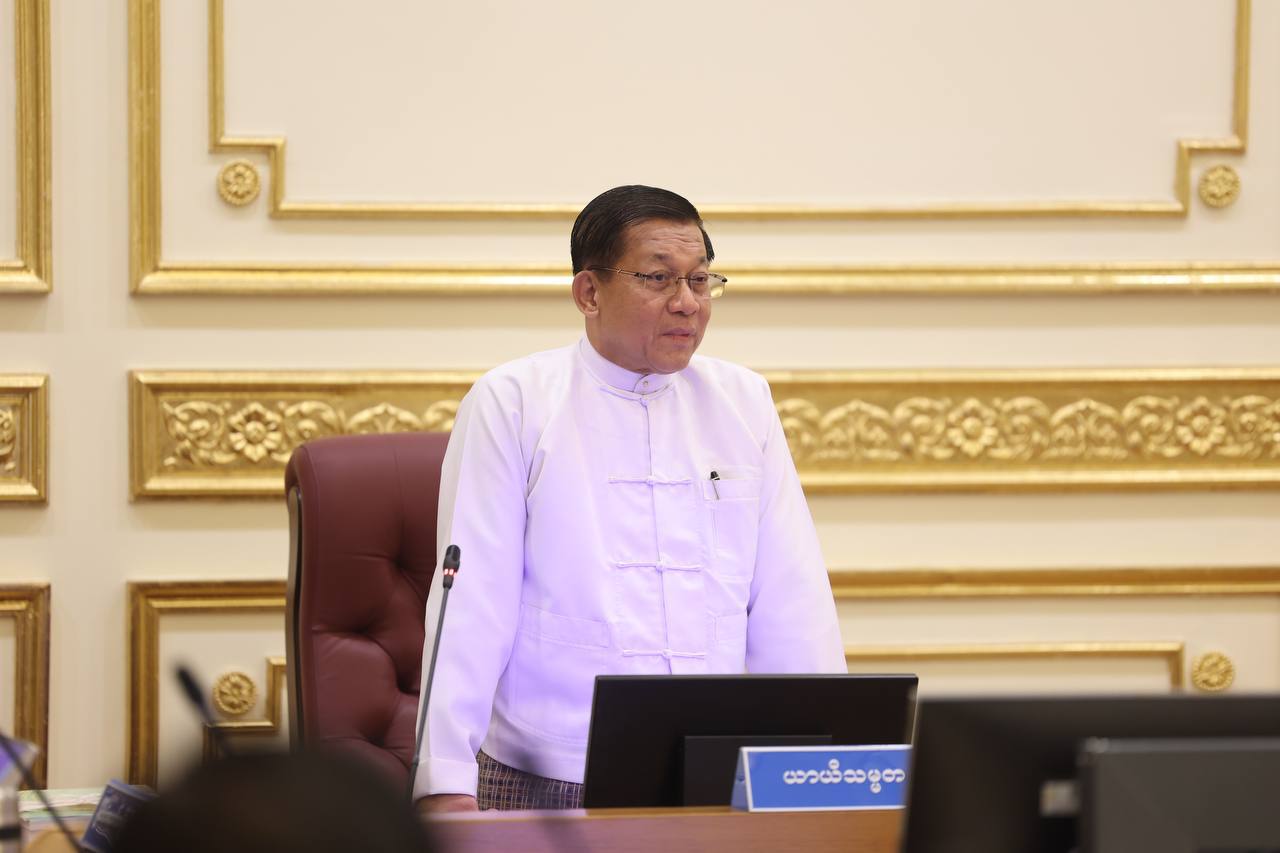
Senior General Min Aung Hlaing, Chairman of the State Security and Peace Management Commission, stated that efforts will continue to achieve peace for the development of the people and the nation.
He made these remarks during a Financial Commission meeting held on March 6, 2026.
Senior General Min Aung Hlaing said, "National unity is extremely important for the stability of the country and the rule of law. Therefore, it is necessary for all ethnic people to hold onto mindfulness and wisdom, stand firmly on the path of the Nationwide Ceasefire Agreement (NCA), and strive together to achieve eternal peace. Only when peace is achieved can the country develop and the socio-economic lives of the people improve. Thus, we must continue to strive for peace for the development of the people and the State."
In Myanmar, the Nationwide Ceasefire Agreement (NCA) was signed on October 15, 2015, by the Restoration Council of Shan State (RCSS), Democratic Karen Buddhist Army (DKBA), KNU/KNLA Peace Council (KNU/KNLA-PC), Arakan Liberation Party (ALP), Pa-O National Liberation Organization (PNLO), Karen National Union (KNU), Chin National Front (CNF), and All Burma Students' Democratic Front (ABSDF).
Later, the New Mon State Party (NMSP) and Lahu Democratic Union (LDU) signed the NCA on February 13, 2018.
Currently, the KNU, ABSDF, and CNF have declared that the NCA is void, withdrawn from the agreement, and are engaged in active fighting with the Myanmar military.
Similarly, the NMSP, LDU, ALP, and PNLO have split into two factions.
Furthermore, groups such as the UWSA, NDAA, SSPP, TNLA, MNDAA, AA, KIA, and KNPP have stated that they cannot sign the NCA.
Beyond the NCA framework, there are groups like the Shanni Nationalities Army (SNA), Kuki National Army (KNA), Zomi Revolutionary Army (ZRA), National Socialist Council of Nagaland (NSCN), and Arakan National Council (ANC), as well as the PDF organizations that emerged after February 1, 2021.
- By CNI
- Category: English Section
- Hits: 532
CNI News
March 6, 2026
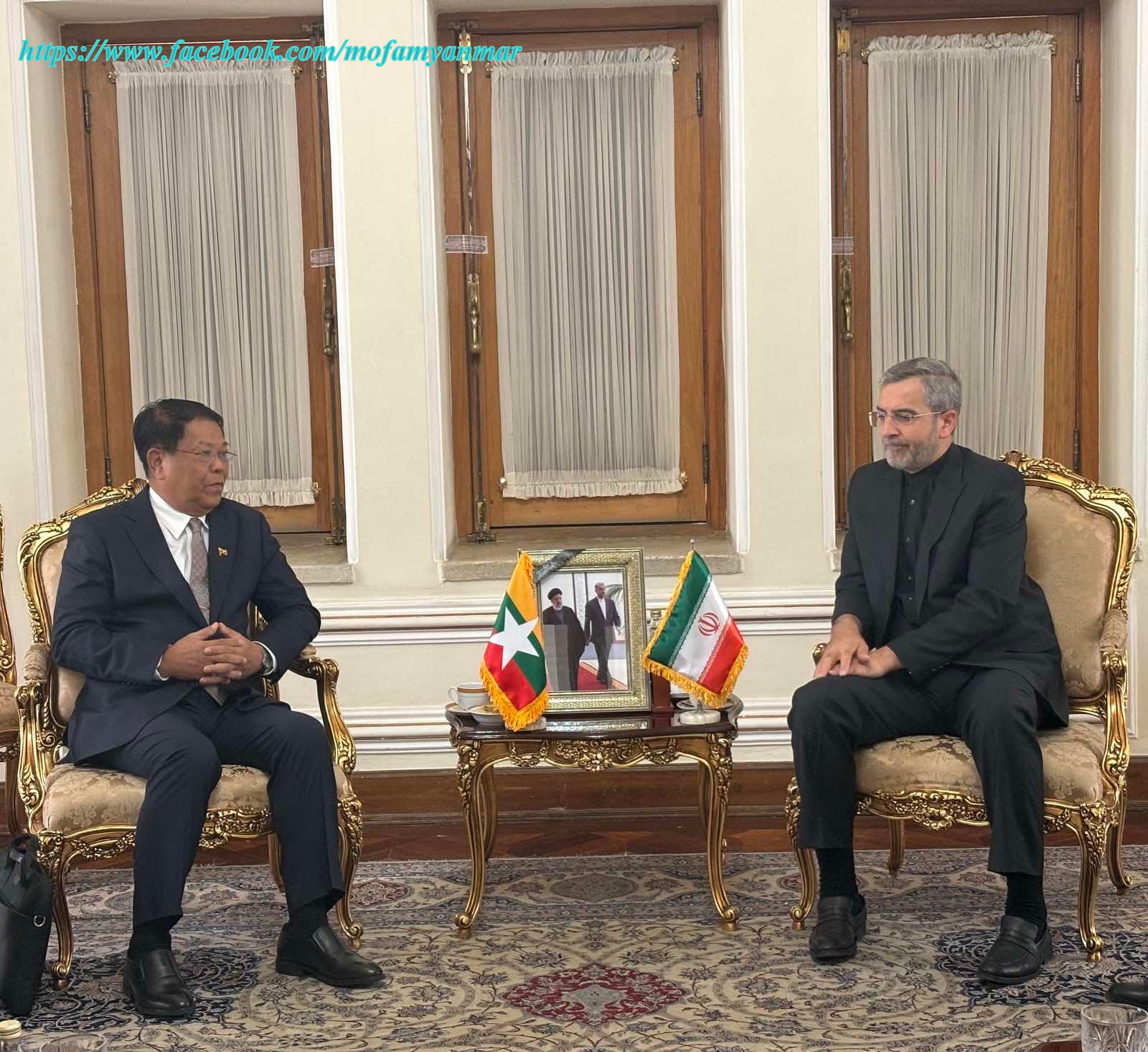
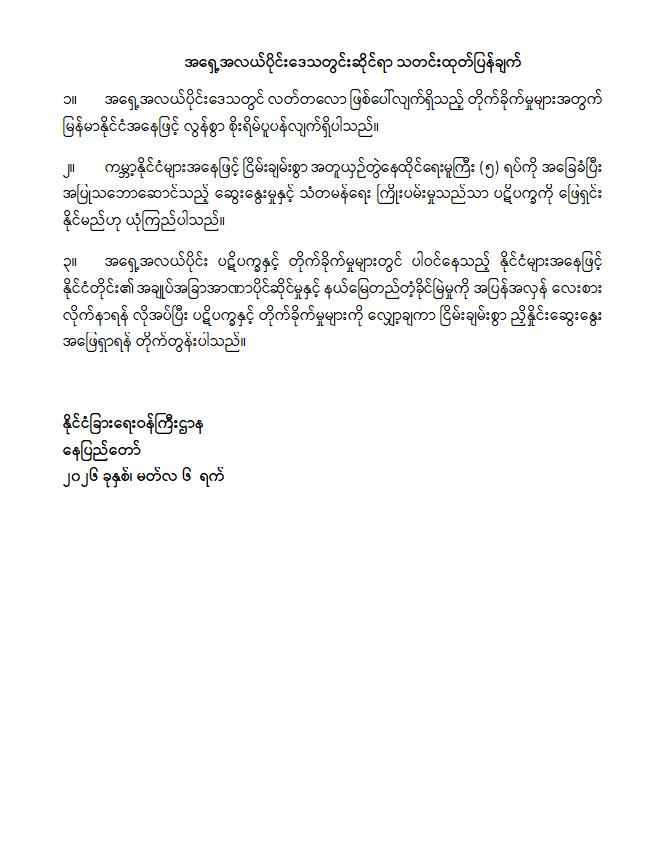
The Myanmar Ministry of Foreign Affairs (MOFA) issued a statement on March 6, 2026, urging a de-escalation of the ongoing war in Iran and calling for a peaceful resolution through negotiations.
Myanmar expressed deep concern over the recent attacks currently unfolding in the Middle East region.
"Myanmar believes that constructive dialogue and diplomatic efforts, based on the Five Principles of Peaceful Coexistence, are the only ways to resolve the conflict," the Ministry stated.
Furthermore, the Ministry of Foreign Affairs urged the nations involved in the Middle East conflict and hostilities to respect the sovereignty and territorial integrity of all states, reduce confrontations, and seek a peaceful solution through negotiation.
The war in the Middle East has been ongoing since the United States and Israel launched attacks on Iran on March 1, 2026.
The strikes by the U.S. and Israel resulted in the deaths of high-ranking military officials, including Iran's Supreme Leader Ali Khamenei.
In response, Iran has been retaliating against U.S. military bases located across the Middle East and has blockaded the Strait of Hormuz, preventing oil tankers from passing through. This situation has led to a burgeoning global energy crisis.
- By CNI
- Category: English Section
- Hits: 333
CNI Interview
March 6, 2026
Myanmar is currently home to numerous armed organizations, and intense fighting is breaking out across the country. While there are calls for peace and attempts at dialogue, success remains elusive. Despite practicing a non-aligned policy between neighbors China and India to promote national development, the country continues to face a general political crisis.
CNI News Agency contacted U Khun Sai, a participant in the peace process, to discuss these conditions.
Q: During the British colonial era, Myanmar had a "98 Departments" administration—though most know it as the "91 Departments" administration. The British controlled seven key departments, while the remaining 91, which were considered less critical, were left to Burmese control. Would a similar system work in Myanmar today? For instance, having the center hold key departments while appointing and empowering local leaders in their respective states?
A: I haven't studied that specific historical system extensively, so I can't give a definitive answer. What I can speak to is the Panglong Agreement. According to the agreement and its subsequent protocols, the central government handles matters concerning everyone, while states handle matters concerning their own territories.
When people hear "the center handles collective matters," it can be interpreted as the Burman government ruling while non-Burman ethnicities only manage their own states. Many understand it that way. However, the leaders who drafted the Panglong Agreement—including Burman leaders—didn't view it like that. The central government wasn't meant to be "Burman-only." It was intended to include ethnic and minority leaders working together.
If you look at the Panglong Agreement, points 1 through 4 relate to the central government, and you can see ethnic leaders were involved there. Since ethnic leaders themselves are part of the center, there is no need for the central government to worry about states governing themselves.
Nowadays, when "Panglong" is mentioned, people often think of secession or independence. But Panglong wasn't built for that. It allows for self-administration within a state. If everyone manages collective matters together at the center, the issue of secession won't even arise. We need to distinguish this clearly. If we don't, and the mindset remains "Burmans hold the center while ethnicities hold the states," then there is a real reason to worry.
In U Nu’s era, state leaders—then called "Chairmen" rather than Chief Ministers—participated in the Union government. This supported the essence of Panglong: that matters concerning everyone are decided by everyone. We need to act in that spirit. Regarding the 91 or 98 departments, I have no specific comment.
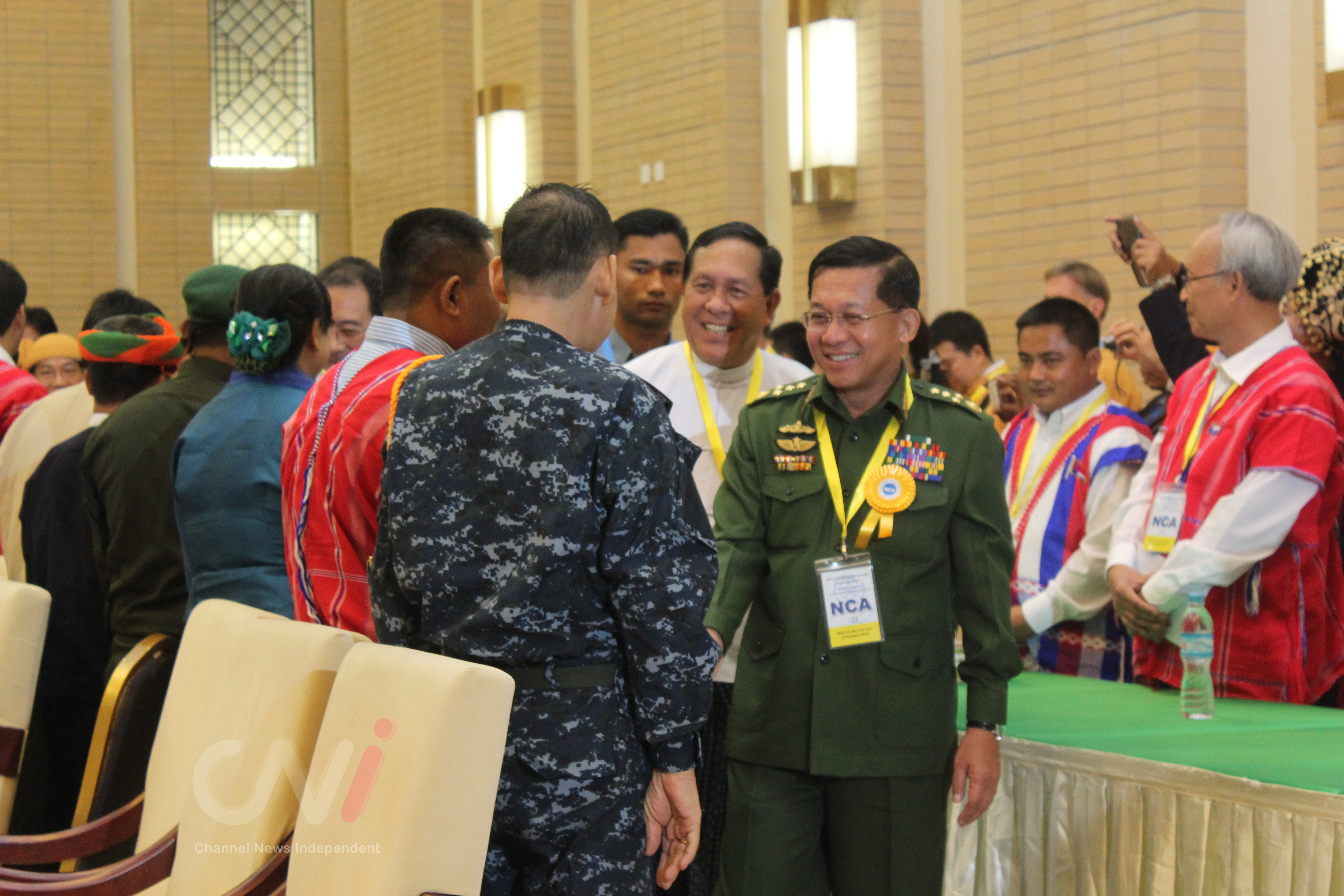
Senior General Min Aung Hlaing and representatives of armed groups.
Q: How do you think the issue of Ethnic Armed Organizations (EAOs) should be resolved?
A: Regarding the EAO issue, looking at current proposals like the "Watan Act," the Burman government might find them unacceptable, viewing them as a "Confederation." However, if we accept and apply the principle that collective matters are managed together while state-specific matters are managed by the states, there is nothing to fear.
Q: Would it be feasible to grant EAOs administrative authority in their respective states?
A: Practically speaking, this could be a necessary temporary measure. However, we must accept that as we build a democracy, we must—sooner rather than later—give the public the right to participate in decision-making. A government that lacks public support, whether it's a state or central government, cannot be sustainable in the long run.
Q: Currently, the Military (Tatmadaw) is using the Border Guard Force (BGF) and People's Militia models, asking armed groups to join as such. EAOs generally dislike this. What if a model like the U.S. National Guard were adopted instead?
A: This is something that takes time. During the NCA (Nationwide Ceasefire Agreement) negotiations, the government stood for a "Single Army" principle, while EAOs stood for "State Guard Forces" in their respective regions.
These two positions represent a conflict: a "Single Army" is a globally accepted norm for a nation, while "State Guard Forces" arise from a lack of mutual trust and security. At that time, it was agreed to negotiate how to transition from separate state forces to a single Union Army step-by-step.
Work had already begun during the Third Union Accord. Had the coup (or "power-keeping") not occurred, we would have made significant strides by now. Now, because of the coup, the "Single Army" concept is even harder to accept. It will take more time and require more stringent regulations.
However, these are not insurmountable issues. Look at Switzerland. They operated with state-level forces for hundreds of years. They managed collective matters together and handled local security with their own state troops. Eventually, they became a Union Army. We don't need to wait hundreds of years like Switzerland; it could happen in a decade. But we need serious dialogue. Everyone must realize that we cannot ensure security alone as a single state or a single ethnic group. If we accept that we must work together, it is entirely possible.
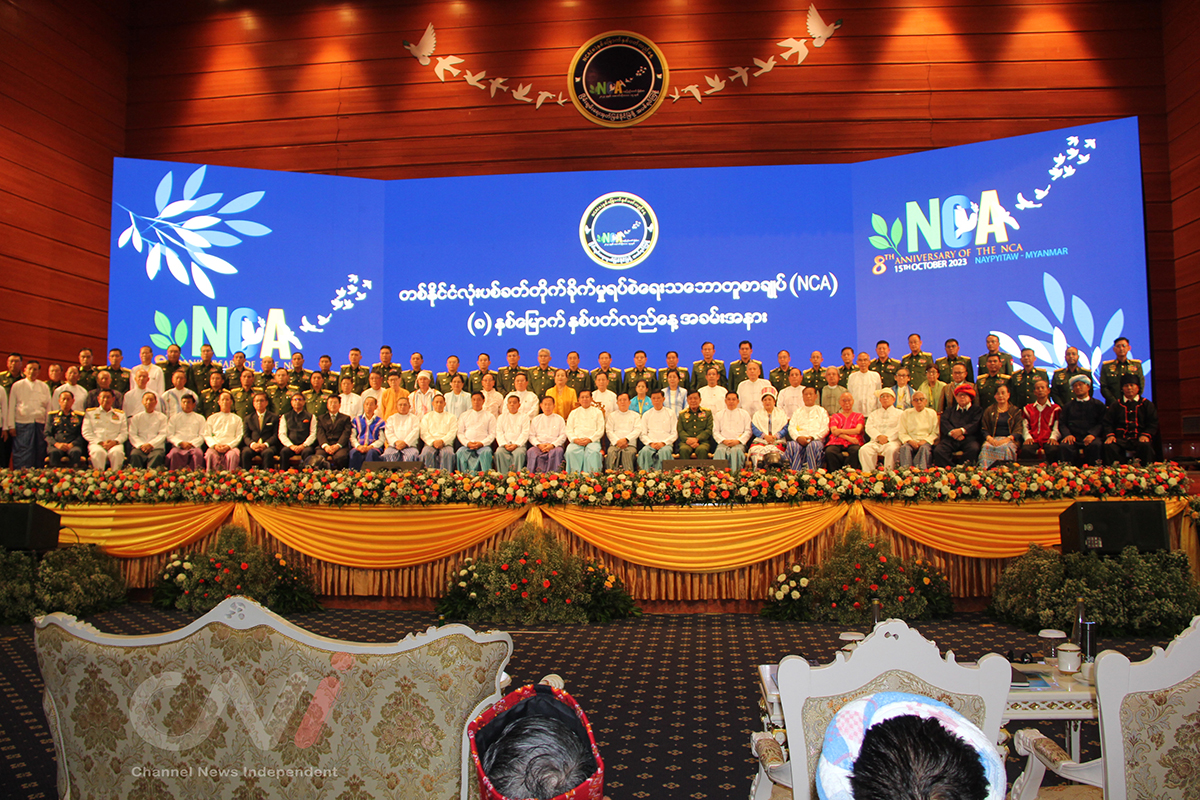
An Anniversary Celebration of the NCA (Nationwide Ceasefire Agreement).
Q: If the right to form these specific State Guard Forces were granted, how do you think the landscape of Myanmar would change?
A: Accepting this wouldn't mean accepting it as a permanent fixture. It must be viewed as an interim stage. We would need to establish clear phases for how these State Guard Forces would eventually transition into a single, unified national army.
Q: Looking at the current situation, many states have multiple EAOs. In Shan State, for example, there are many groups. How should they be organized? In the U.S., they have a Joint Chiefs of Staff model. If Myanmar moves toward a State Guard Force model, how should the initial structure look?
A: I cannot provide technical details on that. In such matters, we should collectively study how Switzerland operated before they formed a unified federal army and establish a policy that fits our own country.
What I recall is that during World War II, they still functioned with state guards. However, they had a Joint Staff for the entire country. During the war, their Joint Staff made the decisions on how to defend the nation, and the respective state guards followed those decisions.
Q: In South Africa, during Nelson Mandela's time, more than seven armed groups were integrated to form the South African National Defence Force (SANDF). His approach involved disarmament, disbanding old units, and then reintegrating them. Since they had been enemies for years and trust was hard to rebuild, they formed commissions where parties could confess their grievances and engage in dialogue. Only then were they retrained under military discipline and standards. Is such a model possible here? How should Myanmar handle this?
A: First, we must talk. But second, we currently lack figures or leaders like Nelson Mandela or Desmond Tutu. Because of this, immediate disarmament followed by reintegration is not easy in our country. It must be a step-by-step process.
However, because it is a gradual process, some might get impatient and say, "Just strip it all away—I’ll disarm first, then you disarm." That might happen, but we shouldn't rush. When we rush, we might overlook or bypass crucial details. If we ignore those details, larger difficulties will emerge later, and they will be harder to overcome. Regardless of the method, we need to talk. Through dialogue, we can find the best path.
We should consider how to combine the Swiss method I mentioned with the South African method you described. We can also study the Nepalese model and synthesize them. The most important thing is to agree: "We will absolutely not fight each other anymore."
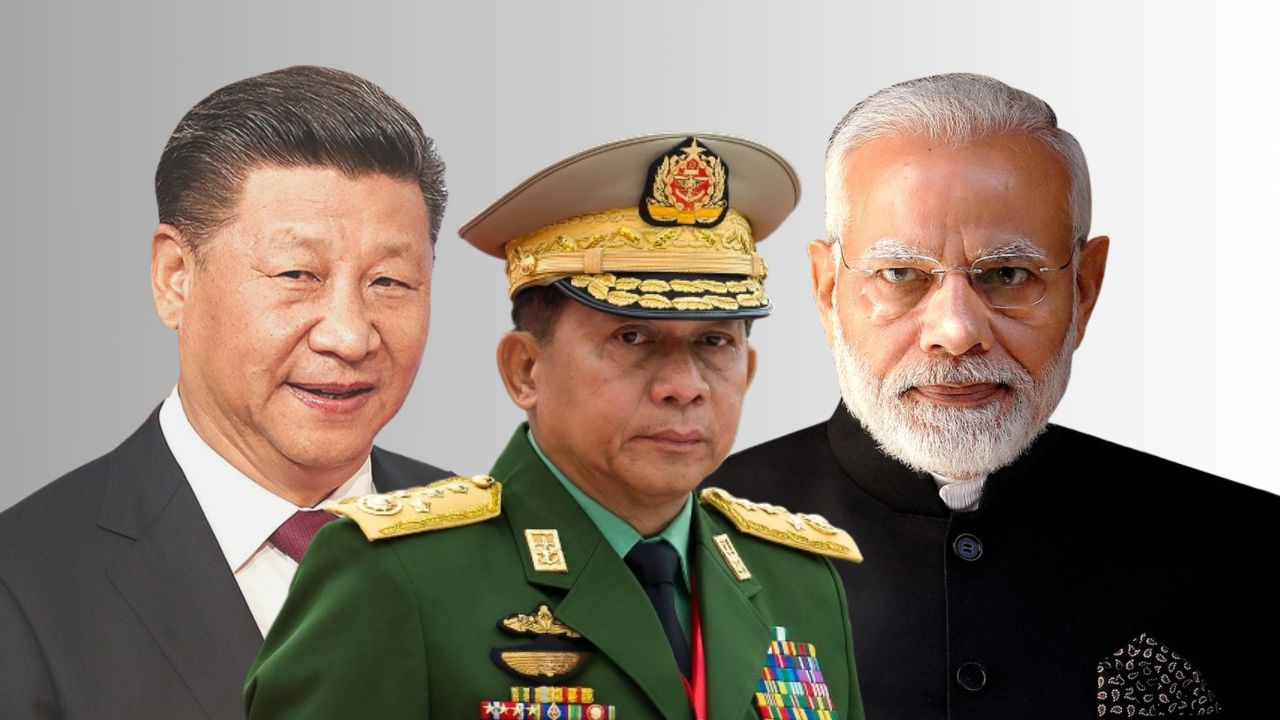
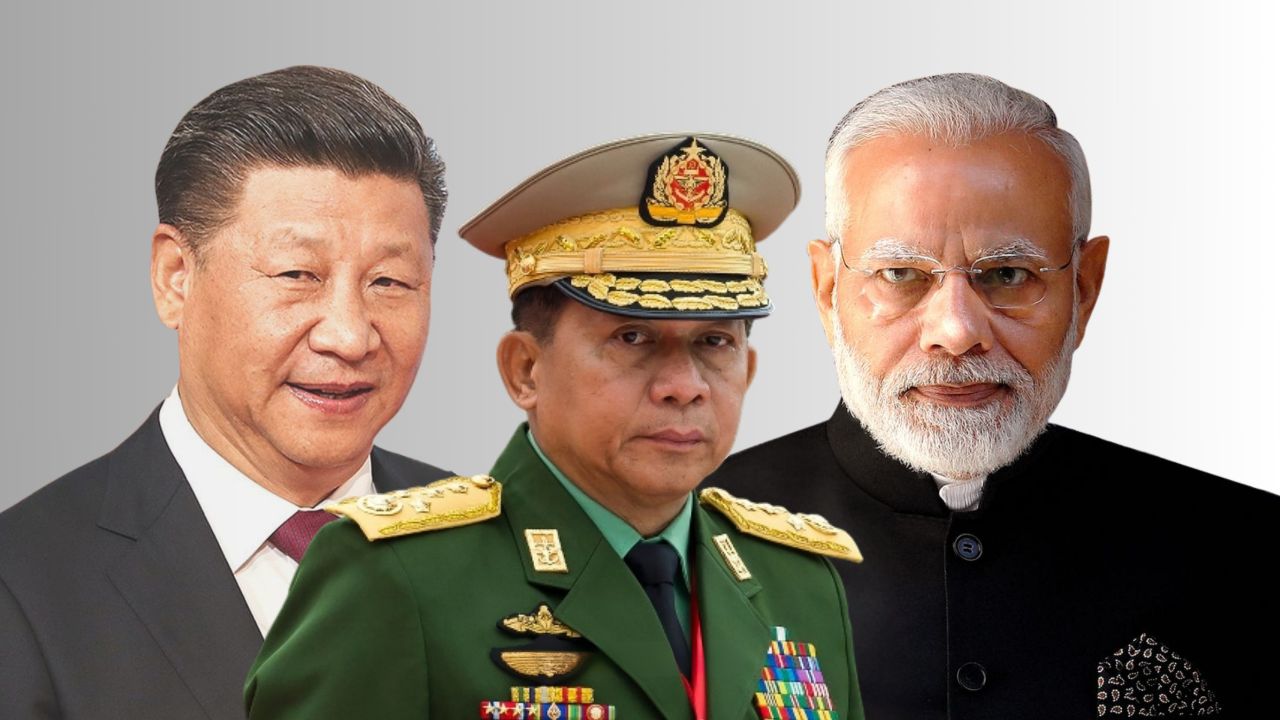
Senior General Min Aung Hlaing with Chinese President Xi Jinping and Indian Prime Minister Modi.
Q: Essentially, there must be a political agreement in place before these discussions can happen, right?
A: There must be. There is one thing we can all agree on right now: we all agree that we must become a Federal Democratic Union. However, the specific "model" of how that will look is what we must negotiate.
Q: A new government will emerge soon this month. What kind of policy should this new government adopt regarding the relationship with China and India?
A: We must follow a Non-Aligned Policy. Even though most people currently reject many sections of the 2008 Constitution, the principles that we are a non-aligned nation and that no foreign troops shall be stationed on our soil are points everyone can agree on. These should remain.
Most importantly, we need to move beyond just paying lip service to the 1955 Bandung Conference agreement and actually practice it. If we can execute that well, Myanmar could truly become the "Switzerland of the East."
Since independence, our Burmese leaders—and by that, I mean all national leaders—have dreamed of and admired this idea. It didn't happen then, but it is possible in our generation.
Q: If instead of a non-aligned policy, the new government leans heavily toward either China or India, what would that scenario look like?
A: If that happens, two things are possible. First, our country might remain a nation in name only. On the surface, we'd still be Myanmar, but in reality, we’d belong to someone else. One could argue there is a silver lining: we haven't known peace in the nearly 80 years we've governed ourselves, so one might hope that falling under another's influence would bring the same peace those countries enjoy. That is one perspective.
The other possibility is that if we align with either India or China, and those two remain at odds, we will inevitably suffer the fallout of their friction. Conversely, if our country can maintain friendship with both, we have nothing to worry about.
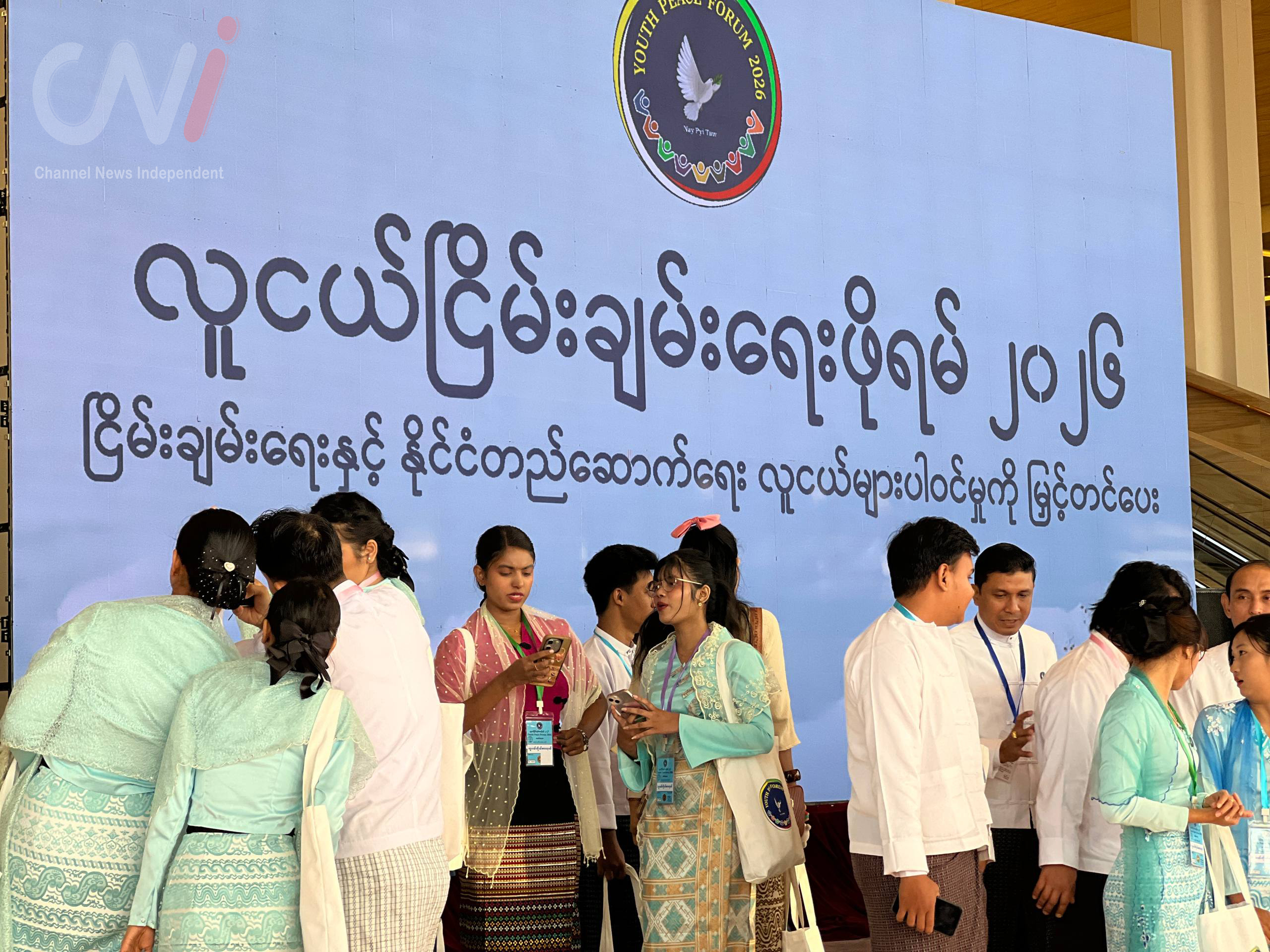
A Youth Peace Forum in progress.
Q: What is your analysis of current "Rare Earth Politics"?
A: Rare earth elements might be scarce in other countries, but you could say they aren't scarce here. Regardless, even if we sell them to whoever wants them, we shouldn't do it just to get some quick cash. We need to get the highest price for our resources.
Furthermore, the revenue generated shouldn't go into individual pockets; it must be used for the country. Geographically, our country is arguably the richest in Southeast Asia, but socially, we are incredibly impoverished. We are like a "rich man's son lost on a sandbank"—clutching a bag of money but with nothing to spend it on, reduced to a life of begging. This era of history needs to end.
I remember hearing our elders say that if every household were given just one teak tree from our forests, there is no way our people would be poor. I liked that idea. But in practice, instead of one tree per household, a single individual ends up owning and selling millions of trees. We must act to prevent this. Rare earth minerals are no different.
Q: Currently, most rare earth-producing areas are controlled by the KIA. How significant is the KIA’s role in this landscape?
A: A state with essential natural resources always has bargaining power. It is very significant. But on the other hand, consider one's survival. Suppose I am a rich man's son with billions of dollars, but I am surrounded by enemies. How can I use that money?
To use it, I need to be on good terms with everyone—or at least the majority. If you work toward that harmony, the benefits aren't just for you; they must include others. If there is a "yours and mine" balance, it’s good for everyone in the long run. We’ve all heard the fable where a deity offers a man who lost his sword a gold one, a silver one, and his original iron one. Because he chose the simple iron one, he received all three. But the one who greedily grabs for the gold sword ends up with nothing. I don't want that to happen to anyone.
In this world, we don't live alone; we live together. I don't need to teach the KIA this; General Gun Maw and General N'Ban La know this better than I do.
Q: Finally, is it necessary to place the military under civilian government control? If so, why?
A: This is a structure that has existed since ancient times. The military must serve under the "Ruler" (the Sovereign). Generals are subordinates to the Sovereign. Whether to keep a general or not depends on the Ruler. However, the Ruler must have the "Virtues of a King," and the Generals must have the "Virtues of a General." Each has their place.
I’m not speaking religiously here. Look at Sun Tzu’s The Art of War. It states that winning a war depends on five factors. Two of the most important are:
The Ruler (The Way): This is the political policy and morality of the leader. If the entire population supports the leader and is willing to follow them even unto death, victory is certain.
The General: The commander’s ability is also vital.
While both the Ruler and the General are crucial, the Ruler must be at the top.
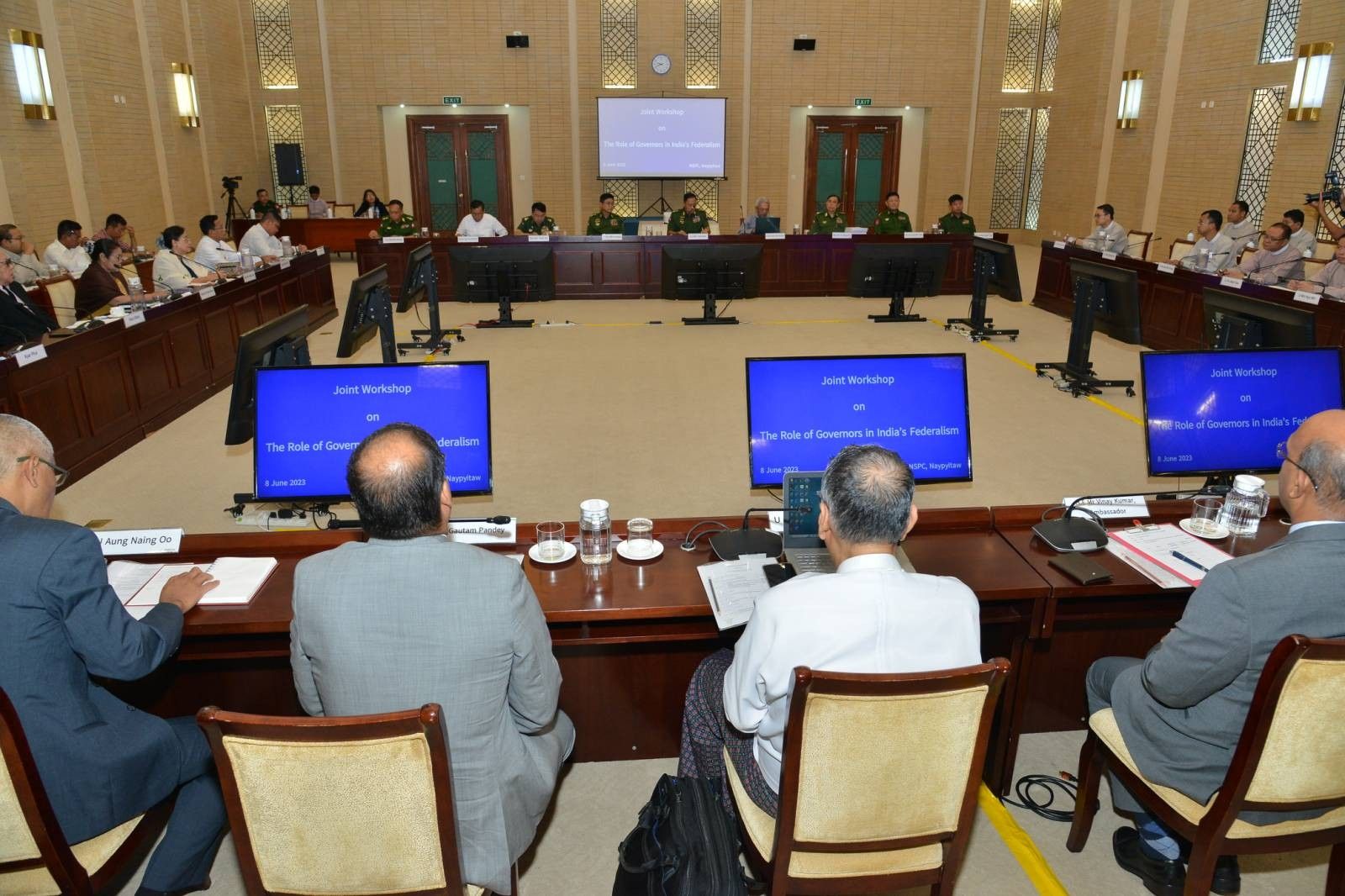
Discussions on Federalism in progress
Q: Do you see that kind of structure emerging in the current Myanmar political landscape?
A: Even George Washington became President. I'm not saying it can't happen here. But remember, when George Washington became President, he didn't rule America like he was commanding an army. That is worth remembering.
Q: If the military stays above the civilian government instead of under it, what happens to the country?
A: That contradicts the traditional wisdom of our elders, so it’s hard for such a system to be sustainable. Our country's failure to thrive is primarily because the military has stayed in a superior position. We must not forget that since 1962, as the military took the upper hand, our country went from being very wealthy to being very poor.
Q: Do you have any additional comments?
A: I think the main problem—and I might be wrong—is that we tend to make things more complicated while trying to solve them. I heard President Donald Trump say that the situation in Iraq was bad before they attacked, but it became much worse after.
This happens when the wrong methods are used for a solution. If we act out of fear and hatred instead of using the right methods, the country will never improve. If we have loving-kindness for one another and discard anger, we can solve any national problem.
Foreign peace experts have told me they've never seen a people as politically savvy and knowledgeable as those in Burma. Every group is full of political "doctors." But their problem is that instead of discussing to reach an agreement, they spend all their time trying to "win" the debate. When they can't win the debate, they take up arms.
That is why our country needs to move away from the culture of "Debate" (trying to beat the other side) and toward "Dialogue" (searching for the truth together). Whether it was President U Thein Sein or whoever else, we started talking about a new culture of solving political problems through discussion rather than force in 2011. It has been 15 years now. We haven't fully implemented it yet. I urge everyone: it is time to make it happen.
- By CNI
- Category: English Section
- Hits: 340
CNI News
March 6, 2026
U Khun Sai, a participant in the peace process, told CNI News that the incoming new government should follow a non-aligned policy between its powerful neighbors, China and India.
He warned that if the country leans entirely toward one side, Myanmar will remain a nation in name only.
"If we do that, two things could happen," U Khun Sai said. "One is that our country remains only in name. Practically, it would belong to others. On the positive side, one might hope that after nearly 80 years of failing to achieve peace through self-rule, falling under another country's influence might bring peace similar to theirs. That’s one perspective.
The other is that if we align strictly with either India or China, and those two remain at odds, we will suffer the fallout. If we can maintain friendship with both, we have nothing to worry about. We must proceed with a non-aligned policy. Currently, while most people reject many sections of the 2008 Constitution, the principles that the country is a non-aligned state and that no foreign troops shall be stationed on our soil are points everyone can agree on. These should continue."
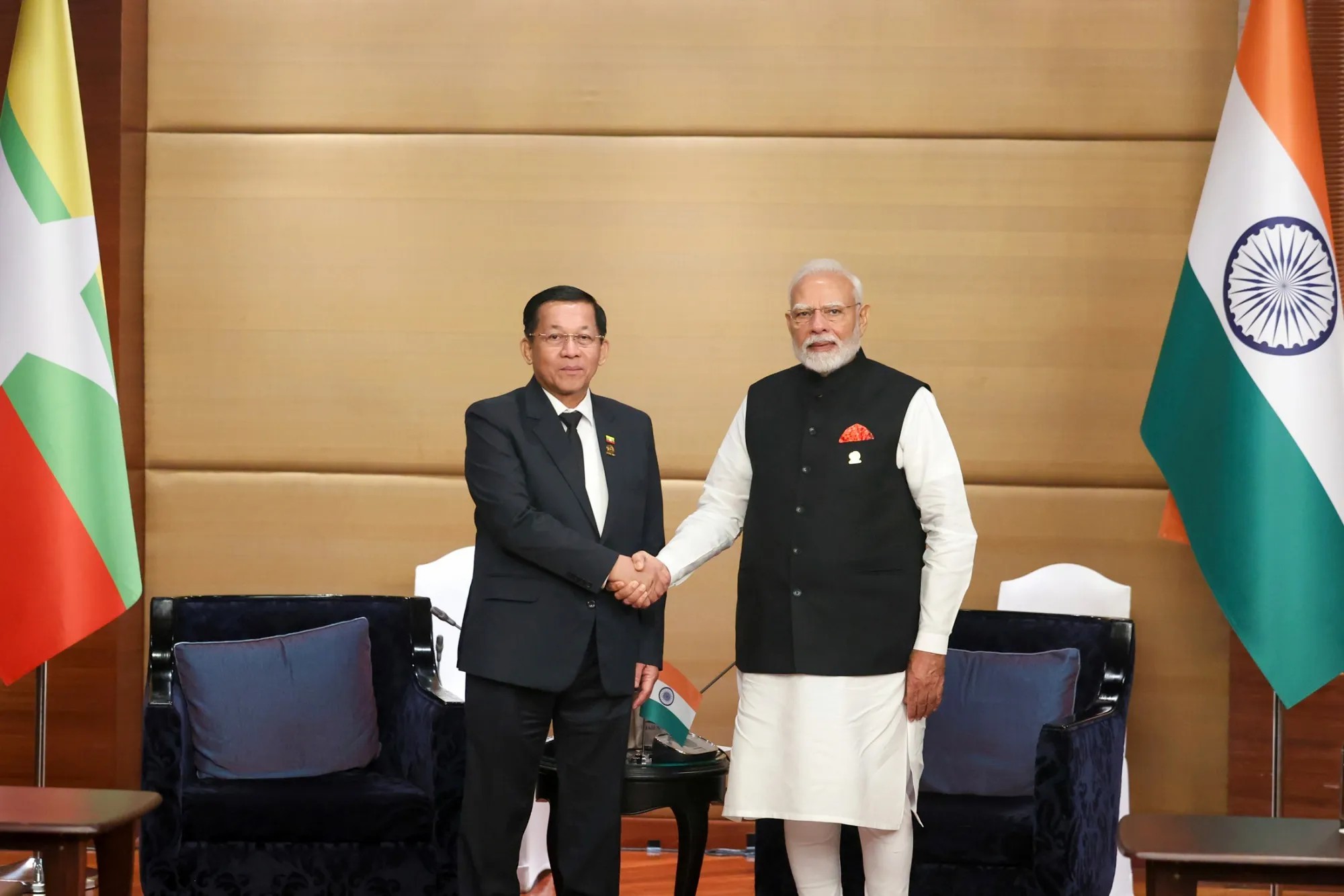
Indian Prime Minister Modi and Myanmar's Acting President Senior General Min Aung Hlaing.
Military and political analysts point out that while both nations have played crucial roles in Myanmar’s affairs since the 2021 political shift, their approaches differ significantly.
China holds the greatest influence over Myanmar's affairs. Its key interests include:
The China-Myanmar Economic Corridor (CMEC). The Kyaukphyu Deep Sea Port and oil/gas pipelines. Significant influence over the Northern Alliance ethnic armed groups.
In current border conflicts, China acts as a mediator to protect its interests. On the international stage, such as at the UN, China acts as a staunch partner, using its veto power to shield the Myanmar government from pressure.
India strives to maintain ties with Myanmar to ensure the stability of its northeastern states. India's primary concerns are: Countering Chinese influence.
Preventing Indian separatist groups from taking refuge along the Myanmar border.
Consequently, India keeps communication lines open with the Myanmar military. Projects like the Kaladan Multi-Modal Transit Transport Project and the India-Myanmar-Thailand Trilateral Highway are vital to India’s "Act East" policy. While India, as the world's largest democracy, often voices support for Myanmar’s democratic transition, it does not intervene as publicly in internal affairs as China does.
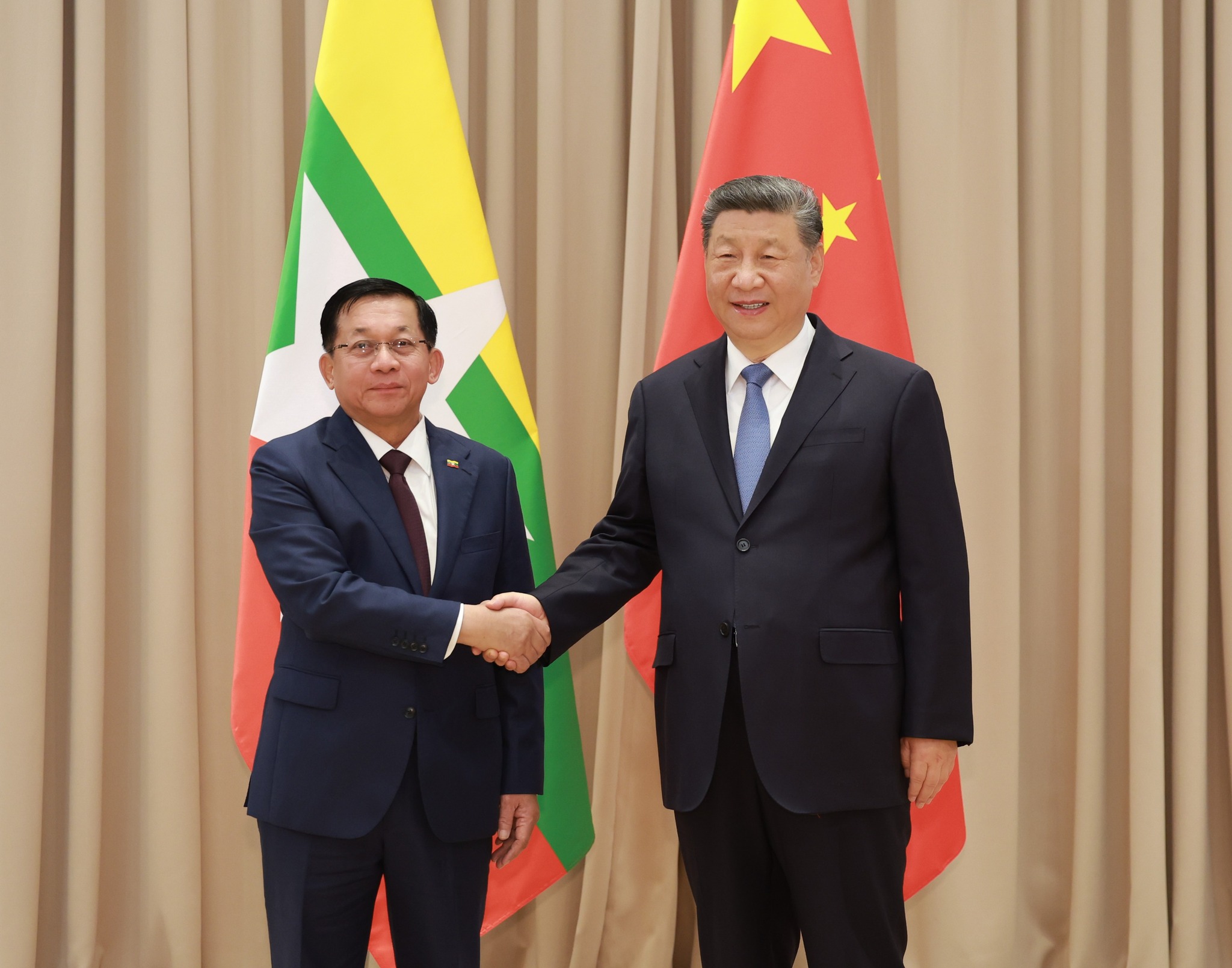
Chinese President Xi Jinping and Myanmar's Acting President Senior General Min Aung Hlaing.
A political analyst told CNI News that while the new government’s policy might be to treat both nations fairly, the neighbors' policies toward Myanmar could shift. He warned that choosing a single path could lead to greater trouble.
"If the government chooses just one side, it will face more difficulties," the analyst said. "For example, if it aligns too closely with India on competitive issues—like natural gas sales—it could cause problems with China. China might tolerate a road project through Rakhine and Chin states to Assam and Manipur because that primarily concerns India. But if Myanmar gives India something that directly competes with Chinese interests, China won't be happy. They won't say it directly, but they will express their dissatisfaction in whatever way they can.
I don't think the policy of the next government will differ much from the current military government’s approach. They will likely try to balance both sides. However, the challenge is that the policies of these two giants toward us may change."
Analysts highlight that Myanmar’s current challenge is a "tug-of-war" of perceptions: India fears Myanmar leaning too far toward China, while China is displeased if Myanmar gets too close to India.
This is most evident in Rakhine State, which hosts both China's Kyaukphyu project and the Sittwe Port—the most critical component of India's Kaladan project. However, under current ground conditions, China appears to have a greater capacity for practical intervention.
- By CNI
- Category: English Section
- Hits: 236
CNI News
March 5, 2026
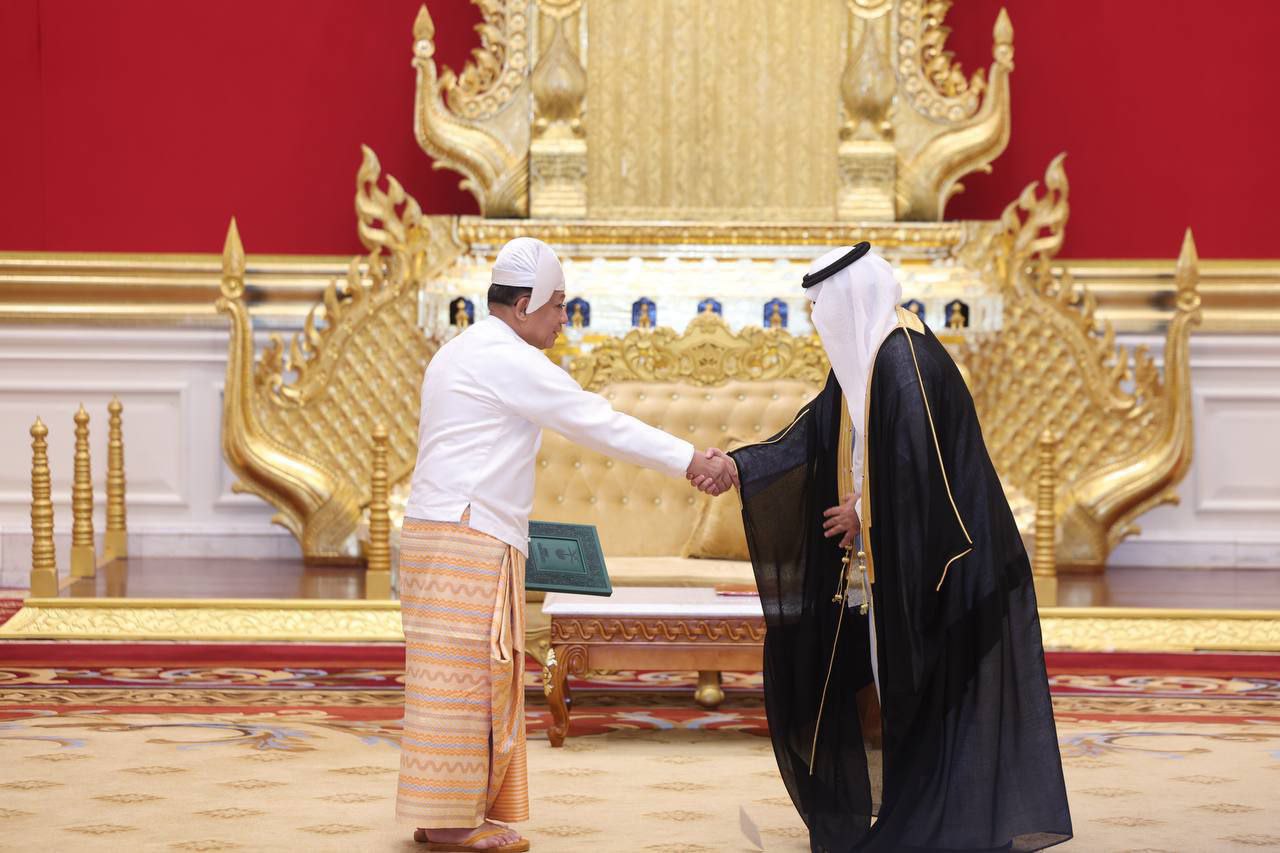
Ambassadors from Saudi Arabia and Nicaragua presented their credentials to Senior General Min Aung Hlaing, Chairman of the State Security and Peace Commission, on March 5, 2026.
Nicaragua appointed H.E. Mr. Segundo Martin Calero Escorcia as the Ambassador to Myanmar, who formally presented his credentials to the Senior General.
Similarly, Saudi Arabia appointed H.E. Mr. Maziad Mohammed M Al Howishan as the Ambassador to Myanmar, who also presented his credentials to Senior General Min Aung Hlaing.
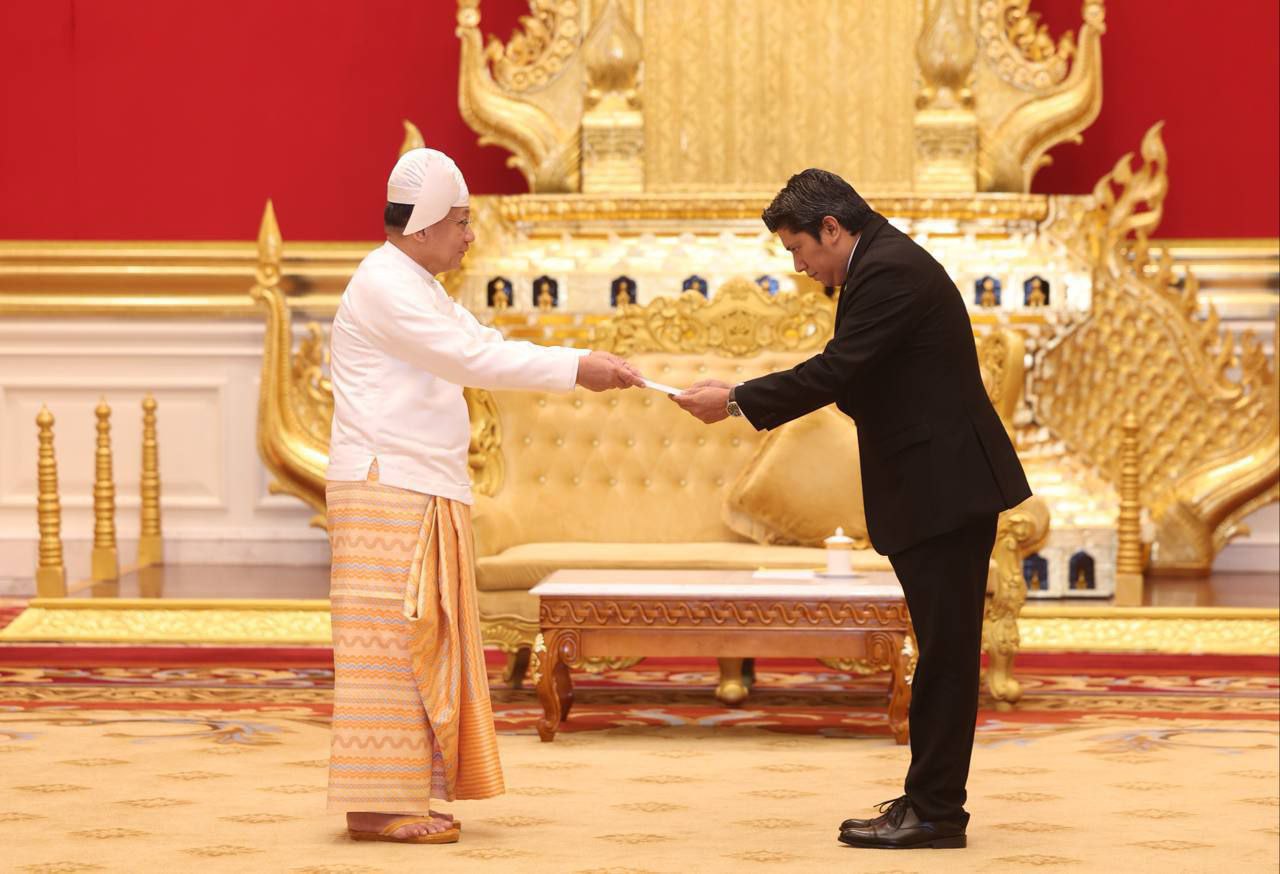
The Nicaraguan Ambassador presenting his credentials to Senior General Min Aung Hlaing
Following the presentation, they discussed:
Opportunities for increasing bilateral investments and trade promotion.
The status of the upcoming parliamentary session to be convened in the near future.
- By CNI
- Category: English Section
- Hits: 607
CNI News
March 5, 2026
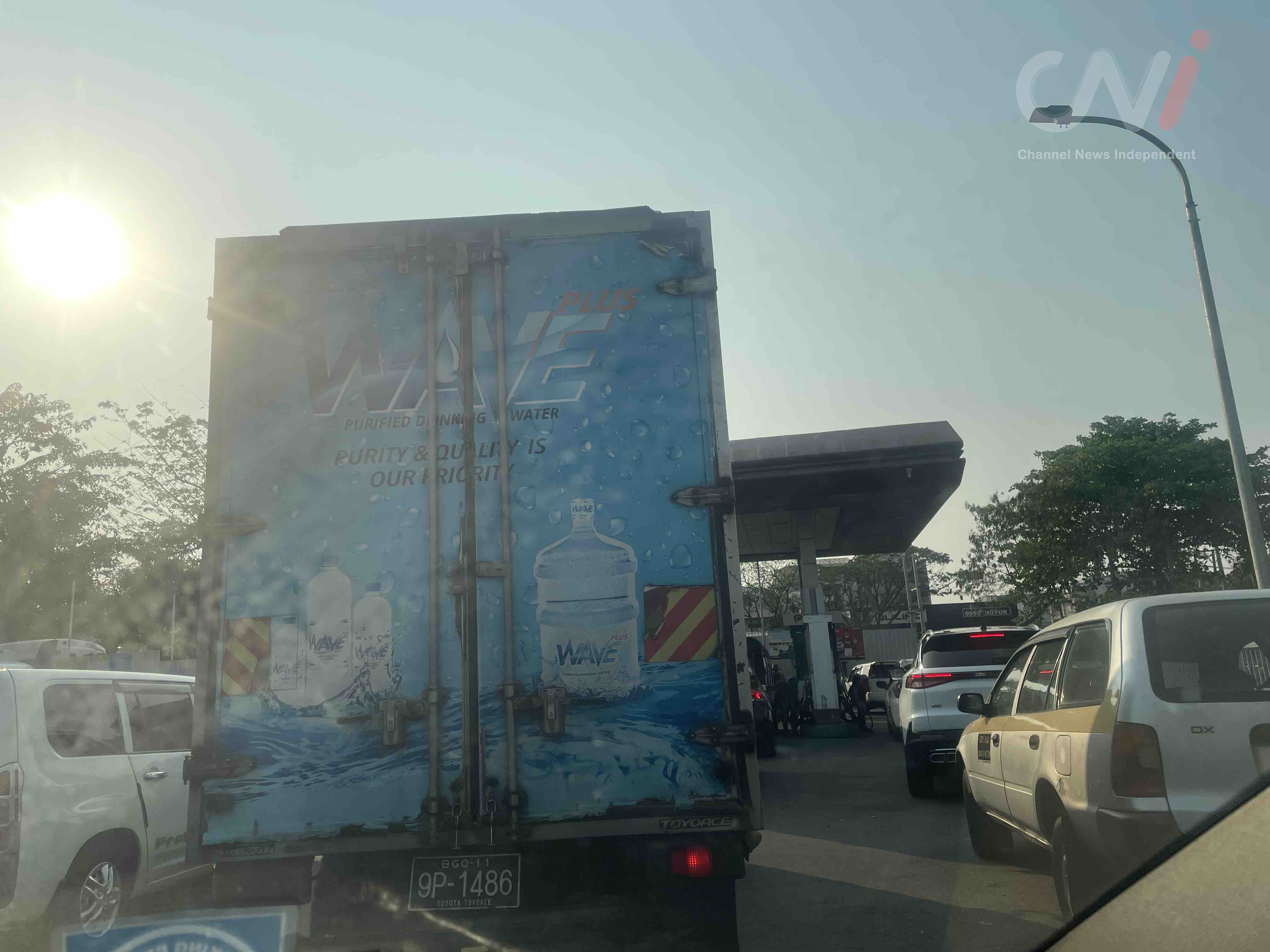
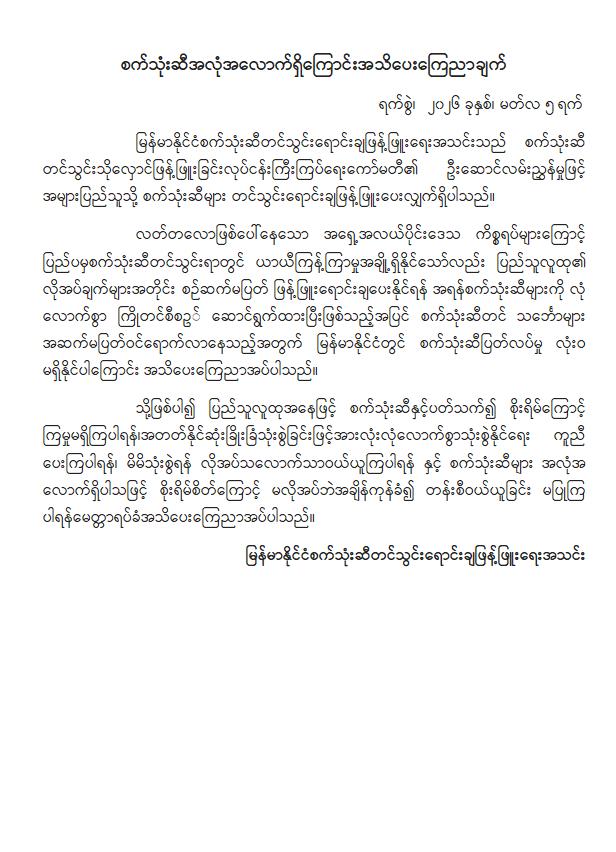
The Myanmar Fuel Oil Importers and Distributors Association (MPTA) issued an announcement on March 5, 2026, stating that fuel shortages in Myanmar are absolutely impossible due to the continuous arrival of oil tankers.
The association urged the public not to waste time waiting in lines out of unnecessary concern.
The MPTA highlighted that they are importing and distributing fuel to the public under the guidance of the Fuel Oil Import, Storage, and Distribution Supervisory Committee.
Official Statement Highlights
"While there may be some temporary delays in importing fuel from abroad due to current events in the Middle East, we have already pre-arranged sufficient reserve fuel to ensure continuous distribution according to public demand. Furthermore, as oil tankers are arriving without interruption, we inform the public that there is absolutely no possibility of a fuel shortage in Myanmar."
The association has requested that the public:
Remain calm and avoid worrying about fuel supplies.Purchase only the amount required for personal use.Refrain from wasting time queuing at stations unnecessarily, as there is an ample supply of fuel available.
Page 29 of 352
Connect with us