
English Edition
- By CNI
- Category: English Section
- Hits: 276
CNI News
23 January 2026
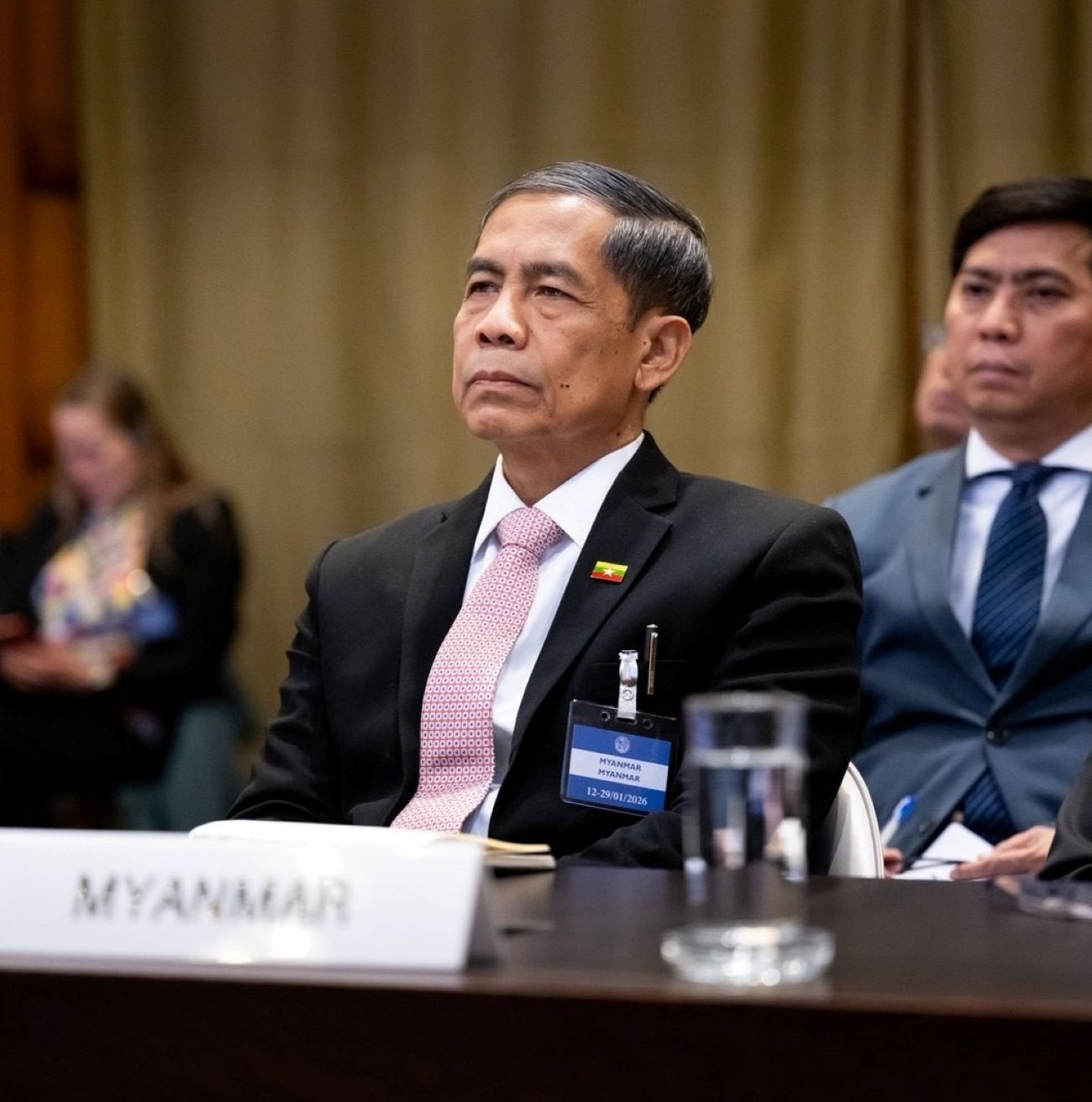
The government in Nay Pyi Taw has issued a set of guidelines that the public must observe when expressing support for the Myanmar delegation (Agent of Myanmar), led by Minister U Ko Ko Hlaing, which is currently presenting its case at the International Court of Justice (ICJ) in The Hague, Netherlands.
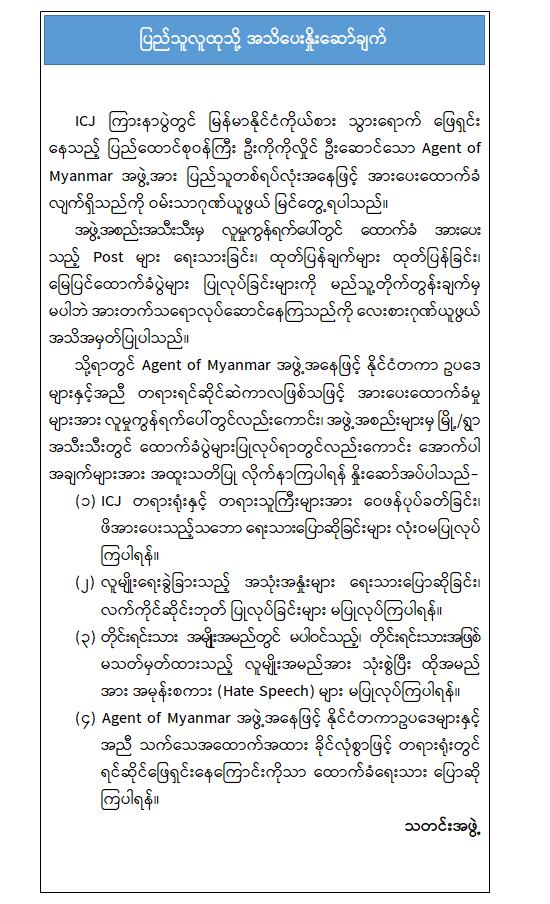
As the "Agent of Myanmar" team is currently undergoing legal proceedings in accordance with international laws, Nay Pyi Taw released four specific points for supporters to strictly follow—whether they are posting on social media or organizing support rallies in various towns and villages.
The four points are as follows:
Strictly avoid criticizing or insulting the ICJ court and its judges, and refrain from any speech or writing that could be perceived as applying pressure on them.
Do not use racially discriminatory language or expressions in speech, writing, or on handheld placards and banners.
Do not use the names of ethnic groups that are not recognized among the official indigenous ethnicities of Myanmar to spread hate speech.
Focus support solely on the fact that the "Agent of Myanmar" delegation is defending the case in court with solid evidence in accordance with international laws.
In 2016–2017, following simultaneous attacks by the ARSA terrorist group on 30 border guard outposts in Rakhine State, Hindus, Rakhine, and other ethnicities were killed.
Subsequently, the Myanmar military (Tatmadaw) conducted area clearance operations, leading to the displacement of Bengalis who fled toward Bangladesh.
Under these circumstances, Gambia filed a lawsuit at the International Court of Justice (ICJ) in The Hague, alleging that Myanmar committed genocide.
Myanmar has taken responsibility for responding to and resolving these allegations.
Accordingly, the ICJ is conducting hearings regarding the genocide allegations against Myanmar from January 12 to January 29, 2026.
A delegation led by Minister U Ko Ko Hlaing and Union Attorney General Daw Thida Oo is currently in attendance to represent the case.
Inside Myanmar, preparations are underway to hold ceremonies and rallies to express support for the Myanmar delegation currently facing the legal battle at the ICJ.
- By CNI
- Category: English Section
- Hits: 436
CNI News
23 January 2026
Based on conflicts between Myanmar migrant workers and Thai citizens inside Thailand, some Thai political parties are politically exploiting Myanmar migrant workers, according to migrant worker rights activist U Min Oo, who spoke to CNI News.
He said that clashes between some Myanmar workers and Thai youths have occurred repeatedly in Thailand. In recent days, Thailand’s Department of Employment announced that it would conduct inspections and take strict action against illegal foreign workers inside the country.
U Min Oo told CNI News that some elected Thai political parties are taking advantage of these conflict incidents as opportunities for political gain.
He said:
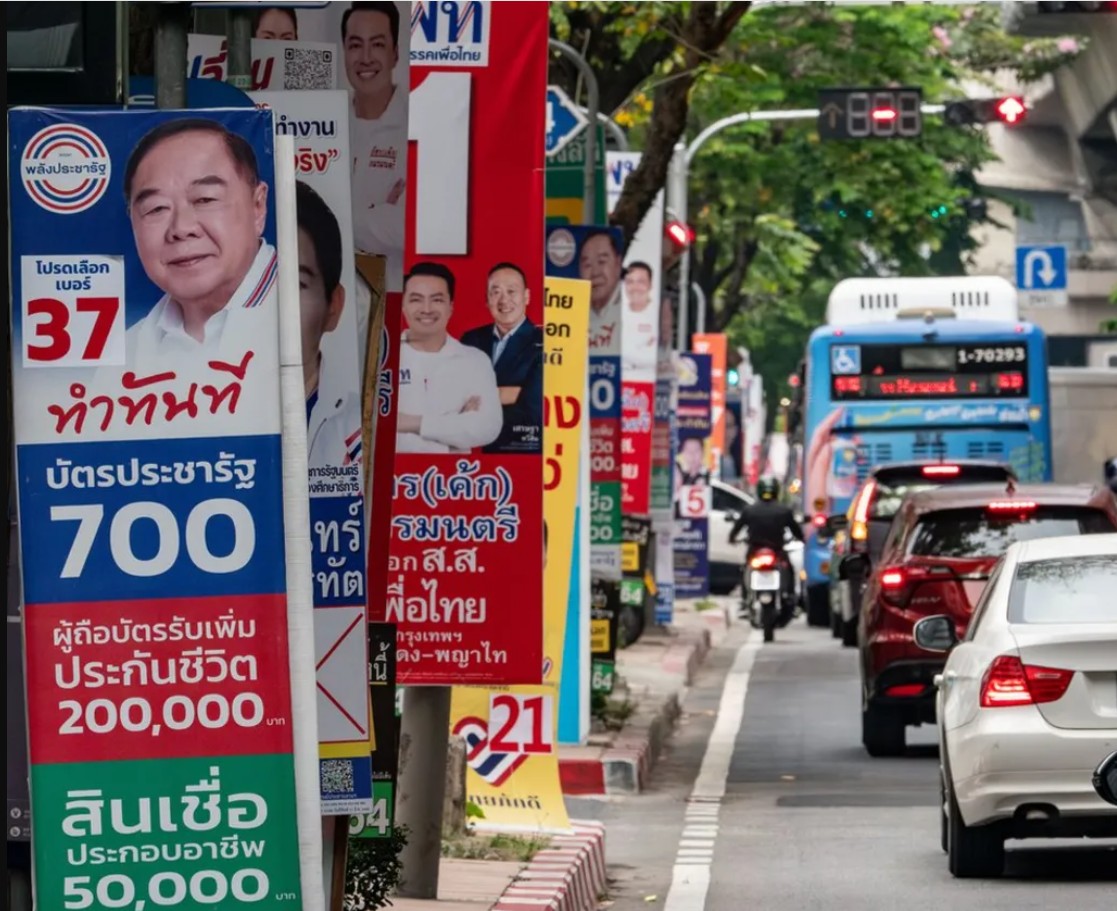
“Based on this issue, other forms of political exploitation could also arise. Starting from incidents that occurred recently, we are seeing daily conflicts between Myanmar and Thai nationals, arrests, and, in between, criminal acts committed by some migrant workers. These incidents are increasing day by day. Based on this situation, some political parties and candidates contesting elections are including this issue in their campaigns and using it for their benefit. On their social media platforms, we can see advertisements like this. They are incorporating this issue into their party policies, claiming that they are addressing migrant worker problems and related issues in order to protect national security. We are seeing these themes included in their campaign messaging. When this happens, Thai citizens develop misunderstandings and negative perceptions toward Myanmar migrants, and they become more cautious of them. As a result, life becomes increasingly difficult in every aspect—housing, food, and daily living—for migrant workers who are honestly working and earning a living.”
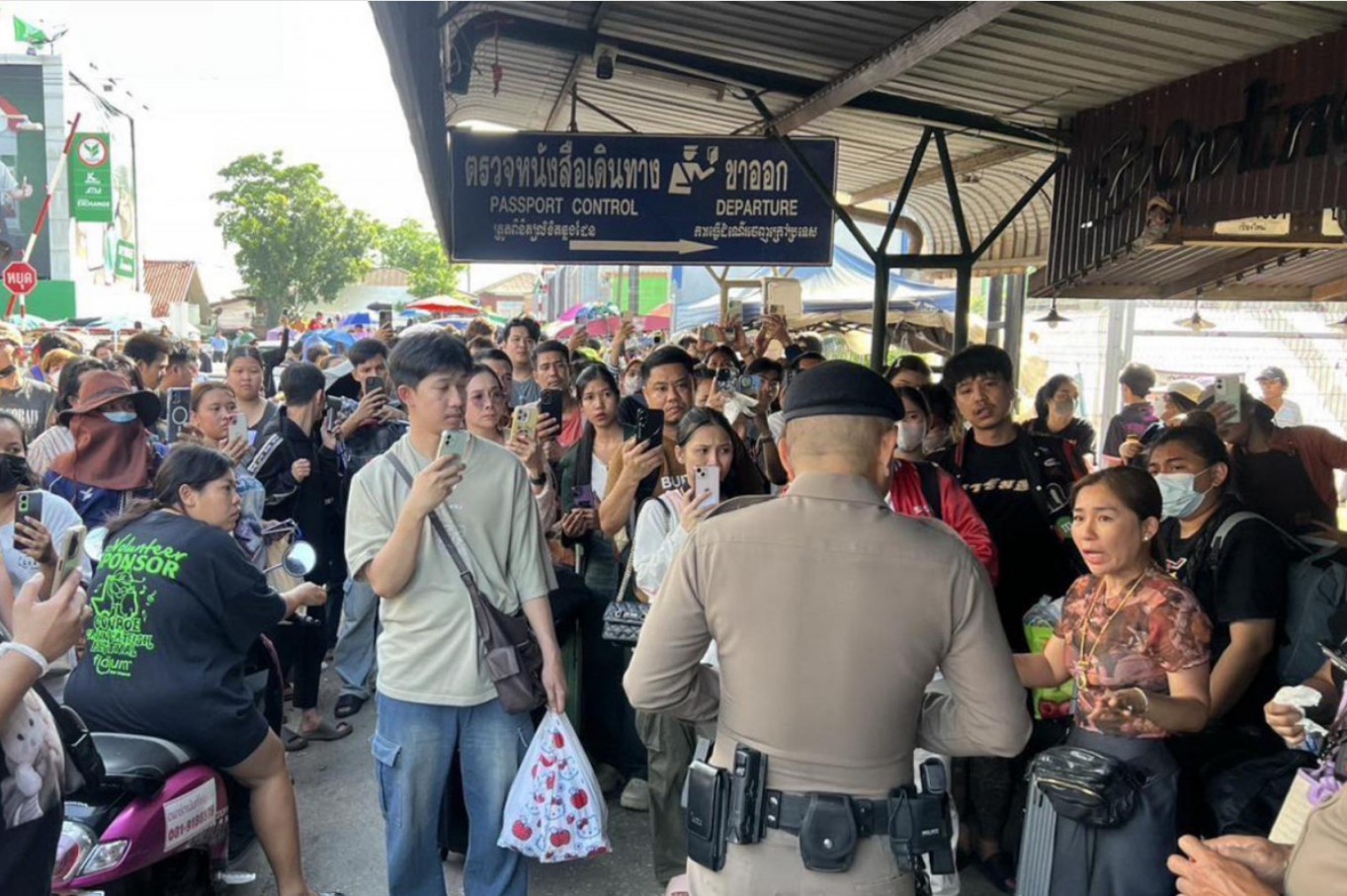
Thai authorities and migrants seen
He added that Myanmar migrant workers have previously experienced political exploitation by politicians in Thailand, and therefore it is extremely important for Myanmar nationals to avoid involvement, as much as possible, in the political and ethnic conflicts of another country.
Another migrant worker rights activist, U Aung Kyaw, told CNI News:
“Regarding this issue, I have lived in Thailand for decades, and we have heard before that migrant workers were exploited by politicians in such ways. However, we do not have concrete evidence. Still, I have heard that they were used through efforts to mobilize manpower, sometimes by offering social assistance or small benefits. This time as well, it cannot be ruled out. Politicians may use or exploit people to achieve their objectives. Therefore, what I want to say in advance is that since this is not our home country, we do not have the right to vote. As guests, we must avoid, as much as possible, involvement in political relations and ethnic conflicts.”
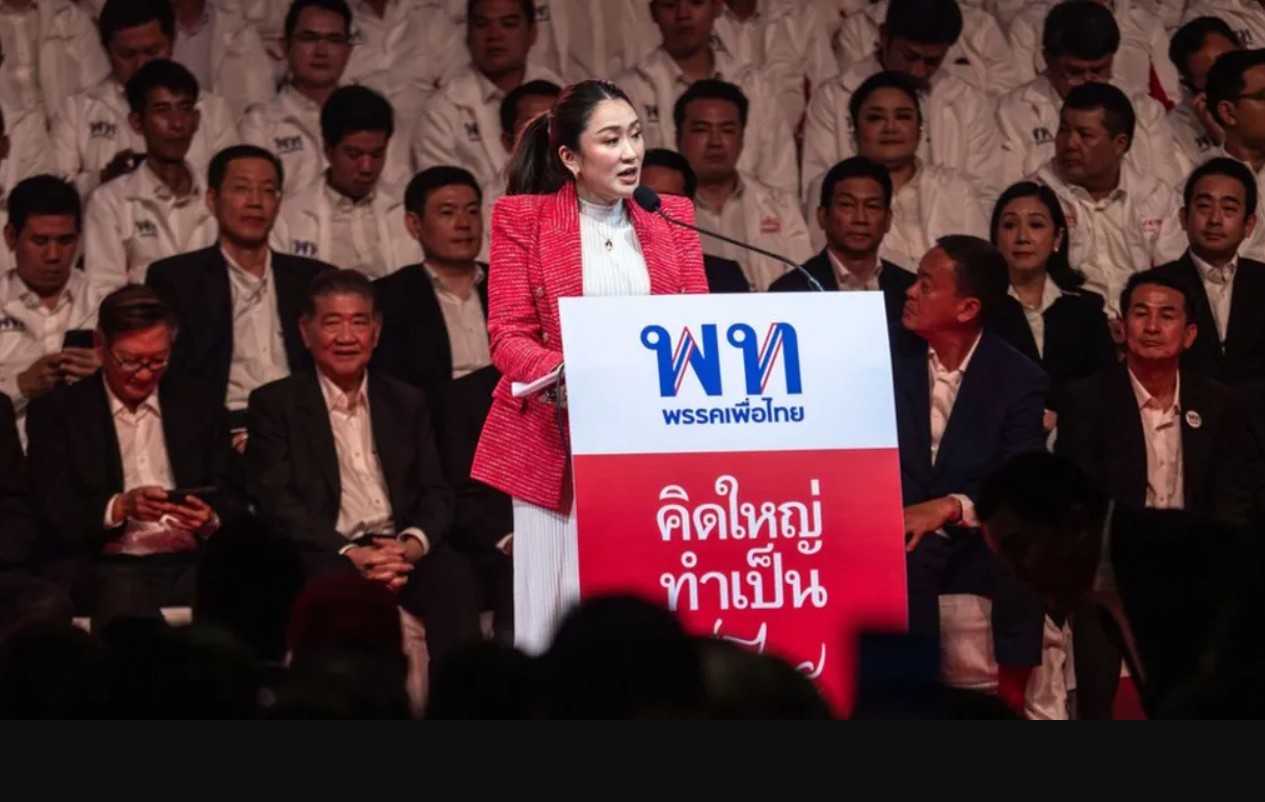
Pheu Thai Party campaigning
Amid these conflict situations, Myanmar nationals are advised to live cautiously and adapt to their surroundings. Migrant worker advocates in Thailand warn that there are also ultra-nationalist Thai groups, and therefore Myanmar migrants need to live carefully, wisely, and with heightened awareness.
Thailand is scheduled to hold an election in February 2026. Political parties are actively campaigning with various policies to win votes, and nationalist groups—referred to as “handlebar mustache nationalists”—are also paying close attention to Myanmar migrant workers, according to reports.

- By CNI
- Category: English Section
- Hits: 689
CNI News
23 January 2026
Myanmar’s Commander-in-Chief of the Defense Services, Senior General Min Aung Hlaing, is the subject of analysis among military and political observers regarding how he could assume the presidency after the election while also maintaining control over the Myanmar Armed Forces (Tatmadaw).
Under the 2008 Constitution, if Senior General Min Aung Hlaing were to become President and govern the country after the election, he would be required to resign from his role within the Tatmadaw.
Article 63 of the 2008 Constitution stipulates that if the President or Vice Presidents are Members of Parliament, they must resign as MPs; and if they are civil servants, they must resign or retire from civil service from the day they are elected as President or Vice President.
Therefore, similar to how Daw Aung San Suu Kyi assumed the position of State Counsellor during her tenure by using Article 217, Senior General Min Aung Hlaing could also adopt a certain title or role to exercise control over both the government and the military, according to political analyst Sai Min Hlaing, who spoke to CNI News.
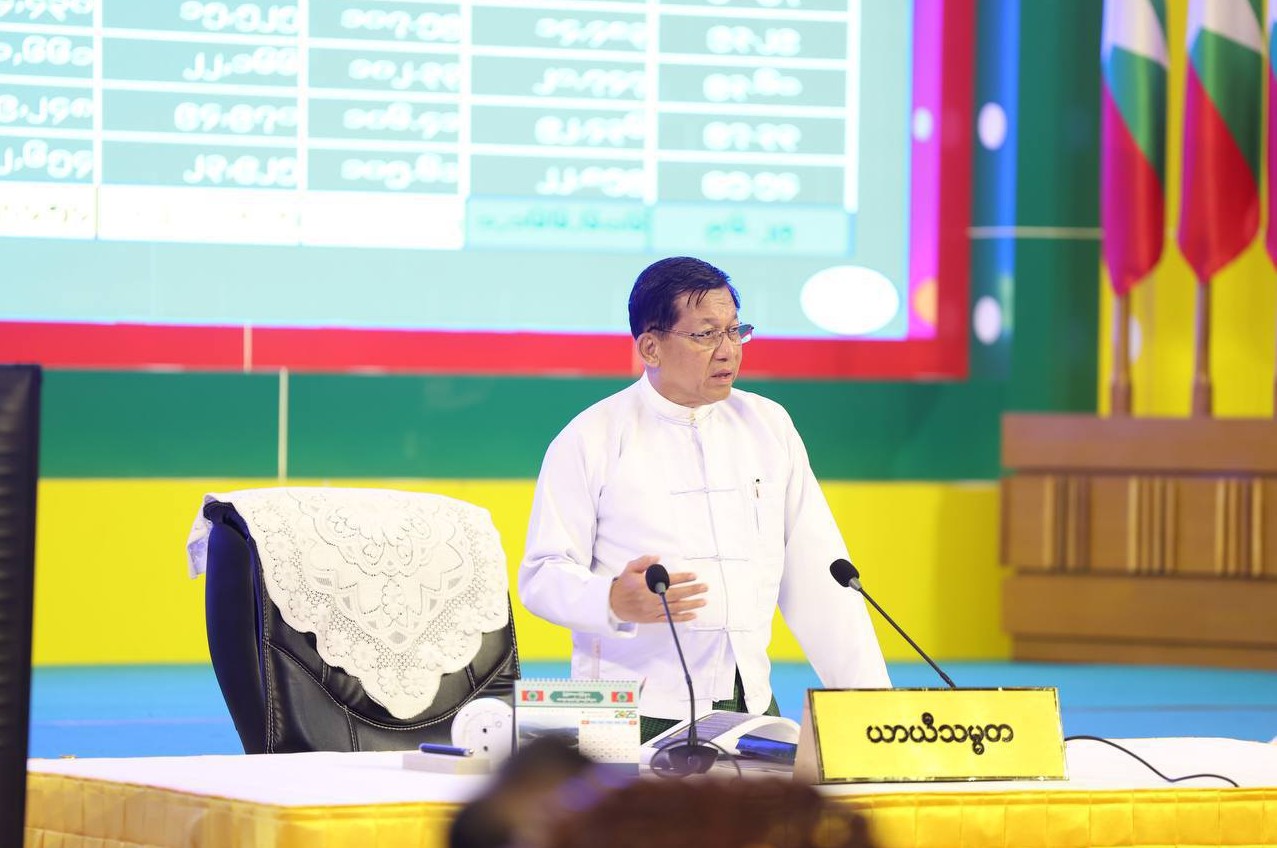
Acting President Senior General Min Aung Hlaing seen
He said:
“If Senior General Min Aung Hlaing truly becomes President, then first, he will be President, and second, he will effectively act like a supreme military commander. He would be both the President and the supreme commander. If he is the supreme commander, that is the highest position in the military. Officially, there is the post of Commander-in-Chief of Defense Services. But our country does not really operate under a clear ‘supreme commander’ system, so that title is not very prominent. However, if he becomes President, he would still effectively be the top leader of the military. The newly appointed Commander-in-Chief would remain under him, because the President would be the supreme commander of the Tatmadaw.”
Article 217 of the 2008 Constitution states that, without contravening constitutional provisions, executive power of the Union is vested in the President.
This wording does not mean that the Union Parliament cannot assign duties and powers to any authority or individual. Nor does it mean that duties and powers assigned under existing laws to relevant authorities or individuals are transferred to the President.
However, if Senior General Min Aung Hlaing were to use this article as a political maneuver, he would have to remain behind the scenes. In that case, he could oversee matters through a council composed of retired officials, according to Dr. Aye Maung, Chairman of the Arakan Front Party (AFP), who spoke to CNI News.
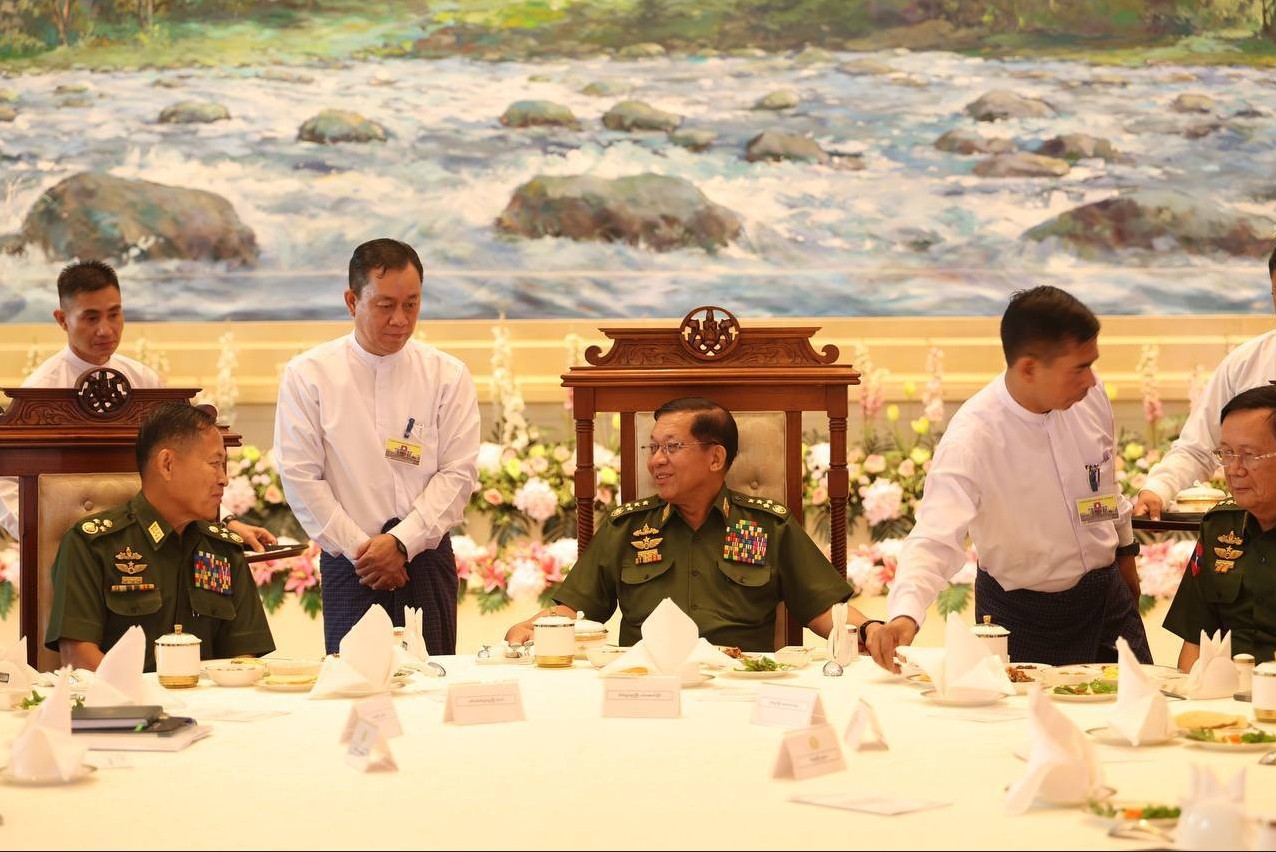
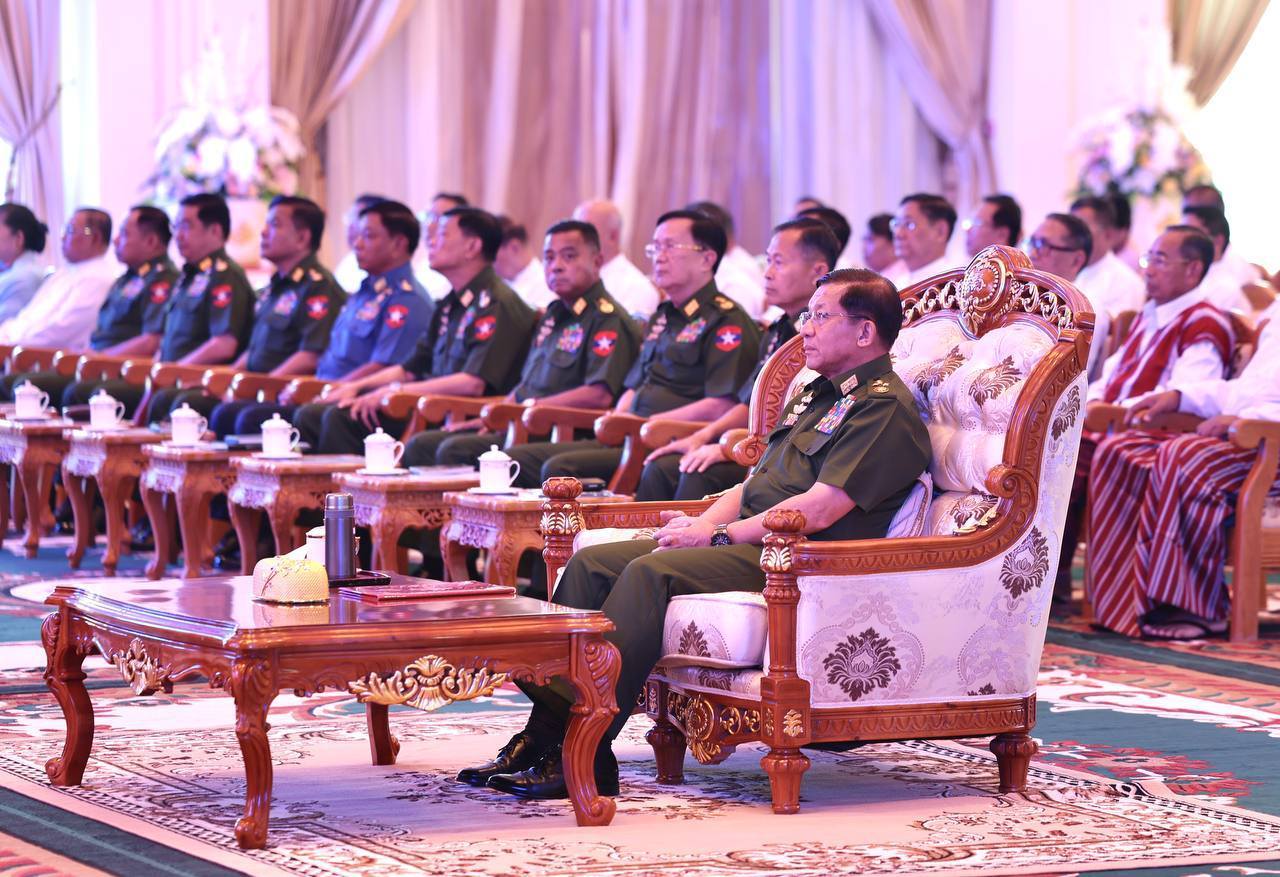
Senior leaders of the Myanmar Tatmadaw seen
Dr. Aye Maung said:
“If Senior General Min Aung Hlaing leads the transitional period, and if he tries to operate under Article 217 in relation to the Tatmadaw, then he would have to stay in the background. Alternatively, he could rely on a behind-the-scenes body—perhaps the current National Defense and Security Council. Would that council be led by Soe Win, or would Min Aung Hlaing himself, as a retired officer and President, be involved? Regarding the Defense Services Act, a council composed of retired officers could be formed to support and oversee the Commander-in-Chief. Such a council could be designed by amending the Defense Services Act to create a position with full authority, though without salary. As a retired Commander-in-Chief, even as a pensioner, it cannot be ruled out that he could still supervise and guide the Tatmadaw toward becoming a more systematic and modern military. However, using Article 217 for this purpose does not seem likely.”
In addition, a military observer told CNI News that the Tatmadaw can form defense councils as needed, and by consolidating such a council, it could control both the presidency and the military.
The observer said:
“The Constitution grants the Tatmadaw autonomy to manage its own affairs. This gives the military considerable authority. A defense council also holds significant power regarding military matters. How extensive those powers would be is unclear. What is certain is that if he becomes President, he must leave the military. The roles of President and Commander-in-Chief cannot be held simultaneously. He also would not be able to serve directly on the defense council in that capacity. However, if such a council is formed independently by the military—since it is not a constitutional body—the Tatmadaw can establish it whenever necessary. In that sense, he could still retain influence. If he wants to form one, he can. So far, we have not heard that such a council has been formed.”
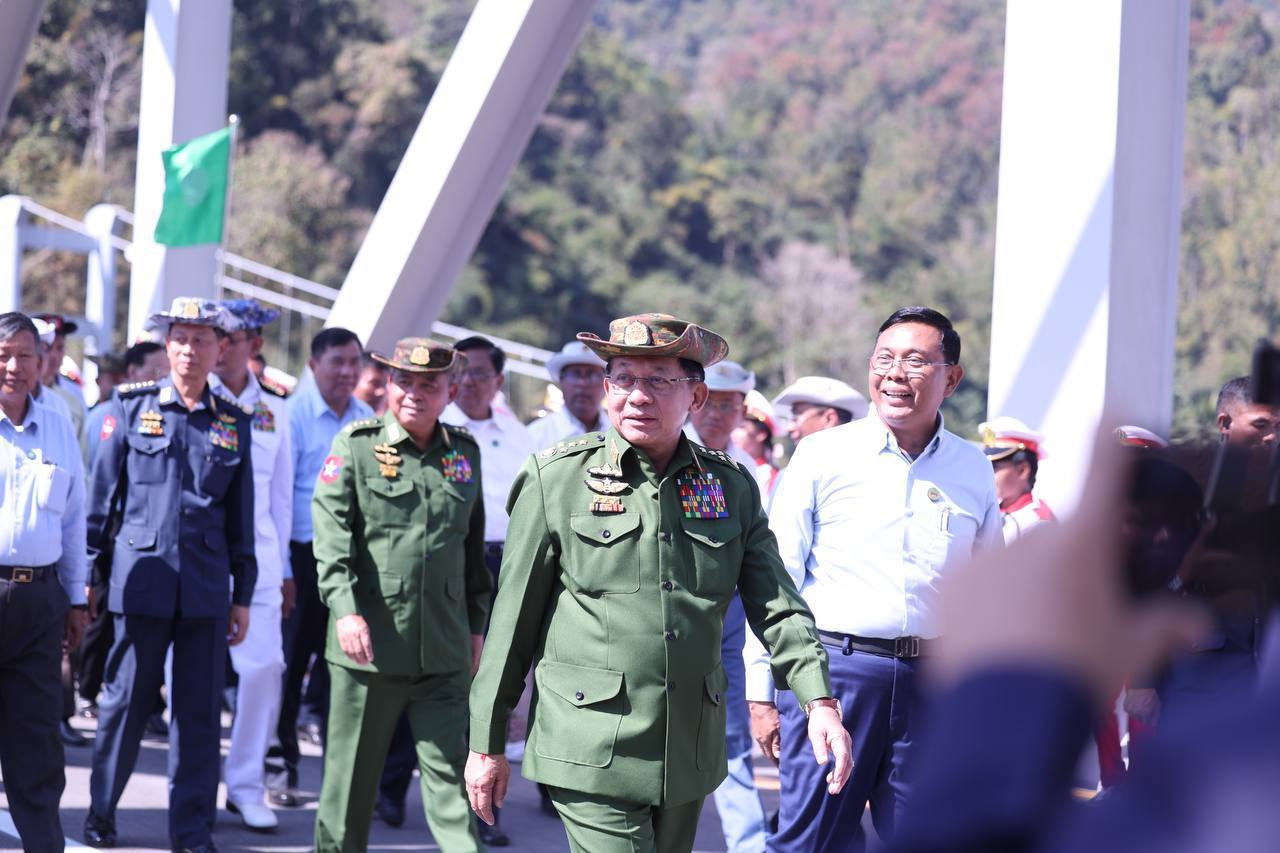
Senior leaders of the Myanmar Tatmadaw seen
At present, both international circles and domestic military and political analysts believe that Senior General Min Aung Hlaing could become President after the election.
However, if he assumes the presidency, he would be required to retire from or resign his position in the Tatmadaw. As a result, analysts believe he may seek a legal pathway that would allow him to control both the presidency and the military.
If such steps are taken, certain provisions of the Constitution would first need to be amended. Consequently, observers are closely watching to see what form these actions may take.
- By CNI
- Category: English Section
- Hits: 430
CNI News
22 January 2026
Military and political analysts are offering various perspectives on how leadership changes might unfold within the Myanmar military (Tatmadaw), alongside the new political landscape following the upcoming election.
There are domestic and international assumptions that Senior General Min Aung Hlaing could potentially become the official President in the post-election government.
Questions have been raised about how the military might change if Senior General Min Aung Hlaing assumes the presidency, as he would have to step down from the position of Commander-in-Chief and transfer the role to a trusted successor.
Dr. Aye Maung, Chairman of the Arakan Front Party (AFP), told CNI News that recent reshuffles within the military indicate that young new-generation officers are being appointed to highly critical positions.
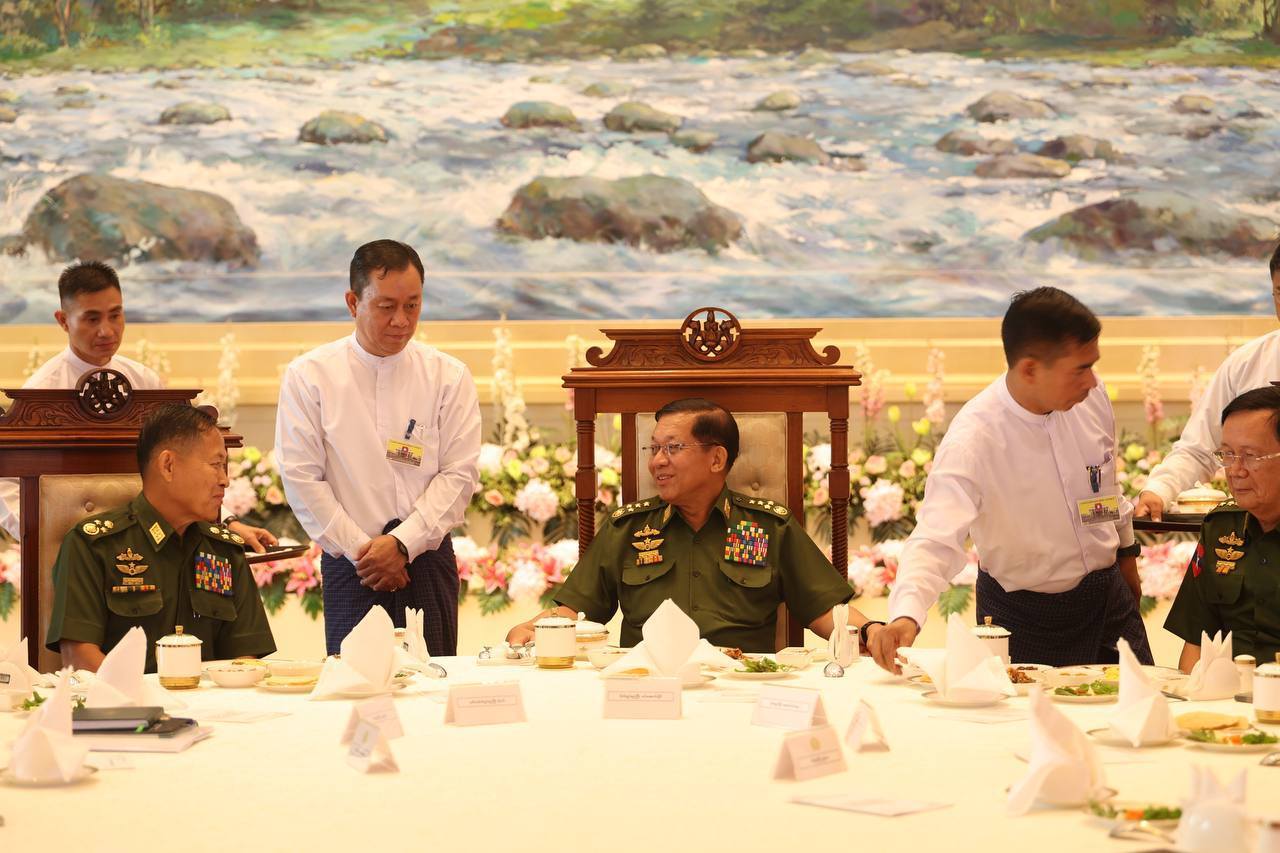
Senior General Min Aung Hlaing and Vice Senior General Soe Win seen together.
"There is a section in the Constitution regarding consultants. I heard during the first parliamentary term that Senior General Than Shwe and Vice Senior General Maung Aye would sit at Office No. 27 under that section during the first transition period, though that later faded away. There is an entry point in the Constitution. I believe it is from the 1953 [Army Act]. Because of that law, there is no age limit for the Senior General and Vice Senior General. In the coming period, the existence of the military is vital as the country is facing many armed conflicts. That is why we see many new generations being given very important roles—for example, the Adjutant General, Quartermaster General, Chief of Staff (Army), and the Chief of the General Staff," he said.
Dr. Aye Maung further noted that there are various ways to analyze whether Senior General Min Aung Hlaing will transition into the Presidency to lead both politics and the military, or whether he will remain in his current role during this period of political and military crisis.
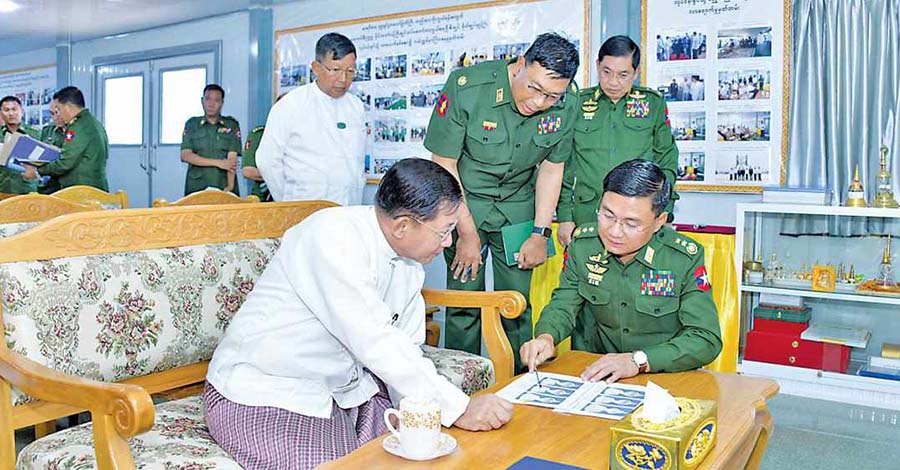
Senior General Min Aung Hlaing and General Kyaw Swar Lin seen together.
He continued, "If we analyze the military's direction: if the Senior General takes the Presidency as many suggest, he would have to relinquish the post of Commander-in-Chief according to the Constitution. So, will he transition to President? If they want to change those important sections [to hold both roles], it would be difficult as the Constitution requires a referendum. Therefore, in this current crisis, will U Min Aung Hlaing remain as Senior General, or will he create a situation to lead both politics and the military as President? In another sense, will one of the two current top leaders stay above the Commander-in-Chief? Will Senior General Min Aung Hlaing become President while the Vice Senior General stays at a place like Office No. 27? Will a new Commander-in-Chief emerge? I think the military itself has already analyzed and decided how to navigate this based on the current political and military situation."
Senior General Min Aung Hlaing has previously stated that state power will be transferred to the government that emerges after the election and that the military will then focus solely on national defense duties.
Individuals currently drawing public interest as potential future Commanders-in-Chief of the Myanmar military include Vice Senior General Soe Win and General Kyaw Swar Lin.
- By CNI
- Category: English Section
- Hits: 351
CNI News
22 January 2026
Following the results of the multi-phase elections held in Myanmar, the incoming government is expected to remain under the direct leadership of the military, political analyst Sai Mein told CNI News.
He stated, "In truth, even during the U Thein Sein government era, military generals shed their uniforms before being elected. Back then, the presidential candidate was predictable. However, based on the current situation, many analysts see a developing 'game' regarding whether the military leader himself will take the presidency, or whether he will remain Commander-in-Chief to maintain control over the military. To be blunt, the government emerging in 2026 will still be one that aligns with the military's wishes. No matter how it is composed or formed, it will remain a government dominated and led by the military itself."
Political parties are expressing concern that the post-election government will be led by the military and the Union Solidarity and Development Party (USDP), resulting in a highly centralized administration.
These concerns stem from the fact that several high-ranking military officers were transitioned into the USDP to contest the election.
Another political analyst told CNI News that while there may be internal policy differences between some senior military officers and the USDP, the selection of a president within parliament (Hluttaw) will likely follow the party’s central decision.
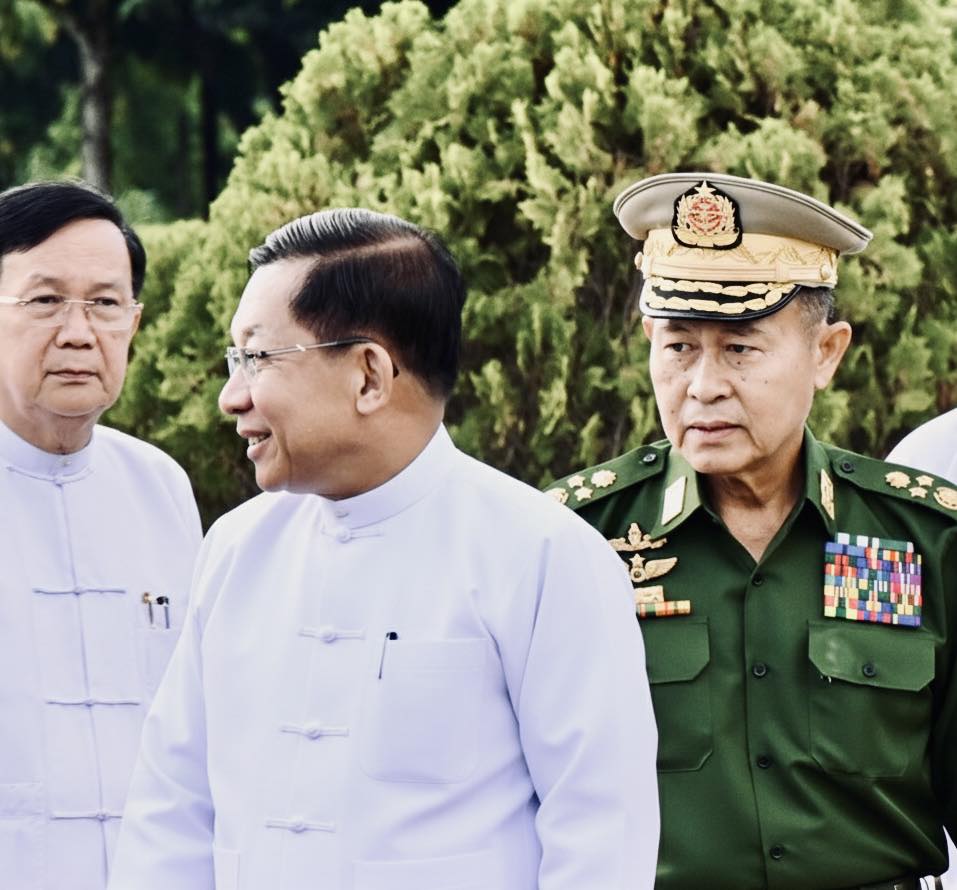
Military leaders seen.
"Although there are internal differences within the USDP, if the leadership reaches a consensus, they will likely vote accordingly," the analyst said. "For example, while it was generally said during the first parliament that representatives could decide for themselves, there were instructions on whom to vote for in critical matters. Since choosing a president is a vital issue, it will likely be guided by party decision—whether to vote for the Vice President nominated by the Pyithu Hluttaw or the one nominated by the military. They will likely decide who to nominate for the presidency only after reaching an agreement within the parliament."
In his message for the 78th Independence Day on January 4, 2026, Senior General Min Aung Hlaing, Chairman of the State Security and Peace Commission, stated that a government characterized by fairness, high voter distribution, and stability would be formed.
He stated, "By utilizing both the First-Past-The-Post (FPTP) and Proportional Representation (PR) systems, we will form governments that are fair, representative, and stable. State responsibilities will be handed over to the government emerging from the election results in accordance with democratic standards."
Political analysts point out that while some ethnic minority candidates ran uncontested under the PR system, simply including these minorities in the government does not yet constitute a practical political solution for the general public.
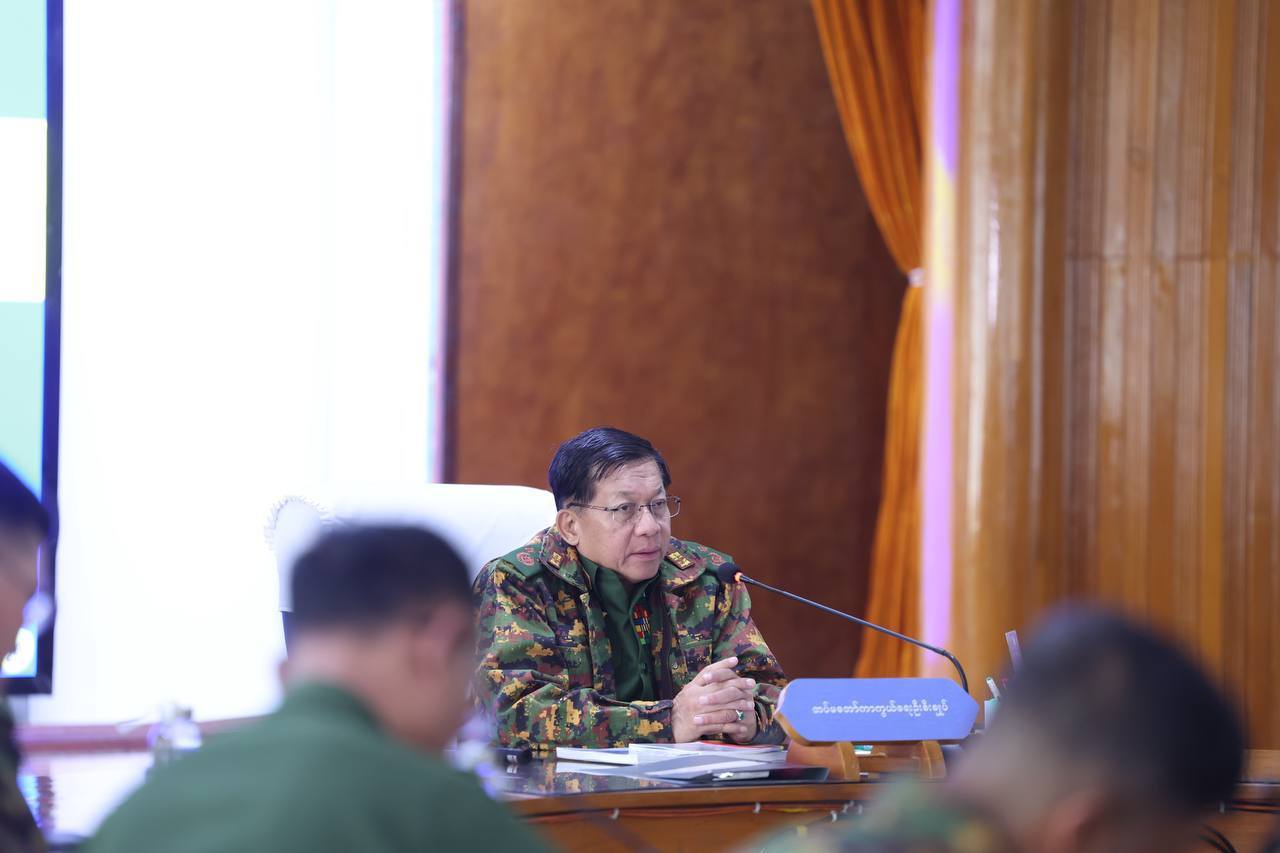
- By CNI
- Category: English Section
- Hits: 331
CNI News
January 21, 2026
Senior General Min Aung Hlaing, Chairman of the State Security and Peace Commission, stated that some Ethnic Armed Organizations (EAOs) are currently engaging in online fraud and gambling operations (locally known as Zha Pian) and the production of narcotics.
He made these remarks on January 20, 2026, during a meeting with officers, soldiers, and their families at the Eastern Central Command in Kholam, Shan State.
Senior General Min Aung Hlaing said, "It is necessary to systematically carry out stability, security, and law enforcement operations within the Eastern Central Command area. Historically, some EAOs in this command area have had a habit of encroaching beyond their designated territories and initiating battles. Furthermore, it is observed that they are now also engaging in online fraud, gambling, and narcotic production."
He added that combating these online scams and drug production activities must be undertaken as a national duty to ensure such activities do not exist within the command's jurisdiction.
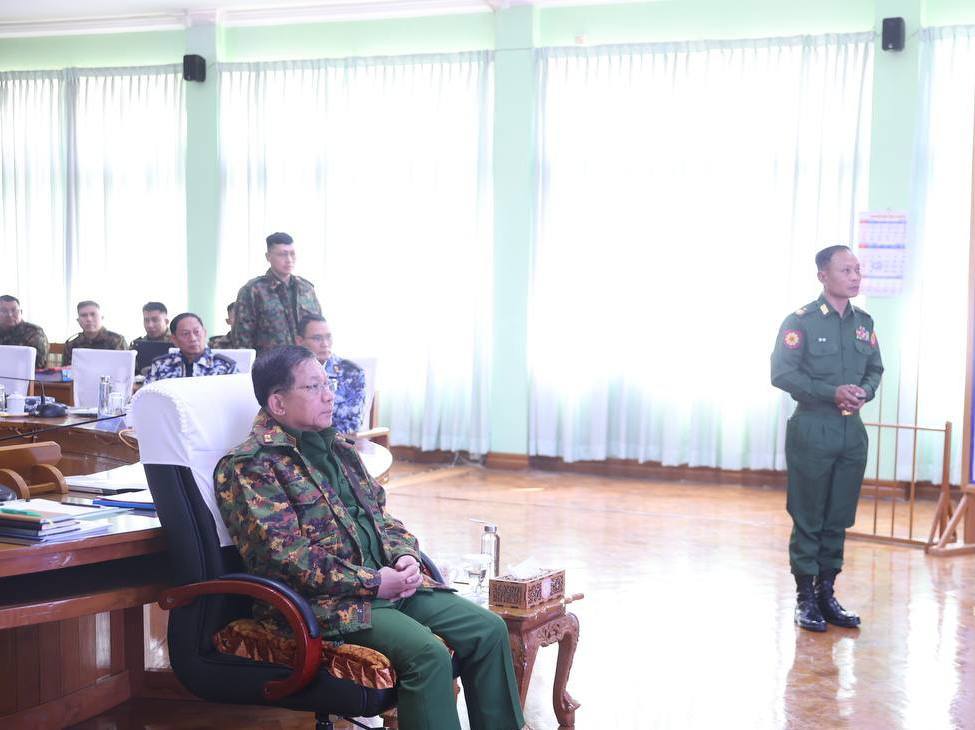
While the Senior General mentioned "some EAOs," he did not explicitly name any specific armed groups during his speech.
However, on January 11, 2026, Naypyidaw released a statement reporting the seizure of equipment used in drug manufacturing and online fraud operations within Hsipaw and Mongyai townships in northern Shan State. The statement claimed that some members of the Shan State Progress Party (SSPP/SSA) and equipment bearing their badges were captured at those locations.
Similarly, Naypyidaw has issued statements regarding the seizure of narcotics belonging to the Arakan Army (AA) and various People’s Defense Forces (PDF) across Rakhine State, Chin State, Sagaing Region, Mandalay Region, and Magway Region.
Furthermore, individuals involved in online fraud and gambling have also been arrested in areas of Kayin State controlled by the Democratic Karen Buddhist Army (DKBA), the Border Guard Force (BGF), and the Karen National Union (KNU).
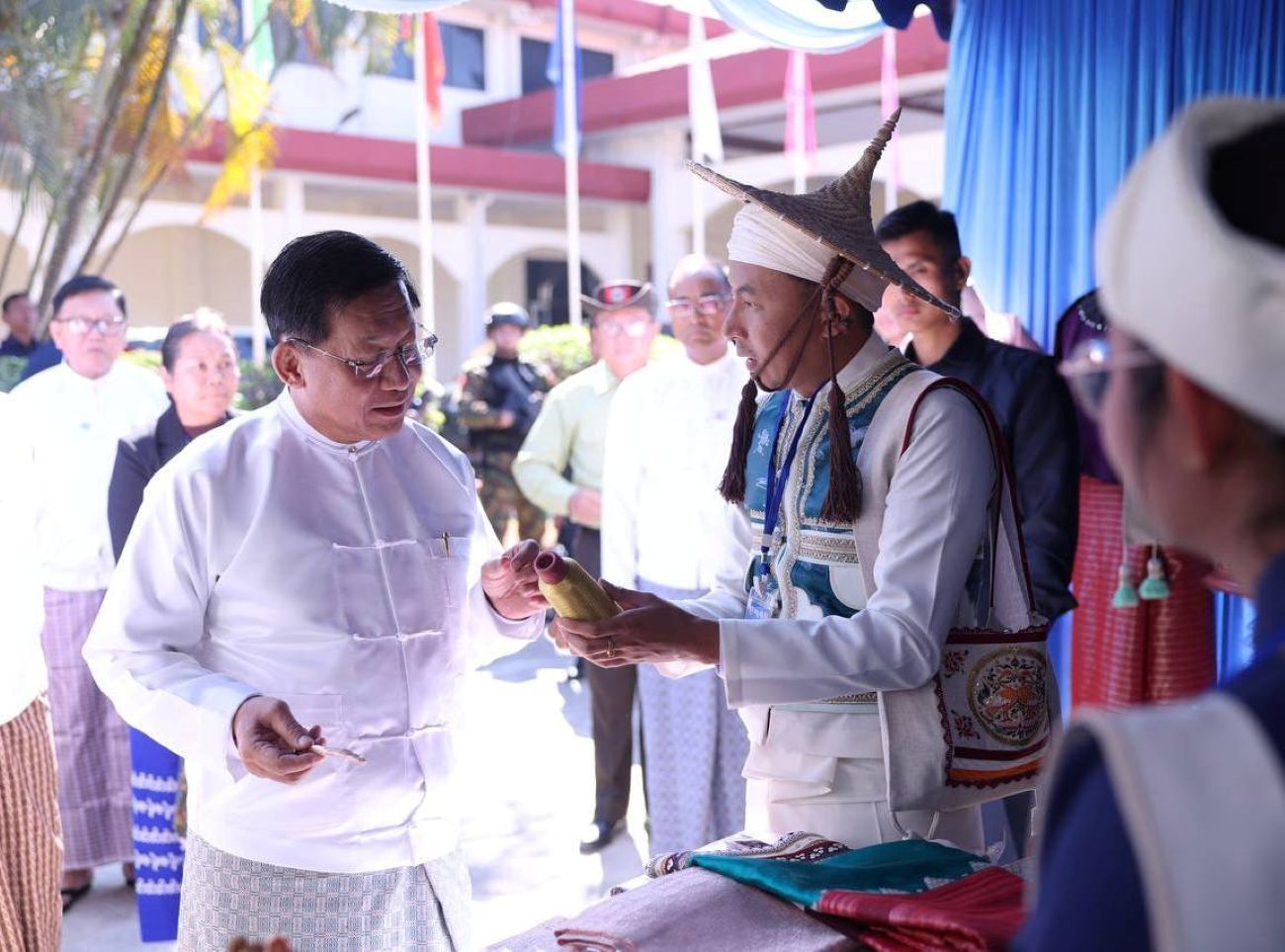
- By CNI
- Category: English Section
- Hits: 355
CNI News
21 January 2026
Senior General Min Aung Hlaing, Chairman of the State Security and Peace Commission, stated that manufacturing industries have shown progress despite economic sanctions imposed on Myanmar by certain countries and organizations.
He made these remarks during a meeting with departmental staff, community elders, and business owners in Kengtung on January 19, 2026.
Senior General Min Aung Hlaing said, "While some countries and organizations have imposed economic sanctions on Myanmar, the state economy has had trade deficits since the previous government's term. By encouraging domestic agriculture and livestock—the backbone of the economy—and working to improve manufacturing, there has been a reasonable degree of progress despite the sanctions. The trade deficit, which was previously in the negative, has returned to a positive balance."
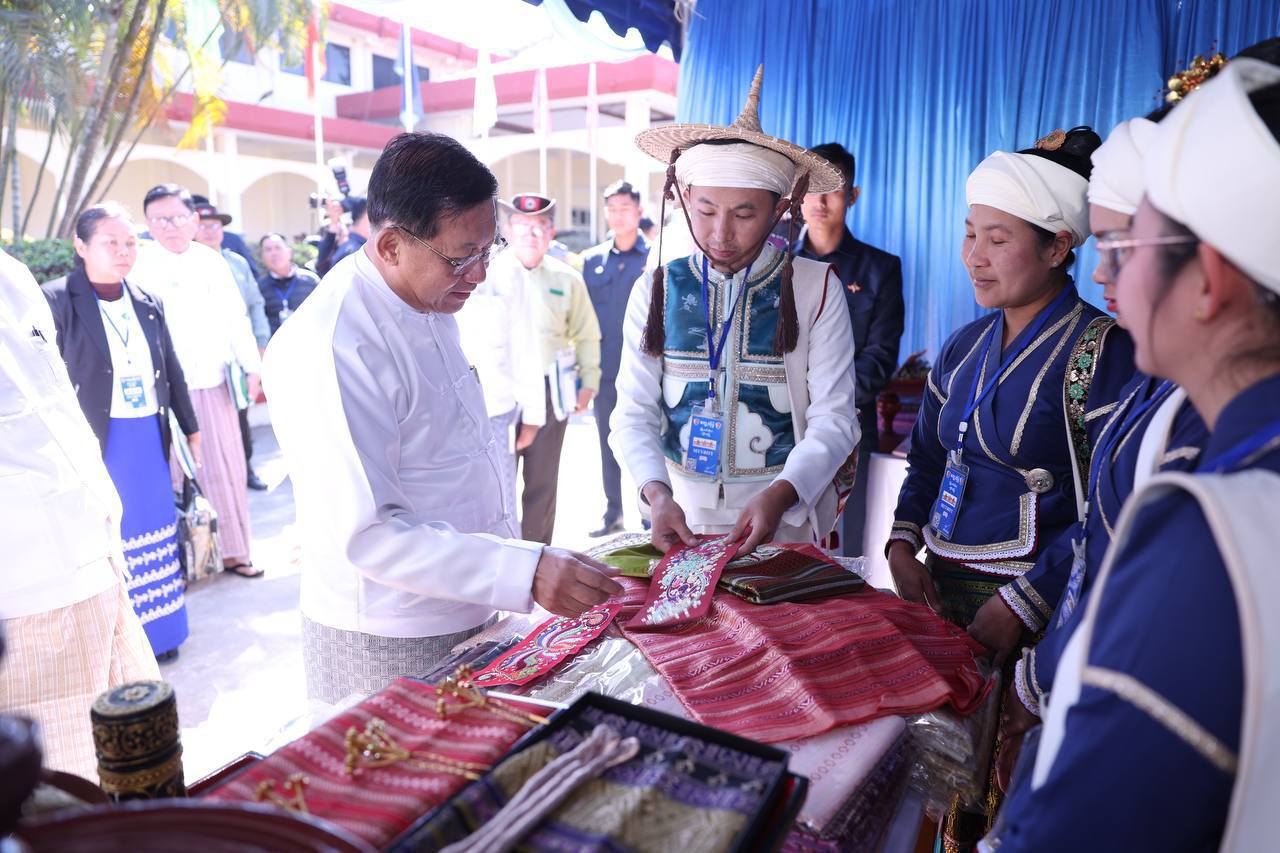
Senior General Min Aung Hlaing
Dr. Aung Myo, a political analyst, told CNI News that while accurate figures for the current Myanmar economy are unavailable and everyone in the country is facing a crisis, the situation has not reached a total collapse.
He noted, "The reason for the trade surplus is the severe restriction on foreign imports. For example, items like kerosene and premium alcohol are restricted. To put it simply, they only allow essentials, which reduces the expenditure of foreign currency and prevents a total disaster. Regardless of the sanctions, we see that the country has resilience. For instance, gold is being illegally extracted in PDF-controlled areas, and there are resources in non-PDF areas as well. Even without accurate data, a 'hidden economy' is surviving. So, while everyone is in a crisis, it hasn't turned into a total catastrophe."
Senior General Min Aung Hlaing further stated that if domestic production of food and consumer goods can meet local demand, foreign currency expenditures will significantly decrease. He added that the annual import of cooking oil from abroad is a loss for the country.
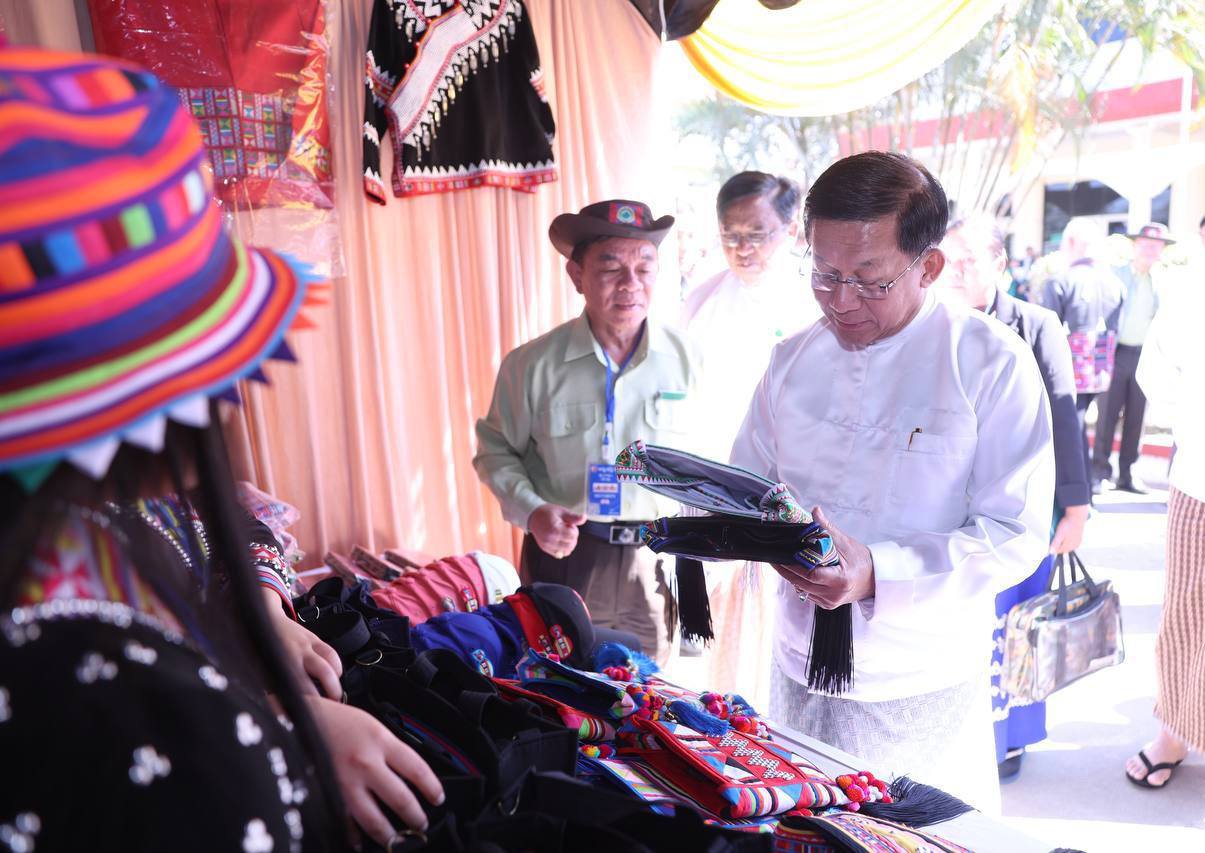
Senior General Min Aung Hlaing
Dr. Aung Myo also told CNI News that officials from the NLD government seemed to lack an understanding of the economy, particularly in budget management.
"During the NLD’s term, the officials were quite inexperienced. They didn't know how to manage the budget effectively. They didn't invest capital for sustainable development. For example, they didn't pursue hydropower projects. Projects that should have been finished in 3-4 years were left incomplete. They focused on rural electrification to gain popularity, but because they didn't understand national development, they couldn't balance the two budgetary goals. There was no real progress in terms of development," he said.
Since the military took over, in an effort to prevent trade deficits and dollar shortages, all imports—including consumer goods, medicines, and other foreign products—have been completely banned, with the exceptions of fuel, palm oil, and weaponry/ammunition.
Currently, the people of Myanmar are facing rising prices for consumer goods, food, and medicine, as well as a scarcity of employment opportunities.
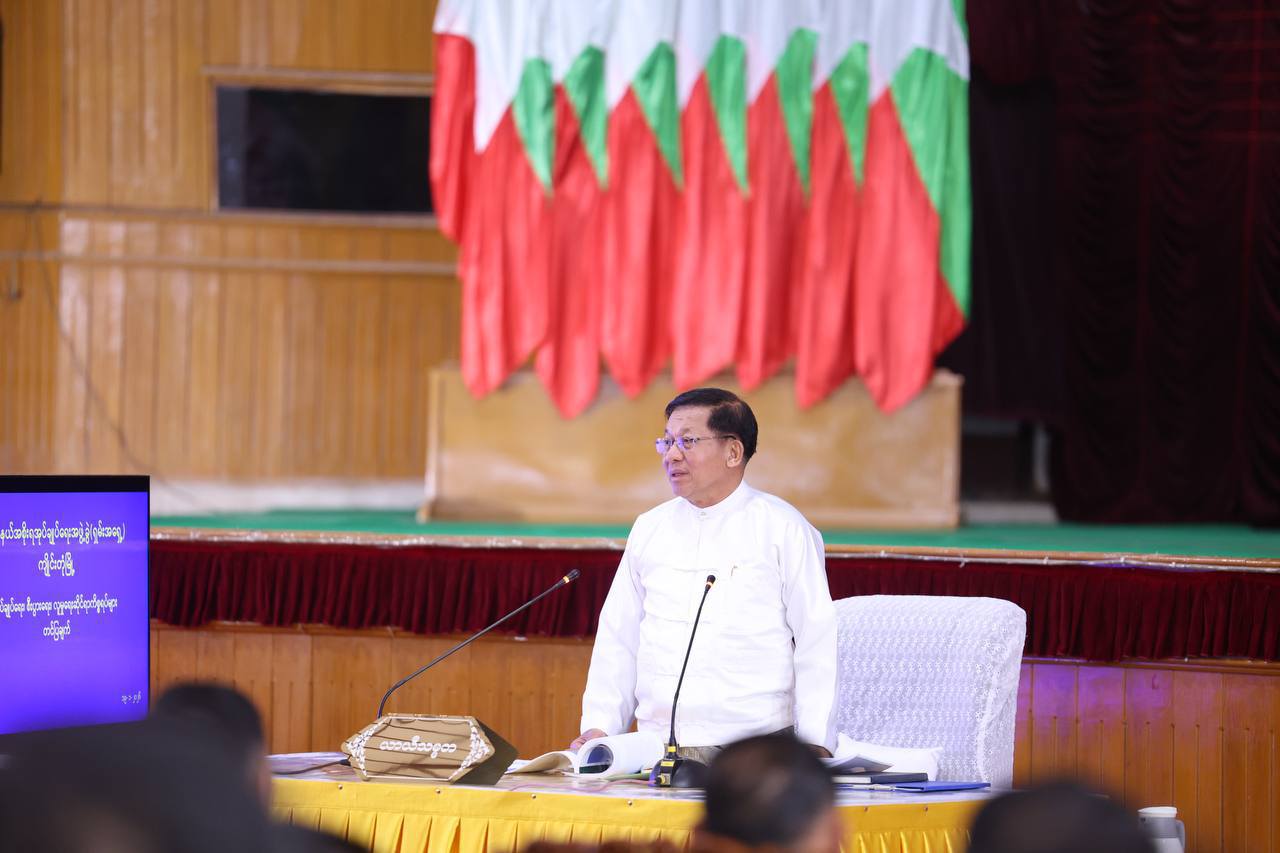
- By CNI
- Category: English Section
- Hits: 455
CNI News
21 January 2026
There is significant public interest and questioning regarding how Senior General Min Aung Hlaing would maintain control over the Tatmadaw (military) if he were to assume the presidency in the upcoming new government.
In the post-election political landscape, Senior General Min Aung Hlaing likely harbors ambitions to become the official President. At the same time, he may create a framework that allows him to continue exercising power over the military, according to Colonel Khun Okkar, Chairman of the Pa-O National Liberation Organization (PNLO-NCA/S), an ethnic armed group signatory to the Nationwide Ceasefire Agreement.
Speaking to CNI News, Colonel Khun Okkar said, "I believe he has the ambition to become President. Therefore, he will likely take the presidency while simultaneously designing a model that allows him to maintain administrative authority over the military. Analysts suggest he will definitely take the presidency but will also manage to mitigate any 'side effects' [of leaving the military]. This could be called a new political landscape. While he is expected to officially become President, there are concerns that this might distance him from the military. However, this could be resolved by amending the 2008 Constitution to allow one person to hold both positions. We must watch whether the first task of the Parliament(Hluttaw) that emerges in March will be to amend crucial sections of the Constitution. If they do, this scenario could indeed materialize."
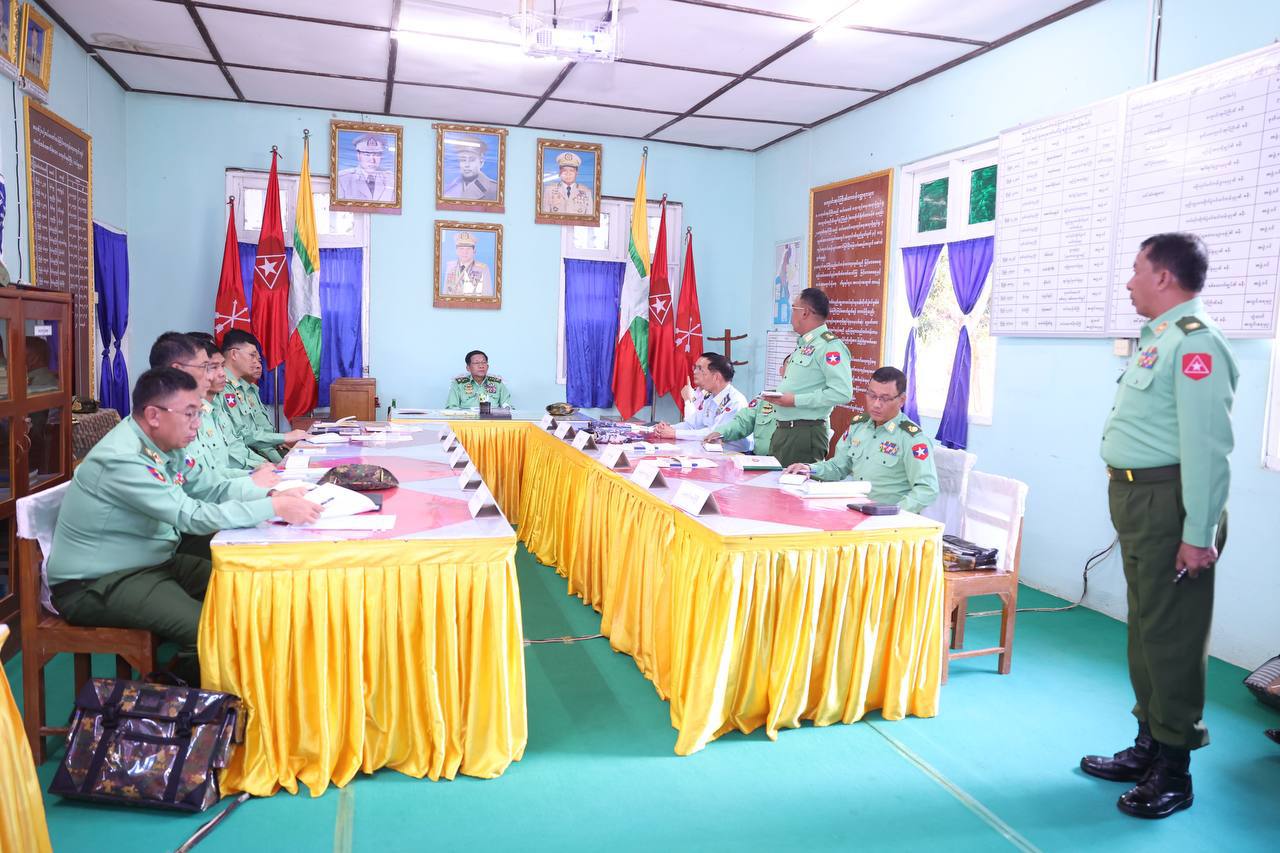
Senior General Min Aung Hlaing
Colonel Khun Okkar further suggested that a proposal to amend the Constitution regarding these matters could emerge as soon as the Parliament is formed.
"I assume that as a President officially elected and confirmed by Parliament, he would proceed decisively through official channels. However, the current 2008 Constitution contains points that could distance a President from the military. They could amend this (so the President is also the Commander-in-Chief). For example, the U.S. President is also the Commander-in-Chief. Similarly, in federal countries, the President's authority controls the military—that is the American model. If Parliament enacts such a provision first, it would become applicable. It’s hard to predict, but under the current Constitution, it is not easy to control both positions. If amended, it becomes easy. Therefore, we believe a constitutional amendment proposal could be tabled immediately after Parliament convenes," he added.
Currently, Senior General Min Aung Hlaing holds the positions of Acting President, Chairman of the State Security and Peace Commission, and Commander-in-Chief of the Defense Services. Consequently, domestic and international observers anticipate he may take the presidency following the 2025 general election.
Military and political analysts point out that if he accepts the presidency, he would technically need to retire from his current post and transfer the role of Commander-in-Chief to a trusted successor. To maintain control over the military, he might then utilize the 2008 Constitution or establish a committee/commission through the National Defence and Security Council (NDSC).
Dr. Nyo Nyo Thinn, founder of Yangon Watch, told CNI News that she does not believe Senior General Min Aung Hlaing becoming President would significantly impact the country's trajectory, noting that the Constitution is not set in stone and can be amended at any time.
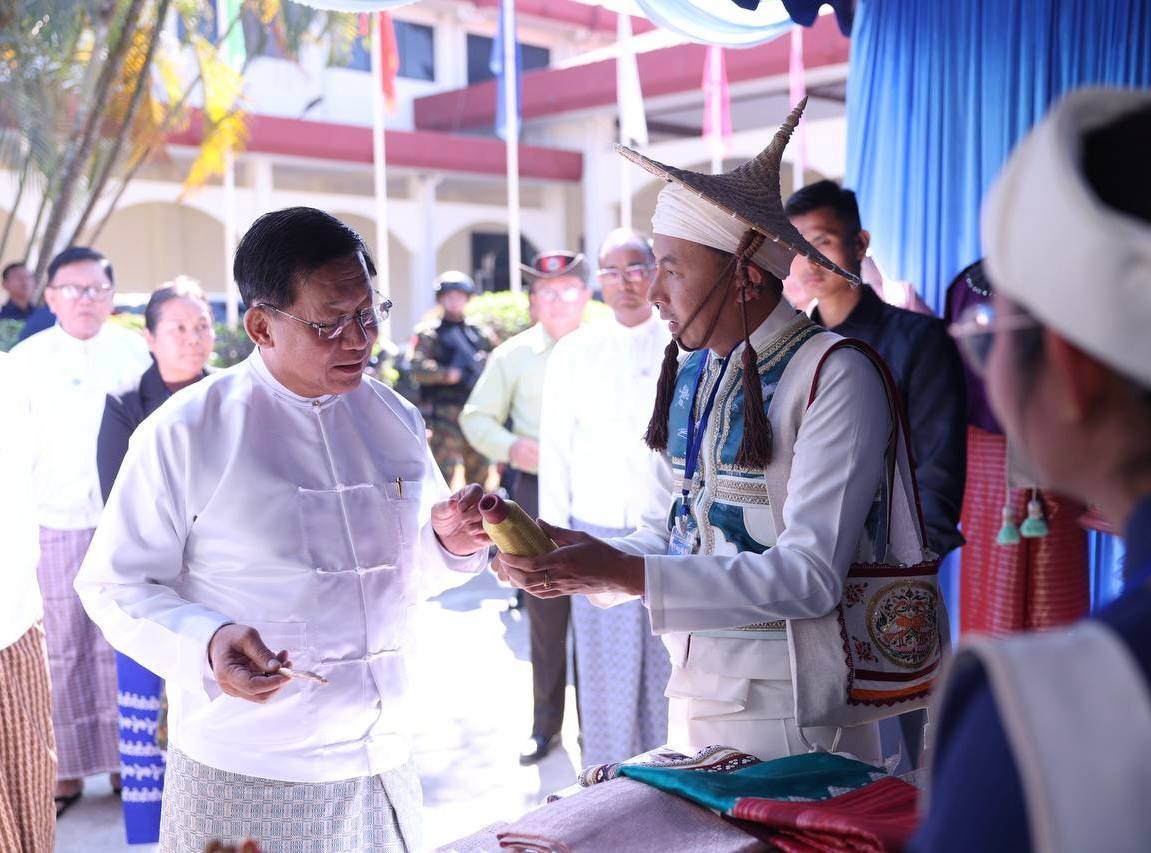
Senior General Min Aung Hlaing
"In my personal view, whether Senior General Min Aung Hlaing becomes President or not won't bring about extraordinary changes for the country. He already has the opportunity to be President if he wants to. If he chooses not to take the presidency, it would clearly indicate his confidence that he can control the incoming government nearly 100 percent anyway. Constitutional obstacles are man-made and can be easily overcome by those who created them. Since laws are written by people, people can change them at any time. Even without a full amendment, every law has a 'loophole.' He can use these exits to achieve his goals. If he wants to, he can create a situation where he controls both positions," she said.
Senior General Min Aung Hlaing has previously stated that state power will be transferred to the government that emerges after the election and that the Tatmadaw will return to its primary duty of national defense.
Therefore, military and political analysts say it remains to be seen whether the Senior General will refrain from the presidency and appoint someone else while acting as an "overseer" of the government from his military post, or if he will take the presidency himself and continue to direct the military.
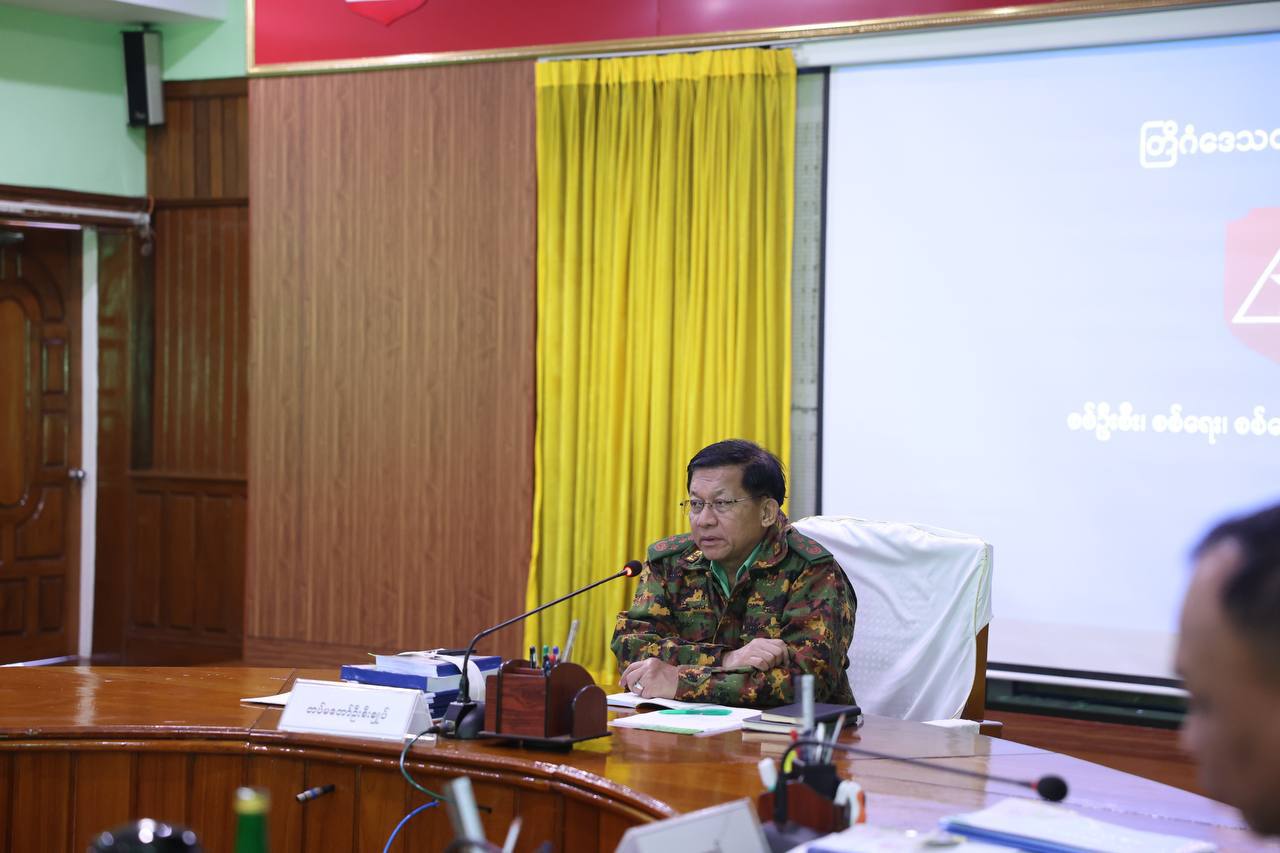
- By CNI
- Category: English Section
- Hits: 305
CNI News
21 January 2026
Senior General Min Aung Hlaing, Chairman of the State Security and Peace Commission, said that efforts must be made to modernize conventional military tactics in line with the times and to apply special military tactics suited to current conditions.
He made the remarks on January 19, 2026, while meeting officers, soldiers, and their families in Kengtung, eastern Shan State.
The Senior General said: “As today is an era of technology, military tactics must also be changed and applied based on the continuously evolving military equipment and technologies. Research must be carried out to ensure that conventional military tactics are updated in line with the times, and that special military tactics can be applied in accordance with current conditions.”
He added that national defense is a very broad responsibility, and therefore training duties must be carried out with great seriousness.
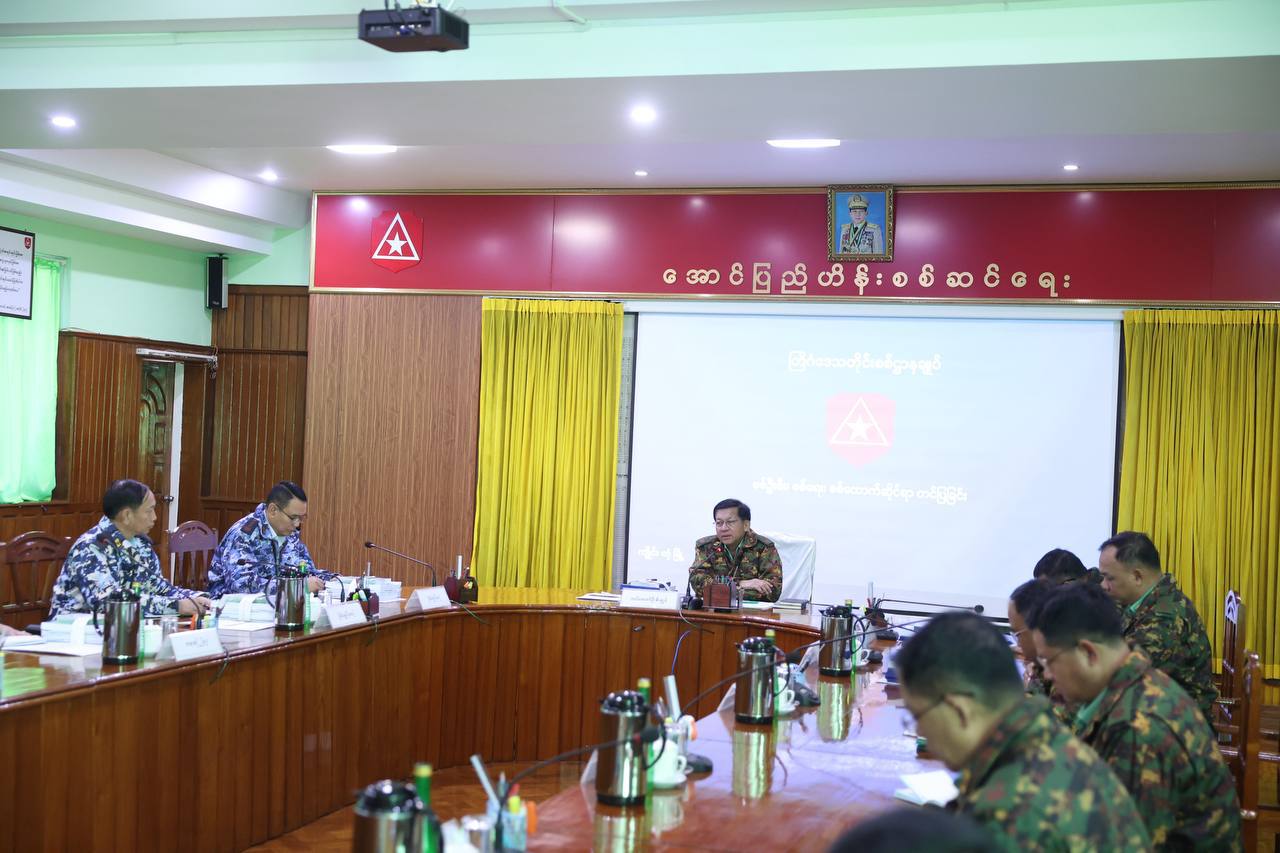
Senior General Min Aung Hlaing seen
Currently, the Myanmar Armed Forces (Tatmadaw) are engaged in fighting with various armed groups nationwide and have suffered territorial losses. In order to regain control of these areas, the military has resumed offensive operations by integrating drones, air power, and ground forces.
Territories that were lost after October 27, 2023—such as Lashio, Hsipaw, Kyaukme, Naungcho, Thabeikkyin, Madaya, Singu, Mogok, and Momeik—have now been brought back under control.
At present, the Myanmar Tatmadaw is also engaged in fighting with multiple armed groups in Rakhine State, Chin State, Kachin State, Kayin State, Kayah State, Sagaing Region, Mandalay Region, Magway Region, Tanintharyi Region, and Bago Region.
Page 40 of 352
Connect with us