English Edition
- By CNI
- Category: English Section
- Hits: 368
CNI News
23 July 2025
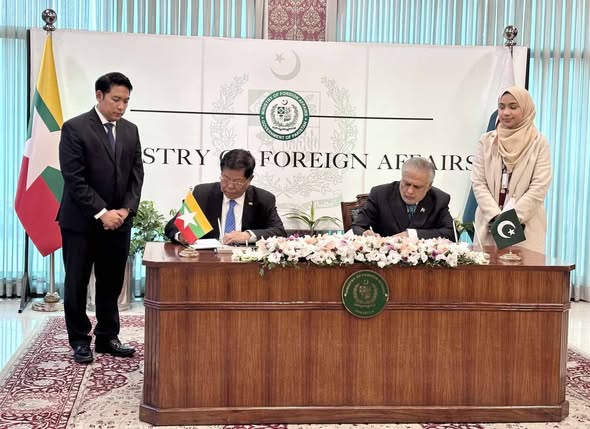
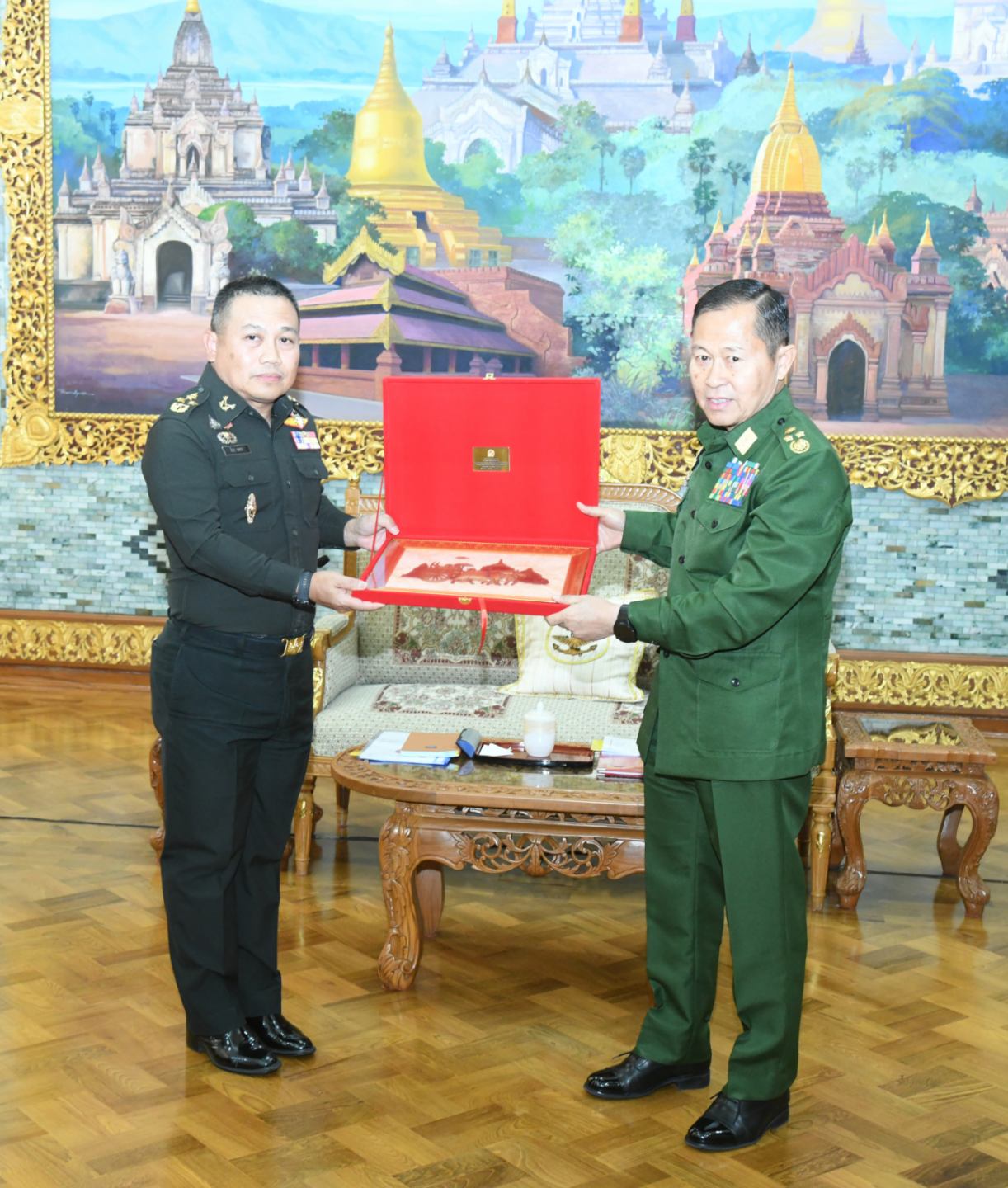
The 14 day-long India-Myanmar United Nations Peacekeeping Training Course led by the Centre for United Nations Peacekeeping in New Delhi, India was inaugurated on July 21, 2025 in Naypyidaw, Myanmar, reported the Indian Embassy to Myanmar.

The Indian embassy said the training course would focus on de-escalation, conflict management and protection of civilians. Indian Ambassador Abhay Thakur and the SAC Vice Chairman Vice Senior General Soe Win attended the opening ceremony and delivered speeches.
India is a neighboring country of Myanmar and is assisting Myanmar in its democratic transition and federal union building.
- By CNI
- Category: English Section
- Hits: 329
CNI News
22 July 2025
A group of people carrying narcotic drugs that will be sent to India was arrested on July 18, 2025, while leaving Kalay for Tamu, announced the Chin National Organization (Upper Chindwin Region).
The group of five people were arrested between Kalay Town and Yarzagyo Town while they were traveling from Kalay to Tamu, carrying 4 bags of WY pills (800,000 pills) on four motorcycles, announced the CNO on July 20, 2025.
The drugs were reportedly being sent to a person named EM in India.
“ CNO will continue to arrest drug carriers, distributors, users, and sellers if they are found out in the Kalay-Kabaw region and will take strict action against. Therefore, we urge local people to cooperate in the fight against drugs to prevent young people in the region from becoming victims of drugs so that the community will be prosperous and beautiful." announced the CNO.
Clashes are taking place between armed groups and the Myanmar Tatmadaw along the India-Myanmar border, leading to regional instability. Then, as the rule of law weakened, arms and drug smuggling is increasing.
- By CNI
- Category: English Section
- Hits: 395
CNI News
22 July 2025
It is urgently important to amend the Nationwide Ceasefire Agreement (NCA) to reflect the current situation and to designate buffer zones for ethnic armed groups (EAOs), Myanmar political analyst Dr. Aung Myo told CNI News.
Currently, fighting is ongoing in Myanmar between ethnic armed organizations (EAOs), Spring Revolution forces, the People's Defense Forces (PDF), and the Myanmar Tatmadaw, and all of them are trying to gain control of territory.
The SAC needed to designate buffer zones for the EAOs so that clashes could be prevented between the two armies and according to the 2008 Constitution, suitable powers should be provided to the EAOs, said Dr. Aung Myo.
“One of the key points in the NCA is that a buffer zone should be created between the two sides. For example, the Wa people live freely on the other side of the Salween River in their own territory. They also collect money. They do it based on their position. The KNU can't do that. In its border areas, both the Tatmadaw and the KNU have controlled. No one has full control. Then the KNU also collect money to support his group. When that happens, there will be clashes between the two sides. That's why it's very important for us to define the territory for the EAOs. Another thing is that we should talk peace to the EAOs. But I think it's more important to reform what needs to be reformed than the peace talk. I see a weakness in that area. For example, we should provide the states with the opportunities that are in the 2008 Constitution," he said.

While the KIA-PDF joint force
The government led by U Thein Sein offered a ceasefire on August 18, 2011, and held talks with 21 ethnic armed organizations.
Then, in 2011-2012, state-level and Union-level ceasefire agreements (Bilateral) were signed with 14 ethnic armed groups. In 2013, negotiations for the NCA agreement began, and a draft of the NCA agreement was received in August 2015.
After receiving the draft NCA, it was signed by the KNU, RCSS, ALP, DKBA, KNU/KNLA-PC, PNLO, CNF, ABSDF on October 15, 2015, and by the NMSP and LDU on February 13, 2018.
The NCA was signed on October 15, 2015, during the Thein Sein government, and will be 10 years old on October 15, 2025.
The armed groups that signed the NCA pointed out that some of the processes under the NCA agreement were only able to be implemented until 2020 and have been halted since then until today.

While seeing the SNA
Furthermore, since the NCA is internationally recognized, if it is to be revised, it would be more natural to include all those who participated in the initial ratification of the NCA, U Thein Tun Oo told CNI News.
“I think we should renegotiate and amend the NCA with those who were involved in both the signing and drafting. I don’t want to comment on how it should be amended or how it shouldn’t be amended. Because the NCA actually worked as intended? I mean, did this agreement really work for us? If it worked, we should continue with it. If it doesn't work, then I think we'll have to decide whether to fix it or not, depending on the ground conditions," he said.
If the NCA agreement is revised, it might be revised when the Hluttaw is formed after the general election Currently, the NCA is not a problem, but the main issue is the implementation of the points in the NCA, said U Thein Tun Oo.
Currently, the ABSDF, CNF, and KNU have declared that the NCA agreement has been void, and they are engaged in clashes with the Myanmar Tatmadaw.
The PNLO, ALP, LDU, and NMSP have also split into two groups, one claiming to have withdrawn from the NCA and the other remaining on the NCA path.
Similarly, conflicts often occur among armed groups such as MNDAA, KIA, TNLA, SSPP, RCSS, PDFs, SNA, KNU, NMSP, etc. due to territorial disputes.
- By CNI
- Category: English Section
- Hits: 395
CNI News
22 July 2025
The management committee on providing employment for dutiful ex-military personnel was formed to enable those who served dutifully in armed forces to get jobs on July 18 2025, reported the SAC.
The committee consists of the Deputy Prime Minister and Minister of Defense as Chairman, the Union Minister of Labor as Vice Chairman-1, the Chairman of the Union Civil Service Commission as Vice Chairman-2, the Adjutant General as Vice Chairman-3, the Union Minister of the Ministry of the SAC Office 4 as Secretary, and the Director of the Resettlement Directorate from the Office of the Chief of Staff (Army) asJoint Secretary.
Then, the members include the Ministry of Planning and Finance, Ministry of Foreign Affairs, Ministry of Home Affairs, Ministry of Agriculture-Livestock and Irrigation, Ministry of Cooperatives and Rural Development, Ministry of Science and Technology, Ministry of Social Welfare-Relief and Resettlement, and the Myanmar Federation of Chambers of Commerce and Industry.
The committee is responsible to resettle the dutiful people's military personnel who became disabled because of enemies (EA1, EA2 and NEA) like permanent military personnel with the plan of the Directorate of Resettlement under the command of the Adjutant General Office.

The formation of the committee on providing employment to ex-military personnel is good, but it will only gain public support if it is implemented to ensure real benefits on the ground; if the situation of the military personnel on the bottom was inquired, what kinds of conditions were occurring could be learnt, pointed out those close to the military community.
With the political crisis that began in Myanmar on February 1, 2021, the Peaple's Military Service Law was enacted on February 10, 2024, and military recruitment of civilians has reached the 15th batch.
SAC has been recruiting military personnel at a rate of 5,000 people per batch and as it has now reached the 15th batch, a total of 75,000 military personnel have been recruited.
- By CNI
- Category: English Section
- Hits: 437
CNI News
20 July 2025
The Myanmar Tatmadaw overthrew the NLD government on February 1, claiming that the NLD attempted to form a government without solving the vote list dispute that took place in the 2020 general election and declared the state of emergency and has been ruling the country.
Then, a political crisis emerged and armed revolutions aiming to overthrow the Myanmar Tatmadaw and the SAC have arisen. Due to the political crisis, the establishment of democracy and federalism have been far away.
Therefore, the SAC is planning to hold elections in December 2025 and January 2026, and has said that state power will be handed over to the party that wins the elections.
CNI News Agency interviewed Sai Nyunt Lwin, chairman of the Shan Nationalities League for Democracy (SNLD), who has decided not to contest the upcoming elections, while urging them to conduct dialogues regarding these situations.
Q: Do you think it is possible to rebuild democracy in Myanmar now?
A: Most organizations have been saying that they will rebuild democracy until now. In reality, it is not easy to predict how it will turn out. Since the rule of law and stability have not yet been established, it must be said that restoring democracy is a distant dream.
Q: How far do you think the federal union that non-Bamar ethnic groups are demanding has been away while democracy is collapsing? What is your opinion on the view that if democracy is not achieved, federalism is also impossible?
A: All the organizations, big and small, involved in the current problems are saying that they will build a federal democratic union. Almost all the opposition organizations are shouting that they will build a federal democratic union.
The strange thing is that this point is the same between the two groups that are fighting against each other. It's like they're fighting with each other with the same goal. It is true that it is very difficult to establish a federal union without democracy.
Democracy is also related to the rule of law, so it is true that the current situation in Myanmar is very far from restoring a democratic system with the rule of law.

While seeing the Myanmar national flag
Q: Now Myanmar is in a state of collapse and the various groups concerned are not trying to maintain this situation but are only trying to gain power. Meanwhile, what is the way to regain control of the situation by taking the people's support?
A: Our Three Main National Causes in Myanmar: non-disintegration of the Union, non-disintegration of national solidarity, and perpetuation of sovereignty are showing cracks. It can be said that the unity of the local elements has been broken. It is really sad. Each relevant group is only focused on winning the war and gaining power.
The resentment and hatred between the two sides are also intense. The people are also suffering from various kinds of problems and are struggling with their own problems. I find it difficult to harness the power of the people. So far, there has been no clear person/organization that can harness the power of the people and save the situation again.
Looking at the current situation, the military approach is leading. The political approach has been left far behind for many years. It is necessary to reduce military means and step up political means.
Looking at the current situation, the military approach is leading. The political approach has been left far behind for many years. We need to work to reduce military power and increase political power.
In practice, we haven't seen even a hint of improvement in politics. To reform the situation by harnessing the power of the people is not possible through military means, but only through political means. Currently, political means have been dim because it is not allowed to be implemented.

While a peace forum was being held
Q: They are talking about elections as a way out of Myanmar politics to restore democracy and build a federal union. Do you really think that holding elections will restore democracy and federalism? Isn't there any other way than elections?
A: The elections scheduled to be held in December are not a way out for the people. It is difficult to say that the elections are free and fair because the situation has been planned in order that the party that won in the 2020 general election cannot participate.
If we are going to hold a free and fair election, there needs to be an environment that is conducive to it. I don't think that's the case at the moment. In my opinion, the only way out for the country is through an election that is held in consultation with and agreed upon by the majority of key stakeholders.
It is said that there have been 43 agreements after the NSPNC discussed with some political parties. But since they are kept secret, how can the public vote based on the “agreements”? It is said that elections should be transparent, right? It is impossible to say that simply holding the upcoming elections successfully will mean that democracy can be restored and a federal union can be built.
It is impossible to say that simply holding the upcoming elections successfully will mean that democracy can be restored and a federal union can be built. Everybody knows it. The only other way, other than elections, is to use political means, namely national reconciliation.
In a time when war and hatred are so great, those who urge to hold a bilateral dialogue are opposed in the sense that they should be given the death sentence. No one dares to say it. The country suffers and will suffer.

Daw Aung San Suu Kyi
Q: What would the situation in Myanmar be like if elections were held?
What would the situation be like if elections were not held?
A: If the election is held without any significant opposition, most of the members of the parties that are friendly to the military will come to the Hluttaw. The Hluttaw will be the one to make/repeale/amend laws.
The use of funds will also have to be discussed and decided in accordance with the law. A civilian government that includes retired generals will emerge and be declared the De Jure government. But the armed resistance organizations will not stop. They will grow even more.
The new civilian government will have to deal with armed resistance groups. The question is how much they will be able to reduce the military approach and shift to a political approach. How to make the territories participate in the Union again is another question.
Another thing is that a great failure will emerge if opportunists are included in the government. If elections were not able to be held as planned, the war could be bigger than now. If the political means could not be used, the military means would be focused.
Except for a dialogue that includes most stakeholders for the sake of the country, there is no other means.

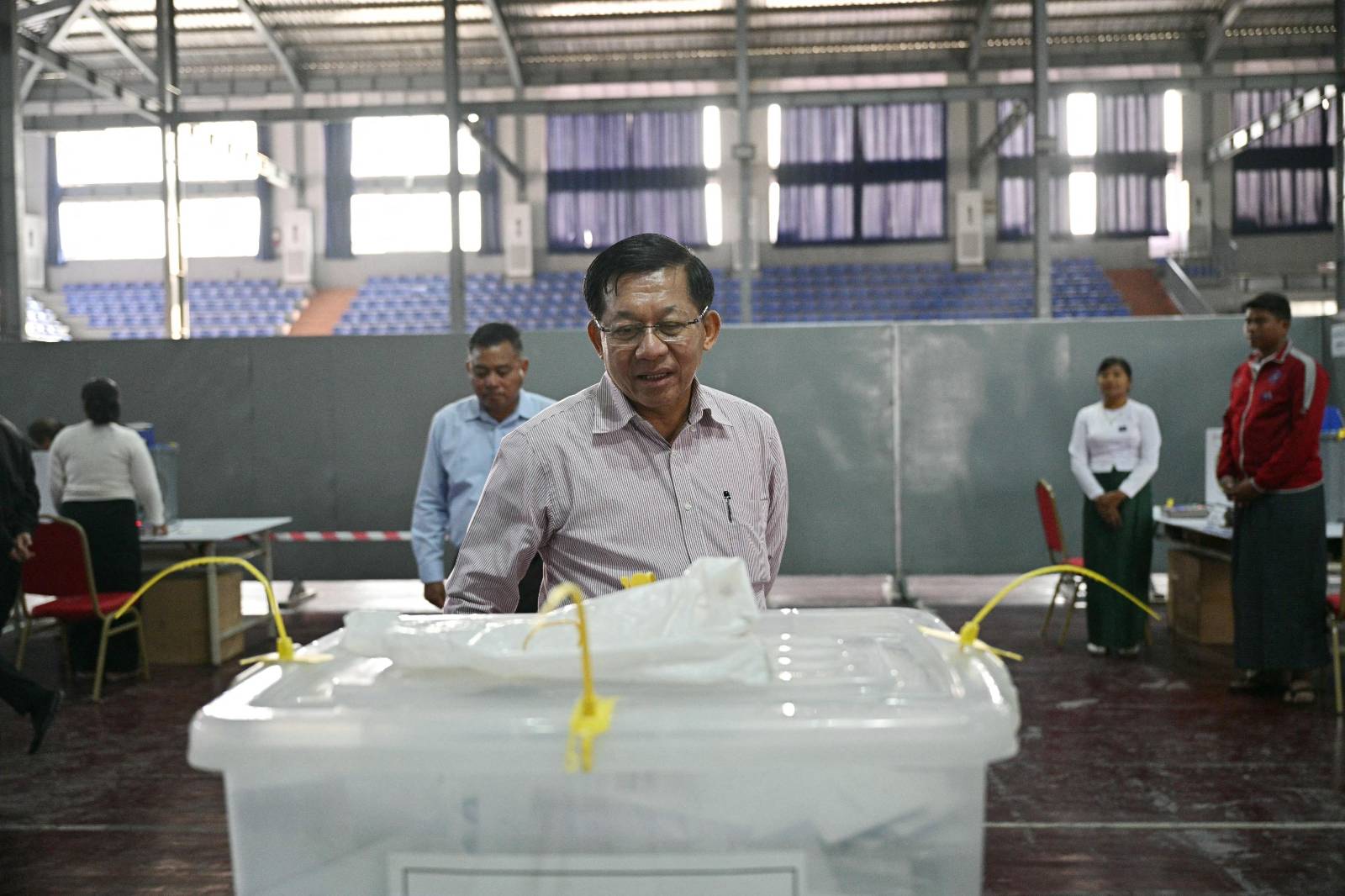
While seeing the SAC Chairman and representatives of political parties
Q: As the last question, some consider that the government that would come to power if elections were held could face more difficult situations. What crises could the government face? What kinds of agreements should there be in advance to prevent such crises?
A: Because the Hluttaw will emerge, legislation and spending will be much slower than now. The government will have to face and overcome criticism and objections. Since there has been no negotiations with the opposition (so far) before the election, the government cannot prepare for a crisis. There is no other option but to face it.
If the government that will come to power includes self-interested people, it will be in dire distress. I think that the current situation is that they are just trying to completely root out each other.
- By CNI
- Category: English Section
- Hits: 377
CNI News
20 July 2025
The Myanmar Tatmadaw overthrew the NLD government on February 1, claiming that the NLD attempted to form a government without solving the vote list dispute that took place in the 2020 general election and declared the state of emergency and has been ruling the country.
Then, a political crisis emerged and armed revolutions aiming to overthrow the Myanmar Tatmadaw and the SAC have arisen. Due to the political crisis, the establishment of democracy and federalism have been far away.
Therefore, the SAC is planning to hold elections in December 2025 and January 2026, and has said that state power will be handed over to the party that wins the elections.
CNI News Agency interviewed Sai Nyunt Lwin, chairman of the Shan Nationalities League for Democracy (SNLD), who has decided not to contest the upcoming elections, while urging them to conduct dialogues regarding these situations.
Q: Do you think it is possible to rebuild democracy in Myanmar now?
A: Most organizations have been saying that they will rebuild democracy until now. In reality, it is not easy to predict how it will turn out. Since the rule of law and stability have not yet been established, it must be said that restoring democracy is a distant dream.
Q: How far do you think the federal union that non-Bamar ethnic groups are demanding has been away while democracy is collapsing? What is your opinion on the view that if democracy is not achieved, federalism is also impossible?
A: All the organizations, big and small, involved in the current problems are saying that they will build a federal democratic union. Almost all the opposition organizations are shouting that they will build a federal democratic union.
The strange thing is that this point is the same between the two groups that are fighting against each other. It's like they're fighting with each other with the same goal. It is true that it is very difficult to establish a federal union without democracy.
Democracy is also related to the rule of law, so it is true that the current situation in Myanmar is very far from restoring a democratic system with the rule of law.

While seeing the Myanmar national flag
Q: Now Myanmar is in a state of collapse and the various groups concerned are not trying to maintain this situation but are only trying to gain power. Meanwhile, what is the way to regain control of the situation by taking the people's support?
A: Our Three Main National Causes in Myanmar: non-disintegration of the Union, non-disintegration of national solidarity, and perpetuation of sovereignty are showing cracks. It can be said that the unity of the local elements has been broken. It is really sad. Each relevant group is only focused on winning the war and gaining power.
The resentment and hatred between the two sides are also intense. The people are also suffering from various kinds of problems and are struggling with their own problems. I find it difficult to harness the power of the people. So far, there has been no clear person/organization that can harness the power of the people and save the situation again.
Looking at the current situation, the military approach is leading. The political approach has been left far behind for many years. It is necessary to reduce military means and step up political means.
Looking at the current situation, the military approach is leading. The political approach has been left far behind for many years. We need to work to reduce military power and increase political power.
In practice, we haven't seen even a hint of improvement in politics. To reform the situation by harnessing the power of the people is not possible through military means, but only through political means. Currently, political means have been dim because it is not allowed to be implemented.

While a peace forum was being held
Q: They are talking about elections as a way out of Myanmar politics to restore democracy and build a federal union. Do you really think that holding elections will restore democracy and federalism? Isn't there any other way than elections?
A: The elections scheduled to be held in December are not a way out for the people. It is difficult to say that the elections are free and fair because the situation has been planned in order that the party that won in the 2020 general election cannot participate.
If we are going to hold a free and fair election, there needs to be an environment that is conducive to it. I don't think that's the case at the moment. In my opinion, the only way out for the country is through an election that is held in consultation with and agreed upon by the majority of key stakeholders.
It is said that there have been 43 agreements after the NSPNC discussed with some political parties. But since they are kept secret, how can the public vote based on the “agreements”? It is said that elections should be transparent, right? It is impossible to say that simply holding the upcoming elections successfully will mean that democracy can be restored and a federal union can be built.
It is impossible to say that simply holding the upcoming elections successfully will mean that democracy can be restored and a federal union can be built. Everybody knows it. The only other way, other than elections, is to use political means, namely national reconciliation.
In a time when war and hatred are so great, those who urge to hold a bilateral dialogue are opposed in the sense that they should be given the death sentence. No one dares to say it. The country suffers and will suffer.

Daw Aung San Suu Kyi
Q: What would the situation in Myanmar be like if elections were held?
What would the situation be like if elections were not held?
A: If the election is held without any significant opposition, most of the members of the parties that are friendly to the military will come to the Hluttaw. The Hluttaw will be the one to make/repeale/amend laws.
The use of funds will also have to be discussed and decided in accordance with the law. A civilian government that includes retired generals will emerge and be declared the De Jure government. But the armed resistance organizations will not stop. They will grow even more.
The new civilian government will have to deal with armed resistance groups. The question is how much they will be able to reduce the military approach and shift to a political approach. How to make the territories participate in the Union again is another question.
Another thing is that a great failure will emerge if opportunists are included in the government. If elections were not able to be held as planned, the war could be bigger than now. If the political means could not be used, the military means would be focused.
Except for a dialogue that includes most stakeholders for the sake of the country, there is no other means.

While seeing the SAC Chairman and representatives of political parties
Q: As the last question, some consider that the government that would come to power if elections were held could face more difficult situations. What crises could the government face? What kinds of agreements should there be in advance to prevent such crises?
A: Because the Hluttaw will emerge, legislation and spending will be much slower than now. The government will have to face and overcome criticism and objections. Since there has been no negotiations with the opposition (so far) before the election, the government cannot prepare for a crisis. There is no other option but to face it.
If the government that will come to power includes self-interested people, it will be in dire distress. I think that the current situation is that they are just trying to completely root out each other.
- By CNI
- Category: English Section
- Hits: 711
CNI News
19 July 2025
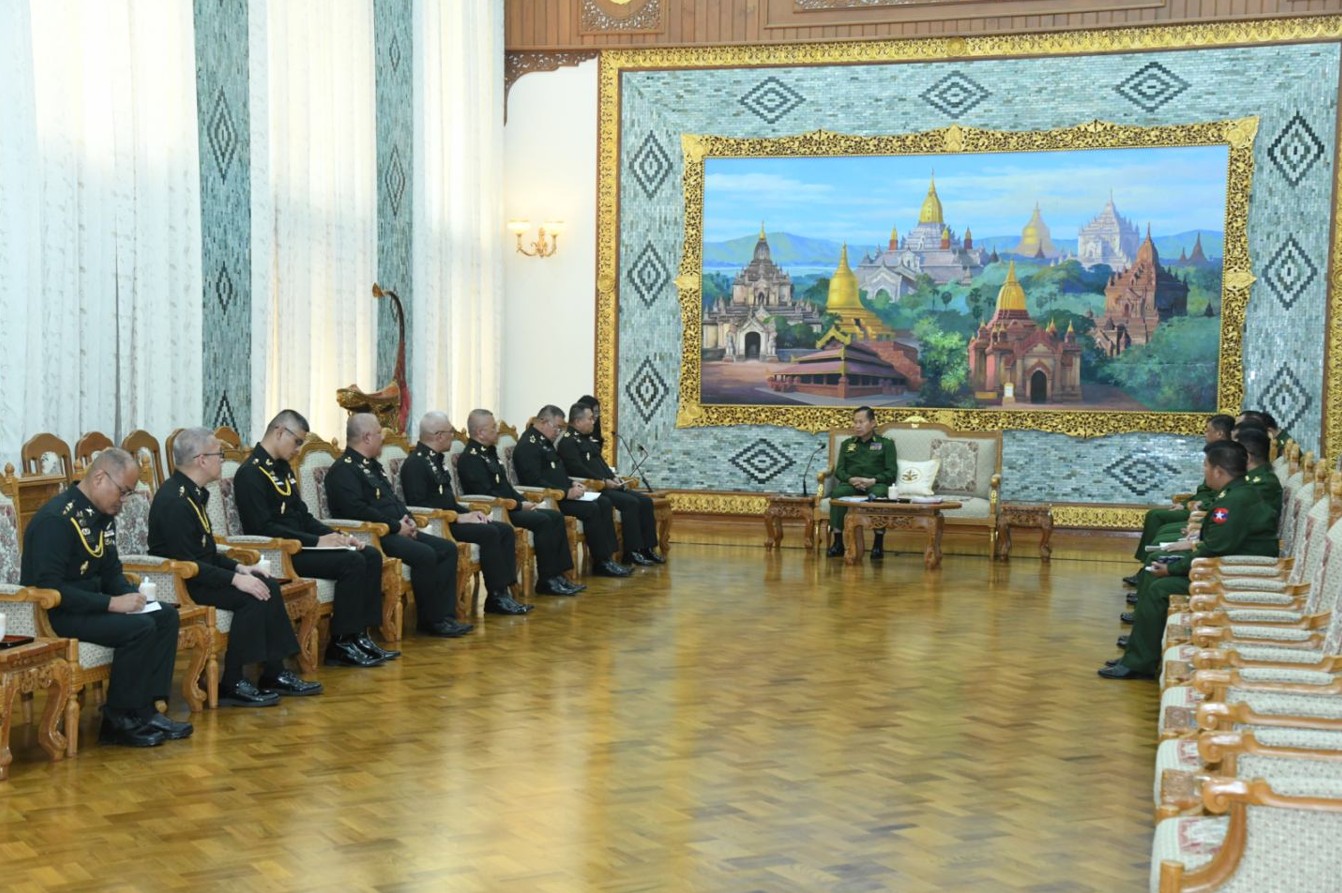
A delegation led by Lieutenant General Shrinjay Pratap Singh, Director General of Indian Defense Intelligence Agency and Deputy Chief of Integrated Defense Staff (Intelligence) arrived in Myanmar on July 16, 2025 and the arrival of this delegation to Myanmar is raising questions among military and political observers about how significant it could be.
The Indian intelligence chief met with vice chairman of the SAC, deputy commander in chief of the defense services Vice Senior General Soe Win in Naypyidaw.
During the meeting, they discussed issues related to maintaining peace and stability in the border areas between the two countries, the rule of law, cooperation for security and development, and holding free and fair multi-party democratic general elections in Myanmar, reported the SAC.
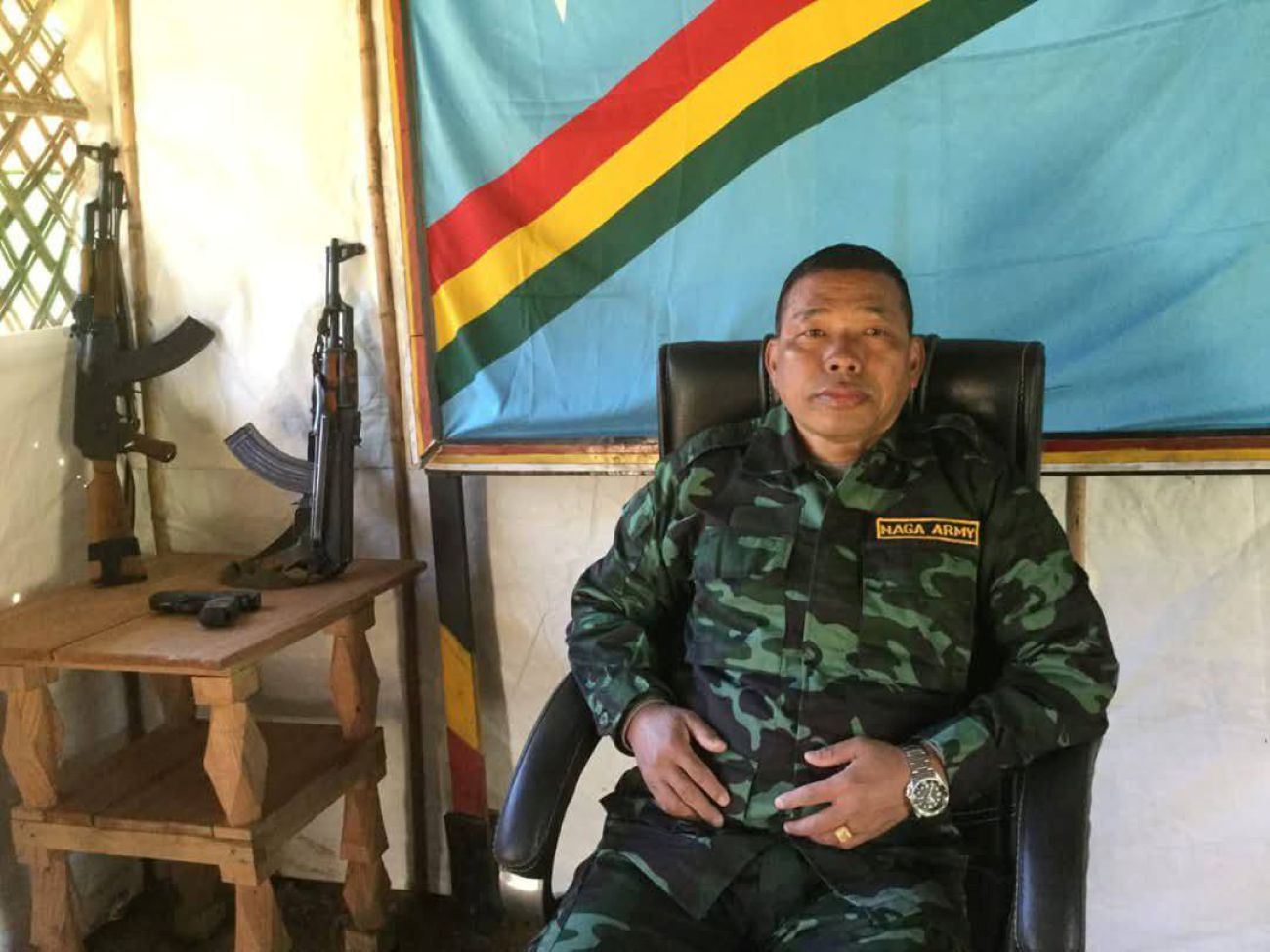
The arrival of the Indian intelligence chief could be linked to the attacks in Naga region on the Myanmar side and the two countries could also reach agreements on internal security, Dr. Aye Maung, chairman of the Arakan Front (AFP), told CNI News.

While seeing leader of the ULFA-I who was killed by Indian attack
“The Indian intelligence chief’s visit could be related to cross-border issues, drug trafficking, and elements that could disrupt bilateral relations. The exchange of intelligence findings is a positive step. After 2023, during the fighting in Paletwa Township, Nhonbu Village and Taron Ai Village, many Myanmar Army soldiers crossed the border and sought refuge in India. There are consultations on how to jointly resolve the problems that arise on the border between the two countries. Military affairs related to the border can also be carried out under the diplomatic affairs. It can also be carried out under the bilateral military-to-military coordination. Political individuals from Myanmar might travel to India to live or further study, including on health and business. We heard that according to the Indian Constitution, the border affairs are under the control of the central government. I heard that the Indian central government has full authority over border issues and union matters," he said.
The Indian army conducted drone attacks to the military camps of the ULFA-I fighting against India and of the PLA based near Hoyat Village, Lahe Township, Naga Self-Administered Zone on the Myanmar side on July 13, 2025.
The attack resulted in the deaths of ULFA-I leaders, including Lieutenant General Nayan Aasu (alias Nayan Madi), Brigadier General Lahun (alias Ganesh Aasu), and Colonel Pradish Aasu, along with two comrades.
Following this incident, the Indian intelligence chief arrived in Myanmar on July 16 and met with the SAC Vice Chairman for discussions.
U Thein Tun Oo, director of the Thayninga Institute for Strategy Studies, told CNI News that there could be discussions on security issues between the two countries as Indian projects are located on the Myanmar side.

Paletwa region
“The main thing is that we can avoid unwanted issues through information exchange between the two countries. There are reports that India troops pursued and were attacking its rebels, and that their attacks have crossed into the Naga region on the Myanmar side. In any case, this issue is a matter for direct diplomatic dialogue, especially between senior military officials. There will be more to discuss between the two countries, especially regarding security. When the two countries work together, State actors from the two countries work together. At this time, the AA is not a state actor, but a non-state actor although it has captured many territories. As the Indian projects such as the Kaladan River Project are located on the Myanmar side, it will be necessary to discuss security issues." he said.
India is implementing the Kaladan River project, which would connect Rakhine and Chin states in Myanmar to the Indian state of Mizoram, but it has been halted due to fighting between the AA and the Myanmar Tatmadaw.
Similarly, The India-Myanmar-Thailand Trilateral Highway Project is also set to be implemented, but has not been able to begin due to ongoing fighting between the Myanmar military and the Spring Revolution Forces.
In addition, India is facing a growing number of arms and drug smuggling along the Myanmar-India border, as well as the influx of refugees from Myanmar due to the fighting.
- By CNI
- Category: English Section
- Hits: 397
Shan IDPs in Myitkyina need help
CNI News
19 July 2025
Shan ethnic people in the IDP camps in Myitkyina need food, shelter, health and education assistance, the Shan Ethnic IDPs Assistance Committee told CNI News.
The Shan ethnic IDPs there are mainly needing educational and health assistance, according to an official of the Shan ethnic IDP assistance committee.

While seeing a Shan ethnic IDP camp
“Currently, we have eight monasteries in Shwe Pyitha Ward including Shan Dhamma Yon (community hall for religious purposes) in Khemathiri Ward,in Myitkyina. We have opened refugee camps for Shan ethnic groups there. In total, there are 11. There are about 4,000 IDPs. There are about 700 households. People from our Shan State have been fleeing battles since July, 2024. Due to the battles between the Myanmar Tatmadaw and the KIA/PDF joint forces, the Shan ethnic IDPs arrived here. Most of them came from Tarlaw, Waingmaw, Bhamo,Inle and Pharkant. They mainly need iron corrugated sheets because it's the rainy season. I want the children of the IDPs to be educated. And they need healthcare as well." he said.
There are more than 100 IDP camps in Myitkyina Township, Kachin State and the Kachin State government said that it could not provide the IDPs with everything they needed, according to the IDPs.
Currently, battles are severely breaking out between the Myanmar Tatmadaw and the KIA/PDF joint forces in Hparkant and Bhamo, Kachin State.
- By CNI
- Category: English Section
- Hits: 541
CNI News
19 July 2025
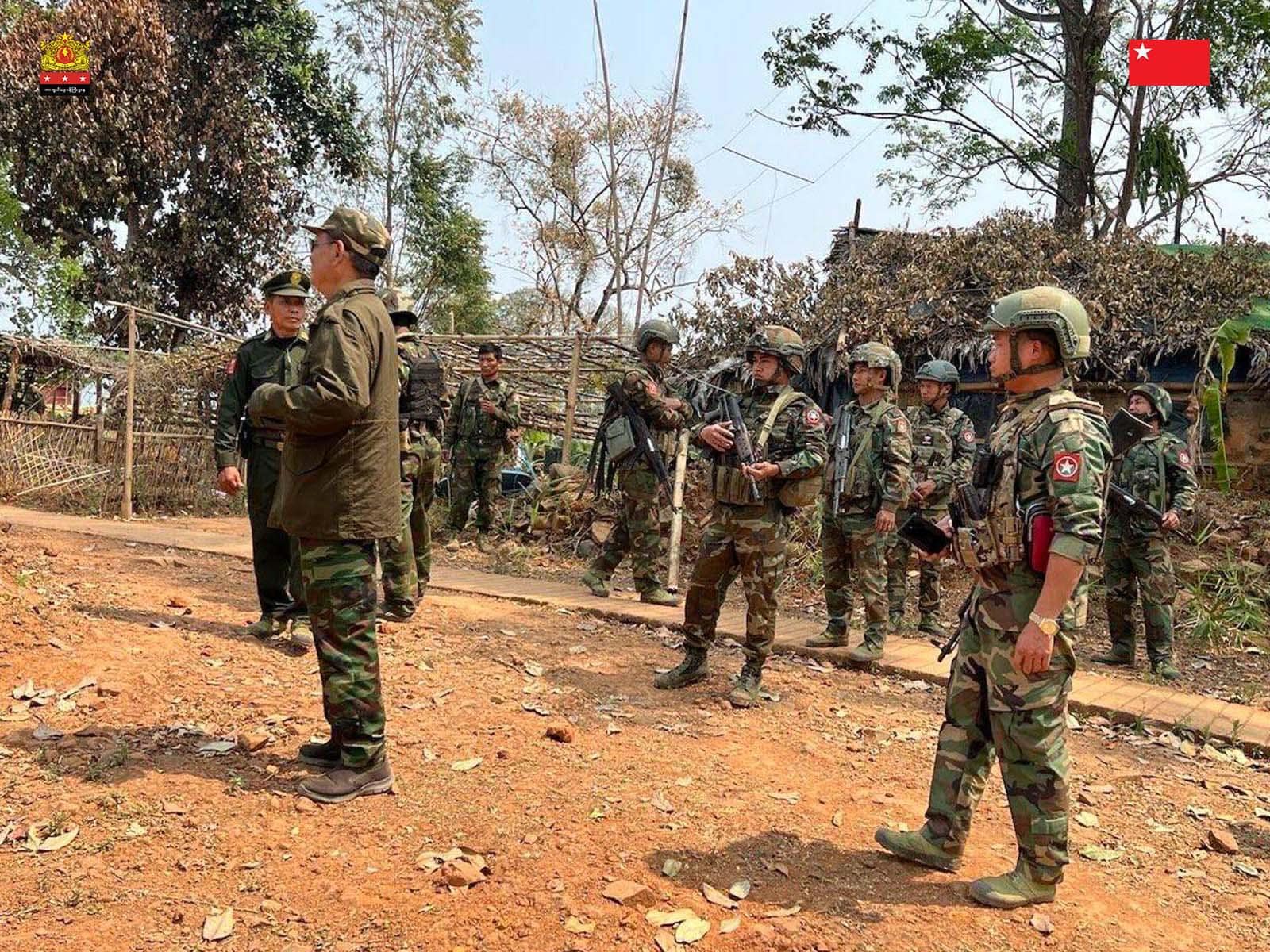
Military and political analysts are analyzing which areas the Myanmar military, which is currently launching offensives to some of the key areas of the lost territories, could prioritize and retake.
The Myanmar Tatmadaw leaders would have a plan for how to regain control of which areas, and the current trajectory could prioritize border trade routes, Thayninga Institute for Strategy Studies director U Thein Htun Oo told CNI News.
“Based on the current path, reopening border trade along the Pyin Oo Lwin and Lashio routes and later regaining control of some important areas will be part of the ongoing plan. There will be Chinese intervention. China shares a long border with Myanmar. And for trade to resume, stability and peace are essential. So, China has to intervene in the negotiations. It was the same with Thailand in the past. Regardless of who it cooperates with, the Myanmar Tatmadaw must guarantee peace and security within the country. Where will the Tatmadaw start to stabilize? Where will the first, second, and third priorities be? They will be included in the areas that are strategically determined." he said.
The Chinese government is arranging talks between the Northern Alliance and the SAC, as it wants the border to remain peaceful and trade routes to reopen as soon as possible.

Negotiations between the Kokang Army (MNDAA) and the SAC were convenient, but talks with the Ta’ang National Liberation Army (TNLA) did not go well due to territorial demands, and they are scheduled to meet again in August.
The Myanmar Tatmadaw is currently conducting offensives mainly in the Ta’ang region and Bhamo, and battles could intensify in those areas, Dr. Hla Kyaw Zaw, a China-Myanmar affairs analyst, told CNI News.
" The military council is launching offensives in Ta'ang region and Bhamo in the northern part of the country. Battles could intensify in these areas. I don't think they (SAC) can advance much in the south.I'm not sure whether they might control some territories around and in the Ta'ang region in the long run. "They have the advantage in airstrikes and weaponry," she said.
The Myanmar Tatmadaw announced that it had retaken control of Naung Cho town in northern Shan State, which had been occupied by the Ta’ang National Liberation Army (TNLA), on July 16, 2025, and that it had retaken control of Mobye town in Kayah State from the KNPP, KNDF, and PDF on July 6, 2025.

Military and political observers point out that the Myanmar Tatmadaw is currently using more air and drone attacks than ground forces in its offensive operations.
The Myanmar Tatmadaw is launcing a defensive operation to prevent the KIA from taking control of Bhamo. Military and political observers have indicated that the capture of Naung Cho in northern Shan State could pave the way for gradual offensives against Kyaukme, Hsipaw, and Kutkai.
On the other hand, ethnic armed groups (EAOs) and People's Defense Forces (PDFs) previously succeeded in capturing towns within days, but now have been unable to do so for months.
Then, their fighting capabilities could decline until they could take years to capture towns, pointed out military and political analysts.