
English Edition
- By CNI
- Category: English Section
- Hits: 414
CNI News
February 16, 2026
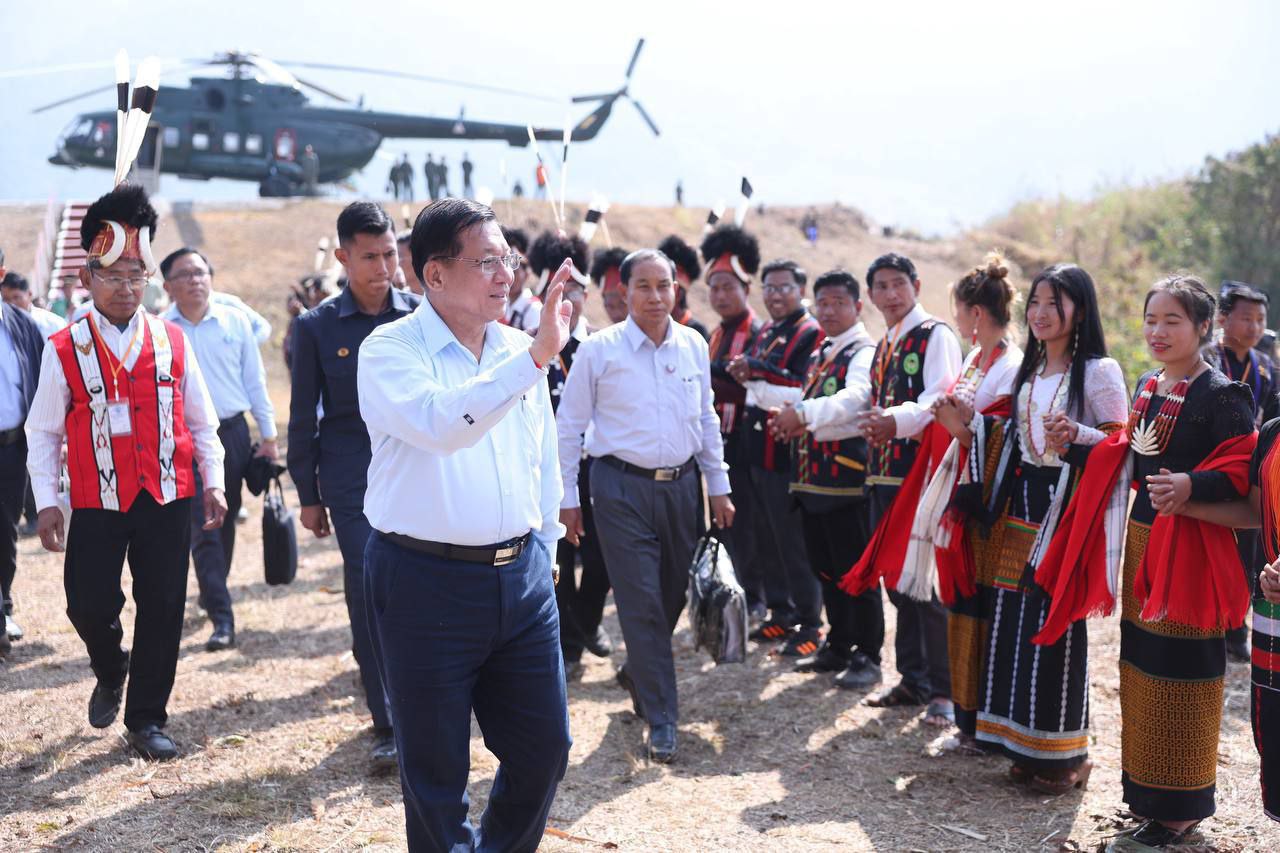
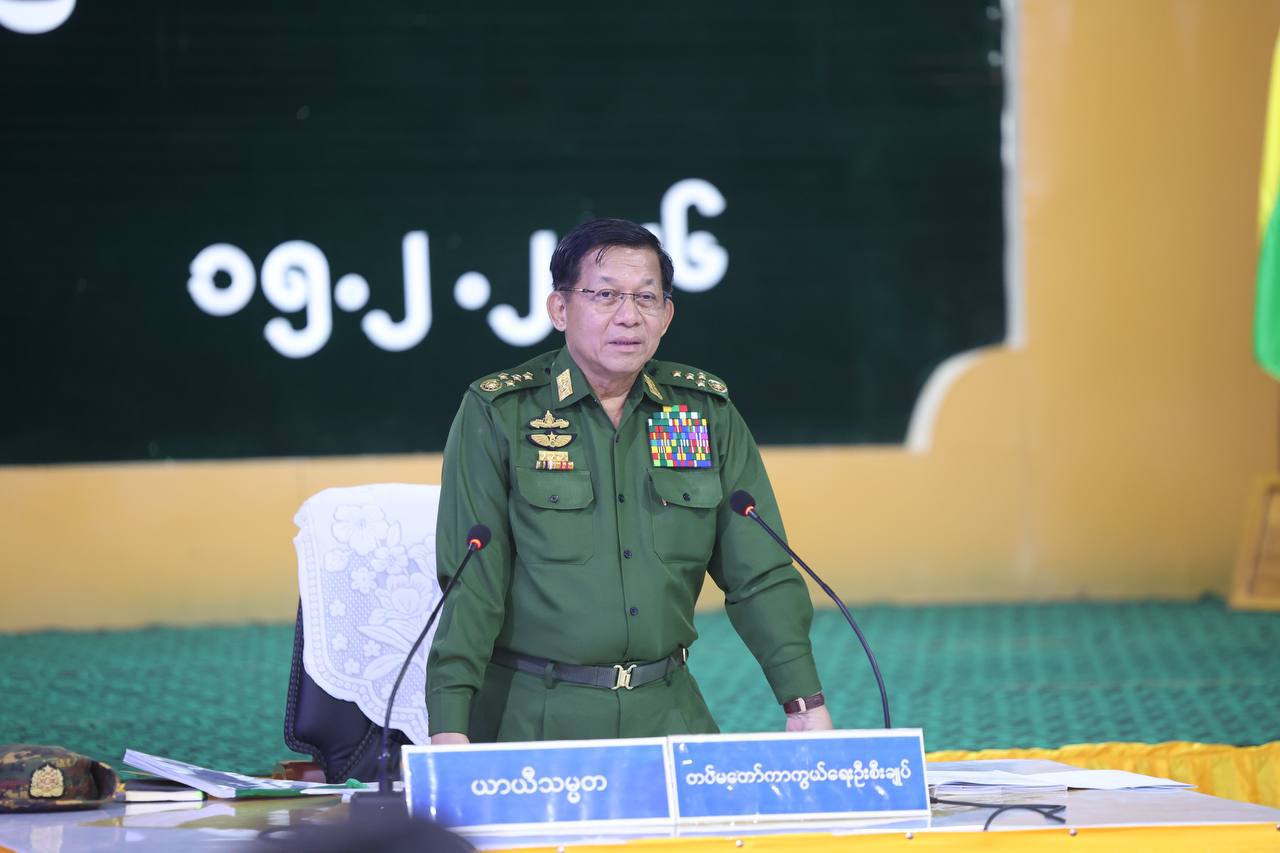
Senior General Min Aung Hlaing, Chairman of the National Security and Peace Restoration Commission, stated that the government will provide necessary support for the development of the Naga Self-Administered Zone in Sagaing Region, an area currently facing significant developmental gaps.
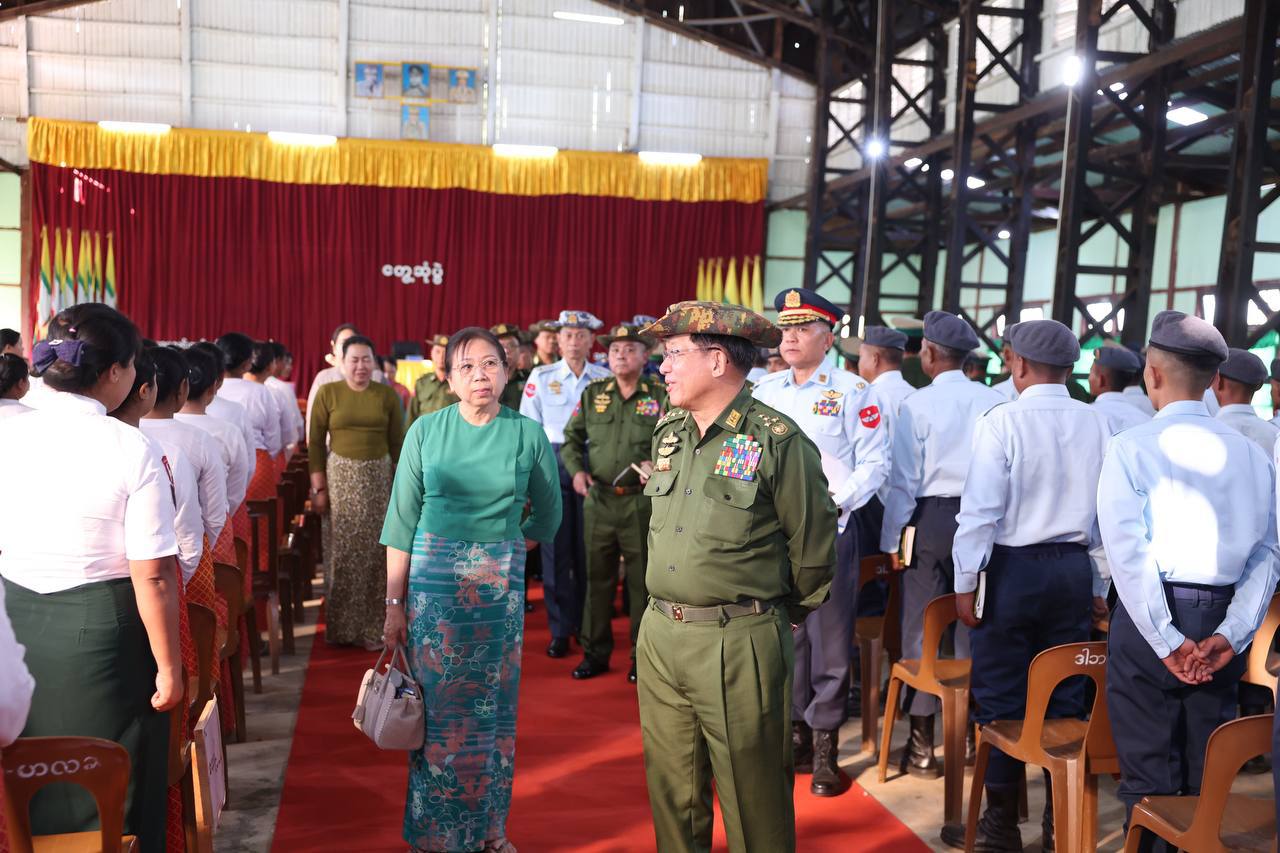
The Senior General made these remarks during a meeting with departmental officials and community elders in Lahe and Leshi towns of the Naga Self-Administered Zone on February 16, 2026.
During the visit, Senior General Min Aung Hlaing said, "I have come here to facilitate the requirements for the development of the Naga region. We will continue to support the construction of a festival ground and a multi-purpose hall for traditional festivals in Lahe. To improve regional connectivity, priority will be given to upgrading roads connecting to the mainland. To ease transportation, the Chindwin River Crossing Bridge (Thamanti) has been successfully inaugurated today."
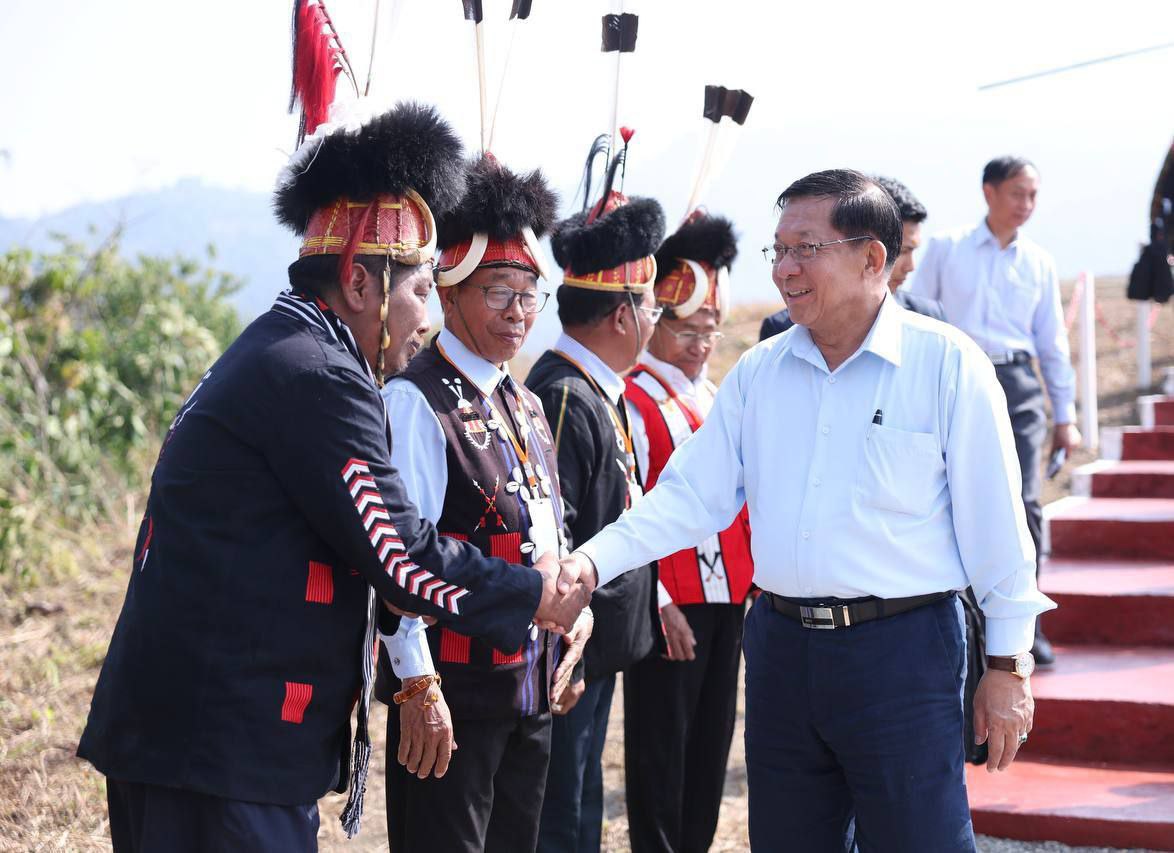
The Thamanti Bridge, which links Homalin District with the Naga region, was officially opened on February 16, 2026.
The Senior General added: "Due to the difficult terrain of the Naga region, road upgrading projects are being carried out annually based on the fiscal year to improve connectivity. Similarly, efforts are underway to ensure the road connecting Lahe and Nanyun is accessible in all seasons. We are also striving to ensure smooth travel on roads leading to the mainland. Because transportation difficulties hinder the transport of materials for regional development, we will continue to work on ensuring secure and smooth regional logistics."
Regarding healthcare, he stated that military specialists would be dispatched if Lahe Township Hospital requires more doctors, and additional health staff would be appointed. He also pledged to provide medical equipment to the extent possible.
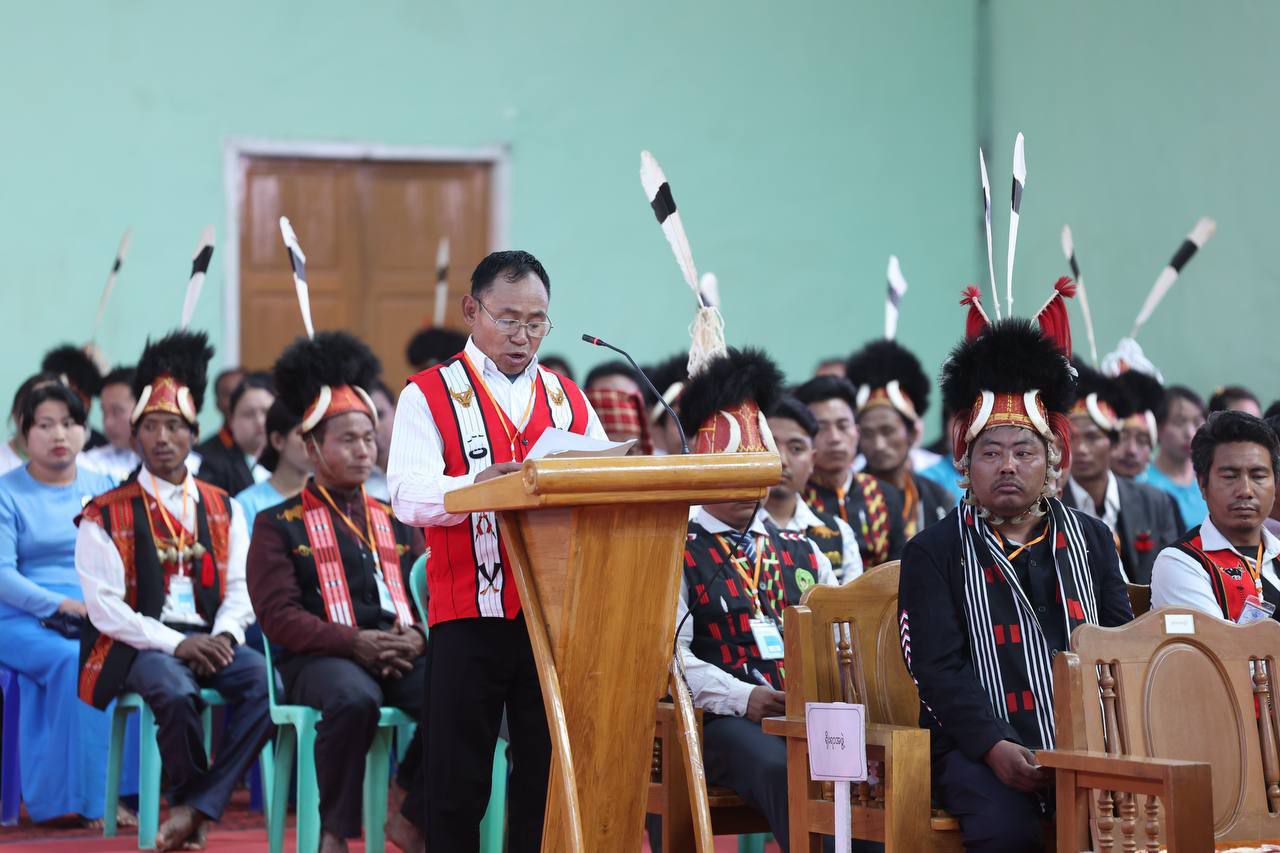
Departmental officials submitted several requests, including: Expanding departmental bodies to levels appropriate for the Naga region.Constructing a City Hall for the Naga Self-Administered Zone.Establishing a Department of Disaster Management. Improving telecommunication and mobile services. Facilitating border trade matters. Ensuring sufficient electricity for certain wards in Leshi and rural areas.
Constructing an advanced reservoir and providing modern machinery for the Matugi Hydropower Plant to ensure adequate water supply.
Ensuring the Thamanti-Leshi-Somra road is accessible in all seasons.
The Senior General observed a lack of food self-sufficiency in the Leshi and Lahe areas. He emphasized that local food security is a vital necessity and pledged to implement upland farming projects. He also mentioned that water management for agricultural use would be organized. He urged the expansion of maize and potato cultivation in Lahe and stressed the importance of increasing the production of local crops such as tea, plum, coffee, orange, and avocado.
- By CNI
- Category: English Section
- Hits: 314
CNI News
February 16, 2026
Chairman of the State Security and Peace Council, Senior General Min Aung Hlaing, stated that many are using politics as a pretext to illegally extract national resources for their own personal benefit within the Sagaing Region.
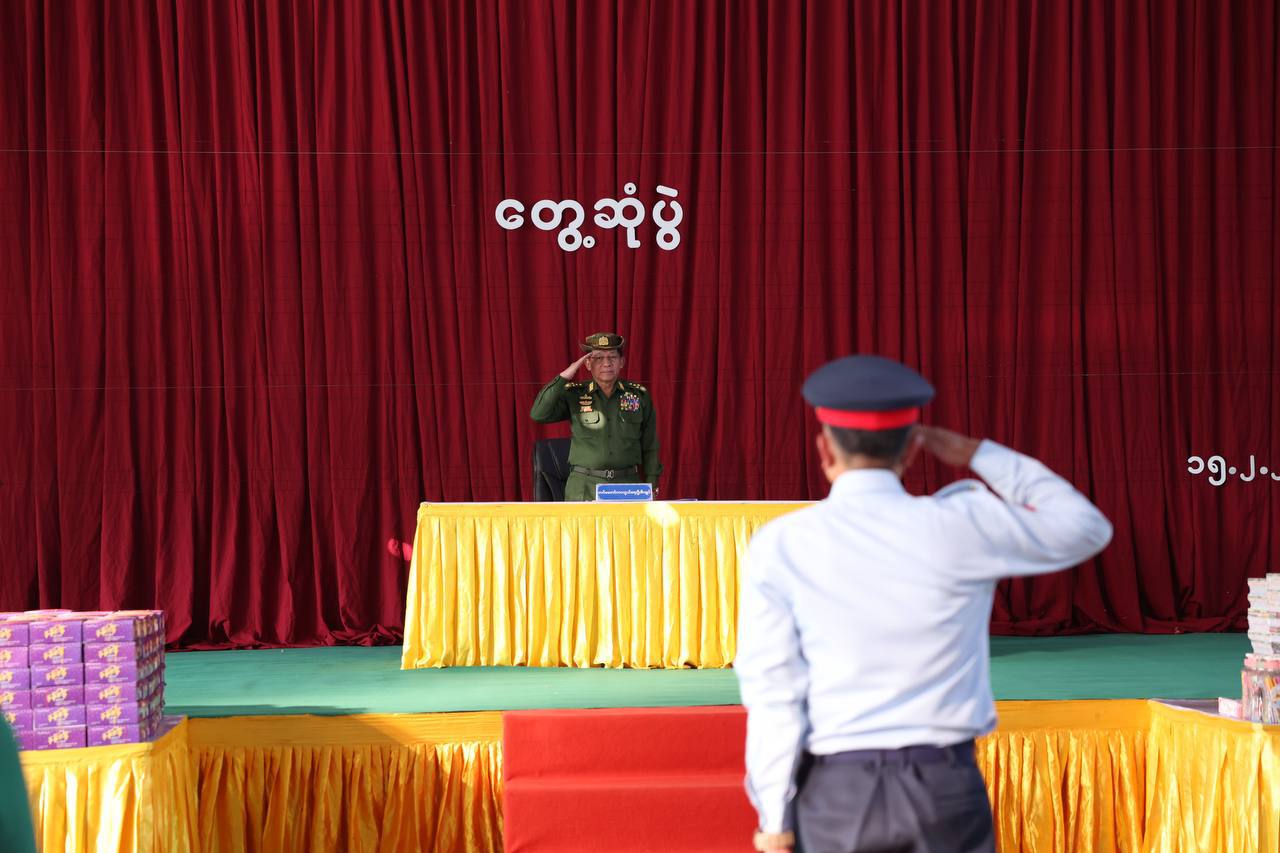
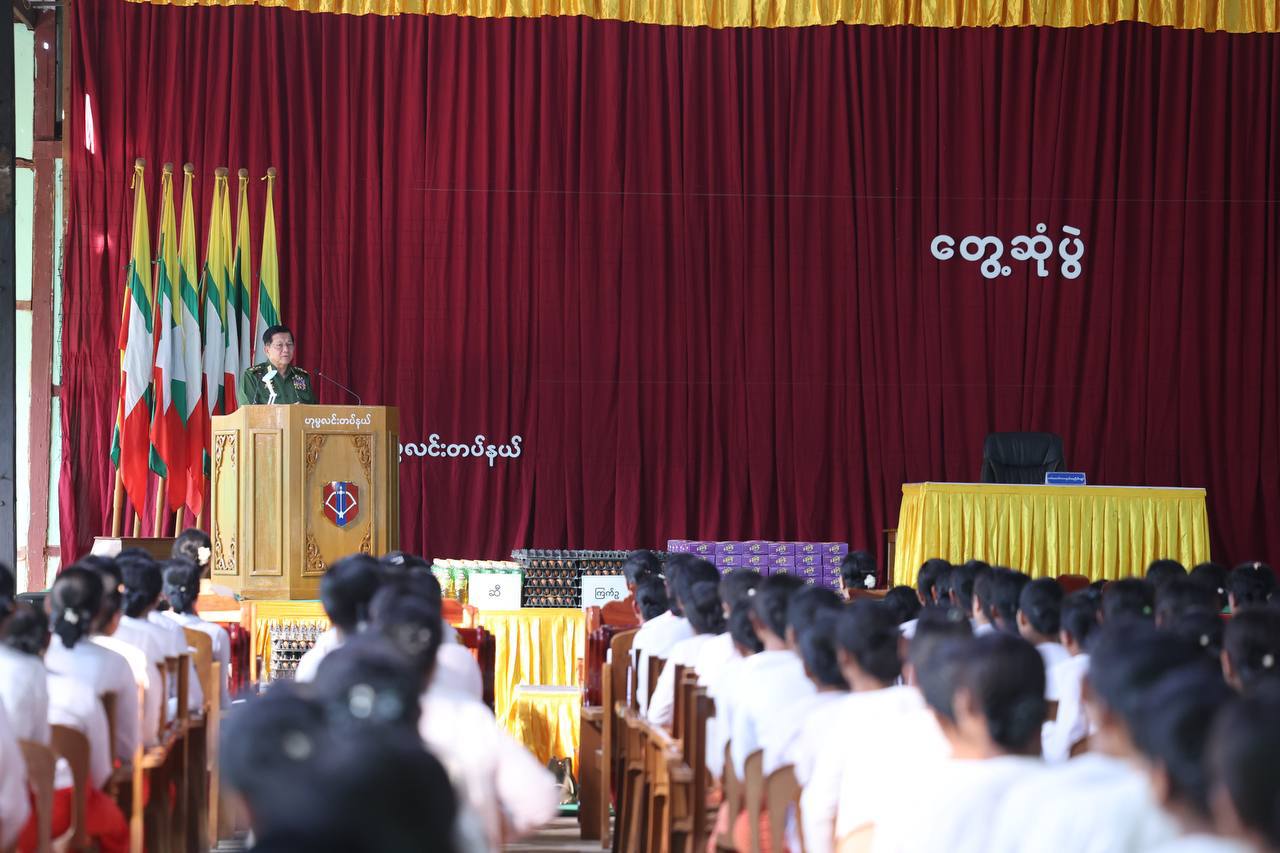
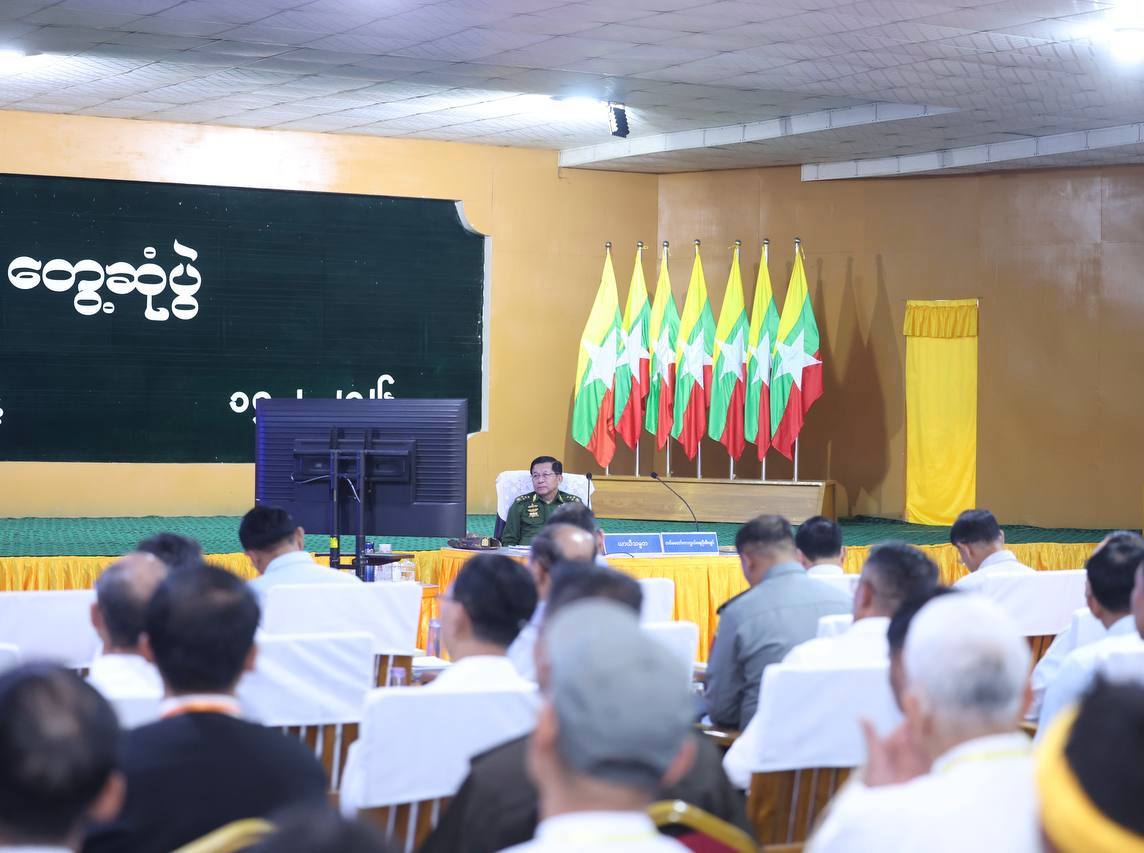
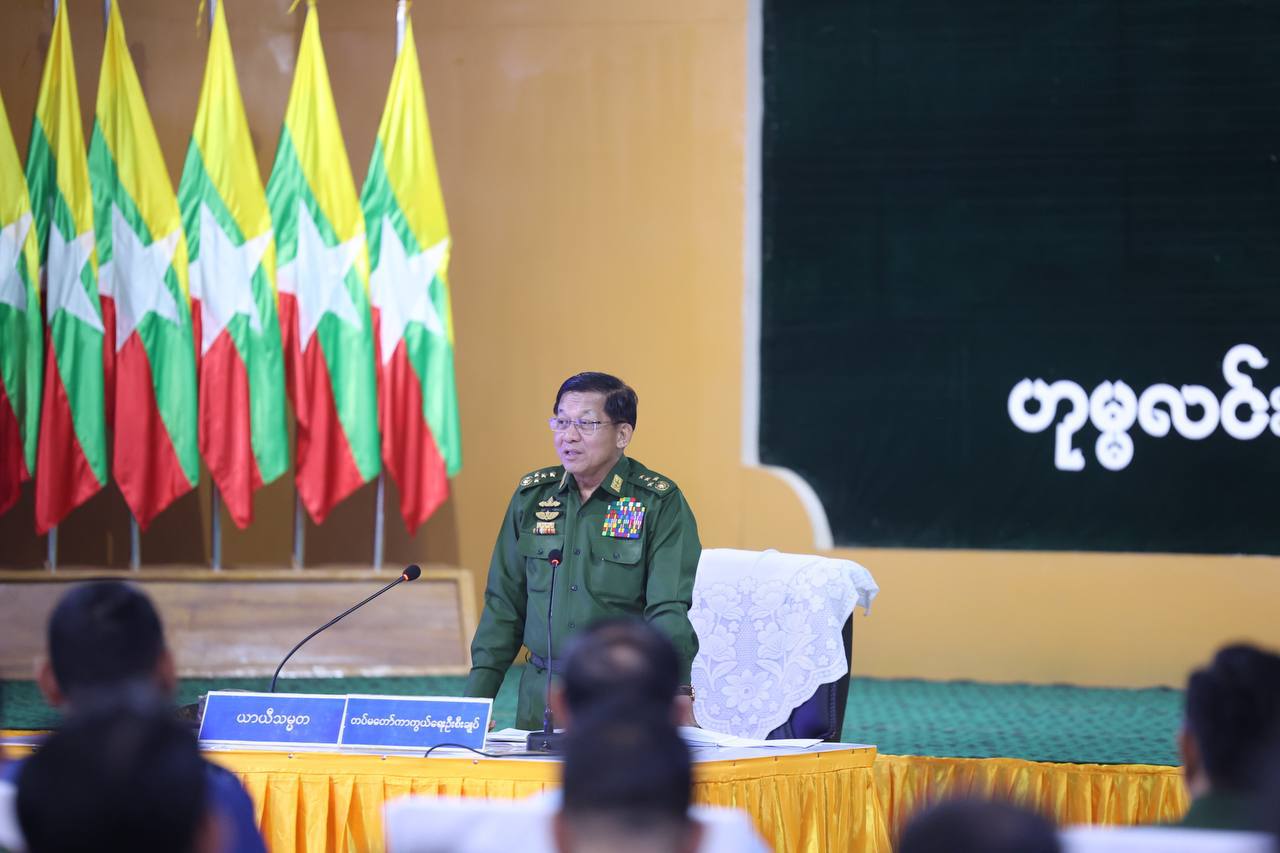
He delivered these remarks during a meeting with town elders and departmental officials in Homalin, Upper Sagaing Region, on February 15, 2026.
The Senior General noted that the prevalence of unrest in certain areas of Sagaing is fundamentally linked to a lack of knowledge and technical education.
He emphasized that while political disagreements should be resolved through political channels, groups are instead resorting to acts of terrorism.
Resource Exploitation: He alleged that national resources are being illegally extracted on a large scale under the guise of political movements.
He claimed that armed groups are using force to extort money from local residents for personal gain, creating a heavy burden on the public. He urged the community to cooperate with relevant authorities to combat these activities.
The Kachin Independence Army (KIA) is reportedly leading the "Three Ks" (Kanbalu, Kawlin, Katha) operation to seize control of the region by supplying arms and ammunition to several groups, including:
PDF, NUG, AA, CNF, ABSDF, Chin PDF, KNA-B, ENNO/ENDA, and Naga PDF.
According to KIA statements, their objective is to control Sagaing and establish a continuous "liberated zone" connecting Kachin State, Sagaing Region, Chin State, and Rakhine State across Northwest Myanmar. This would serve as a launchpad to control Magway and Mandalay Regions.
Reports from regional sources and the news desk indicate a deteriorating situation on the ground:
Armed groups operating in Sagaing are sustaining themselves by mining/selling local resources and collecting taxes from the population.
Some organizations along the Sagaing-India border are reportedly involved in the smuggling of gold, narcotics, and weaponry.
Due to intense armed conflict, both water and land transport routes have become difficult to navigate. This has led to:
Skyrocketing commodity prices. Exorbitant transportation costs for civilians.
- By CNI
- Category: English Section
- Hits: 317
CNI News
February 16, 2026
Chairman of the State Security and Peace Council, Senior General Min Aung Hlaing, stated that everyone must work together to oppose terrorist groups attempting to destroy regional peace and stability in Homalin Township, Sagaing Region.
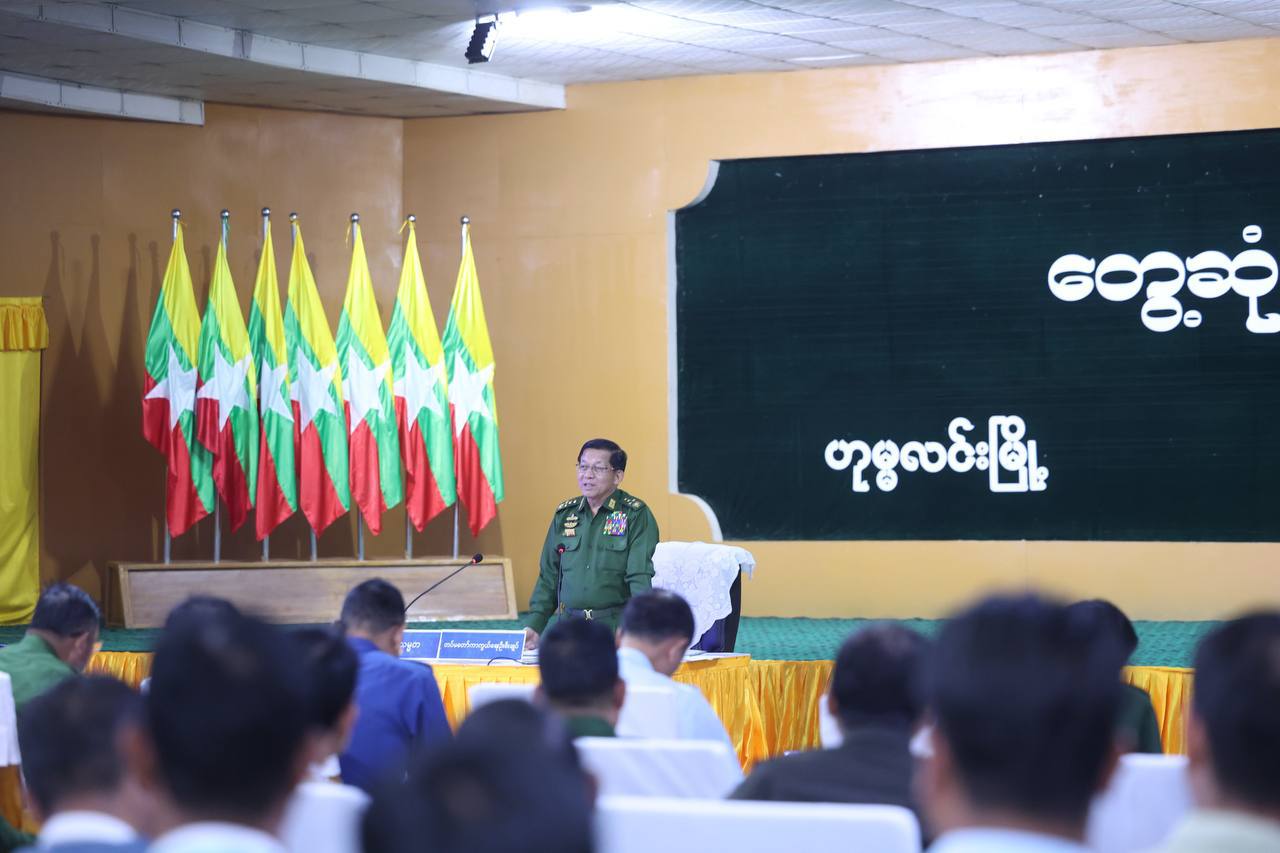
He made these remarks during a meeting with town elders and departmental officials in Homalin, Upper Sagaing Region, on February 15, 2026.
The Senior General claimed that continuous peace invitations are being extended to achieve eternal peace within the country.
Opposition to Terrorism: He urged collective action to ensure that terrorist groups disrupting local stability no longer exist in the region.
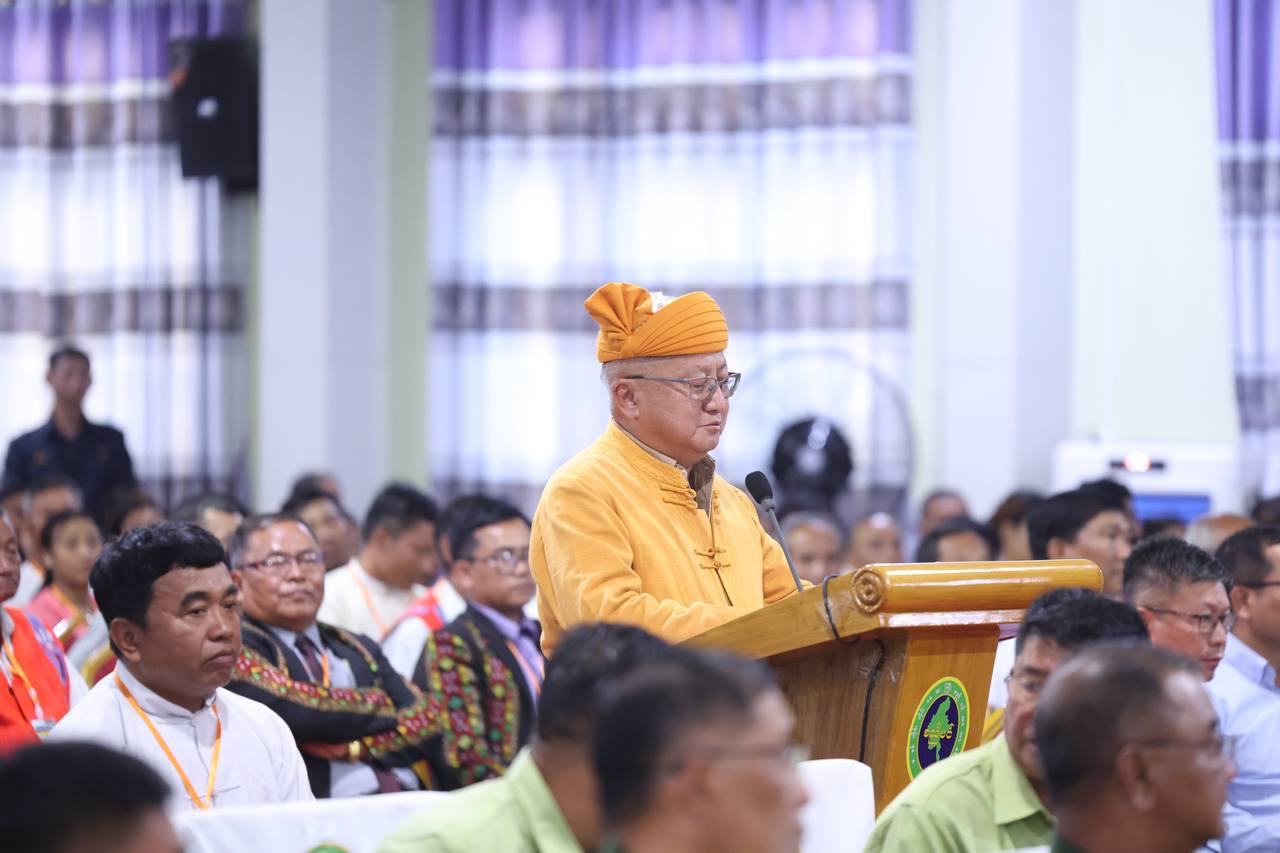
He called for collaborative efforts toward national progress and noted that the state is managing air travel to Homalin as systematically as possible to support regional growth.
Root Causes of Unrest: He attributed the prevalence of insurgencies in parts of Sagaing Region to weaknesses in knowledge and technical education. He argued that while political disagreements should be resolved through political means, groups are instead resorting to terrorism.
Resource Exploitation: He alleged that groups are using politics as an excuse to illegally extract national resources for personal gain and are forcibly collecting money from locals using armed force, creating a burden on the public.
The Kachin Independence Army (KIA) is reportedly attempting to control the "Three Ks" area (Kanbalu, Kawlin, Katha) by providing weapons and ammunition to various groups, including:
People’s Defense Forces (PDF) and the National Unity Government (NUG).Arakkha Army (AA), Chin National Front (CNF), and ABSDF.Kuki National Army-Burma (KNA-B), Eastern Naga National Organization (ENNO/ENDA), and Naga PDF.
The KIA’s Strategic Goal: The KIA has stated intentions to control Sagaing Region and establish a link between Kachin State, Sagaing Region, Chin State, and Rakhine State to liberate the northwestern part of Myanmar, eventually targeting control over Magway and Mandalay Regions.
Controlled by KIA-NUG-PDF: Shwepyaye (near Homalin), Indaw, Pinlebu, and Katha.
Active Conflict Zones: Ongoing attempts to seize Htigyaing, Kanbalu, Phaungpyin, Mawlaik, Tamu, Kalay, Wuntho, Kawlin, Shwebo, Yinmarbin, Pale, and Monywa.
Naga Region: The KIA, PDF, and Naga armed groups are also attempting to gain control over Khamti and the Naga Self-Administered Zone.
#SeniorGeneralMinAungHlaing #KIA #ArmedConflict #Homalin #Politics #CNImyanmar
- By CNI
- Category: English Section
- Hits: 251
CNI News
February 16, 2026
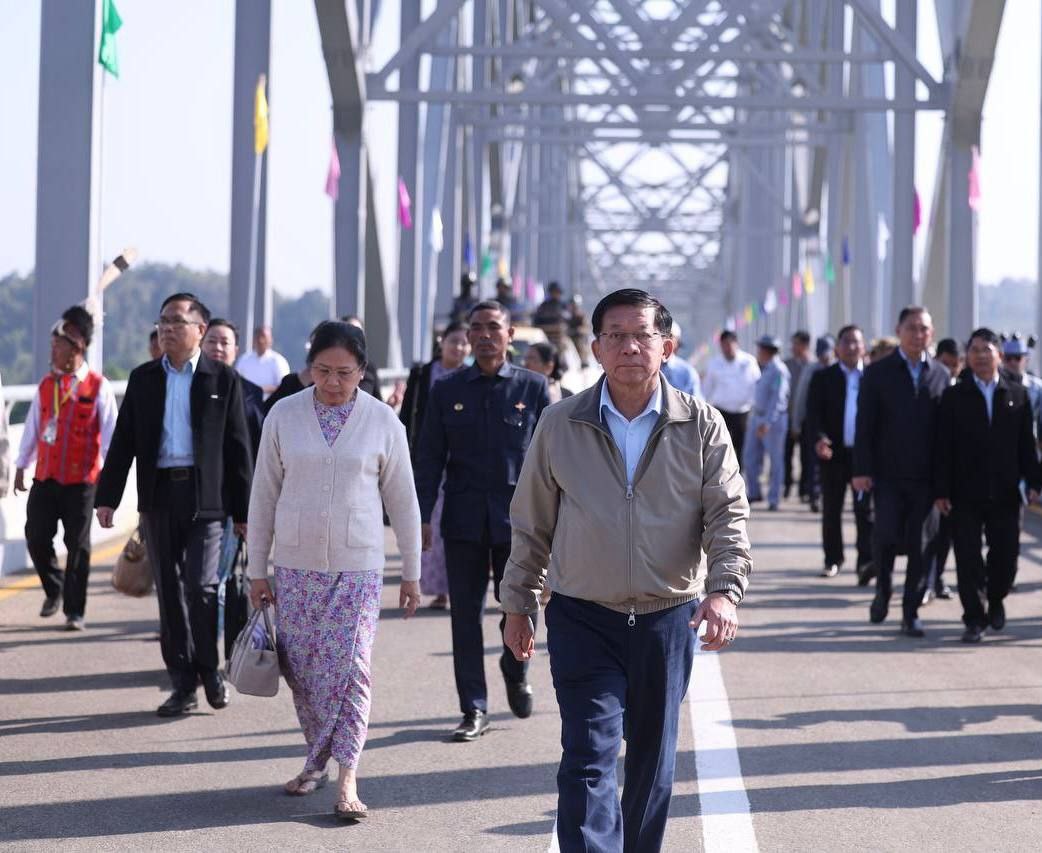
The Chairman of the State Security and Peace Council, Senior General Min Aung Hlaing, attended and inaugurated the opening ceremony of the Chindwin Bridge (Thamanti), located near Thamanti Village in Homalin Township, Upper Sagaing Region.
The opening ceremony was held on February 16, 2026.
Length: 2,628 feet Reinforced Concrete Waterway Clearance: 40 feet (height)
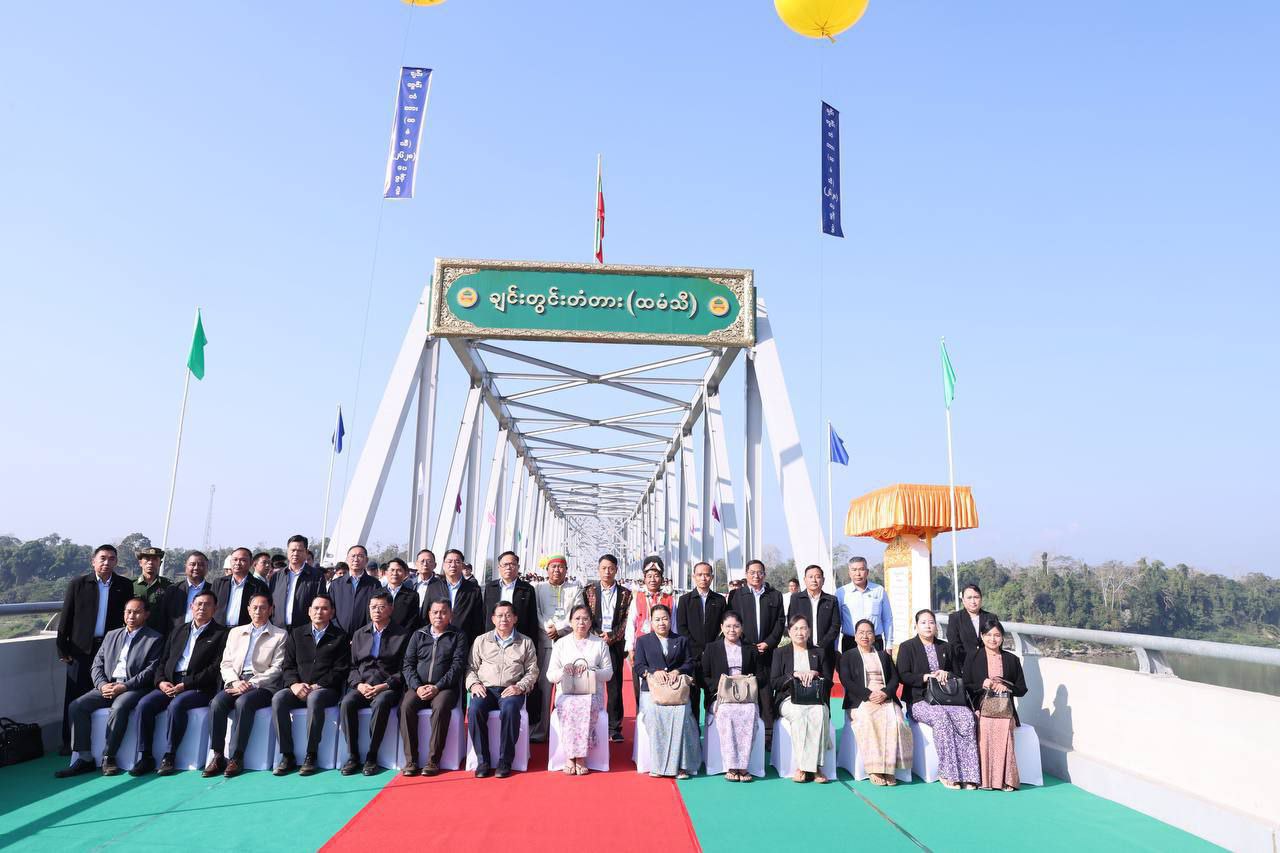
The completion of this bridge is expected to significantly support the socio-economic development of residents in the Homalin District and the Naga Self-Administered Zone. Key benefits include:
Faster and easier transportation of local products. Improvements in education, healthcare, and regional economic growth.
- By CNI
- Category: English Section
- Hits: 507
CNI News
12 February 2026
Military and political analysts are sharing their perspectives on how the Myanmar military (Tatmadaw) might carry out operations to reclaim lost territories under the new government, which is expected to emerge after the convening of parliament (Hluttaw) in March 2026.
Colonel Khun Okkar, Chairman of the Pa-O National Liberation Organization (PNLO-NCA/S)—a signatory of the Nationwide Ceasefire Agreement—told CNI News that while he does not believe the new government and parliament will prioritize military action, if they do, they are likely to focus on the central regions of Myanmar.
"There are two possibilities. They might negotiate with those who have seized territories. For instance, the retrieval of Hsipaw and Lashio in the north was achieved through non-military means; it was done through negotiation. Therefore, they might try to negotiate or make deals. However, in places like Magway and Sagaing, where negotiations or deals may not be possible, military intensity could increase. On the other hand, I don't think the situation is conducive to escalating military operations in Rakhine or Kachin states. I believe they will prioritize military actions in the central heartland—Magway, Sagaing, Mandalay, and Bago. They will likely approach ethnic regions using a different method. They cannot conduct military operations across the entire country simultaneously, so they are expected to prioritize the central regions," he said.
Military and political observers noted that although clashes between the Myanmar military and revolutionary forces plus some ethnic armed organizations continue after the completion of the three-phase election, the intensity is lower than in the pre-election period.
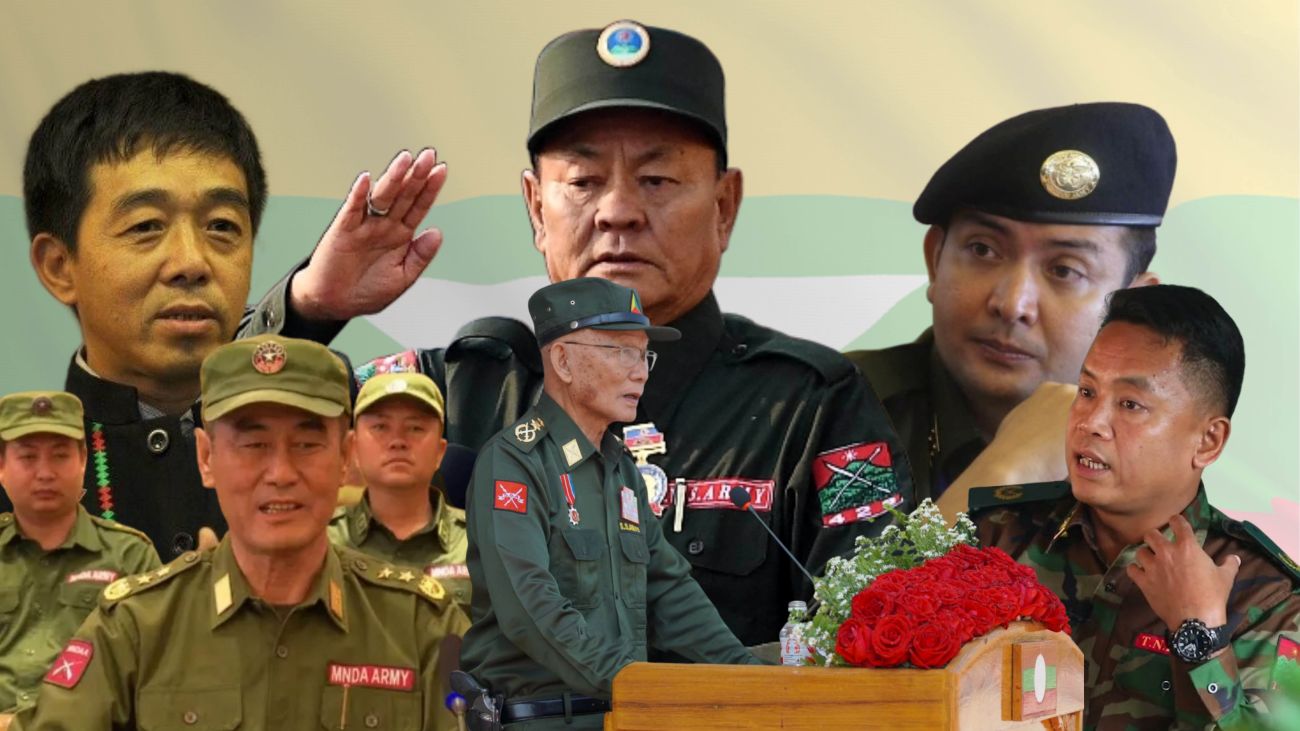
Armed group members and Military leaders seen
While the Myanmar military has regained some lost territories through Chinese mediation, a significant number of territories remain outside their control.
A political analyst told CNI News that if the current Commander-in-Chief, Senior General Min Aung Hlaing, becomes President, the military situation under the new government will depend on the vision of either the new Commander-in-Chief or Senior General Min Aung Hlaing himself.
"He is currently focusing on major cities like Naypyidaw, Mandalay, Sagaing, and Monywa, aiming to crush or push away the forces threatening these areas and their surroundings. This doesn't strictly depend on the incoming President. Since we began practicing the 2008 Constitution in 2010, the President has taken the administrative role while the Commander-in-Chief handles military duties. Therefore, it will depend on the vision of either the new Commander-in-Chief or the former one, U Min Aung Hlaing," the analyst said.
Currently, during the pre-parliamentary period, the Union Consultative Council Law has been enacted. Additionally, the Martial Law orders in 63 townships, which have been under a state of emergency since July 31, 2025, have been extended for another 90 days.
The 63 townships under Martial Law include areas controlled by ethnic armed organizations as well as those partially controlled by forces under the National Unity Government (NUG).
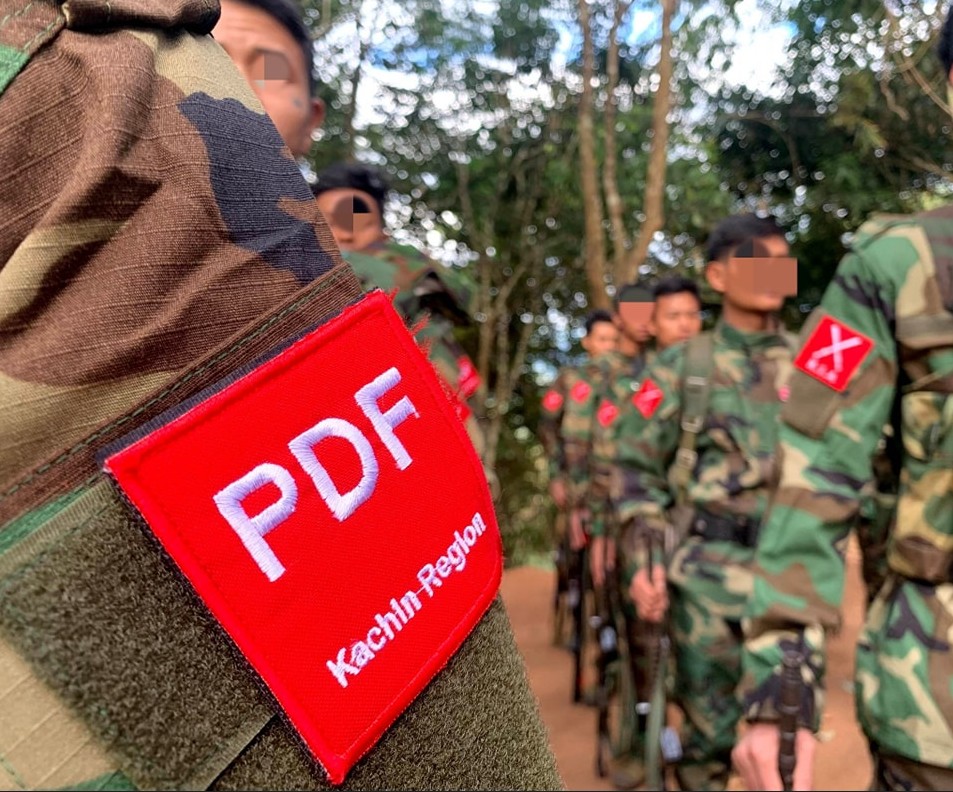
KIA-PDF joint forces seen
These townships include: Kachin State: Sumprabum, Shwegu, Injangyang, Sawlaw, Chipwi. Kayah (Karenni) State: Shadaw, Hpasaung, Mese.
Karen State: Kawkareik, Kyainseikgyi. Chin State: Kanpetlet, Thantlang, Paletwa, Tonzang, Mindat, Matupi, Falam.
Sagaing Region: Tigyaing, Kawlin, Pinlebu, Khin-U, Wetlet, Kani, Depayin, Pale, Indaw.
Magway Region: Pauk, Myaing, Saw, Tilin, Yesagyo. Mandalay Region: Mogok, Singu, Ngazun.
Rakhine State: Ramree, Pauktaw, Ponnagyun, Rathedaung, Gwa, Maungdaw, Buthidaung, Kyauktaw, Minbya, Myebon, Mrauk-U, Thandwe, Ann, Taungup.
Shan State: Namtu, Mabein, Kutkai, Namkham, Hsenwi, Kunlong, Namhsan, Mantong, Hopang, Laukkai, Konkyan, Momeik, Kyaukme, Hsipaw, and Mong La.
- By CNI
- Category: English Section
- Hits: 357
CNI News
12 February 2026
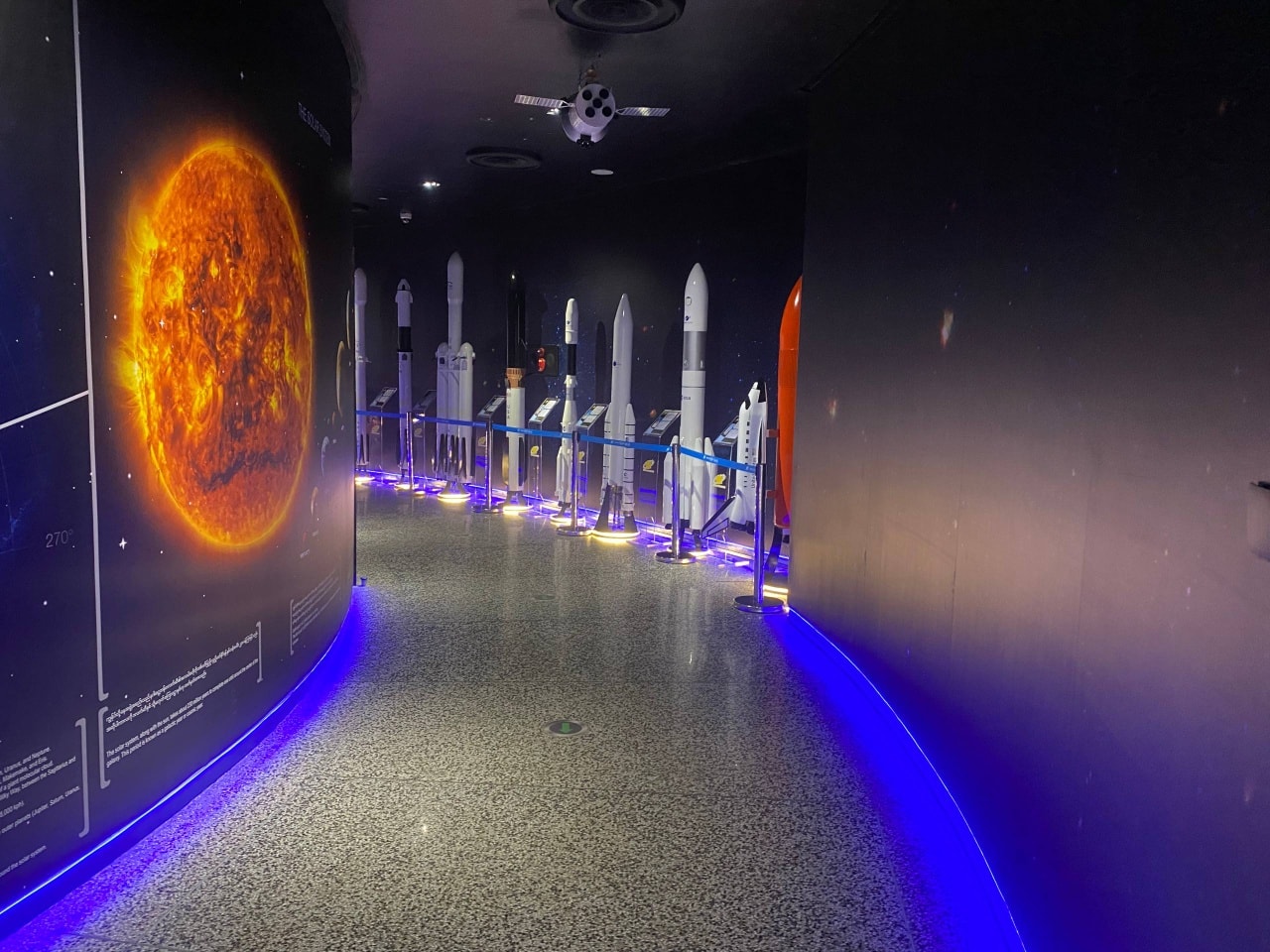
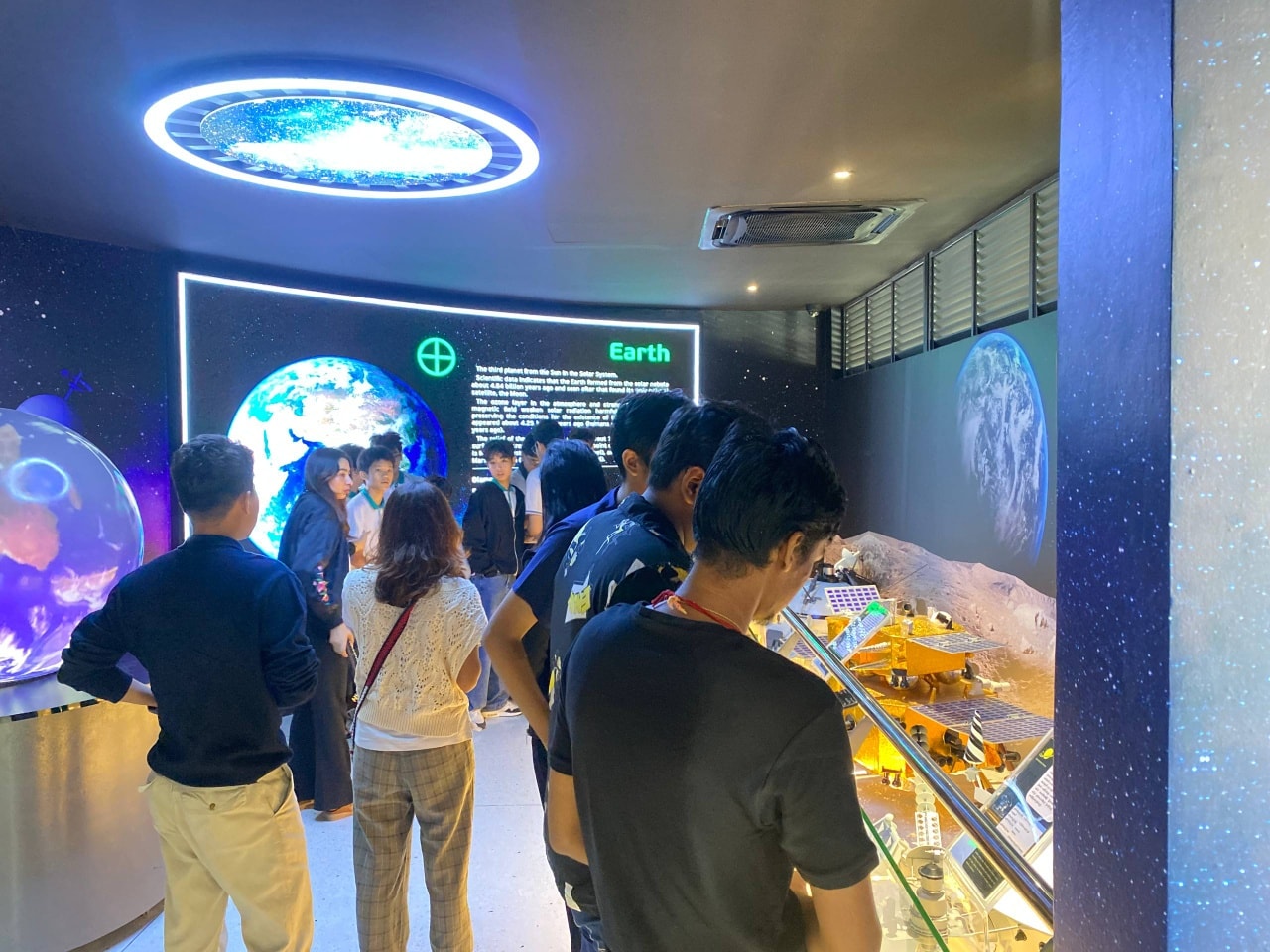
A grand Space-Themed Painting / Cartoon / Poster Competition will be held at the Space Museum (Yangon), located in People’s Square, Yangon, Myanmar, from February 27 to March 3, 2026.
The competition is jointly organized by the Yangon Region Government, the Myanmar Space Agency, and the Space Museum (Yangon). More than 6,000 basic education students are expected to participate.
The competition topics are as follows: Primary Level: “Space Heroes”
Middle School Level: “Exploring the World of Space”. High School Level: “Future Space Technology”

The painting and poster competitions will take place from 8:00 a.m. to 11:00 a.m., while the cartoon competition will be held from 8:00 a.m. to 10:00 a.m.
Students who wish to participate must register through their respective schools, with the application deadline set for February 19.
Winners will receive medals and certificates of honor. In addition, all participants will be awarded certificates and commemorative gifts.
Prize money will be awarded as follows:
Primary Level: First Prize: 500,000 kyats,Second Prize: 400,000 kyats,Third Prize: 300,000 kyats,Special Prizes: 200,000 kyats each (10 awards).
Middle School Level: First Prize: 700,000 kyats,Second Prize: 600,000 kyats,Third Prize: 500,000 kyats, Special Prizes: 300,000 kyats each (10 awards).
High School Level: First Prize: 1,000,000 kyats, Second Prize: 900,000 kyats,Third Prize: 800,000 kyats,Special Prizes: 500,000 kyats each (10 awards).
- By CNI
- Category: English Section
- Hits: 569
CNI News
11 February 2026
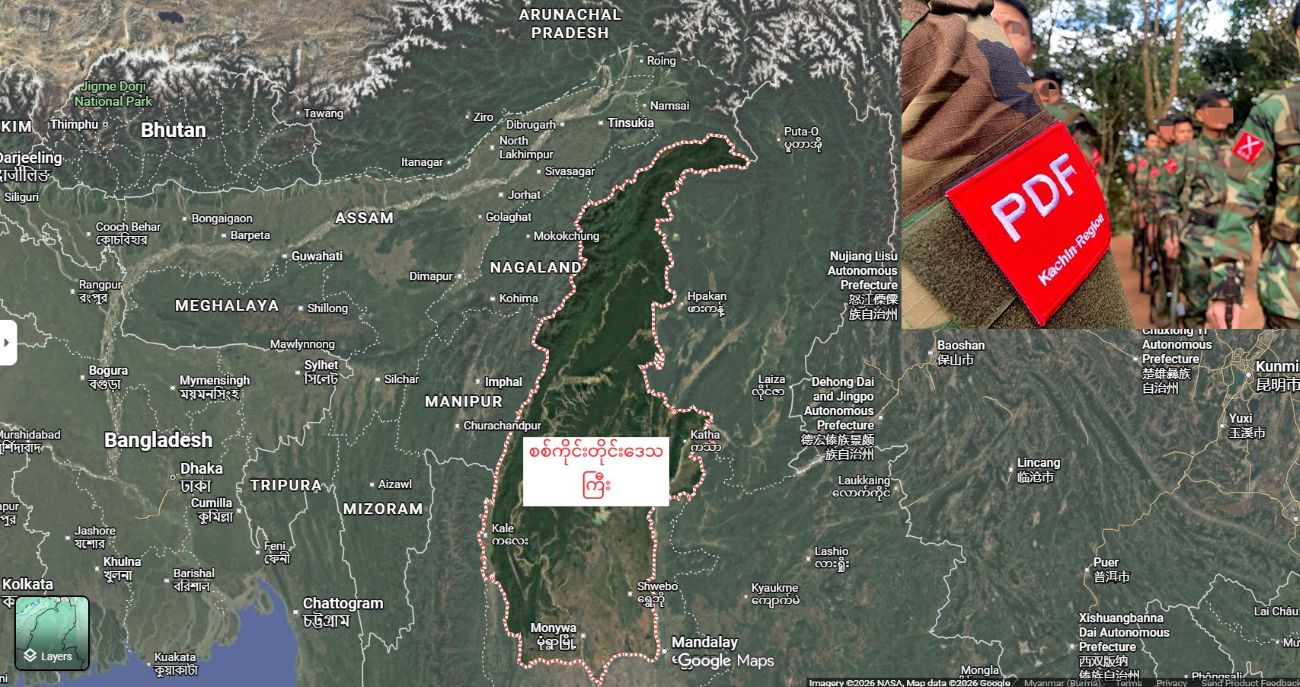
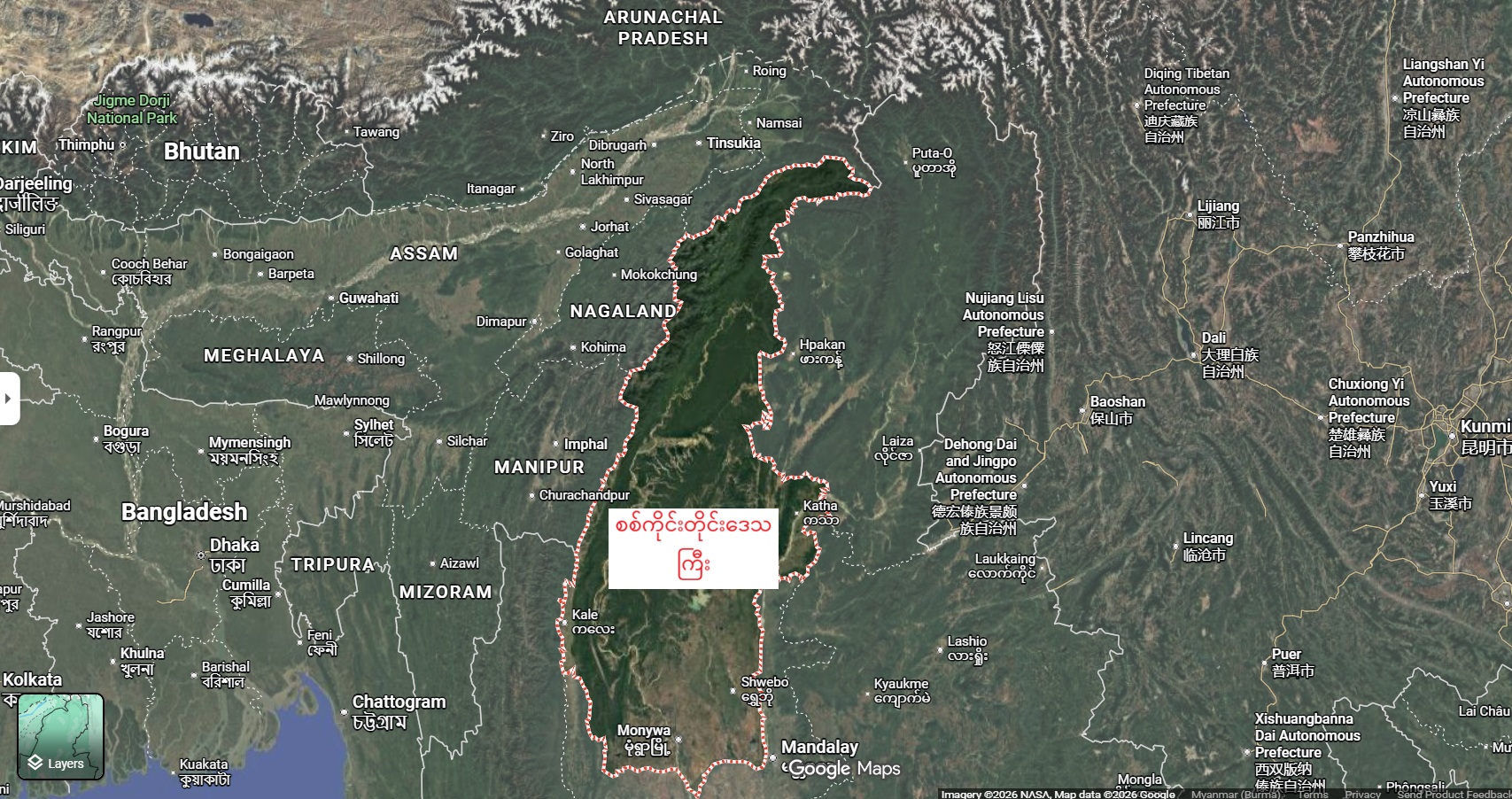
The Kachin Independence Army (KIA) will carry out the “Ka-Thone-Lone” (Kanbalu–Kawlin–Katha) military operation in Sagaing Region and, after securing control, will take control of the entire northern and lower parts of the region, said KIA Deputy Commander-in-Chief Lt-Gen Gun Maw.
He made the remarks during an online speech at the 65th Kachin Revolution Day ceremony held in Texas, United States, on February 5, 2026.
Currently, efforts are underway to stably control the entire northern area, including Kachin units, Chin units, Naga units, and the “Ka-Thone-Lone” areas—Kanbalu, Kawlin, and Katha—in upper Sagaing Region. Lt-Gen Gun Maw said that once the upper region is secured, the lower region can be controlled easily.
He stated: “We are placing special emphasis on Chin State. This is because we are working to stabilize our Kachin units, Naga units, Chin units, and the Ka-Thone-Lone areas in upper Sagaing Region. We believe this is achievable. Once the entire upper northern region becomes stable, we will be able to control the lower region easily. That is our military objective. We believe the resources of Chin State can contribute to nationwide success. Therefore, we are striving vigorously for the liberation of Kachin State and the whole of Chin State.”
A view of Sagaing Region
On February 1, 2021, the Myanmar military ousted the NLD government, alleging that it had attempted to form a government without resolving voter list disputes from the 2020 general election. This led to nationwide protests and armed resistance.
KIA leaders previously met with a Chinese representative, and China reportedly pressured them to avoid fighting. However, KIA said that clashes would be unavoidable and that they would cooperate with pro-democracy forces. Lt-Gen Gun Maw stated that Sagaing Region is the “gate to our compound,” and for Kachin security, they must control Sagaing Region.
He said: “The Chinese government told us not to launch offensives. We cannot avoid it. We must fight together with democratic forces. Especially in Sagaing Region, which is the gateway to our compound, we must guard against the enemy. We must ensure the security of the gateway to Kachin State through the forces present in Sagaing Region. We said this on February 2.”
Currently, KIA is supplying weapons and ammunition to the Arakan Army (AA), the Chin National Front (CNF), Naga armed groups, People’s Defense Forces (PDF), and PDFs operating in Sagaing Region. They are conducting the Ka-Thone-Lone operation and other offensives to gain control of Sagaing Region.
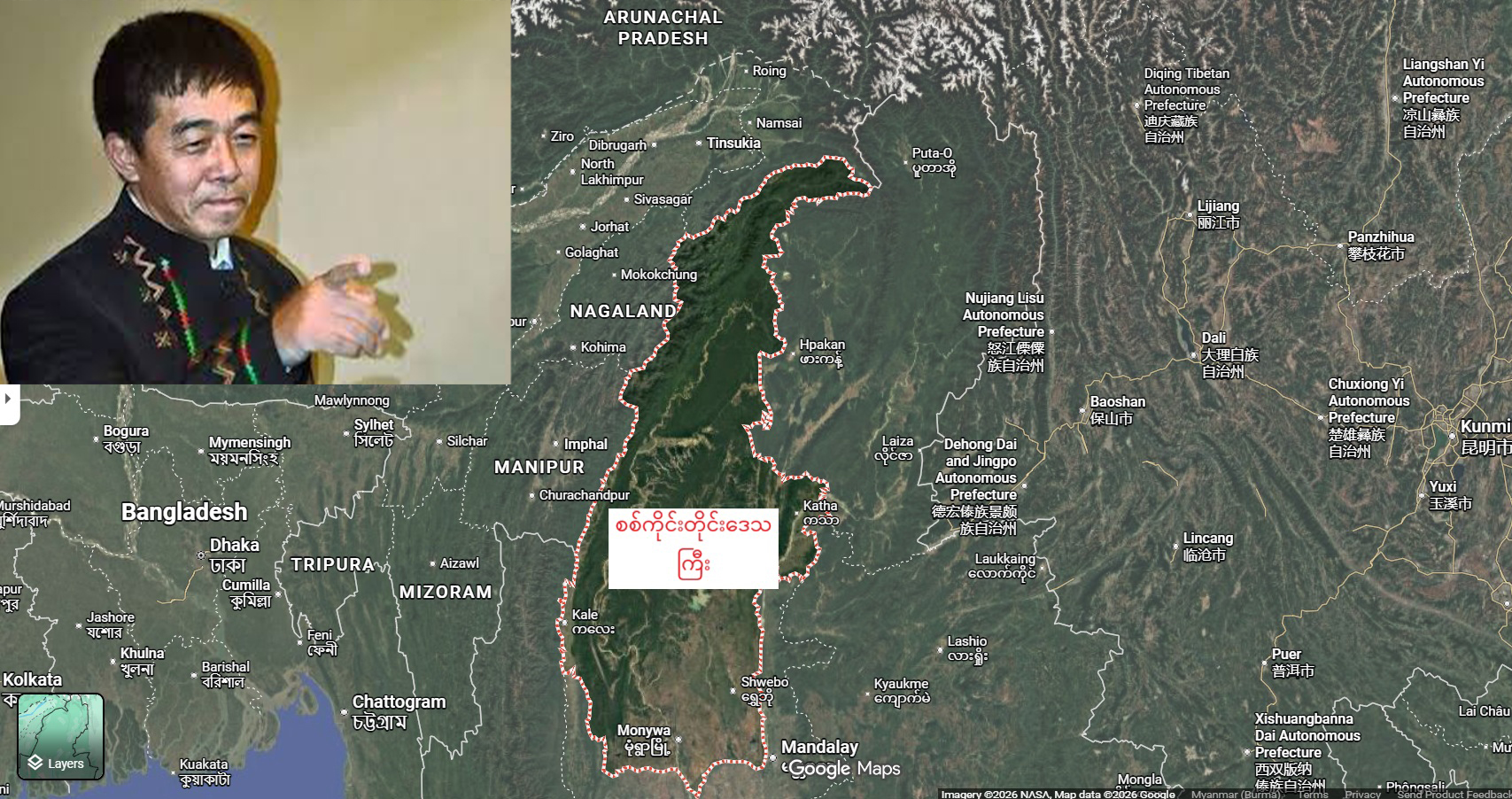
KIA leader Lt-Gen Gun Maw and a view of Sagaing Region
After KIA-PDF forces gained control of Shwe Pyi Aye, Pinlebu, and Indaw towns in Sagaing Region, they are now attacking to capture and control towns such as Homalin, Kawlin, Katha, Wuntho, Tamu, Naga areas, Pale, Monywa, Hpaungbyin, Yinmabin, Shwebo, Kale, Htigyaing, and Banmauk.
KIA is attempting to connect Kachin State with Sagaing Region, Chin State, and Rakhine State to establish control across Myanmar’s northwestern region. It is also exerting military pressure to control Magway Region and Mandalay Region (lower region).
If KIA succeeds in controlling the entire northwestern region of Myanmar, it would gain access from a landlocked area to a seaport, enabling diplomatic relations with Western countries and Europe.
Subsequently, KIA could potentially implement military, political, economic, and even secession-related plans.
Lt-Gen Gun Maw also recalled that during a 2018–2019 meeting with Daw Aung San Suu Kyi in Yangon, he had stated that they could not promise not to secede. He reiterated this during the Kachin Revolution Day ceremony held on February 5, 2026.
- By CNI
- Category: English Section
- Hits: 818
CNI News
11 February 2026
Domestic and international observers are closely watching what role Senior General Min Aung Hlaing might assume under the new government set to emerge in Myanmar this coming April.
Currently, Senior General Min Aung Hlaing holds the positions of Acting President, Commander-in-Chief of the Defense Services, and Chairman of the State Security and Peace Commission.
Following the completion of the 2025 General Election and the enactment of the Union Consultative Council Law on February 3, 2026—just before the formation of the new government in April—questions have arisen: Will he serve as President? Will he remain Commander-in-Chief and Chairman of the Council? Or will he take on both the Presidency and the Council Chairmanship?
Political analyst U Kyaw Htet told CNI News that Senior General Min Aung Hlaing could lead the government by assuming the Chairmanship of the Council without needing to relinquish his current post as Commander-in-Chief.
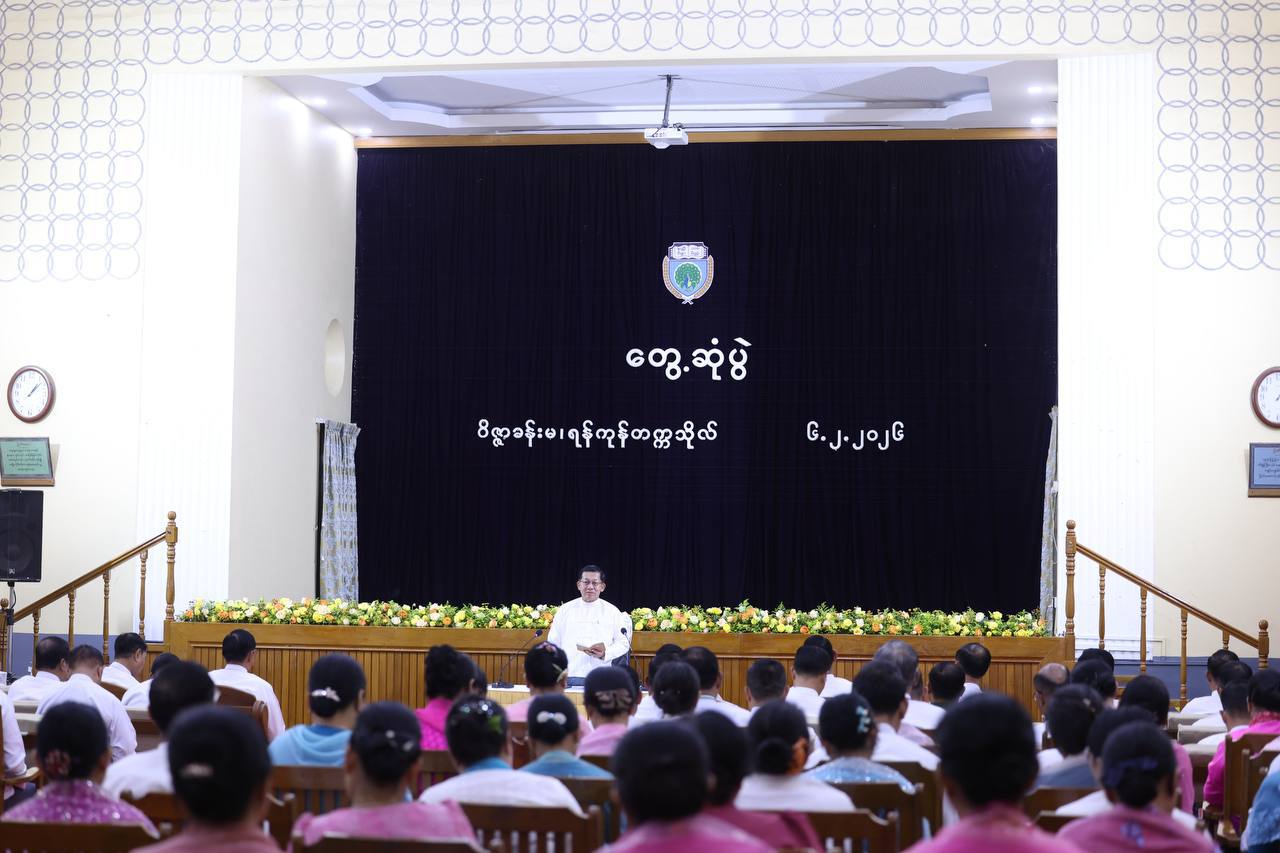
Senior General Min Aung Hlaing
"He can take the Chairman position of the Union Consultative Council without giving up his role as Commander-in-Chief. This could be a political 'exit strategy' given the current situation. Since the military's role remains vital and 63 townships are still declared unstable, the military’s duties are not yet complete. We anticipate that he might continue as Commander-in-Chief while also serving as Council Chairman to work alongside the new government. For the Presidency, he might appoint someone he trusts—perhaps the current Prime Minister, U Nyo Saw, as President."
The law stipulates that the Union Consultative Council: Shall consist of at least five members. Is formed by the President.
Will be supported by the Office of the President for administrative needs.
Some analysts suggest a different configuration: Senior General Min Aung Hlaing may become the President in the new government, appointing Vice Senior General Soe Win as Chairman of the Consultative Council and General Ye Win Oo as Secretary, while appointing a new Commander-in-Chief.
Observers have drawn comparisons to the 2015 post-election period when the NLD enacted the State Counsellor Law for Daw Aung San Suu Kyi to hold a leadership role. They point out that Sr-Gen Min Aung Hlaing could similarly use the Council Chairmanship alongside his military rank to govern the administration from a position of influence.
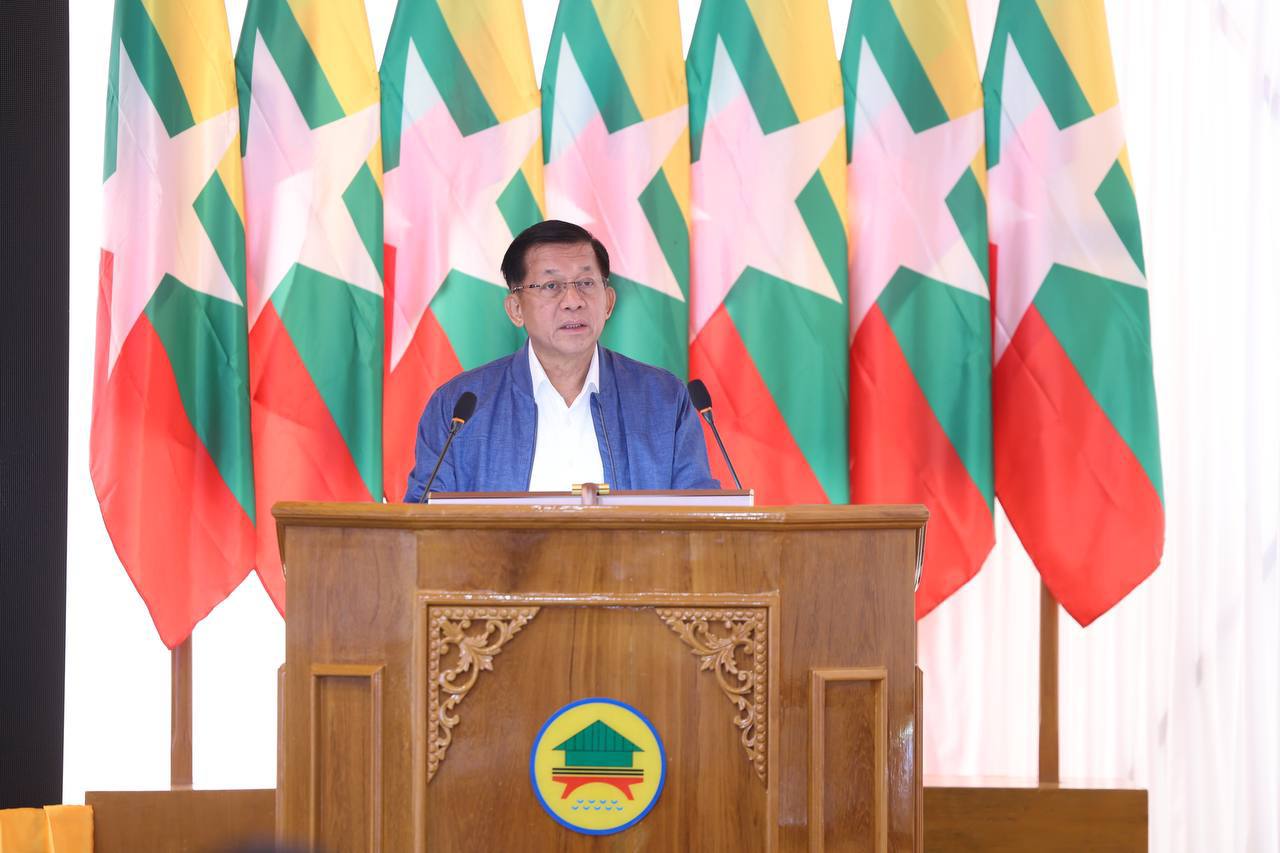
Senior General Min Aung Hlaing
Dr. Aye Maung, Chairman of the Arakan Front Party (AFP), told CNI that there is a high probability of the Senior General becoming the President.
"To achieve stability in the coming five-year term, it seems necessary to implement a 'Team Work' approach based on constitutional provisions. This is likely why the Union Consultative Council was established just before the formation of the post-election government. Generally speaking, once the government is formed, power will be transferred from the current administration. Since the President appoints the Council, I estimate the Senior General has a high percentage of becoming the President. A representative from the military bloc in parliament could then emerge as a Vice President."
The Union Consultative Council's term will coincide with the President's term. The President has the authority to appoint the Chairman and Secretary, delegate powers, and issue necessary bylaws and orders through the President's Office.
The 2025 General Election was held in three phases from December 28, 2025, to January 25, 2026. Parliament (Hluttaw) is expected to be convened in March, with the new government formed in April. Senior General Min Aung Hlaing has stated that state power will be transferred to the winning party.
- By CNI
- Category: English Section
- Hits: 340
CNI News
11 February 2026
In the current Myanmar political landscape, where armed conflicts have yet to cease, new policies must be established to facilitate peace negotiations with Ethnic Armed Organizations (EAOs), Colonel Khun Okkar, Chairman of the Pa-O National Liberation Organization (PNLO-NCA/S)—a signatory to the Nationwide Ceasefire Agreement (NCA)—told CNI News.
He stated that China's efforts alone are not enough to negotiate peace with ethnic armed groups. He noted that in politics, nothing is "impossible," and everything is "possible," suggesting that if the opportunity to negotiate is granted, peace can be achieved.
Colonel Khun Okkar said, "It is possible if policies that both sides can accept are set. The principles laid down during President U Thein Sein’s era were good. We can hold state-level, union-level, and then nationwide ceasefire talks. By taking a little time with these meetings, separate agreements can be signed with each group. That would make things go smoothly. Of course, there are territorial limits; that depends on the negotiations. Nothing is impossible. In politics, everything is possible. However, negotiation is required, and there are limits. There are limits to how much the Arakan (Rakhine) want or how much the Kachin want. Every group has a desire to negotiate. When negotiating, you can mutually adjust what they want and what you can give. There has to be a 'give and take.' You won't get everything you ask for, but you won't get nothing either. It works both ways. Negotiations are necessary. If the chance to negotiate is given, peace can be achieved."
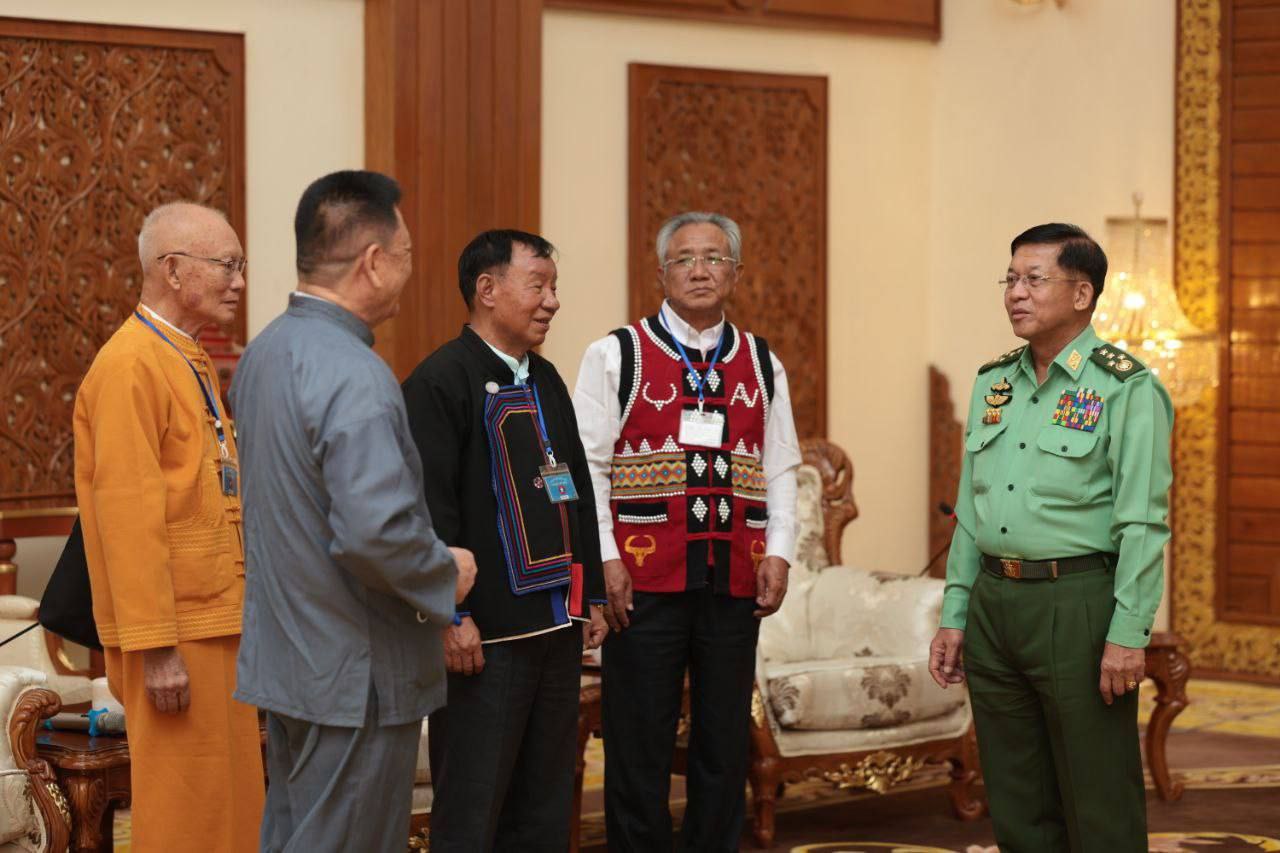
Senior General Min Aung Hlaing and leaders of the NDAA, SSPP, and UWSA.
Currently, the groups that have not yet signed the NCA include the UWSA, NDAA, MNDAA, TNLA, KIA, SSPP, AA, and KNPP.
A political analyst told CNI News that although some ethnic armed groups have declared their withdrawal from the NCA or stated the treaty is void and are engaging in armed struggle, the government appears to continue recognizing them.
The analyst suggested that if the Northern groups study the NCA thoroughly and choose to sign, there could be opportunities for them. However, he noted that if territories are strictly defined only according to the existing Constitution, these groups will not come to the negotiating table.
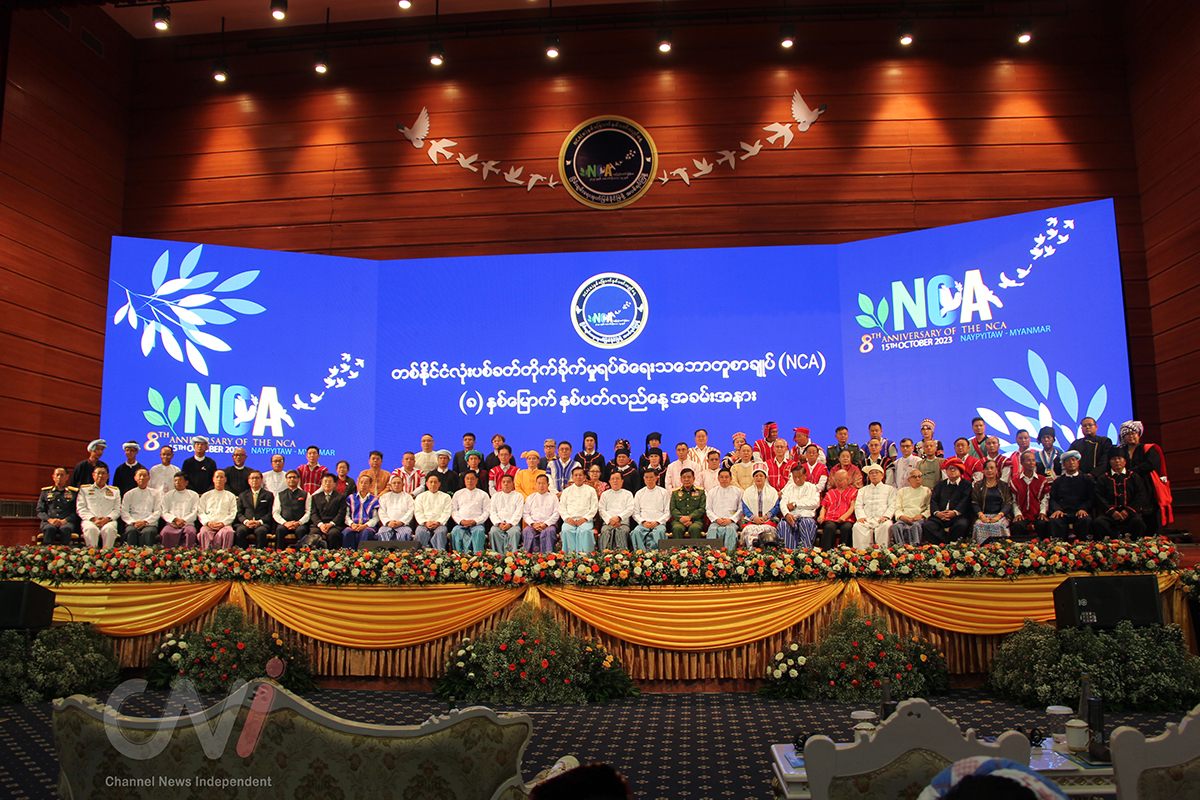
The anniversary ceremony of the NCA.
The political analyst said, "By signing the NCA, they wouldn't have to withdraw from the areas their troops currently control. They would stop the fighting in their current positions and sit at the peace talk table. What I mean is, they are currently in a winning position. According to the NCA, once fighting stops where the troops are stationed, peace is discussed. During those talks, they can discuss granting states or changing the designation of ethnic territories on the map. They need someone to encourage them—for example, if a country like China urges them to try and sign the NCA, and the government side keeps the door open, they might negotiate. If not—if the territory must strictly remain as defined in the original Constitution—the EAOs won't come. There will just be a lull in fighting, but no actual peace. It would be a situation where they fight when they want to and stop when they don't, resulting in a state where there is neither peace nor active combat."
The ethnic armed organizations in Myanmar that signed the Nationwide Ceasefire Agreement (NCA) include the RCSS, DKBA, KNU/KNLA-PC, ALP, PNLO, NMSP, CNF, ABSDF, LDU, and KNU.
However, following the political changes after February 1, 2021, the CNF, ABSDF, and KNU withdrew, claiming the NCA was void. Furthermore, groups like the PNLO, ALP, LDU, and NMSP have split into two factions.
Page 34 of 352
Connect with us