
English Edition
- By CNI
- Category: English Section
- Hits: 1050
CNI News
10 December 2025
The Myanmar military (Tatmadaw) may attempt to reopen the Mandalay–Muse trade highway at any cost, according to Colonel Khun Okkar, Chairman of the Pa-O National Liberation Organization (PNLO–NCA/S), speaking to CNI News.
Major towns along the Mandalay–Lashio–Muse highway include Naungcho, Kyaukme, Hsipaw, Lashio, Hsenni, Kutkai, and Muse.
The Mandalay–Lashio–Muse highway is the main road supporting China–Myanmar border trade. However, due to military operations by MNDAA, KIA, and TNLA forces, trade along the route has come to a halt.
After the Myanmar military launched offensives to retake Naungcho, Hsipaw, and Kyaukme—towns seized and controlled by the TNLA—the military succeeded in regaining them. Recently, it also regained control of Mogok and Momeik.

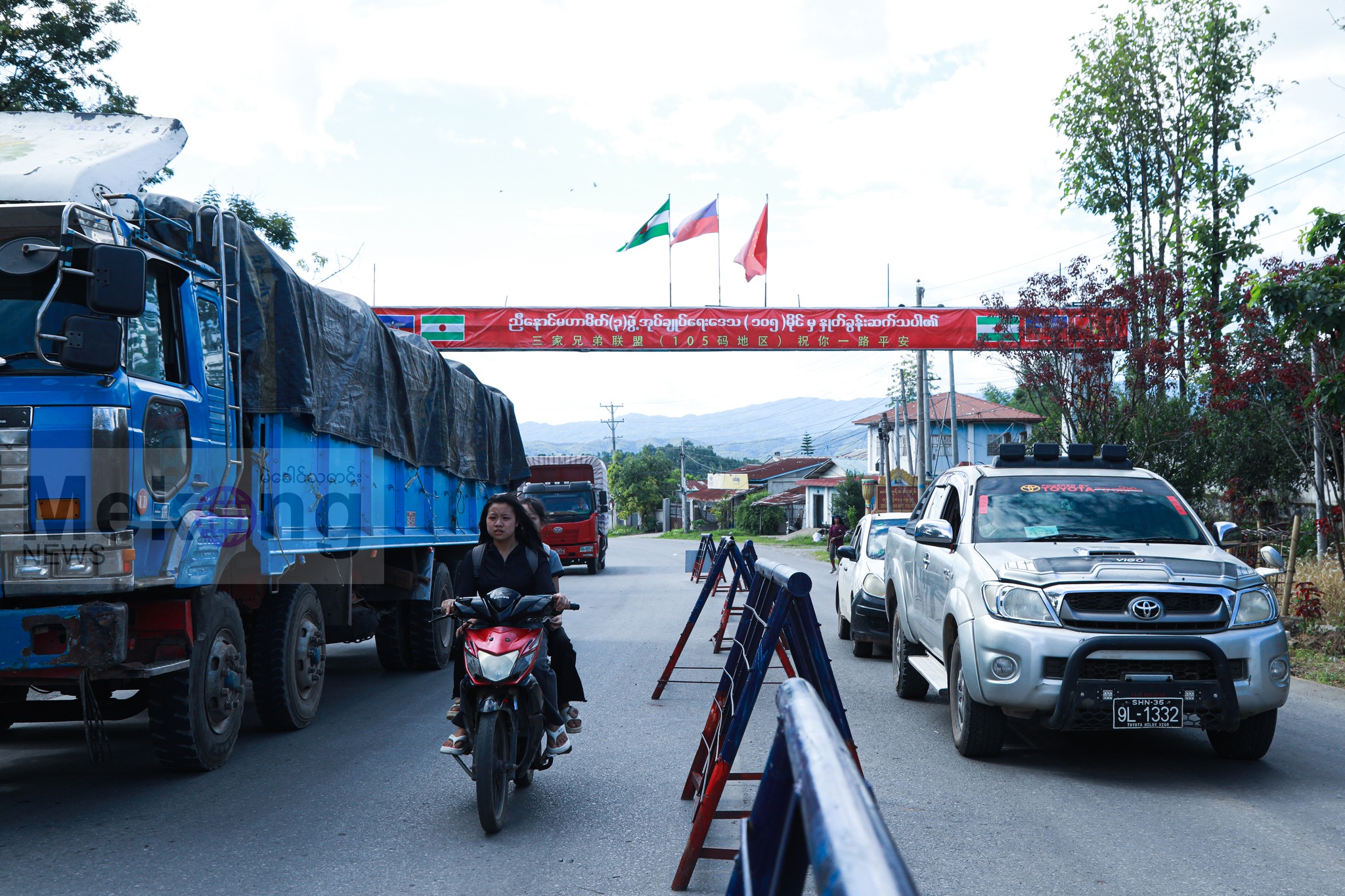
A view of the Muse 105-Mile trade zone (Photo: Mekong News)
Following the recapture of Mogok and Mongmit—both controlled by the TNLA—the next steps could include reopening the Mandalay–Muse trade highway at all costs, said Colonel Khun Okkar of PNLO–NCA/S.
He said: “This is like moving step by step. The agreement reached on October 29 was implemented on November 29 and 30. I believe more steps will follow.The next steps may involve positioning military forces necessary to reopen the Mandalay–Muse trade highway. I think this will come gradually.I believe they will reopen the Mandalay–Muse road no matter what. Why? Because they have already negotiated with the Kokang, and the ‘Wa’ that has long been the military’s allies. For China, this road is crucial for reopening trade routes and continuing work.When China’s interests, Myanmar’s interests, and the military’s interests all align, negotiations could lead to progress.”
Dr. Hla Kyaw Zaw, a China–Myanmar affairs analyst, also told CNI News that the Mandalay–Muse road may reopen soon, which would allow some economic breathing room.
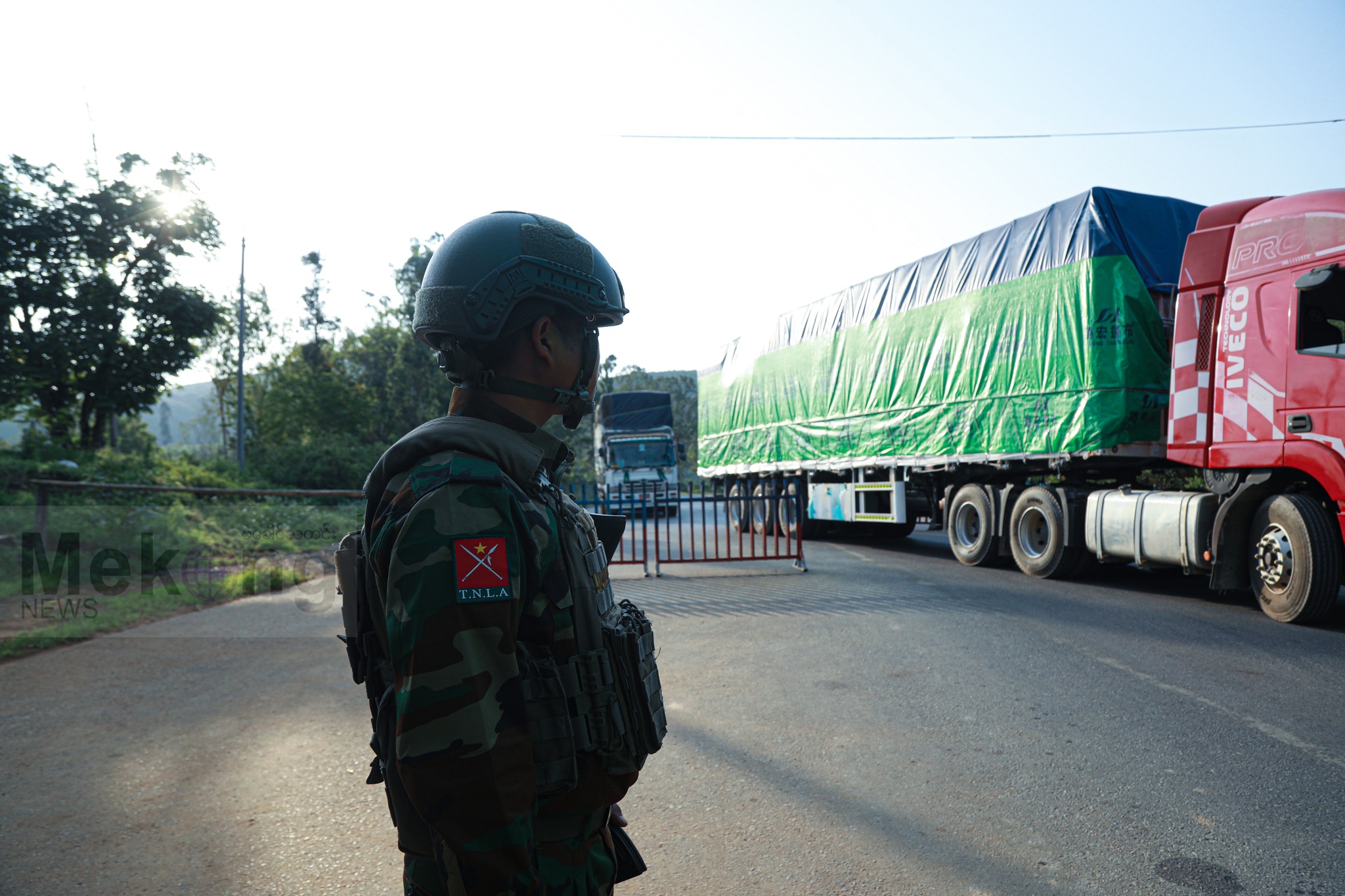
TNLA troops inspecting trucks leaving the Muse 105-Mile trade zone (Photo: Mekong News)
She said:“The Mandalay–Muse road is likely to reopen. Why? Because China has reopened all its border gates; on the KIA side, they have opened almost all their gates—five in total. This aligns with Yunnan Province’s strategy of transporting raw materials from Myanmar through these border gates to Yunnan, building factories there, and producing value-added goods. Economically, this could provide some breathing space.However, given the military’s underlying mentality—which does not prioritize public welfare—retail and wholesale economic burdens and public dissatisfaction will still remain. In the short term, the economy may stabilize to some extent.”
Analysts note that if the military regains full control of the Mandalay–Muse highway, it would dominate not only the entire northern Shan region but also China–Myanmar border trade.
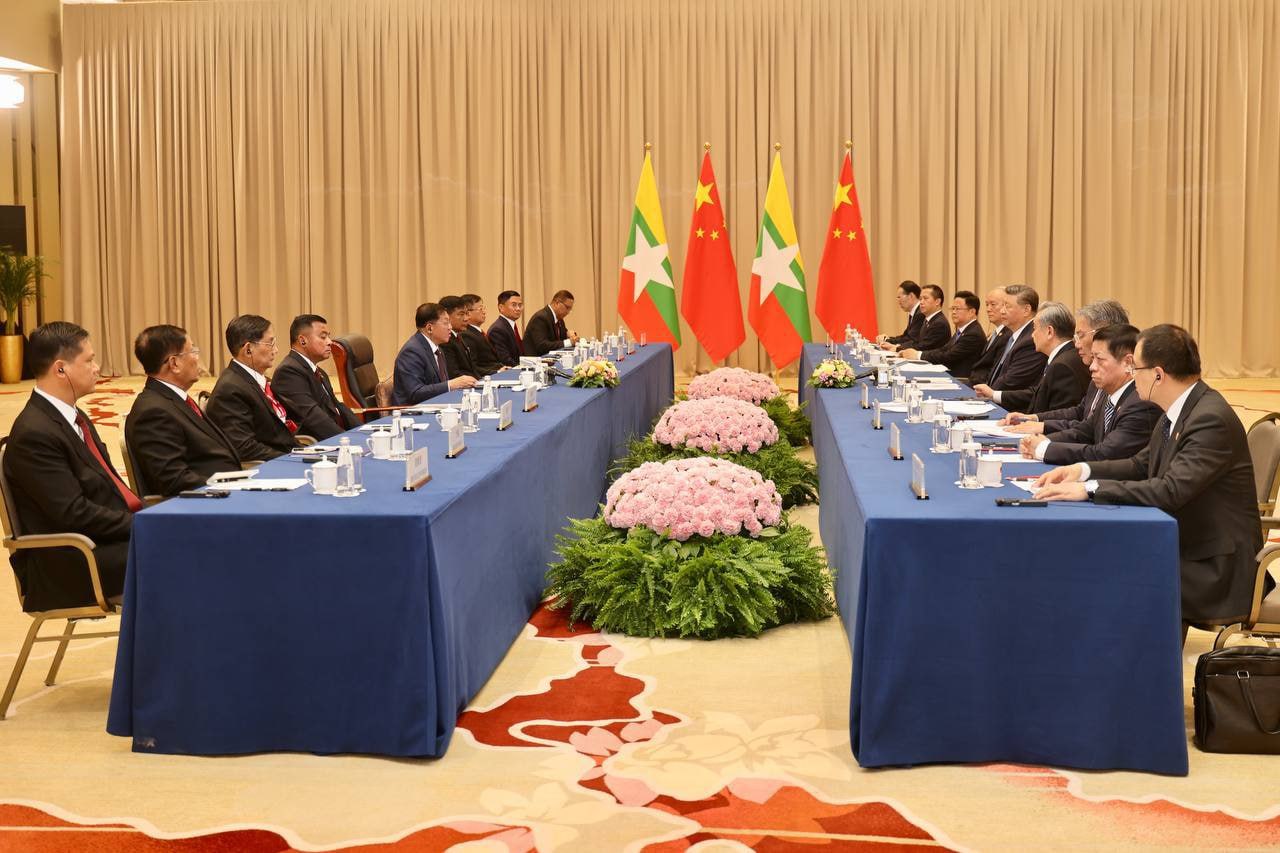
Currently, China and the Myanmar military have agreed to reopen the Mandalay–Lashio–Muse trade highway.
However, the TNLA has maintained its stance that it will collect taxes from trucks using the route, while China and the military do not accept tax collection by the TNLA. Negotiations remain ongoing.
- By CNI
- Category: English Section
- Hits: 504
CNI News
10 December 2025
Although the United States has recently shown a more favorable view toward Myanmar, China is not worried that the Myanmar military (Tatmadaw) might shift toward the Western bloc, according to political and military analysts who spoke to CNI News.
The U.S. Department of Homeland Security announced on November 24 that it was ending Temporary Protected Status (TPS) for Myanmar nationals, claiming that Myanmar is preparing for elections and showing visible improvements in governance.
Immediately after the U.S. announcement, Myanmar’s National Defense and Security Council closed all ongoing cases filed under Penal Code Section 505(a) and granted amnesties, a move analysts say was intended to show alignment with the U.S. position.
A political analyst told CNI News that because the U.S. ended TPS for its own national interests, China is not concerned that the Myanmar military will move closer to the U.S. or Western nations.
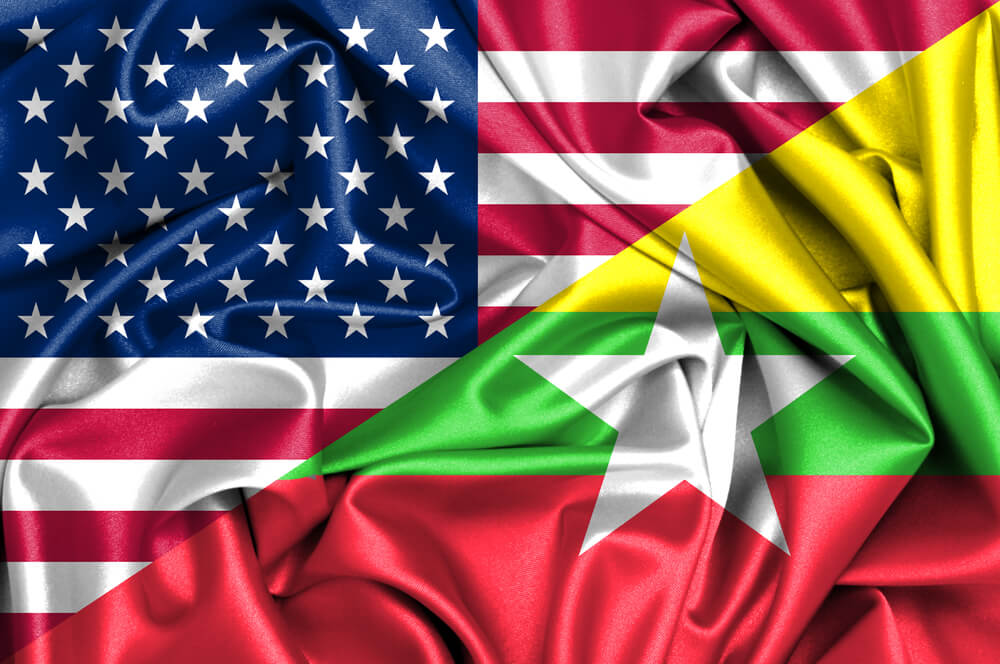
Flags of Myanmar and the United States
He said,“China won’t worry that much. As I mentioned earlier, they understand what’s going on.Why? Because Donald Trump never said anything like, ‘We support Myanmar’s election,’ or ‘The election is legitimate and important for restoring democracy,’ like China would say. The U.S. only said the situation had normalized enough based on their own interests, and that’s why they ended TPS.So China isn’t worried that the Myanmar military will follow the U.S. or join the Western bloc. They are confident the Myanmar military will never side with the U.S. They know that very well. So China is not really concerned.”
Analysts note that U.S. President Donald Trump appears to be attempting to shift U.S. policy toward Myanmar, and that the Myanmar military, in turn, seems to be taking positive actions toward the U.S. movement.
Since the outbreak of armed conflict in Myanmar after 2021, the revolutionary forces have been supported by the Western bloc, including the U.S., while China has mediated between the military and certain ethnic armed organizations.

Chinese Special Envoy Mr. Deng Xijun meeting Senior General Min Aung Hlaing
Colonel Khun Okkar, chairman of the Pa-O National Liberation Organization (PNLO-NCA/S), told CNI News that China pays little attention to these recent U.S. statements because China itself is deeply involved in Myanmar’s political affairs.
He said,“China isn’t worried. China is directly involved in Myanmar’s affairs. From the Kokang issue to the Lashio issue, China has stepped into Myanmar territory and is managing things. So China won’t care much about a soft statement from the U.S.”
Myanmar will hold Election Phase (1) on December 28, 2025 in 102 townships, Phase (2) on January 11, 2026 in 100 townships, and Phase (3) in the last week of January 2026.
- By CNI
- Category: English Section
- Hits: 542
CNI News
10 December 2025
In Myanmar, politicians increasingly fail to listen to the voices of the majority of citizens and instead make people listen only to what they themselves want to say or do. As a result, public trust and confidence in them have been declining, according to political observers.
Analysts point out that politicians and political parties only meet with the public and listen a little to public opinion when elections draw near. However, whether they win a parliamentary seat or not, they no longer listen to the voices of the people after the election.
They add that Myanmar’s political journey is a long-term process that must move step by step beyond polarization, division, and antagonistic politics, towards the flourishing of a diverse range of ideas and choices.
Dr. Nyo Nyo Thin, founder of the Yangon Watch Organization, told CNI News that the decline in politicians’ ability to listen stems from Myanmar’s long history of isolationist policies.

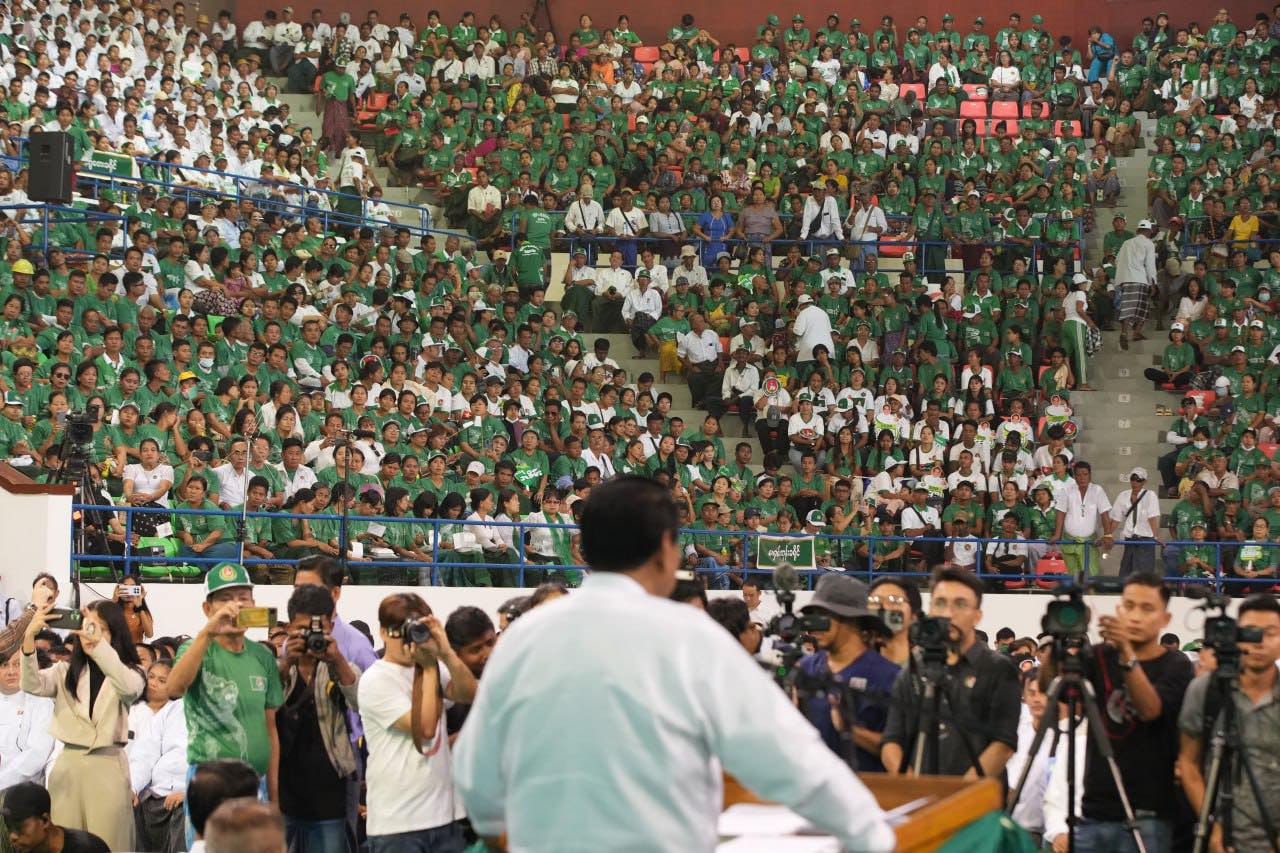
PP Party campaign
She said,“Generally, in our country, political culture was not properly taught in schools from a young age. We never had schools that effectively trained students in the fundamental qualities needed to build a positive political culture. Especially in politics, personality cults became widespread. Because the political system was based on these cults, the issue of intolerance among politicians was never clearly visible in the past. But since the start of the democratic period, we began to see that politicians’ ability to listen to the people was very limited.For nearly three centuries, our country practiced an isolationist policy. As a consequence, just like the politicians, those who govern the country also lack the ability to listen to the majority of citizens.When elections are near, these patterns become more evident during campaign periods.”
Regarding the need for public political awareness, observers note that the public themselves must make an effort to supplement their political knowledge.
By doing so, the public not only benefits their own interests but also contributes to the national interest, national development, and the emergence of a healthy political system.
Dr. Aung Myo, an independent candidate from Zabuthiri Township, told CNI News that politicians act based on personal ambition, refuse to give space to others, and behave as if anyone who disagrees with them is an enemy—a form of “liberalism in name only.”
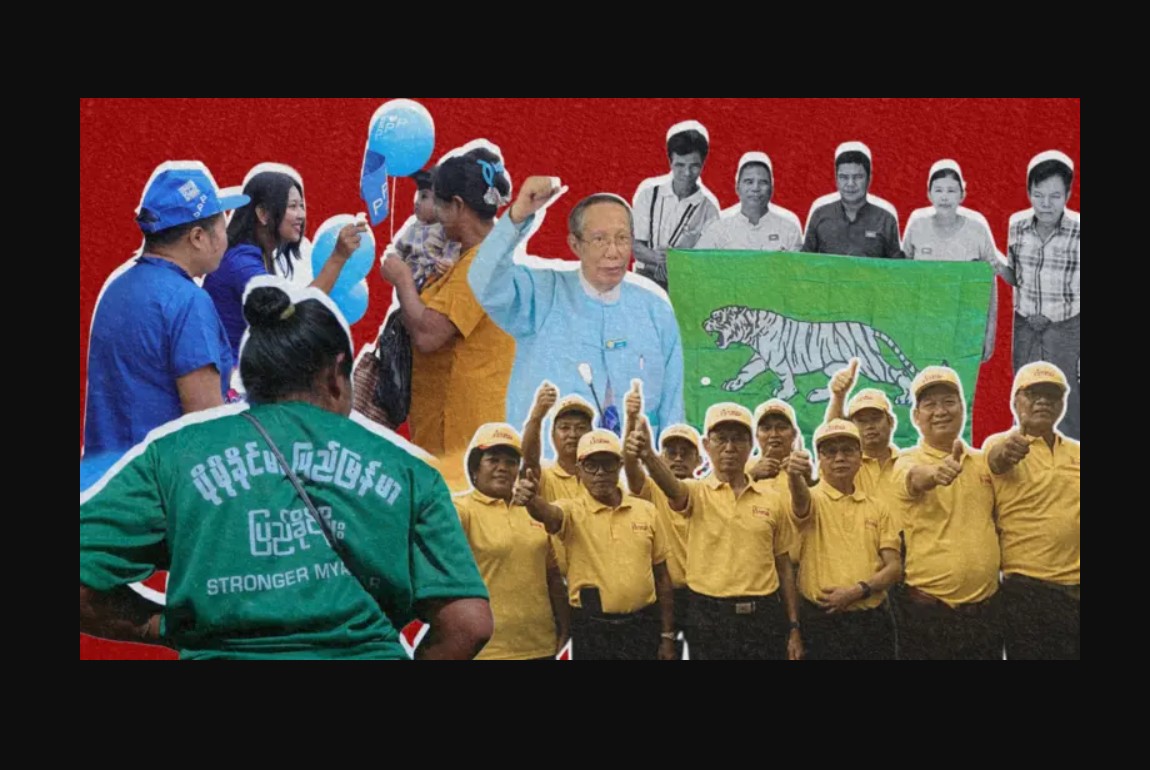
Political parties campaigning
He said,“The weakness in listening comes mainly from politicians only doing what they themselves want, without giving others a chance or showing respect.We see this in the NUG and PDFs as well—they only see people as friends or foes, and they don’t listen to those in between.Frankly, liberals are not thriving. What they call ‘liberal’ isn’t real liberalism. These people are just wearing a liberal mask—if they think ‘you’re not like me, so you’re my enemy,’ how can they be true liberals?They insist only their view should be heard, and they reject others’ views. This has turned into a kind of exaggerated national character.It mainly happens because they prioritize personal ego. And because they can’t tolerate criticism, they turn into fake liberals.”
Observers warn the public to be cautious of politicians who, in this multi-party democratic era, frequently use terms like “national politics” to portray themselves as selflessly working for Myanmar’s benefit, while in reality serving their own interests.
In Myanmar, Election Phase (1) will be held on December 28, 2025, Phase (2) on January 1, 2026, and Phase (3) in the last week of January 2026.
During the campaign period, politicians and political parties are actively conducting voter outreach activities. But after the election, political parties and politicians tend to distance themselves from the public.
- By CNI
- Category: English Section
- Hits: 489
CNI News
9 December 2025
In Myanmar, if one does not have money when engaging in politics, it is necessary to possess political influence, said political analyst U Htet Aung Kyaw in an interview with CNI News.
The countries with strong influence tend to be powerful in political, military, or economic terms, and therefore they must make efforts to build political power and influence, which has been previously expressed by Commander-in-Chief Senior General Min Aung Hlaing.
When discussing politics, concepts of party politics and national politics often come together, and party politics can effectively be described as power politics, because political parties compete to gain state power.
If one lacks political influence and does not have money, doing politics becomes extremely difficult, and democracy is somewhat expensive, said political analyst U Htet Aung Kyaw.
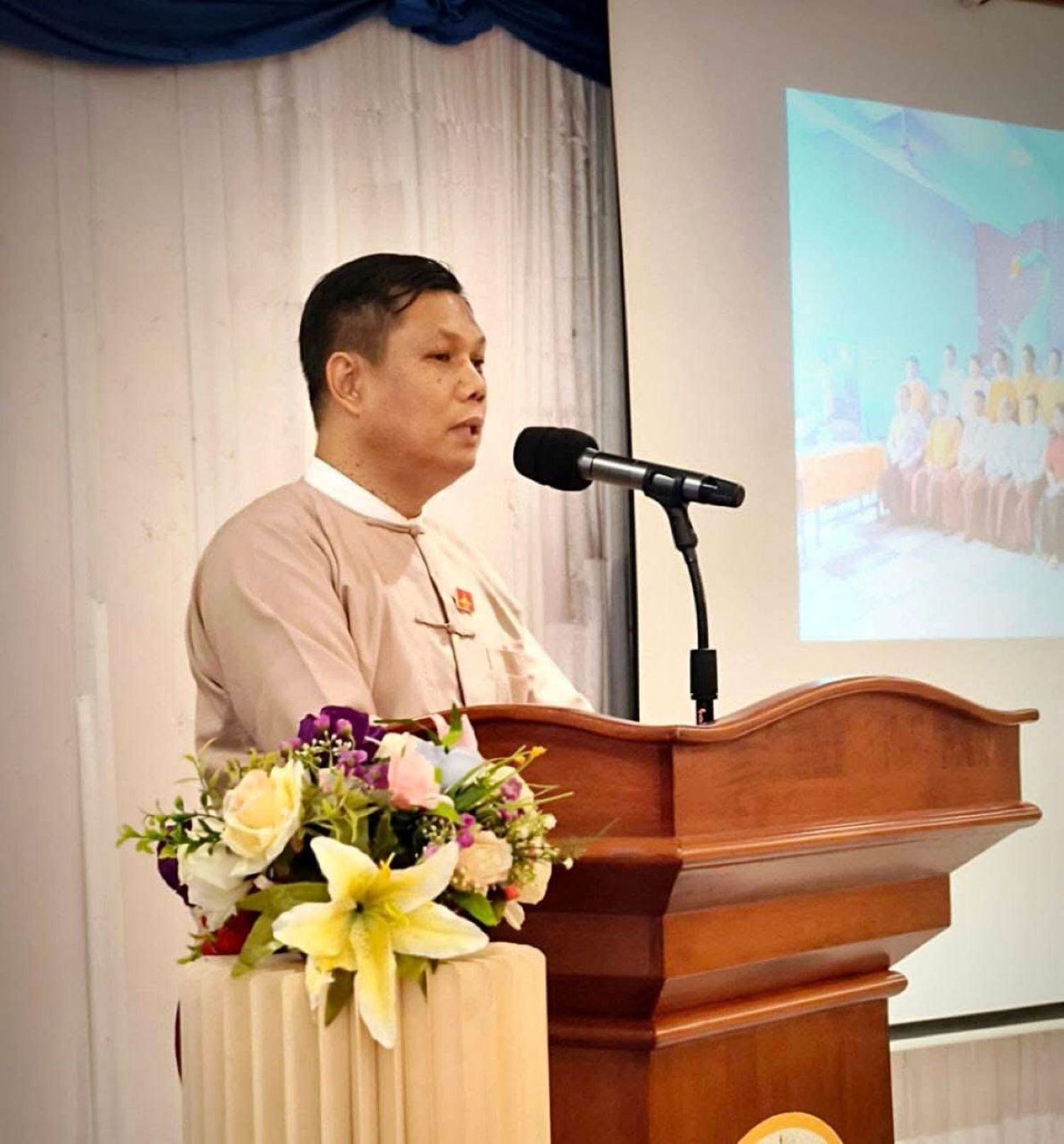
Political parties
He explained:“When you do politics, even if you have no money, you must at least have political influence. If you have influence, the public will support you, and you can continue operating through party membership fees, contributions, donations, and so on. But if you don’t have political influence and you also don’t have money, then doing politics becomes very difficult. Yet there is no alternative way either. Democracy is, in a sense, a little expensive. As the saying goes, ‘Democracy is very expensive.’ So, one way or another, it is costly. If you don’t have money, you have to work harder to build political influence.”
He added that in today’s context, how the general public interprets, understands, and takes responsibility in politics has become very important. Politics, he explained, is nation-building through people with different perspectives and values working together for the national interest.
In Myanmar today, wealthy individuals are building political influence by mobilizing the public with money, said Dawbon Township independent parliamentary candidate U Kyaw Htet.
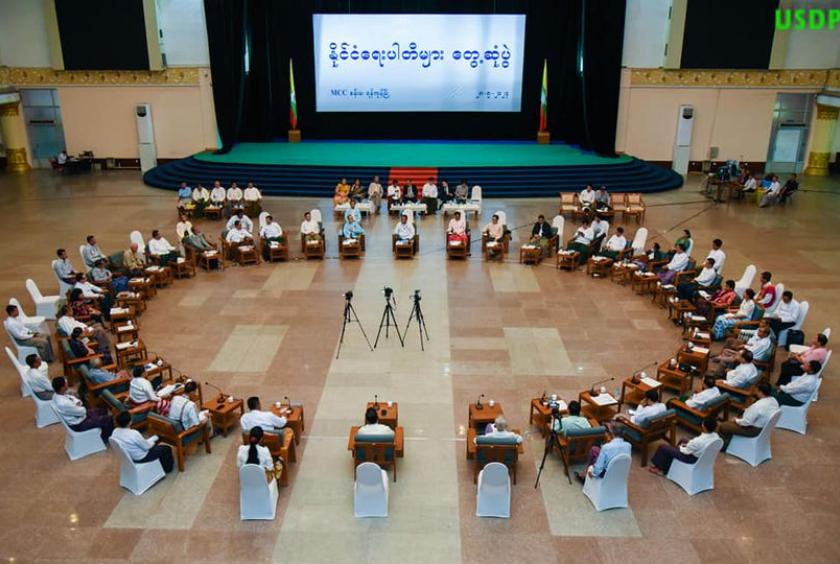
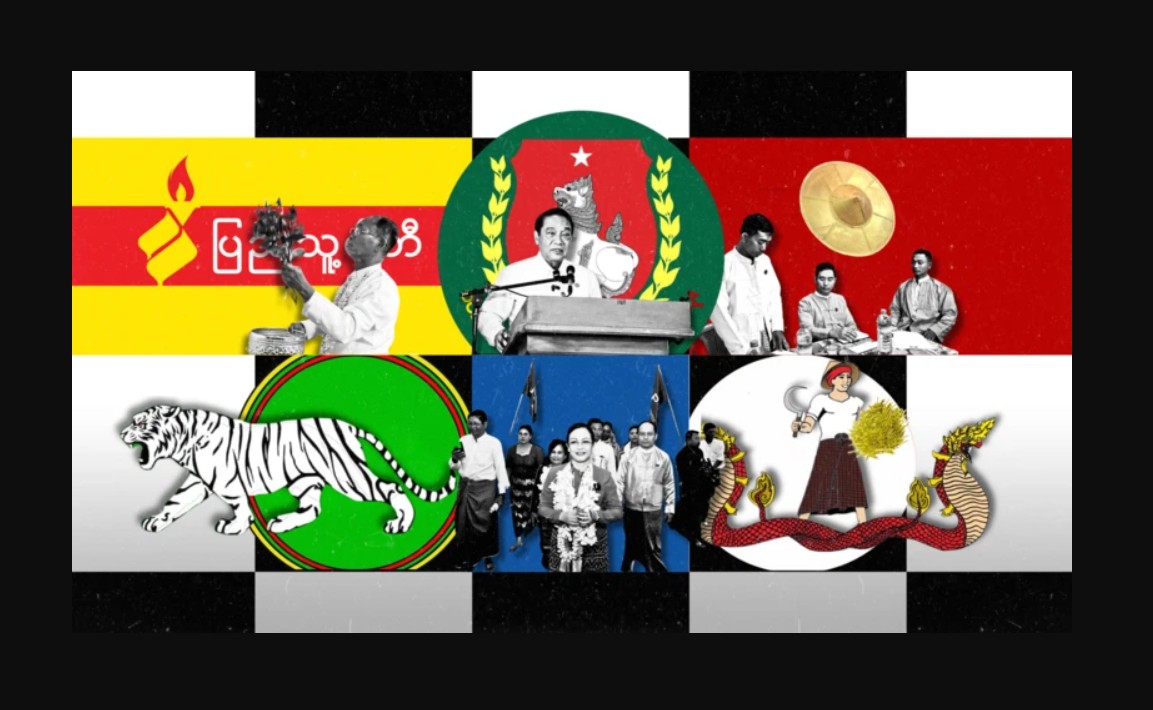
Political parties
He said:“There are gaps in public knowledge regarding democracy and politics. The political environment is such that people tend to misunderstand who is a politician and who is merely an influencer. We see that politics is being shaped by those who have money — they can easily mobilize people with money and build political influence through shortcuts. They promote themselves and approach the public as if that alone makes them politicians. Some people mistakenly think that is what politics is. The public still lacks understanding of who a true politician is and who sincerely builds politics with true political spirit. Because democratic culture is still not understood to the extent it should be, these things are happening.”
Political analysts point out that although politics arises from differing values, interests, and goals, that does not mean these differences must always be resolved through confrontation.
Under the Political Parties Registration Law enacted on January 31, 2023, any political party seeking to organize nationwide must have 50,000 members and open more than 100 party offices.
Analysts explain that this law has led political parties to rely heavily on businesspeople for financial support, resulting in business elites increasingly exerting influence over political parties and building political power within them.
- By CNI
- Category: English Section
- Hits: 654
CNI News
9 December 2025
There are ongoing analyses among military and political observers regarding what other strategic objectives the Kachin Independence Army (KIA) may have, in addition to seizing and controlling towns inside the Sagaing Region.
Currently, the KIA has expanded and operated across northern Shan State, Kachin State, and into the Sagaing Region, allowing it to stand as one of the strongest ethnic armed organizations.
Recently, KIA–PDF forces have taken control of Banmauk, Pinlebu, Indaw, Shwe Pyi Aye, and Khanpat townships in the Sagaing Region. From these positions, they are in a condition to continue launching attacks on Hkamti, Kawlin, Phaung Pyin, Tamu, and Kalay towns.
Analysts point out that if KIA can take control of Hkamti, it will effectively control the entire upper Sagaing Region. If it succeeds in taking Kawlin, it will likely attempt to expand control over Kalay, Tamu, and Kantbalu.
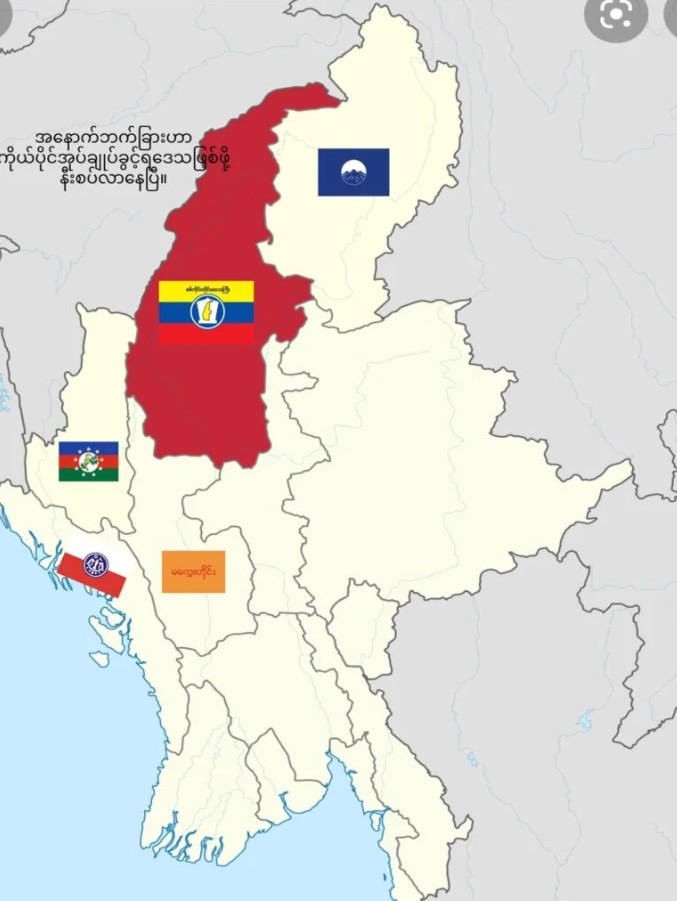
Map showing connected territories from Sagaing Region
According to U Khun Sai, a peace process expert, if KIA gains full control over the Sagaing Region, it will not stop there — because gaining such control would allow KIA to access neighboring countries through Chin and Rakhine States, facilitating both trade and diplomatic outreach with neighboring and Western countries.
He said to CNI News:“If they can control the Sagaing Region, they will get closer to India. From Sagaing, through Chin and Rakhine, they would gain opportunities for international trade and external relations, which would benefit them. Kachin, like Shan, is a landlocked state. So I don’t think the KIA will stop even after securing Sagaing Region. Even if they don’t continue capturing more towns militarily, they will still push to expand their influence, build relationships, and project power.KIA is not only careful and strategic in politics; they are also skilled in diplomacy. If they maintain relations with China on one side and engage India, the U.S., and other countries on the other side, their position becomes much stronger.Instead of being jealous of the Kachin, we should learn from their methods.”
The KIA has been providing military training, weapons, and ammunition to revolutionary forces in the Sagaing Region that border Kachin State. They have jointly conducted operations, captured towns, and expanded control across Kachin State and the Sagaing Region.
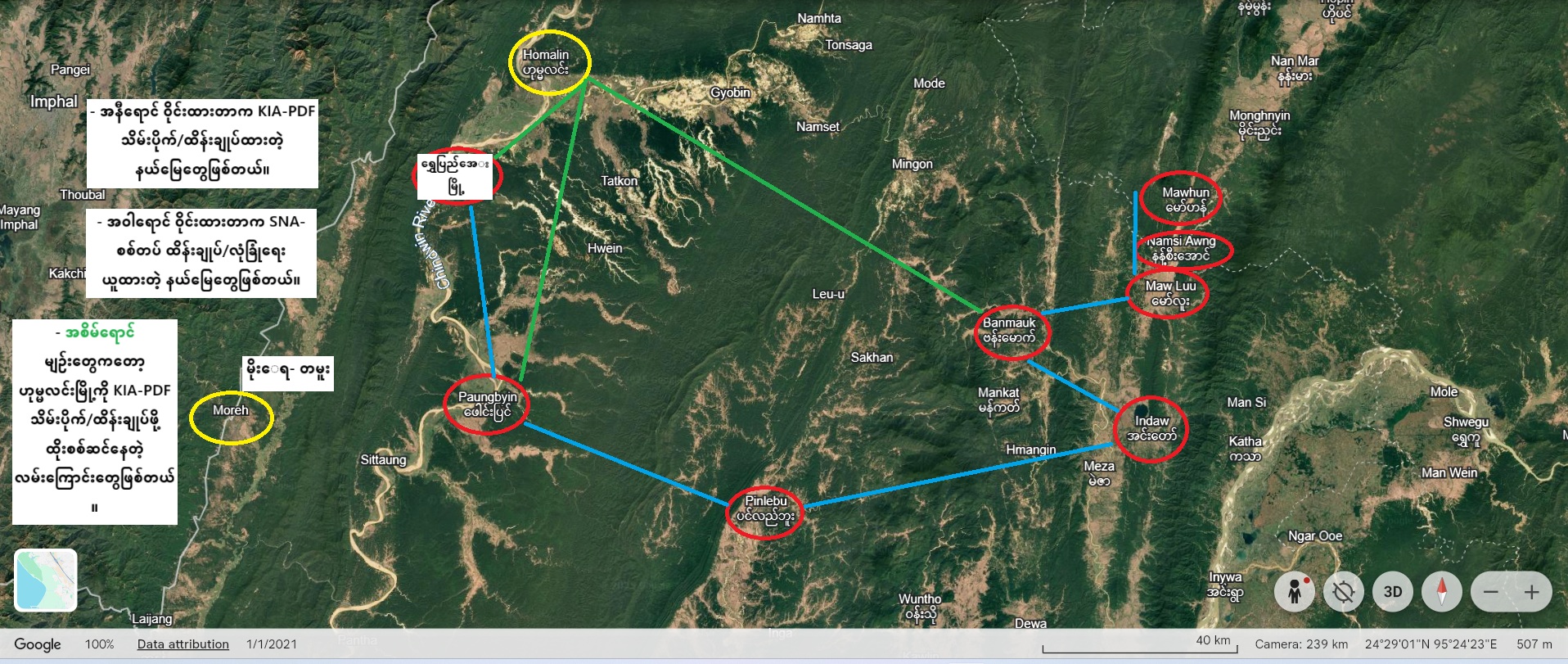
Towns in Sagaing Region captured by the KIA
Following the military coup of February 1, 2021, the KIA strengthened its forces and expanded its controlled territories far beyond previous levels.
The Sagaing Region has two border exits into India: The Tamu–Moreh crossing The Pansawng (Naga area) crossing, To secure the Tamu–Moreh corridor, KIA has been providing weapons and ammunition to the Kuki and PDF forces.
For the Pansawng (Naga) corridor, KIA has been working with NSCN-K/YA and NSCN-K/AM through recruitment and by supplying arms to ENDA/ENNO (Eastern Naga Defence Army) to implement its strategy.
A political analyst told CNI News that if any ethnic armed group captures territories beyond those designated under the 2008 Constitution and attempts to establish them as its own administrative region or state, inter-ethnic conflict could emerge — as seen in the case of the TNLA.
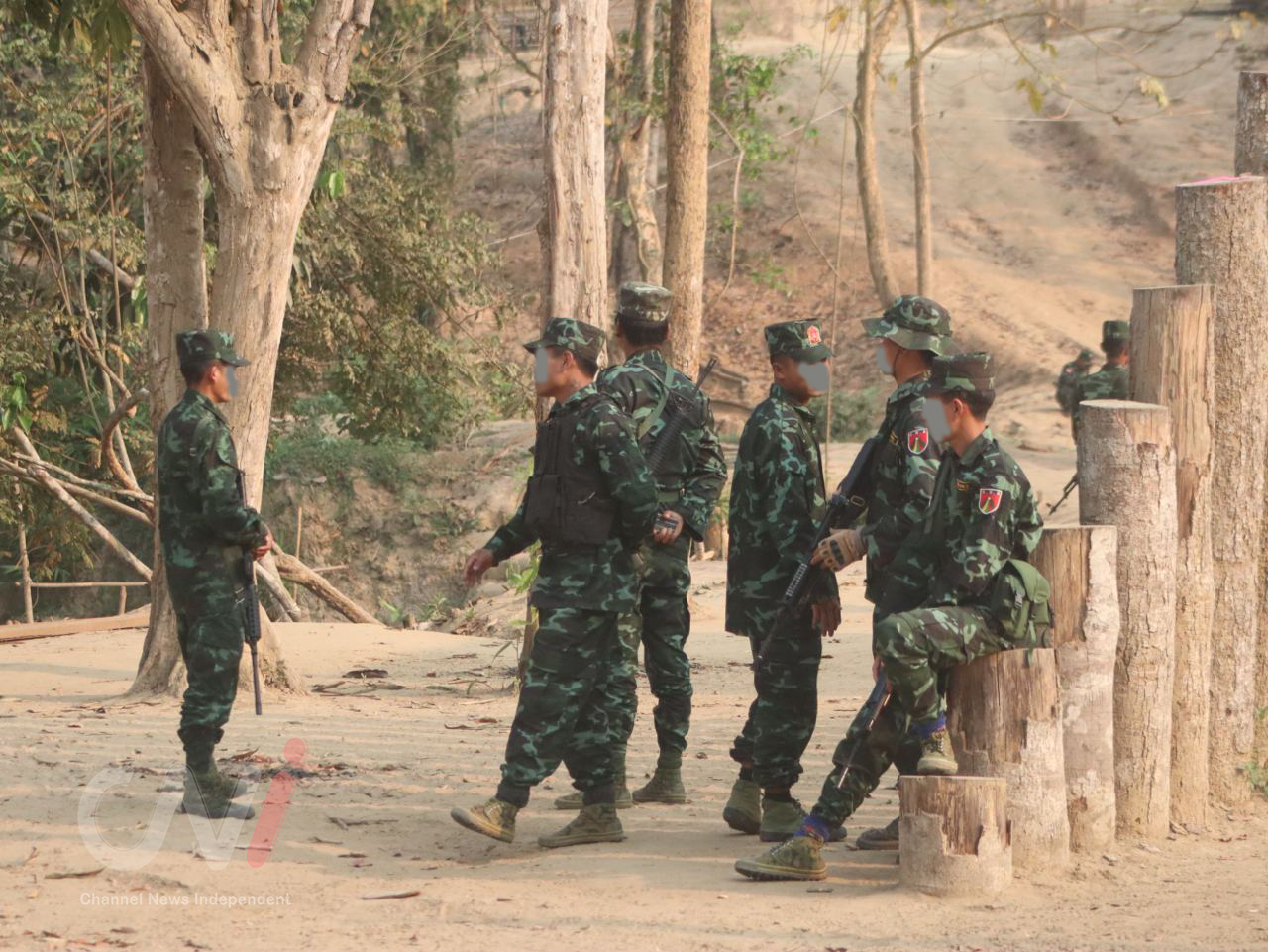
Shanni Nationalities Army (SNA) seen
He stated:“When ethnic armed groups capture territories and then declare them as their own state or region, TNLA’s experience can repeat itself — resulting in inter-ethnic conflict.The 2008 Constitution already lists recognized ethnic territories such as Kokang, Pa-O, Kachin, etc. The majority of people in Myanmar accept these official designations.So if any group tries to expand and claim new territory, making the same mistake as the TNLA, serious conflict between groups can emerge.AA, MNDAA, and TNLA do not explicitly promote federalism; they prefer a model similar to the Wa — controlling their own territory independently as a single-party armed administration.KIA previously accepted federalism and participated in NCA negotiations. But later, they withdrew. After Operation 1027 and subsequent political and military developments, KIA’s positions may change again.If they firmly commit to federalism, negotiating with the NUG and PDFs becomes much easier, with fewer major obstacles.”
According to analysts, the primary barrier preventing the KIA from fully controlling the entire Sagaing Region is the presence of the Shanni people and the Shanni Nationalities Army (SNA).
If KIA were to take over all of Sagaing Region, its power would surpass its current strength significantly. Analysts are watching closely to see whether the KIA’s strategies and operations will allow it to practically achieve full control over the region.
- By CNI
- Category: English Section
- Hits: 423
CNI News
9 December 2025
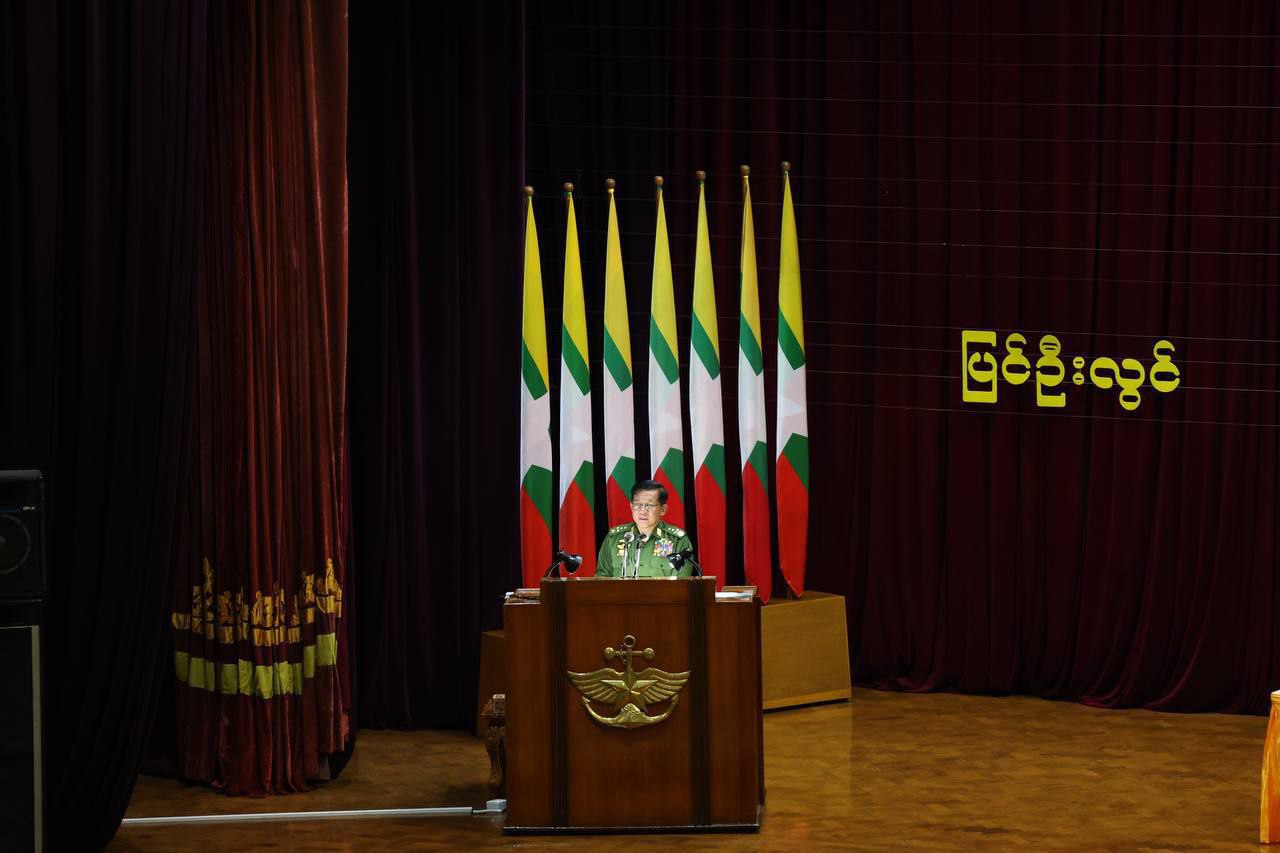
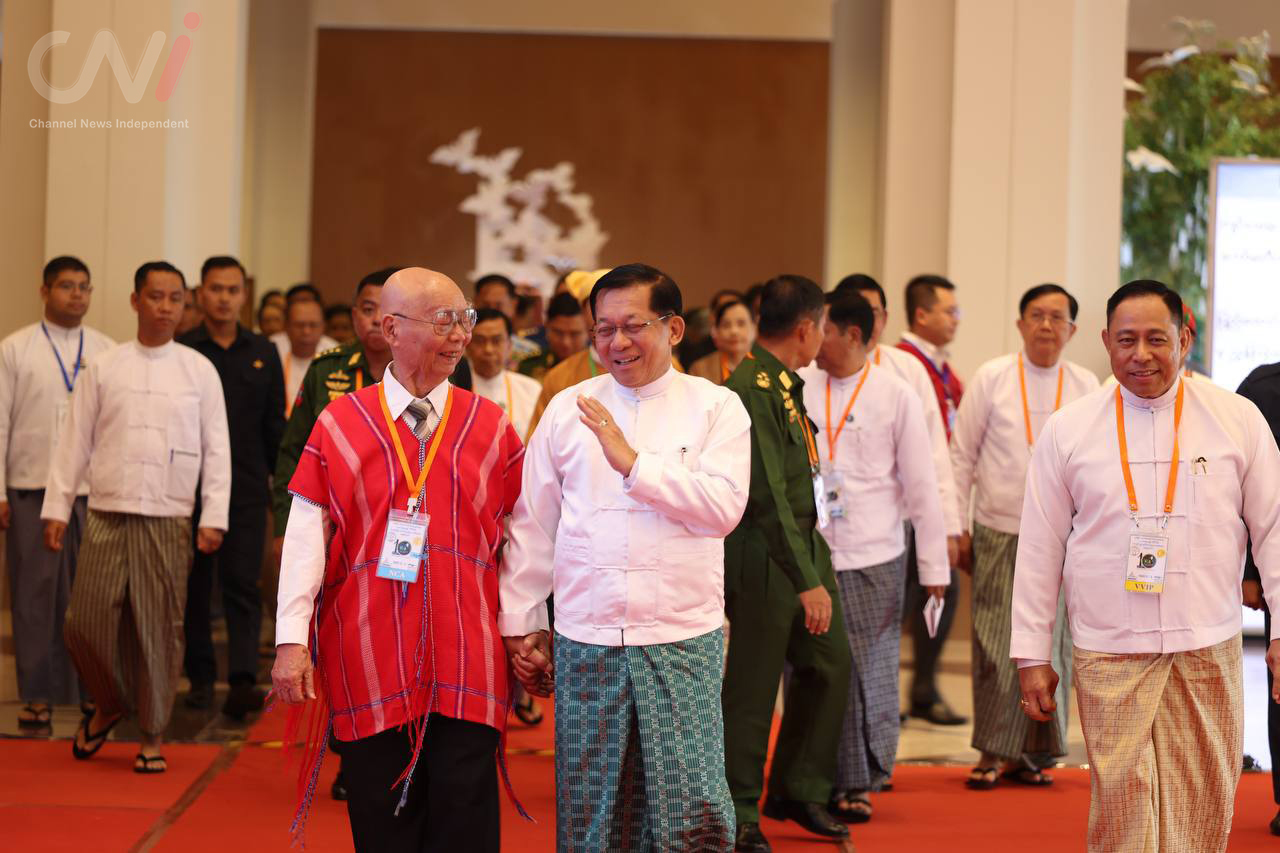
The military (Tatmadaw) will gradually reduce its inclusion in Hluttaw once democracy becomes established and once there are no more ethnic armed organizations in the country, said Senior General Min Aung Hlaing, Chairman of the National Security and Peace Commission.
He made these remarks on December 6, 2025, during a meeting with officers, soldiers, their families, and cadets from the Pyin Oo Lwin cantonment.
Senior General Min Aung Hlaing said:“When democracy flourishes in our country and when there are no ethnic armed groups anymore, the Tatmadaw will be able to gradually reduce its presence in Hluttaw. At present, because the Tatmadaw has to take a leading role in national politics, it is necessary for us to carry out our duties systematically and correctly.”
He stated that the Tatmadaw has historically participated in the leadership of national politics throughout successive eras, and based on historical and current circumstances, the military will continue to play a role in national political leadership.
In Myanmar, the military occupies 25 percent of seats in the Regional/State Hluttaws, the Pyithu Hluttaw, and the Amyotha Hluttaw without contesting elections, as guaranteed by the 2008 Constitution.
Ethnic armed organizations and political parties have called for the military to withdraw these parliamentary seats or at least reduce the percentage.
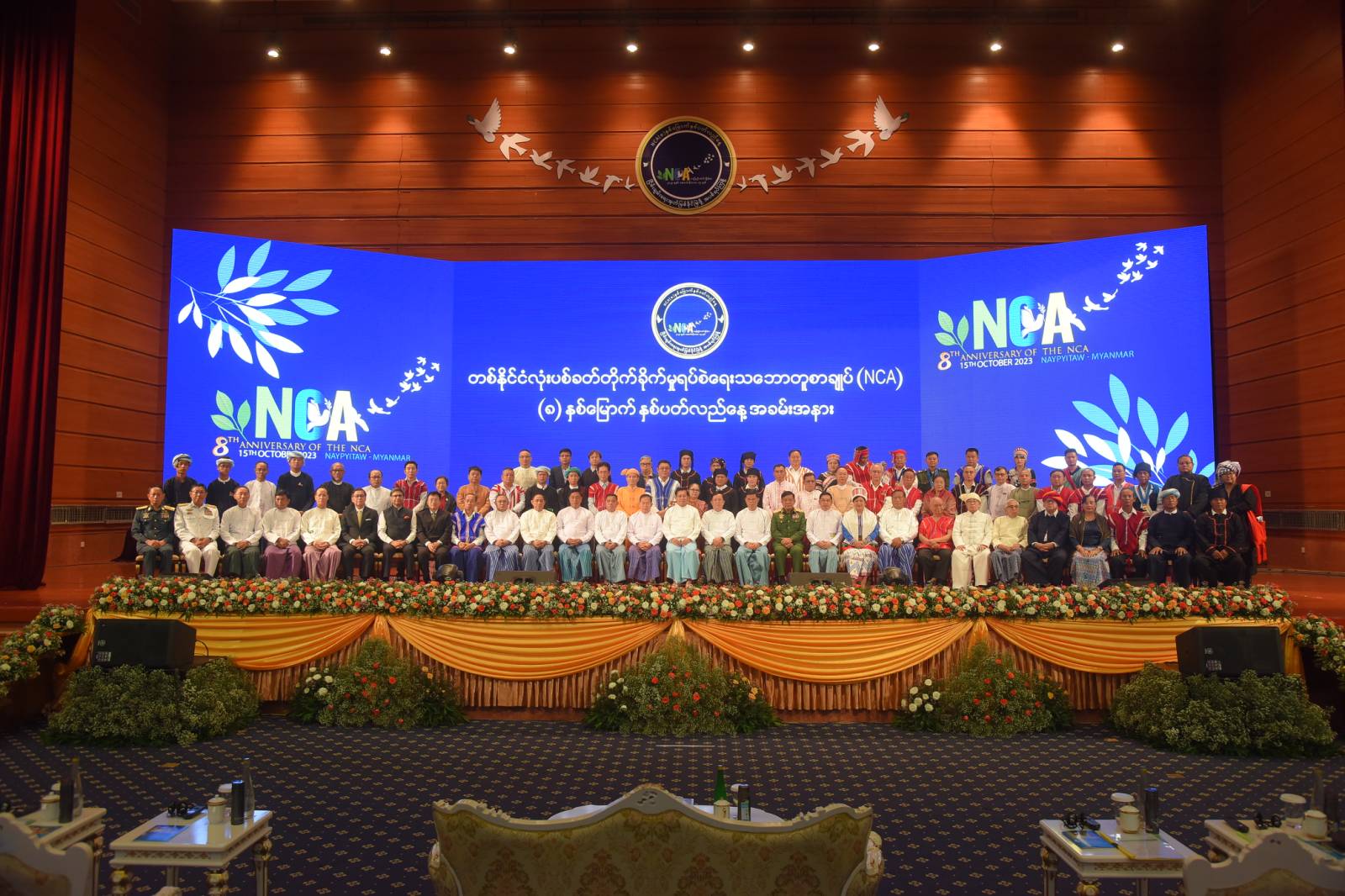
The ethnic armed groups that signed the Nationwide Ceasefire Agreement (NCA) are:
RCSS, DKBA, KNU/KNLA-PC, ALP, PNLO, NMSP, CNF, ABSDF, LDU, and KNU.
Among them, KNU, CNF, and ABSDF have withdrawn, saying the NCA has already collapsed.
LDU, NMSP, PNLO, and ALP have split into two groups—those who want to remain in the NCA process and those who want to withdraw.
Ethnic armed groups that have not signed the NCA include:UWSA, NDAA (Mongla), SSPP, KIA, MNDAA, TNLA, AA, and KNPP.
Ethnic armed groups outside the NCA framework include:SNA/SNUC, KNA/KNO, ZRA/ZRO, ENDA/ENNO, NSCN-K/AM, NSCN-K/YA, and ANC.
Additionally, armed groups that emerged after the February 1, 2021 coup and the Spring Revolution include:BPLA, BNRA, KNDA, PLA, DPLA, MLA, MNLA-AD, MSDF, MSRF, KPDF, SAF, 96 Soldiers-PDF, as well as many PDFs in Chin State and numerous PDFs under the NUG across the country.
- By CNI
- Category: English Section
- Hits: 499
CNI News
8 December 2025
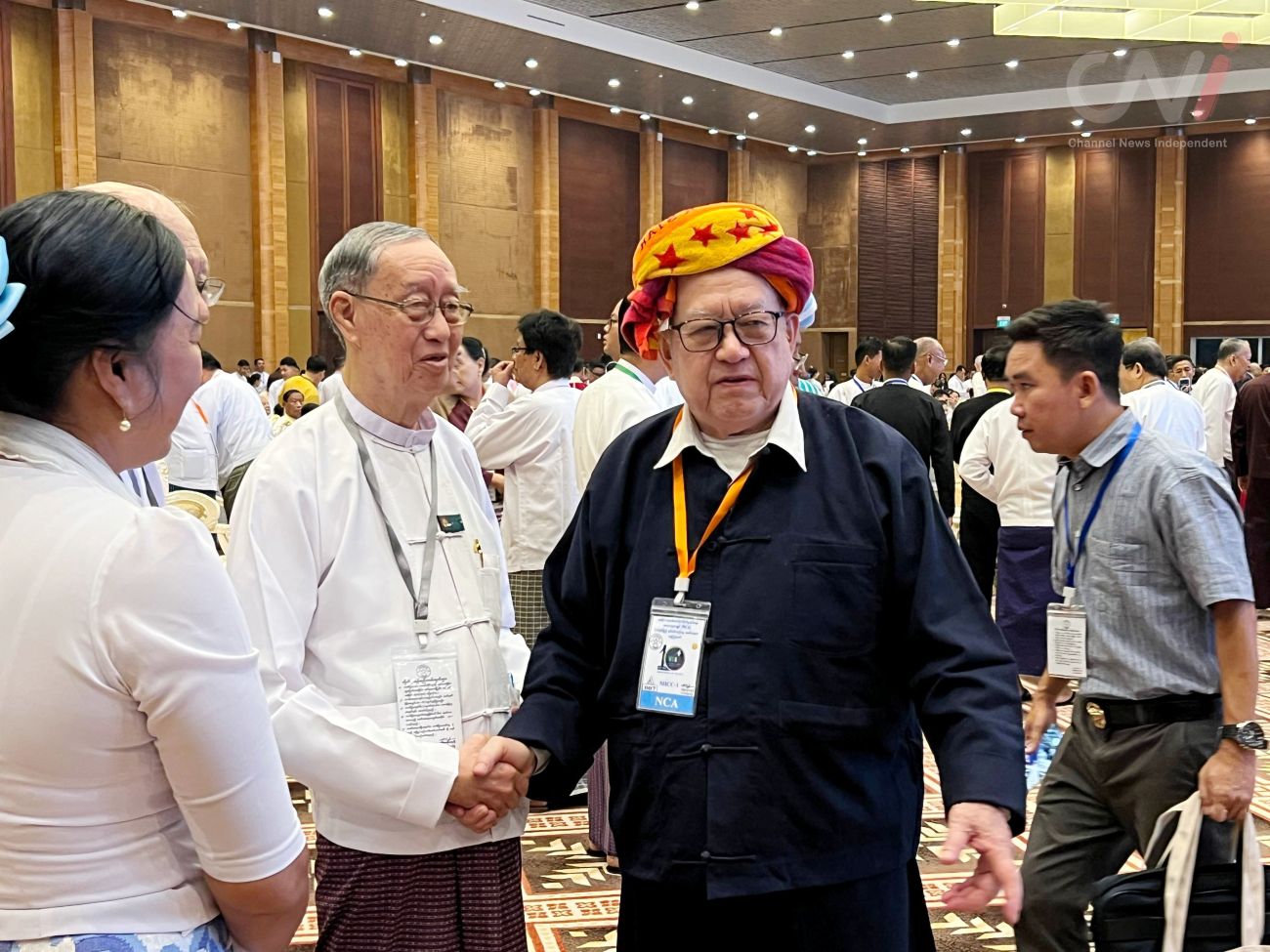
There are certain differences between the political objectives of ethnic liberation revolutions and those of the pro-democracy forces’ Spring Revolution, according to Colonel Khun Oakkar, Chairman of the Pa-O National Liberation Organization (PNLO – NCA/S), which is a signatory to the Nationwide Ceasefire Agreement (NCA). He said this in an interview with CNI News.
Following the political change after 2021, People’s Defense Forces (PDFs) emerged and have been fighting together with ethnic armed organizations (EAOs) to overthrow the Myanmar military (Tatmadaw).
Colonel Khun Oakkar of PNLO (NCA/S) said that the political aim of ethnic armed groups is to ensure national liberation and safeguard national interests.
He said:“The political objectives of the ethnic national liberation struggle and the Spring Revolution groups are a little different.The ‘Wa’, the Palaung, the Kokang—all of them are fighting because their political goal is national liberation and ensuring national interest. But they might not try to seize power in Nay Pyi Taw.However, the Spring Revolution forces' political objective is to seize state power. There’s no reason to object to that. But ethnic armed groups aim to protect their people’s equality, self-determination, stability, peace, and interests.So when the political objectives of both sides align, they cooperate; when they don’t align, they separate.They work together when the goals coincide, and when they don’t, they go their separate ways.Because of that, you can’t label one as ‘revolutionary’ and the other as ‘not revolutionary.’”
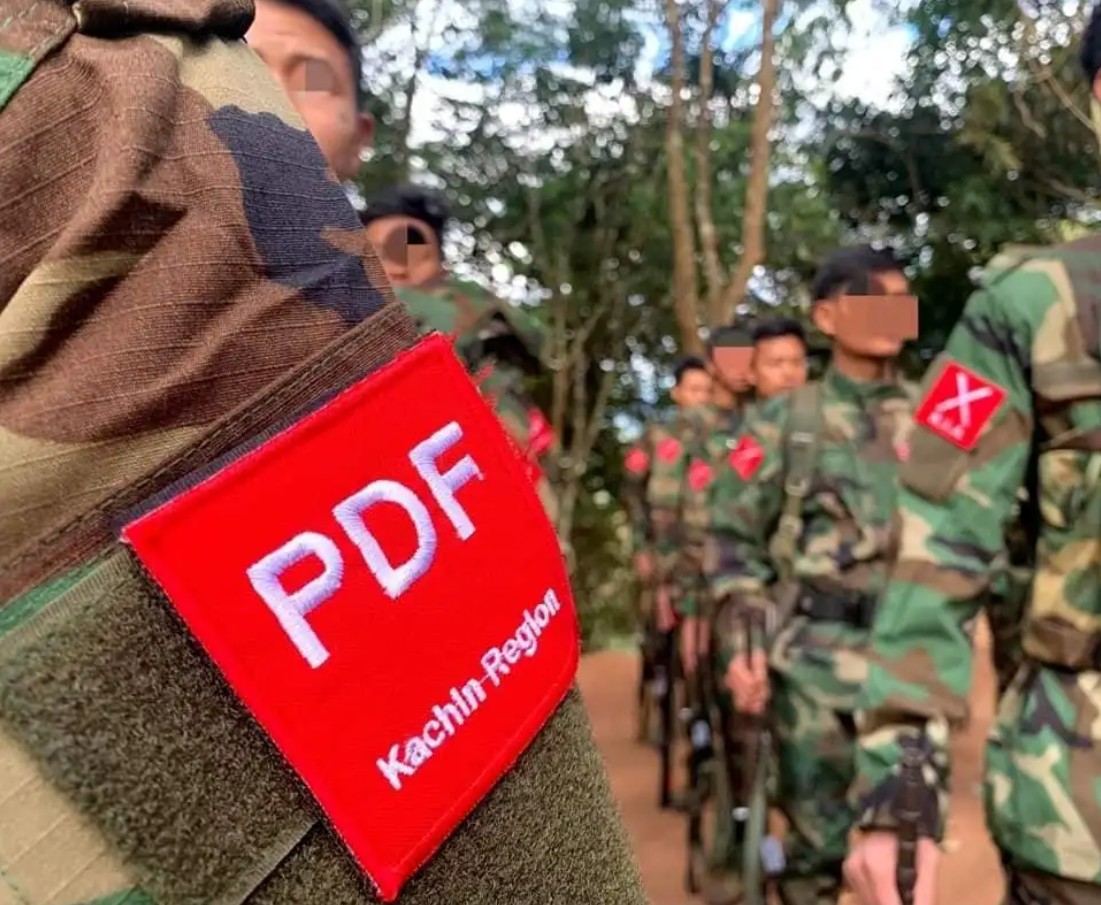
PDF and KIA joint force
Ethnic armed organizations (EAOs) began their struggle more than 70 years ago, after Myanmar gained independence on January 4, 1947, demanding self-determination and the right to self-administration.
People’s Defense Forces (PDFs), on the other hand, emerged after the military removed the NLD government on February 1, 2021, claiming the 2020 general election dispute had not been resolved and the formation of a government was attempted without addressing it.
Thus, the PDFs are fighting to overthrow the Myanmar military and regain central power, while EAOs are fighting for national liberation, self-determination, and the right to self-administration.
U Thein Tun Oo of the Strategic Studies Group told CNI News that PDFs must reflect on whether their current situation truly aligns with what they had initially expected.
He said:“To put it frankly, they need to analyze whether the conditions on the ground match what they had expected.If they can reflect clearly on that, they will know what they need to do next.We have said this many times already, so I don’t want to repeat it.But during heated moments, when emotions run high, people tend to act however they want.Still, they must reconsider whether the outcome truly matches what they intended. If not, then they must decide for themselves what comes next. That depends on their own choices.”
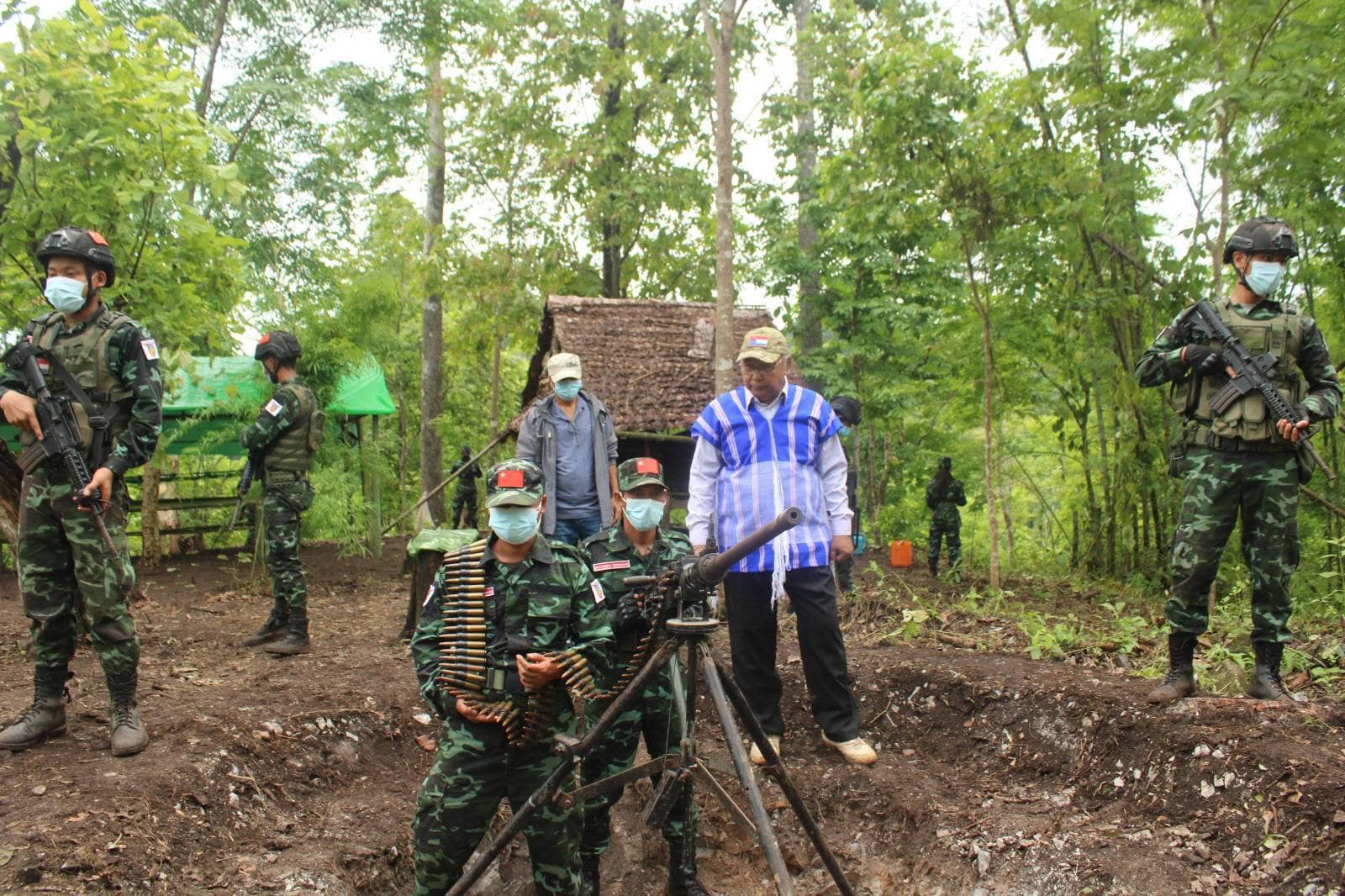
PDF and NUG Prime Minister Mahn Win Khaing Than
On October 27, 2023, EAOs such as the Ta’ang National Liberation Army (TNLA), the Myanmar National Democratic Alliance Army (MNDAA), the Arakan Army (AA), as well as KNDF, BNRA, BPLA, MDY-PDF, DPLA, PLA and others formed a coalition and launched Operation 1027 in northern Shan State and Mandalay Region.
Afterward, TNLA and MNDAA reached agreements with the Myanmar military to secure control over their desired territories and guarantee national interests. Following those agreements, they distanced themselves from the PDFs.
Similarly, the Kachin Independence Army (KIA) and Arakan Army (AA), having already captured strategic territories in Rakhine State, Kachin State, and parts of Sagaing Region with the support of PDFs, are believed to be maintaining communication and coordination with the Myanmar military for negotiations, according to informed sources.
Analysts point out that while PDFs continue fighting the Myanmar military, they still lack firm territorial control and do not yet have the capability to threaten central power in Nay Pyi Taw.
- By CNI
- Category: English Section
- Hits: 409
CNI News
8 December 2025
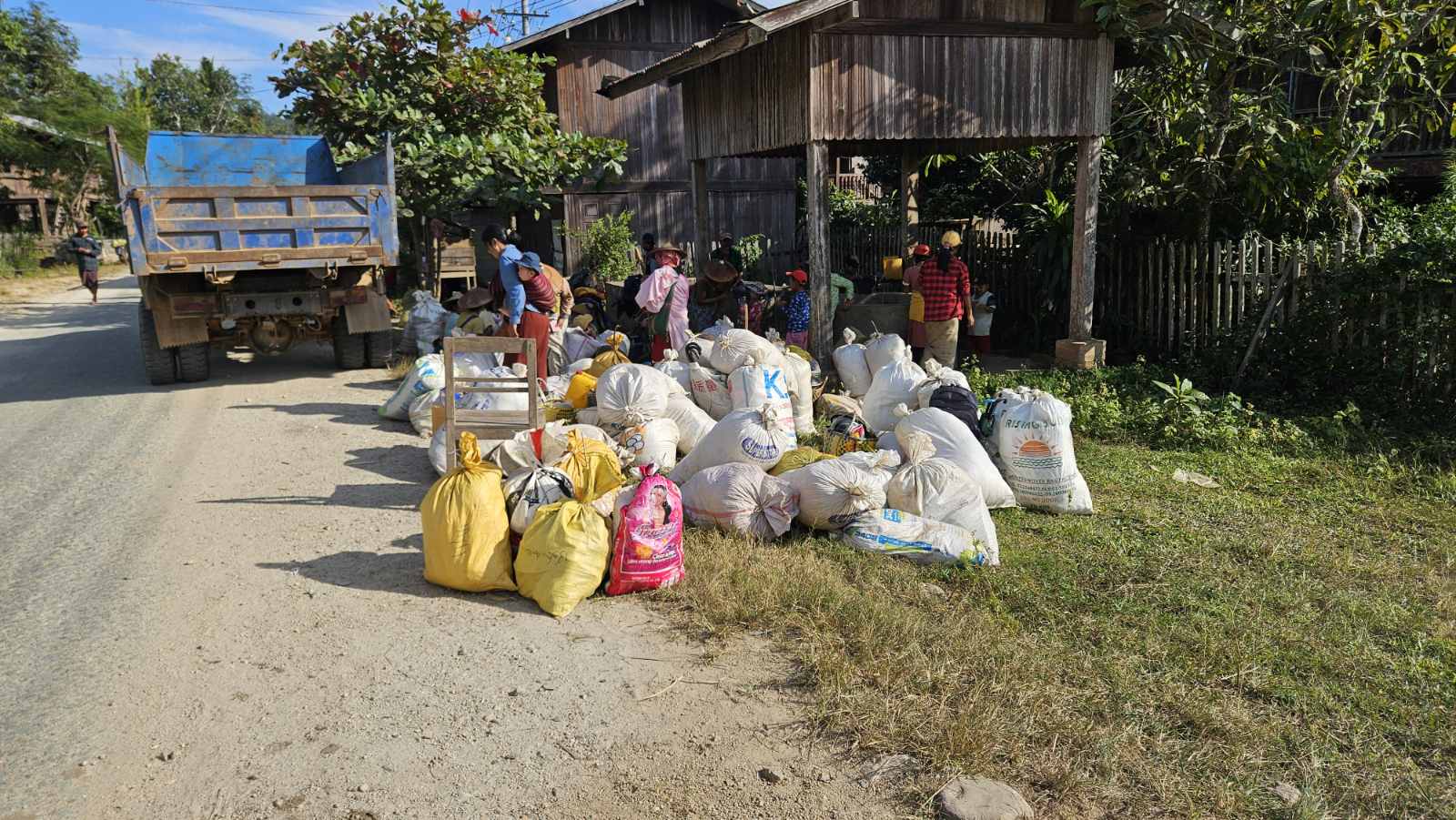
It has been learned that residents from villages such as Takhwettha, Khonan, Khobyin, Khamo, and others in Banmauk Township, Sagaing Region, have fled into territory controlled by the Shanni Nationalities Army (SNA) Brigade 614.
Residents from those villages, who had earlier fled into areas controlled by the joint forces of PDF–KIA–Kadu, reportedly returned and moved toward SNA-controlled areas on December 4, 2025, due to a lack of food supplies in the areas where they had sought refuge.
A local resident said,“Some villagers from Takhwettha, Khonan, Alat, Kan, Khobyin, and Khamo arrived in areas controlled by the PDFs. Now the PDF–KIA side is no longer providing any food supplies, so they had to secretly come back. Fellow villagers went to bring them back, and now they have fled into areas under SNA control. Here, arrangements for food and shelter have been provided for them,” he said.
The KIA–PDF–Kadu joint forces attacked Banmauk town on September 15, 2025, and fully captured it on September 20.
After that, residents from the town of Banmauk and nearby villages fled into the western side of the area controlled by the SNA.
Currently, there are around 5,000 internally displaced persons sheltering within SNA-controlled territory.
- By CNI
- Category: English Section
- Hits: 363
CNI News
8 December 2025
Political analyst U Htet Aung Kyaw told CNI News that the public in Myanmar does not appear to be showing much excitement or movement regarding the upcoming election.
In Myanmar, Election Part (1) will be held on December 28, 2025; Election Part (2) will be held on January 11, 2026; and Election Part (3) will be held in the last week of January.
He said that, up to now, public interest in the upcoming election remains low, and that he has not yet seen any significant public enthusiasm.
He continued:“Whatever the case may be, compared with the 2010, 2015, and 2020 general elections, we can say that public interest in the 2025 general election has dropped significantly. Up to this moment, the only thing that can be called active or vibrant is the fact that the Election Commission has issued an excessive number of rules and regulations.They have made the rules and regulations extremely strict. Also, in some townships certain matters are tightly controlled, while in other townships they are not strictly controlled at all. When such inconsistencies exist, politicians and parties face some constraints in their activities.Compared with the previous three elections, this one is noticeably calm and quiet.”
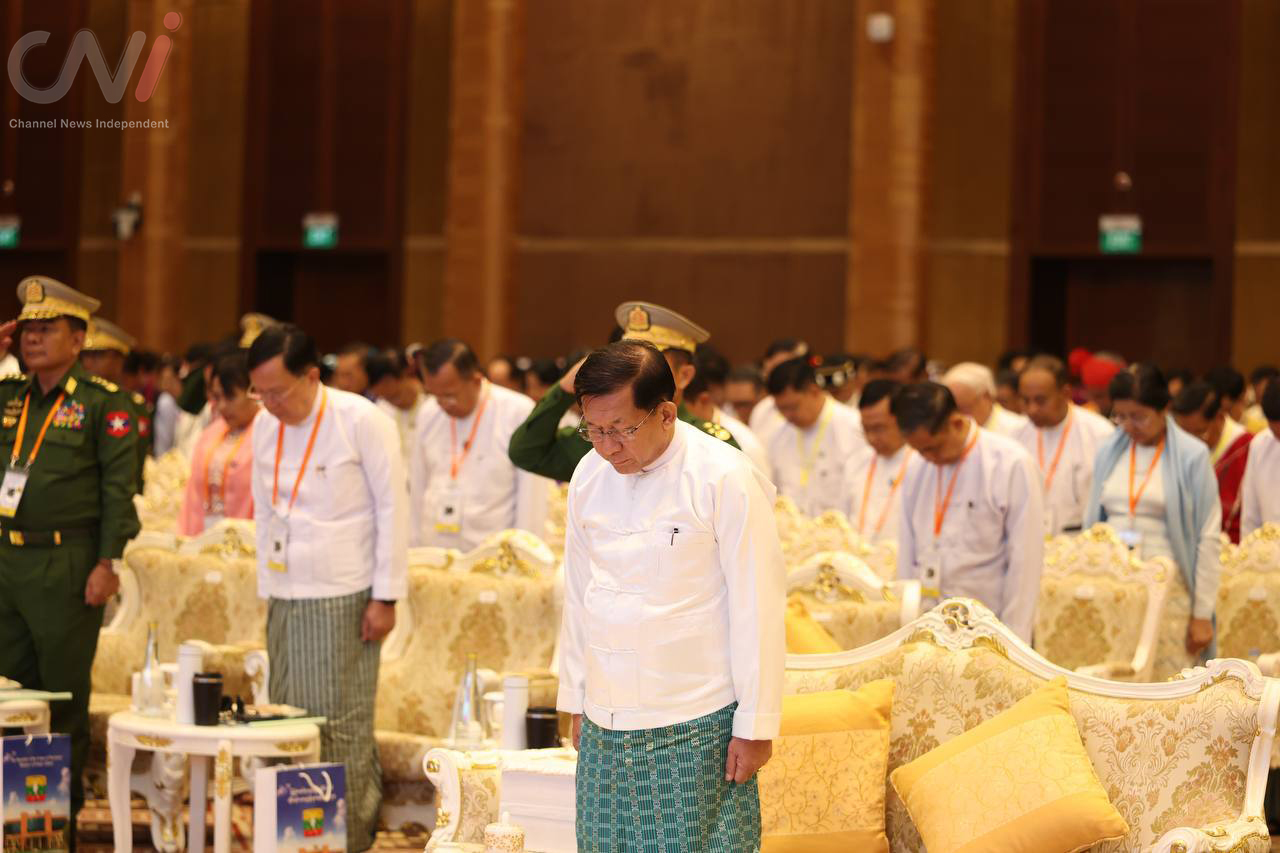
Government led by Senior General Min Aung Hlaing
He also pointed out that political parties need to make strong efforts to help the public understand that the election is an important starting point for the country.
U Thein Tun Oo, Director of the Strategic Studies Group, also told CNI News that when there is a misunderstanding about elections, various opinions and comments tend to arise, and it is important to understand election practices.
He said:“First of all, to return to the electoral path, we must hold an election. When an election is held, we must try to conduct it as best and as effectively as possible. Earlier I mentioned Free and Fair Elections. While such standards are based on normal elections, in situations like the current one—where an election is being held amidst many difficulties—we cannot proclaim Free and Fair everywhere.That is a challenge. If we cannot declare it Free and Fair, does that mean it is not Free and Fair? That is also not correct. What it means is that we must try our best to make it as Free and Fair as possible.We cannot insist on holding onto the fixed idea that unless it is truly Free and Fair everywhere, we will not accept it. This is an election held as part of a transition, so there will naturally be needs and limitations. But it is important to overcome these challenges and to understand all the usual practices of elections in order for elections to be held regularly.When there is a lack of understanding, various comments and views will arise. That’s why there is nothing particularly surprising. These situations occur because there is a misunderstanding of the nature of elections.”
Revolutionary forces have announced that people should not vote or take part in the election, and that those who cooperate with the election organized by the military will be effectively punished.
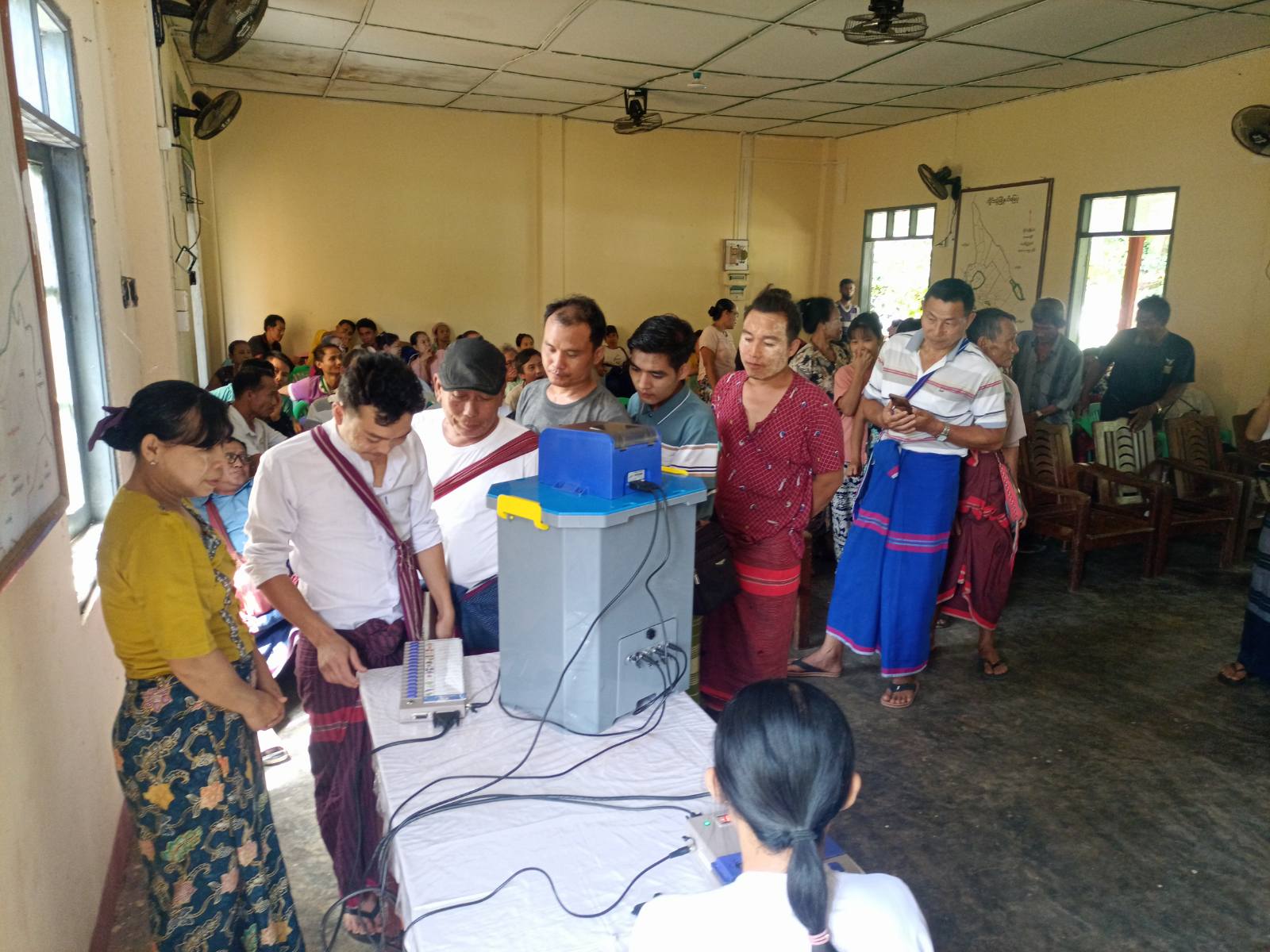
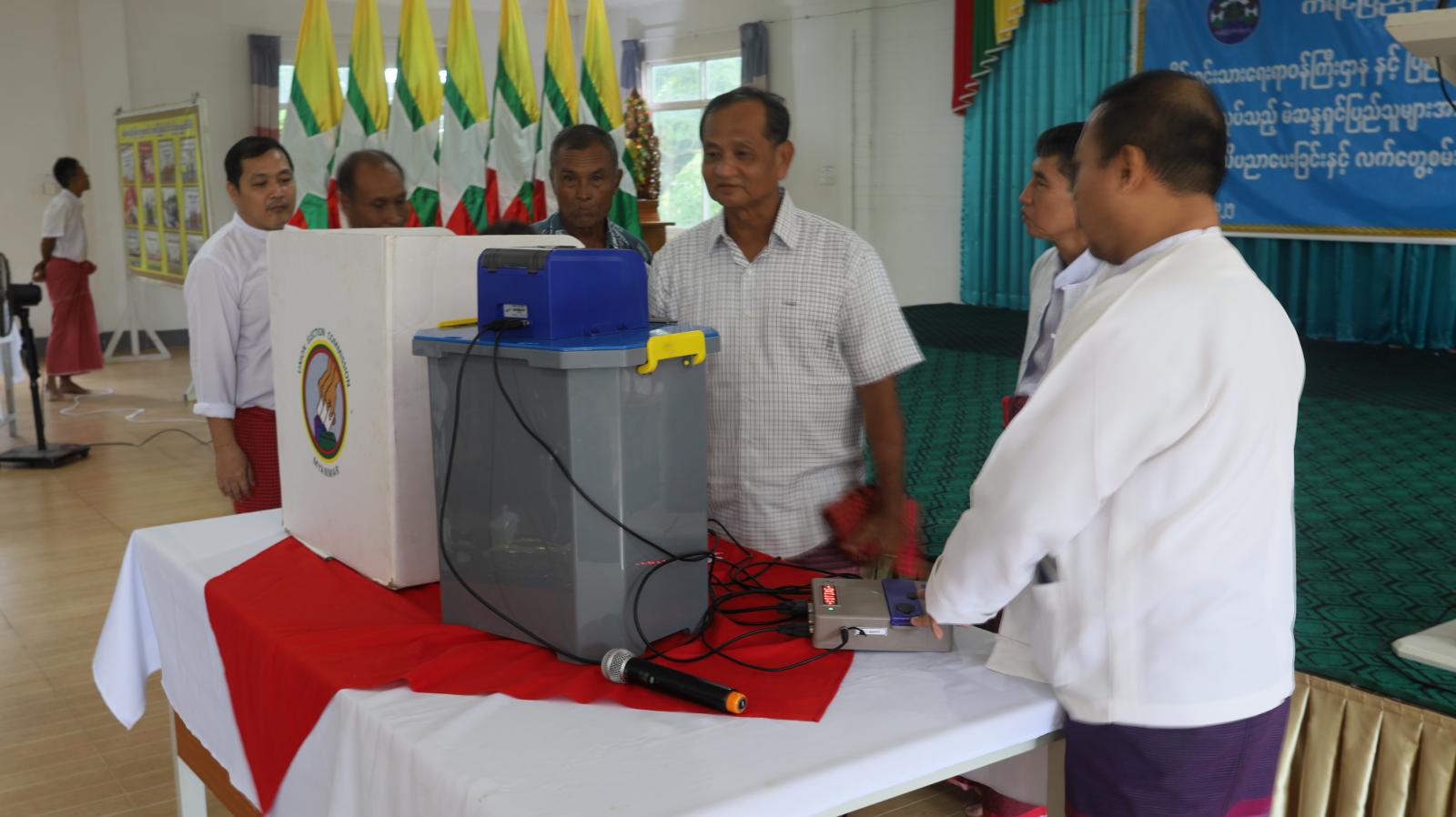
Citizens observing an election voting machine
As a result, many people are facing difficulties voting due to security concerns. Some citizens fear that although their names appear on the voter list, if they do not go to vote, ward administrators—who possess their household information—may use that against them. Therefore, some people remain hesitant about whether to vote or not.
Observers also note that public interest in the election has weakened because many people believe that even after the election, no significant change will occur, as the new government could once again be led by the military and the USDP.
However, if the post-election government is formed in a style similar to the government under U Thein Sein, some changes could be possible.
If Senior General Min Aung Hlaing appoints someone he trusts as president and forms a government, there may be some degree of change. But if Min Aung Hlaing himself assumes the presidency and the government continues with current policies, then meaningful change is unlikely, analysts say.
Page 50 of 352
Connect with us