
English Edition
- By CNI
- Category: English Section
- Hits: 301
CNI News
15 December 2025
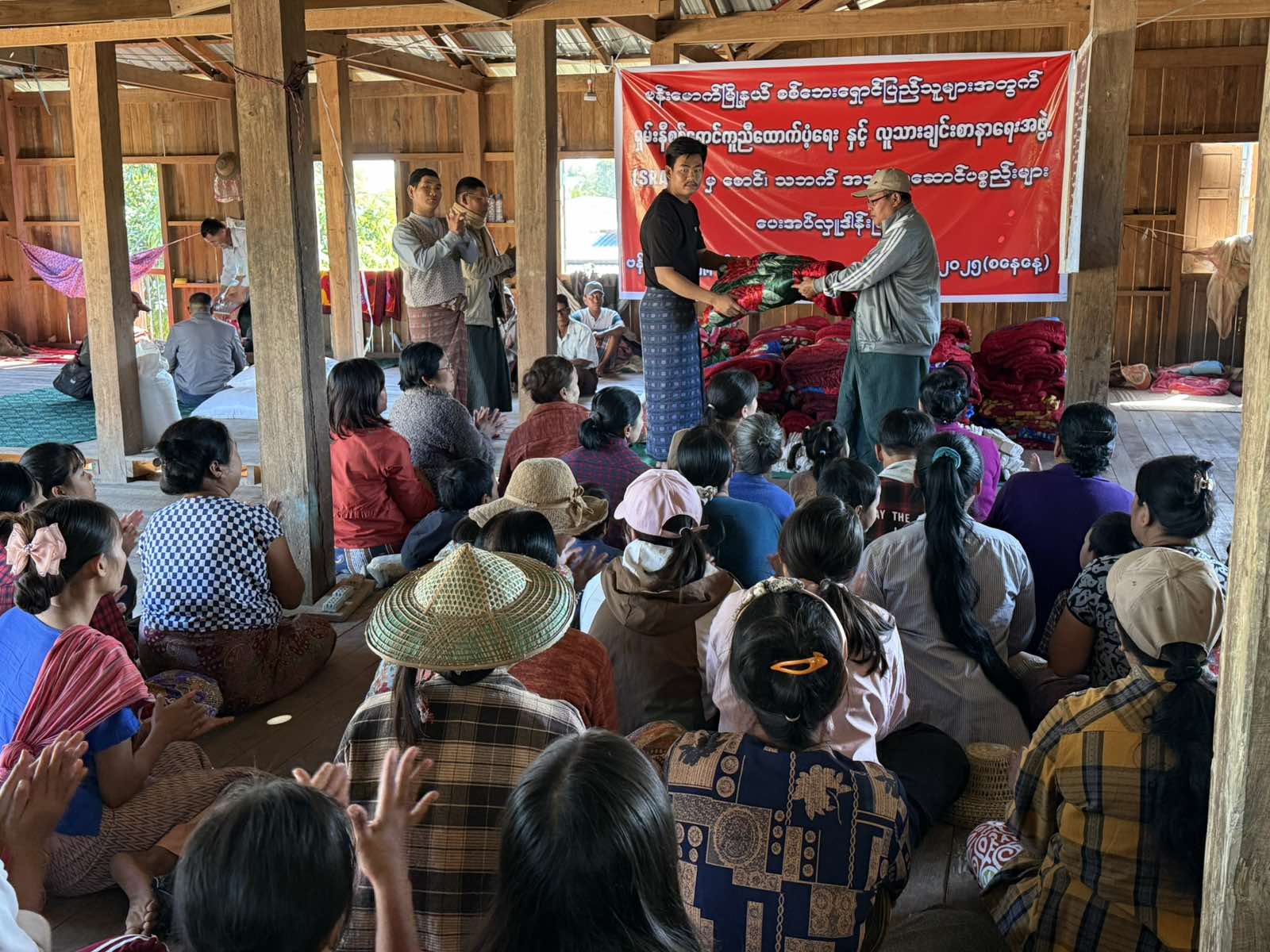
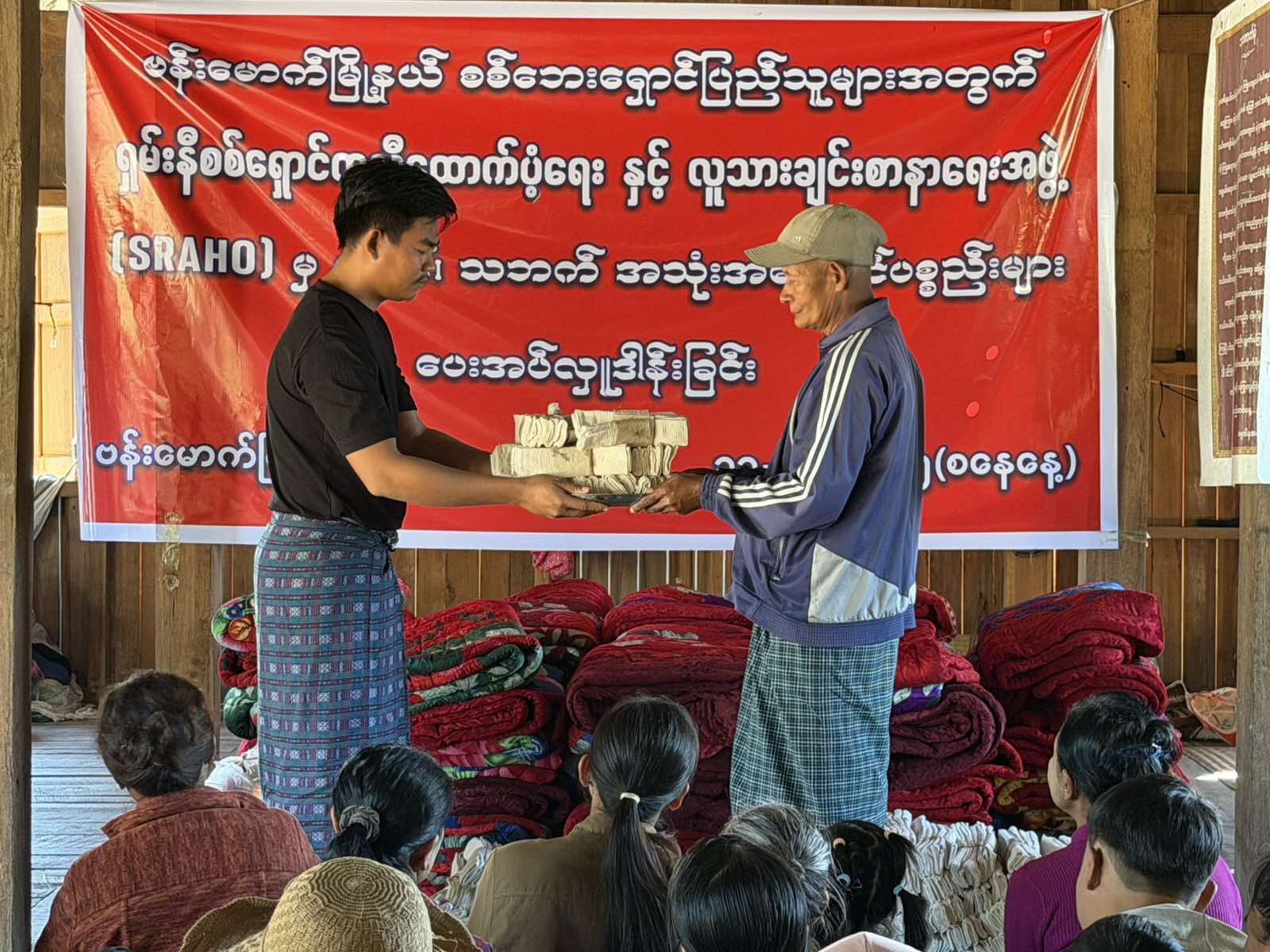
The Shanni Refugee Relief, Assistance and Humanitarian Organization (SRAHO) provided assistance on December 13, 2025, to civilians displaced by fighting in Banmauk Township, Upper Sagaing Region, who have been forced to flee their homes.
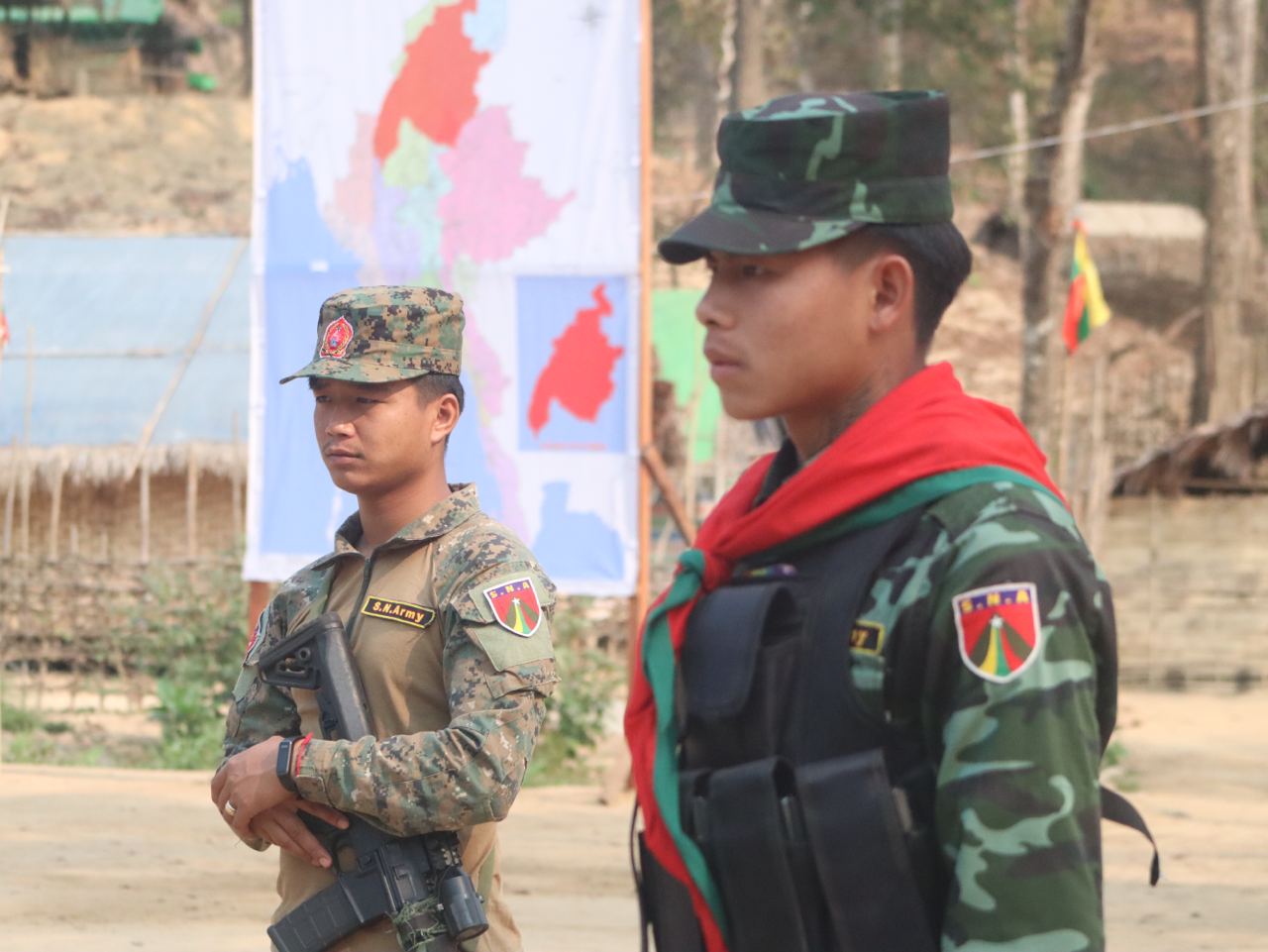
SRAHO delivered blankets, towels, and 5 million kyats in cash to displaced people from Banmauk Township who are sheltering in areas controlled by Brigade 614 of the Shanni Nationalities Army (SNA).
Banmauk town was attacked in a joint offensive by the Kachin Independence Army (KIA), Kadu armed group, and PDFs on September 15, 2025, and was subsequently seized on September 20.
Following this, civilians from Banmauk town and nearby villages fled their homes and escaped to the western part of Banmauk Township, an area controlled by SNA Brigade 614.
At present, around 5,000 people displaced by the Banmauk fighting are staying in SNA-controlled areas, and they are in urgent need of food, healthcare, blankets, and warm clothing.
Local residents said that neither the Sagaing Region government, the Union government, nor the international community has provided any assistance to these displaced people.
- By CNI
- Category: English Section
- Hits: 407
CNI News
15 December 2025
Political and military analysts are debating whether Myanmar’s 2025 general election could lead to a political transformation similar to the one that emerged after the 2010 general election.
In Myanmar, Phase (1) of the election will be held on December 28, 2025; Phase (2) on January 11, 2026; and Phase (3) in the final week of January 2026.
Political observers point out that public interest in the election remains low, as the majority of the public believes that no real change will occur because the post-election government is likely to be formed and led mainly by the Tatmadaw and the Union Solidarity and Development Party (USDP).
Dr. Aye Maung, Chairman of the Arakan Front Party (AFP), told CNI News that the 2010 general election marked the first opening of the multi-party democratic electoral arena, and that the parliament and government that emerged afterward were able to bring about national changes through negotiation and consultation.
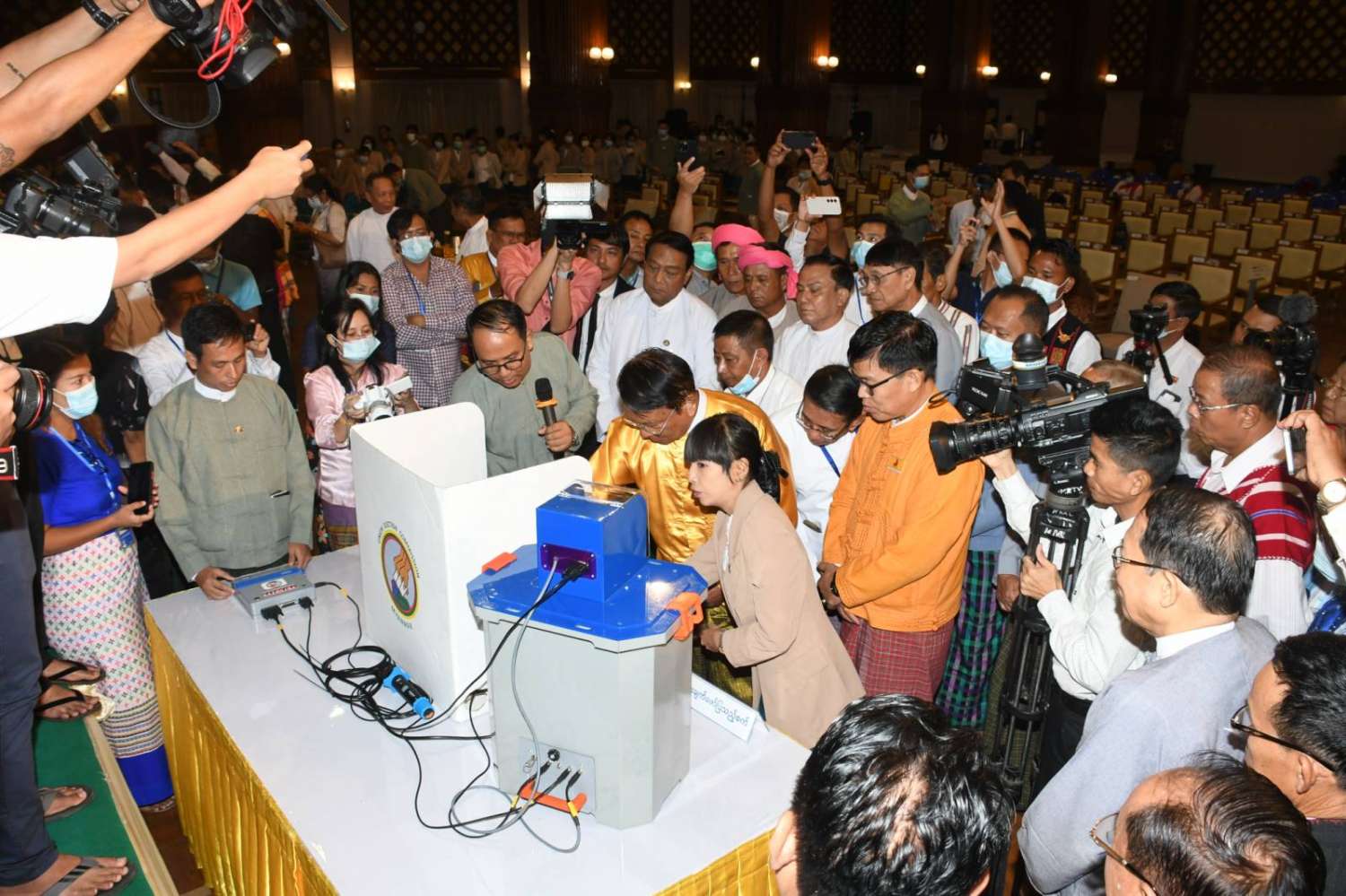
Demonstration of voting procedures
He said:“It could be a step toward the future with a clearer vision than the 2010 political landscape. In other words, it would include reforms along with transformation.We analyze the post-2025 election landscape as being even more advanced than before. Rather than moving forward under a single dominant party, it would emphasize national unity and national reconciliation, working seriously to break free from more than 70 years of internal armed conflict.It would aim toward a peaceful new state capable of ending the civil war, and, in other words, toward correctly building a federal democratic Union. That is what we expect from 2025, and we believe it is possible.”
Political analyst U Htet Aung Kyaw told CNI News that, compared with the 2010, 2015, and 2020 general elections, the upcoming election appears relatively calm. He added that if a large number of citizens turn out to vote, it may be possible to expect an outcome even more favorable than the 2010 political landscape.
He said:“As the election approaches, changes may still occur. If the public turns out in large numbers to vote, opposition forces could win a reasonable share.If that happens, we could hope for a political landscape that is even better than in 2010. Back then, we truly did not know what lay ahead. We only had the vague idea that some form of change might occur.This time, however, we already know quite clearly what is possible and what is not. How far we can push what is possible depends on how much success the opposition forces achieve in the election.Therefore, if voter turnout is high, we can expect to see a situation that surpasses the 2010 political landscape.”
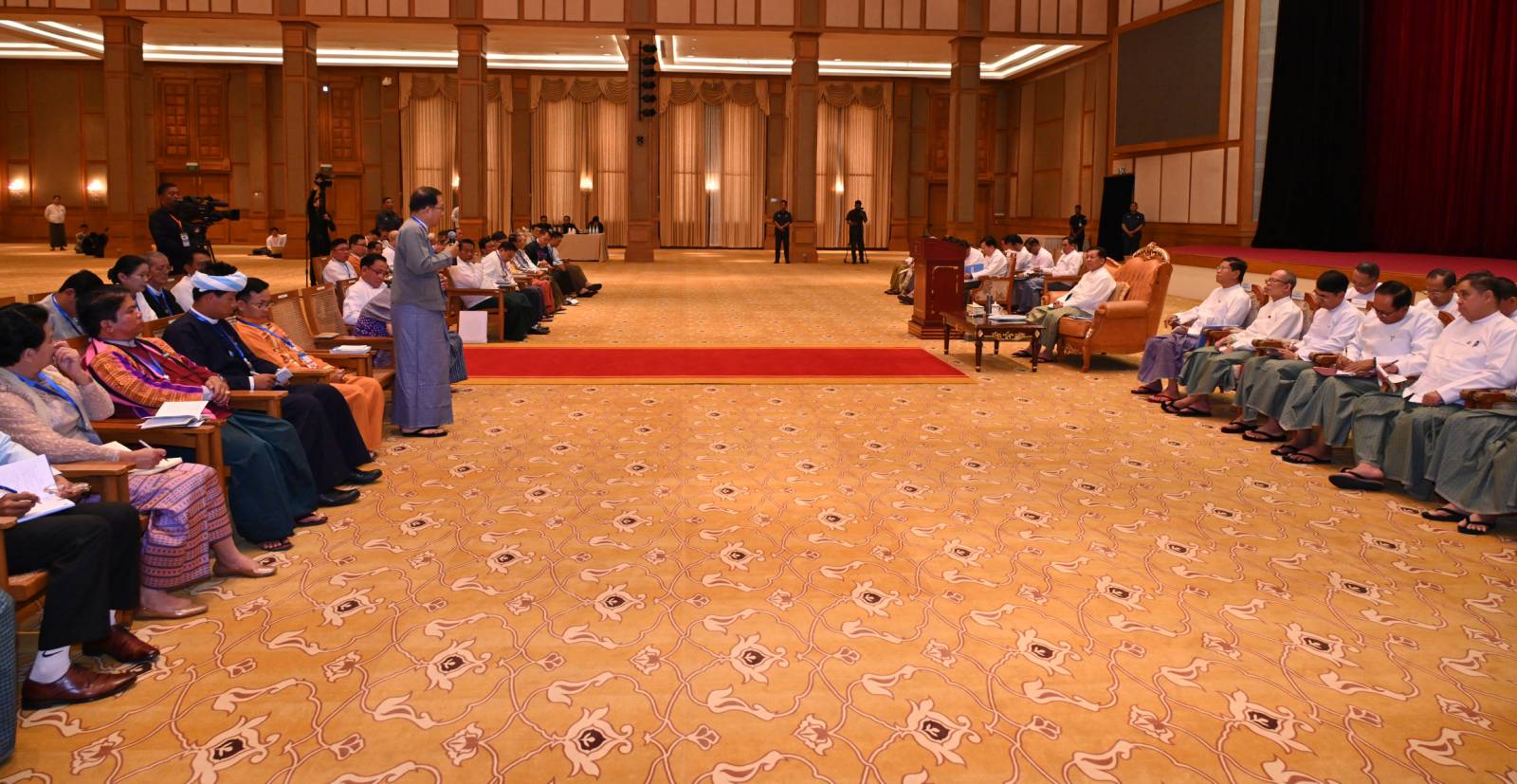
Senior General Min Aung Hlaing meeting with political parties
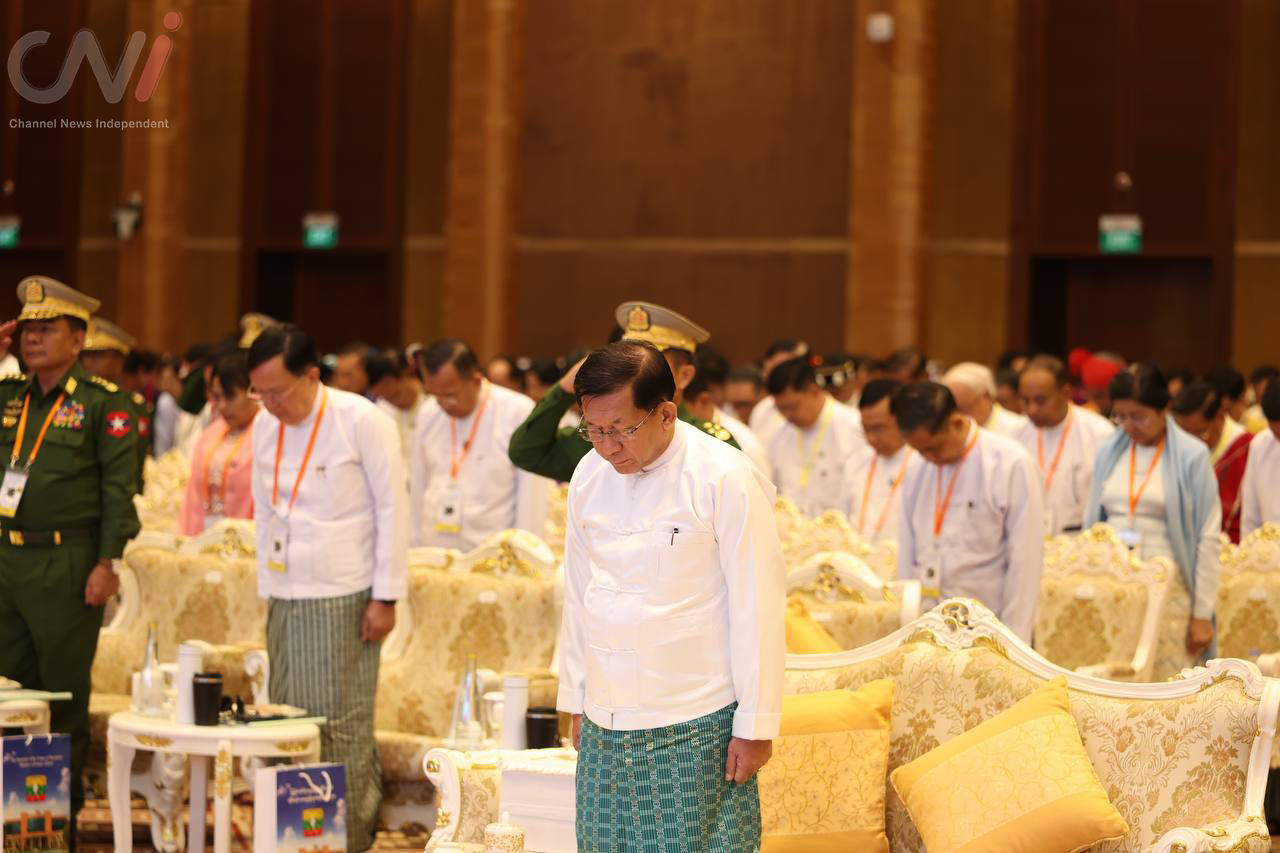
Senior General Min Aung Hlaing, Chairman of the State Security and Peace Commission, has stated that the 2025 general election will bring about a turning point for the country.
Meanwhile, members of the public have expressed the view that even if the post-election government is led by the Tatmadaw and the USDP, they would like to see it take the form of a national unity government.
On the other hand, political analysts warn that if the civilian government that emerges after the election is unable to effectively operate the administrative mechanism amid widespread and intense armed conflict, the country could once again find itself in a situation where it has to rely on the Tatmadaw.
- By CNI
- Category: English Section
- Hits: 451
CNI News
15 December 2025
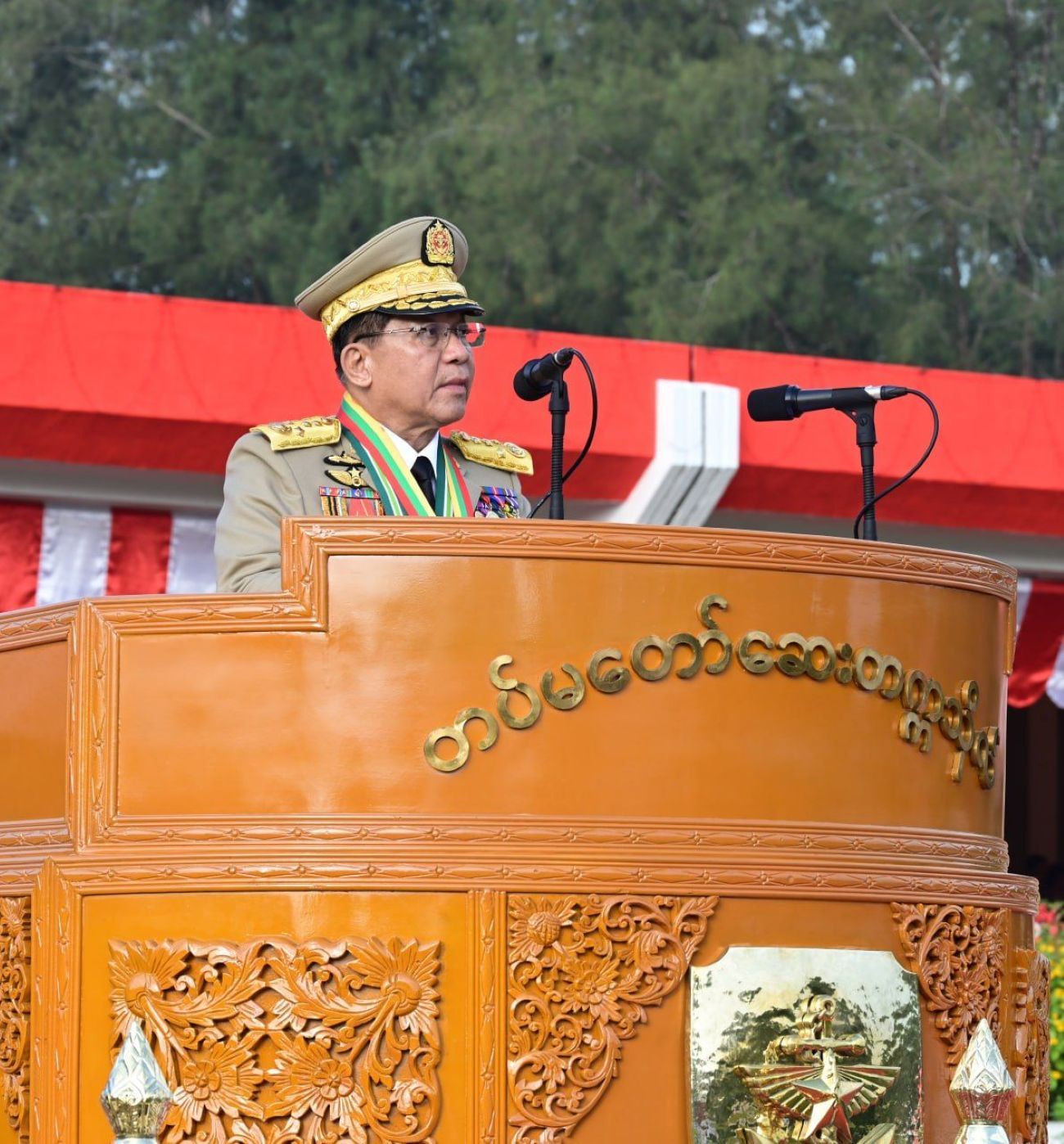
Senior General Min Aung Hlaing, Chairman of the State Security and Peace Commission, said that the survival of a multi-party democratic system is extremely important in order to build a Union based on democracy and federalism.
He made these remarks on December 10, 2025, at the graduation parade ceremony of the 26th intake of officer cadets at the Defence Services Medical University parade ground in Yangon.
Senior General Min Aung Hlaing said that in building a Union founded on democracy and a federal system, it is important not to blindly copy the models of other countries, but instead to develop a form of democracy and federalism that is suitable for Myanmar’s own conditions.
He said:“Democracy is a system of governance chosen by the people. While it allows decisions to be made in accordance with the will of the majority, it is also necessary to give due consideration to the wishes of minorities.Federalism means sharing authority, power, and rights, and its essence lies in unity and harmony. In order to bring about a Union based on democracy and federalism, the survival of a multi-party democratic system is extremely important.”
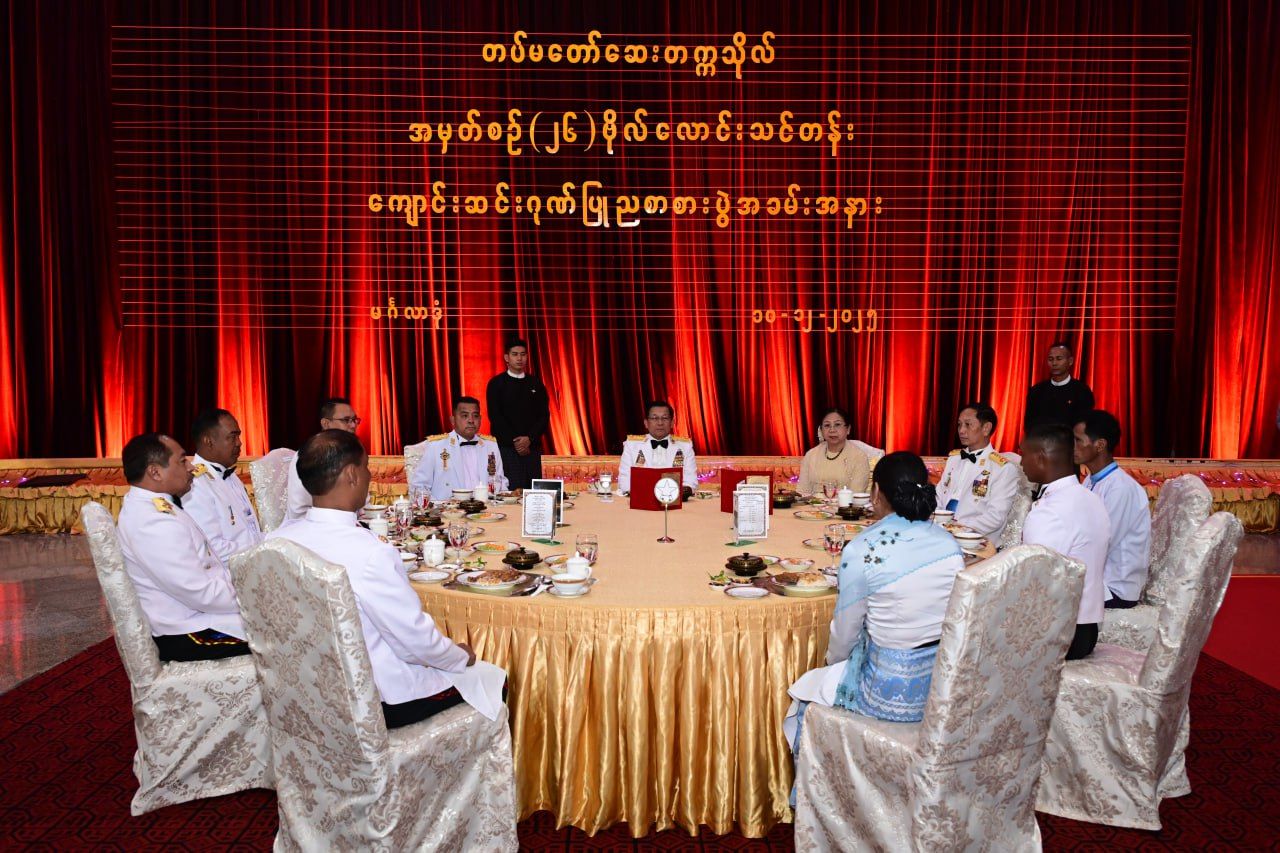
He added that because elections are an indispensable process for the survival of a multi-party democratic system, the multi-party general election desired by the majority of the public will begin on December 28.
The Senior General explained that the upcoming election differs from previous elections in three key aspects. First, it combines the first-past-the-post (FPTP) system with a proportional representation (PR) system. Second, voting will be conducted using Myanmar Electronic Voting Machines (MEVM) with push-button operation. Third, the election will be held in phases depending on security conditions and administrative arrangements.
In Myanmar, Phase (1) of the election will be held on December 28, 2025; Phase (2) on January 11, 2026; and Phase (3) in the final week of January 2026.
Senior General Min Aung Hlaing also stated that state power will be transferred to the political party that wins the election, and that the Tatmadaw will thereafter focus solely on its duty of defending the nation.
- By CNI
- Category: English Section
- Hits: 458
CNI News
15 December 2025
A political analyst told CNI News that for the Myanmar military to regain public trust, it must walk the path of reform and demonstrate tangible changes in practice as a corrective response to the developments that have occurred since 2021.
He said:“The government that emerges from the election will essentially represent political change. If it cannot demonstrate that there is a genuine desire to carry out reforms, then it will not gain public trust or support.How important public support is has already been shown in history during President U Thein Sein’s administration in 2012. It is extremely important. The same issue handled by a government that has public support versus one that does not will not receive the same public response.When a government with public support takes action, public reactions are different. For example, during the NLD government’s term, when electricity meter fees were increased despite already being low, there was no major backlash. But when a similar move was made during U Thein Sein’s administration, protests and public dissatisfaction erupted. That is clear evidence.The current armed conflict exists because the military seized power in 2021. Since that is the cause, it must be corrected. The military has to return to the path of reform. Only if it can demonstrate this in practice will the public regain trust.”
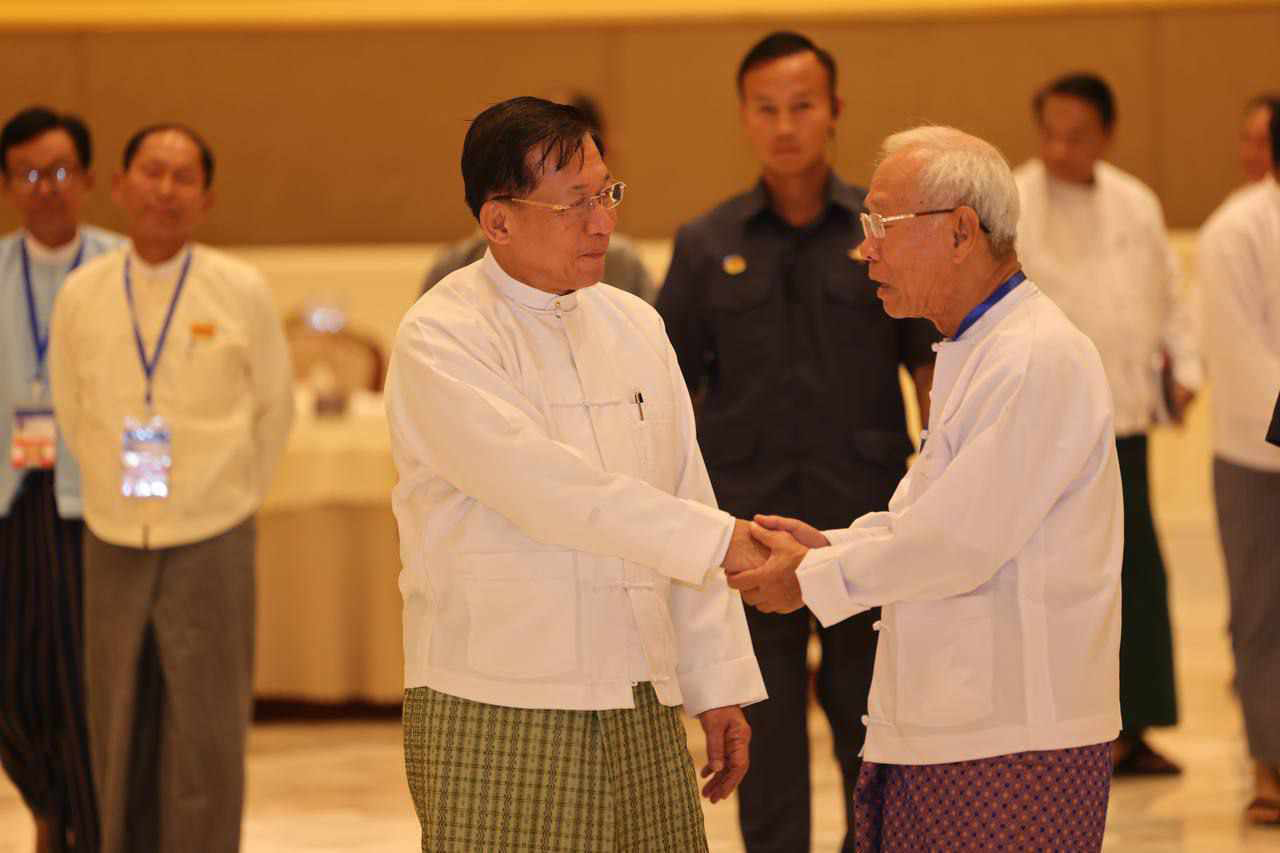
Senior General Min Aung Hlaing meeting with political parties
At present, various analyses are emerging regarding the leadership of the government that will take office after the elections. Political observers believe that Senior General Min Aung Hlaing may continue to hold all three branches of power in their current form.
They also speculate that either U Khin Yi, Chairman of the Union Solidarity and Development Party (USDP), or the current Prime Minister U Nyo Saw could become president, while Senior General Min Aung Hlaing may continue to retain the position of Commander-in-Chief of the Defence Services.
However, military and political analysts view that neither Senior General Min Aung Hlaing nor USDP Chairman U Khin Yi possess the same flexible attitude as U Thein Sein, nor are they likely to actively pursue reforms.
Political analyst Sai Mein told CNI News that if Senior General Min Aung Hlaing continues to concentrate all power in his own hands after the elections, the parliament will merely function as “water in the palm of his hand.”
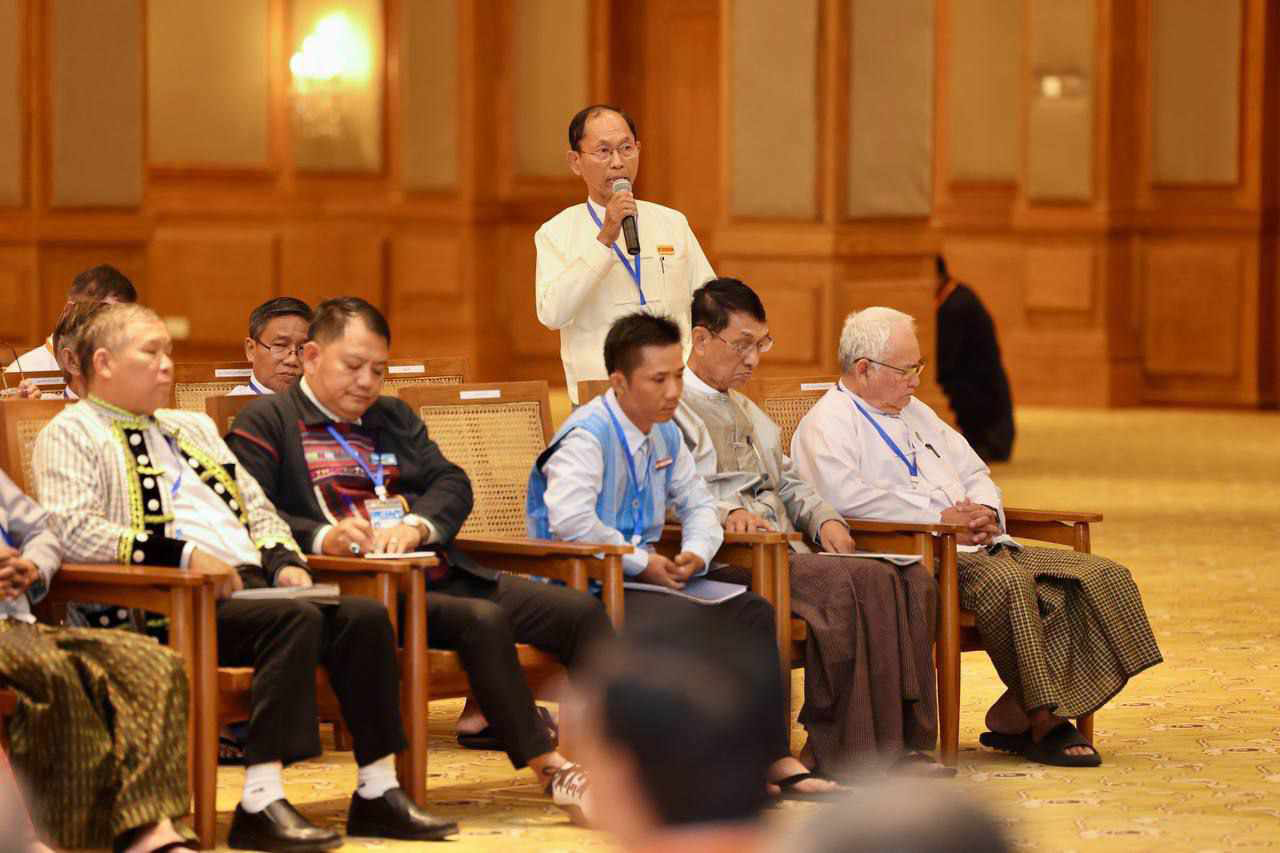
Political parties during a meeting
He said:“After the 2010 election, most people were already able to predict who would become president, and it indeed turned out to be U Thein Sein.But with this election, led by the military, even one month before voting, no one knows who will become president. Most predictions suggest that the military leader, Senior General Min Aung Hlaing, will himself become president, retain the position of Commander-in-Chief, and also remain prime minister—meaning all power would be concentrated in one individual.Even during Senior General Than Shwe’s time, he did not personally assume all leadership positions. Although he controlled power, he handed the presidency to U Thein Sein. But in the current situation, if one person controls everything, it is extremely concerning.Based on what we can observe, no matter how much the parliament is said to have changed, it will still be water in the palm of the military leader’s hand. There are analyses suggesting that the level of change may not even reach 50 percent of what was seen during the U Thein Sein era.”
Analysts further point out that even if a civilian government comes to power after the elections, if it is unable to operate the administrative mechanism normally amid widespread armed conflict, a situation in which power is handed back to the military could re-emerge.
The elections will be held in three phases—on December 28, 2025; January 11, 2026; and in the final week of January 2026. Senior General Min Aung Hlaing has stated that state power will be transferred to the government that emerges from the elections.
- By CNI
- Category: English Section
- Hits: 386
CNI News
13 December 2025
In Myanmar, the parliament (Hluttaw) and the government have traditionally operated in a mutually dependent relationship in governing the country. As a result, questions have arisen as to whether the parliament’s role is to oversee and check the government or to protect it.
Myanmar is scheduled to hold Phase (1) of its elections on December 28, 2025. Phase (2) will be held on January 11, 2026, and Phase (3) will take place in the final week of January.
After the elections, the new government that emerges is likely to be led jointly by the Myanmar military (Tatmadaw) and the Union Solidarity and Development Party (USDP). Similarly, there is a strong likelihood that the parliament will also be dominated by the military and the USDP holding the majority of seats.
Because of this, many people are concerned that the parliament may end up functioning not as a body that checks and balances the government, but rather as one that protects it.
U Kyaw Htet, an independent candidate contesting in Dawbon Township, Yangon Region, told CNI News that if the post-election parliament operates as if it were part of the same group as the government, it could result in an ineffective and unclear political trajectory—an outcome that is cause for concern.
He said: “If a new government and parliament emerge after this election, it would mean that the legislative pillar is revived. If the government takes a wrong path, then the parliament should be able to step in and correct it. If more representatives who truly represent civilians and ethnic groups are elected, those voices will become louder. Since the voices in parliament represent the voice of the people, the government will not be able to force certain decisions and will instead have to negotiate and seek solutions. However, if the parliament moves forward as if it were part of the same group as the government, then the process becomes vague and ineffective. That is the worrying point. The government and parliament need to be distinct. We need clarity in the separation of responsibilities.”
The late Rakhine MP U U Hla Saw, who turned away from parliamentary politics and joined armed resistance
In Myanmar, the governments and parliaments that emerged from the 2010 and 2015 general elections developed a pattern of mutual protection. As a result, members of parliament from non-Bamar ethnic political parties experienced growing frustration with the parliamentary system.
Subsequently, some MPs even turned their backs on parliamentary politics altogether and joined armed resistance movements.
Dr. Nyo Nyo Thin, founder of the Yangon Watch Group, told CNI News that national leaders and politically farsighted figures must make advance preparations to ensure that Myanmar does not end up with a parliament that merely protects the government.
She said: “The responsibilities of parliament are to legislate, to check and oversee the government, and to represent the people. Oversight of the government is one of the most important duties of MPs. Parliament does not have a duty to protect the government; it only has a duty to oversee it. The task of protecting the government will be done by the government itself and by the Ministry of Information. Parliament’s responsibility is solely to provide oversight. To prevent the emergence of a parliament that protects the government, national leaders and politically farsighted leaders must prepare in advance. The public must elect MPs who are capable of holding the government accountable. After electing them, the public must continuously monitor their representatives. If MPs are seen as failing to represent the people, the public should hold them accountable. People should be able to protest and lodge complaints with relevant political parties. If MPs act improperly, the public should speak out. The public must continue to oversee parliament.”
During the dispute over voter lists following the 2020 general election, there were calls for an emergency parliamentary session to address the issue.
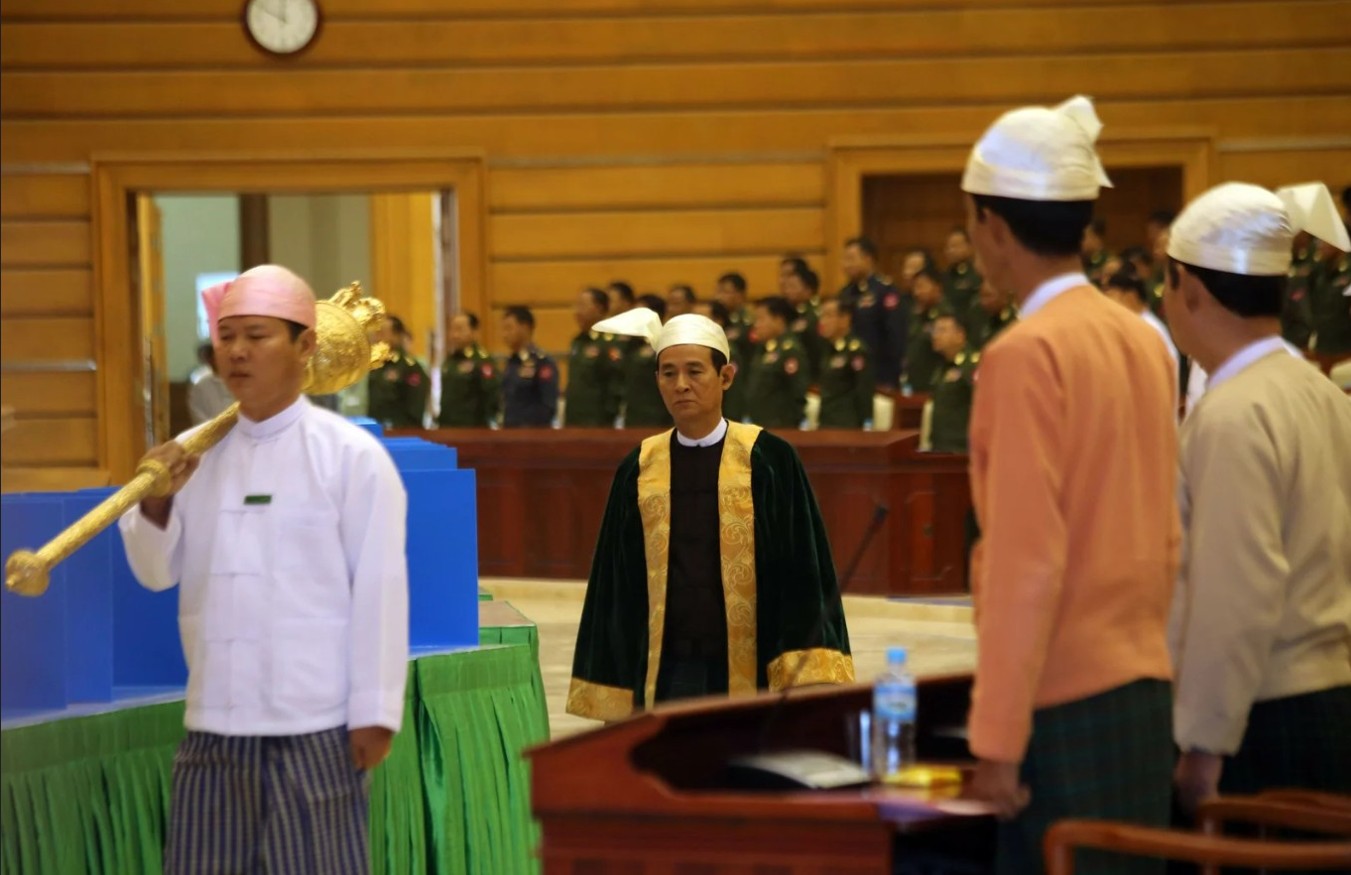
U Win Myint serving as Speaker of Parliament
However, as the National League for Democracy (NLD) held strong dominance in parliament and the parliamentary speakers were also NLD members, those calls were ignored and the government was effectively protected.
Subsequently, on February 1, 2021, the Myanmar military (Tatmadaw) removed the NLD government, citing its attempt to form a government without resolving the 2020 election disputes, and seized state power.
After the military takeover, parliamentary politics disappeared, and the three branches of power—judicial, legislative, and executive—were concentrated in the hands of Senior General Min Aung Hlaing alone.
As a result, political parties and pro-democracy activists are now striving to restore parliamentary politics after the elections are held.
- By CNI
- Category: English Section
- Hits: 343
CNI News
13 December 2025
Senior General Min Aung Hlaing, Chairman of the State Security and Peace Commission, said that in order to eliminate corruption, all media organizations and the general public must work together and cooperate in collective efforts.
He made these remarks in a video message delivered at the ceremony marking International Anti-Corruption Day on December 9, 2025.
The Senior General stated that to foster a culture that does not tolerate corruption at all, and to prevent corrupt practices, it is necessary to place balanced emphasis on fundamental awareness-raising, preventive measures, and education.
He said:“In order to correctly distinguish between serving the public interest and pursuing personal gain, and to ensure that corrupt practices do not occur, civil servants, public officials, businesspeople, civil society organizations, media organizations, and the entire public must work together to collectively strive in anti-corruption efforts.”
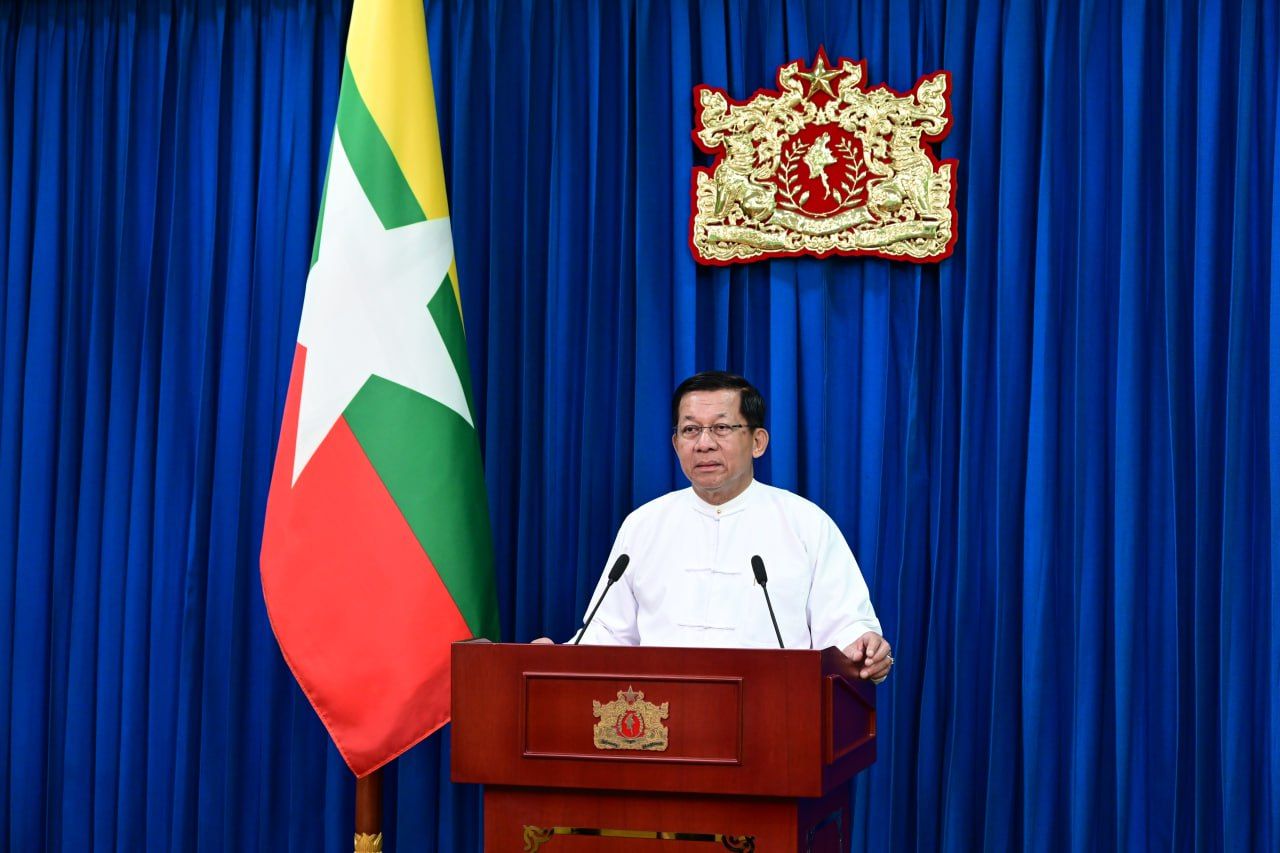
He added that anyone who commits corruption by deviating from the state’s established objectives must be dealt with effectively and in accordance with the law, without favoritism or discrimination.
A journalist commented: “Calling for cooperation between journalists and the public to fight corruption is a good thing, and we welcome it. The key issue, however, is the establishment of an independent anti-corruption commission that will genuinely take action. The body currently formed in Myanmar is merely symbolic. Another point is that journalists know who is involved in corruption, who gives and receives bribes, and how business and opportunities are obtained through such practices. But even when we point this out and report on it, if there is no action taken, it achieves nothing. If there were genuine investigations and real enforcement that reach down to the grassroots level, the public would be eager to provide information, and journalists would also be ready to report. What is needed now is to act as stated and prove it through action first.”
In Myanmar, corruption has grown to a severe level and has come to harm the country’s social life and economy.
Political observers note that corruption among government employees and departmental bodies should be addressed with effective and concrete enforcement measures.
- By CNI
- Category: English Section
- Hits: 737
CNI News
13 December 2025
China has been carrying out numerous investments and projects in neighboring Myanmar. This has raised questions among the public as to whether China is engaging Myanmar primarily for economic reasons or for strategic interests.
China–Myanmar relations have now reached their 75th anniversary, and China’s stance toward Myanmar has been welcomed by the State Security and Peace Commission.
However, following the political and military changes that took place in Myanmar after February 1, 2021, military and political analysts point out that China has become deeply involved and is exerting growing influence.
As long as political and military instability persists within Myanmar, China–Myanmar economic cooperation cannot be effectively implemented. China views Myanmar not so much as an economic opportunity but more as a strategic one, according to economic analyst U Htay Aung Kyi, who spoke to CNI News.
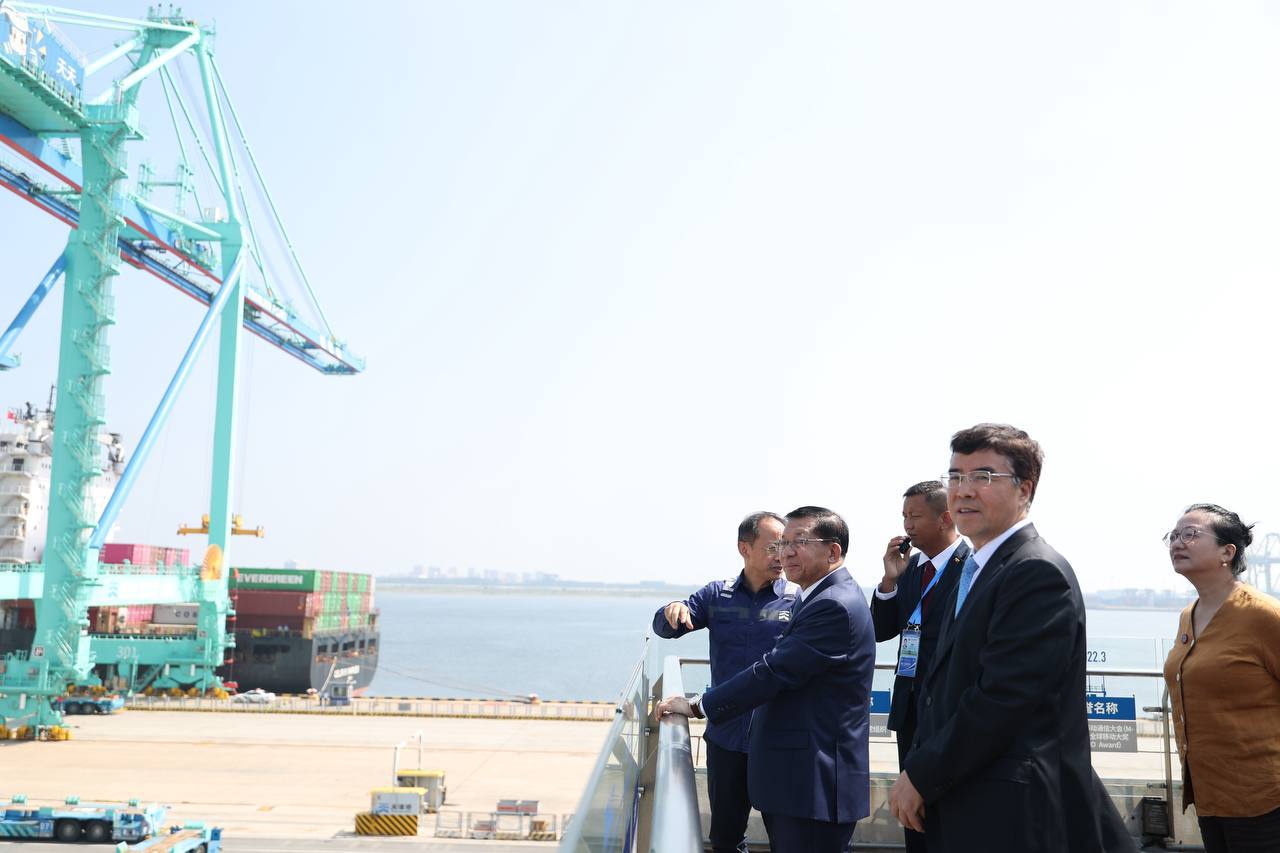
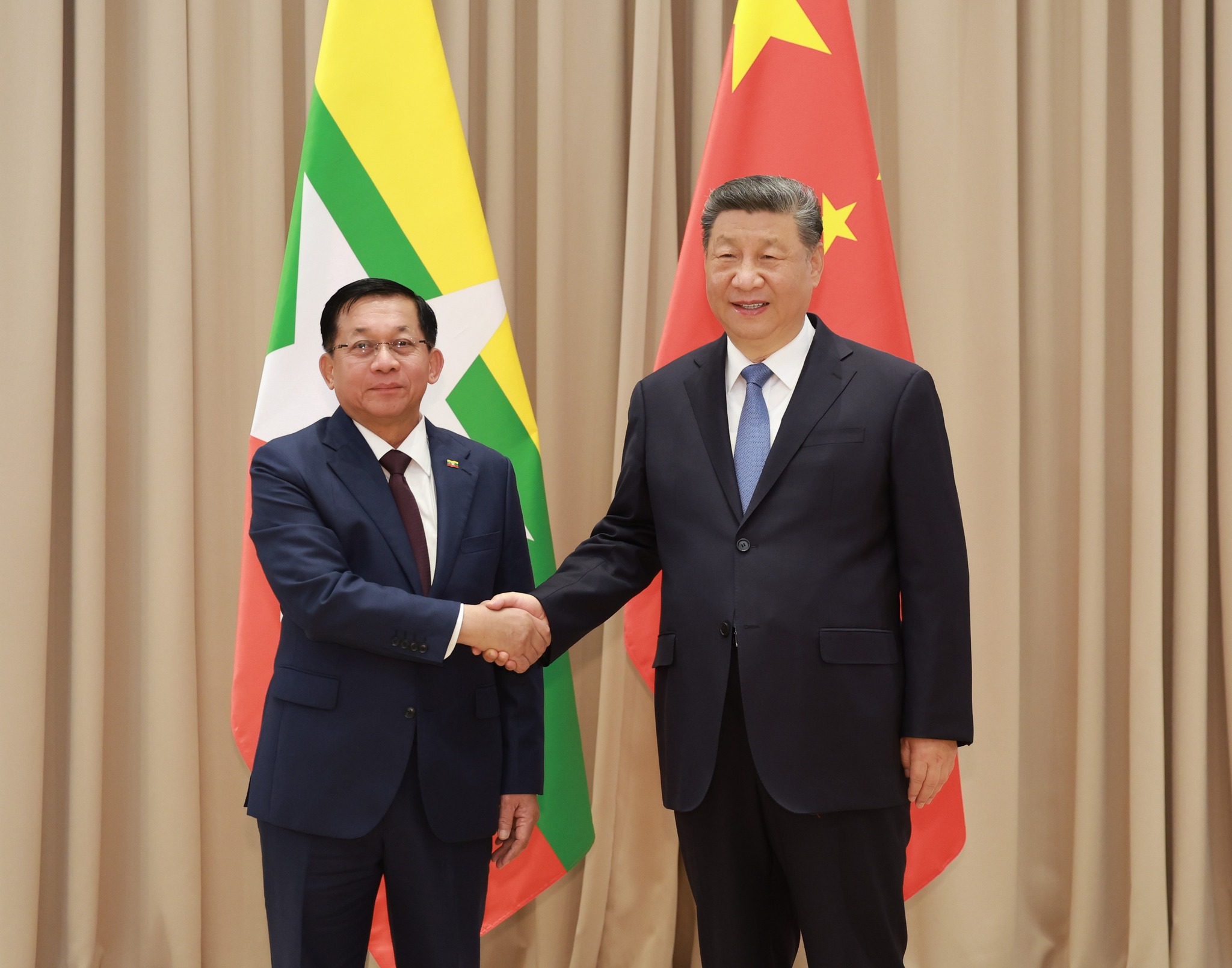
Senior General Min Aung Hlaing seen during a visit to China
He said:“As long as fighting continues among armed groups inside Myanmar, China’s western gateway will not be able to open. Its economic activities won’t be able to operate. China’s western gateway must pass through northern Shan State, Sagaing, Magway, and then Rakhine. As long as internal fighting continues in Myanmar, that western gateway cannot be opened. Even though it cannot be opened, for China, the opportunity lies more in strategy than in economics.I don’t recall the exact figures for China’s total investment volume or the data right now, but what I do remember is this: if you compare China’s total overseas investment with the amount it has invested in Myanmar, the share in Myanmar is not very large. At present, China does have business and economic interests in Myanmar, but the main interest is strategic.To put it briefly and straight to the point, China wants a situation in which it can operate inside Myanmar. Only then can it move forward.”
At present, China is exerting pressure and mediating to halt the fighting between the Myanmar military and the Northern Alliance groups (MNDAA, AA, TNLA) in northern Shan State.
At the same time, China is also pressuring for towns along the Myanmar–China border trade routes to be handed back to the Myanmar military.
Currently, Myanmar has no country to rely on other than China, and therefore finds itself in a situation where it must comply with whatever assistance China requests, according to China–Myanmar affairs analyst Dr. Hla Kyaw Zaw, who spoke to CNI News.
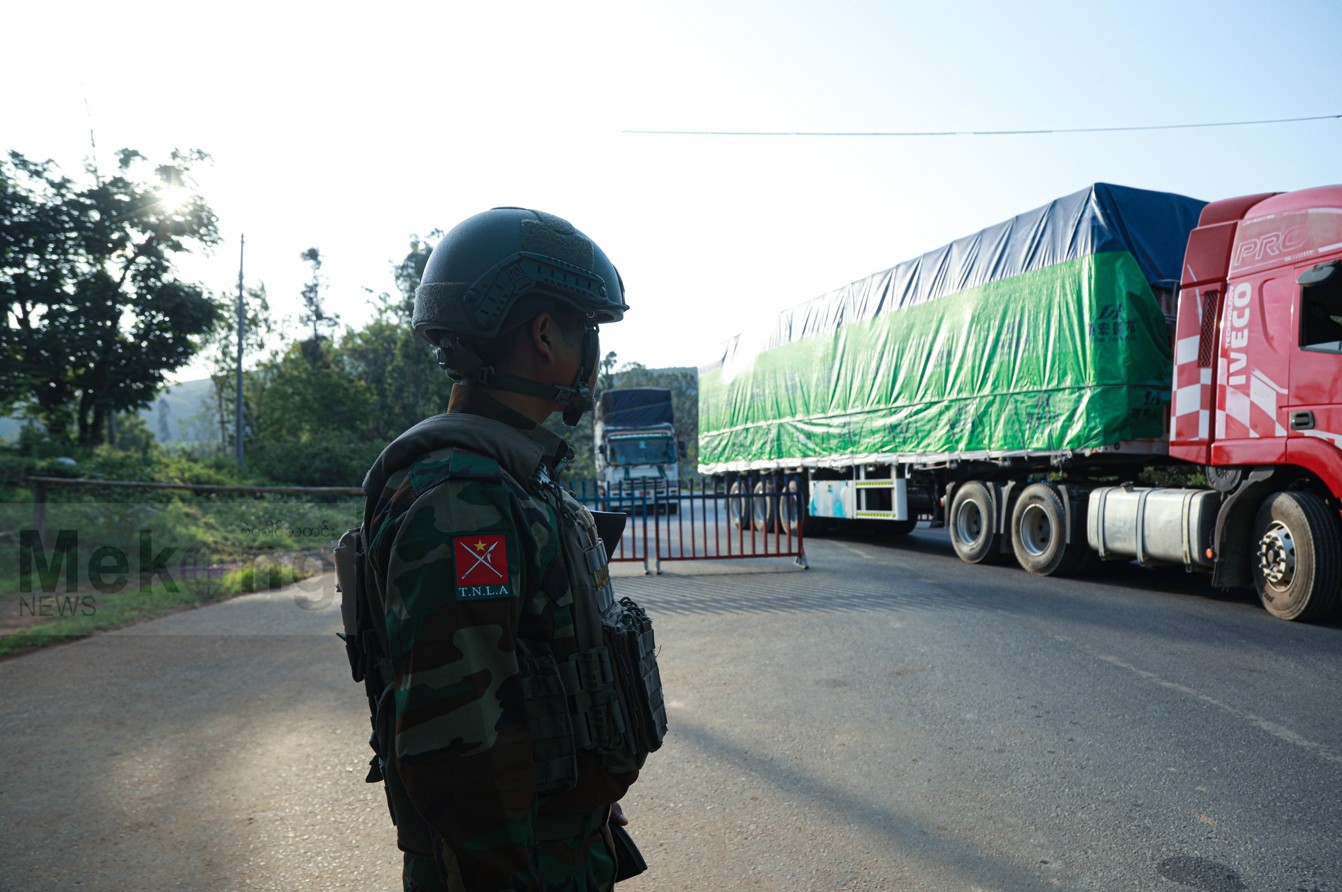
TNLA monitoring the China–Myanmar border
She said:“They have no choice but to comply. Who else do they have? The statistics released by Yunnan Province really surprised me. After Yunnan’s trade volume with Vietnam, Yunnan’s trade with Laos is only about one-tenth or one-fifth of the value of Yunnan’s trade with Myanmar.Yunnan’s economic relationship with Myanmar is not insignificant. Why? Because Myanmar relies only on China, whereas Vietnam and Laos can also trade with other countries. That’s why they pay attention to Yunnan in trade. For Myanmar, its lifeline is Yunnan alone. Maintaining good relations with Yunnan is essential. That’s why it appears that Myanmar has to grant whatever assistance China asks for. And that’s also why China knows that only when Myanmar is peaceful, stable, and when the people are calm, can its projects succeed.”
At present, intense fighting between the Myanmar military and armed groups across the country has caused China–Myanmar border trade to come to a halt, and China’s projects and investments inside Myanmar have also been suspended.
As a result, during a meeting with Senior General Min Aung Hlaing in Russia in May 2025, Chinese President Xi Jinping stated that measures must be taken to ensure the safety and security of Chinese companies and employees in Myanmar, as well as Chinese projects and investments.
- By CNI
- Category: English Section
- Hits: 463
CNI News
12 December 2025
Regarding the leadership of the government that will emerge in Myanmar after the upcoming multi-party democratic general election, various assessments are being made among military and political analysts.
According to these analysts, there are currently three scenarios being discussed. Among them, the first scenario is that a government similar to the one led by former President U Thein Sein—one that strongly desires reforms—could come to power, leading the country back toward improvement. This was stated to CNI News by U Khun Sai, who is involved in the peace process.
He said,“Scenario number two is that Senior General Min Aung Hlaing might not take the top government post himself, but continue serving as Commander-in-Chief of the military. Then he would appoint someone he trusts as the leader of the government. If that happens, things could improve to some extent. But it wouldn’t be as good as the first scenario. The second scenario has some positive sides, but it’s still uncertain.Scenario number three is that Min Aung Hlaing himself becomes the government leader. If that happens, he will be holding complete control—leading the military on one side and leading the government on the other. In that situation, those of us on the revolutionary side will obviously continue our struggle. Most of our revolutionary forces would need to rely more heavily on ourselves. Unlike before, financial support from our people abroad has decreased and so has international assistance, and if we do not receive recognition, we will face many hardships. It seems that U Min Aung Hlaing and his circle have already calculated these factors. So, of the three scenarios, we hope for the first one. And we pray that scenarios two and three do not happen.”
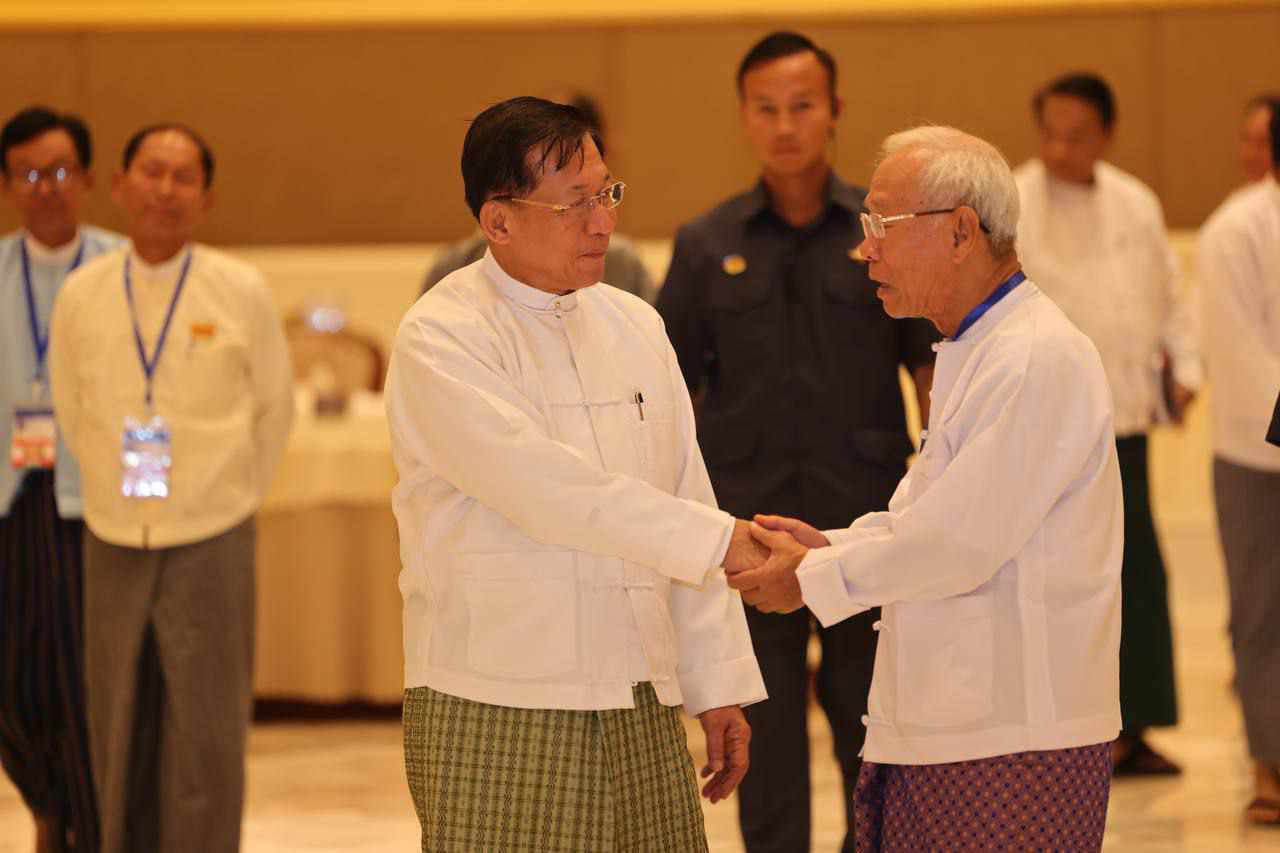
Political parties meeting with Senior General Min Aung Hlaing
He added that if the third scenario—where Senior General Min Aung Hlaing leads both the government and the military—comes true, Myanmar will continue to struggle.
U Khin Yi, Chairman of the Union Solidarity and Development Party (USDP), said on 27 November 2025, during a campaign event in Pathein, Ayeyarwady Region, that if the next government cannot closely cooperate with the military, it will collapse the very next day. Based on that argument, he urged voters to cast their ballots for the USDP.
Analysts say that if the civilian government that emerges after the election cannot effectively operate administrative mechanisms amid widespread armed conflicts, it may have to hand power back to the military.
At present, the National League for Democracy (NLD)—the party that usually wins the most seats in Myanmar’s elections—is not expected to participate in the upcoming election, and its leader Daw Aung San Suu Kyi and other members remain in detention.
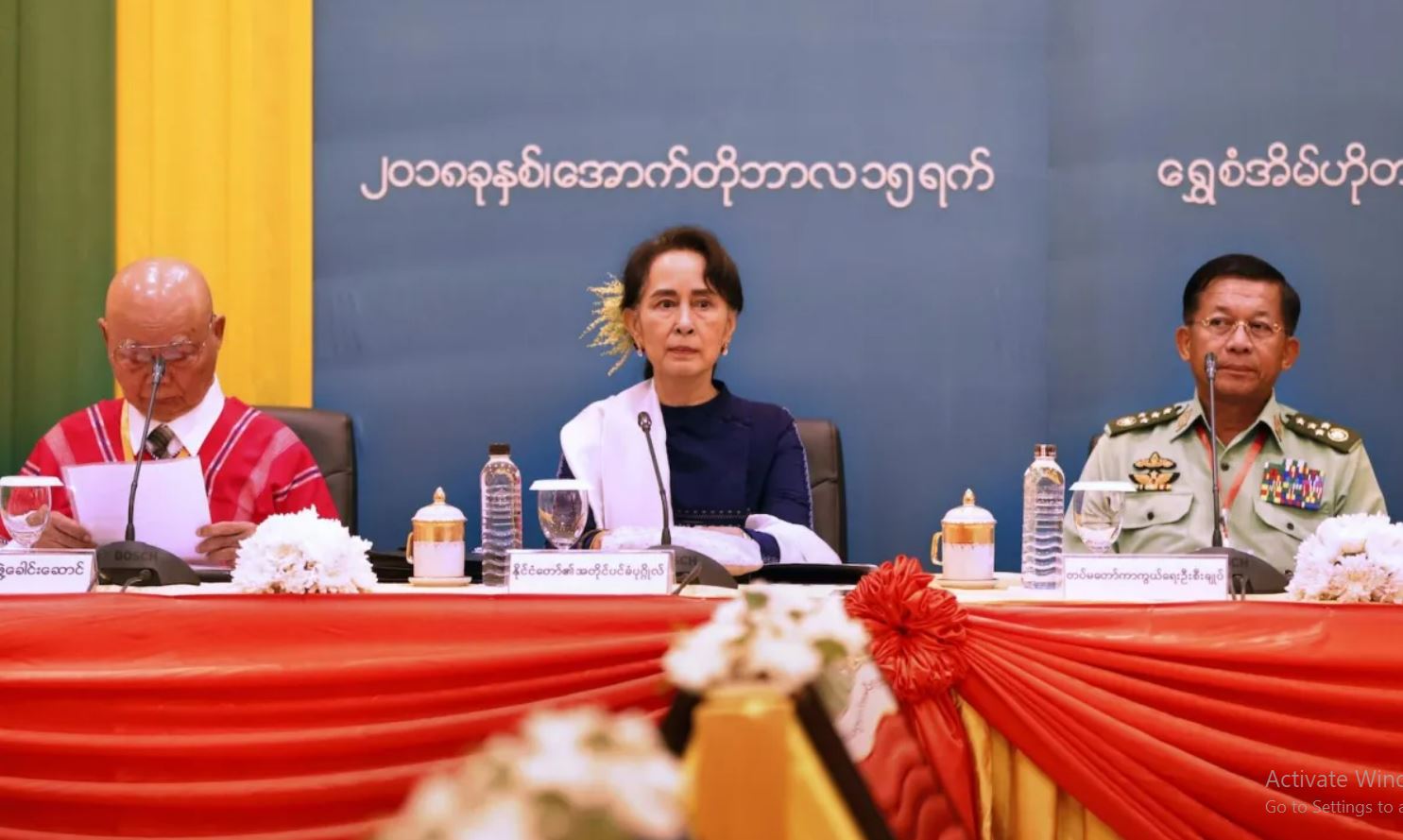
Daw Aung San Suu Kyi
Therefore, U Khun Sai said he does not expect Daw Aung San Suu Kyi or members of the NLD to be granted freedom before the election.
He said,“What should be done is obvious—we don’t need to say it. President U Thein Sein already did the right thing in the past. But what is more likely now is something similar to what former Senior General Than Shwe did—releasing Daw Suu only after the election. Why? Because if she is released before the election, things could become chaotic or the election might even be disrupted. At this time, it would be even worse. So I don’t think the authorities will give any freedom to Daw Suu or the NLD before the election. As for the upcoming election, no matter what, the party led by the military will certainly win. There is no doubt about that.”
During the period of former Senior General Than Shwe, an election was held and state power was later transferred to a government led by U Thein Sein. At that time, Daw Aung San Suu Kyi was released and numerous political changes took place.
Military and political analysts are hoping that a similar situation may arise again after the upcoming election.
- By CNI
- Category: English Section
- Hits: 647
CNI Interview
11 December 2025
The Myanmar National League for Democracy (NLD) government led by Daw Aung San Suu Kyi was removed by the military (Tatmadaw) on February 1, 2021, after the military alleged that the government attempted to form a government without resolving disputes over the voter list.
After that, protests against the military took place, and armed groups, pro-democracy activists, political parties, NLD leaders, and MPs tried to bring down the military regime.
During this period of armed resistance, the Kachin Independence Army (KIA) provided support by helping form armed groups, giving military training, and supplying weapons and ammunition, attempting to help topple the Myanmar military.
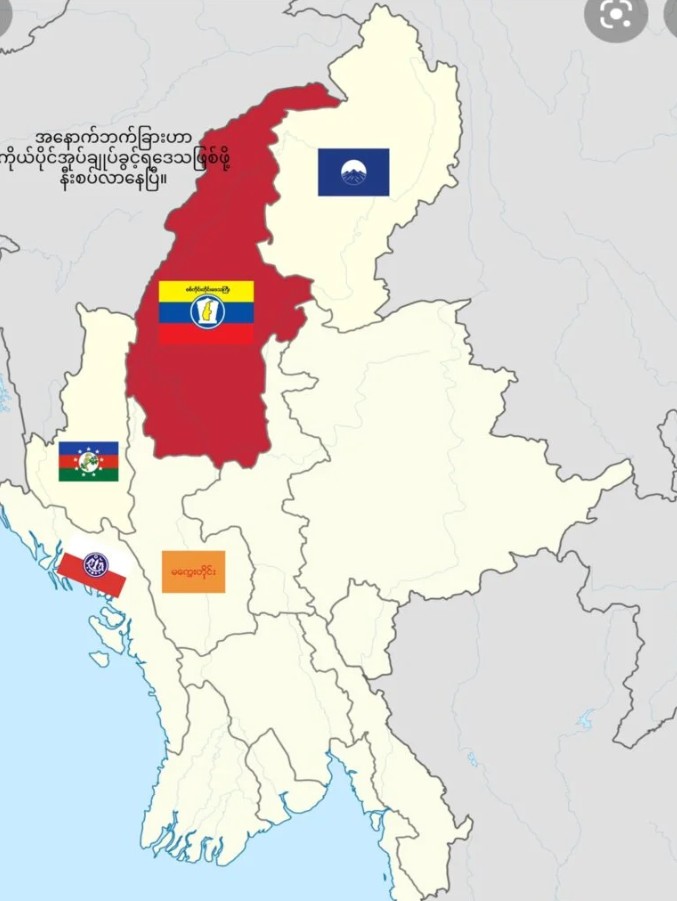
On the other hand, the KIA has also been trying to implement its own objectives of liberation across northern and north-western Myanmar—Kachin State, Sagaing Region, Chin State, and Rakhine State—by conducting operations aiming to control Sagaing Region.
One of the major obstacles to the KIA’s goals is the Shanni (Tai Leng) people and the Shanni Nationalities Army (SNA). The KIA has been launching attacks against Shanni communities and Shanni armed groups.
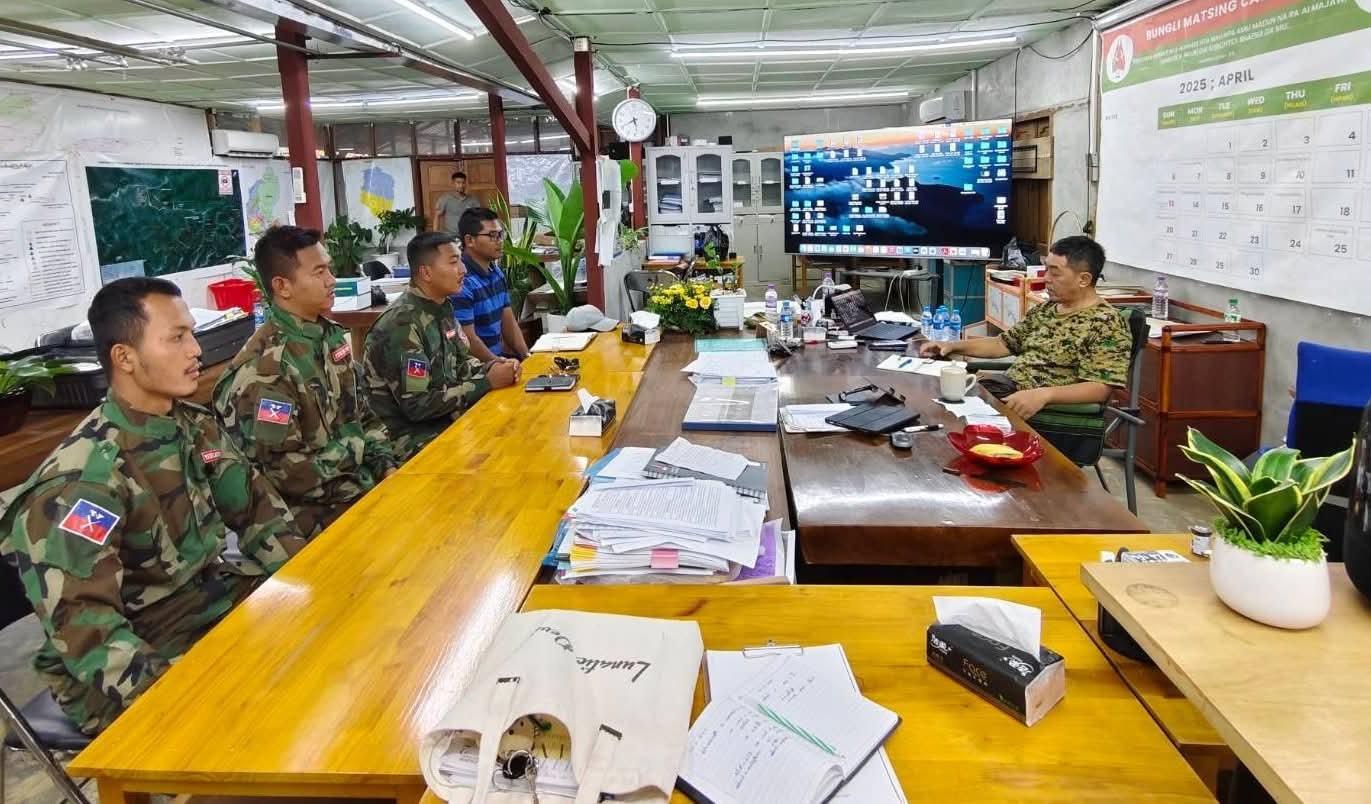
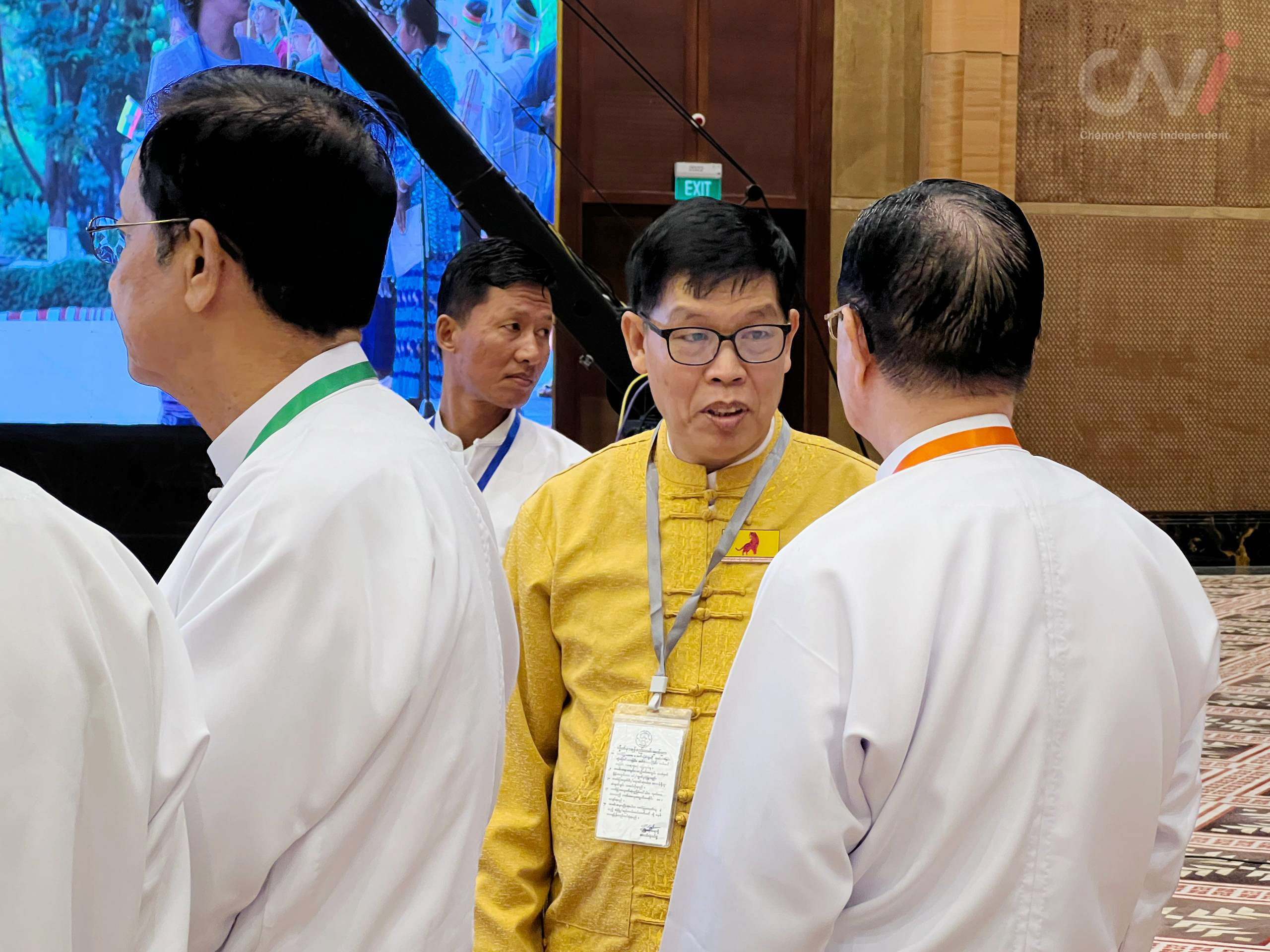
Regarding these issues, CNI News interviewed Sai Htay Aung, Chairman of the Tai Leng (Shanni) Nationalities Development Party (TNDP).
Q: Between overthrowing dictatorship and self-determination, which is more feasible for the EAOs under the current circumstances?
A:These EAOs have been fighting for decades. At this point, they are already well-experienced in revolution. They will act primarily for their own interests.
Even behind the slogan of overthrowing dictatorship, EAOs themselves should do self-reflection. They, too, exercise authoritarian power.
A government operates under the law and commands the military under constitutional authority. But EAOs have no law. They punish and largely execute anyone they consider guilty. In some cases, they are even more frightening dictators than the actual dictatorship. Students experienced the same thing after the 1988 uprising.
Today, students say they will not repeat the mistakes of 1988 in 2021. But what is happening now looks very similar to 1988. Sooner or later, the students and PDFs who are now fighting dictatorship will also be expelled by EAOs.
In 1994, after the KIO/KIA signed a ceasefire with the SLORC government, they expelled the ABSDF North group from their territory in 1996.PDFs today will face the same outcome.
Q: After TNLA entered a ceasefire, revolutionary groups seem to be gravitating toward the KIA. Why can’t the military control the KIA?
A:We heard that the KIA gave jade-mining rights in Hpakant to top leaders of the Spring Revolution groups—AA leaders, CNF, Naga armed groups, etc.
When the KIA grants taxation rights and business concessions, those groups depend on the KIA. If they don't cooperate, they lose their privileges.This is economic and territorial leverage.
Q: Does that mean the KIA is getting stronger?
A:Many Kachin people are fatigued with the KIA’s long war. For example, in the Bhamo battle, many Kachin people died.But the circle of people who benefit from the KIA or work closely with it still supports them.
How strong the KIA becomes depends largely on the current and future governments.
When the KIA is weak, it makes ceasefires. When the KIA grows strong, it attacks the government again.
This has happened repeatedly—five or six times at least.If the government analyzes this properly and can fully disarm the KIA, more than half the country could achieve peace.
Q: If a ceasefire with the KIA cannot be achieved, what situation will the military face?
A: A ceasefire alone won’t solve everything. The fire the KIA started is now burning in Rakhine as well.If negotiations fail, the government must find a military approach.
Q: What is the political and military situation in Kachin areas now?
A:The KIA is skilled at balancing politics and military action. Even if they do not fight directly, they can put pressure on the government in some places using groups they support.
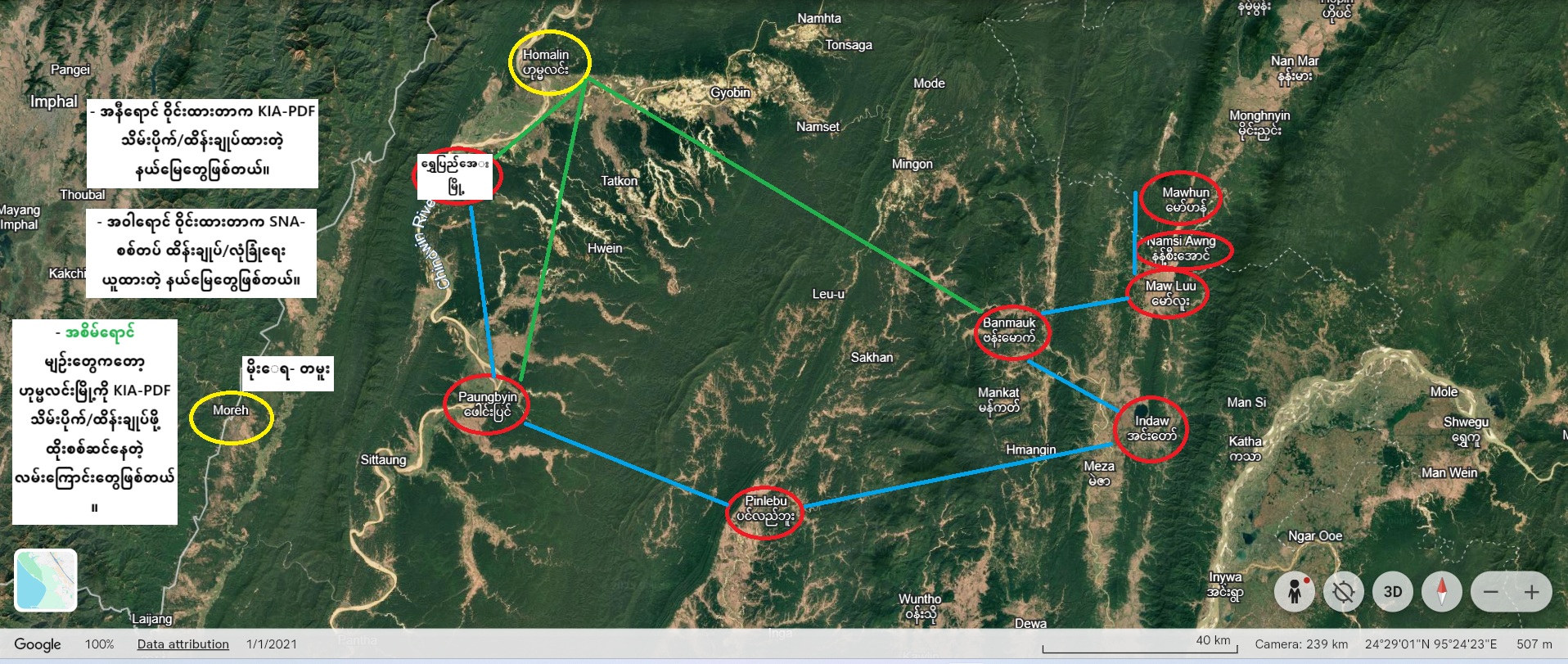
For example, during our election campaigns in Mohnyin and Mogaung, battles frequently break out between PDFs and SNA or the Tatmadaw.This is not unrelated to the KIA’s influence.
Previously, the KIA had not armed PDFs in large numbers. But right before election season, they distributed weapons.
Thus, clashes increased. In recent days, battles broke out near Moekaung’s 8-mile junction and Nanmar. These are forms of intimidation.
Therefore, even if the KIA does not openly obstruct elections, they can still manipulate areas through groups they support.
Q: Why would the KIA arm PDFs?
A:Since the arming happened right before elections, it is clearly election-related.
Usually, when the KIA wants to launch operations, it arms PDFs, and when operations end, it takes the weapons back.
But starting from the 1st of last month, the KIA fully armed PDFs from Nanmar and Moenyin areas, and then battles often broke out..
Q: What is the situation now in the Shanni areas of Sagaing?
A: In areas without elections like Banmauk, battles continue. We heard the SNA has regained about half of Banmauk town. But the town is burning. PDFs, while retreating, burned houses.
SNA forces reportedly recaptured zones where the hotels are located. But because PDFs retreat and torch houses, people fear Banmauk may turn entirely into ashes.
Q: How should the situation in Banmauk and Shanni areas be handled? Especially regarding security?
A: In Kachin areas, if the KIA reaches political negotiations, the government must control PDFs from Sagaing and Magway through the KIA.
Shanni people have never betrayed the state. They have never acted to destroy the country.
If the state wants to “manage” the KIA, the Shanni people have their own people’s militia and the SNA.
If the state arms the Shanni properly, they can control the KIA militarily and politically.
This was done before the 1994 ceasefire as well, when Shanni forces were armed to pressure the KIA into talks.
Today, the Shanni have grown in strength.What they lack is weapons. If the state arms the Shanni, it would greatly benefit national peace.This is not about instigating ethnic conflict—this is for national peace.
Q: So the current problem is that the SNA cannot match the KIA militarily?
A: That’s correct. It’s a weapons issue. Politically, we can talk to them. But with weapons, we can speak with more authority.
Q: How do you view the role of Daw Aung San Suu Kyi in Myanmar’s political landscape?
A: I don’t really want to criticize Daw Suu’s role too much. Because back during U Thein Sein’s administration, when she also cooperated and participated, Daw Aung San Suu Kyi’s political power was not small at all. A lot will also depend on the next government that the current administration will transfer power to. If she is released and re-enters the political scene, she will again be someone who can speak to and mobilize the whole country. Her political influence is quite significant.
Q: Under U Than Shwe’s rule, Daw Suu was under house arrest. Then during U Thein Sein’s term, she reached an agreement under the 2008 Constitution and re-entered politics through the by-election. Based on the current situation, is there a possibility for Daw Suu to contest elections again under the 2008 Constitution? If the government offers it, do you think she would accept? How do you see it?
A: As I said earlier, it depends heavily on the government that comes in. I think the new government will learn lessons from all the issues that happened during the old SLORC/SPDC era and from the events during U Thein Sein’s time, and will act accordingly.
Q: If that is the case, can Myanmar’s political landscape progress without Daw Aung San Suu Kyi?
A: Even if she is no longer present, there can be gradual changes. The reason is— we already experienced one period of her leadership and participation over those five years. All her actions were based on the people. So if she is no longer in the scene, the momentum may not be as strong, but I expect gradual changes to still happen.
Q: Then how would the international community view a political landscape where Daw Aung San Suu Kyi is absent?
A: The international community will be similar. Even before Daw Aung San Suu Kyi appeared on the scene, our country existed and stood on its own. Now too, after her absence, things will gradually develop. Looking at the SAC, you can see it. At first, the international community imposed full sanctions. But gradually, the government began achieving success in diplomatic engagements. Later, it also gained some political success. In the same way, by continuing step by step, things can progress.
Page 49 of 352
Connect with us