
English Edition
- By CNI
- Category: English Section
- Hits: 428
CNI News
8 December 2025
Military and political analysts are assessing how the relationship between Belarusian President Lukashenko and Myanmar’s military leadership might impact Myanmar's political landscape.
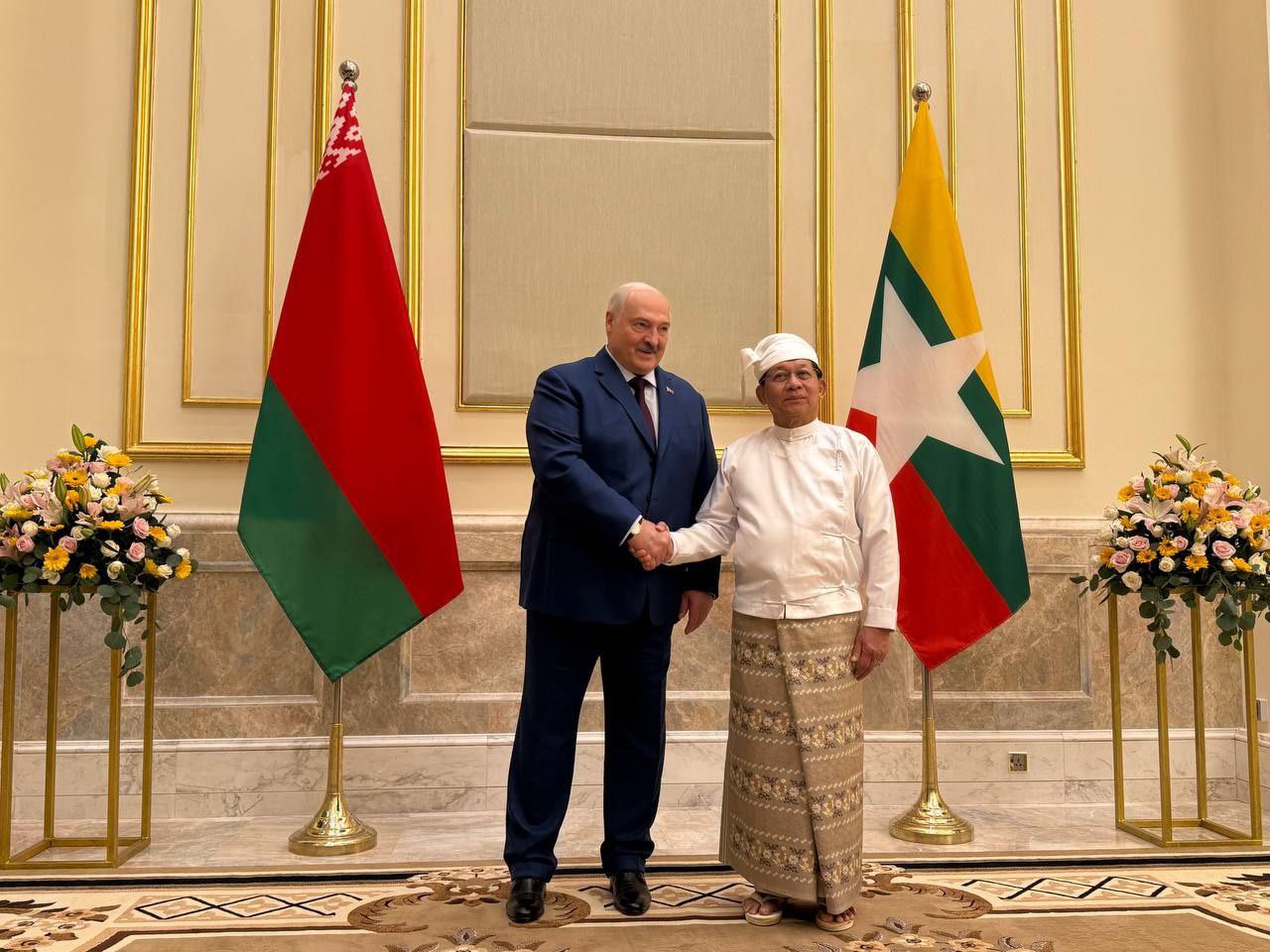
Belarusian President Alexander Lukashenko arrived in Myanmar on the evening of November 27 on a goodwill visit.
This was his first-ever trip to Myanmar. On November 28, he met with Senior General Min Aung Hlaing.
Senior General Min Aung Hlaing has visited Belarus twice before, and since 2023, Myanmar has been sending military officers for further training not only to Russia but also to Belarus.
According to political analyst Sai Mein, this growing connection between the Myanmar military and Belarus is likely aimed at strengthening the army:
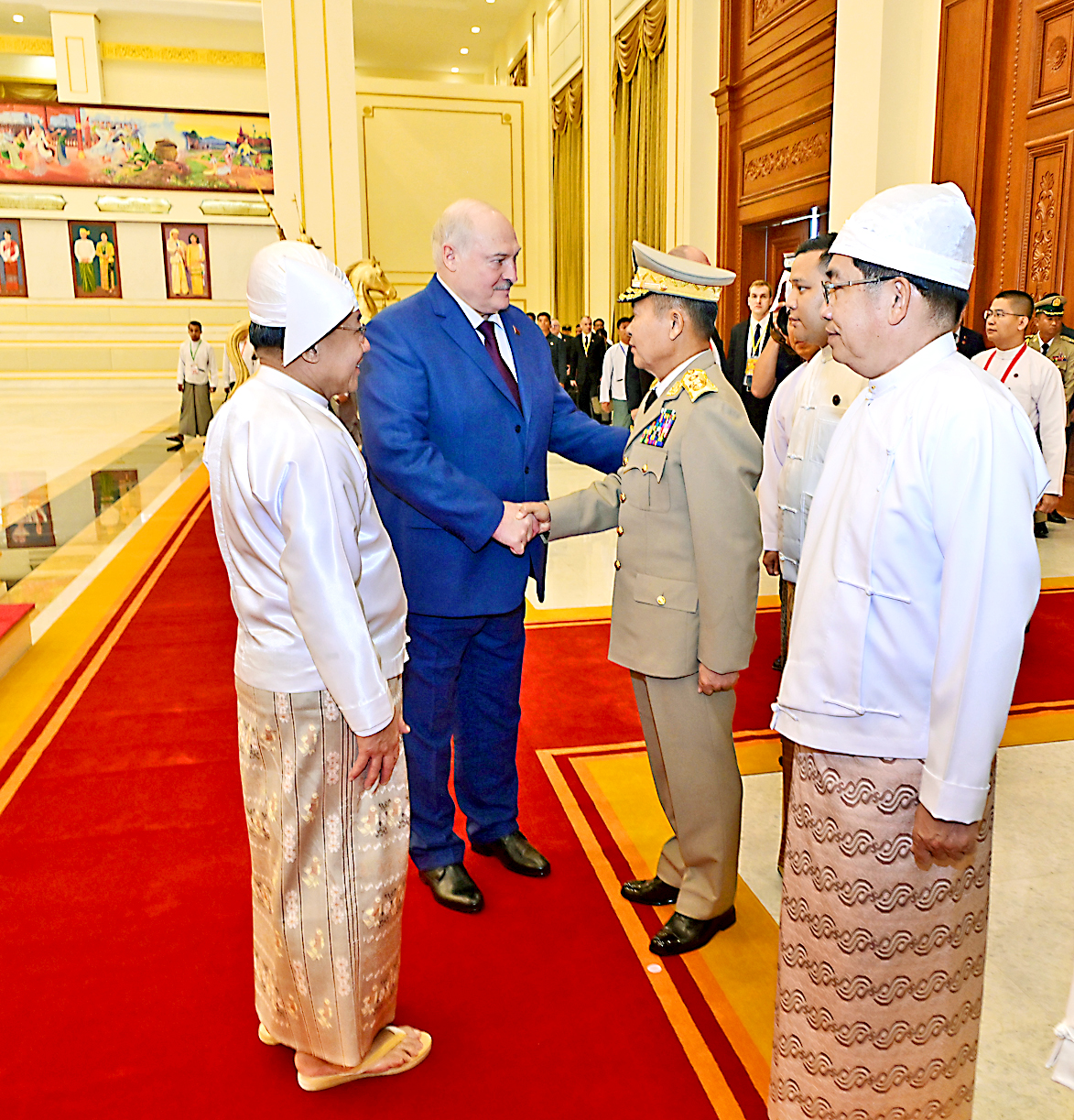
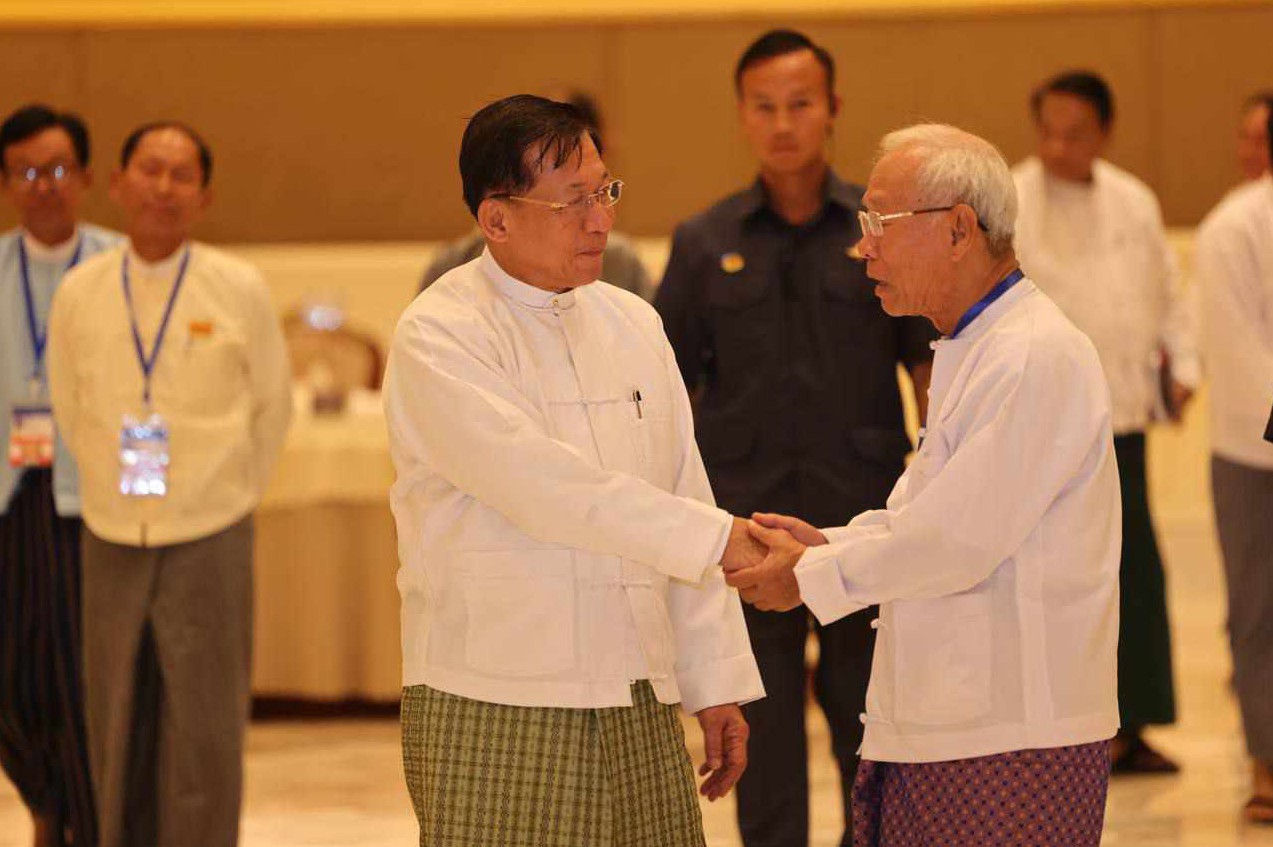
Senior General Min Aung Hlaing meeting Belarusian President Lukashenko
“Myanmar’s military leader has already visited Belarus twice. The main purpose is to obtain military support.After travelling to Russia and Belarus, the military council’s strength has grown again.For example, even groups like the TNLA—who were performing very strongly—had to retreat from areas like Nawnghkio, Kyaukme, and Hsipaw and could not maintain their positions.The main idea is whether they can move from building hydropower plants to building arms factories.So the military council’s connection with Belarus seems clearly aimed at strengthening military capabilities.”
During the meeting, Myanmar expressed its intention to join the Shanghai Cooperation Organization (SCO) as a member and to work toward membership in BRICS and the Eurasian Economic Union (EAEU).
Senior General Min Aung Hlaing requested that Belarus continue supporting Myanmar’s efforts in these areas.
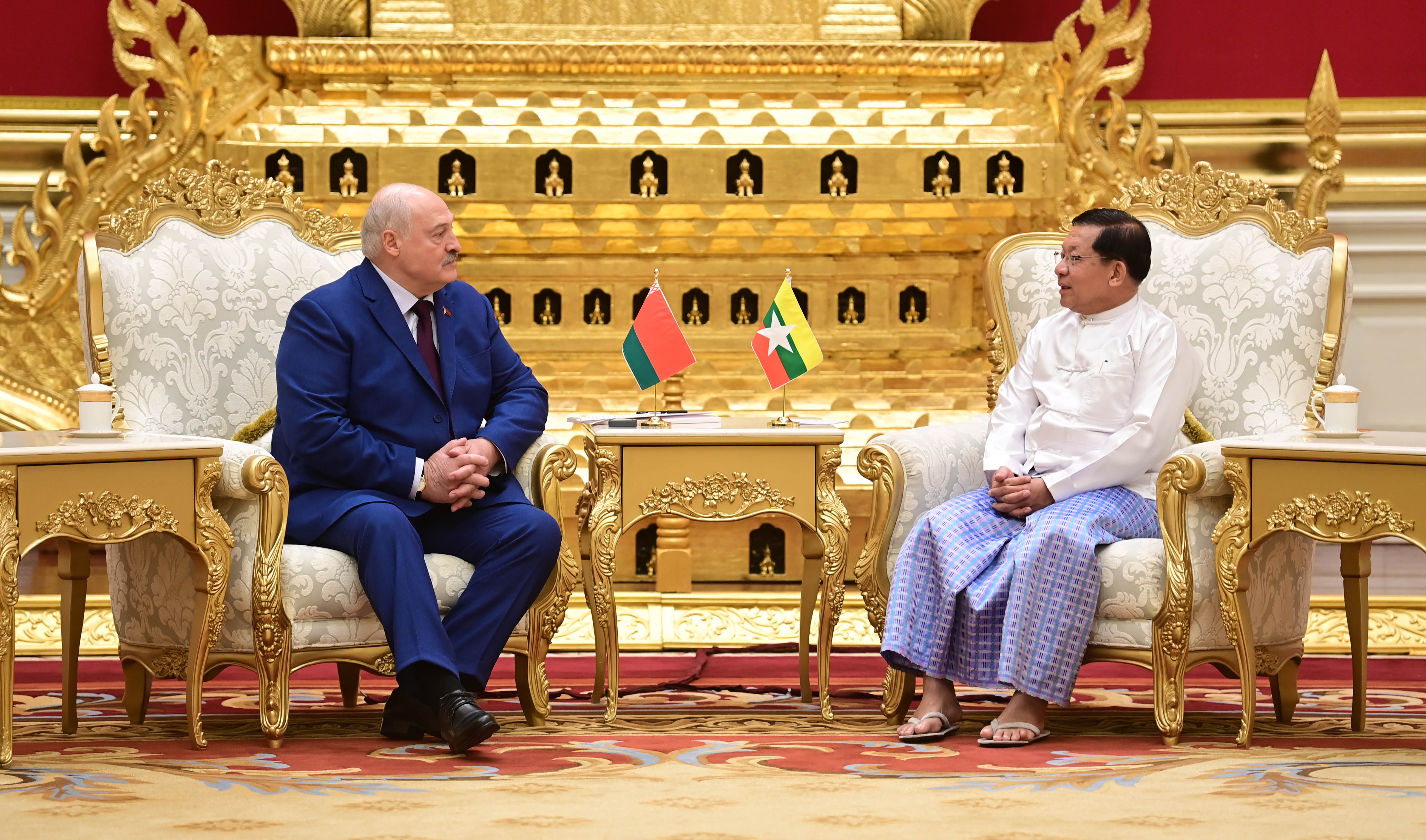
Senior General Min Aung Hlaing meeting Belarusian President Lukashenko
Both sides also discussed expanding cooperation in economic investment, education, healthcare, industry, agriculture, and military technology.
Myanmar will hold the first phase of its multi-party general election on December 28, 2025.
PNLO-NCA/S Chairman Colonel Khun Okka told CNI News that Lukashenko’s trip to Myanmar at this time also carries a message of Russian endorsement:
“This is reciprocal. Belarus is entering the picture based on the close strategic ties between Russia and Myanmar.If Russia cannot come directly, Belarus comes on Russia’s behalf. That shows Russia is supporting from behind.So it is mutual backing among them.Since the election is approaching, this visit can be seen as showing support for the upcoming election.”
President Lukashenko said that 2025 had been a memorable year for both countries.
He acknowledged that Myanmar would soon hold a historic election and stated the upcoming election was important for Myanmar.
He expressed his support for the election that Senior General Min Aung Hlaing plans to hold.
Both countries also signed several memoranda of understanding to enhance cooperation.
- By CNI
- Category: English Section
- Hits: 321
CNI News
6 December 2025
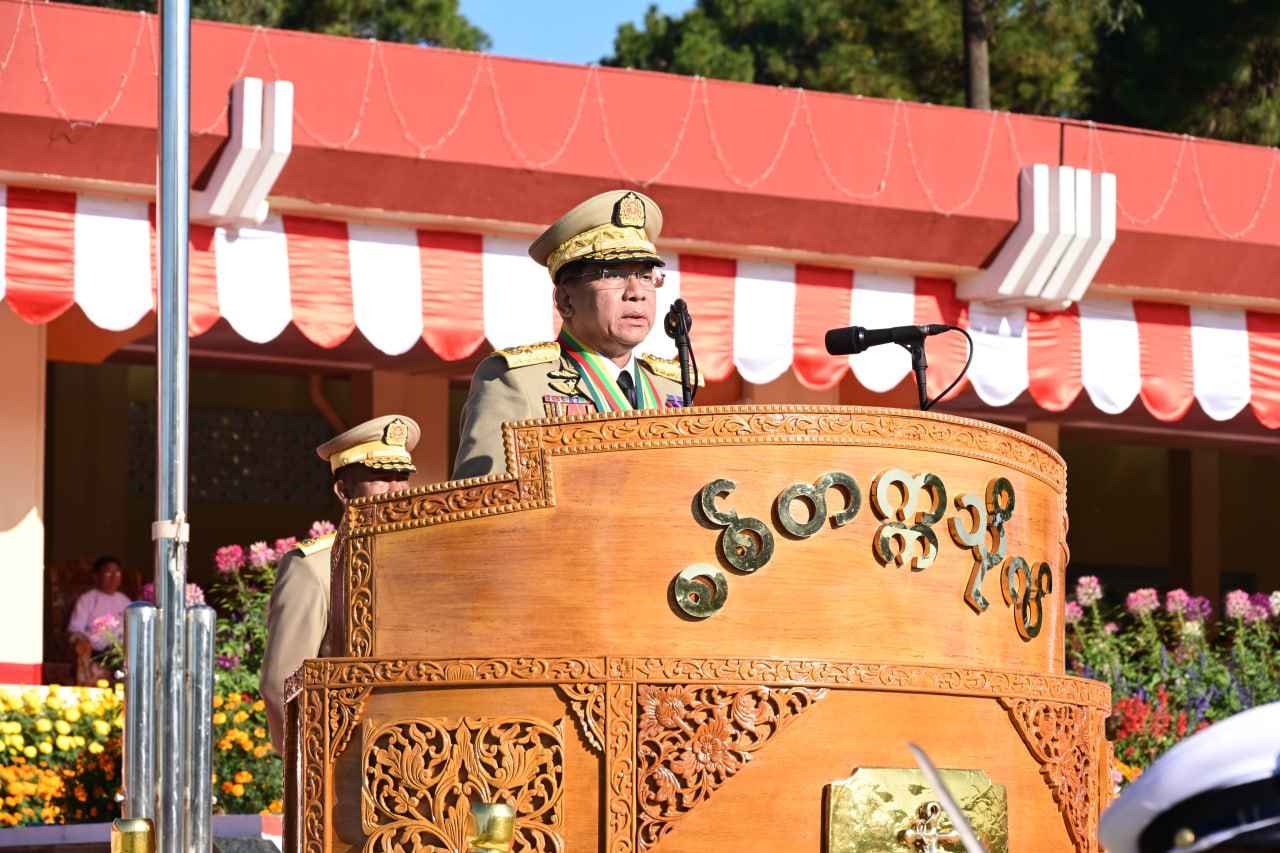
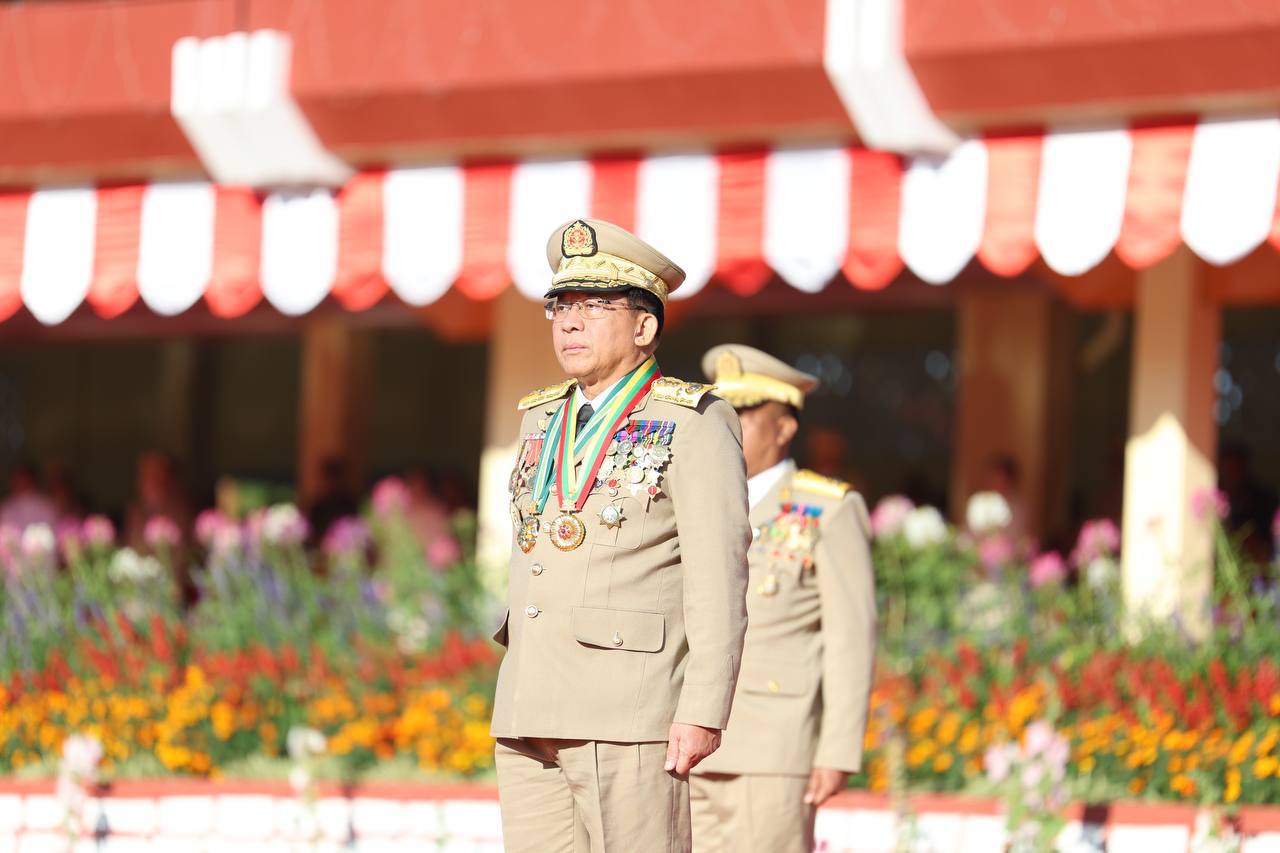
It is now time to clearly recognize that the rollback of democracy has been caused by the armed struggle, said Senior General Min Aung Hlaing, Chairman of the State Security and Peace Commission.
He made the remarks at the graduation ceremony of the 67th Intake of the Defence Services Academy held on December 3, 2025.
Senior General Min Aung Hlaing said:“The terrorist NUG and CRPH groups have falsely accused the Tatmadaw (Myanmar Armed Forces) of rolling back democracy and have indoctrinated young people with extremist ideas, pushing them onto the wrong path of armed violence.Because of these armed movements, the Union that we are striving to build has suffered heavy losses in human resources.For more than 70 years, attempts to resolve issues through armed struggle have never produced results.It is time to understand clearly that the rollback of democracy is due to the armed struggle.”
He added that if everyone shares the common goal of building a Federal Democratic Union, armed groups including the PDFs should prioritize the interests of the Union and enter the legal fold, as the State has already extended an invitation.
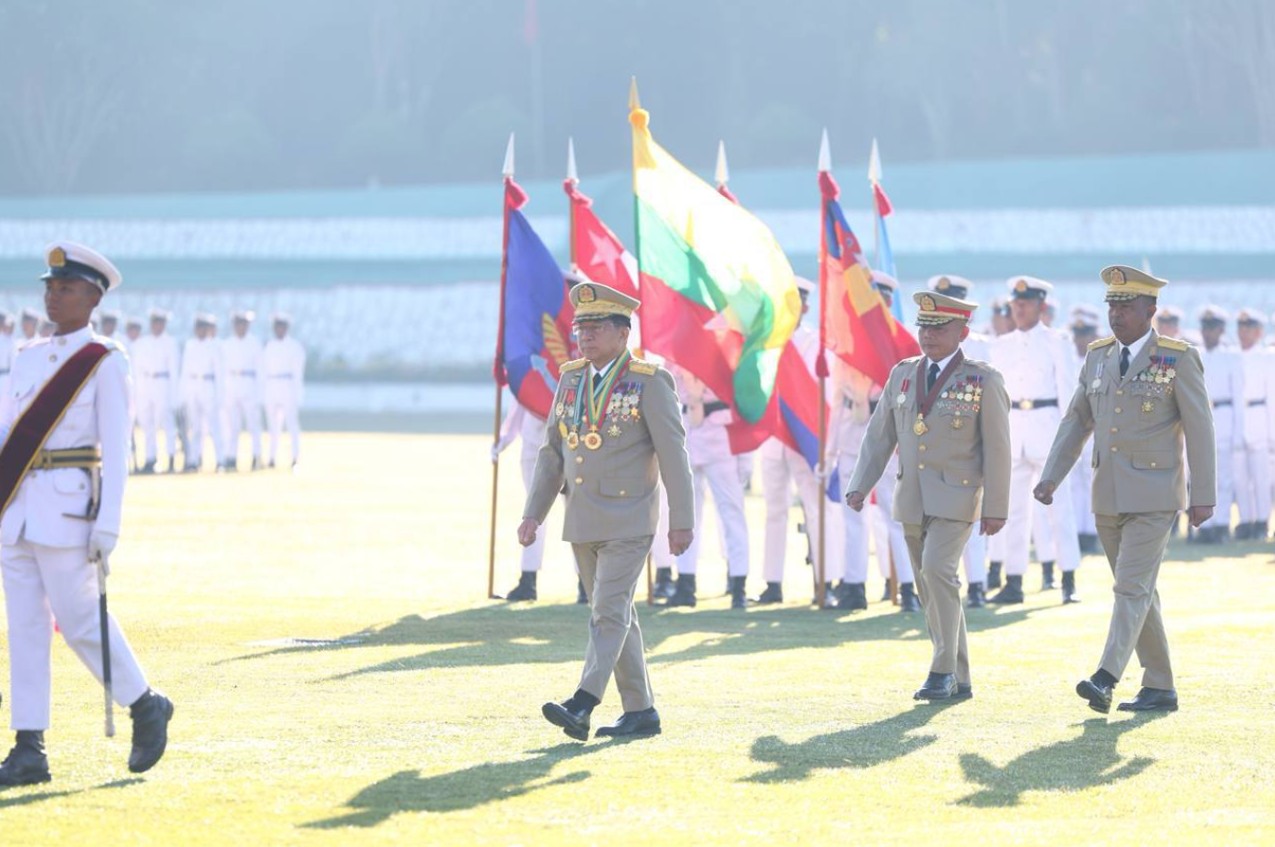
Senior General Min Aung Hlaing continued:“On the other hand, some ethnic armed organizations that had signed the NCA have broken their promises and diverted from the path of peace.Based on past peace experiences, the Tatmadaw has laid down a clear six-point peace policy.Peace can only be achieved through dialogue.So instead of only stating what they want, all sides must work together sincerely and realistically on what can be achieved.”
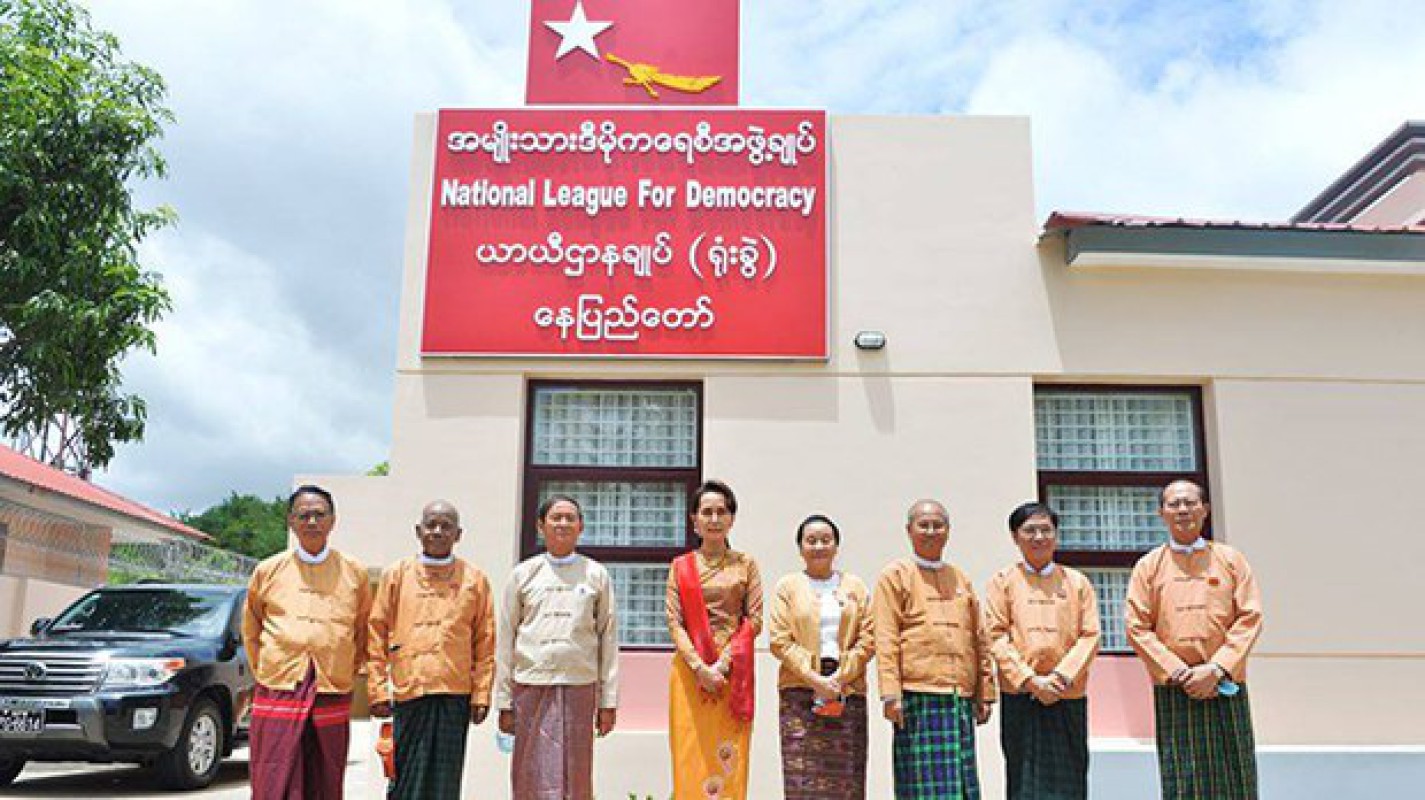
On February 1, 2021, the Myanmar military (Tatmadaw) seized power from the National League for Democracy (NLD) government, claiming they attempted to form a government without resolving disputes over the 2020 general election voter lists.
The military then declared a state of emergency and formed administrative bodies including the State Administration Council (SAC), the Caretaker Government, and the State Security and Peace Commission. These bodies have controlled the country to this day.
As a result, NLD leaders, elected lawmakers, armed groups, pro-democracy activists, civil society organizations, and artists opposed the coup and launched armed resistance to topple the military regime.
The armed conflict has since spread across the entire country, displacing more than three million civilians and destroying hundreds of thousands of homes and buildings.
Senior General Min Aung Hlaing has also stated that elections will be held in three phases—Phase (1) on December 28, 2025; Phase (2) on January 1, 2026; and Phase (3) in the last week of January 2026—and that state power will be handed over to the winning party.
- By CNI
- Category: English Section
- Hits: 526
CNI News
6 December 2025
Military and political analysts say that because the National League for Democracy (NLD) will not be participating in the upcoming multi-party democratic general election, there is little chance that the ongoing armed conflicts will see any significant change.
The NLD, which has traditionally won the majority of votes in Myanmar elections, is not registered as a political party in the election scheduled to begin on December 28, 2025.
A political analyst told CNI News that the absence of the NLD in the election is a key reason why no major shift can be expected in the current armed conflicts.
He said:“Not allowing—or not having—the NLD in the election is the main reason why the ongoing armed clashes will not see significant change.There is one thing though. After the election, will they allow the NLD to participate in a by-election like during President Thein Sein’s administration? If that happens, then we could hope for something similar to what occurred under Thein Sein’s government.But it’s doubtful whether such a situation will return. Why? Because future leaders like Senior General Min Aung Hlaing and USDP Chairman U Khin Yi are not as flexible as U Thein Sein. And I don’t think they will engage actively in reforms like U Thein Sein did. If they don’t take that approach, such circumstances will not easily occur.If the NLD were gradually allowed to participate again in elections in areas where PDFs and the NUG are active, and if they regained some parliamentary seats, then expectations would rise that things might improve—just like during the by-election period under Thein Sein’s administration.”
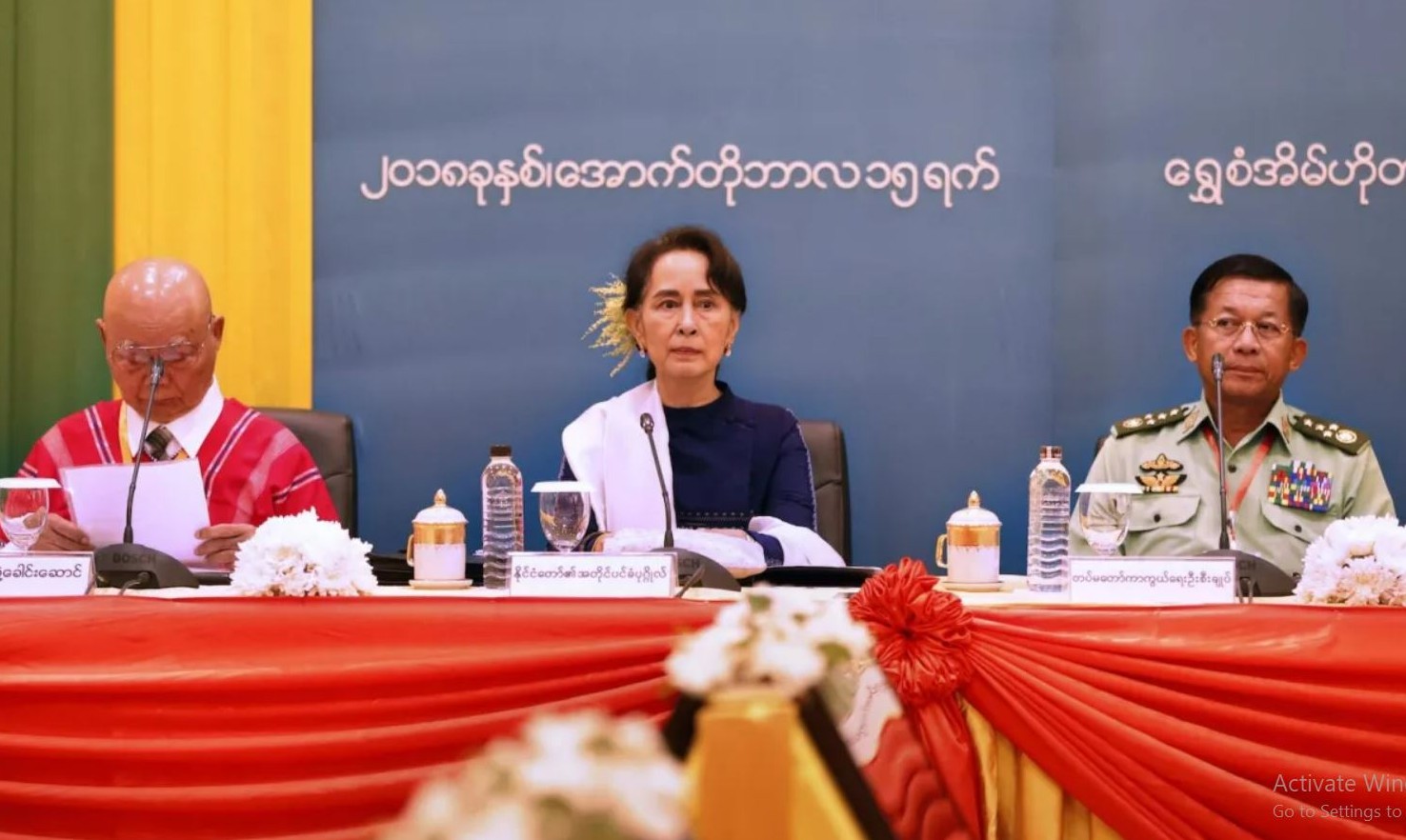
Daw Aung San Suu Kyi, Senior General Min Aung Hlaing, Former KNU Chairman
On February 1, 2021, the Myanmar military (Tatmadaw) removed the NLD government led by Daw Aung San Suu Kyi, claiming that disputes over voter lists from the 2020 general election were unresolved, and subsequently detained Daw Aung San Suu Kyi and U Win Myint.
In addition, key founding members and senior leaders of the NLD—patron U Tin Oo, vice-chair Dr. Zaw Myint Maung, and spokesperson for public relations and communications Monywa Aung Shin—have since passed away.
Although several political detainees have recently been granted amnesty, Daw Aung San Suu Kyi has not yet been released, leading some military and political observers to speculate that she might be freed after the election.
U Khun Sai, who works in peace processes, told CNI News that in a political landscape where Daw Aung San Suu Kyi is absent, revolutionary forces could either grow stronger or experience a decline in morale.
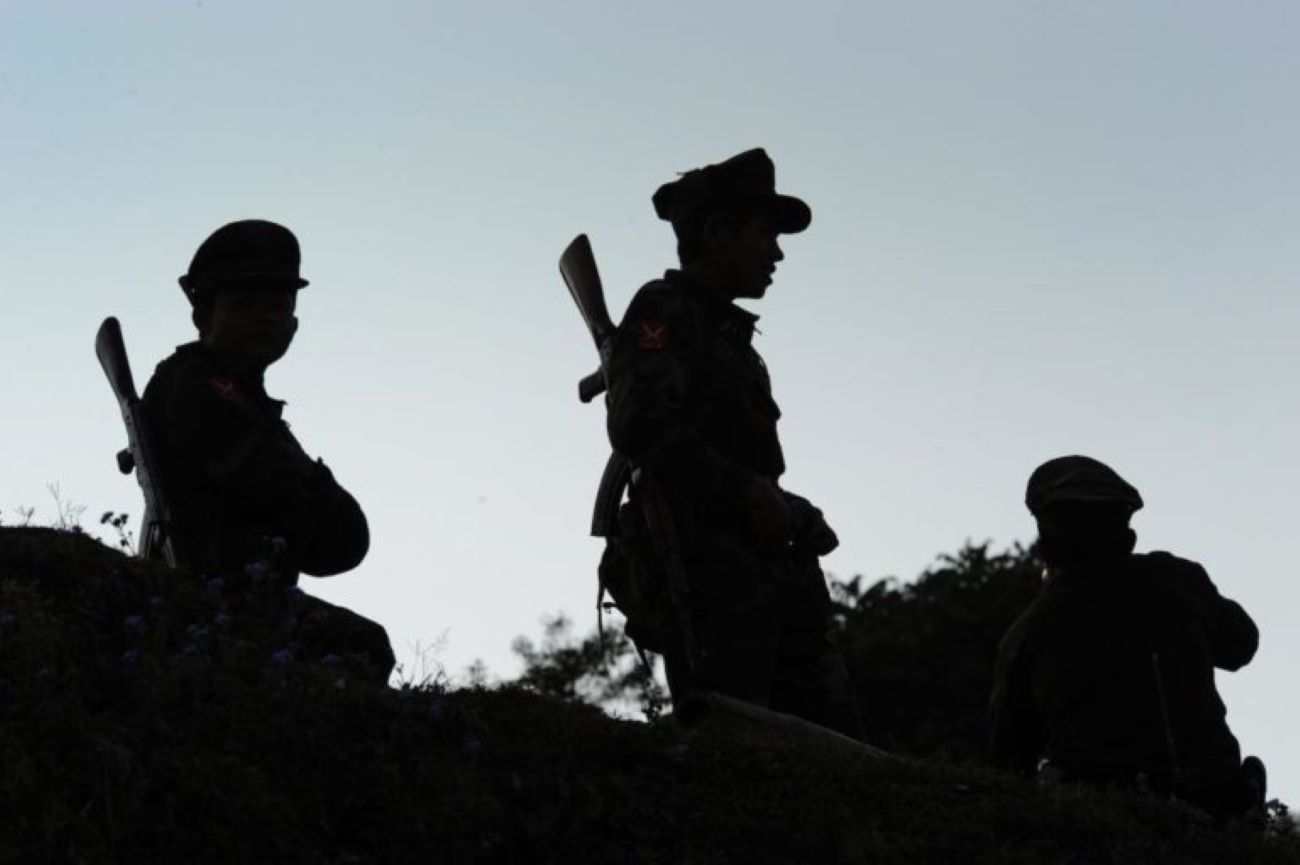
Armed resistance groups
He said:“Right now, what we see across the country cannot yet be described as a full-scale uprising, even though many think it is.One reason it isn’t is because many people still hold hopes for Daw Su. Because of that, they aren’t fully participating.However, if Daw Su was no more or if the NLD completely ceased to exist, our revolutionary forces could grow even stronger. On the other hand, some argue that without Daw Su, the morale of those fighting under her influence could fall sharply.We will have to wait and see which of these two possibilities becomes reality.”
Military and political analysts also say that Daw Aung San Suu Kyi is someone who ought to be included in discussions and negotiations aimed at resolving Myanmar’s political crisis and armed conflicts.
- By CNI
- Category: English Section
- Hits: 276
CNI News
5 December 2025
Political analysts point out that Myanmar’s political environment has become tarnished because of people who exploit politics for personal gain.
The public has not lost trust in politicians, they say. Rather, people have become fearful, and politics itself has gained a bad name because of those who manipulate it for selfish purposes. Daw Sanda Min, an independent candidate from Latha Township, told CNI News:
“It’s not that people don’t trust politicians. They are fearful—there are many things that have caused fear. After what happened post-2021—the incidents, the political figures, and those calling themselves revolutionaries—their ways of operating have frightened the public, frightened them away from politics. People have faced terrifying situations that would scare anyone. So, I see it more as fear rather than distrust.It’s not that there is no trust. Every country has politicians. Among them, there are good people and bad people, and there are those who exploit politics. So, it’s not that people have lost trust in politicians—they are afraid. Because of those who exploit politics, the political sphere has become tainted.”
On February 1, 2021, Myanmar’s military (Tatmadaw) removed the NLD government, declared a state of emergency, and has ruled the country since.
Analysts note that in this situation, political parties, politicians, and armed groups have taken advantage of the people's lives and resources for their own benefit, while failing to solve or protect the public from their hardships. They only come close to the public during election periods when they need votes, speaking of “the people” without sincerity.
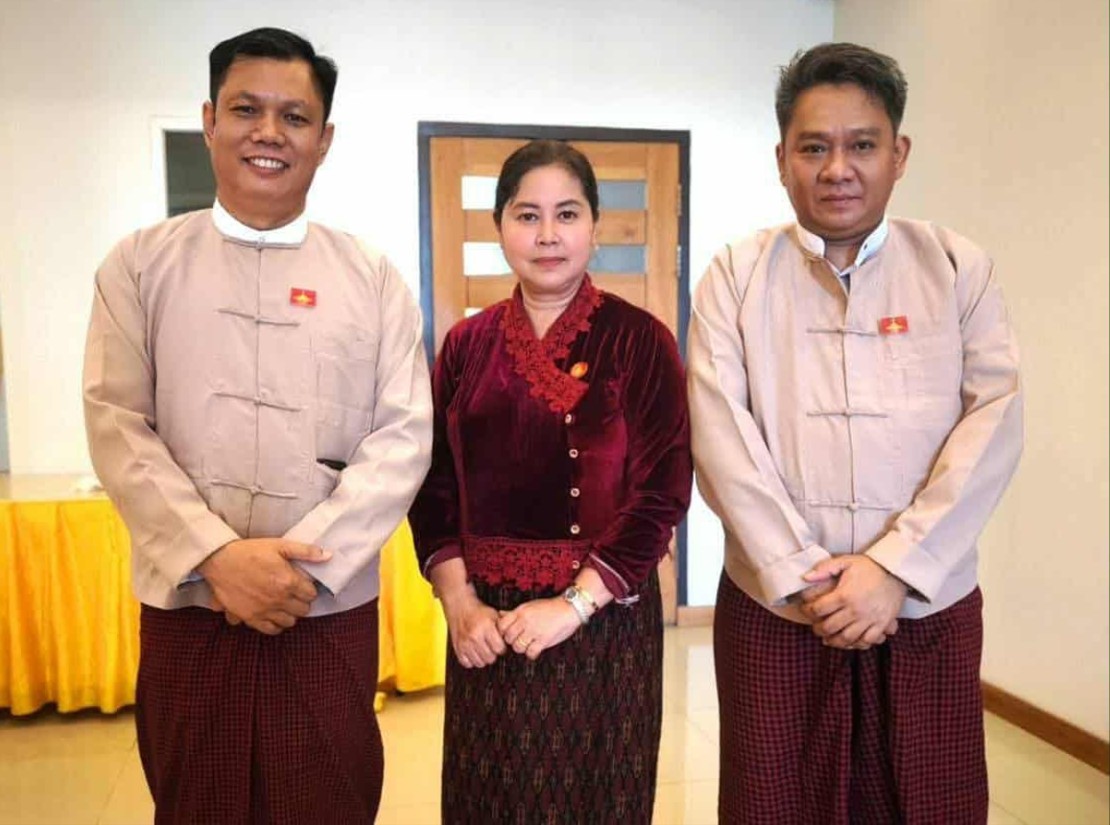 Daw Sanda Min and U Htet Aung Kyaw
Political analyst U Htet Aung Kyaw told CNI News that the desire to engage in politics—whether with good intentions or bad—should be allowed as long as it does not violate the law:
“This is the real situation. People who have founded parties have to attend national events. Once they do, they build connections with those in power and take advantage of those relationships.It’s not that they genuinely want to represent the public or have ideas for how to improve the country.So it’s understandable when people say politics is full of those who exploit it. Ultimately, the public will decide who is who.According to a citizen’s political rights, anyone may establish a political party or enter politics—whether their intentions are good or bad—as long as they do not break the law.Banning a person from forming a political party just because they are a businessperson is not something that can be done easily.”
U Shwe Mann has previously said that in order to prevent opportunists from infiltrating politics, the public must be politically knowledgeable.
Analysts also note that since political changes took place over the past four years, Myanmar has again ranked among the world’s worst countries in corruption indicators—an alarming situation.
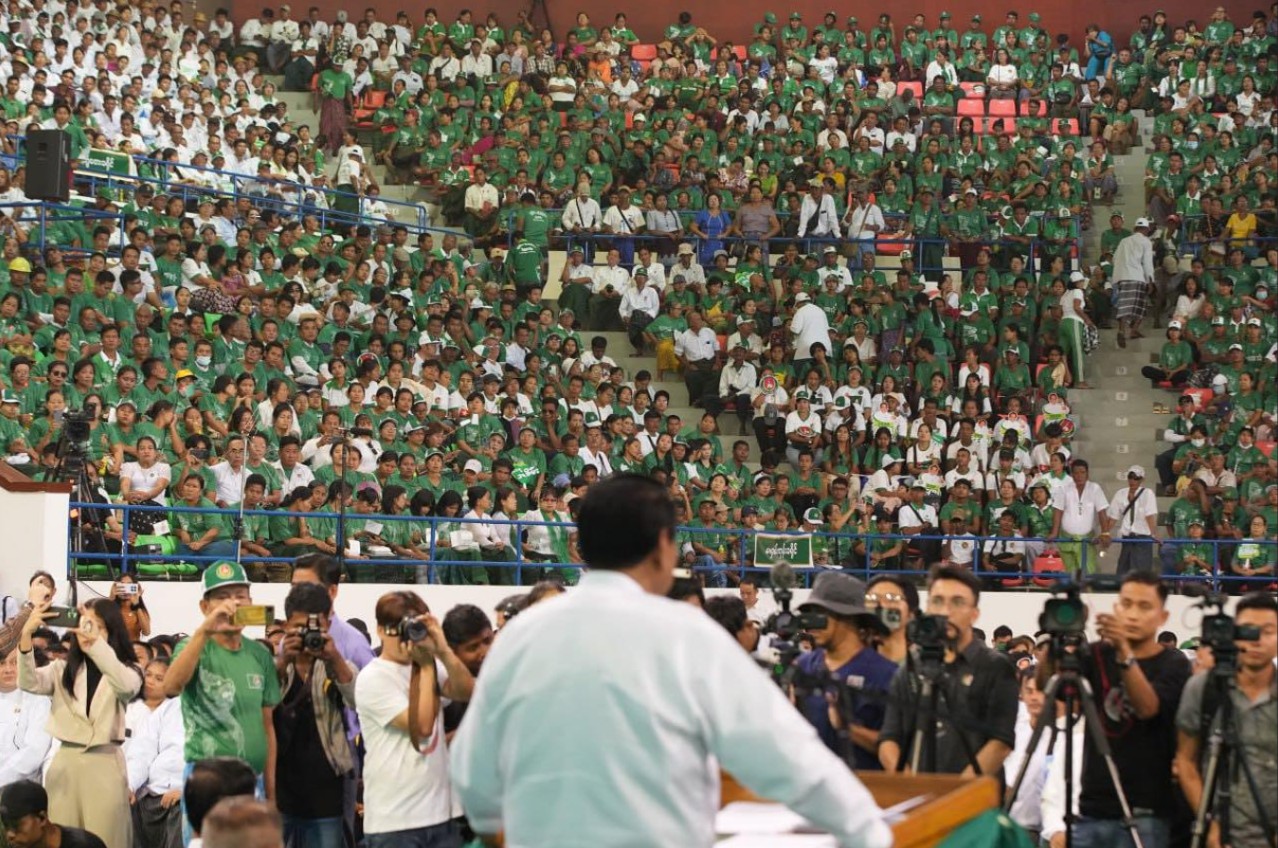
USDP campaigning
Dr. Aung Myo, an independent candidate running in Zabuthiri Township, Nay Pyi Taw, said that once people gain political positions and authority, many cannot restrain themselves and begin to betray principles:
“People who exploit politics exist in every country. Human beings have ego. If they have political interest, they pursue politics.
Politics is not as ruined as people say—there is nothing irreparably damaged. Those who exploit politics simply continue what they have always done.
But yes, when people enter politics without the right intentions, that part is true.
Everyone works for themselves. When they begin gaining positions and authority, they cannot control themselves and end up betraying principles.
It’s not always about exploiting politics—it’s because, generation after generation, we Burmese lacked good administrative systems, our rights were restricted, and we were not allowed proper governance.
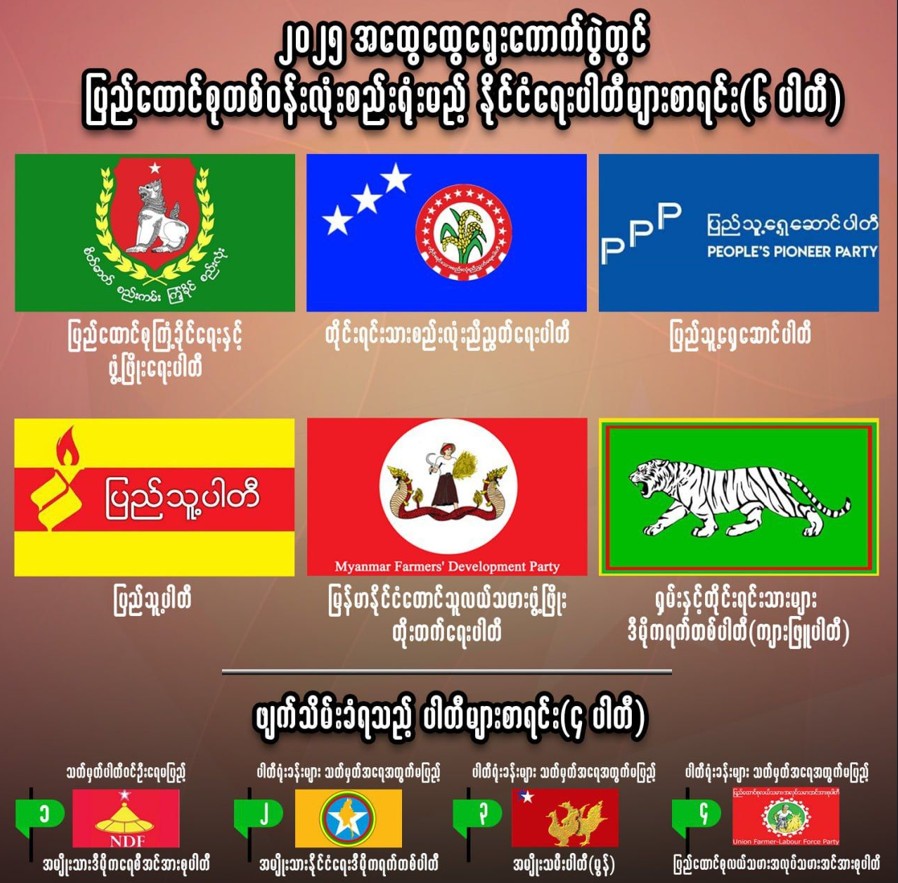
Dissolved parties and the parties preparing to contest the election
If the system were good, such exploitation would not happen. When the military seized power, there was no one to restrain them. That is simply their nature.”
Political analysts say Myanmar has an excessive number of political parties, many of which have never won an election. Yet they attend party-founding meetings, build connections with authorities, and pursue personal interests.
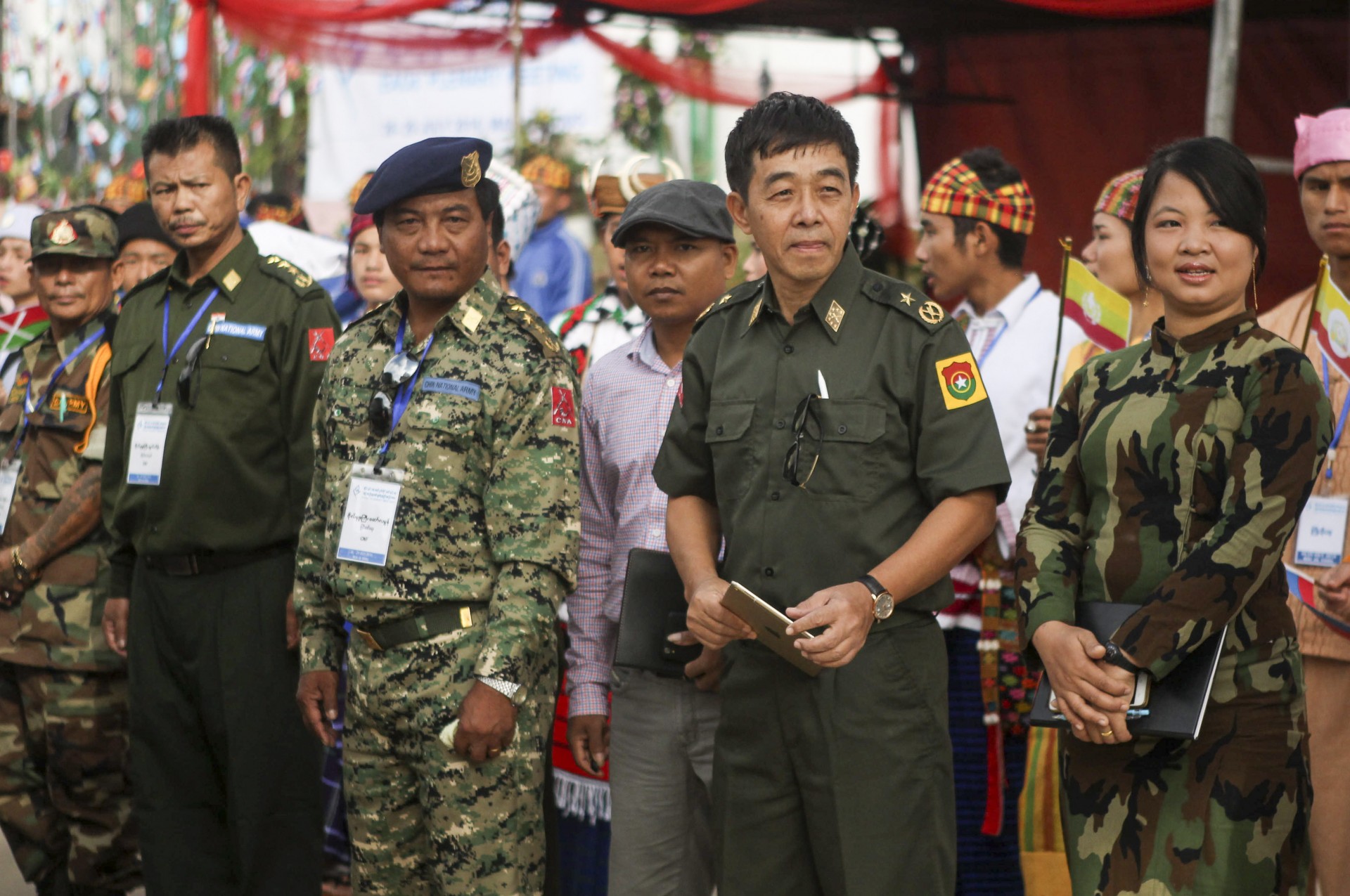
Despite founding parties and attending political discussions, many still lack proper understanding of federalism and democratic principles.
- By CNI
- Category: English Section
- Hits: 586
CNI Interview
5 December 2025
The Kachin Independence Army (KIA) is trying to gain control over the Sagaing Region. If KIA can control Sagaing Region, it will be able to connect Rakhine State, Chin State, Sagaing Region, and Kachin State—ultimately extending influence across the entire northwestern corridor of Myanmar.
Afterward, they may apply military pressure toward Mandalay and Magway Regions to block Tatmadaw offensives from reaching them.
With land access stretching from Kachin to Rakhine, KIA would also be able to use Rakhine’s coastline to expand trade and diplomatic relations with Western countries.
Meanwhile, the Myanmar military (Tatmadaw) is trying to open a political exit by holding elections. Because of this, people are increasingly interested in the prospects for Daw Aung San Suu Kyi’s release.
CNI interviewed U Khun Sai, who is involved in peace processes, regarding these matters.
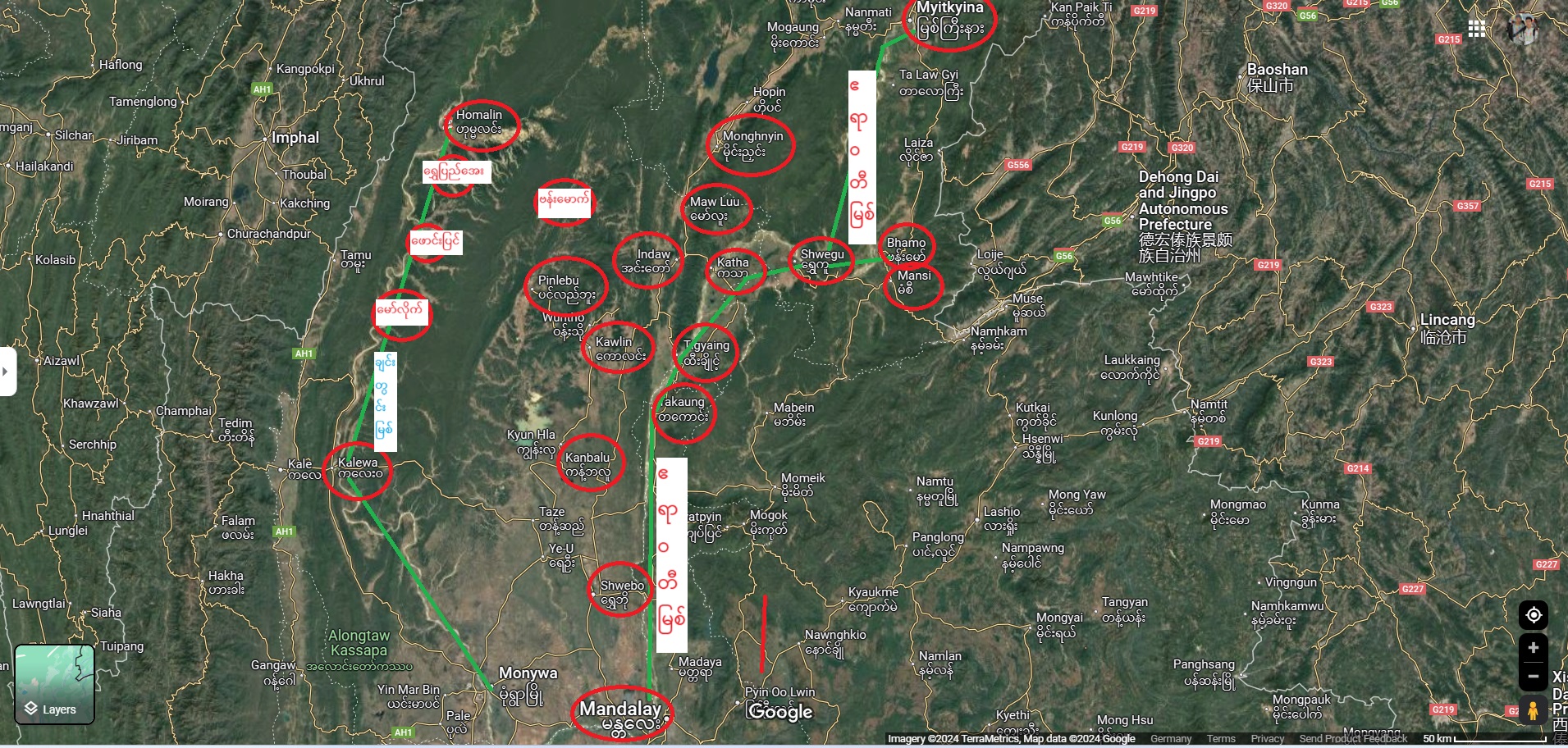
KIA–PDF operational areas in Sagaing Region
Q: The U.S. ended TPS for Myanmar citizens, saying Myanmar has stabilized. Does this mean a policy shift toward the Myanmar military?
A: Everyone is thinking about this. People don’t understand why the U.S. did this. The U.S. knows exactly what’s happening in Myanmar—they have an embassy in Yangon constantly observing everything. There’s no way they don’t know.
So we can only guess. I could be wrong, maybe very wrong.
One possibility is that U.S. policy toward Myanmar is fundamentally tied to China. They say: “Washington’s Burma policy is Washington’s China policy.” So this TPS decision likely has something to do with China.
Another point is that the U.S. has been observing the pro-resistance forces for more than five years now. Even until today, they haven’t shown a clear, unified capability.So although the U.S. doesn’t like Min Aung Hlaing, they may have to deal with him for now. And that may be influencing this decision.
I recall something: this year ASEAN countries were asked about their key security partners. Surprisingly, many said China.
But among ASEAN members that still consider the U.S. as a strategic partner, the top ones were Cambodia and Myanmar.
This is surprising because Cambodia relies heavily on China.Myanmar under Min Aung Hlaing was also listed.So, to counter China’s influence over these two countries, the only powerful force they can use is the US. So that might be part of the reason.
Q: “Wa” forces allegedly halted weapons support due to Chinese pressure. MNDAA and TNLA also lost support and so revolutionary forces seem to be aligning more with KIA. Why can’t the military suppress KIA?
A: KIA has a few unique advantages.
Geographically – Unlike the Wa, who rely entirely on China, KIA lies between China and India. That makes full Chinese pressure more complicated.
Dual-track approach – They fight the military, yet at the same time maintain channels for talks through intermediaries.
Since the 1990s, the Peace Talks Creation Group (PCG) in Kachin has acted as a mediator. So even while fighting, they’re always in dialogue.
Relationship with NUG – They cooperate with the resistance but KIO as an organization doesn’t fully merge with them. They keep diplomatic flexibility. Because they aren’t 100% anti-Naypyidaw, they can maneuver more easily.
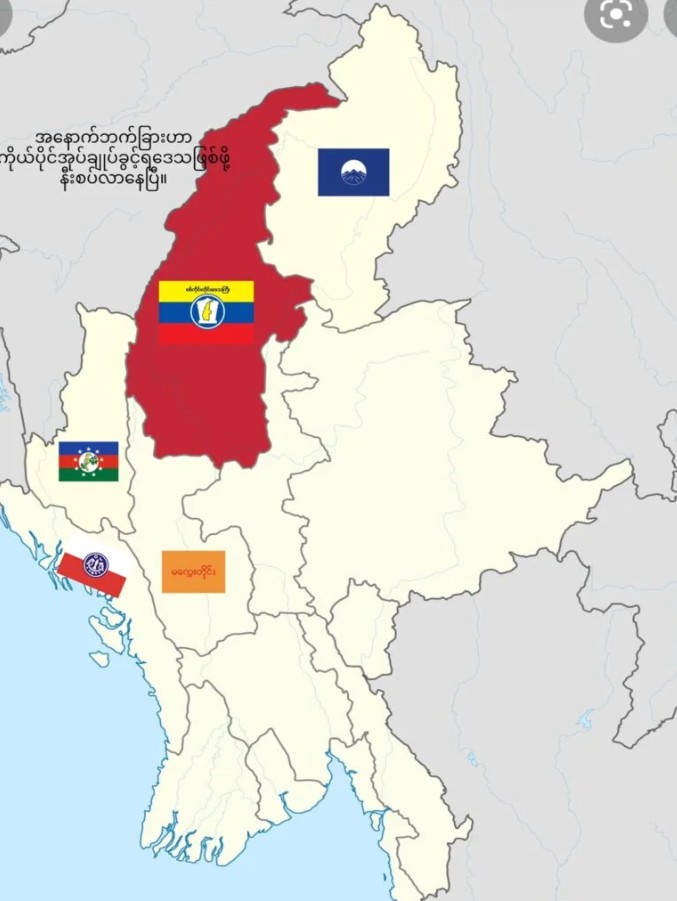
Geographic connections among Kachin, Rakhine, and Chin States and Sagaing Region
Q: If the military cannot sign a ceasefire with the KIA, how dangerous could the situation become?
A: I haven’t fully evaluated that yet, so I won’t make a statement.
Q: It appears KIA wants not only Kachin but also Sagaing Region. If KIA gains Sagaing Region, what could happen?
A: If KIA controls Sagaing Region, they will be closer to India.
Through Sagaing → Chin → Rakhine, they could improve international trade and foreign relations.
Kachin, like Shan, is a landlocked state, so access to the west would be advantageous.
I don’t think they will stop at Sagaing Region—they will likely continue seeking influence in surrounding territories to improve their strategic position.
Q: If KIA takes Sagaing, would they become even stronger than now?
A: Yes, they could. KIA is not only politically cautious but also experienced in diplomacy.
If they maintain relations with China while also engaging India, the U.S., and others, their position could strengthen further.
Instead of envying them, we should learn from their approach.
Q: In the past, under U Thein Sein, even without the NLD in government, progress was made—including Daw Aung San Suu Kyi’s release according to the agreement that the NLD would protest the by-election under the 2008 Constitution and the NCA talks.
According to the estimation of most people, the post-election government will include the current authorities only. If the NLD is no more, what kind of change might emerge in these armed conflicts?
A: The struggle nationwide isn’t yet 100% unified. Many people still have hopes pinned on Daw Suu, which is why they aren’t fully participating.
If Daw Suu were gone and NLD disappeared, the revolution could either grow stronger or psychologically weaken.
We’ll have to wait and see which outcome happens.
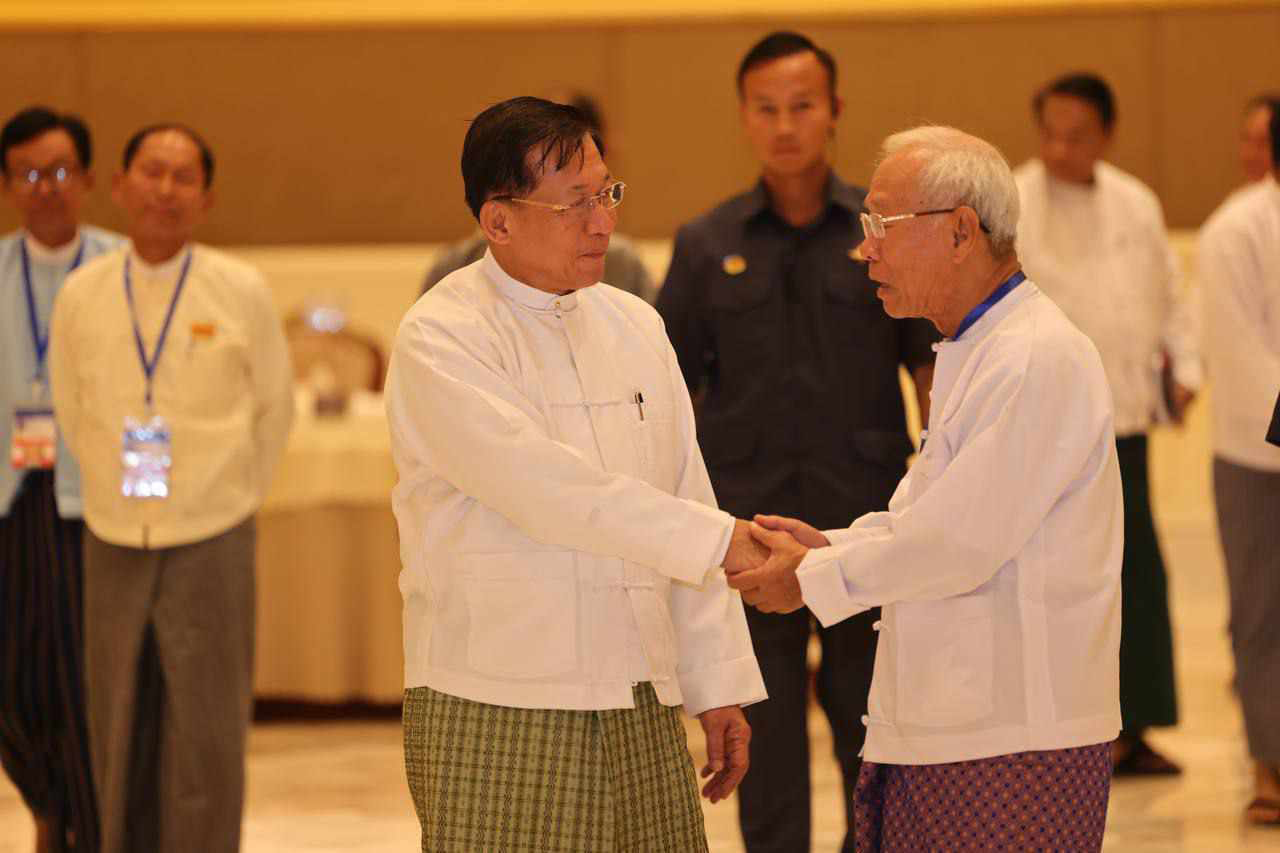
Senior General Min Aung Hlaing meeting with political parties
Q: After the election, what should the new government do regarding Daw Aung San Suu Kyi and NLD?
A: What should be done is already known—U Thein Sein demonstrated it before.
But most likely, the situation will resemble the Than Shwe era: Daw Suu will only be released after the election.
If released beforehand, the election might become chaotic or collapse entirely.
So currently, it’s unlikely they will release Daw Suu or NLD before the election.
And in any case, the military-backed party is almost guaranteed to win.
However, after the election results come out, there are various analyses about what might happen. One such analysis says the people of Myanmar might be fortunate—because a reform-minded government, similar to President Thein Sein’s administration, could come to power, one that has a strong desire to implement reforms.
If that happens, some say the country could begin to improve again.
The second possibility is that Senior General Min Aung Hlaing himself might not take the leadership role in the government, choosing instead to remain as Commander-in-Chief, while appointing someone he fully trusts to lead the government on his behalf. In that case, it could be somewhat good. But it's not better than the first possibility.
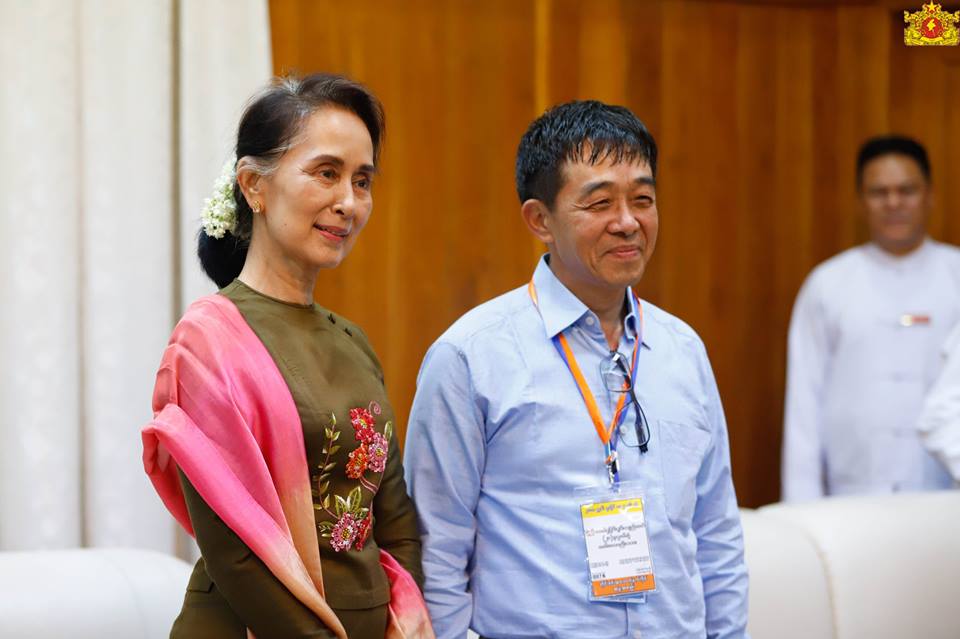
Daw Aung San Suu Kyi meeting KIA leader Lt-Gen Gun Maw
The third scenario is that Min Aung Hlaing himself takes the leading role in government. If that happens, he would be holding both the military and political power at the same time. In such a case, our revolutionary side would have to continue fighting. Most people believe that this would push our revolution into an even more self-reliant situation. Unlike before, support from Myanmar people living abroad decreased, and if international assistance or recognition would become even more difficult to obtain, that would put tremendous pressure on us. It seems Min Aung Hlaing and his circle have already calculated these factors.
So, in this matter, we pray for the first scenario to happen. And we pray that the second and third scenarios do not occur.
Q: If, as many analysts believe, the third scenario eventually happens, would it be easy for the country to become stable?
A:If so, the struggle and conflict would have to continue.
Q: Regarding the current issue of Zha pian (telegram fraud), have you studied anything about it?
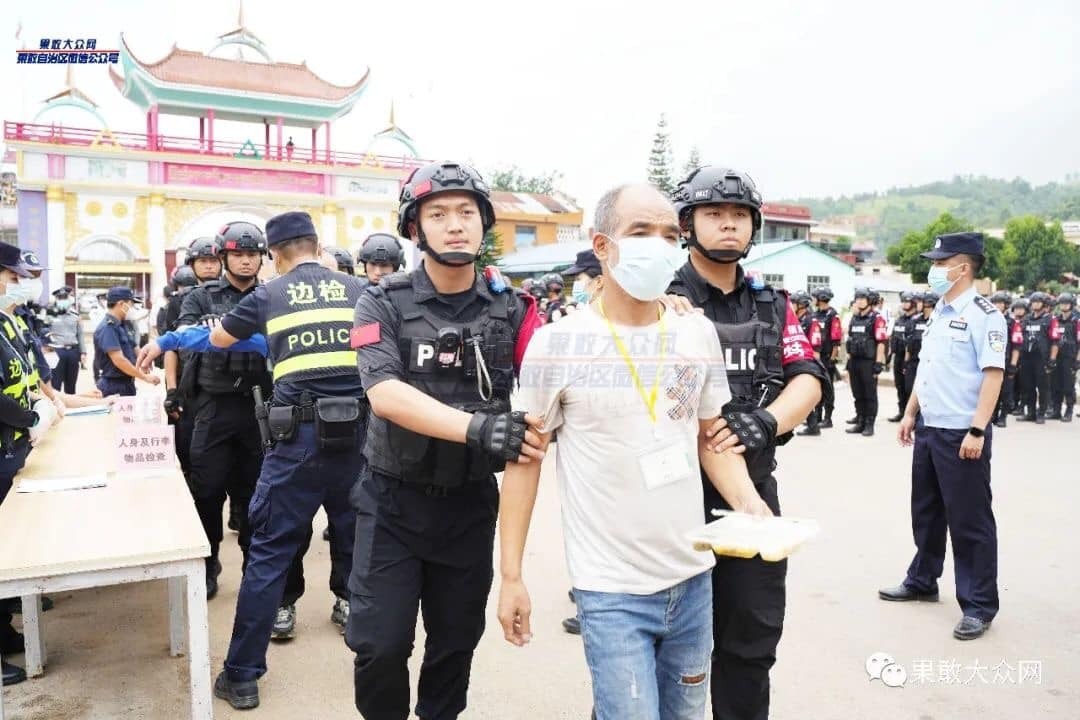
Some people involved in Zha pian
A: Not yet. But speaking simply, the issue of Zha pian also stems from our political failures—failures to reach agreements or to implement agreements. In 1947, we decided to administer the country under a federal system. But after General Aung San was assassinated, the federal idea existed only in name, and the country was practically ruled under a centralized system.
Because of that, the country became unstable and civil war began. With that came many consequences.
If we look generally, the first major issue was opium—groups building up their strength through opium trading. Later, not only opium but heroin production became a source of power. After that came methamphetamine, and now Zha pian is the latest development.
Therefore, unless we are able to implement the political agreements we originally made, these consequences will continue. Opium is harmful. Heroin is worse than opium.
Methamphetamine is worse than heroin. And Zha pian is even worse. If we leave things as they are, something even more dangerous than Zha pian could emerge in the future.
That is why, before it gets to that point, we must quickly work together to build the federal union we agreed upon in 1947.
- By CNI
- Category: English Section
- Hits: 426
CNI News
5 December 2025
A land plot owned by the late Acting President U Myint Swe—located in Mandalay City, Maha Aung Myay Township, Plot No. (Ma-59), Ownership No. (31), with an area of 0.1102 acres—was sold by his son-in-law, U Tar Yar Myint Swe.
After the sale, U Myint Swe’s widow, Daw Khin Thet Htay, published an objection announcement in state-run newspapers.
According to the announcement, the land in question is solely owned under the name of the late Acting President U Myint Swe, and it had never been granted or transferred to anyone as inheritance. Since the land grant had expired, a power-of-attorney letter was issued to U Tar Yar Myint Swe solely to process the extension of the land grant period. However, using that power-of-attorney, U Tar Yar Myint Swe sold the land.
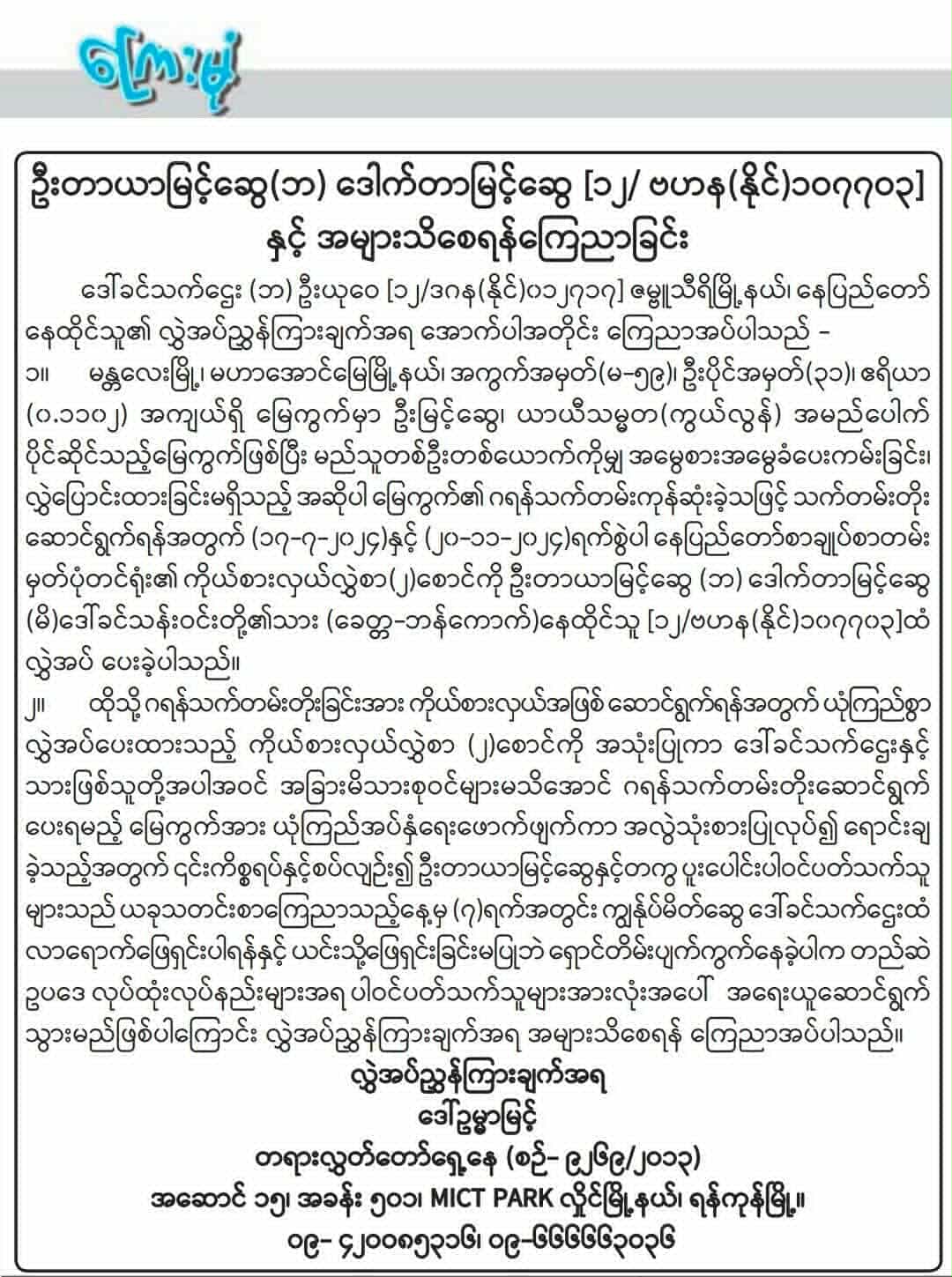
It is stated that Daw Khin Thet Htay, their son, and other family members had no knowledge of the sale. In relation to this matter, U Tar Yar Myint Swe and any individuals involved were instructed to come forward and resolve the issue within seven days from the date of the newspaper announcement. Failure to do so and evading responsibility would result in legal action against all parties involved, in accordance with existing laws.
U Tar Yar Myint Swe is the husband of Daw Khin Thet Htar Swe, who is the daughter of the late Acting President U Myint Swe and Daw Khin Thet Htay.
- By CNI
- Category: English Section
- Hits: 345
CNI News
4 December 2025
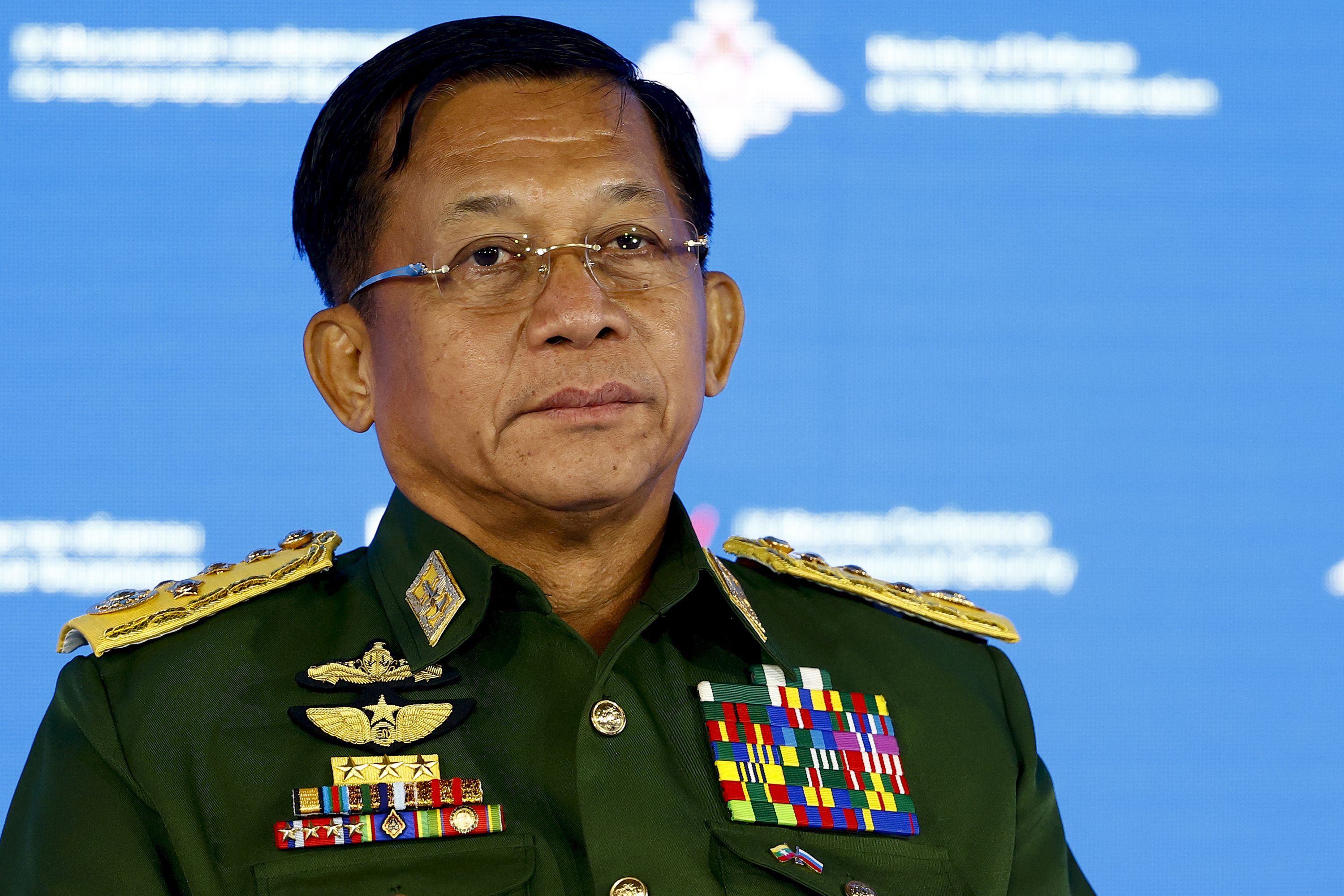
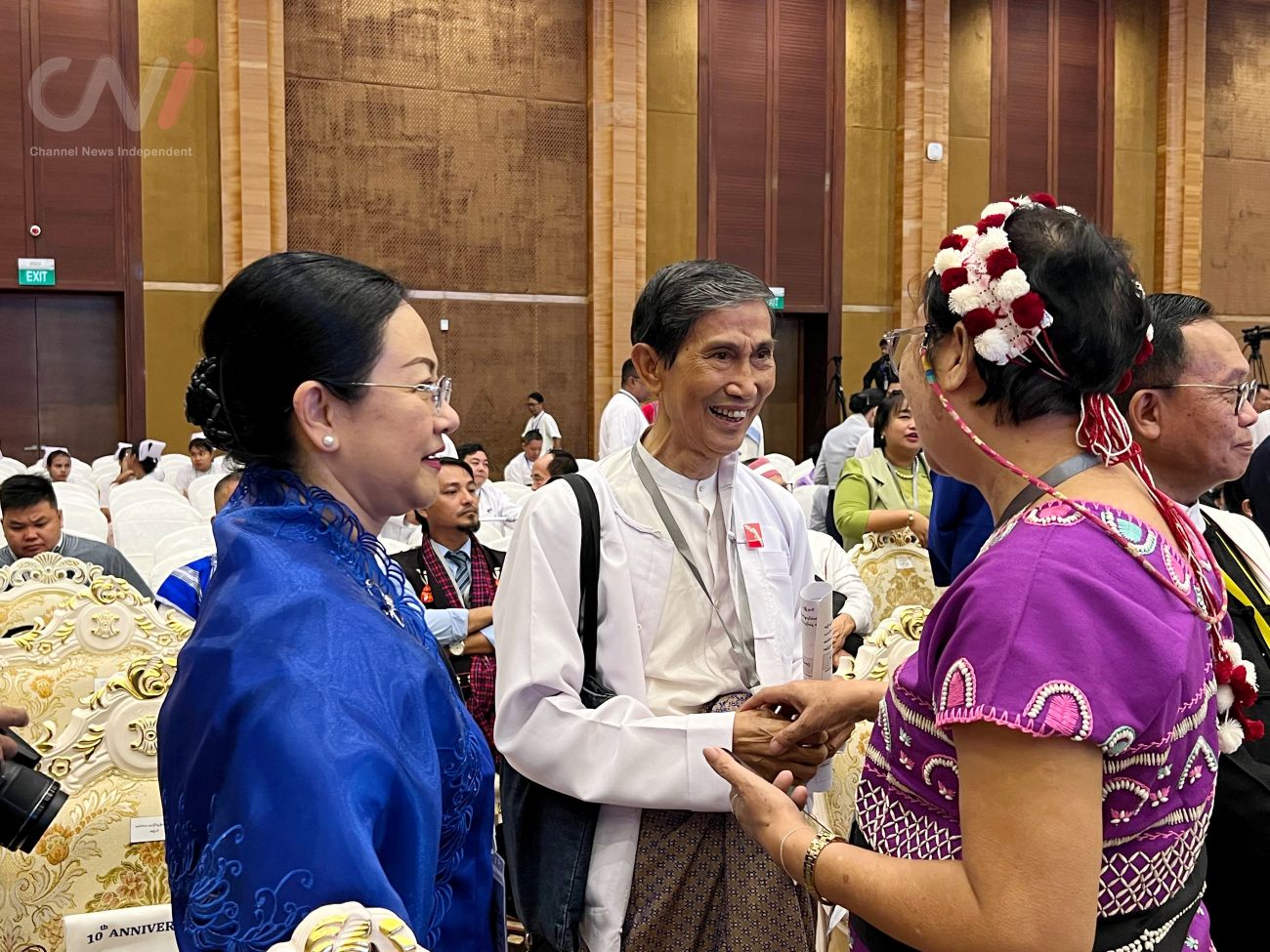
The public needs to avoid mistakenly voting for people who pretend to love the country but in reality seek only their own personal interests, said Sai Htay Aung, Chairman of the Tai Leng (Shanni) Nationalities Development Party (TNDP), in an interview with CNI News.
In Myanmar, the 2025 election will be held in three phases — Part (1) on December 28, 2025, Part (2) on January 11, 2026, and Part (3) in the last week of January.
Sai Htay Aung said that a true politician must be able to engage and communicate with anyone if it benefits their people and their country, and that voters should not cast their ballots for those who pretend to love the country while pursuing personal profit.
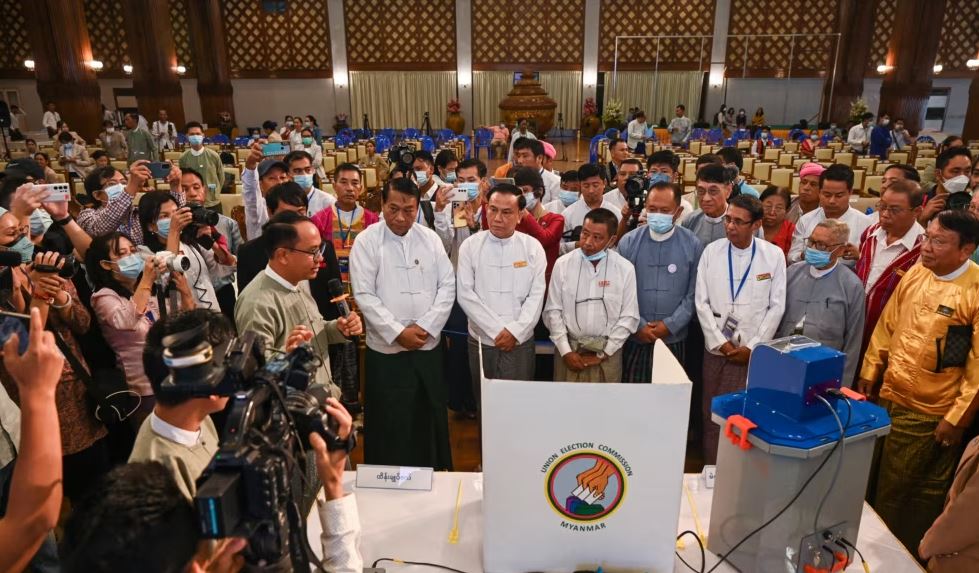
Election Commission meeting with political parties
He said:“A politician is someone who must be able to turn an enemy into a friend. As for us, we prioritize the country’s interests, and we want voters to choose those who work by looking at the face of the country and the people — no matter who they work with.Why is this important? Because right now, our country is in a very critical moment. We will need to work on reconstruction. Some people, however, are pretending to love the country while actually seeking personal gain. People need to avoid voting for such individuals.This is based on the experiences we have gone through. A politician must help build a better country. And if it benefits your people and your country, you must be able to cooperate with anyone. That’s why, as I said earlier, there are those who can harmonize with the military and so on.The military loves the country as well. If we all share this love for the country, then everyone can unite and work together on nation-building.”
Chairman of the State Security and Peace Commission, Senior General Min Aung Hlaing, also said that voters should choose candidates who can serve the interests of the country and their region, who can uphold and protect the Our Three Main National Causes, and who can cooperate in harmony with the military.
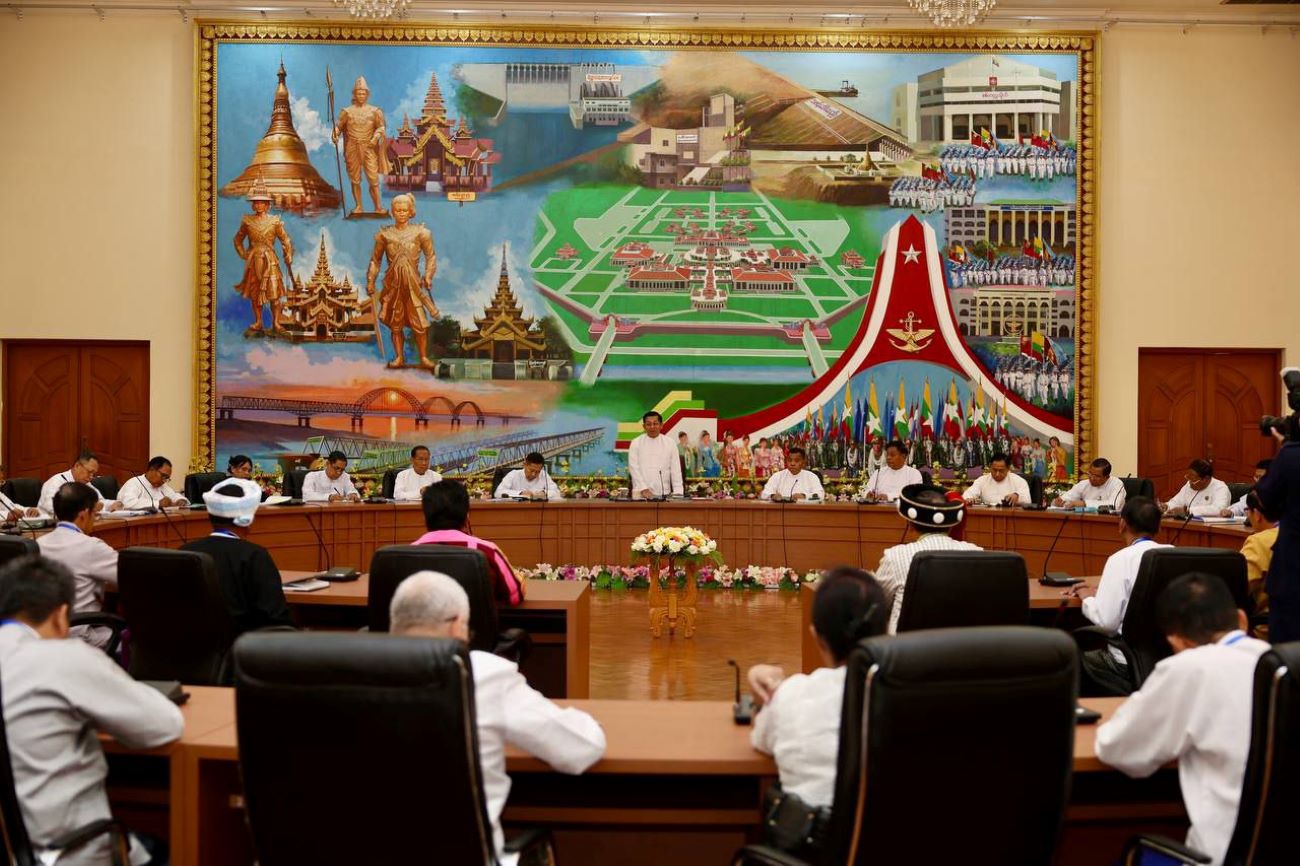
Senior General Min Aung Hlaing with political party representatives
Political analyst U Htay Aung Kyaw told CNI News that prioritizing national interests should not rest solely on the military, but must include businesspeople, industrialists, and all groups working together.
He said:“If an organization that disagrees with the military were to govern the entire country, it would be difficult because the military is the country’s backbone.If this backbone clashes with the administration, things will not run smoothly.Not only with the military — business owners, traders, industrialists — everyone must cooperate smoothly. Everything must be fair and balanced.Only when everyone prioritizes national interests and works together in development can the country truly progress. If all groups move forward fairly and in unity, the country’s development will not take long — that’s what I believe.”
Senior General Min Aung Hlaing has said that the upcoming election will bring a turning point for the country, and voters should choose those who protect the Our Three Main National Causes.
- By CNI
- Category: English Section
- Hits: 484
CNI News
4 December, 2025
The United States, under President Donald Trump, appears to be trying to adjust its policy toward Myanmar, according to Colonel Khun Okkar, Chairman of the Pa-O National Liberation Organization (PNLO-NCA/S), who spoke to CNI News.
On November 24, the U.S. Department of Homeland Security announced that it would terminate the Temporary Protected Status (TPS) previously granted to Myanmar nationals, citing Myanmar’s preparations for elections and visible administrative improvements.
Colonel Khun Okkar said,“It looks like they’re trying to change their policy. They haven’t actually changed it yet. Fundamentally, it hasn’t changed. But the US sees the way the State Security and Peace Commission is handling things now such as the election process, the political scope being expanded again. So, the US seems to show that they think adjustments may be necessary. Because of that, I believe they issued this statement to signal that they want to observe more before making a decision.”
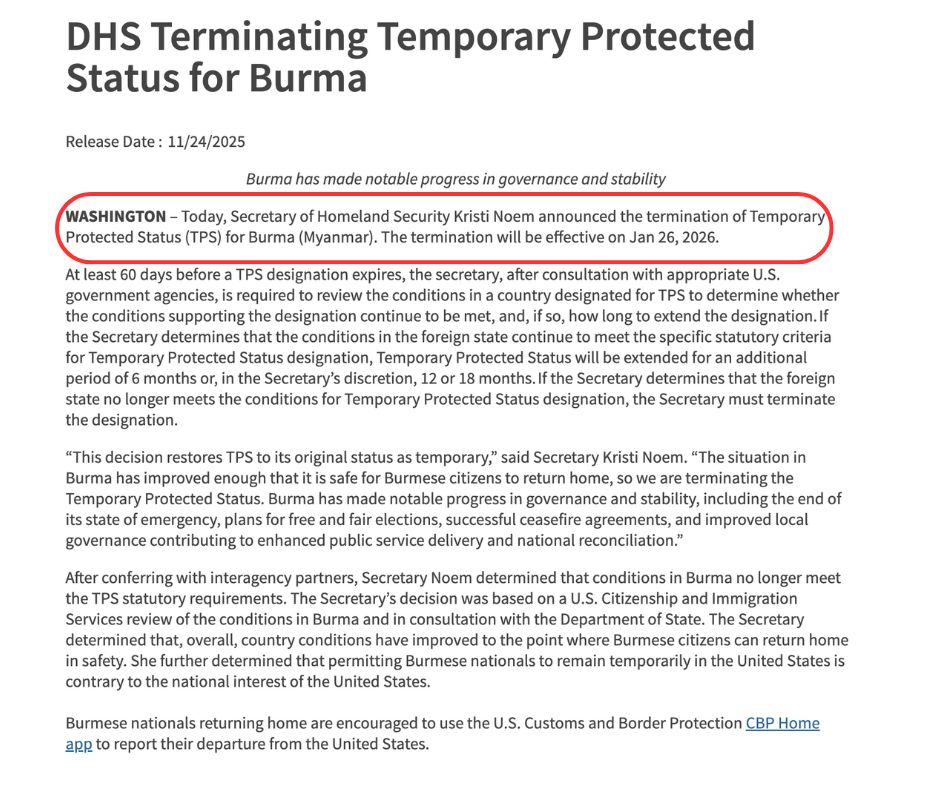
U.S. announcement on TPS termination for Myanmar
The U.S. stated that the situation in Myanmar has improved to a level where Myanmar nationals could safely return home, which is why TPS was terminated.
It added that there have been significant improvements in administration and stability in Myanmar, that the State of Emergency had been lifted, and that preparations were underway for free and fair elections. Successful ceasefire agreements and better local governance were leading to improved public services and national reconciliation, according to the U.S. government.
As a result, the U.S. said conditions had now improved enough for Myanmar nationals to safely return.
Approximately 4,000 Myanmar nationals currently live in the United States under TPS. With no further extensions available, TPS holders will only be allowed to remain for up to 60 more days.
TPS is commonly used by people who do not wish to apply for asylum but need temporary permission to stay in the U.S., and it also provides eligibility for legal work authorization.
TPS was first granted to Myanmar people after the 2021 political crisis under former President Joe Biden’s administration.
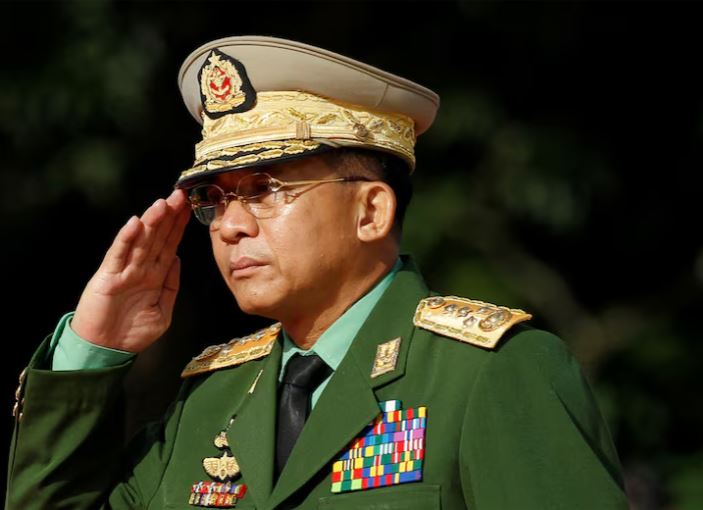
Senior General Min Aung Hlaing
Colonel Khun Okkar of PNLO-NCA/S said the U.S. government under President Donald Trump does not appear to be directly endorsing Myanmar’s military, but views Myanmar as “stabilizing,” and that changes may follow after the election.
He explained:“Even though they’re not openly endorsing the military, the upcoming election could bring a turning point. There is already a certain level of stability before the election. Afterward, a parliament and a government will emerge. If those institutions function properly, it may be seen as improved stability. So this early termination of TPS could be based on an expectation of political changes after the election — a belief that things will move in a more positive direction. It’s like allowing TPS holders to return home if they wish, based on that expectation.”
Myanmar will hold Part 1 of the election on December 28, 2025, in 102 townships, and Part 2 on January 11, 2026, in 100 townships. Part 3 is expected in the final week of January 2026.
The upcoming election is expected to bring political change to the country, and the government says it wants citizens to vote. Senior General Min Aung Hlaing, Chairman of the State Security and Peace Commission, said people should vote for those who will protect the Our Three Main National Causes and promote economic development.
He stated that after the election, power will be transferred to the winning party, and the military will only handle national defense responsibilities.
- By CNI
- Category: English Section
- Hits: 380
CNI News
4 December 2025
Myanmar, where the social situation has fallen to an extremely low state, needs politicians and businesspeople to cooperate and establish a strong economic system to move the country forward, economic and political analysts say.
Economic analyst U Htay Aung Kyi told CNI News that no country exists without politicians and businesspeople, and what truly matters is how they think. Therefore, politicians and businesspeople must collaborate for national development.
He said:“Honestly speaking, there is no country without politicians and businesspeople. The important thing is their mindset. For example, in South Korea, Park Chung-hee created cronies — but why did the country still develop? In Myanmar, cronies were also created. So why did none of these cronies reach the international level? The way they were nurtured is important.Another thing is that business people look for profit. For national development, you have to look at the entire national economic system. Something may benefit cronies a lot, but if it harms the national economy, it should not be done. If the country collapses, everything collapses — I can guarantee that.In South Korea, Japan, and Singapore, the major transformation was called the ‘democratic transition’. We must understand that. Democracy is about understanding how the national economic system and public administration system work, and how to clearly explain this to the politicians. That is crucial.In reality, we lack genuine experience. We have weaknesses. We don’t have a habit of listening. That is our main problem. Democracy requires thinking for the country’s future, and we need to be able to explain firmly and clearly so that politicians understand.”
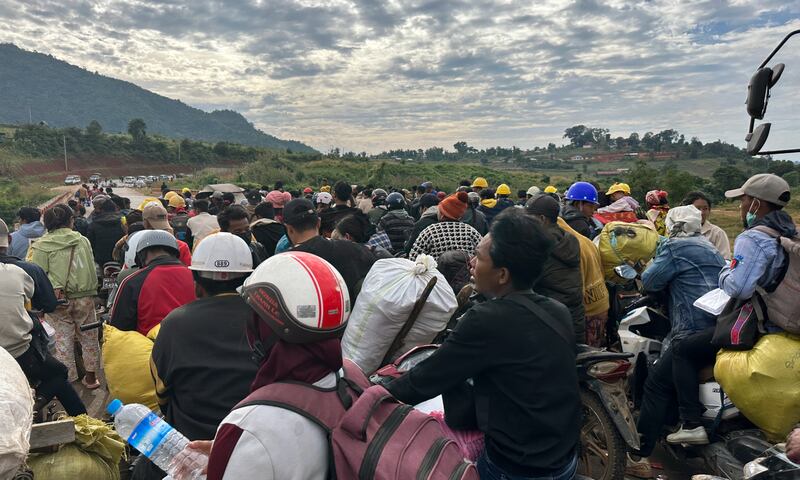
grassroots communities
In Myanmar, each time a new government takes office, a new group of cronies tends to emerge. Although no crony has ever completely collapsed due to U.S. sanctions, the public continues to bear the indirect impact of sanctions. Additionally, the country’s financial and economic sectors continue to suffer from second-hand effects and long-term damage.
Sai Htay Aung, Chairman of the Tai Leng (Shanni) Nationalities Development Party (TNDP), told CNI News that in Myanmar, no matter how much politicians claim to love the country, they cannot operate without financial backing.
He said:“In Myanmar, if you want to run a political party, no matter how much you love the country, you cannot do anything without support. Some political parties do have genuine political intentions. But when they need money, they turn to businesspeople. When they do that, the businessperson will not help unless they see personal benefit. If the businessperson supports them, it is with the expectation of profit — and when that happens, the politician becomes tied up by them. In such a situation, the country is the one that fails.”
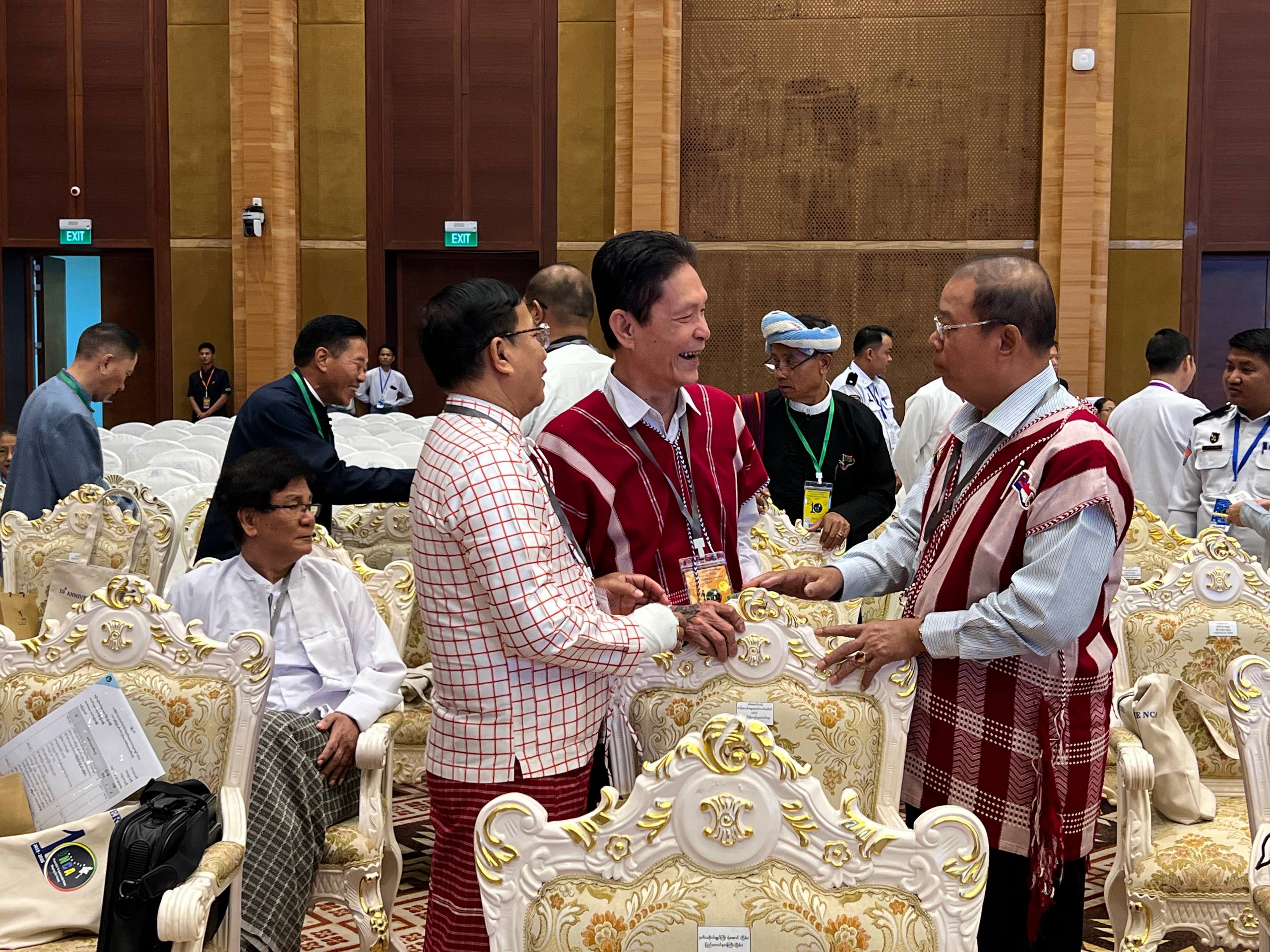
armed groups and political parties
On January 31, 2023, the political party registration law was enacted in Myanmar. Under this law, any party wanting to register at the Union level must open offices in more than 100 townships, gather 50,000 party members, and pay a 100 million kyat registration fee to the Union Election Commission (UEC).
Furthermore, when parties participate in elections, they also need funding for campaign expenses for their candidates. Because of these conditions, political parties and politicians have come to rely heavily on financial support from business people — which has allowed businesspeople to gain increasing control over political parties.
Page 51 of 352
Connect with us