
CNI News
June 26, 2026
Lawmakers and political parties are sharing their assessments on how the government led by President U Min Aung Hlaing should strive to achieve peace and stability amid the ongoing instability arising from political and military conflicts in Myanmar.
They pointed out that Myanmar is geopolitically situated at one of the most critical nexuses between powerful neighboring nations. To leverage this opportunity effectively, they emphasized that the country must first resolve its domestic political instability.
Sai Htay Aung, Chairman of the Tai-Leng (Shanni) Nationalities Development Party (TNDP), told CNI News that the root cause of Myanmar's political instability is the ethnic armed conflict, and this issue needs to be addressed consistently.
"Myanmar's political issue is fundamentally an ethnic issue—that's the first point. If we look at where these ethnic issues began, they started from the naming of ethnicities and grew progressively larger over time. It is not other issues. Since the ethnic groups are also brothers living together, if we can negotiate through a give-and-take process—looking at what they need, what we can give, and where we can compromise—then a resolution can be reached. The reason the ethnic problem has grown larger now is due to the rise of armed conflict, causing more fighting and deepening hatred. We must try to resolve this through political means to prevent such things from happening.Once the ethnic problem is resolved in Myanmar, internal peace will definitely be achieved. Therefore, I believe that if the ethnic problem can be resolved smoothly, peace for the country will not be far away. Once stability is achieved, I see that Myanmar will develop rapidly while playing its cards among the powerful nations that are important in terms of geopolitics," he said.
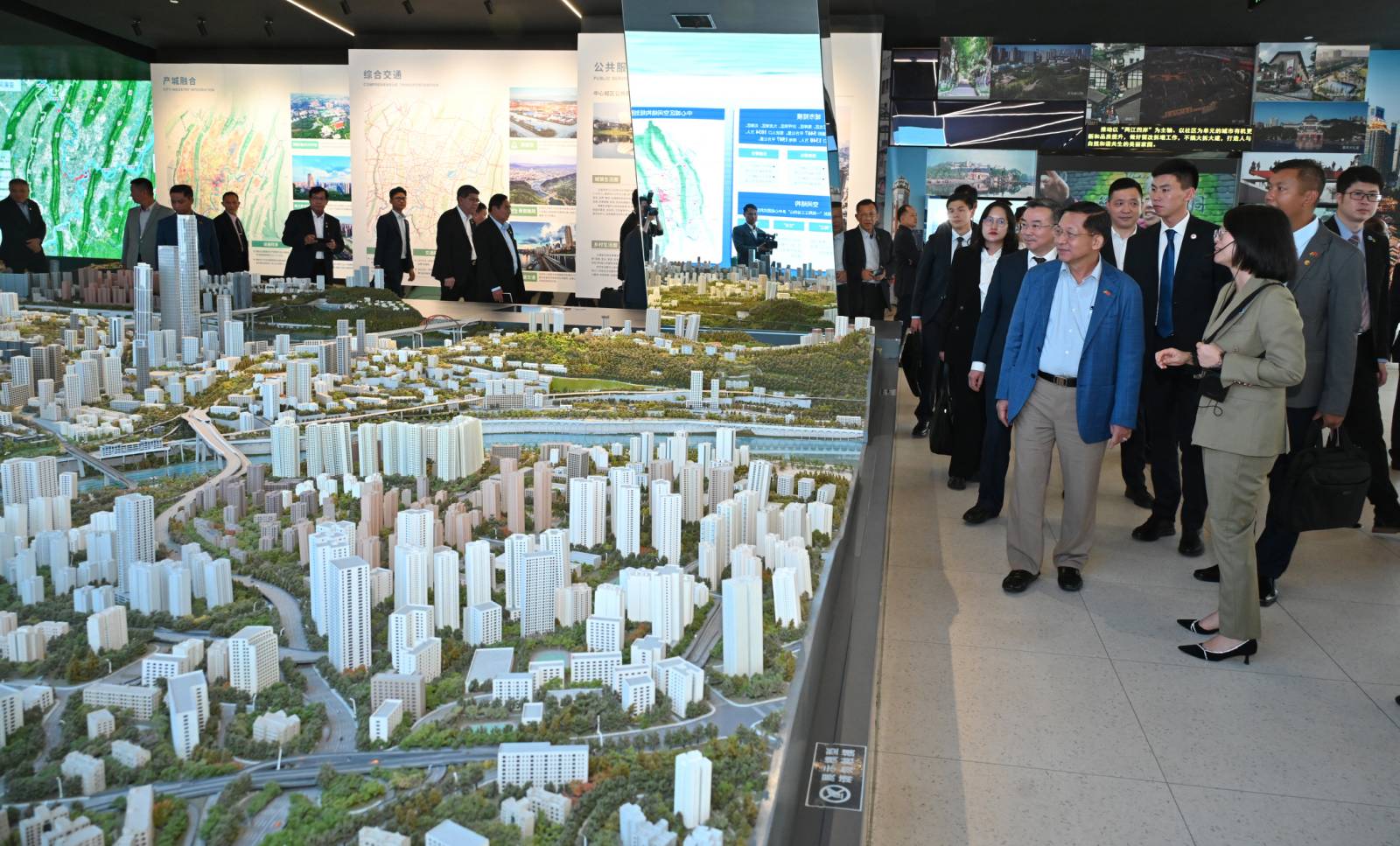
Myanmar President U Min Aung Hlaing observing urban development.
China is implementing projects in Myanmar such as the Kyaukphyu deep-sea port, which will provide an outlet to the Indian Ocean, oil and natural gas pipelines, as well as the Muse-Mandalay trade route, a railway project, and the Shweli-Mandalay-Kyaukphyu expressway to facilitate smooth China-Myanmar border trade.
Similarly, India views Myanmar as an indispensable gateway for its economic growth, serving as the only land bridge to connect with the Southeast Asian (ASEAN) market and regional countries.
Political analysts point out that contexts for negotiations and discussions between the government and ethnic armed groups in the regions where these projects are located could emerge. They also suggest that pressure and mediation from the Chinese government on the respective organizations could be witnessed.
Sai Kaung Thet San, a Pyithu Hluttaw (House of Representatives) lawmaker from the Shan and Nationalities Democratic Party (SNDP), told CNI News that primary priority must be given to national reconciliation in order to achieve political stability.
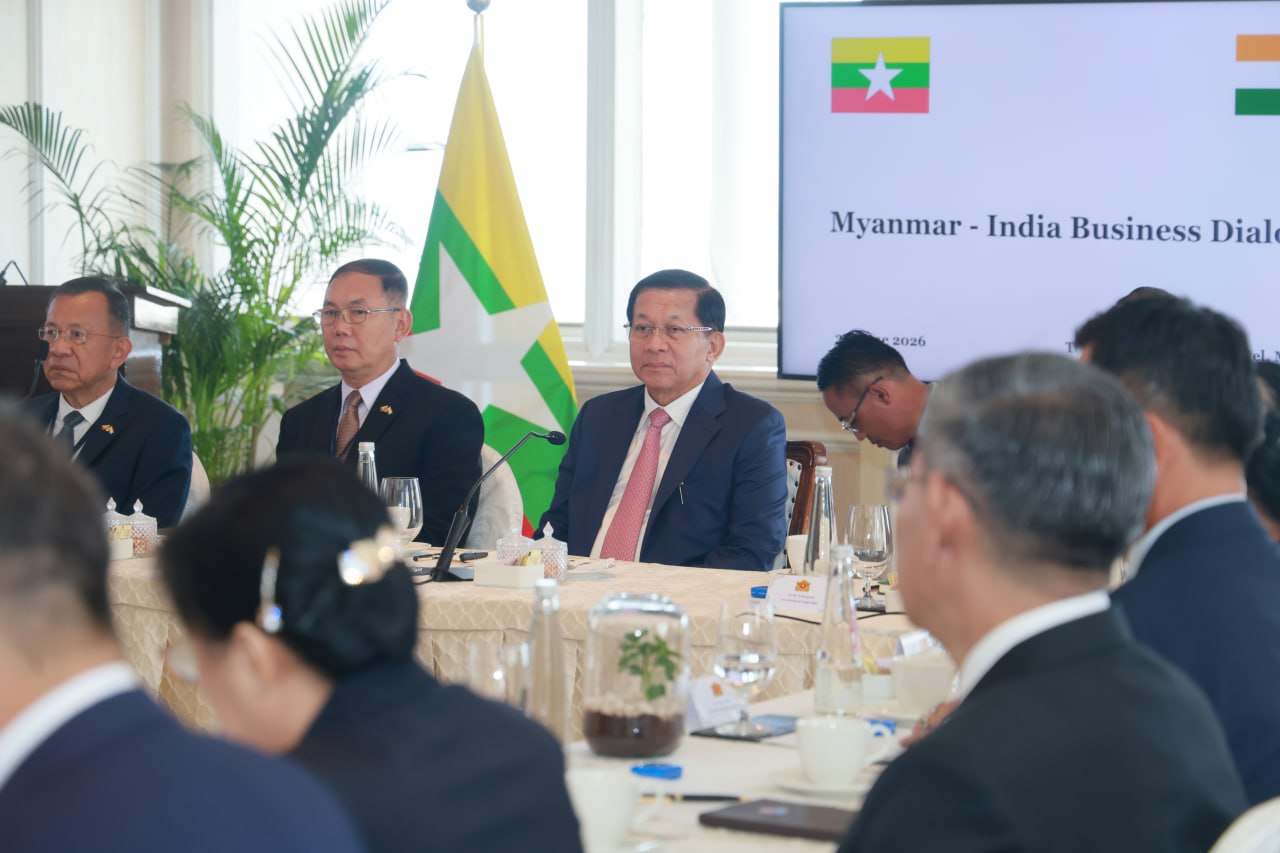
President U Min Aung Hlaing at the India-Myanmar Economic Forum.
"To achieve political stability, number one is national reconciliation. We must give priority to national reconciliation first. After national reconciliation, we must work to achieve internal peace. Based on these two points, if we reach a good state, transitions in the country will certainly happen. During President U Thein Sein’s tenure, the all-inclusive Nationwide Ceasefire Agreement (NCA) was signed. Furthermore, successive governments have worked to achieve internal peace. Frankly speaking, during the current government’s tenure, political organizations and armed groups that should and ought to be included are being invited for negotiations. The best way is through negotiation and discussion. Within the 100-day period, there are groups that have come forward to discuss now. On the other hand, there are also organizations that have moved outside the NCA framework. We also need to make efforts to get them to participate again," he said.
However, political analysts point out that ethnic armed organizations still have very weak trust in the current government’s peace process, and it can be assumed that enticing incentives have not yet been effectively offered to bring them onto the peace path.
Recently, President U Min Aung Hlaing visited India from May 30 to June 3, 2026, and China from June 15 to 19, 2026, holding talks with Chinese President Xi Jinping as well as Indian Prime Minister Narendra Modi.
On the other hand, the National Solidarity and Peacemaking Negotiation Committee (NSPNC) has held separate bilateral discussions with ethnic armed groups including the SNA, SSPP, UWSA, and NDAA, as well as meetings with the 7 EAO Alliance.