
CNI News
June 26, 2026
If Myanmar intends to stop the illegal extraction of rare earth elements by small Chinese companies and consider a government-to-government (G to G) approach, it needs to contact either the Yunnan provincial government or China's central government, political analyst Dr. M Kon La told CNI News.
In Myanmar, rare earth elements are primarily and most abundantly produced in areas near Pangwa and Chibwe in Kachin State Special Region (1) along the China-Myanmar border. Currently, these areas are controlled by the Kachin Independence Army (KIA).
Additionally, rare earth mining is also being carried out in areas controlled by the United Wa State Army (UWSA) and the National Democratic Alliance Army (NDAA) in Shan State.
Dr. M Kawn La told CNI News that the issue lies in the fact that because these areas are controlled by EAOs, mining is permitted as long as money is paid, making it impossible to crack down on illegal extraction.
"To crack down on this illegal chain is impossible as long as the rare earth-producing areas remain in the hands of EAOs. They will do whatever they want. To manufacture weapons and to ensure solid rations for their troops, they will overturn everything they have and sell it all. However, it's different on the government side. Therefore, the government needs to gain full control over these territories first. Only after gaining control can we talk G to G. Then, all those rogue 'thief' companies will disappear. Action needs to be taken against them. But to take action, we cannot just do it directly. The only thing we can do is launch airstrikes. The reason why those rare earth mining sites aren't bombed is because when a bomb was dropped once near Bhamo—where illegal gold mining was taking place—civilians died, and everyone opposed it. In reality, they are smuggling. To bring it under government control, action must be taken against all smuggling and lawless operations. However, during wartime, since there are no other viable methods, airstrikes are used," he said.
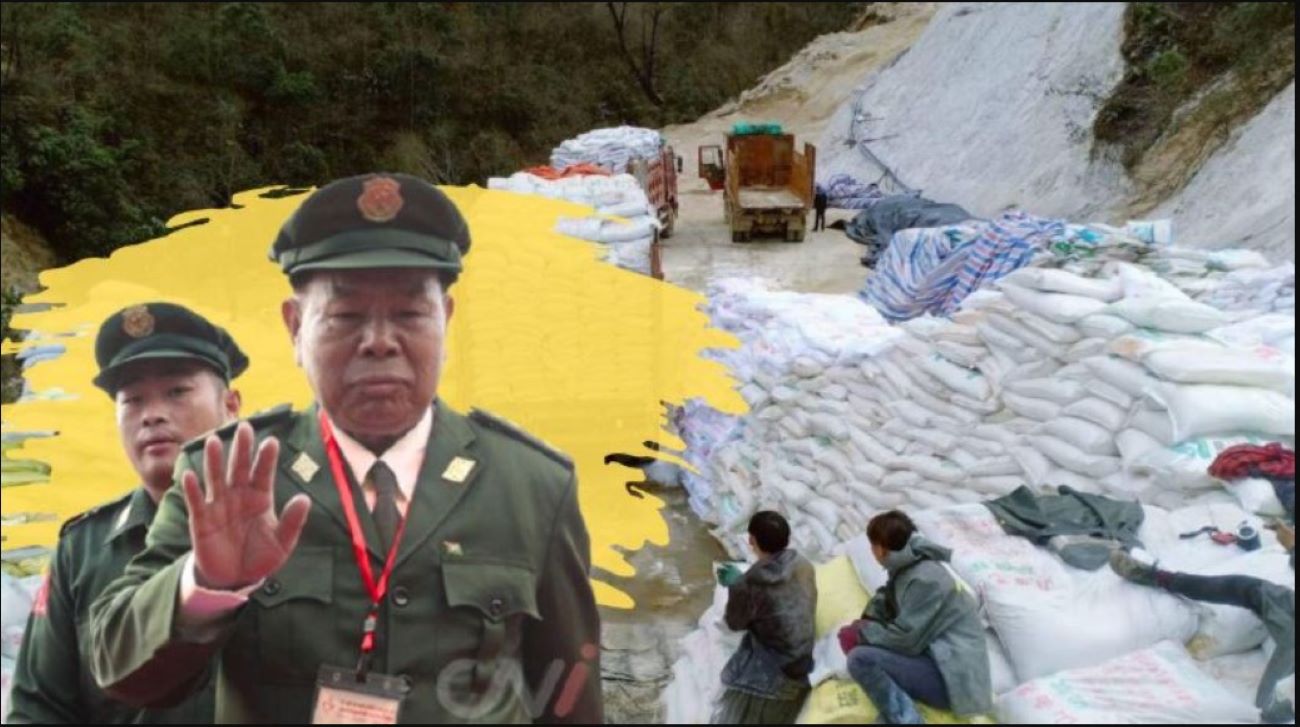
The KIA and a rare earth mining site.
Dr. M Kawn La further suggested that the Myanmar government should either conduct airstrikes on illegal rare earth mining operations or approach and negotiate with the Chinese central government.
"I am not instigating or encouraging bombings. What I mean is, if we are to consider a G to G approach regarding Chinese citizens—specifically people from Yunnan coming to do business here—we need to approach either the Yunnan government or the Chinese central government through the consulate. The EAOs will definitely continue to allow it because they will do it if they get money; that is the problem. Therefore, this sector plays a very important role in the peace process as well. However, we also need to consider what kind of give-and-take the EAOs are practicing with China—what kind of deals they are making," he said.
According to data from ISP Myanmar, during the 8-year period from 2017 to 2024, Myanmar became the primary foreign source of rare earth raw materials for China, with the total value of rare earth exports from Myanmar exceeding $4 billion.
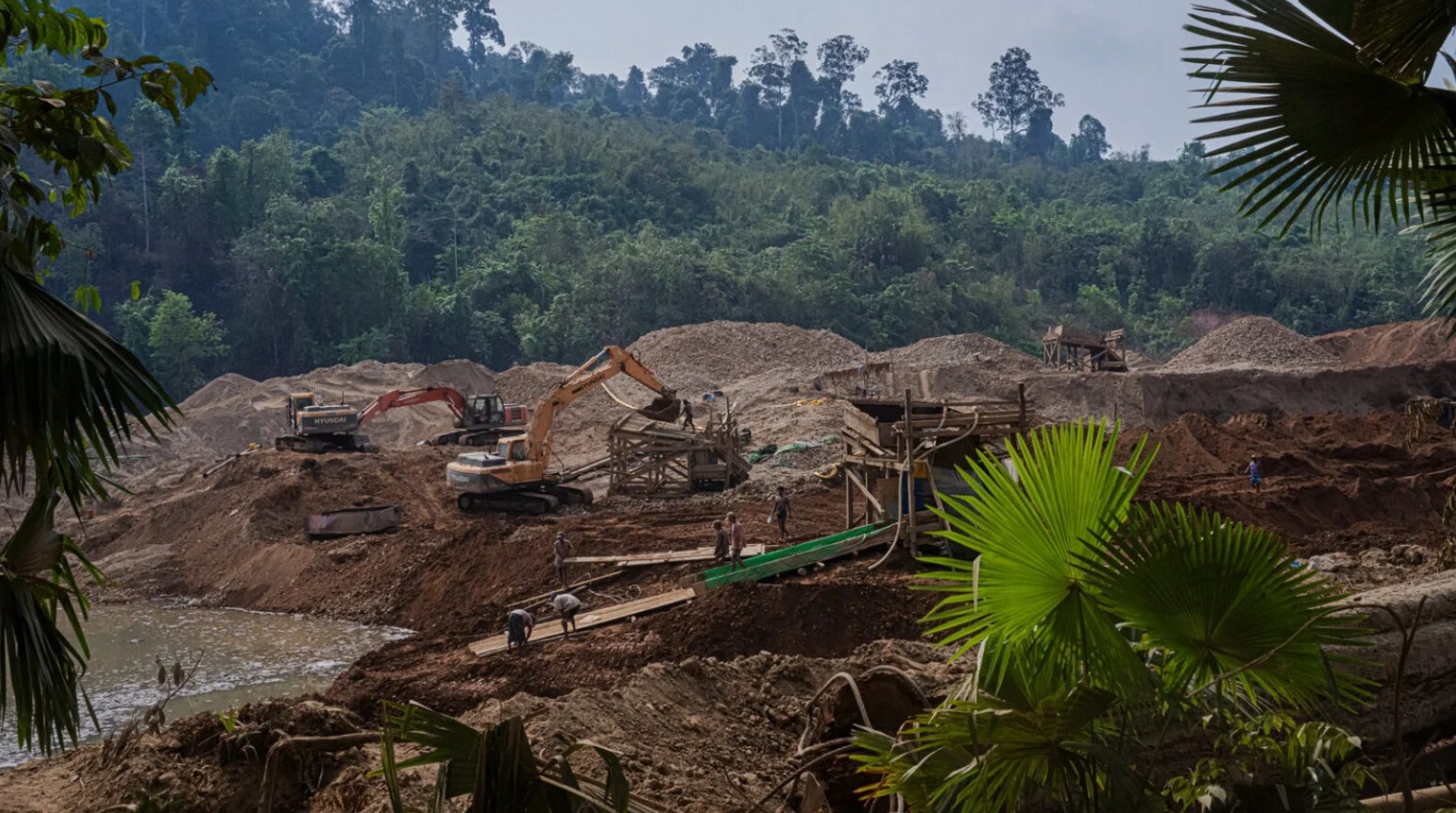
A resource extraction site.
Rare earth exports from Myanmar increased significantly after 2021. Between 2021 and 2024, rare earth elements worth $3.6 billion were exported.
Kachin politician U Gun Gawng Awng Kham told CNI News that because most rare earth areas are located along the border with China, much depends on the extent to which China permits the trade.
"Right now, since the KIA is in a position to fully control these rare earth areas, it depends entirely on the KIO (Kachin Independence Organization). It depends on how they will handle it and to what extent they will operate. However, one key factor is that all rare earth mining areas share a border with China, so it depends on how much China allows or disallows it. In the current situation, it will also depend on the level of relationship China maintains with the KIA," he said.
Military and political analysts point out that hundreds of illegal rare earth mines were expanded and operated in cooperation with Chinese businessmen without official licenses.
The raw rare earth materials obtained from these extractions were smuggled into China through border gates in various ways, bypassing customs duties and inspections. However, when the KIA took control of the area, China shut down the border gates.
As a result, it has become difficult for the chemical agents used in rare earth mining to be smuggled into the local region, and it is similarly challenging to transport the already illegally extracted minerals back to the Chinese side due to disrupted routes.