
CNI News
25 June 2026
Economic analysts are evaluating how the public in Myanmar could benefit from Chinese and Indian investments and projects, following Myanmar President U Min Aung Hlaing’s recent state visits to both India and China, where the implementation of these initiatives was discussed.
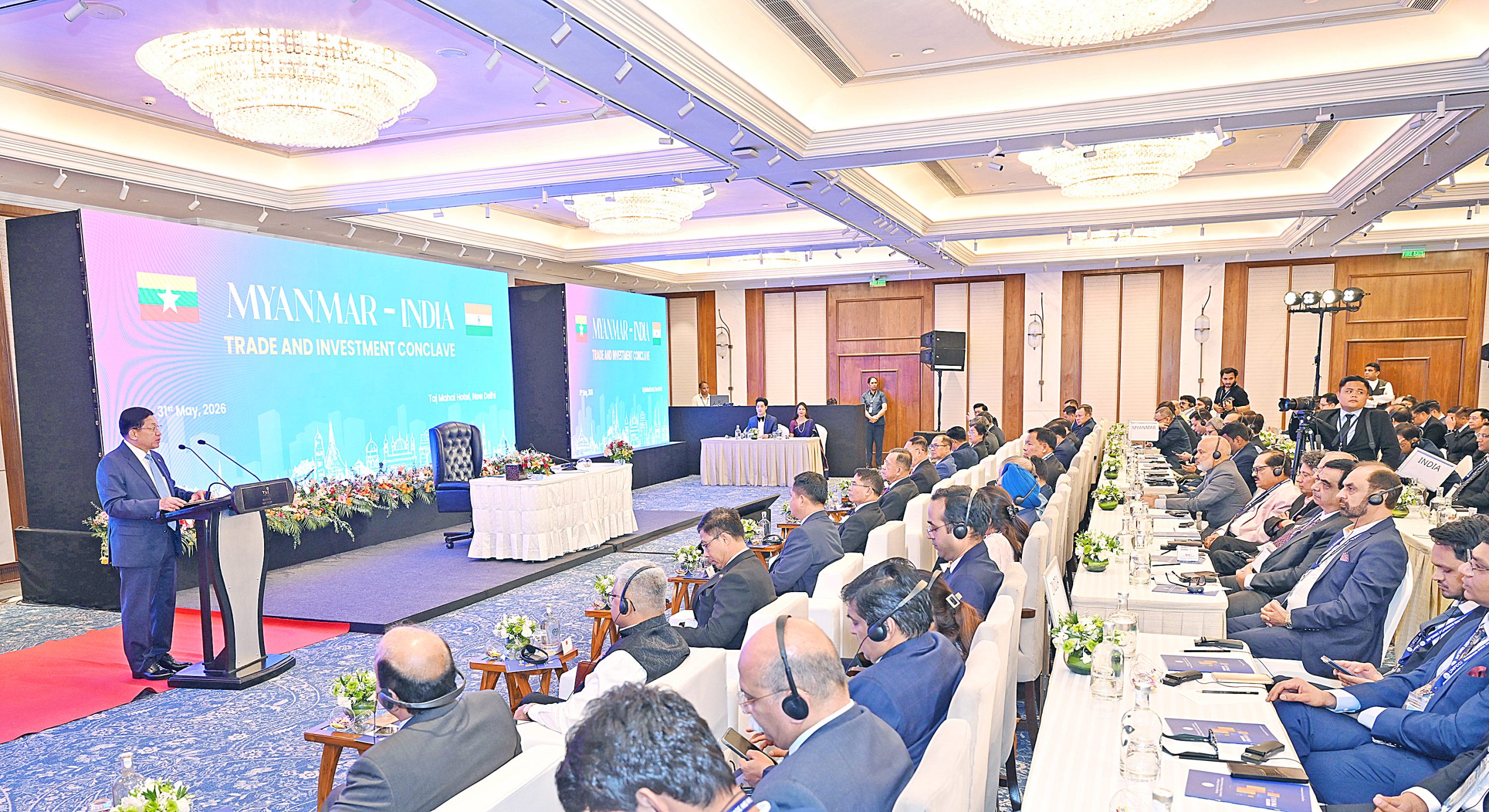
President U Min Aung Hlaing visited India from May 30 to June 3, 2026, to hold talks with Indian Prime Minister Narendra Modi. Their discussions focused on implementing the Kaladan Multi-Modal Transit Transport Project, developing the India-Myanmar-Thailand Trilateral Highway, and encouraging Indian entrepreneurs to invest in Myanmar.
Following this, President U Min Aung Hlaing traveled to China from June 15 to 19, 2026, to meet with Chinese President Xi Jinping. During this visit, 18 Memorandums of Understanding (MOUs) were signed, and discussions were held to invite Chinese businesses to invest in Myanmar.
Economic analyst U Thet Zaw told CNI News that if Chinese projects and investments can be successfully implemented, it will generate abundant job opportunities, potentially offering basic wages of up to 1.5 million Kyats.
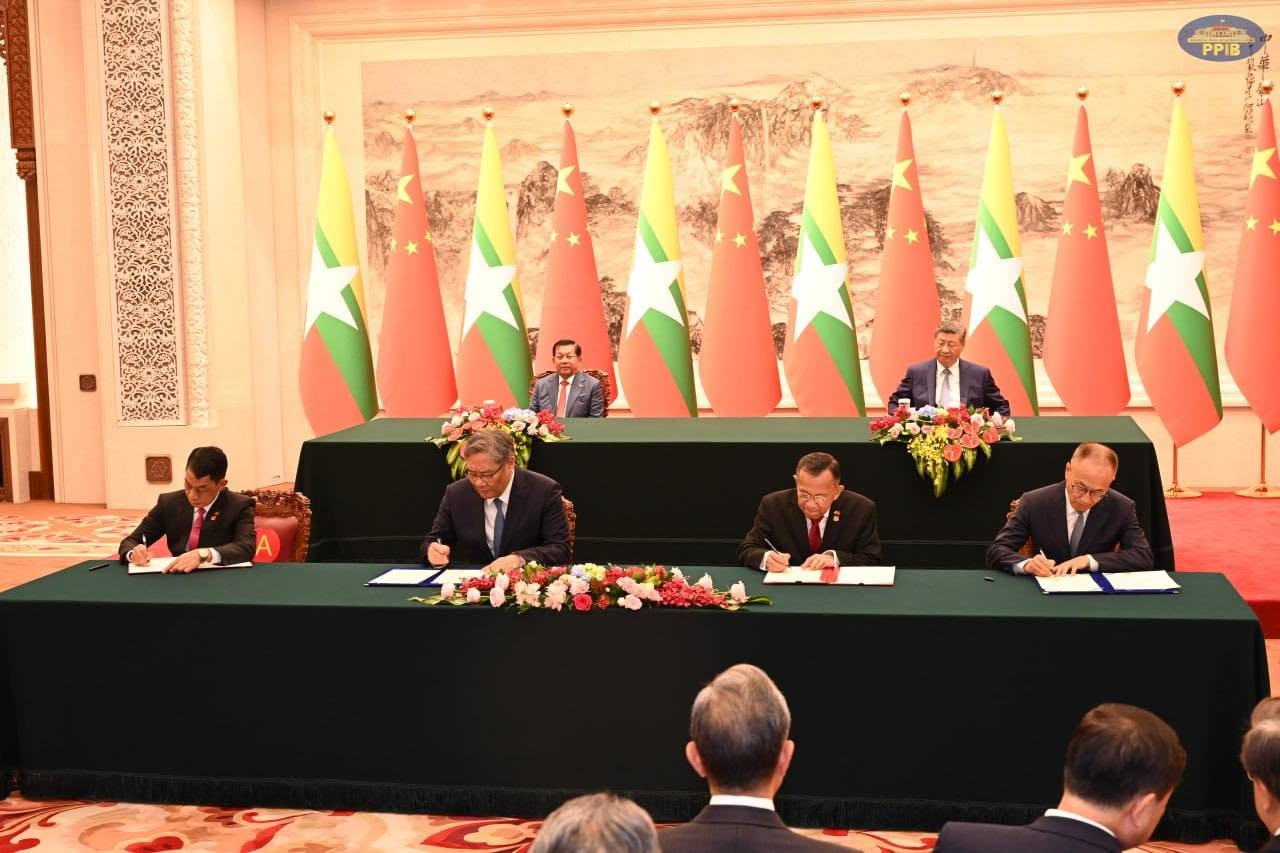
The signing ceremony of the Myanmar-China Memorandums of Understanding
"Regarding affairs in the north, it's about trade with China. Furthermore, the Kyaukphyu–Kunming highway depends heavily on the Northern Alliance's ability to achieve peace. China wants both sides to find peace. However, it also depends on our stance over here and when we can decisively finalize these matters. The circumstances under which projects can resume hinge on that.If these projects succeed, job opportunities will follow. The minimum wage for basic laborers provided by China would likely be around 1.4 million to 1.5 million Kyats. For those with specialized skills, I think they could earn around 3 million to 4 million Kyats," he said.
Economic analysts and the general public have pointed out that the Myanmar government should publicly disclose and clarify details regarding the economic agreements, projects, and investment conditions reached during the visits to China and India.
Business owners also highlighted that under the current situation, Myanmar is not yet fully prepared for large-scale investments. Barriers preventing the influx of investments include difficulties in setting up business operations, bureaucratic delays at various administrative levels, and policy constraints.
U Htay Aung Kyi, an economic and banking expert, told CNI News that Myanmar needs to work on improving its business environment so that agreed-upon projects can actually be implemented on the ground.
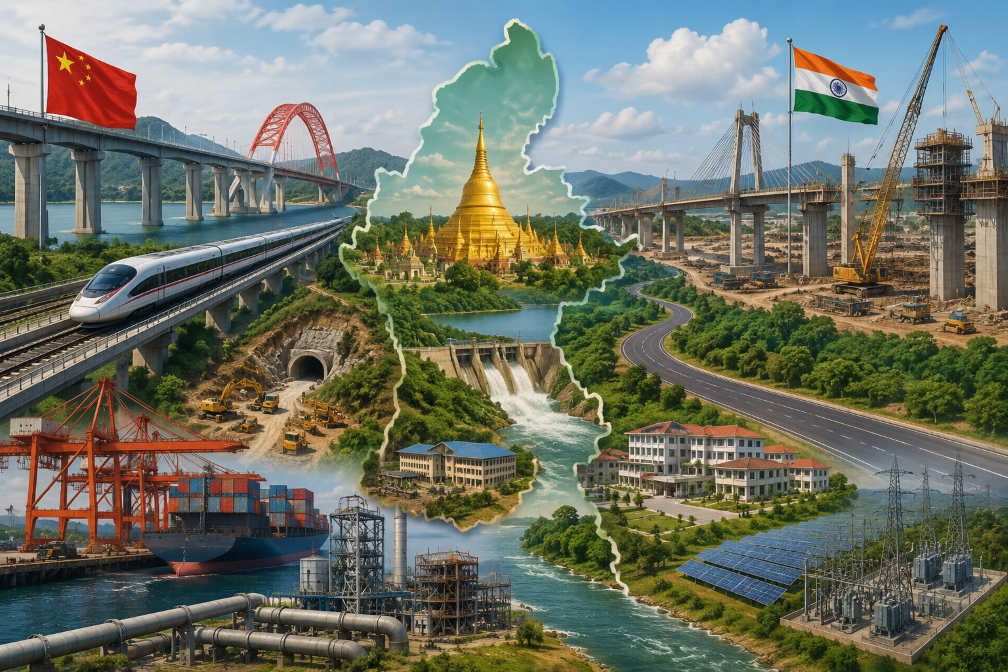
The investments being made by China and India in Myanmar
"If they are genuinely committed, they will sign MOUs. I am saying this without any bias. I harbor no ill will toward anyone. What I want to say is that signing an MOU is just one step. Reaching the actual execution phase involves an intermediate stage where both sides evaluate whether the project is truly feasible and worthwhile. On our part, we must improve the investment environment. Issues like electricity supply can be managed and resolved; that’s not the main problem. The most critical factor is an environment conducive to investment. This point was notably included in Xi Jinping's remarks. He emphasized the necessity of creating a practical and realistic landscape, covering everything from mindsets and philosophies to employment affairs. Ultimately, signing an MOU is better than not signing one. However, the most important thing is that we must create the necessary conditions to make actual operations viable," he said.
India is currently Myanmar's 11th largest investor country, with a total investment value of USD 782.385 million across 39 investment projects. These investments span industrial sectors such as oil and natural gas, transport and communications (the Kaladan River Basin Project), services, agriculture, livestock, and fisheries.
Meanwhile, China's total existing investment volume in Myanmar exceeds USD 21 billion, maintaining its position at the very top as Myanmar's largest source of foreign investment.