
CNI News
25 June 2026
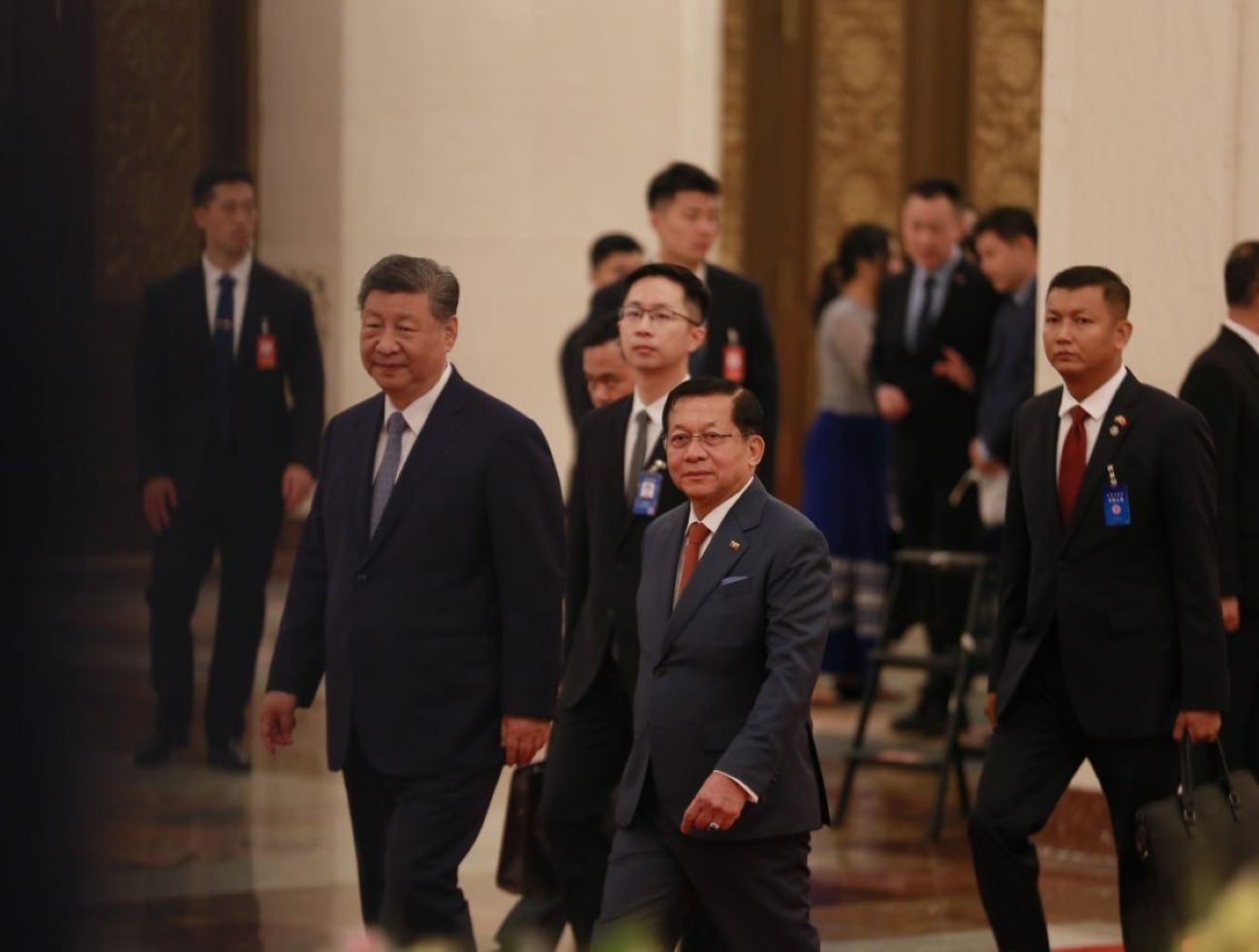
Domestic and international political circles are assessing the significance of China's role in Myanmar's peace process under the new government led by President U Min Aung Hlaing.
China wields significant influence over the United Wa State Army (UWSA), National Democratic Alliance Army (NDAA), Shan State Progress Party (SSPP), Myanmar National Democratic Alliance Army (MNDAA), Ta'ang National Liberation Army (TNLA), and Arakan Army (AA), and has been mediating to facilitate peace talks between them and the Myanmar military (Tatmadaw). Similarly, China has been urging the Kachin Independence Army (KIA) to hold talks with the Myanmar military.
Military and political analysts point out that although China's influence over all armed groups is not absolute, these groups rely on China for weapons, ammunition, rations, and fuel. Therefore, in the long run, they cannot survive independently without ties to China.
Political analyst Dr. M Kawn La told CNI News that Myanmar's peace process largely depends on the actions of neighboring countries sharing its borders, and that the new government should engage in detailed peace negotiations with both China and India.
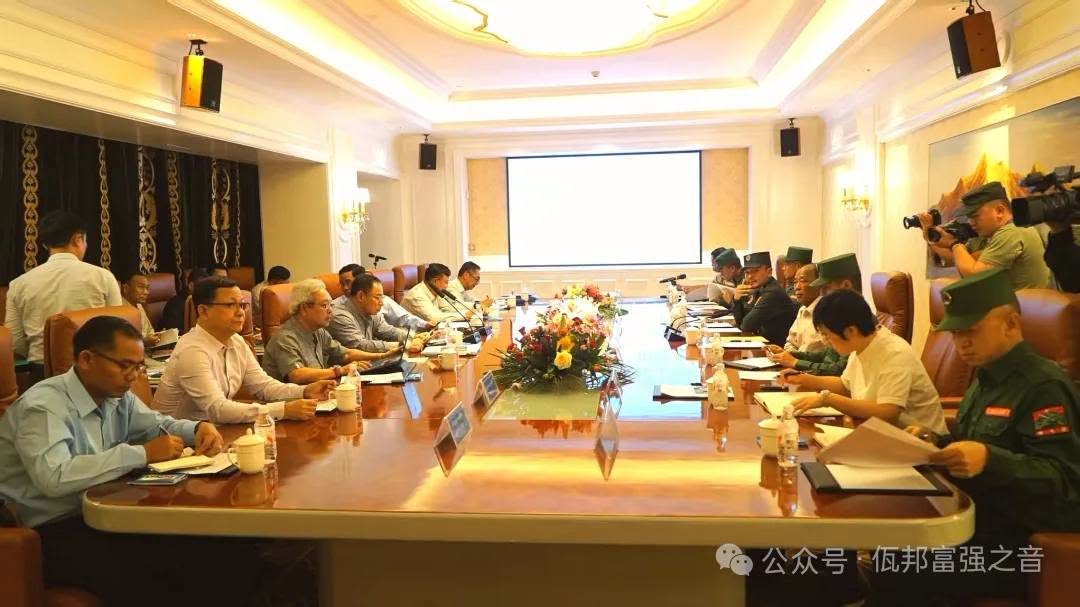
The meeting between UWSA and NSPNC
"The peace process depends heavily on the actions of the powerful nations bordering us. Our peace process is highly contingent on them. For example, if India takes decisive and strict action, the CNF won't be able to survive, and it will also become difficult for the AA to sustain itself. Similarly, if China acts decisively on this side—say they just cut off a single weapons supply route or block ration routes required to wage war—it won't be easy for border-based armed groups to sustain themselves or fight a battle. We need to reflect on the answer to where these weapons come from. Therefore, neighbors are extremely important in the peace process. If we genuinely want peace, the government must engage in detailed negotiations with China on how to move forward with peace talks, as well as detailed negotiations with India. They are likely already doing this, but I am just projecting. Any government leading the country must inevitably do this. If we are genuinely heading toward peace, this is a top-down task—work that must be done from the top. That means it's an action for the superstructure, while the infrastructure has its own separate tasks to fulfill. These must be implemented politically. These are the broad dimensions we have to consider, and that's what I want to highlight," he said.
Military and political observers point out that while China genuinely wishes to see peace in Myanmar, it is also playing a strategic game on another front. They note that China is positioned to continue intervening in Myanmar's internal affairs by leveraging its influence over ethnic armed groups.
Currently, intense fighting continues between the Myanmar military and various armed forces, leaving peace processes stalled and unimplemented. The civil war in Myanmar has persisted since the country gained independence on January 4, 1948, up to the present day.
Political analyst U Htet Aung Kyaw told CNI News that Chinese pressure on ethnic armed groups is exceptionally critical for the peace process.
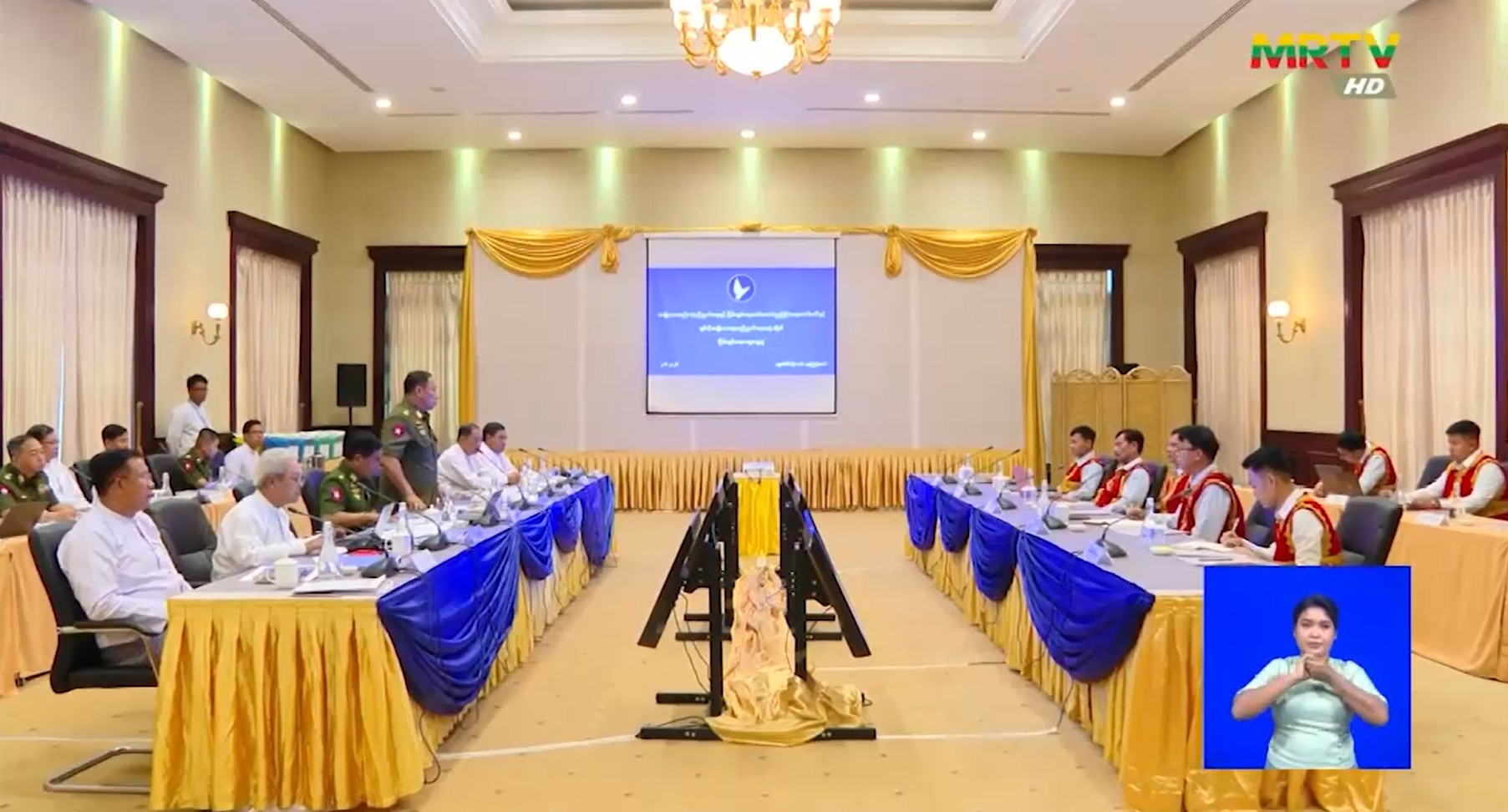
The meeting between SNA and NSPNC
"Whether it was during Deng Xijun's visit or Wang Yi's visit, when it was pointed out that raw materials were entering the ethnic armed groups from the Chinese side, China halted those flows. There were instances where they completely closed border gates and cut supplies. Under those conditions, even the Wa forces visibly slowed down their momentum, as did all the other armed groups. So to put it simply, China is the key factor. China's movements are the most critical. Following that, how the Wa react and subsequently how other ethnic groups respond becomes even more significant. Based on what we saw under that scenario, all other armed groups toned down their operations. This shows heavy Chinese pressure. Since China sent a clear signal that it cannot accept instability in a neighboring country right along its border, the landscape changed visibly for everyone. That much is quite obvious," he said.
President U Min Aung Hlaing has extended an invitation to Myanmar's ethnic armed groups to engage in peace talks before July 31, 2026.
Following this, the new government's National Solidarity and Peacemaking Negotiation Committee (NSPNC) held separate meetings in Nay Pyi Taw with the Shanni Nationalities Army (SNA) on June 4, 2026; with seven NCA-signatory armed groups on June 9 and 10; and with the Shan State Progress Party (SSPP) on June 12.
Similarly, the NSPNC held dialogue with China-border-based groups, meeting the National Democratic Alliance Army (NDAA) in Mong La on June 17, and the United Wa State Army (UWSA) in Pangsang (Pangkham) on June 18.