
CNI News
June 22, 2026
Female politicians told CNI News that while women's participation across various sectors in Myanmar has increased, there is still a pressing need to enhance their capacity.
Critics point out that under the current government's term, despite a prominent women's leadership role including a female Vice President and numerous female MPs in parliament, capacity building remains essential.
In Myanmar's peace process, efforts to boost female participation and ensure women are involved at every decision-making level have successfully raised female representation to 22%.
Daw Saw Mra Raza Lin, Chairperson of the Arakan Liberation Party (ALP), told CNI News that while female participation in Myanmar's governance and peace processes has risen during the current administration, further capability is required to advance the interests of the nation, its ethnic groups, and local regions.
"During the Nationwide Ceasefire Agreement (NCA) negotiations, agreements were reached to promote women's participation and include women at every decision-making level. Following that, female representation rose to 22%, as seen in the final peace conference. However, mere participation is not enough. In any organization, women's involvement must genuinely benefit the country and its people. Women cannot simply be there to nod their heads in agreement. If women can utilize their own capacities to work harder for the country, their people, and their regions, then their increased participation is truly worth celebrating."
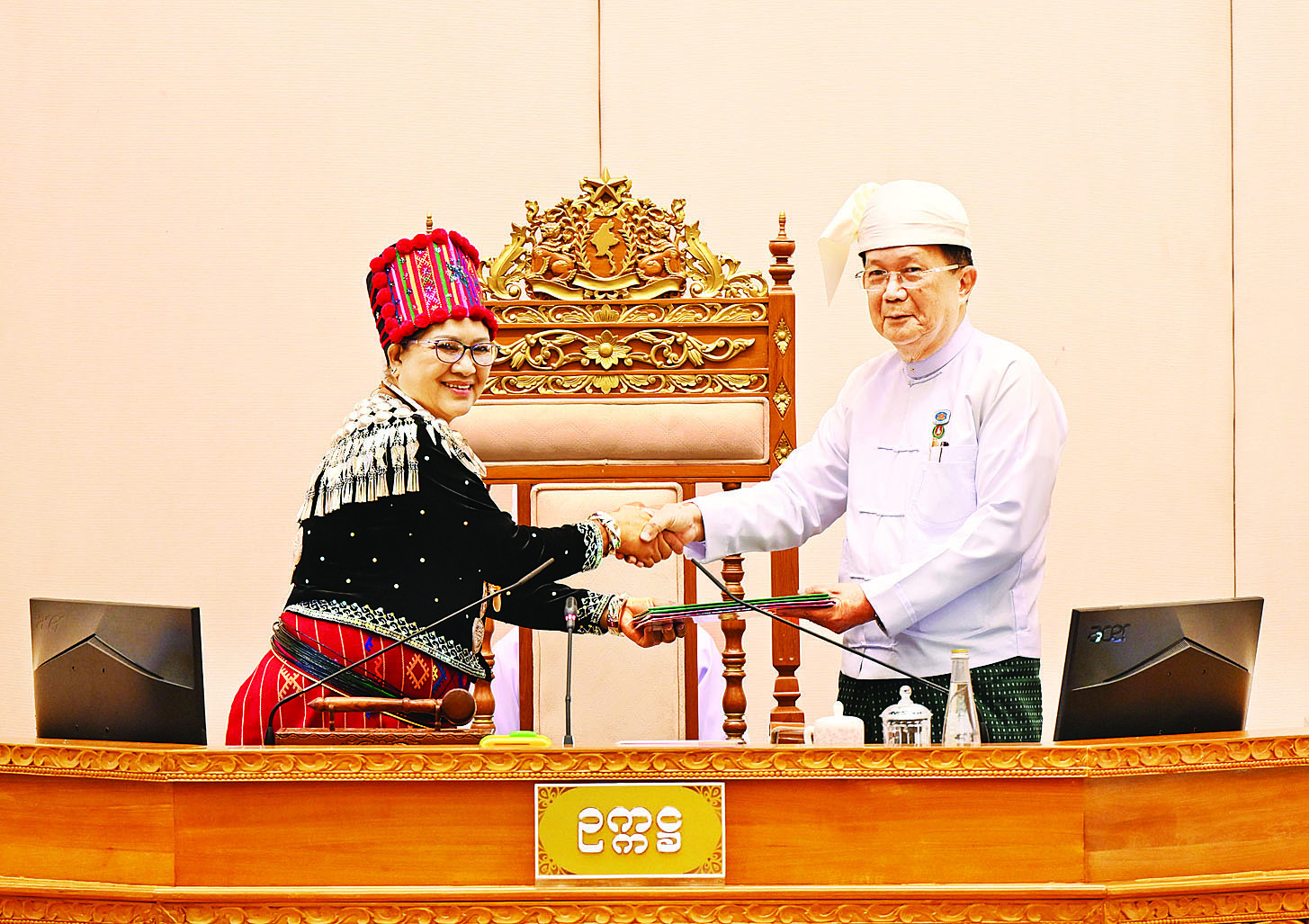
Daw Dwe Bu, former Speaker of the Amyotha Hluttaw and current member of the Union Advisory Council.
Currently, women in Myanmar are being appointed as ward/village tract administrators and elected as MPs. However, female representation remains low in parliamentary committees, and appointments to leadership roles are exceptionally rare.
International standards mandate that women must make up at least one-quarter (25%) of government and civil society organizations. Therefore, women's rights advocates point out that Myanmar's political and social organizations across all sectors must meet these international standards to secure international trust.
Dr. Nyo Nyo Thin, founder of Yangon Watch, told CNI News that current female MPs need to conduct field inspections in their respective constituencies regarding women's, children's, and elderly rights, as well as corruption and malpractices by administrators, and raise these issues in parliament to maintain checks and balances.
"In particular, female MPs in parliament must question and audit whether the citizens, children, women, and the elderly in their constituencies are genuinely receiving the rights and support provided by the Department of Social Welfare, such as maternal and childcare benefits and elderly stipends. Checking whether constituents receive these social welfare rights from government operations is exactly what a female MP should do."
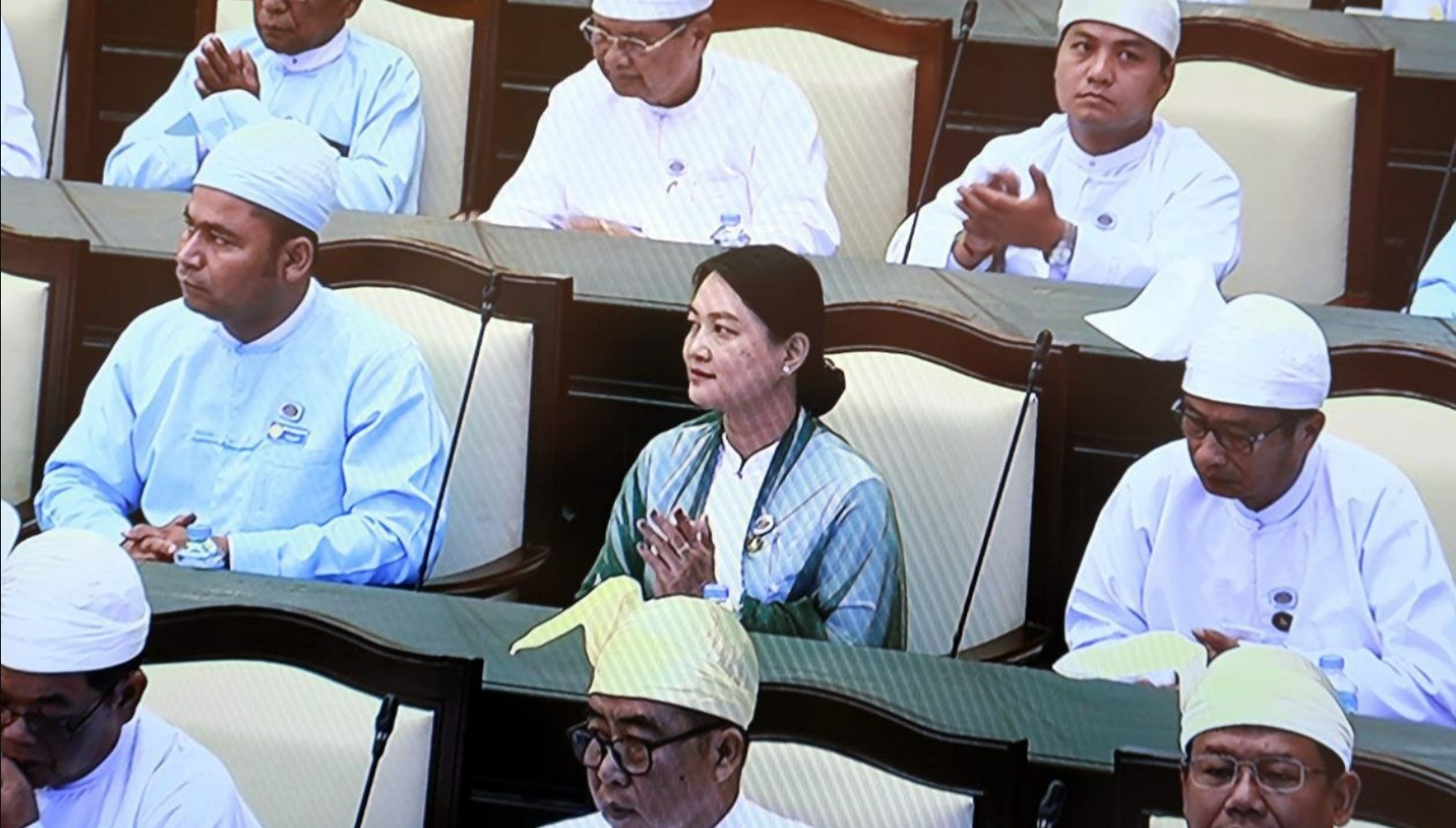
A female member of parliament seen among male MPs.
Similarly, Dr. Nyo Nyo Thin pointed out that female MPs should use a "mother's heart" to evaluate whether administrative staff are violating the fundamental rights of the public.
"Furthermore, women should evaluate and regulate with a mother’s heart whether municipal and administrative staff are violating the basic rights of citizens in their constituencies. They should investigate whether administrators are taking bribes for guest list registrations. Saving 5,000 or 10,000 Kyats means a lot to ordinary citizens—it can buy them 3 or 4 condensed milk cans worth of rice. Therefore, female MPs need to use their motherly hearts to oversee and curb the undisciplined actions and malpractices of certain administrators."
Women's rights advocates note that although female participation and leadership opportunities remain limited in Myanmar's political landscape and governance system, the increasing number of female MPs represents a positive change.
According to data from the Union Election Commission (UEC), a total of 1,183 female candidates were officially confirmed for the 2025 general election. The breakdown of registered female candidates across various parliaments includes:
Pyithu Hluttaw(House of Representatives): 309 candidates Amyotha Hluttaw (House of Nationalities): 190 candidates Region and State Hluttaws: 704 candidates.