
CNI News
June 11, 2026
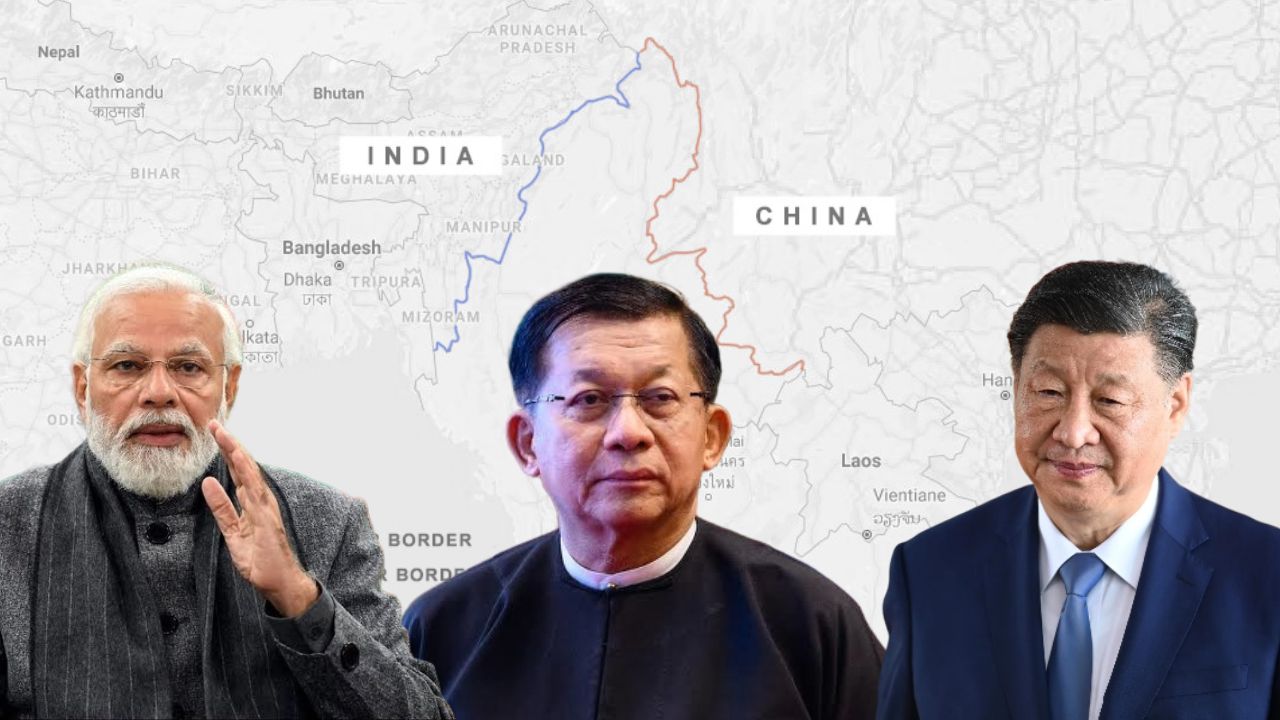
Political parties and political analysts are highlighting how Myanmar should shrewdly navigate its position between its powerful neighbors, China and India.
Military and political analysts assess that the attitudes of China and India toward Myanmar are based on their respective national interests, geopolitical competition, and border stability.
A political analyst told CNI News Agency that it is highly crucial for the government to act shrewdly amidst the investment projects of China and India in Myanmar; otherwise, Myanmar could fall into a cycle of deep debt to China.
"Geographically, our country is located at an excellent and strategic hub for major global powers," the analyst said. "If we can leverage this, it will be immensely beneficial for us. But if we fail to utilize it effectively, we will end up merely investing the 'land,' being exploited, and gaining no development at all. We could end up stuck in a cycle of persistent poverty and destitution.For instance, China is aiming to secure an outlet to the Indian Ocean by cutting through Myanmar. The basic premise of their Belt and Road Initiative (BRI) projects is to build massive roads and engage in trade. When such roads are built, Myanmar has to bear the costs. If there is no money, China will lend it. They have established banks specifically for the BRI, and those banks will lend the funds. Furthermore, if technical expertise is lacking, they have all the expertise. No matter how difficult a terrain is on earth, they can build a road through it. China relies on such guarantees to persuade and lobby countries.However, if you are stuck paying interest on loans for building this highway or mega-port, yet no ships dock at the port, no foreign goods flow in due to the lack of an expansive market, and no ships depart from here because you have nothing to sell, the port construction might be complete, but you are left with nothing but bank loans and interest payments. Consequently, you sink into a debt trap. This is similar to how China built the Hambantota port in Sri Lanka."
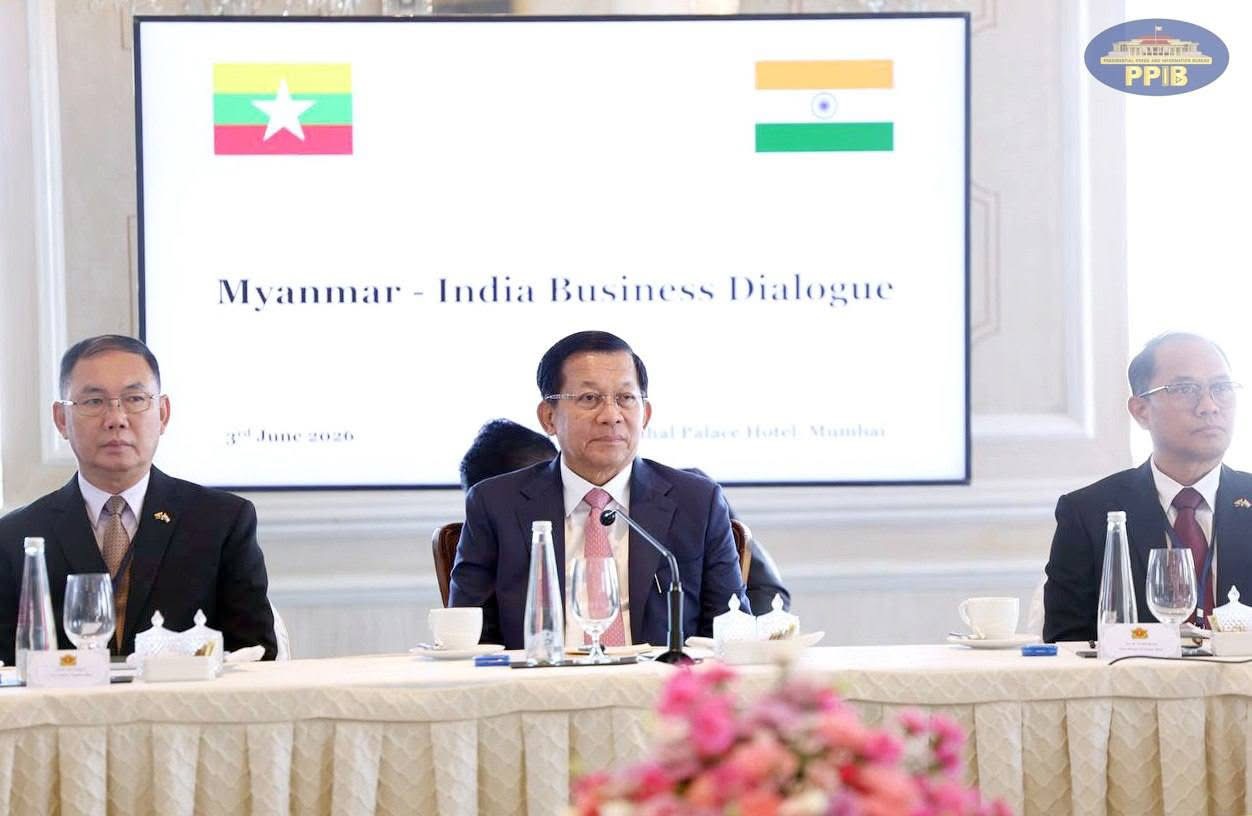
President U Min Aung Hlaing attending a Myanmar-India economic discussion.
The analyst further noted that the government needs to seize existing opportunities and know how to make clever demands that serve the national interest.
"At a time when China wants to execute these projects, we currently do not have much to sell to them; we are mostly buying goods from them," the political analyst continued. "So, once the roads are connected, it is certain that both goods and people will flow through these routes. What we can export are agricultural products. Therefore, we must demand, 'Please allow our agricultural products. Permit us to sell them.' Making such demands can work out well if we do so before reaching an agreement, particularly at a time when they intensely desire an access route to the Indian Ocean. If we wait to demand until after an agreement is reached and contracts are signed, it won't be easy. What I mean to say is, we must know how to negotiate and demand. We must know how to ask not only for job opportunities for our people but also for the advancement of manufacturing technologies."
Military and political analysts point out that the regions in Myanmar bordering China and India include Shan, Kachin, Chin, Sagaing, and Rakhine states and regions, emphasizing the need to exercise caution across all these territories adjacent to the two giants.
Dr. Kyaw Swe, a Pyithu Hluttaw (House of Representatives) MP from the National Unity Party, told CNI News Agency that since Myanmar is positioned between the world's most populous nations, it should strive to turn their vast populations into a secure market for its food and agricultural products.
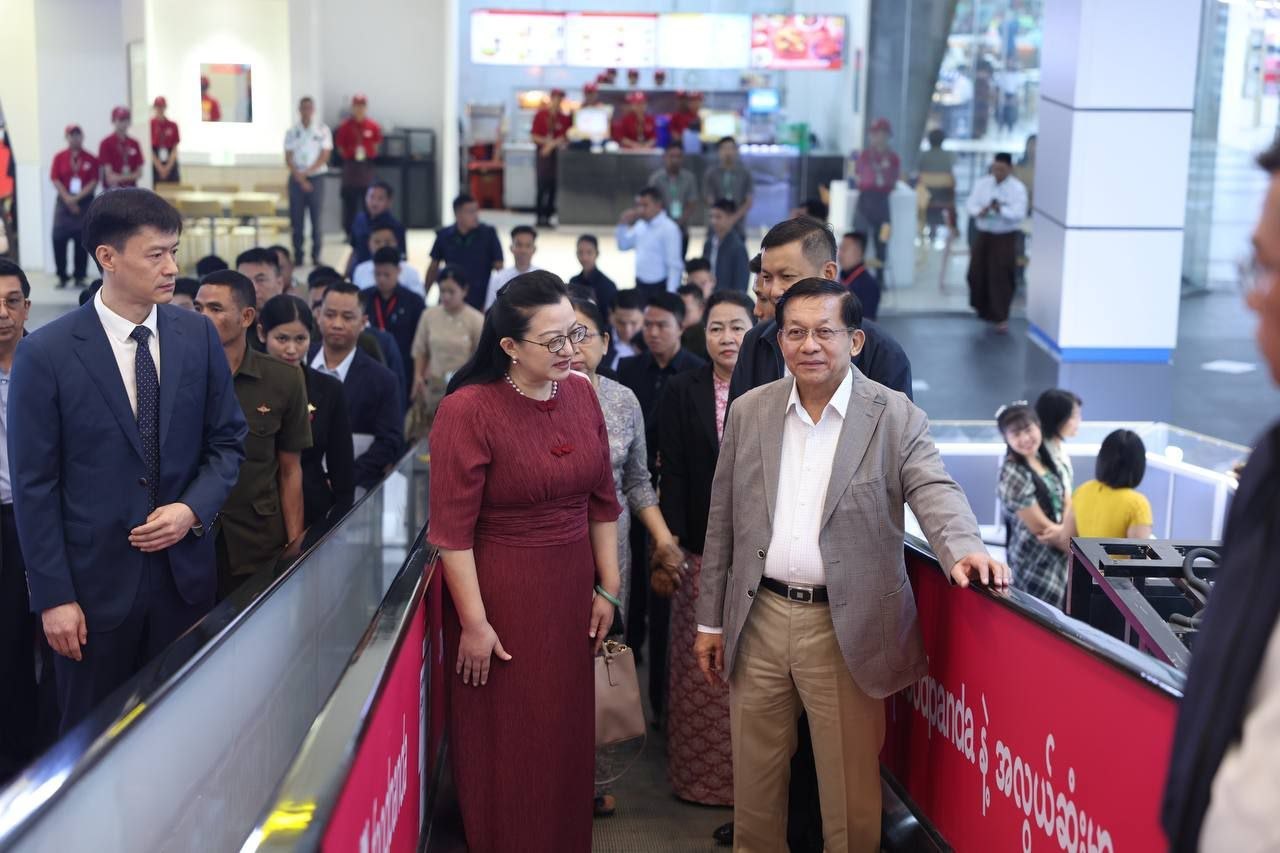
Chinese Ambassador Ms. Ma Jia and President U Min Aung Hlaing.
"Myanmar has to live between countries with the largest populations in the world," Dr. Kyaw Swe said. "Therefore, we must strive to turn their large populations into a market for us. We should prepare ourselves to secure strong, core markets for food and agricultural products, which our country mainly produces. Another point is that in international diplomacy, Myanmar must work to gain the support and standing of these major powers. From Myanmar's side, we are located right in the middle of two of the largest consumer markets. It is highly viable for us to produce and supply what the consumer populations of these two countries need. Myanmar also holds a strategic position in every logistics and transportation route, which presents tremendous opportunities for us. Furthermore, once projects like the Dawei Deep Sea Port are completed, we will be able to pursue even greater development. Myanmar will then position itself right within the global trade zone."
China-Myanmar affairs analysts point out that the Chinese government is likely to wrap up its projects in Myanmar, namely the Belt and Road Initiative (BRI) projects and the Kyaukphyu Deep Sea Port project, within the next five years.
Similarly, India is actively implementing the Kaladan Multi-Modal Transit Transport Project and the India-Myanmar-Thailand Trilateral Highway.