
CNI News
June 3, 2026
Military and political analysts are discussing and analyzing what kind of role the Indian government could play in Myanmar's peace process.
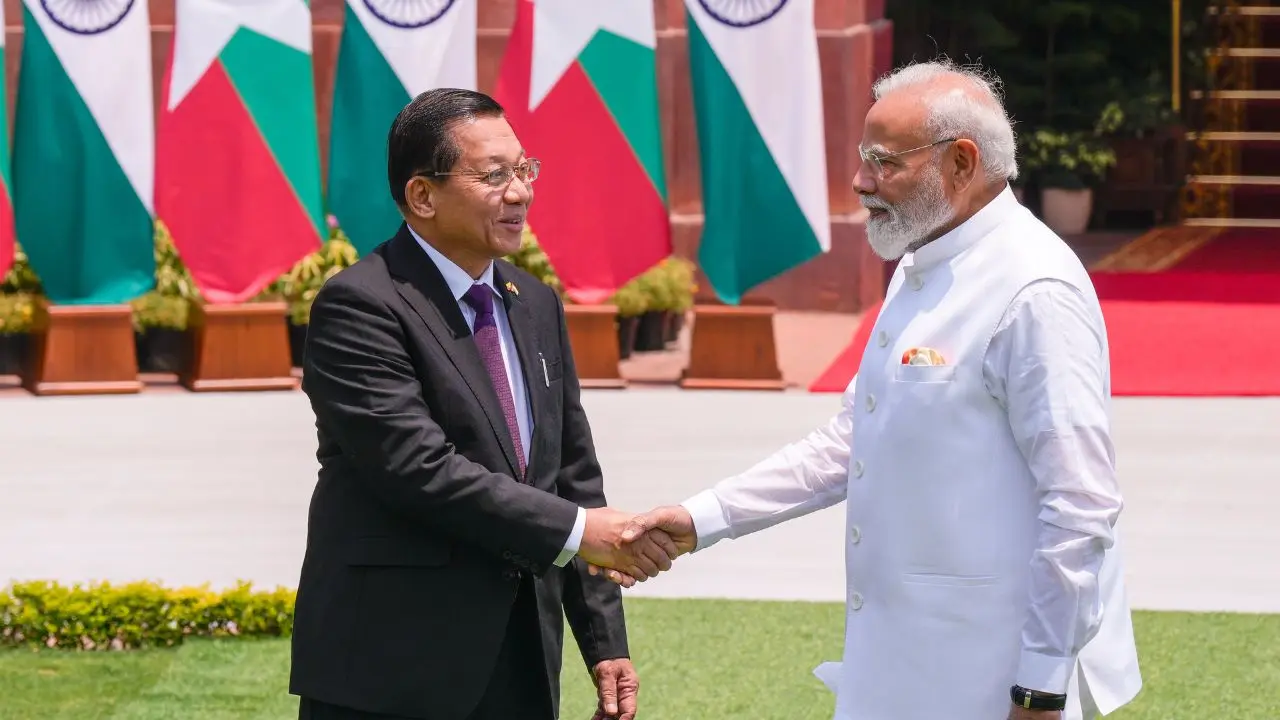
On June 1, 2026, Indian Prime Minister Narendra Modi and Myanmar President U Min Aung Hlaing met in New Delhi to discuss rare earth elements, trade, and security issues.
Similarly, during his meeting with Indian Prime Minister Modi, Myanmar President U Min Aung Hlaing agreed to crack down on rebels operating on Myanmar soil who are fighting against India, according to Vikram Misri, the Foreign Secretary of India's Ministry of External Affairs.
Political analyst Dr. M Kawn La told CNI News Agency that India has historically provided assistance regarding peace in Myanmar, and its involvement could greatly contribute to achieving peace in the country.
He said, "They (India) have been providing assistance for talks. Connecting with them, Chin State and the Naga region in the northwestern part of our country share borders with India. Furthermore, India’s Arunachal Pradesh state borders our Kachin State. Therefore, it connects with KIO/KIA, the Naga (NSCN), the Chin (CNF), and all the way down to Paletwa. Right now, there is an armed political conflict happening in the country. Thus, with India's involvement and support, we can accomplish a lot regarding the peace issue. Our Peace Process relates to those armed groups, and on the other hand, India can directly work towards achieving peace with the AA as well as the CNF. Just like China, India has power. So, such circumstances exist where they can take action. Since they have done things in the past, I assume they will take action now. It is a good thing."
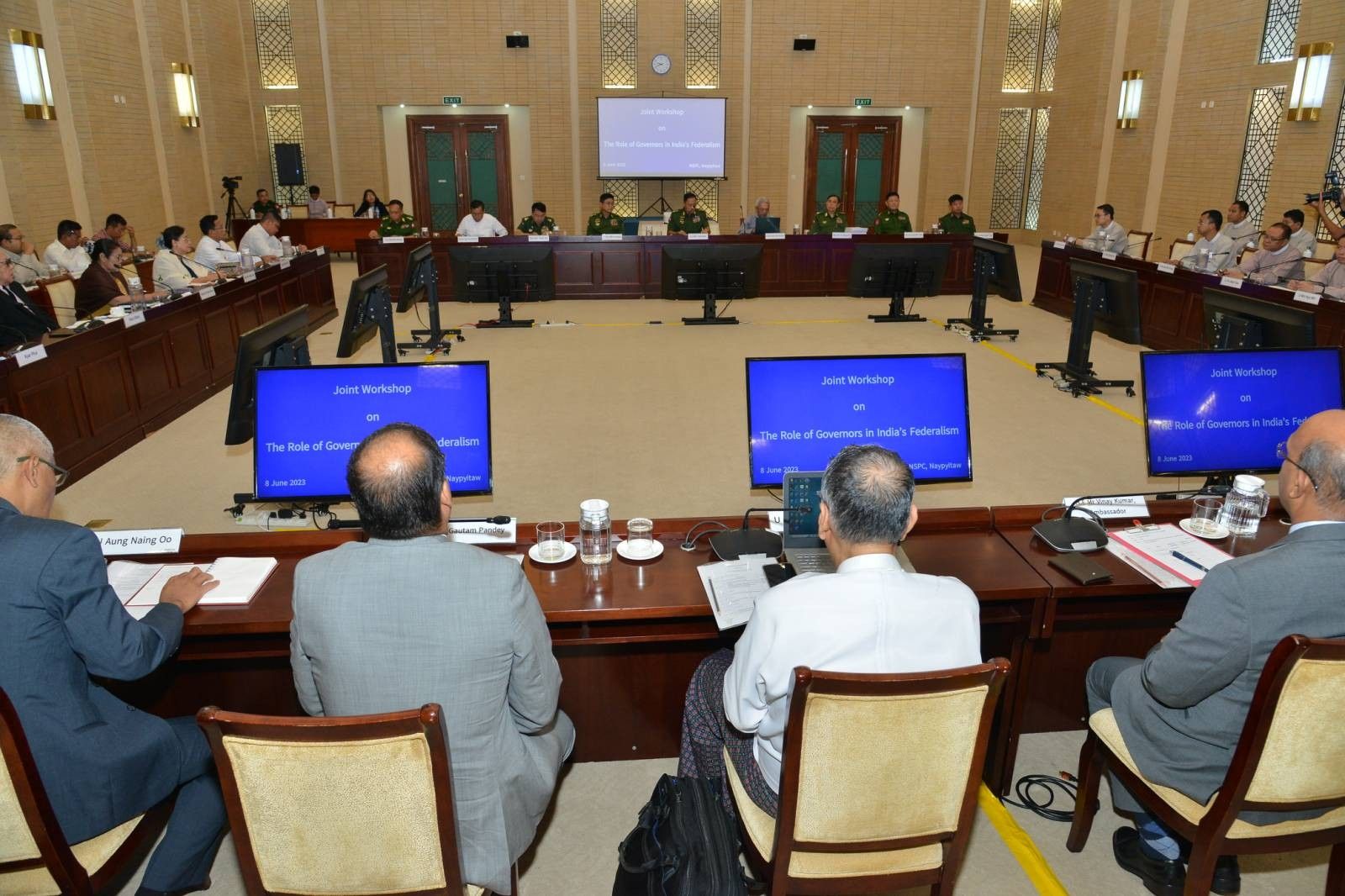
India, political parties, NSPNC, and EAOs holding a discussion on federalism and the constitution.
Previously, in November 2024, representatives from political parties, Ethnic Armed Organizations (EAOs), and the NSPNC (National Solidarity and Peacemaking Negotiation Committee) went on a study tour to India to study the constitution and federalism.
Following that, on March 18, 2025, Indian think tanks met and discussed matters regarding federalism and democracy with political parties, the NSPNC, and EAOs at the India Centre in Yangon.
Regarding the current ongoing armed conflicts, Dr. M Kawn La told CNI News Agency that there is a possibility that the Indian government might pressure the EAOs regarding the peace process.
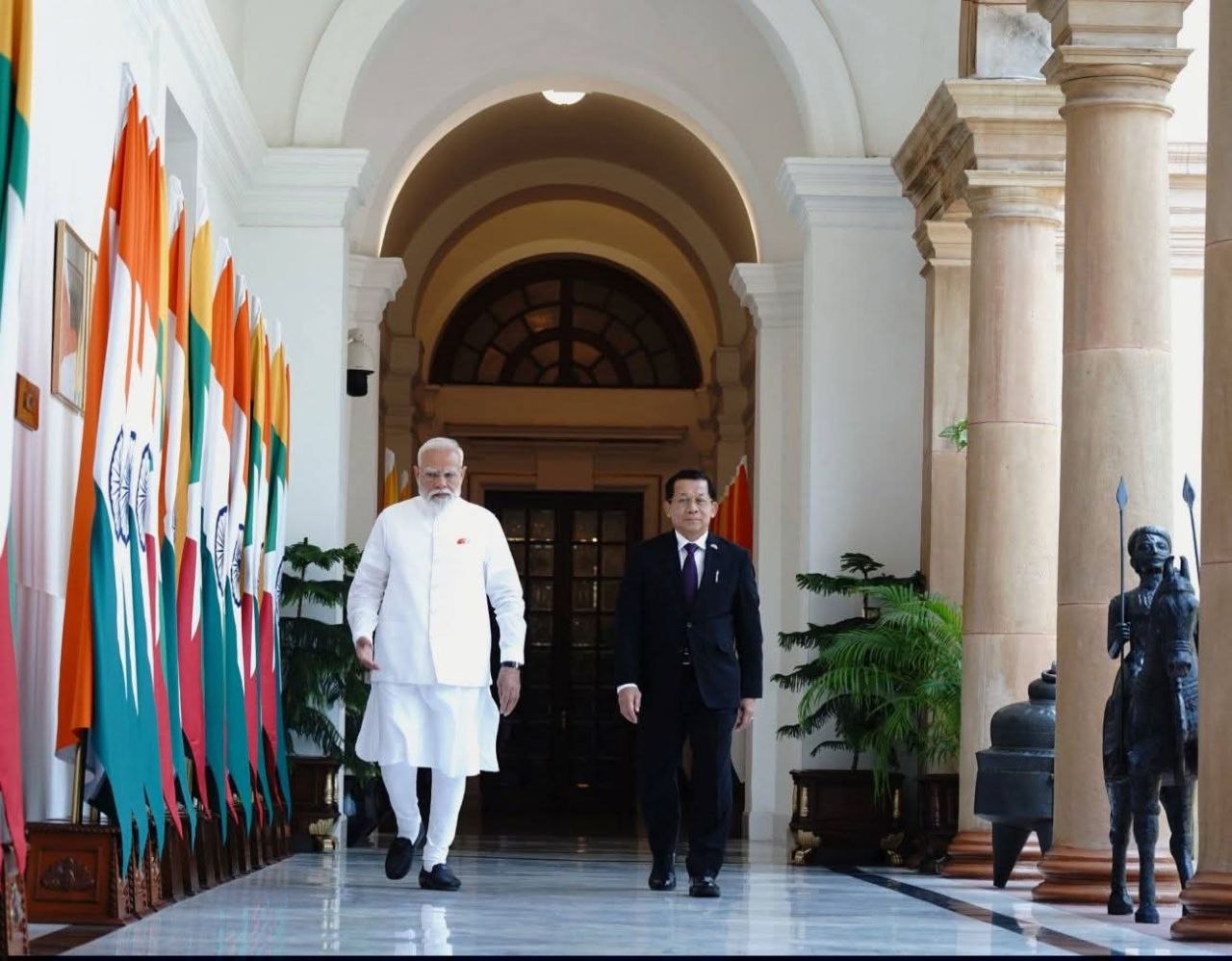
Myanmar President U Min Aung Hlaing and Indian Prime Minister Modi.
He said, "The Indian Ambassador often says one thing: regarding power, they will only engage with the current government—the de facto government. Whether it is a de facto government or a de jure government, they will not do anything that harms the government that holds sovereignty. They do not engage with anyone else besides that government. The current Ambassador has said this two or three times already. So, what this means is that regarding the CNF, likely the AA, the NSCN, and the KIA, they will implement the Peace Process on a G-to-G (Government-to-Government) basis. Back in 2015, India tried to facilitate Track 1.5 diplomacy. Therefore, what they can do now is closely continue Track 1.5. Will India act as a mediator for the peace of these groups? They do have the opportunity to do so. If we look at history regarding the Peace Process, because India engages with high priority, they are in a position where they might talk to EAOs about peace issues to assist the government. There are conditions where they could put pressure. This is my view."
At the invitation of Indian Prime Minister Modi, Myanmar President U Min Aung Hlaing is visiting India from May 30 to June 3, 2026.
This trip marks U Min Aung Hlaing’s first official overseas trip during his tenure as President.
On the other hand, President U Min Aung Hlaing has invited ethnic armed organizations to participate in peace talks, setting a deadline of July 31, 2026.