
CNI News
June 3, 2026
Merchants and producers state that the decline in cultivation rates and the resulting impact on yields across all agricultural sectors in Myanmar, including rice and paddy, is due to the inability to export goods through border trade.
Following the political transition in 2021, armed conflicts broke out, leading to a halt in the Myanmar-China and Myanmar-Thailand border trade.
Since then, Myanmar's export sector has had to rely solely on maritime trade. Coupled with the negative impacts on the export industry, the lack of market access and difficulties in exporting agricultural products have led to a decline in cultivation rates.
Exporter Ko Sai Kyaw told CNI News Agency that the impact on domestic cultivation is because maritime trade primarily focuses on exporting rice, beans, and pulses, making it difficult to export perishable items like watermelons and onions that cannot be stored for long periods.
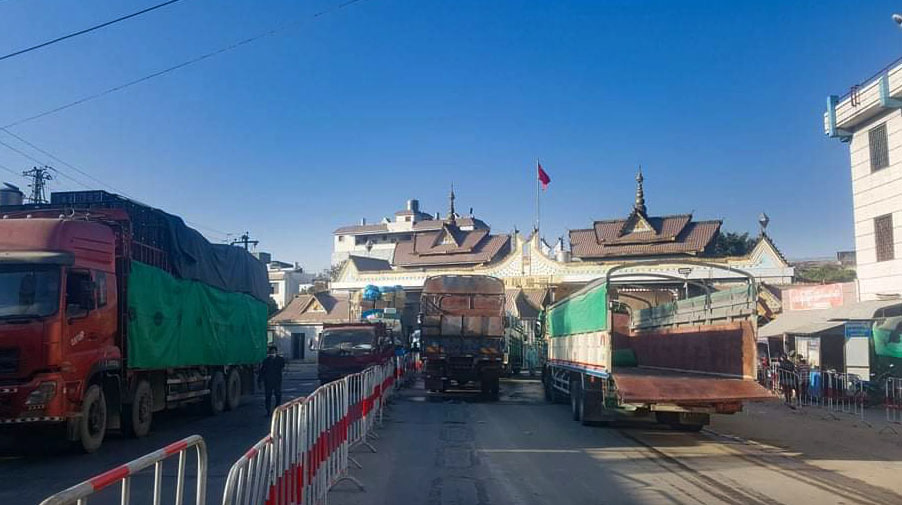
He told CNI News Agency that this is mainly due to the impact of the closure of the Chinese border trade, through which exports were previously routed via northern Shan State and Kachin State.
Exporter Ko Sai Kyaw said, “Our country's main export is agricultural produce. And that market is mainly the Chinese market. Our fruits, rice, and crops are primarily exported to Yunnan Province, China. For things like potatoes and onions, exporting them via containers is not easy. They are not the type of goods that can be stored for long periods. They are mainly exported through border trade. In border trade, if we send them by truck today, they arrive tomorrow or the day after tomorrow—everything from watermelons onward. Since the borders, like the Muse border, are now completely closed, these impacts are happening.”
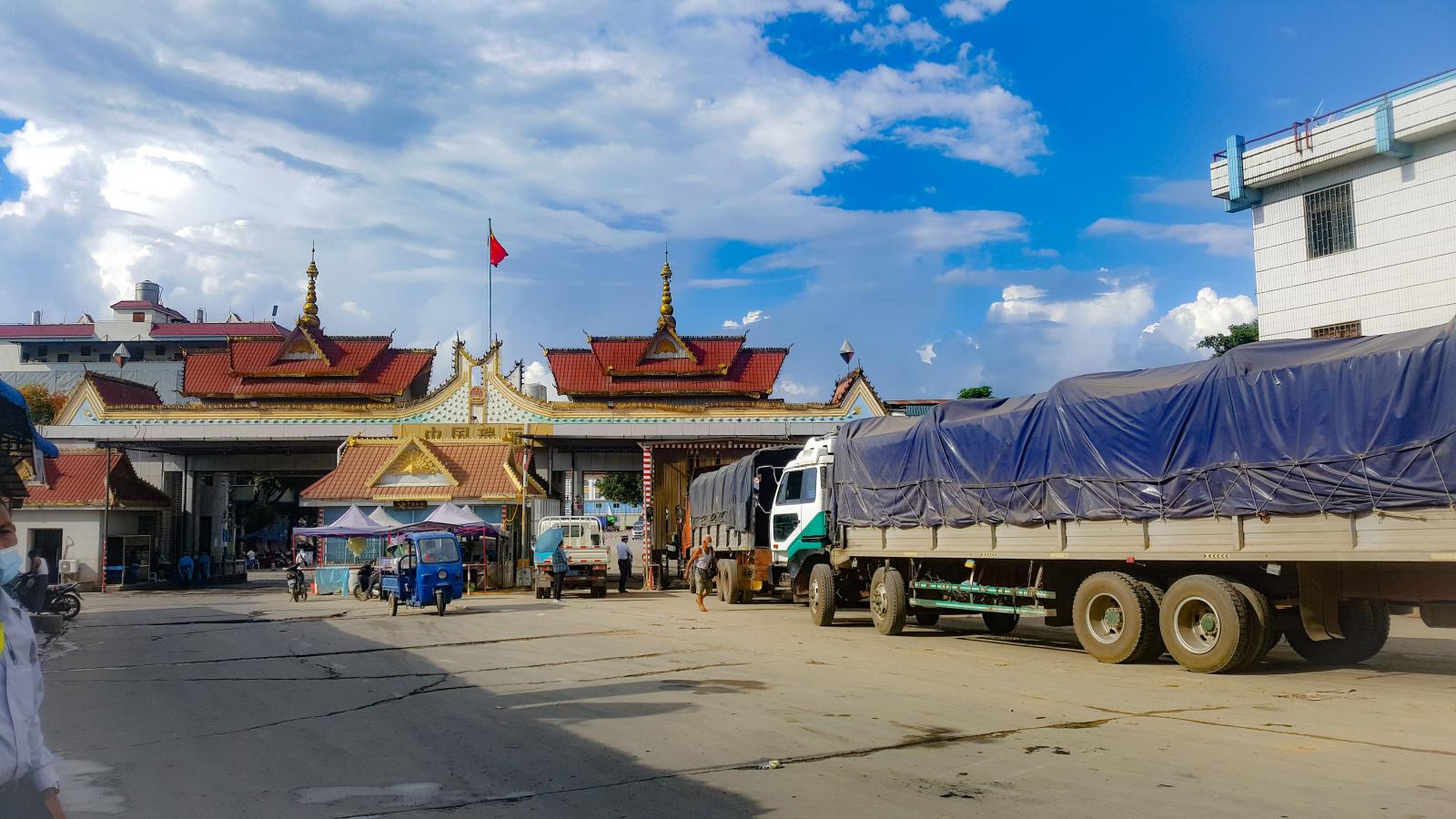
A Myanmar-China border trade gate.
When the border trade was previously open, hundreds of thousands of tons of rice and broken rice were exported through China-Myanmar border gates in northern Shan State and Kachin State. Currently, China remains the main buyer of Myanmar rice even through maritime trade.
However, since maritime trade is the only available trade route, producers are facing low purchase prices (price squeezing). Because they are facing losses instead of profits, production rates have declined, U Thein Aung, former chairman of the Farmers' Development Association, told CNI News Agency.
He said, “Take the rice market, for example. In the past, a large volume of rice was exported overland through the Ruili border in China. China also offered good prices. Therefore, to be frank, exporters going via sea vessels couldn't lower the prices as much as they wanted. Now, when the Chinese route is unavailable, the groups exporting via the maritime route face no competition on the other side to counter their price squeezing. Since the buyer side is now one-sided and lacks competing alternatives, they can squeeze prices as much as they want. That is the rice market. Without a market, if they are forced to cultivate, only the cultivators suffer the losses. If there is profit, production will naturally progress.”
While the cost of cultivating crops, including rice and paddy, is increasing twofold to threefold year by year, farmers face annual losses due to the lack of foreign markets for agricultural products and transportation difficulties, resulting in poor prices.
Furthermore, cultivation rates are declining due to regional instability in some areas. Some farmers have suspended cultivation after facing losses and have turned to other livelihoods, such as livestock farming.
On the other hand, although the government provides cultivation loans, they are not disbursed on time. Fertilizers are also not supported in a timely manner, causing cultivating farmers to incur even higher expenses.