

CNI News
May 29, 2026
A spokesperson for the Ta'ang Women's Organization (TWO) told CNI News that ethnic groups in Myanmar are not waging a revolution to secede from the country.
During a Union Government meeting held on May 26, 2026, President U Min Aung Hlaing stated that weaknesses within the 1947 Constitution led to states demanding the right to secede, which subsequently escalated political conflicts.
In response, the TWO spokesperson explained to CNI News that ethnic groups are fighting because they want to co-exist within Myanmar while securing the right to self-determination and the freedom to shape their own destiny.
"We don't want to use the word 'secession.' We are not breaking away from the Union. What we want within the Union is equality for all ethnic nationalities, ethnic rights, and the freedom to determine and forge our own destiny. We can see that almost no ethnic group takes the stance or position of seceding from the Union.In my view, everyone is fighting to protect their people, to fully achieve the rights of their public, to secure justice for their community, and to gain self-determination. The revolution currently being waged by ethnic groups is not for secession."she said.
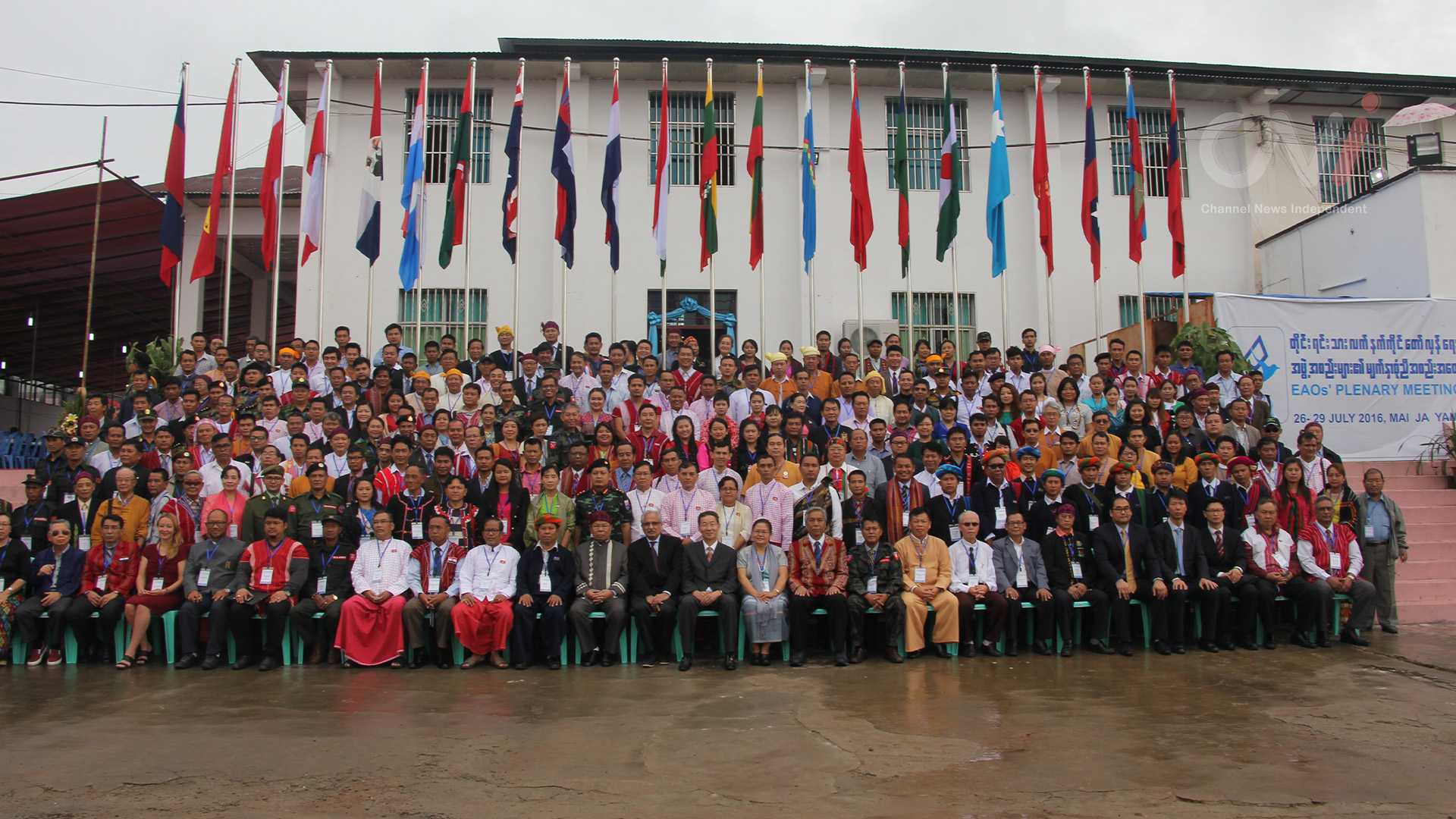
Ethnic armed leaders seen alongside international representatives.
Political analysts point out that the ethnic revolution does not intend to break the country apart or secede. Instead, the primary objective is to uproot dictatorship and build a genuine Federal Democratic Union that encompasses equality for all diverse ethnic nationalities, self-determination, and power-sharing.
Analysts also note that the flaws of the 1947 Constitution stemmed from excessive centralization of power without granting genuine self-determination and full equal rights to the states, alongside limiting equal representation for ethnic groups in the Chamber of Nationalities (the Upper House). They highlight that these shortcomings caused division and dissatisfaction among ethnic groups, eventually leading to secessionist efforts and armed conflicts.
Dr. Kyaw Swe, a Pyithu Hluttaw (House of Representatives) MP, told CNI News that according to the manifestos and policy statements of all ethnic armed organizations, no group has the objective of breaking away to establish a new independent nation.
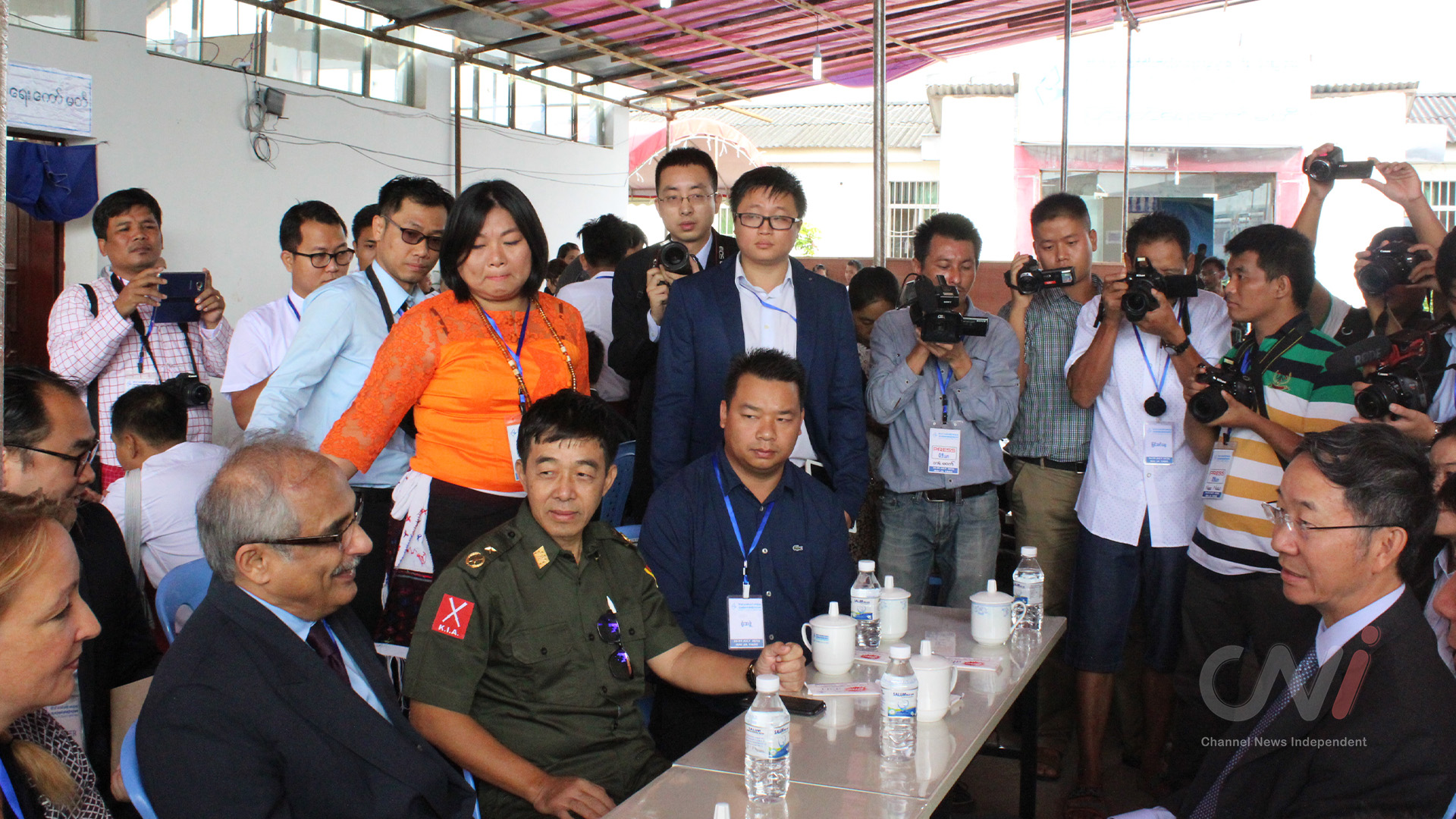
KIA leader Lieut-Gen Gun Maw seen with Indian and Chinese representatives.
"The majority of ethnic groups proposed rights under the Panglong Agreement. After feeling that they did not fully receive those Panglong rights, they pursued the path of secession. They adopted the armed struggle based on the belief that they would only obtain their rights by fighting for them. The 1947 Constitution was effectively discarded by 1958 and 1960. We need to make amendments to guarantee the rights included in the Panglong Agreement. Although many states were added under the 1974 Constitution, ethnic groups felt that their rights were still insufficient and limited. That is why they continue to utilize the armed struggle. If you look at the policy manifestos and statements of all ethnic armed organizations, no organization has the goal of establishing a new country. They use the armed struggle to secure more rights and to ensure those rights are guaranteed. Most ethnic groups simply want to reach a stage where the Constitution guarantees the federal democracy they aspire to."
Military and political observers emphasize that the position of most Ethnic Armed Organizations (EAOs) in Myanmar is not to secede from the Union to form an independent nation, but rather to build a federal union that guarantees equality, self-determination, and democracy.
However, the Arakan Army (AA) is waging its revolution with the goal of establishing a confederation or a new independent nation.
Similarly, KIA leader Lieut-Gen Gun Maw has previously stated that if ethnic armed groups transition beyond the year 2025, they may develop political considerations that go beyond federalism.