
CNI News
May 26, 2026
Political and economic analysts have pointed out that property prices in Myanmar have skyrocketed, making it increasingly difficult for citizens to own homes, and that the government should find ways to address this issue.
Under the current circumstances, an ordinary working-class person in the country cannot afford to own a home even after working for 20 years, resulting in a continuous rise in squatting.
Political analyst U Htet Aung Kyaw told CNI News that while Myanmar has adequate land for its people based on its geography, the exorbitant rise in real estate prices indicates a policy failure that the government must remedy as soon as possible.
"Land prices are so high that an ordinary worker cannot catch up with them even after working for 20 years," said U Htet Aung Kyaw. "This is something a government must take into consideration. It is a real problem when people work so hard but cannot even afford a small plot of land. This is a policy issue. It implies that something is wrong with the policy. A government must thoroughly consider and manage these issues. The government must think about and implement plans to ensure homeownership for all its citizens. Given Myanmar's land area relative to its population, having squatter homes is deeply embarrassing. It can be said that the policy is flawed. Squatting shouldn't exist given the vastness of this country's land area. Why this is happening points to a policy failure. I believe this needs to be corrected as quickly as possible."
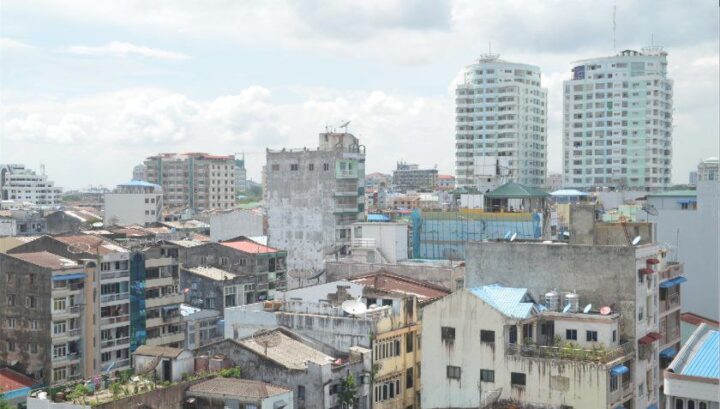
Apartments in Yangon
Efforts have been made in Myanmar to help citizens own homes and land, including property sales expos, bank home loan systems for those without full cash upfront, and installment plans offered by government and private housing projects.
However, political and economic analysts point out that these measures remain out of reach for the general public, and even affordable low-cost housing projects often end up turning into high-priced properties.
Economic analyst U Thet Zaw told CNI News that there are fallow agricultural lands within Yangon where cultivation has ceased, and the government should utilize these lands to construct low-cost housing to better help the public secure shelter.

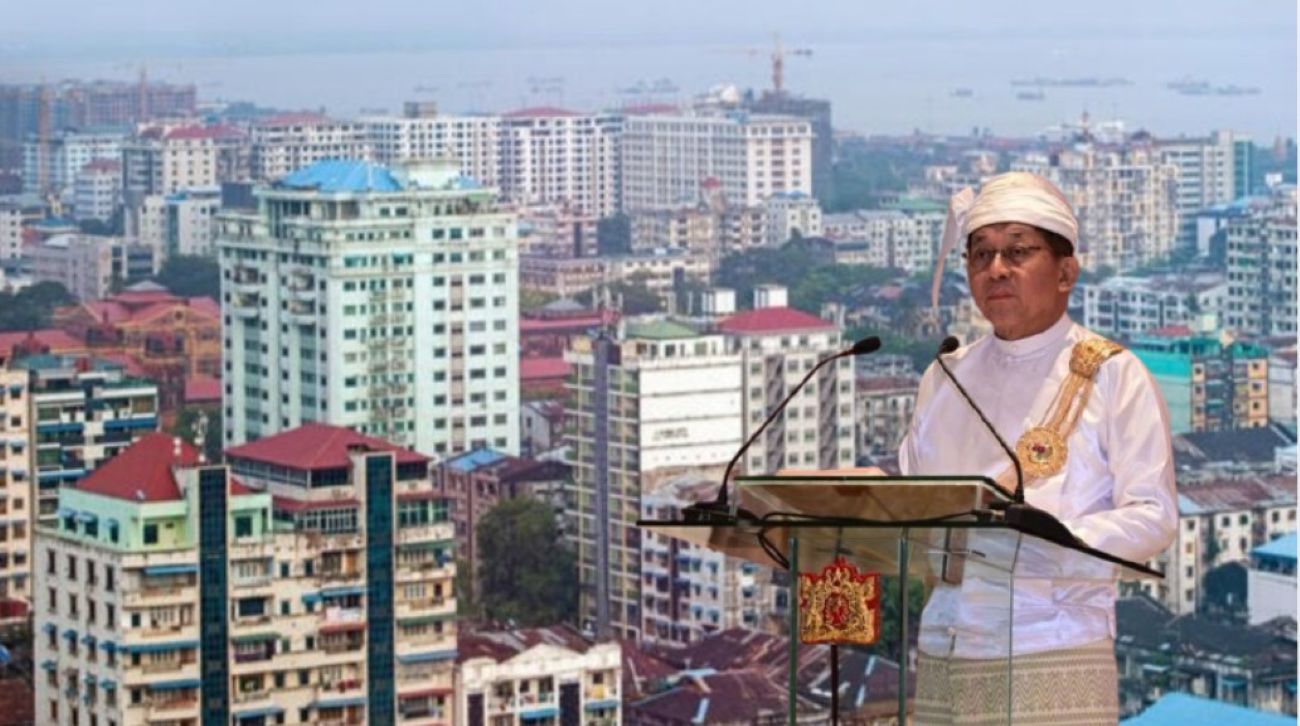
President U Min Aung Hlaing.
"What I'm saying is that in places like Dagon Seikkan and East Dagon, they can no longer cultivate crops. There are many acres of vacant land left over," said U Thet Zaw. "Take housing projects like Thukha Dagon, for instance—we could easily develop two or three times more of those. There are plenty of vacant spaces like that where housing can be built. Build them constructively, and then divide them; one group for those who work abroad, and another group for squatters. Build low-cost housing and provide rental housing. The state truly needs to invest in this for the country."
Economic analysts have pointed out that in Myanmar's real estate market—particularly in Yangon, Mandalay, Pyin Oo Lwin, and Shan State—property purchases by Chinese nationals have driven market prices well beyond the reach of local citizens.
To address the challenges of citizens being priced out of the real estate market and the shortage of affordable housing, many foreign nations, including Canada, have implemented bans on foreign nationals owning residential property.