
CNI News
May 27, 2026
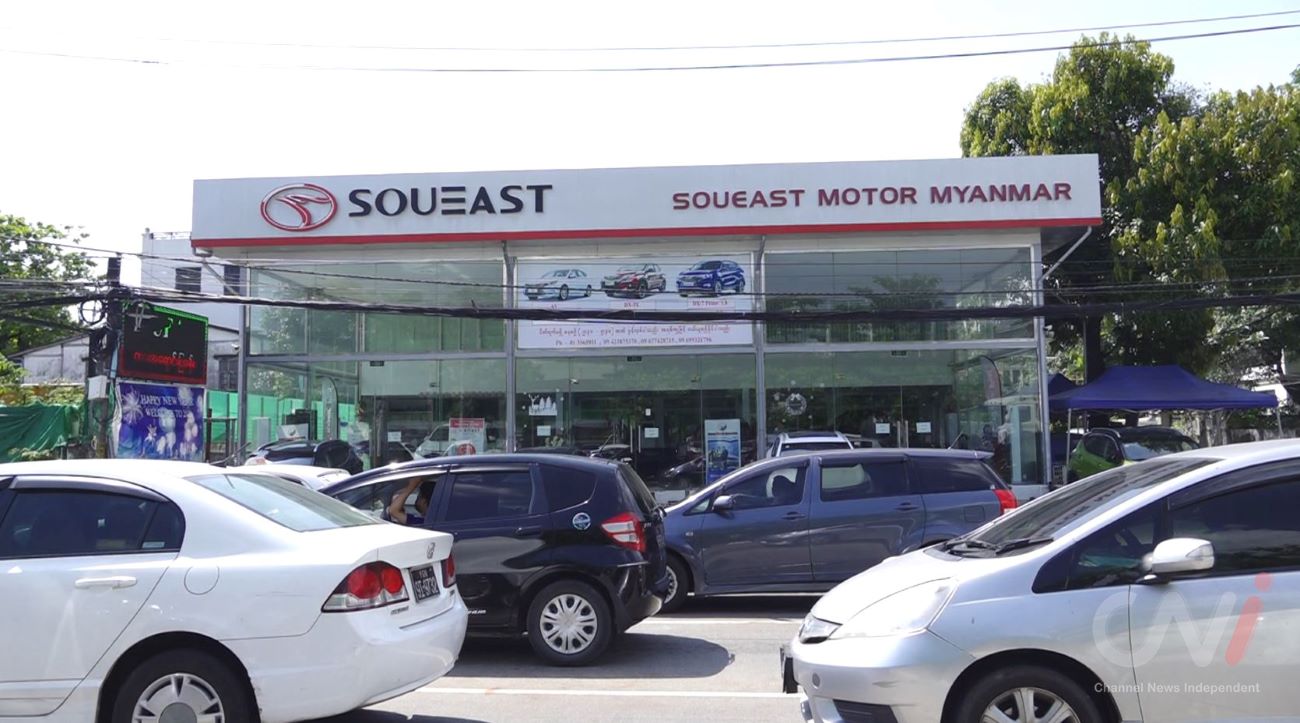
It is crucial to review the anomalous skyrocketing of car prices in Myanmar, said Sai Kaung Thet San, a Pyithu Hluttaw (House of Representatives) MP from the Shan and Nationalities Democratic Party (SNDP), in an interview with CNI News.
Due to the depreciation of the Myanmar Kyat, most domestic entrepreneurs and investors have been shifting their capital into real estate, gold, and automobiles, driving up market speculation.
Sai Kaung Thet San stated that the drastic surge in domestic car prices has created a massive gap between the original manufacturer's factory price and the domestic retail price. He emphasized the need for a systematic review to understand why such a massive discrepancy has emerged.
"If we look back at the parliamentary landscape around 2012–2013, a Hijet cost around 4 million Kyats and a Probox was around 10 million Kyats at that time. For us to return to such an era and elevate the public's standard of living, the first and foremost requirement is for the government's national policy to be properly aligned and correct. Secondly, we need to review the country's current situation alongside the tax burdens placed on citizens. Thirdly, import laws need to be reassessed and amended to keep pace with the times. In our country, a Hilux Revo costs between 250 million and 320 million Kyats. While it costs around 300 million Kyats with a license here, the same Revo costs just over 50 million, 60 million, 70 million, or at most 80 million Kyats in Thailand, where it is manufactured. We need to analyze what exactly went wrong to cause such a massive difference in our country," he said.
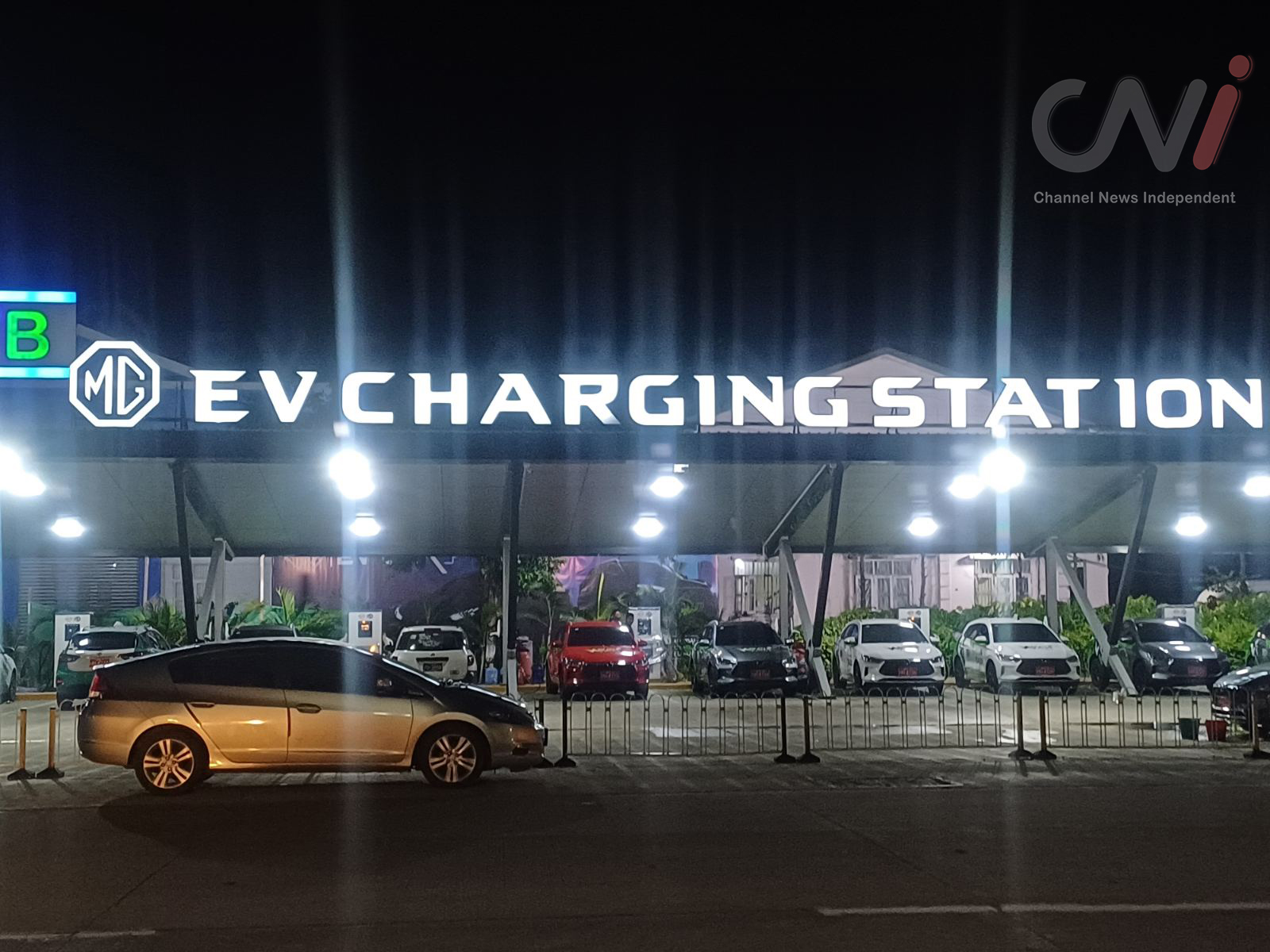
Photo of an EV charging station.
The Pyithu Hluttaw representative further explained that these price disparities depend heavily on government policies, and that outdated policies must be amended.
> "The price difference depends primarily on government policy, and secondly, on the need to review existing laws. These two factors are key. What I mean is that we must review taxes and arrange things so they align with the public's actual income. To make cars affordable for ordinary people and to bring prices down, we need to amend laws to improve the current situation. The government policy must also change in certain areas. If no changes are made, it is highly unlikely for a civil servant to ever afford a car. If we can introduce installment plans—such as multi-year payment options—I believe car and motorcycle prices will drop to a reasonable level," he added.
U Aung Pyae Sone, a local businessman, also told CNI News that the primary driver behind the current spike in car prices is solely the government's regulatory policy.
"To look at it from another perspective, when the government imports a vehicle from abroad, it requires US dollars—foreign currency. If the government had sufficient foreign currency reserves, citizens could import as many cars as they wanted. For example, even if a population of 60 million imported 60 million cars, it wouldn't be an issue. However, while citizens earn in Kyat, importing requires US dollars, and the government faces difficulties in subsidizing and allocating foreign currency for this. Consequently, to stabilize the prices of fundamental necessities like fuel and cooking oil, the government has restricted passenger vehicle imports. This is the government's side of the policy. When imports are restricted like this, what issues arise? A car abroad that was worth 10 million Kyats back in 2015 might now be worth 12 million Kyats at most. However, in Myanmar, that same 10 million Kyat car has shot up to around 100 million Kyats. If we look at why this happened, it is due to this policy. Showroom companies and importers cannot cause a 10-fold price hike on their own. It is not that car companies, importers, or traders are manipulating the car market; rather, car prices are fluctuating entirely based on government policies," U Aung Pyi Sone analyzed.
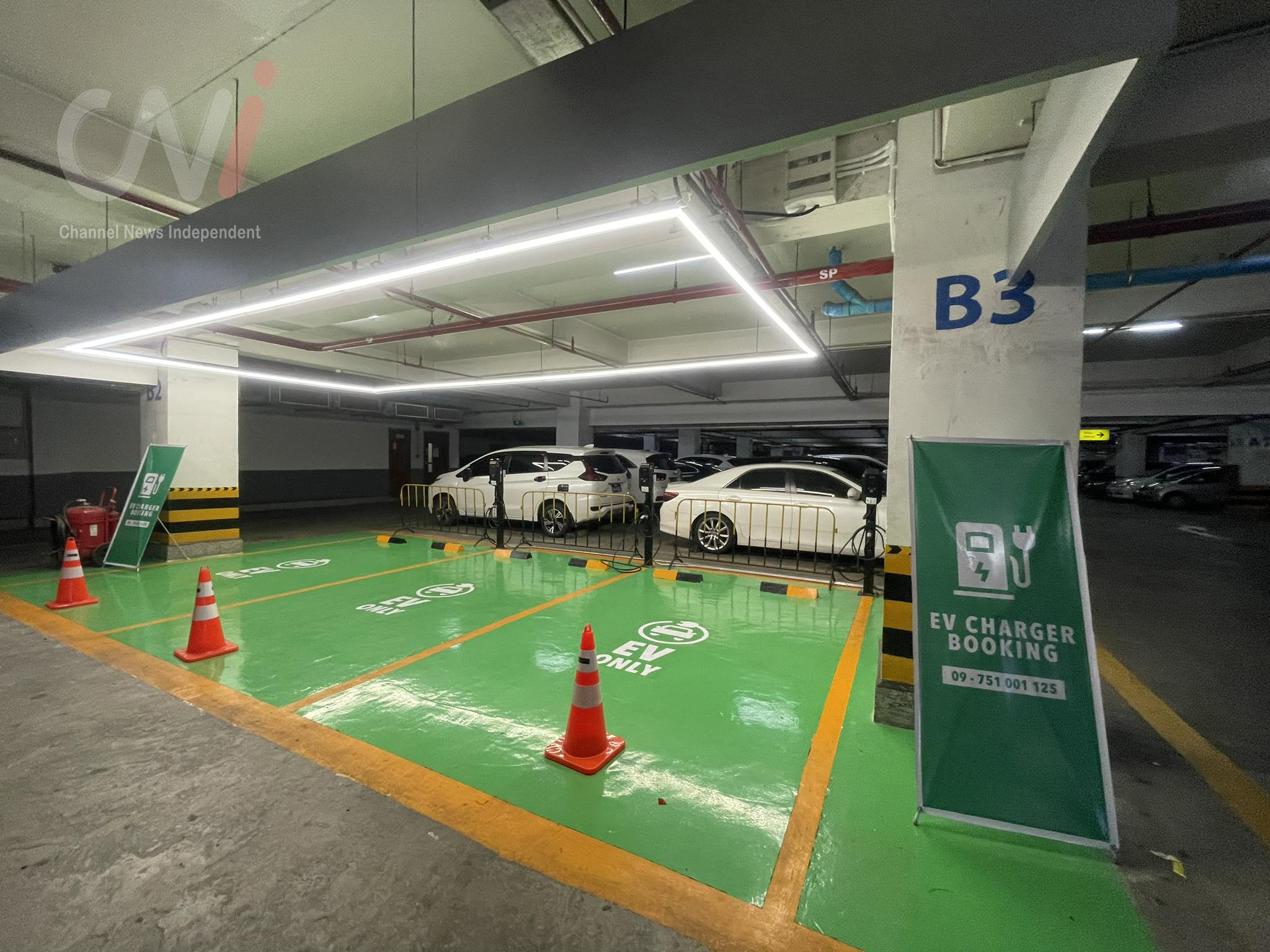
Photo of an EV charging station.
Furthermore, U Aung Pyae Sone added that the government is encouraging the public to use electric vehicles (EVs) by allowing EV imports, while heavily restricting the import of traditional fuel-powered cars, which is driving up overall car prices.
"The government is adhering to the same policies as the previous administration. Because they are maintaining this stance, car prices continue to surge. While they push the public toward EVs and allow EV imports, restrictions on fuel-powered vehicles remain in place. This is why car prices are rising. The government needs to ease import restrictions, allow the import of conventional fuel-powered cars alongside EVs, and implement systems to assemble and sell cars domestically through the SKD (Semi-Knocked Down) system," he said.
Currently, the Myanmar car market faces numerous hardships alongside soaring prices.
Additionally, due to odd/even license plate regulations, EV prices have reportedly surged by 25 percent per vehicle, bringing costs up to around 200 million Kyats.
Businessmen have pointed out that Parliament(Hluttaw) needs to intervene and regulate this situation, and the government needs to reopen car import permits.