
CNI News
May 26, 2026
Commodity prices are rising in Pakokku and neighboring townships after authorities restricted the transportation of food, consumer goods, and other commodities at the entry and exit points of Pakokku in Magway Region, according to local residents.
Locals noted that the restrictions on commodity transport at the entry and exit points of Pakokku town have been in place for more than 10 days now.
Mainly, commodities including onions produced in regions such as Yesagyo, Myaing, Pauk, Seikphyu, Myittha, and Yaw are typically transported and sold to other regions through the Pakokku commodity exchange centers.
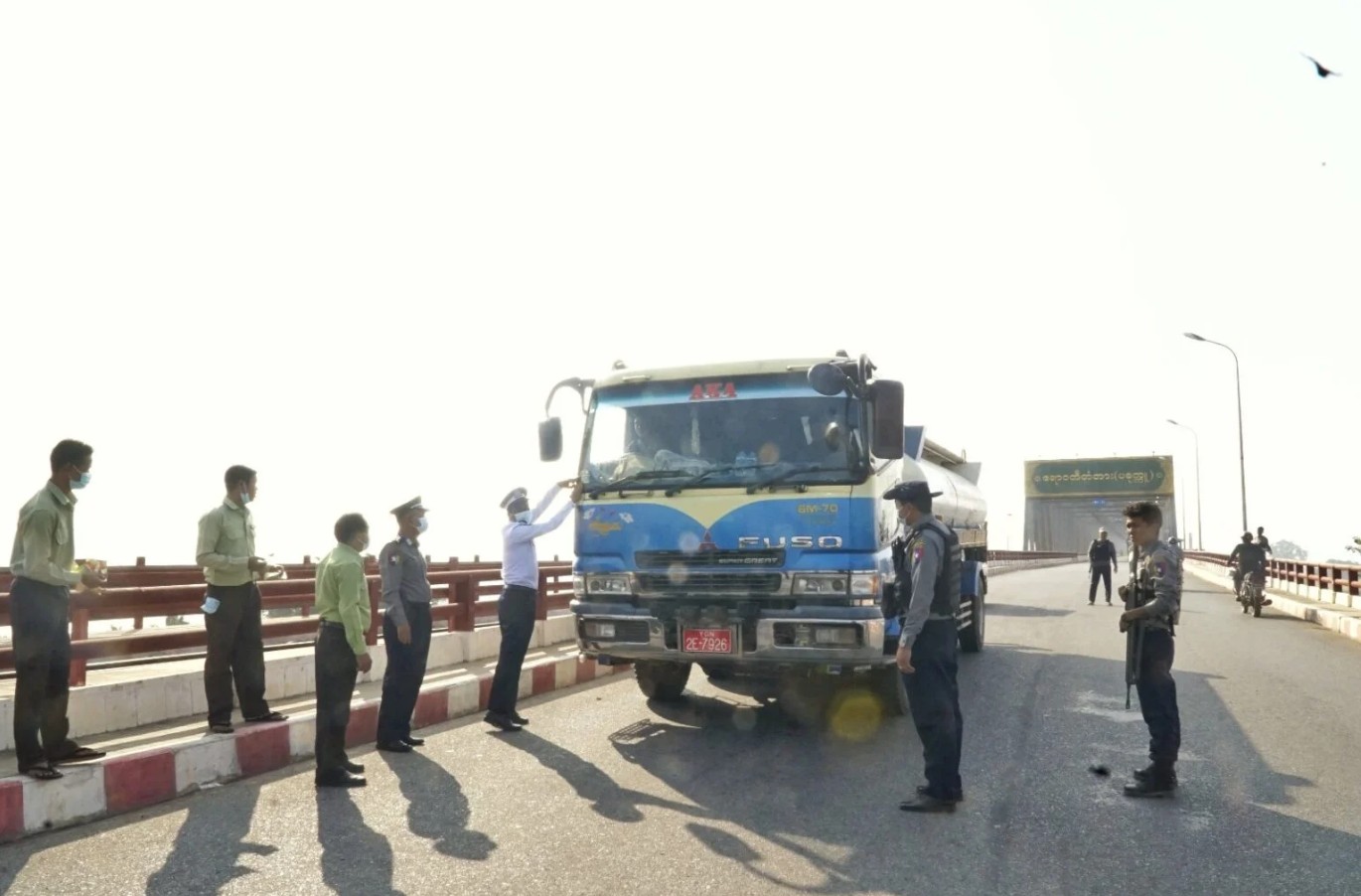
Currently, cargo trucks traveling in and out of Pakokku town face movement restrictions, and the transport of various types of goods has been restricted since May 13, 2026.
U Zaw Myint, a trader from Seikphyu Township, told CNI News that these restrictions have led to increased expenses and higher commodity prices. Consequently, instead of heading to Pakokku to sell their goods, traders are forced to resell them within their own local areas.
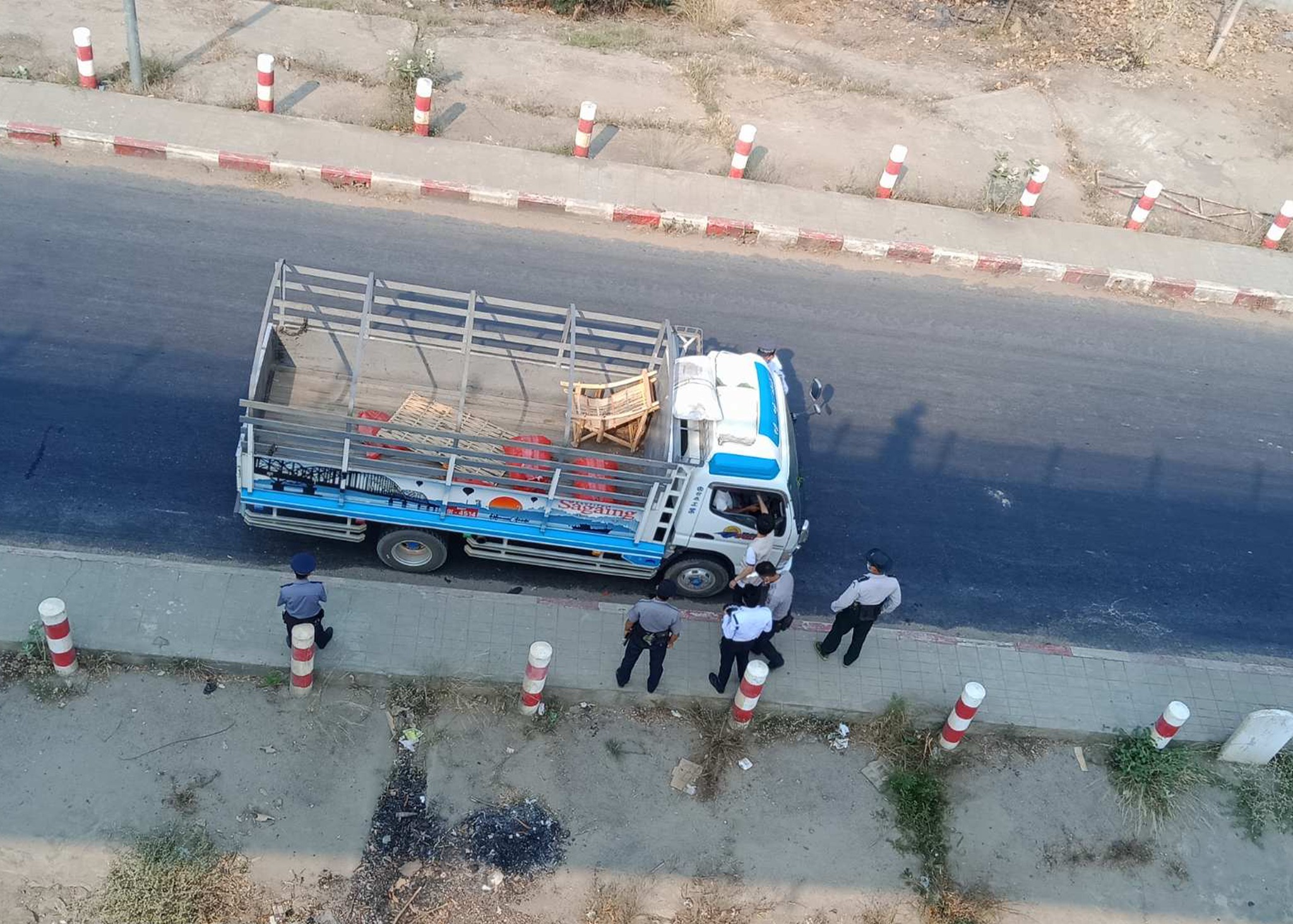
Authorities inspecting cargo trucks at the entry/exit bridge of Pakokku town. (Photo: MOI)
He stated: "The restriction has been in place for about 10 days. We are not allowed to transport consumer goods and food items to our local areas. Of course, commodity prices have risen significantly. Onions can still be transported, but because transportation costs are high, inter-city trade is no longer carried out like before. For instance, the market price in Pakokku is 2,100 kyats, but if it is transported to Seikphyu, it becomes 2,250 kyats. Previously, the transport cost was around 50 kyats per viss. When it increases from 50 to about 100 kyats per viss, the profit we could make from trading vanishes. Therefore, we end up in a situation where we just have to trade within our own town."
Furthermore, while more than 70,000 viss of onions used to enter the Pakokku commodity exchange center daily, current arrivals have reportedly dropped by about half.
Military and political analysts point out that the Myanmar military may be restricting the transit of goods through Pakokku town to cut off food supplies to the western part of Magway Region and the Magway-Chin State border areas, where revolutionary forces are strong.
They mentioned that this current restriction falls within the "100-day plan" period being implemented by the new government, and the format might change once this period passes.
U Khin Zaw, an onion trader from Pakokku Township, told CNI News that if such restrictions on goods transport persist for a long time, farmers will not get good prices, and consumers will face high prices and commodity shortages.
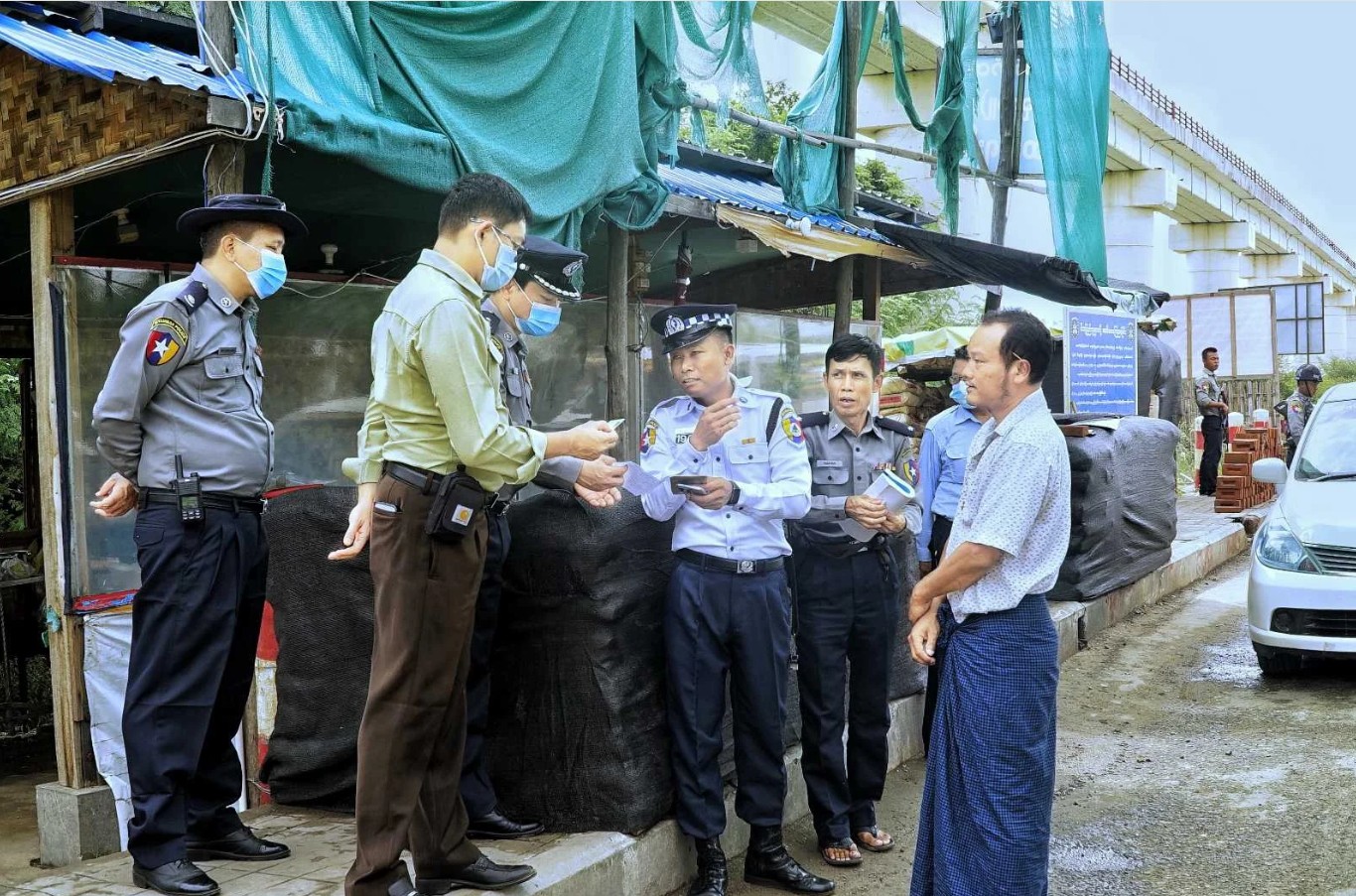
Authorities inspecting cargo trucks at the entry/exit bridge of Pakokku town. (Photo: MOI)
He said: "Farmers do not get a good price, and consumers are facing high commodity prices. When intermediary expenses increase excessively, it's no longer profitable for the traders, nor is it profitable for the farmers downstream."
In 2025, the Myanmar military also restricted the transport of medicines, fuel, electrical appliances, and chemical fertilizers between townships within Magway Region, including Pakokku Township. Currently, almost all consumer goods and food items are being restricted further.
It is learnt that while certain goods are permitted to enter and be sold within Pakokku town, no goods are allowed to be transported out to other regions through Pakokku Township.
Currently, clashes are breaking out between revolutionary forces and the Myanmar military in Saw Township in western Magway Region, as well as in the southern Chin State region that borders Magway.