
CNI News
May 26, 2026
The Naga Self-Administered Zone in Sagaing Region, Myanmar, is falling behind in its education sector due to difficult transportation and poor infrastructure, U Chit Yaung, Chairman of the United Tangshang Naga Council, told CNI News.
He mentioned that there is also an insufficient number of teachers in the Naga region. For the teachers assigned to serve there, going to the Naga area feels like a major burden, and the arduous travel conditions have become a source of dread for them.
U Chit Yaung said: "Currently, all-round development is needed for the Naga region to prosper. However, the most critical factor is having good transportation. Even if people say there are roads, we need to address whether these roads can actually be used at any time. Therefore, leaders and administrative authorities at all levels need to thoroughly understand and implement transportation solutions suited to this region. If transportation improves, teachers and health workers assigned to serve in the Naga region will no longer hesitate to go. They will come as soon as they are assigned. If the education and healthcare sectors can operate smoothly, there will be better outcomes for the public. The education sector, in particular, is the most challenging in the Naga region. Because of poor transportation, some staff members who have been there once never want to return. Education is lagging behind significantly. In many rural areas, schools could not even open. Consequently, this generation will continue to face major hardships."
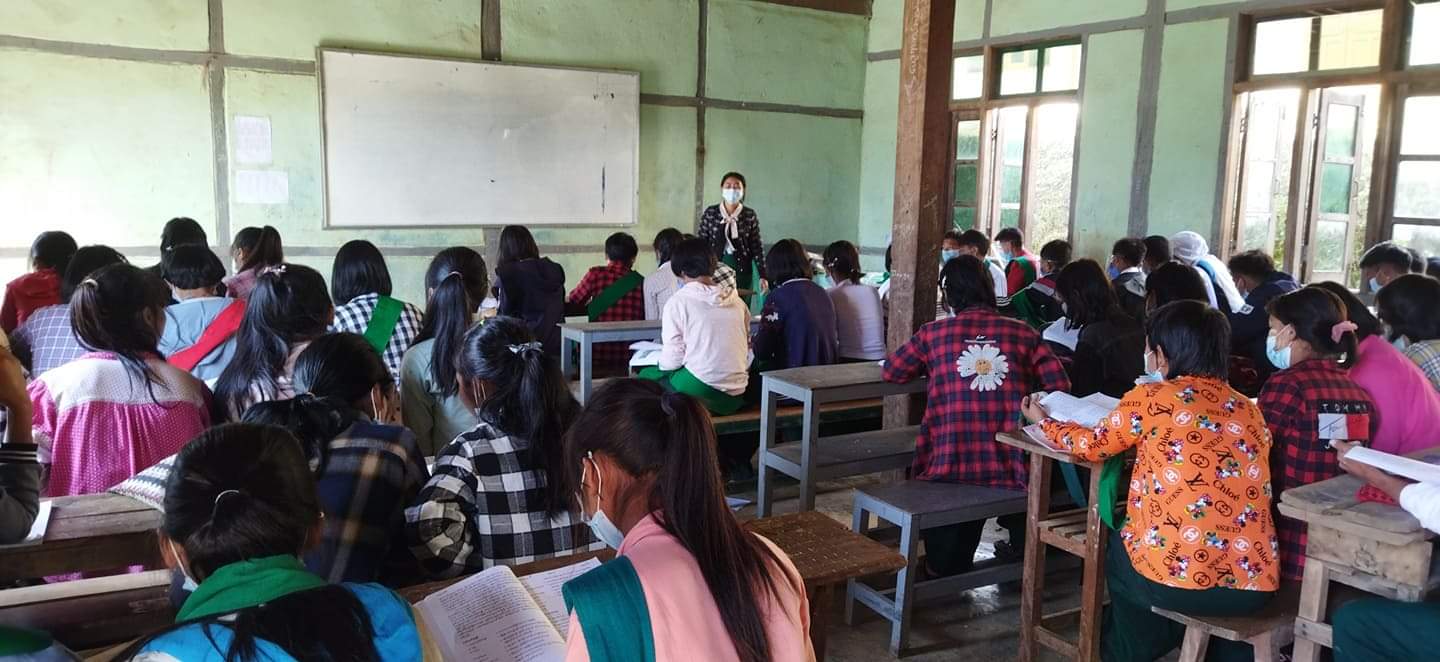
Students from the Naga region.
It is reported that many border and mountainous areas in Myanmar face similar issues, including teacher shortages, schools repeatedly opening and closing, and a lack of school buildings and educational supplies.
Nevertheless, authorities are striving to ensure that every school-aged child has access to basic education, to reduce school dropout rates, and to encourage students to at least attend and complete middle school.
U Mazoe Laung Wee, a member of the Pyithu Hluttaw (House of Representatives) from the Naga National Party (NNP), stated that while around 3,000 teachers are needed for the current school opening season in the Naga region, only about 1,000 are currently available.
U Chit Yaung, Chairman of the United Tangshang Naga Council, reiterated to CNI News that the education and healthcare sectors can only function at their best if transportation infrastructure is improved.
He said: "Everyone knows about the transportation situation. Furthermore, the roads are currently only at the gravel stage, which causes significant difficulties. Since it's a mountainous region, when it rains, water pools on these gravel roads, and the heavy rushing water causes road washouts and sweeps away the stones, making travel very difficult. It has been raining heavily this year, so people are really suffering. Regardless, our civil society organizations will cooperate with all groups. Now that the parliament has emerged, members of parliament are constantly focusing on the transportation issue. Education and healthcare can only function optimally if transportation is good. That is why transportation interconnects with everything else."
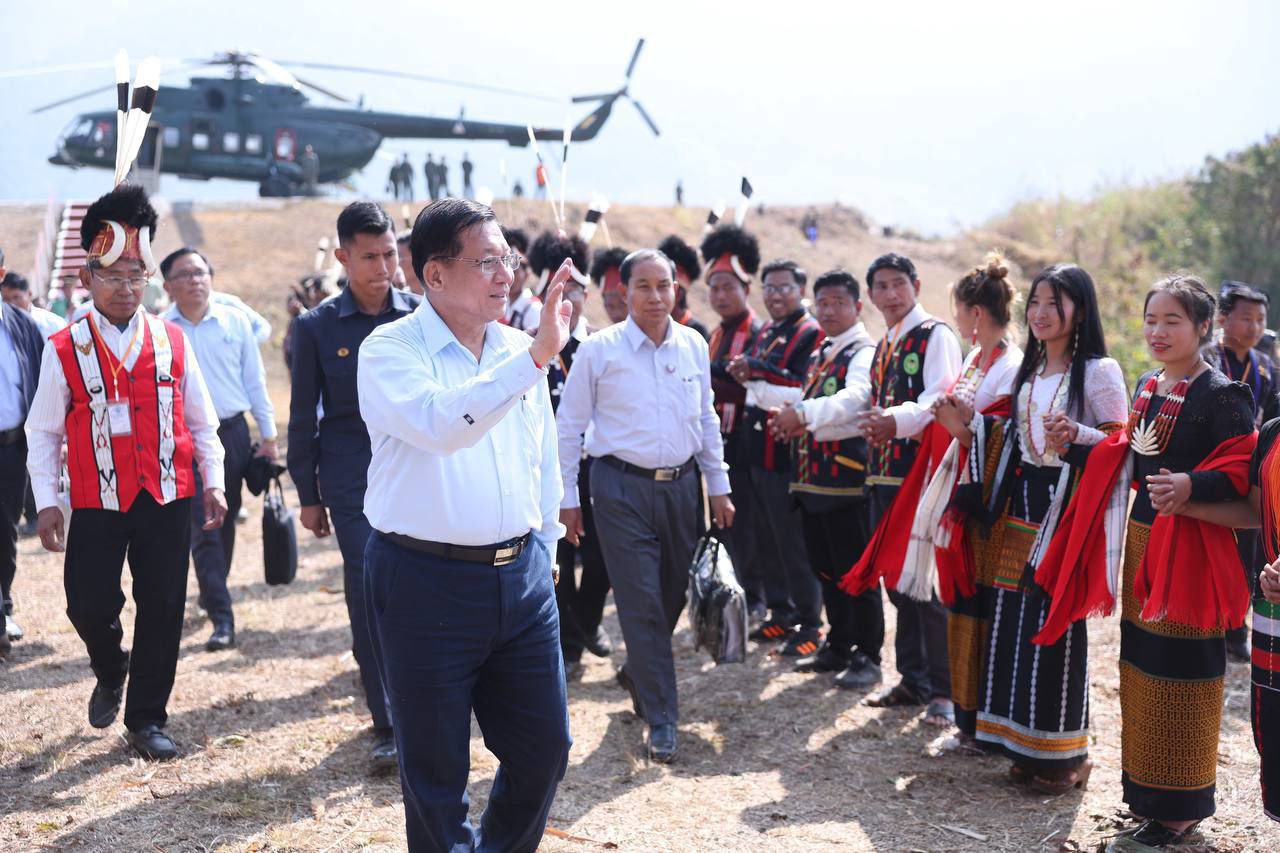
Senior General Min Aung Hlaing arriving in the Naga region on February 26, 2026.
Although education in the Naga Self-Administered Zone (Leshi, Lahe, and Nanyun) has lagged behind due to its remoteness and difficult access, it is learnt that the government and local residents are collaborating to promote KG+9 basic education and vocational training.
However, local residents noted that teacher shortages and high dropout rates remain a challenge, and efforts are being made to develop human resources through technology and agricultural/livestock training programs.
President U Min Aung Hlaing, during his visit to the Naga region last year, stated that the necessary support would be provided for the stability, peace, and development of the area.
In Myanmar, school enrollment for the 2026–2027 academic year is currently being accepted from May 25 to May 30, 2026, and basic education schools are scheduled to open on June 1.