
CNI News
May 21, 2026
U Kyaw Min Htet, a Regional Hluttaw (Parliament) Representative from the People's Pioneer Party (PP), told CNI News that the role of parliament is crucial in implementing peace processes in Myanmar.
On April 11, 2026, the government announced the reconstitution of the National Solidarity and Peacemaking Central Committee (NSPCC), the National Solidarity and Peacemaking Working Committee (NSPWC), and the National Solidarity and Peacemaking Coordination Committee (NSPNC).
Military and political analysts have raised questions over whether parliament is being treated as irrelevant to peace-related matters, given that its role was noticeably absent from this newly formed structure.
U Kyaw Min Htet, the Regional Parliament Representative from the PP, emphasized to CNI News that because parliament is an institution that represents the public, its role must absolutely be taken into consideration in peace processes.
He said: "First of all, why is parliament important? It's because it represents the people. Regardless of how things are argued now, people can debate whether it is currently legitimate or illegitimate. However, the reality is that some citizens cast their votes, and this parliament emerged based on those election results. So, this parliament is an organization that represents a portion of the public, though not necessarily everyone. Another point is that parliament is different from the government; it is always dispersed among and rooted within the public. When parliament is not in session, a member of parliament lives and interacts with the community just like an ordinary citizen. It is quite difficult for ministers to interact with regular citizens in that manner. Therefore, we need to utilize the strength of parliament representatives to rebuild mutual understanding, resolve public disputes, and restore mutual trust regarding peace issues directly on the ground. Furthermore, while the role of parliament is vital in legislative work, it is equally crucial in peace affairs because of the constitutional amendment process. Parliament is the primary body vested with the authority to amend the constitution. It holds the main responsibility for current constitutional reforms. For these reasons, the role of parliament must be taken into account."
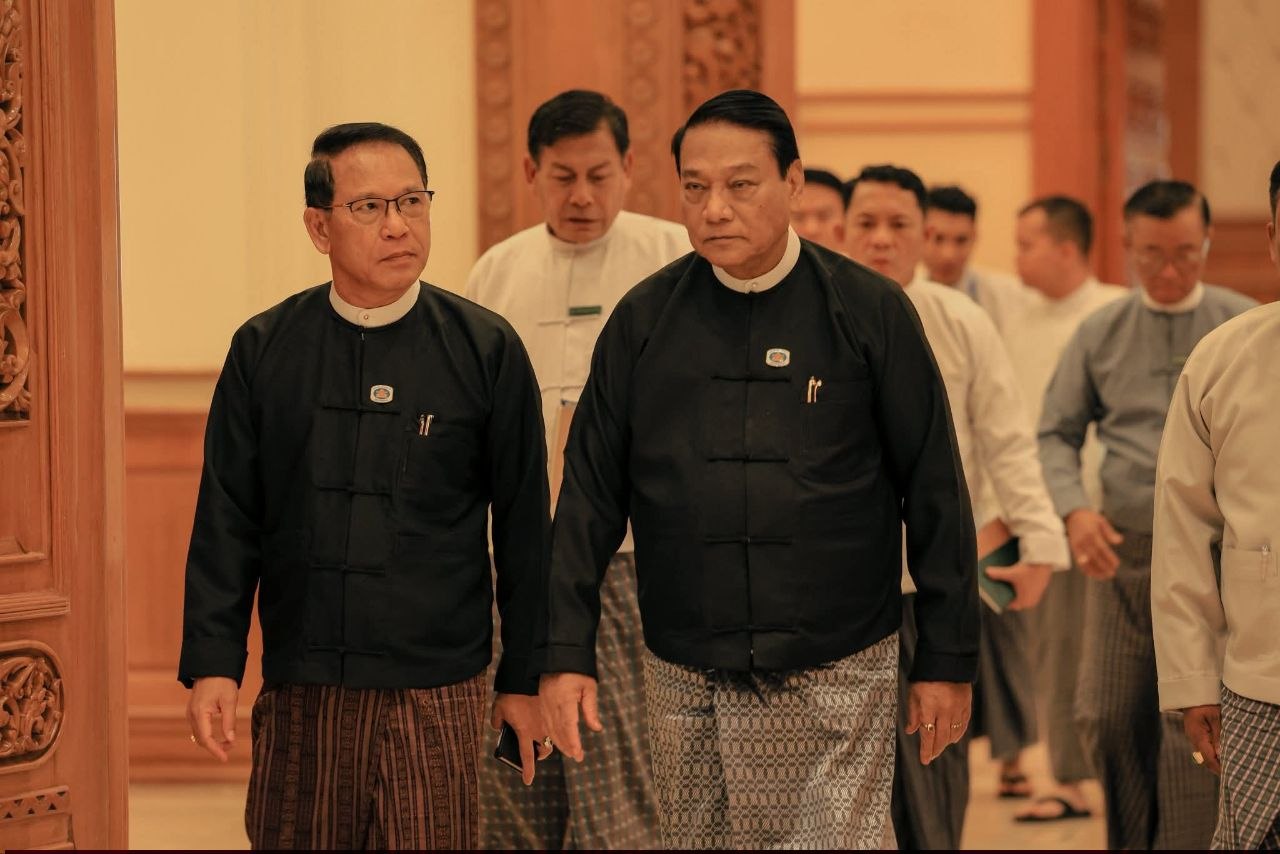
The Speaker and Deputy Speaker of the Pyithu Hluttaw seen together
Military and political analysts pointed out that the omission of parliament from the current structures of the NSPCC, NSPWC, and NSPNC suggests an intention to prioritize discussions between armed factions first. They noted that excluding the parliamentary sector inherently reduces public representation.
Parliament Representative U Kyaw Min Htet added that the government should not disregard the parliamentary role when forging peace processes.
He stated: "Since constitutional amendments will inevitably be a part of the peace process, parliament's involvement is vital. However, since parliament has only recently been reconvened, I am unsure of the current government's exact rationale for not including it in the peace process yet. For political institutions to become strong, the ruling government itself needs to nurture and strengthen them. To do so, the role of parliament must be given primary consideration, focusing heavily on parliament and political parties. Therefore, the representation of parliaments and political parties should not be ignored in the peace process. I believe they will be included at some point. The reason we want parliament to flow along within this process is not because it holds executive power—it is true that as a non-executive body, it cannot make definitive executive rulings. However, we want parliament involved because it plays a critical role in matters like constitutional amendments and territorial boundary demarcations. That is why I say I want parliament included in these committees."
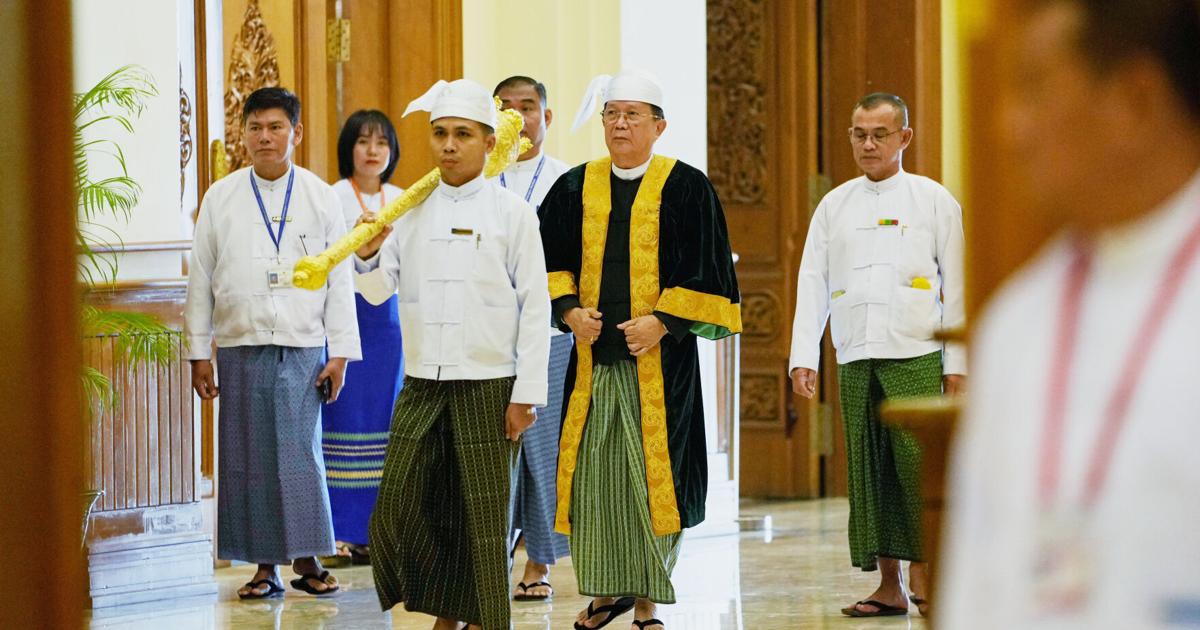
The Speaker of the Amyotha Hluttaw seen representing
Members of parliament warned that if the parliamentary role is excluded from the peace process, unnecessary disputes could arise when agreements and constitutional amendment proposals eventually reach the floor of parliament. Therefore, they urged that integrating parliament into the peace process should be seriously considered.
On the other hand, it is understood that parliament is planning to form its own peace-related committee.
Currently, the NSPNC is preparing to move peace processes forward by holding meetings with both ethnic armed organizations that have signed the Nationwide Ceasefire Agreement (NCA) and those that have not yet signed.