
CNI News
May 21, 2026
Military and political analysts are sharing their assessments on how a path to dialogue can be established to achieve peace between the Tatmadaw (the Myanmar Military) and the Arakan Army (AA) in Rakhine State.
Battles resumed in Rakhine State in November 2023. Currently, the AA has captured Paletwa and 14 townships within Rakhine State, while the Tatmadaw controls 3 townships.
U Thar Tun Hla, Chairman of the Arakan National Party (ANP), told CNI News that if peace and dialogue are approached merely for display, there will be no solution. Instead, a process to build mutual trust must be initiated first, and the problem-solving process must be based on the actual ground realities.
"The most critical factor for peace talks is having a genuine desire and goodwill to build peace. If peace and dialogue are conducted just for show, no solution will emerge. It is vital that the negotiating parties trust each other. If mutual trust cannot be built between the negotiating parties, neither peace nor dialogue will yield results. Therefore, since it is crucial for the parties to have trust in the negotiation process, I see that trust-building processes must be undertaken first. Looking back at Myanmar's political situation since independence in 1948, there has been a weakness in seeking solutions through political means. Successive ruling governments since independence have faced many weak situations. Therefore, analyzing the current situation, we need to lay down and execute a problem-solving process that is based on the actual realities on the ground," he said.
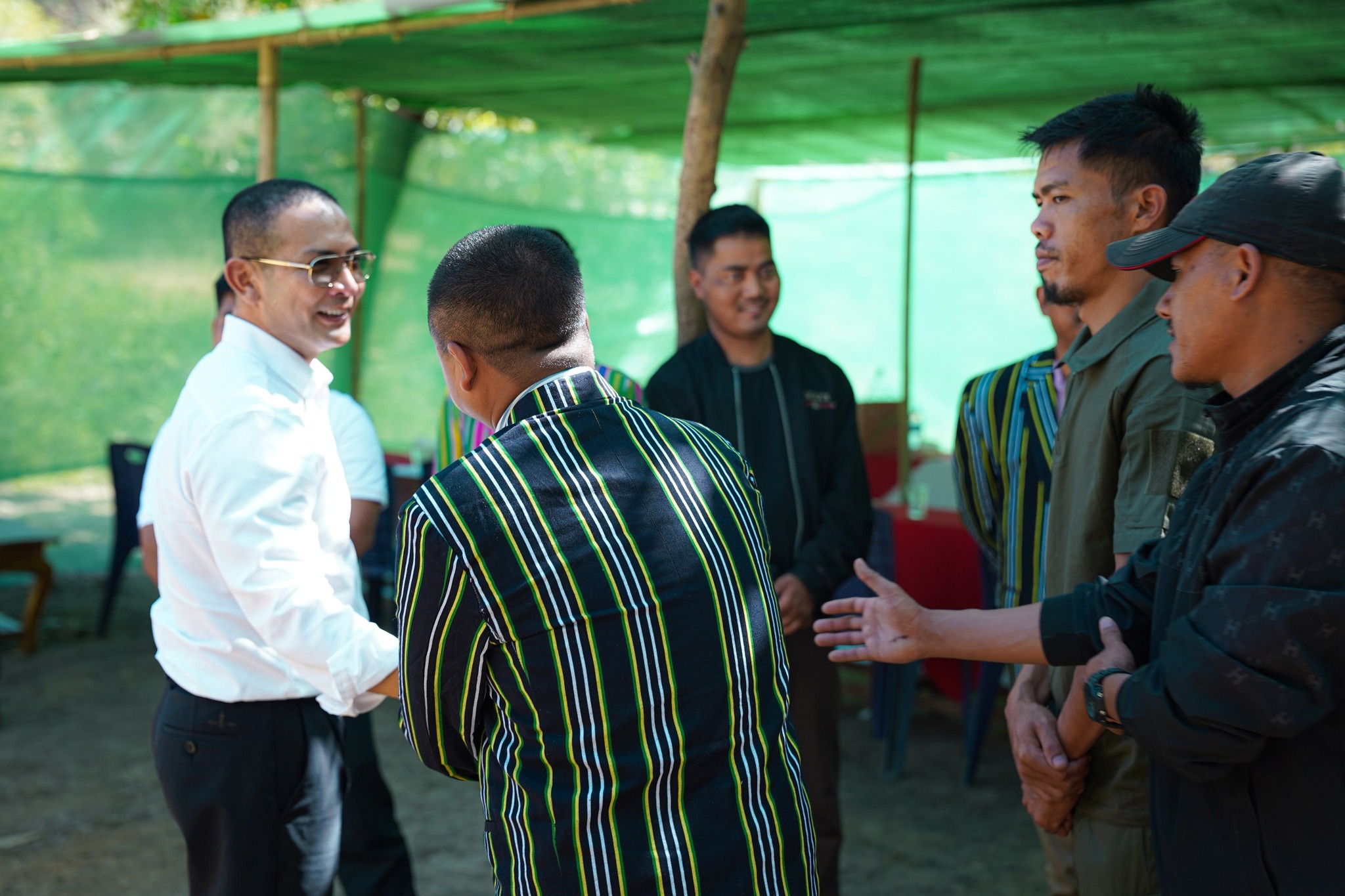
AA Leader Major General Twan Mrat Naing and the Chin Revolutionary Forces.
In an interview with The Diplomat, AA leader Major General Twan Mrat Naing stated that during peace talks with Myanmar military representatives in China two years ago, the AA demanded that there be no Myanmar military troops stationed in the Rakhine region. On the other hand, the Myanmar military desired to return to the status quo prior to 2023.
A political analyst told CNI News that if the military insists on regaining its former positions during peace talks, it will not be workable.
"From my perspective, the military's stance that they must regain the places where they previously resided is unworkable. If they want it to work—for instance, like the MNDAA returning Lashio or Muse to the military—the military would only hold a very confined authority, ruling over something like just 12 wards. This is because the vast majority of the areas where the general public lives are under their (the ethnic armed groups') administration. It looks as though those administrative systems must be recognized. If these are to be guaranteed by the constitution, it is important to look at the rights of the people to choose and elect under a multi-party democratic system within the state. They might need to move toward a model where they accept government administration chosen through a competitive multi-party democratic system. However, at present, I do not see any prospect of the northern groups under Chinese influence accepting such a multi-party system. I think they will continue to rule under a single-party, military-led system. We will have to negotiate this and decide how much time it will take. Since we want to move toward a democratic federal system, I think we need to discuss how much time will be permitted for this transition," the analyst said.
Dr. Aye Maung, Chairman of the Arakan Front Party (AFP), told CNI News that every armed organization seems to consider resolving armed conflicts through dialogue and discussion as a priority.
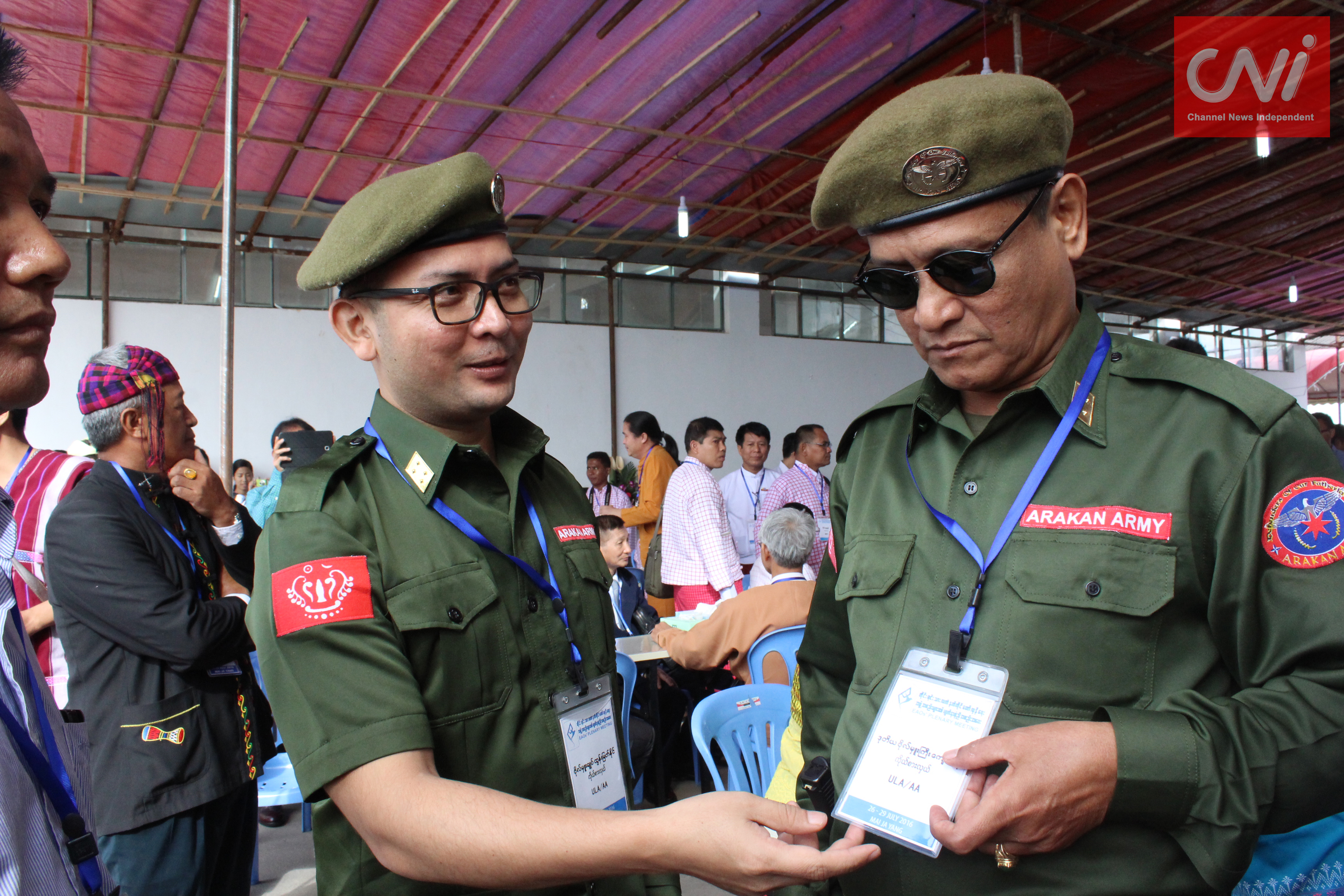
AA Leader Major General Twan Mrat Naing.
"In any case, finding a solution through dialogue seems to be a priority for every armed organization. Regarding the give-and-take, and what kind of political objectives each armed organization will achieve to make compromises—it will be difficult for both organizations to present an outcome to the public without building some form of political result. Whether it is the AA or the MNDAA, armed organizations have their parties, party members, and armed wings. There are commanders and soldiers. There have been lives sacrificed. There are instances of losing territory, and instances of gaining territory. If territory is surrendered, the morale of their public, commanders, and soldiers might drop. If territory is gained, the morale of their commanders and soldiers might rise. After capturing a territory, it can be difficult to give it back without achieving a certain level of political advancement after fighting with such expectations," he said.
Currently, AA leader Major General Twan Mrat Naing has declared that they will launch final township-capturing battles to achieve victory over the remaining three townships in Rakhine State between 2026 and 2027.