
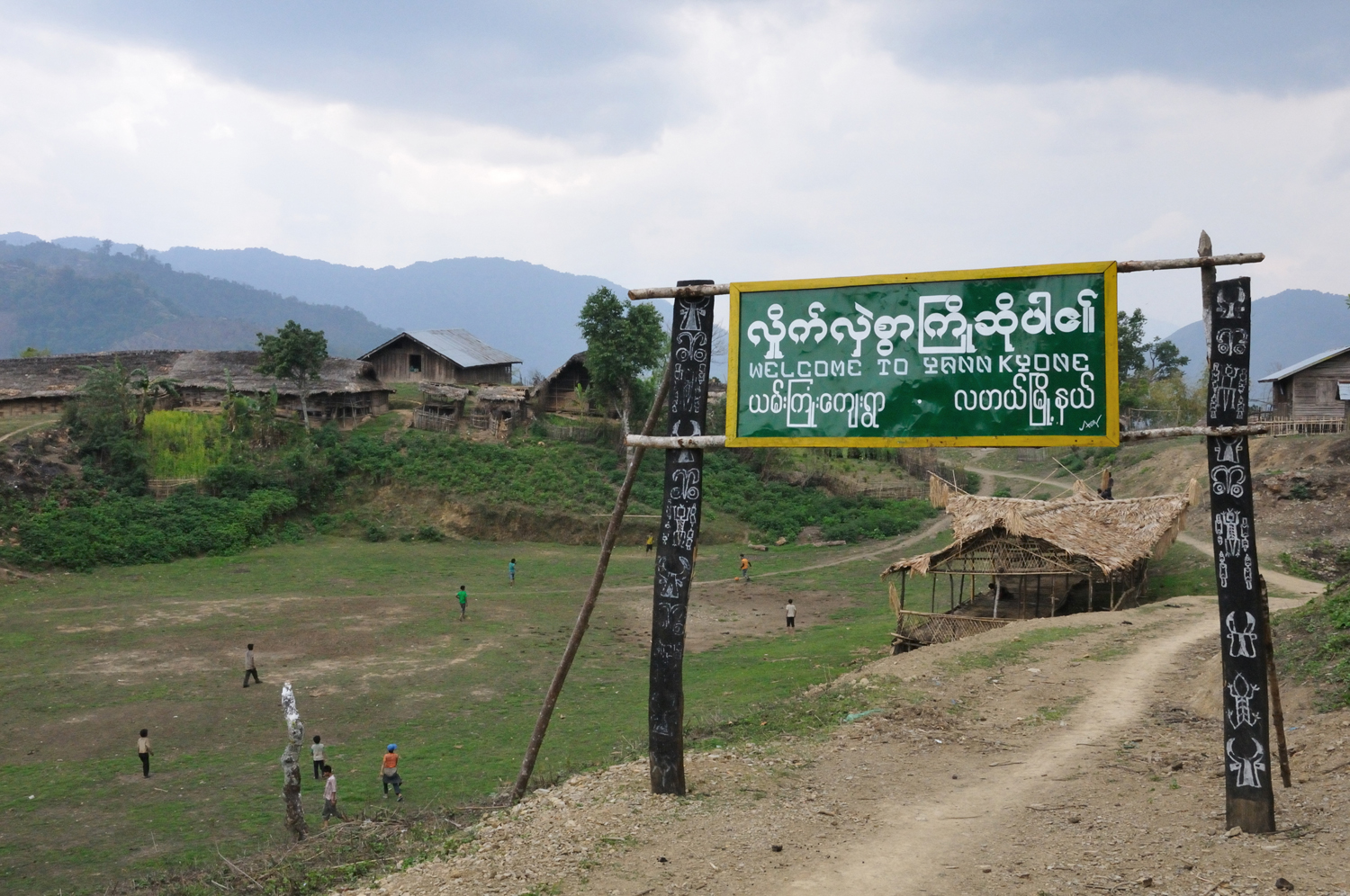
CNI News
May 21, 2026
Leaders of local organizations are seeking answers as to why commodity prices remain exorbitantly high in the Naga Self-Administered Zone, located in the upper part of Myanmar's Sagaing Region, despite it being one of the least developed areas in the country.
It is reported that local residents in the Naga Self-Administered Zone are facing delayed commodity flows and high commodity prices due to armed groups setting up checkpoints and collecting taxes.
Consequently, leaders of Naga organizations have pointed out and suggested that it would be better if the government stepped in to regulate and stabilize the current situation of rising commodity prices.
U Shan Maw, Chairman of the Naga Traditional Culture Committee in Khamti Township, told CNI News that traders are raising prices because of the heavy taxing by armed organizations along the trade routes entering the Naga region.
He said: "Regarding the Naga region, the main factor in the economy is the trade route. For example, currently in Khamti, the prices of commodities—such as petrol, diesel, and rice—are extremely high. This is because these things are under the control of armed organizations. Since their tax collection is high, traders also raise the prices. Traders mark up the prices unfairly. For instance, we have to buy and consume a regular bag of rice for around 180,000 to 200,000 Kyats. We hope these issues will be resolved once the country becomes peaceful."
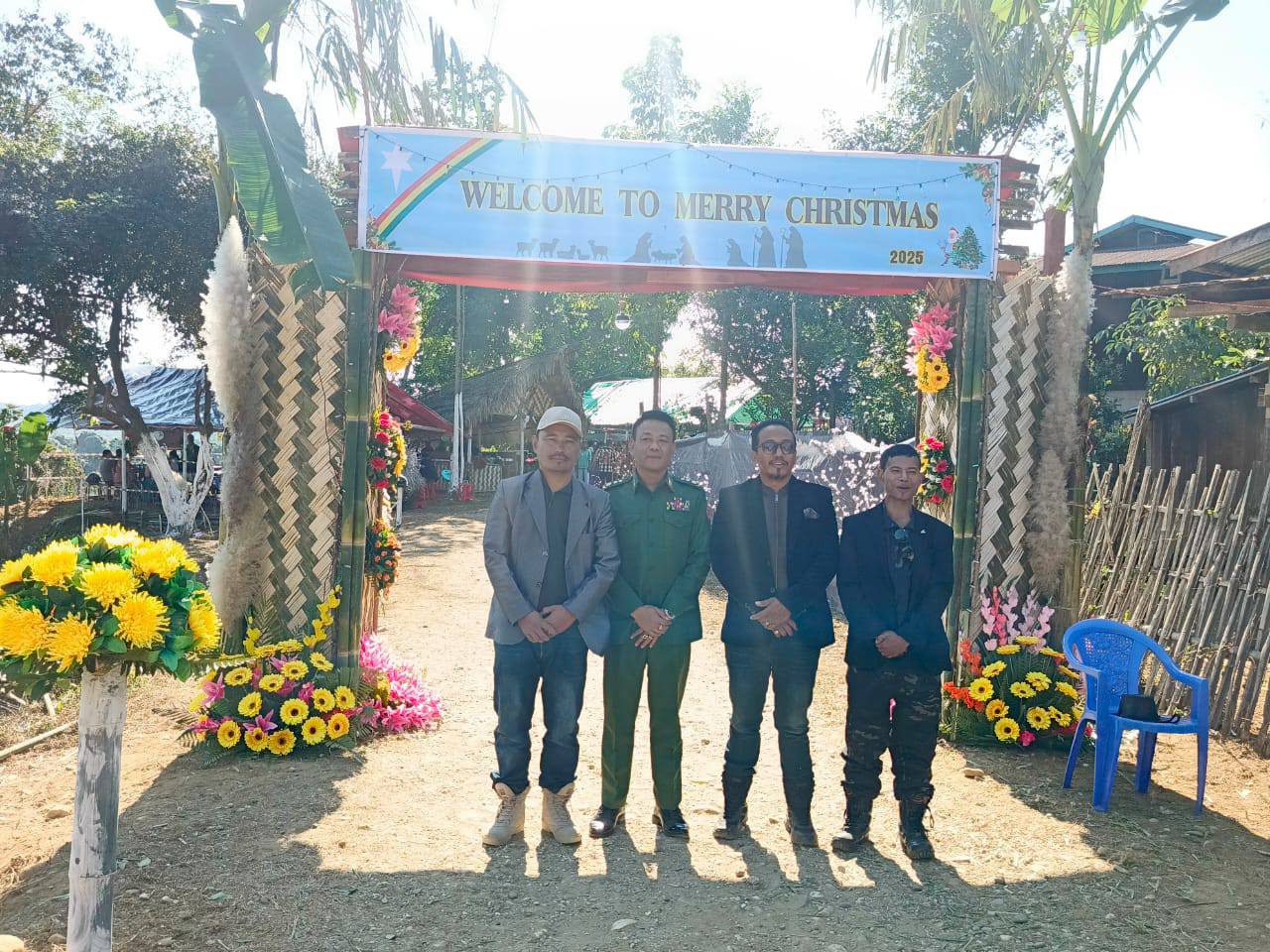
Members of the Myanmar Military(Tatmadaw) and a Naga armed group seen together
Due to increased tax collection and a growing number of checkpoints by armed organizations, the flow of commodities has been delayed, and local Naga residents are bearing the brunt of skyrocketing commodity prices.
Since the Naga region shares a border with India, it relies on the flow of goods through townships like Pansaung, Nanyun, and Leshi (Lahe), as well as border trade gates on the Indian side.
Similarly, from mainland Myanmar, goods are transported to the Naga region using the Chindwin River, passing through Monywa, Homalin, and Khamti.
The Chindwin River Route: In Shwe Pyi Aye town, the KIA and PDF have blocked and cut off the flow of commodities. They only allow passage after collecting exorbitant amounts of money, causing the prices of goods reaching the Naga region to spike dramatically.
The India Route: Goods brought from the Indian side face multi-layered monetary collections by various Naga armed groups, government departments, and bus terminal associations, which also drives up commodity prices significantly upon arrival in the Naga region.
U Chin Maung, Chairman of the Peace Procurement Committee of the National Socialist Council of Nagaland-Khaplang/Anmai (NSCN-K/AM), told CNI News that the current government is also opening gates and collecting taxes, and that if those gates relax their tax collection, the armed groups could relax theirs as well.
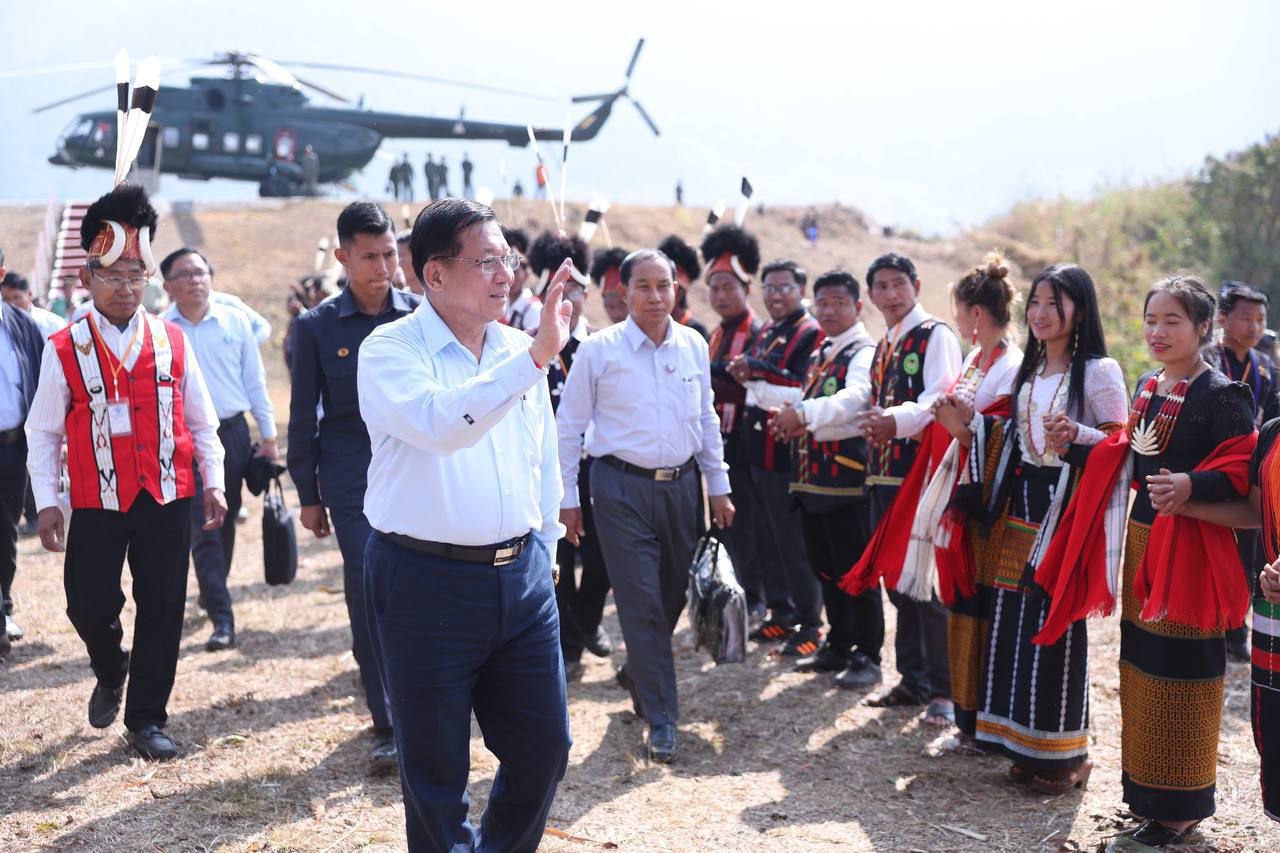
President U Min Aung Hlaing arriving in the Naga region
He stated: "On our side, we do not collect taxes to the extent that it would cause such high commodity prices. At our Leshi gate, we only charge 20,000 Kyats per car. However, in Leshi town, the car committee said they have to pay 20,000 Kyats per barrel of fuel to the government's General Administration Department (GAD). Then, another 20,000 Kyats goes to the car committee, and the payments at the entry/exit gates are even higher. At the checkpoints we maintain for security, our collection is not that high.
As an armed organization regarding tax collection, we sent one of our majors to the government's General Administration Department to meet with government officials. We told them that if they reduce their fees, we are also ready to reduce ours. Even now, we do not collect taxes by force. If the current government can relax this, we can also relax our gate fees."
During his visit to the Naga region, President U Min Aung Hlaing stated that the government would fulfill and carry out what is necessary for the development, stability, and peace of the Naga region.
Because the Naga region is a mountainous area, it faces scarcities. Additionally, it is currently confronting challenges such as an insufficient number of school teachers, high commodity prices, tax collections by armed groups, the military, police, and the GAD, as well as delays in the flow of goods.
Currently, various Naga armed groups—including the NSCN-K/AM, NSCN-K/YA, NSCN-IM, NSCN-HR, ENNO/ENDA, and NPDF—alongside Meitei armed groups and the KIA, are based in the Naga region and actively operating.