
CNI News
May 19, 2026
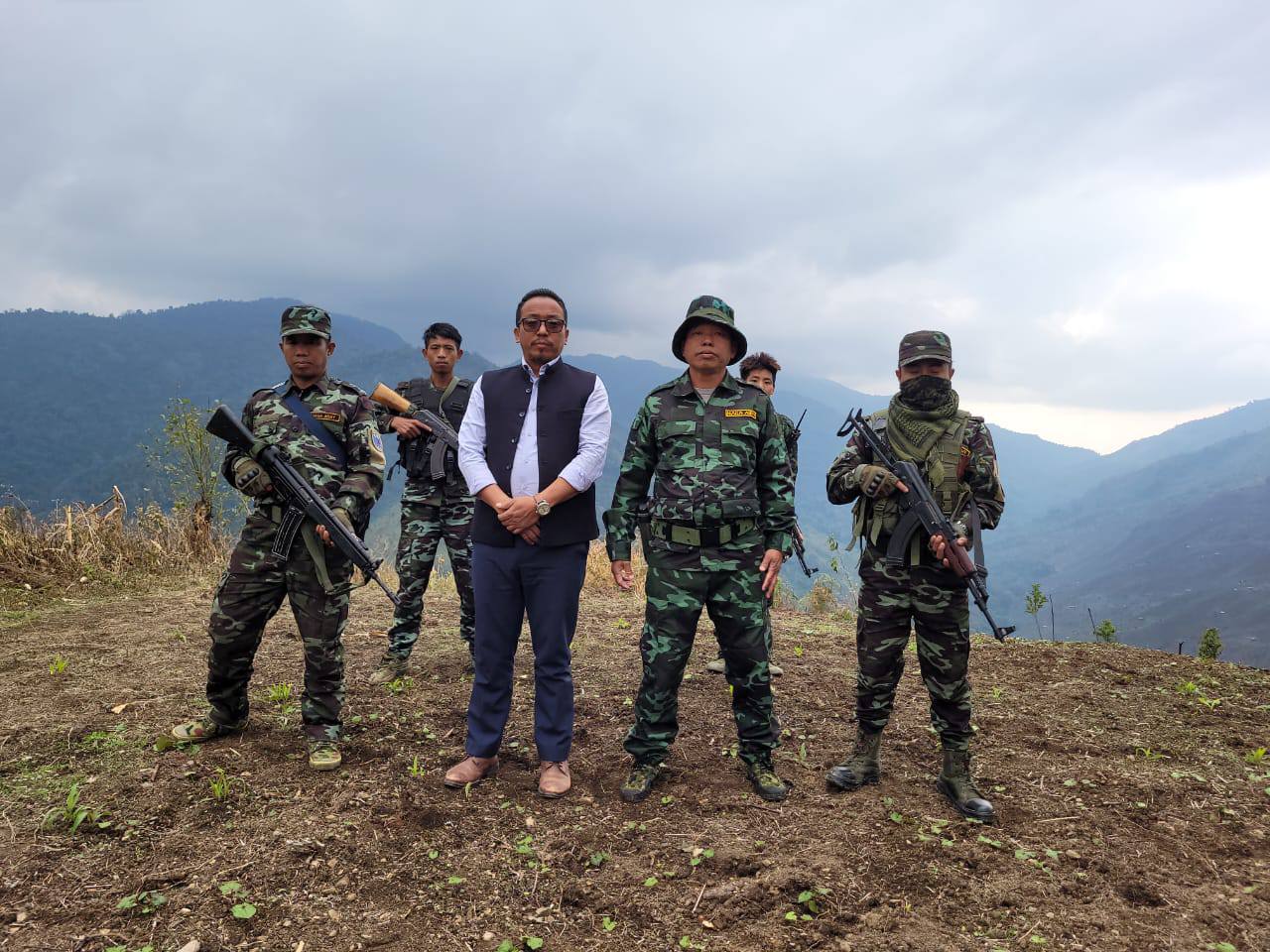
The National Socialist Council of Nagaland-Khaplang/Ann Mai (NSCN-K/AM) told CNI News that it plans to control drug trafficking routes passing through the Naga Self-Administered Zone in Sagaing Region, Myanmar.
Taking advantage of political instability and growing armed conflicts in Myanmar, drug smuggling networks have been trafficking and distributing narcotics throughout the country as well as exporting them to neighboring countries.
According to the NSCN-K/AM, drugs have increasingly entered and spread within the Naga Self-Administered Zone, mainly through Nanyun Township from Kachin State. U Ching Maung, Chairman of the Peace-Making Committee of the NSCN-K/AM, told CNI News:
“Regarding drugs, the news currently spreading is that most of the narcotics are entering from Kachin State. Most of them come through the Nanyun route. Authorities and relevant departments in Nanyun have discussed coordinating efforts to address the issue. However, we have not yet officially held a meeting. We will cooperate with them and organize discussions. Only after meetings are held will we be able to determine the extent of the actions to be taken and find a proper solution. We will need to coordinate with the government so that the relevant departments can participate. We have already made considerable efforts regarding drug issues. We believe that after discussions, we will find ways to control the problem.”
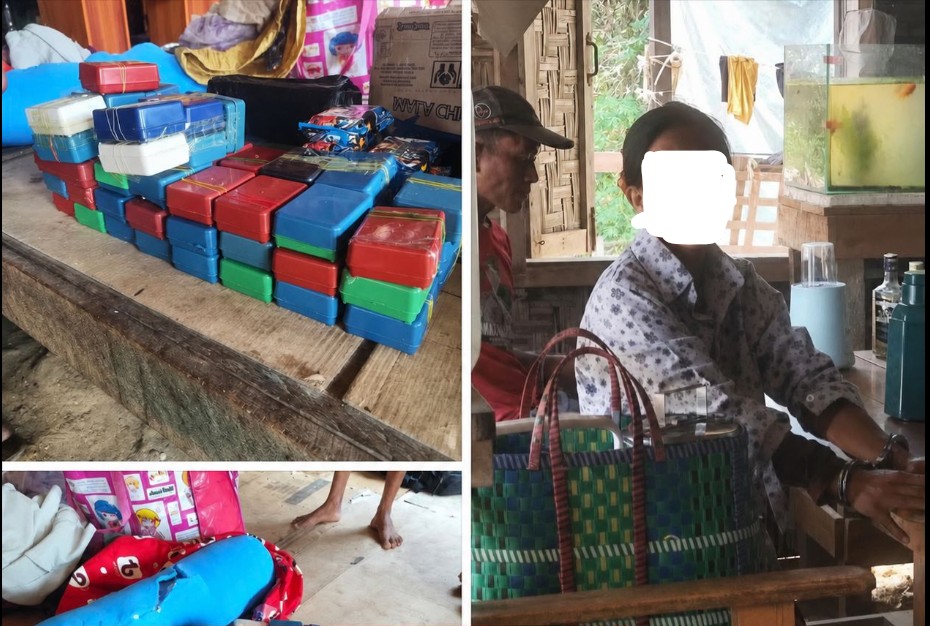
Daw Kaw Yuan, who was transporting drugs to Nanyun Township, was arrested with heroin on May 6, 2026.
On May 6, 2026, authorities discovered heroin hidden inside 88 soap containers in the luggage of a woman named Daw Kaw Yuan, who was traveling from Shin Bway Yang in Kachin State to Nanyun Township in the Naga Self-Administered Zone.
The seized heroin was reportedly worth approximately 44 million kyats at current market value.
Residents in the Naga region said that heroin and methamphetamine tablets are mainly flowing in from neighboring Kachin State. Drugs have already spread to villages across Nanyun, Lahe, and Hkamti townships, and even high school-aged youths are reportedly using narcotics.
U Sham Maw, Chairman of the Naga Traditional Culture Committee in Hkamti Township, told CNI News that there are many drug trafficking routes into the Naga region and discussions are ongoing with local authorities on how to control them.
He said: “The drug issue is a very serious problem because it is closely connected with politics. If the political situation improves, then discussions on how to control drugs will become possible. Armed groups, the police force, and civil society organizations need to coordinate in order to handle the problem effectively. This is not only a Naga regional issue but a nationwide issue. Therefore, policies must be developed at the national level. There are many trafficking routes — through Kachin State, Hkamti, and Homalin. Most of the trafficking occurs through armed-group-controlled routes. This is because there is involvement by armed groups as well as some officials from relevant departments. We are still discussing and reviewing the matter with responsible authorities and have not yet made any final decisions.”
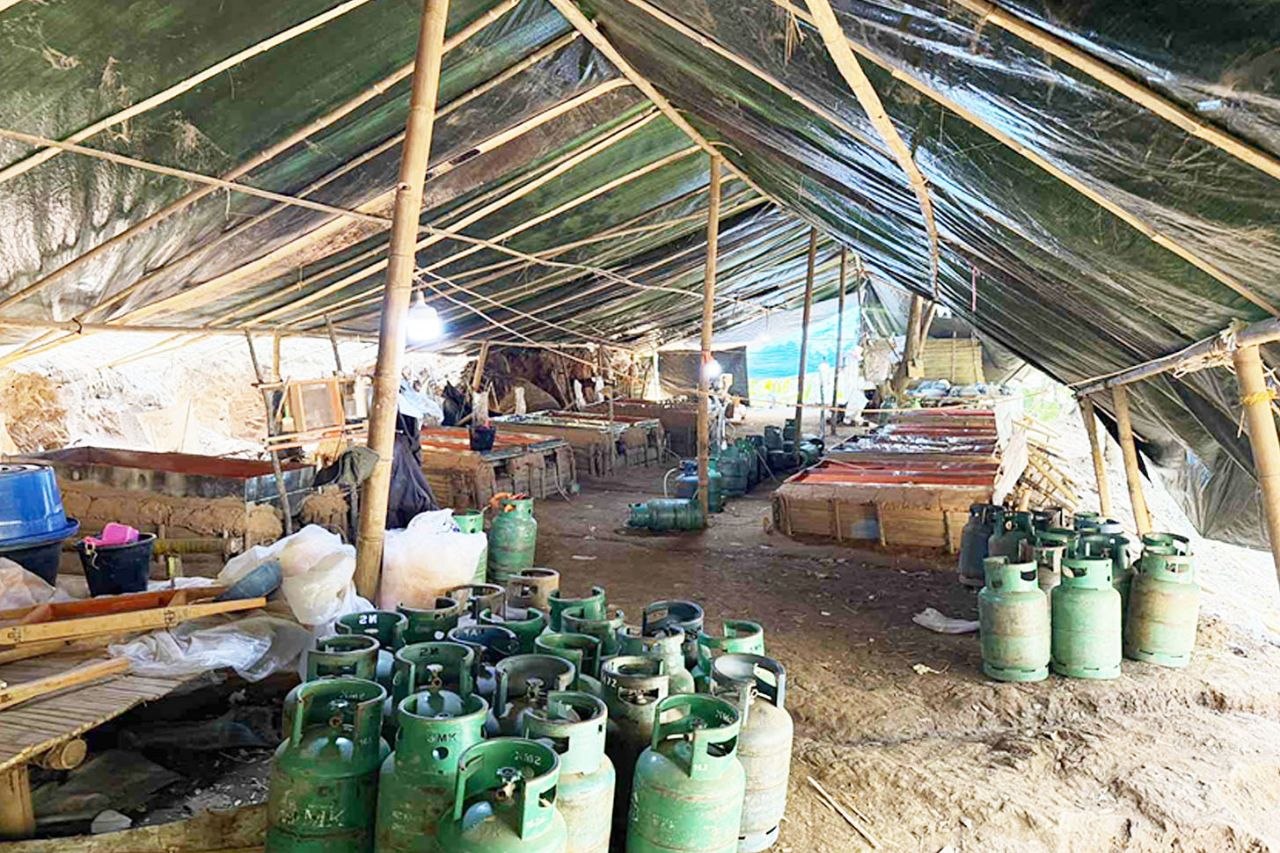
A drug manufacturing factory seized in northern Shan State.
Earlier this year in Tachileik Township, eastern Shan State, authorities reportedly seized narcotics and related materials used in drug production worth approximately 20.2 billion kyats.
Additionally, between January 16 and 22, 2026, drug production factories and materials used in narcotics manufacturing were seized near Hsipaw and Mongyai in northern Shan State.
According to statements released from Naypyidaw, authorities confiscated narcotics and chemical substances used in drug production worth more than 1.761 trillion kyats during 2025 in Myanmar.
Drug trafficking networks in Myanmar are reportedly operated through cooperation among armed groups, business figures, corrupt officials, and drug syndicates from neighboring countries. The narcotics are then trafficked to neighboring countries including Thailand, India, Laos, and Bangladesh.