
CNI News
May 19, 2026
Political analyst Dr. M Kawn La told CNI News that it would be highly beneficial if the Kachin Independence Organization (KIO), the new government, and the Tatmadaw (military) could effectively and swiftly achieve peace, rather than fighting for mutual total annihilation.
He explained: "Right now, even the Myitkyina-Mandalay highway has been reopened. Nantsiaung, Mohnyin—they have all reopened. Since Katha has also been recaptured by the government forces, the KIO's position in Bhamo is not looking good. The government is in a position where it could recapture everything. For the new government, this issue is quite broad. It would be best if the new government could handle the peace process with the KIO as effectively and quickly as possible. It is much better than fighting an all-out war of annihilation. That is my perspective. The reason is that the government military's current offensives toward Kachin State are focused on cutting off supply routes from the Sagaing Region and Chin State sides, and they are fighting back to win the war."
The Kachin Independence Army (KIA/KIO) has been conducting a liberation offensive along the northwestern region, linking Kachin State with Sagaing Region, Chin State, and Rakhine State.
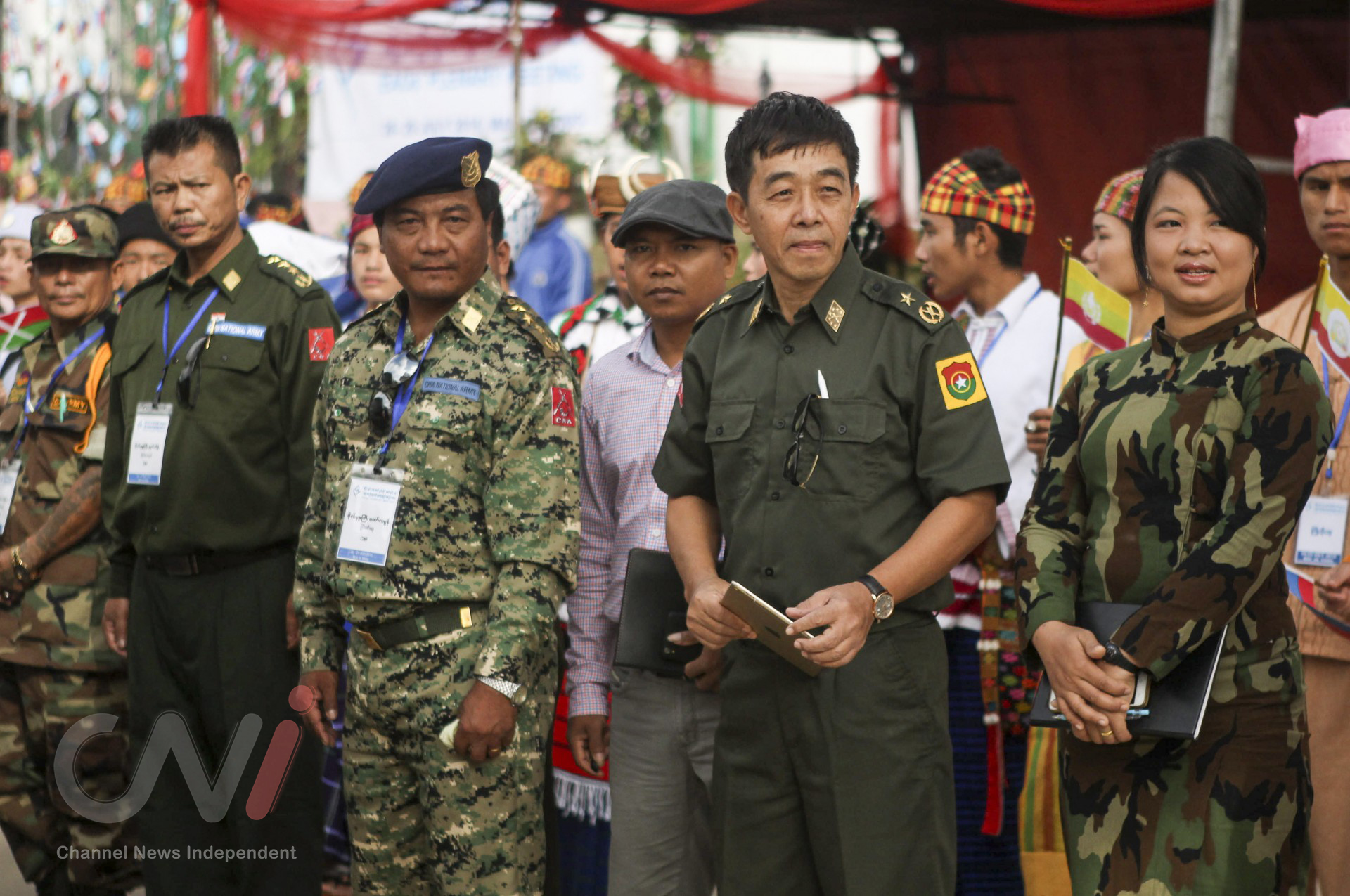
Some KIA and CNF leaders seen together.
Currently, the Tatmadaw has managed to regain control of towns bordering Kachin State and Sagaing Region—such as **Banmauk, Mawlu, Indaw, Katha, and Htigyaing**. It has also been observed that the military is prioritizing offensive operations in Kachin State, Sagaing Region, and Chin State.
Because of this renewed control, military and political observers assess that the KIA is facing significant crises in its liberation operations across the northwestern region.
Kachin politician U Kawn Gaung Aung Kham told CNI News that the Tatmadaw is likely to launch offensives not only in Kachin, Sagaing, and Chin, but also in other states. However, the extent of these offensives will depend heavily on the revolutionary allied forces.
He stated: "They might do that. However, what kind of 'peace' are we talking about? It will depend on whether it is an all-inclusive peace or a mutually beneficial peace. From what we understand, regarding the concept of peace, there are aspects the revolutionary side accepts and aspects they do not. The Tatmadaw is launching offensives in Chin State as well, in addition to Kachin and Sagaing. It also appears the Tatmadaw intends to launch offensives in other states. But how far they can push these operations will depend entirely on the allied forces and the local populations."
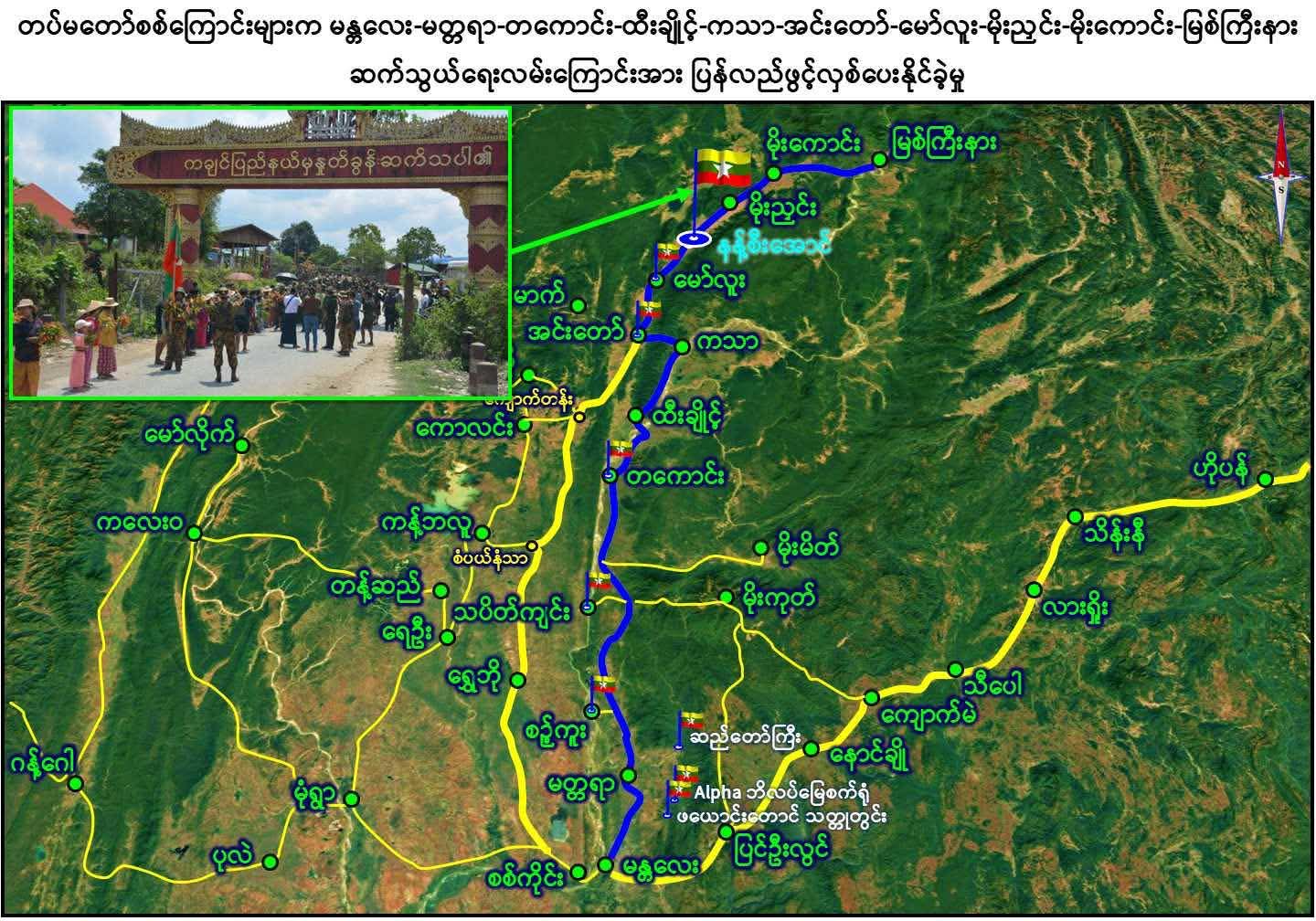
The Tatmadaw regaining control of the Mandalay-Indaw-Myitkyina route.
Military and political observers deduce that Naypyidaw calculates that if the government can control the KIO, it will subsequently be able to control some of the remaining ethnic armed organizations (EAOs) and revolutionary forces.
Although the new government led by President U Min Aung Hlaing has announced an invitation to all armed groups for peace talks within 100 days, reports indicate that on the ground, invitation letters have only been sent to 7 out of the 10 armed groups that signed the Nationwide Ceasefire Agreement (NCA).
It is also reported that the TNLA—one of the Three Brotherhood Alliance groups—and General Ko Ko Oo, Chief of the General Staff (Army, Navy, and Air), met for discussions in Kunming, China, from May 12 to 13, 2026.
Similarly, news is emerging that further discussions with the MNDAA and the KIA will take place shortly.