
CNI News
May 19, 2026
Military and political observers are currently analyzing and discussing how the new government, led by President U Min Aung Hlaing, should separately approach the Kachin Independence Army (KIA) and the Arakan Army (AA) when practically implementing peace initiatives.
Observers point out that the KIA is striving for liberation across Myanmar's northwestern region, which includes Kachin State, Sagaing Region, Chin State, and Rakhine State.
On the other hand, the Arakan Army (AA), formed in April 2009, initially established its foothold in Paletwa Township, Chin State, at the dawn of its revolution. It later penetrated Rakhine State and successfully seized control of a route to the sea.
Similarly, the AA has allied with the CNF, KIA, ABSDF, PDF, TNLA, and MNDAA in the Sagaing, Magway, and Ayeyarwady Regions, as well as Chin, Kachin, and Shan States, to fight the Myanmar Tatmadaw (military) and expand its controlled territories.
Political analyst Dr. Myo Set Thway told CNI News that based on the current military landscape, although the AA is generally under the KIA's influence, the approach to handling these two groups will differ. He emphasized that China's role as a mediator is crucial in dealing with both groups.
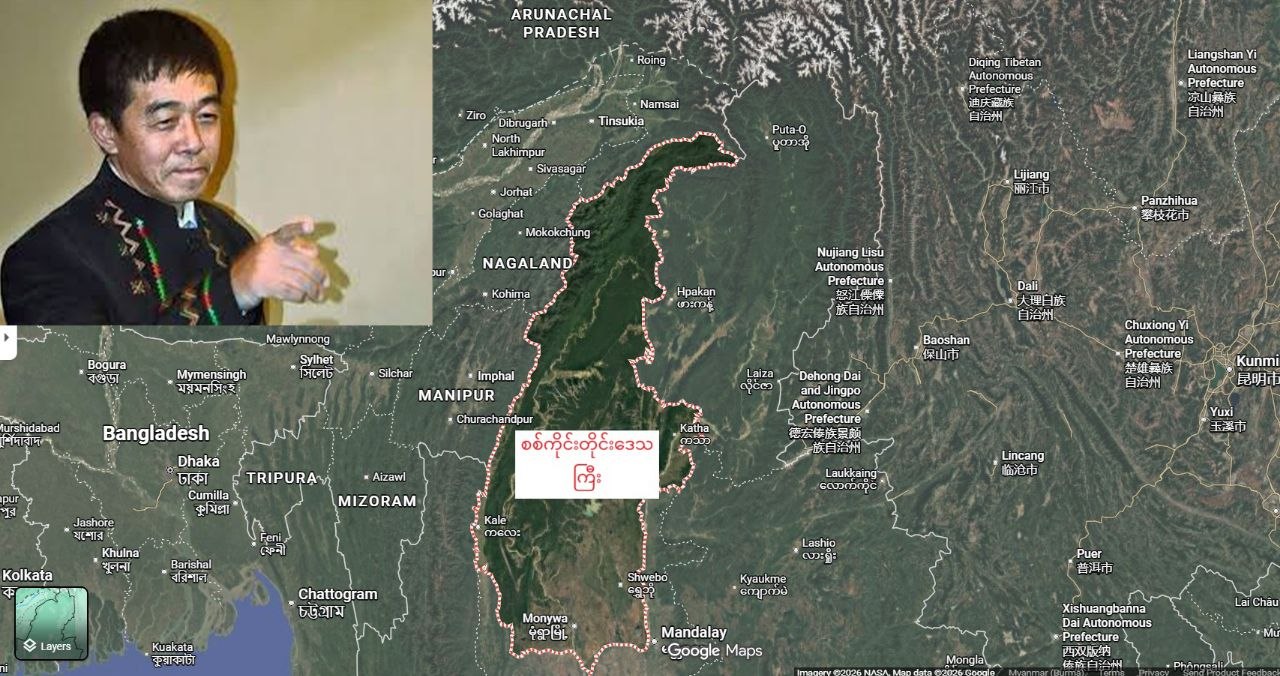
KIA leader Gun Maw and the Sagaing Region seen together.
He stated: "Generally speaking, you could say the AA is under the KIA's control, but in reality, the AA was born out of the KIA's nurturing. This means the AA is the KIA's disciple. However, this master-and-disciple dynamic is no longer identical. The way you have to deal with the KIA is different from the way you deal with the AA. True, they are master and disciple, but you must treat the master one way and the disciple another. This is because their stances on their armed paths are different. Primarily, if China steps in to mediate, the AA situation could be resolved. When negotiating with these armed groups, force is sometimes required, but dealing with the AA seems to require a bit more than that. Even though they possess significant manpower, if the Tatmadaw and the government include China's mediation in their dealings, balancing power with the AA will likely be easier. The KIA, however, could be more complicated. Due to the geographical terrain, penetrating their territory will likely be harder. The main issue is that the AA is demanding a confederate status, and they have territories under their control. Talking about peace also means playing a power game on the side. You have to project your power while making a deal with the other side. We cannot grant the confederate status they are demanding. So, how much will they be given? Will Rakhine State be granted a self-administered state status or not? These are the kinds of discussions that will have to take place."
Military and political observers also highlight that, given the current territorial landscape, the KIA might use Myanmar's domestic resources—such as rare earths and jade—as leverage in negotiations.
Political analyst Dr. Aung Myo told CNI News that the KIA cannot be viewed in the same light as other armed groups. Because the two groups (AA and KIA) have different objectives, the negotiation and dialogue format cannot be a one-size-fits-all approach.
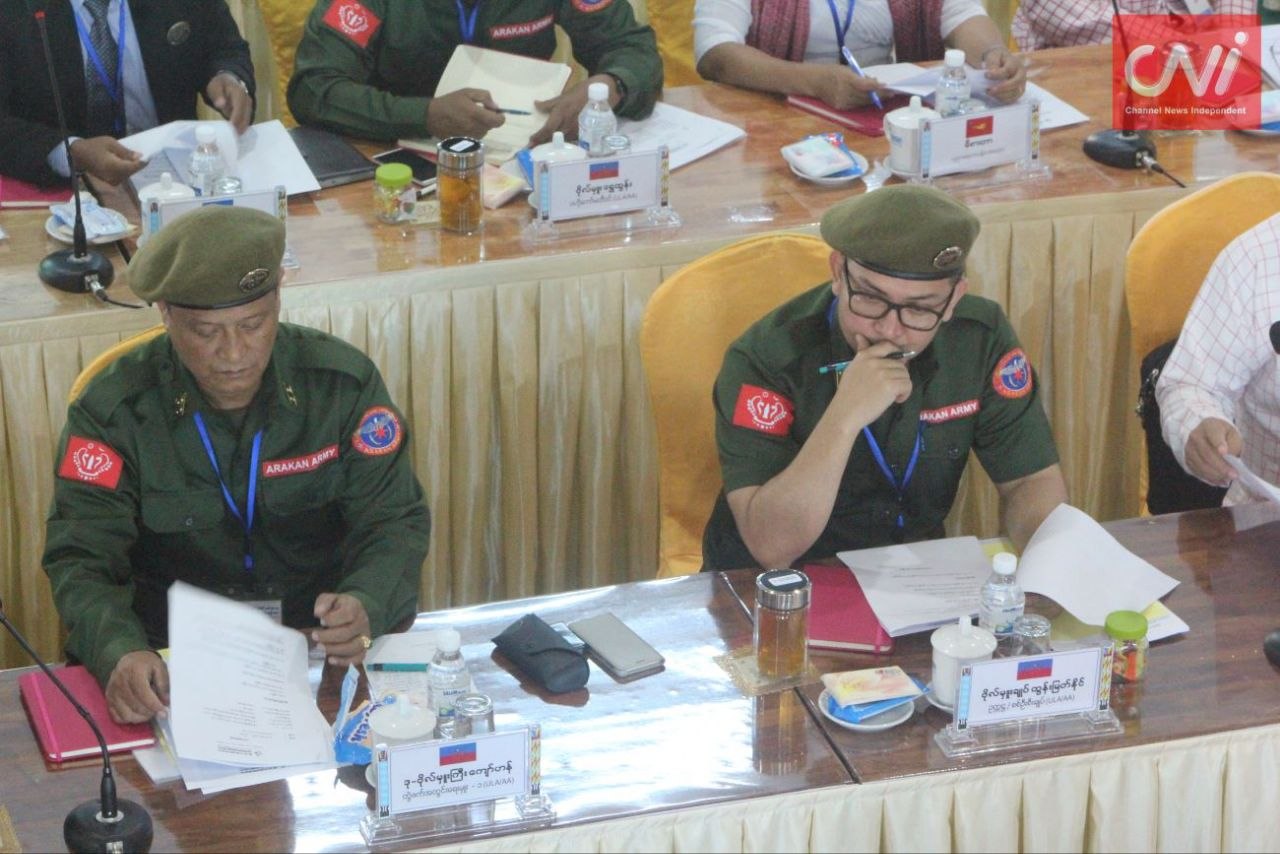
An AA leader seen.
He explained: "The first point is that the KIA cannot be lumped together with the others. The reason they cannot be considered the same is that they are influenced by the American Baptist Mission and the Western bloc. They engage economically with China, but ideologically, they lean towards the West. Another factor is the division among their own ethnic groups; there is also bullying. On the other hand, the Shanni forces are a major presence there. If the Shanni forces ally with the Bamar, they become the strongest force in Kachin State, which raises the question of whether this region will even remain as Kachin State. The territorial situation could even revert to the pre-General Aung San era, resembling the setup under the 1935 Government of Burma Act. Regarding the KIA, agreements and cooperation from China's Yunnan provincial government are necessary. Why? Because there are Kachin populations living inside Yunnan. That is a point of difference from the AA. Furthermore, Kachin is a landlocked state—another difference from the AA. In terms of population, they are not as numerous as the Rakhine. Another key point is that places they desperately want, like Myitkyina, were not even included in the Kachin Hills during the colonial era. Therefore, in every strategic consideration and thought process, they cannot be treated the same as the AA."
Currently, the AA operates independently within Rakhine State, while in Northern Shan State, it conducts military operations as part of the Three Brotherhood Alliance (MNDAA-AA-TNLA).
A ceasefire agreement was reached between the Myanmar Tatmadaw and the AA in November 2022, but fighting erupted again in November 2023, and military tensions remain high to this day.
Currently, the peace dialogue sector is included among the tasks that the new government cabinet, led by President U Min Aung Hlaing, plans to implement within its first 100 days.
Military and political observers point out that trust must be rebuilt to implement an all-inclusive peace process in Myanmar. They emphasize that responsibility and accountability are fundamental to carrying out peace processes, and without such an environment, it will not be easy for a peace initiative to succeed.