
CNI News
May 19, 2026
The government cannot grant the Kokang group (MNDAA), which is based in and controlling territory in northern Shan State, the same privileges as the “Wa” group (UWSA), Sai Htay Aung, Chairman of the Tai-Leng (Shan-Ni) Nationalities Development Party (TNDP), told CNI News.
He stated that the state government will not allow the Kokang region to become like the “Wa” region, and that it can handle the situation under the 2008 Constitution. He added that the "Wa" region could also be handled accordingly in the future.
"The government will handle it strictly under the 2008 Constitution. At some point, the 'Wa' region will also be reformed under the 2008 Constitution. If they cannot reform it, they must try to make it function in accordance with the 2008 Constitution. Why? Because right now, Myanmar’s diplomacy with China is in a good position. We have to consider this from diplomatic, political, and constitutional perspectives. Therefore, under the current trajectory, the government will not accept another situation like the 'Wa.' Under the 2008 Constitution, the 'Wa' is granted a self-administered division. However, Myanmar’s sovereign power does not reach the 'Wa' region. The government will not tolerate the emergence of another such entity," Sai Htay Aung said.
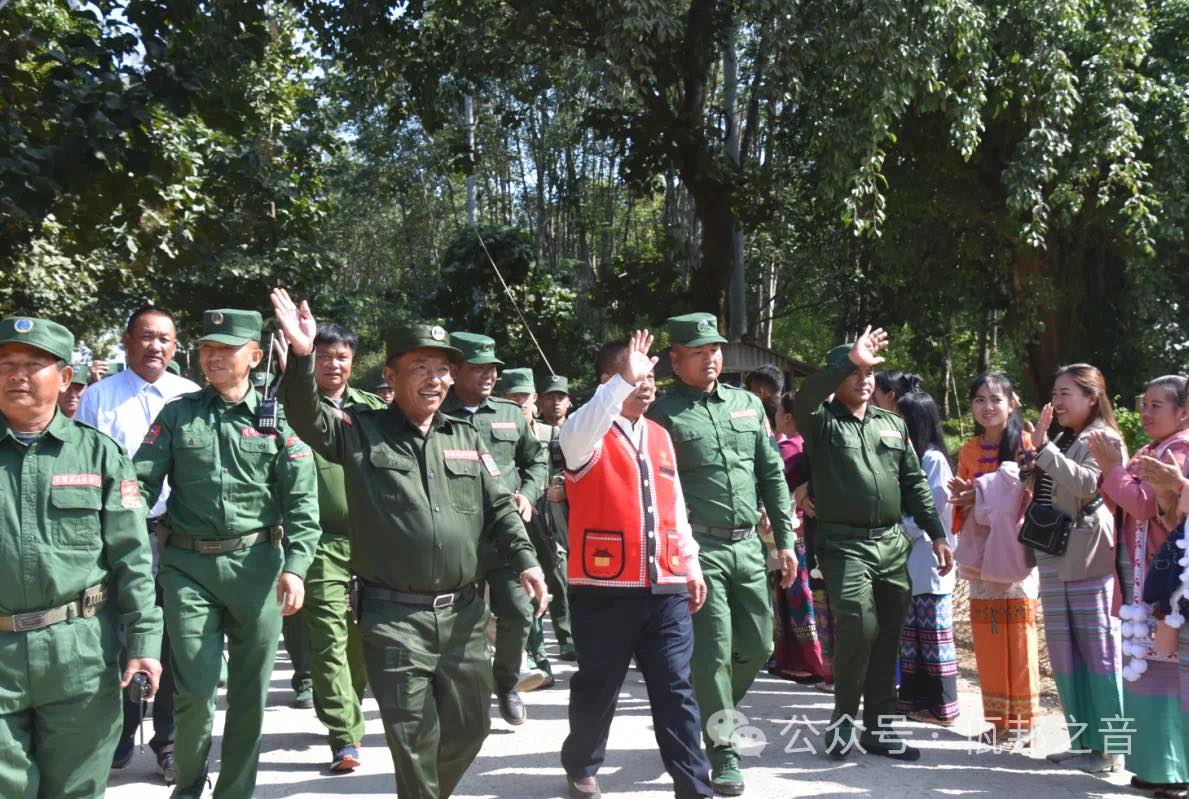
Seen are troops of the UWSA.
Currently, under Section 56(f) of the 2008 Constitution, six townships in Shan State—Hopang, Mongmao, Panwai, Nahpan, Metman, and Pangkham (Pangsang)—are consolidated and designated as the "Wa" Self-Administered Division.
Similarly, under Section 56(e) of the 2008 Constitution, Konkyan and Laukkai townships in Shan State are consolidated and designated as the Kokang Self-Administered Zone.
However, the "Wa" region has never been under the direct administration of the central government of Myanmar, and even during the British colonial era, administrative power did not extend to that area.
Political analyst Dr. Aung Myo told CNI News that while the Kokang region wishes to follow the path of the "Wa" region, the "Wa" cannot be compared to the Kokang. He noted that sovereign power did not reach the "Wa" region even during the colonial era, and neither the Chinese nor the Myanmar governments interfered there. In contrast, the Kokang area was historically merely a subordinate territory under the Sawbwas (Saophas) of Hsenwi, meaning it cannot be given the same status as the "Wa."
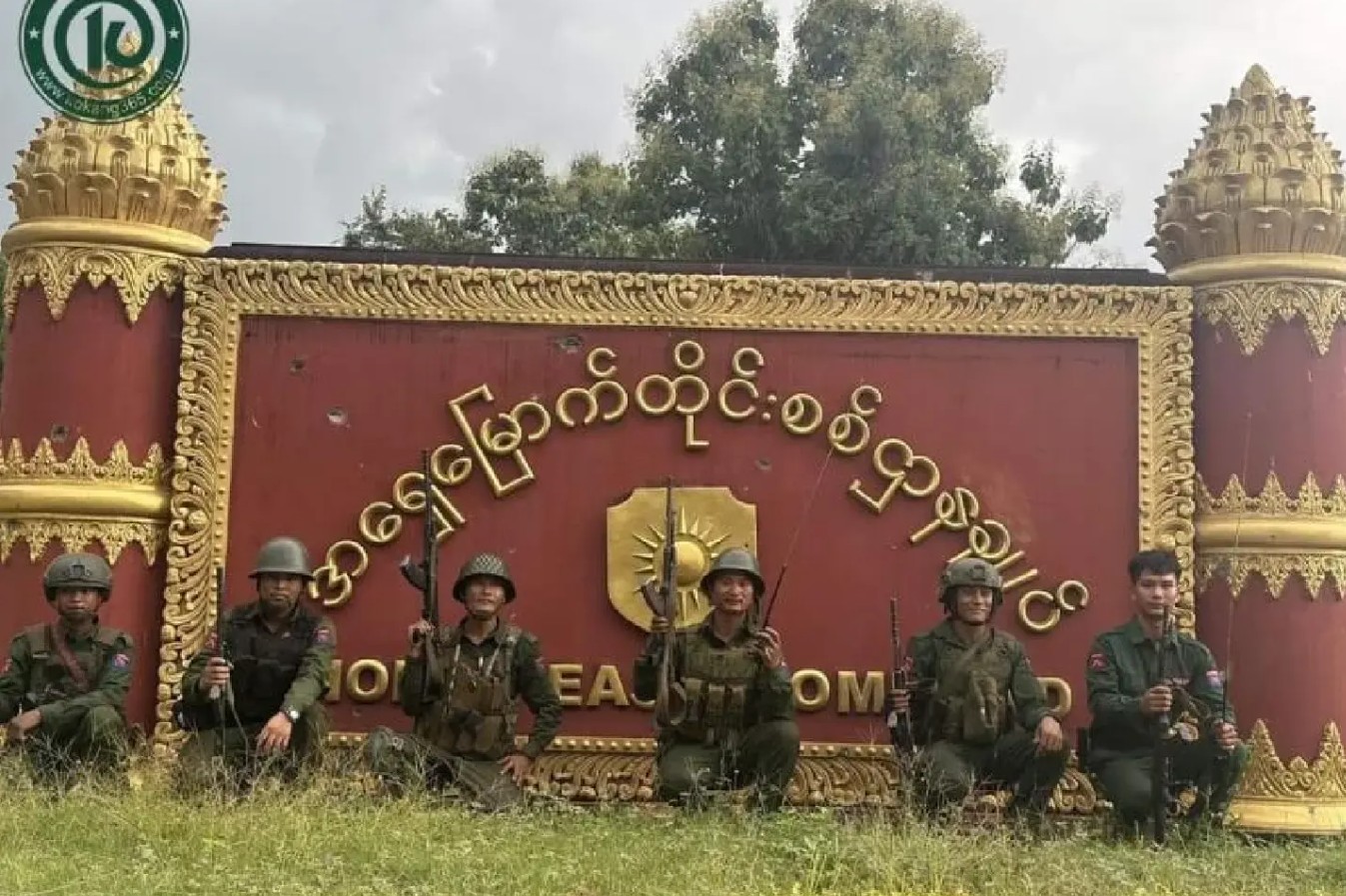
Seen is when the MNDAA captured the Northeastern Command based in Lashio.
"They want to move toward a 'Wa-style' model. But in the case of the 'Wa,' from the very beginning, even the Chinese government could not control them—meaning they didn't interfere. The Burmese didn't go there either, considering the mountains too remote. Furthermore, even after annexing the entire country in 1886, the British government left the Wa region alone for 50 years. That is the kind of background it has. At this point, we may have to look the other way regarding certain aspects of their autonomy. But for the Kokang side, it cannot be done this way. The Kokang were previously under the jurisdiction of the Hsenwi Sawbwa. They didn't even have the status of a Sawbwa; they were just at the level of a local fief governor (Nyein Sar). Therefore, these people cannot exist like the 'Wa.' We accept that they have the right to administer within their region to a certain extent. However, for instance, we cannot accept them handing down death penalties without the consensus of the Union Supreme Court or the President," Dr. Aung Myo said.
Currently, like the "Wa," the Kokang group enforces the exclusive use of the Chinese language in its seized and controlled areas. They are using the Chinese Yuan (RMB), installing signage with Chinese text, and issuing Kokang household registration lists and identity cards.
Since the launch of Operation 1027 on October 27, 2023, the Kokang group (MNDAA) has been negotiating with the government-military to gain administrative control over not only the Kokang Self-Administered Zone but also other areas including Hsenwi, Kutkai, Namhkam, Mongko, Mongko (Phongsai), Chinshwehaw, Hsipaw, and Kyukoke-Pansai.
On the other hand, it is observed that in areas controlled by the Kokang group (MNDAA), land purchases by Chinese nationals are rising, and the Kokang group has been facilitating business operations and mining rights for them.