
CNI News
April 29, 2026
Daw Saw Mra Yar Zar Lin, Chairperson of the Arakan Liberation Party (ALP), told CNI News that it would be best if the government could present a clear framework for how negotiations will proceed when inviting armed groups to peace talks.
She stated: "It would be ideal if they could present a specific model for how the discussions will take place. If they have set agendas, presenting those as well would be very beneficial. One thing I’ve noticed is that there are currently no rigid restrictions; there seems to be an opening for transparent discussion. It will start with informal talks. These informal meetings can help build mutual trust. Right now, there is a lot of anger and pride on all sides due to the ongoing fighting. Because of this conflict, we must start with informal meetings. We need to define how to begin. When we negotiate, there are basic principles, such as building the nation in accordance with the outcomes of the political dialogue. This means building a Union based on democracy and federalism. Therefore, it is crucial for the negotiating partners to engage effectively to produce good results."
Currently, the government led by President U Min Aung Hlaing has included peace and dialogue as a key component of its "100-Day Plan."
From April 20 to July 31 (within the 100-day window), all groups—including PDFs, ethnic armed organizations (EAOs) that have signed the NCA, and those that have not yet signed—have been invited to participate in peace talks.

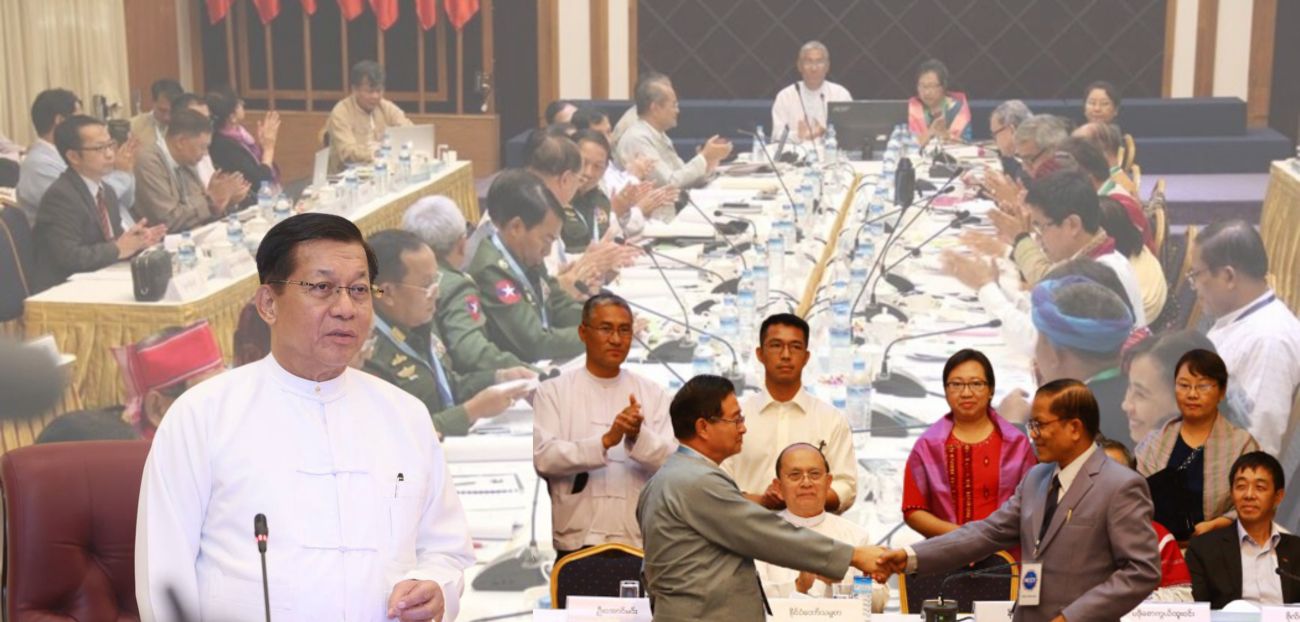
The NCA signing ceremony in progress.
There are varying assessments on the process: some argue that peace and a ceasefire are different and that a ceasefire should be established first, while others believe both should be pursued simultaneously. Military and political analysts also suggest that while some ethnic armed groups may not yet be ready for a full peace process, they may agree to a ceasefire.
Dr. Kyaw Swe, a Pyithu Hluttaw representative from the National Unity Party (NUP), told CNI News that he believes all armed groups will likely implement a ceasefire as a first step.
He said: "Peace and a ceasefire are not the same. Peace allows for regional development to take place. A ceasefire, in the past, has often been like a break for both sides to replenish their forces. However, stopping the fighting as soon as possible is best. If a ceasefire is achieved first, the people will start to feel a sense of relief; it’s the first step. To reach a point where both sides can accept a resolution for peace, it currently seems to require a third-party mediator. A ceasefire from just one side isn't enough for lasting peace. We will reach the 'peace stage' only with strong support or conflict resolution efforts from a neutral intermediary. But stopping the fire is the priority. We welcome the move toward a ceasefire and believe all armed groups will start implementing it first."

The NCA signing ceremony in progress.
On April 11, 2026, the government announced the reconstitution of the National Solidarity and Peacemaking Central Committee (NSPCC), the National Solidarity and Peace-making Working Committee (NSPWC), and the National Solidarity and Peace-making Negotiation Committee (NSPNC).
According to the NCA treaty, the Union Peacemaking Dialogue Joint Committee (UPDJC) is supposed to be composed of 16 representatives from the Government, Parliament, and Military; 16 from NCA-signatory EAOs; and 16 from political party blocs.
Military and political analysts pointed out that because the parliamentary sector is missing in the newly reformed NSPCC, NSPWC, and NSPNC, there could be significant difficulties regarding constitutional amendments. They noted that in the current Myanmar political landscape, the military's influence and involvement appear set to continue.