
CNI News
April 23, 2026
Military and political analysts are questioning whether the NUG and CRPH will be included in the peace invitation extended by the transitional government led by President U Min Aung Hlaing.
On April 21, 2026, President U Min Aung Hlaing invited both Nationwide Ceasefire Agreement (NCA) signatories and non-signatories—specifically naming the KNU, CNF, and ABSDF, who signed the NCA but have not engaged in dialogue between 2021 and 2025—to participate in peace talks by a deadline of July 31.
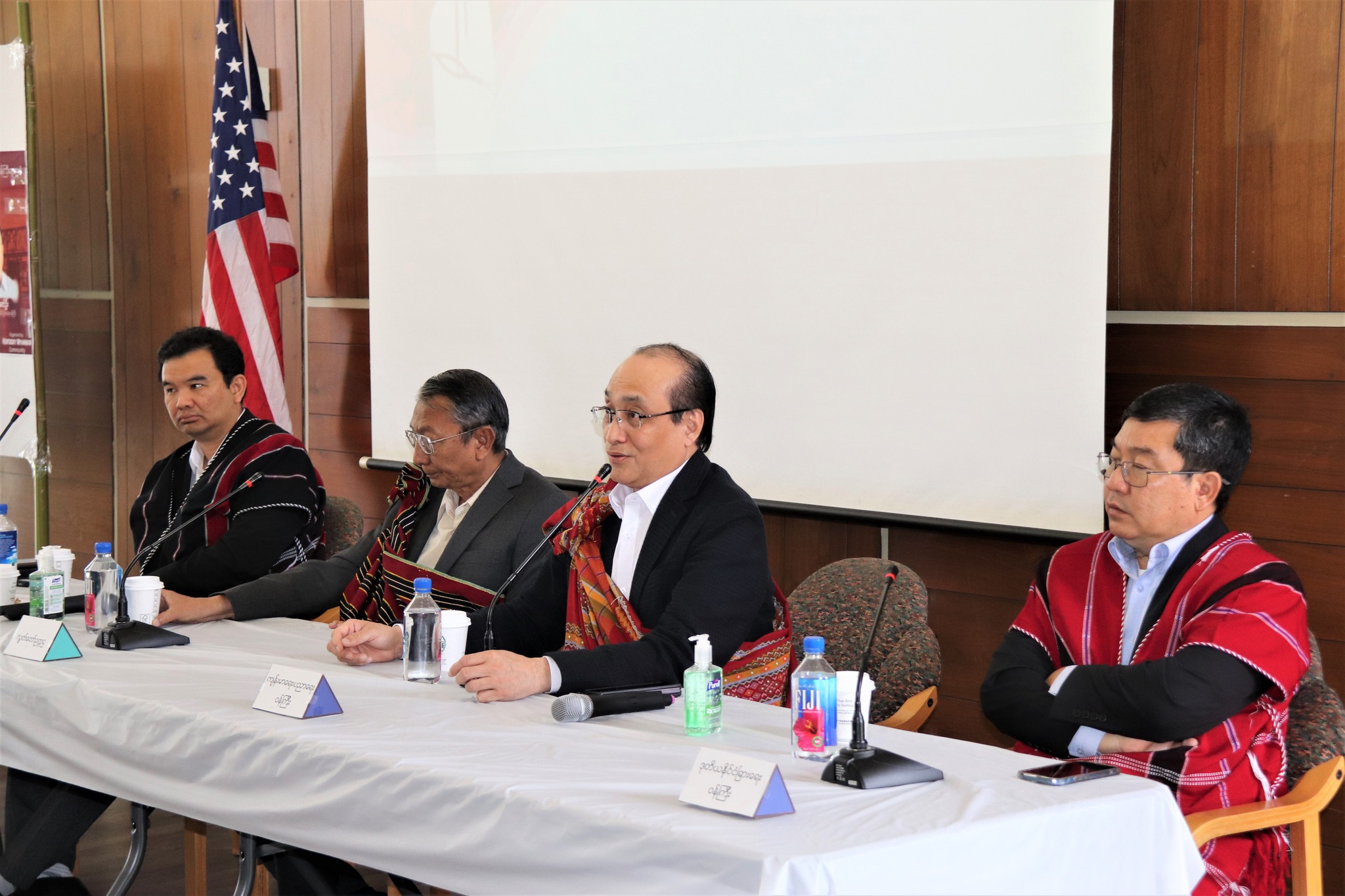
Colonel Khun Okkar, Chairman of the Pa-O National Liberation Organization (PNLO-NCA/S), told CNI News that the invitation appears to prioritize groups that signed the NCA but later walked away. He noted that since these groups have formed a federalist coalition that includes the NUG, their return to the peace process could potentially bring the NUG and CRPH to the table.
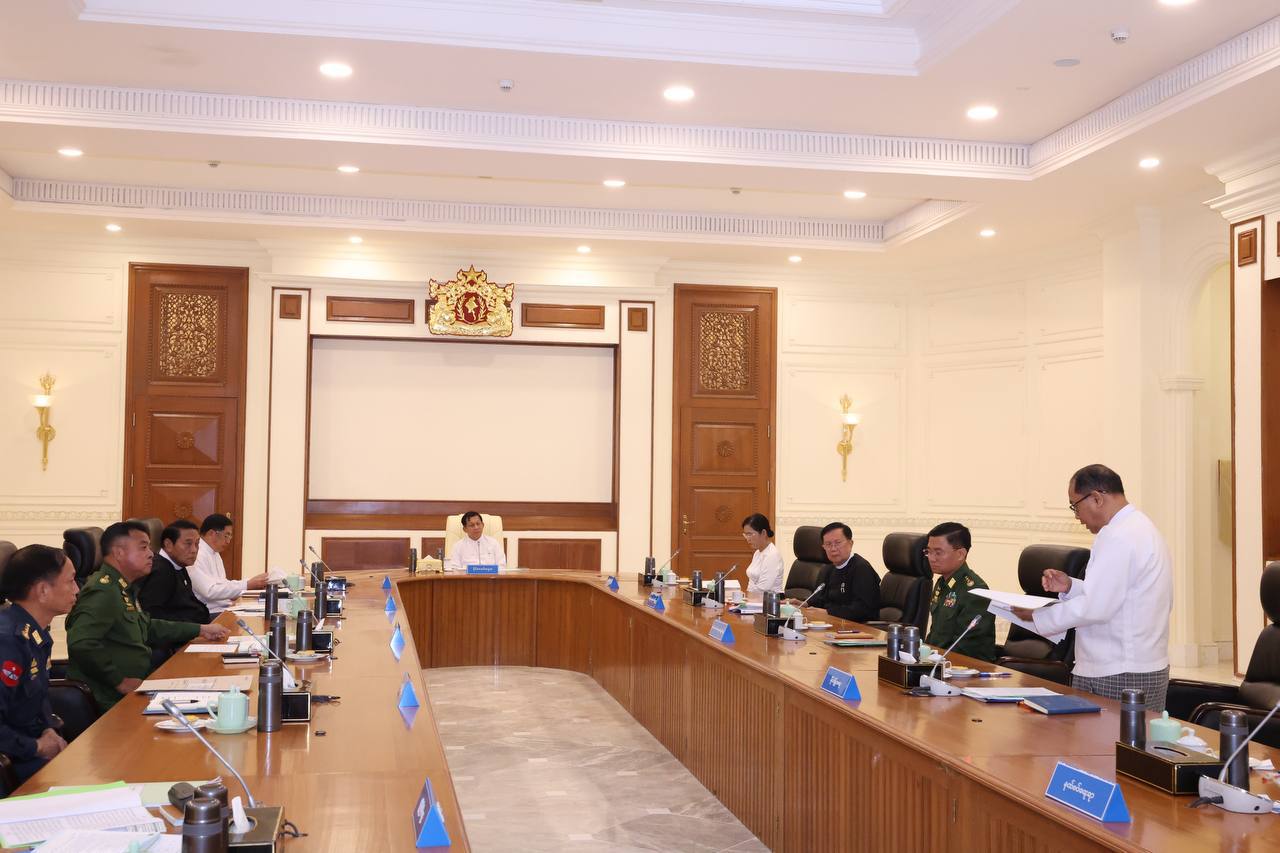
President U Min Aung Hlaing.
"They are extending a practical invitation. The priority seems to be the groups that signed the NCA and then left. The recently formed 'Steering Council for the Emergence of a Federal Union' (SCEF) is centered around the NUG and CRPH. This looks like a move to lay down a platform so that the NUG and CRPH can eventually have a seat at the negotiating table. It ensures that the groups providing that platform are not left out. However, if the NCA remains the primary foundation, the groups that signed and then withdrew—specifically the CNF and KIA—could be recalled first. Since they left claiming the NCA was void, their return might involve gathering their allies into this new coalition to gain leverage. We will have to wait and see how the actual negotiations unfold." — Colonel Khun Okkar
On March 30, 2026, opposition forces announced the formation of the Steering Council for the Emergence of a Federal Union (SCEF). This council includes: Kachin Independence Organization (KIO/KIA),Karen National Union (KNU),Chin National Front (CNF),Karenni National Progressive Party (KNPP),National Unity Government (NUG), Committee Representing Pyidaungsu Hluttaw (CRPH).
KIA leader Lieut-Gen Gun Maw has previously stated to the media that the KIA will only engage in peace talks if the NUG-PDF are included, and has questioned whether the military is prepared to accept them in discussions. Since the President invited the KNU, CNF, and ABSDF—who are now part of the SCEF—the situation suggests they may demand NUG-CRPH participation as a condition for talks.
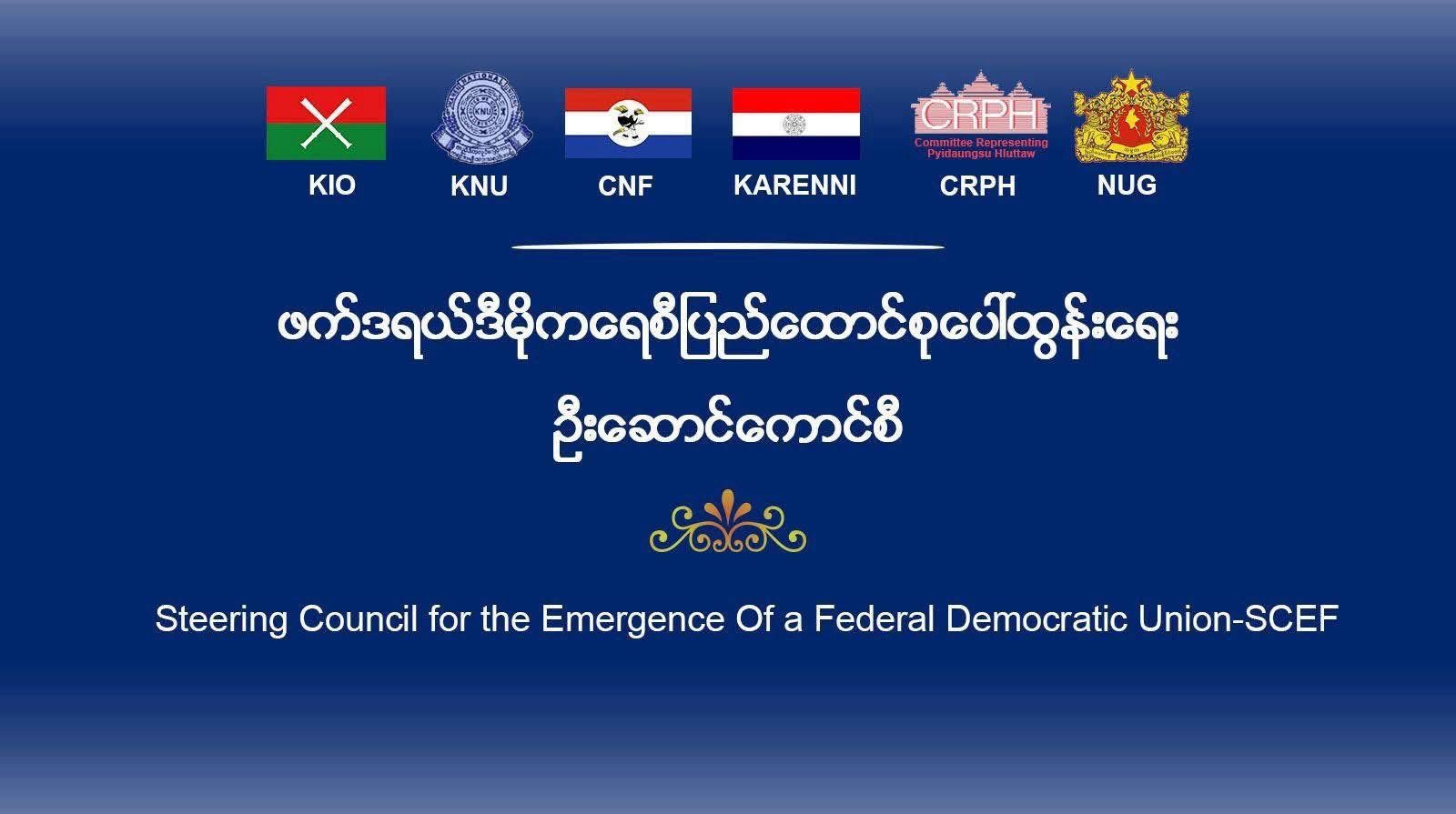
The announcement of the SCEF formation on March 30, 2026.
However, political analyst Dr. Aung Myo expressed skepticism to CNI News, suggesting that while the KNU and CNF might attend, the inclusion of the NUG-CRPH remains unlikely.
"The KNU and CNF have existed for a long time. But logically, two lions cannot inhabit the same cave. They won't tolerate the NUG. Since the NUG is composed of people from the mainland Bamar majority, [the military] will not let them in. Ethnic groups like the CNF and KNU might say they accept 'two lions in a cave' on their side, but the government likely won't. I don't see a scenario for their inclusion. Real implementation is what matters most. The government could achieve more by decentralizing power and sharing the budget within the framework of the 2008 Constitution. Showing practical progress in states would be more effective than just talk." — Dr. Aung Myo
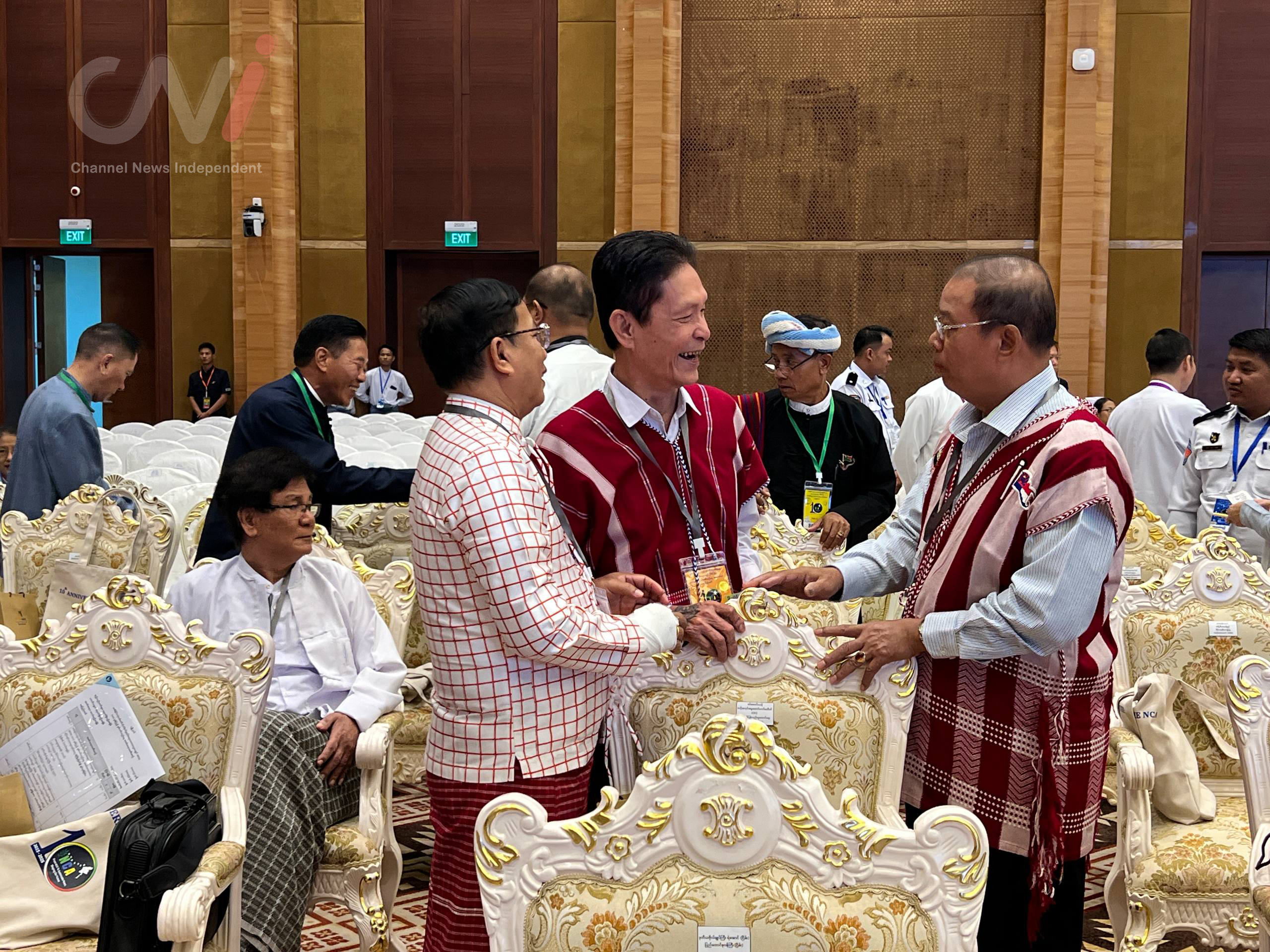
Various leaders of Ethnic Armed Organizations (EAOs).Various leaders of Ethnic Armed Organizations (EAOs).
On April 20, 2026, President U Min Aung Hlaing stated that he invites all groups that have yet to meet for talks to do so by July 31, emphasizing the need for peace and stability for national development. He warned that groups making impossible demands just to sustain their organizations would be making a mistake, and the State would have to take necessary actions.
Currently, the NCA signatories include: RCSS, PNLO, ALP, DKBA, KNU/KNLA-PC, LDU, NMSP, CNF, KNU, and ABSDF.
Non-signatories include: KIA, SSPP, UWSA, KNPP, and NDAA.
The military’s official stance regarding newer armed groups that emerged after February 1, 2021—including the AA, TNLA, MNDAA, SNA, and NSCN—remains unclear.