
CNI News
April 23, 2026
Military and political analysts are pointing out that the transitional government led by President U Min Aung Hlaing must have a clear plan of action should Ethnic Armed Organizations (EAOs) fail to respond to the latest peace invitation.
On April 20-21, 2026, President U Min Aung Hlaing invited both Nationwide Ceasefire Agreement (NCA) signatories and non-signatories to engage in peace talks by a deadline of July 31, 2026. The invitation specifically included the KNU, CNF, and ABSDF—groups that have signed the NCA but have not met with the government for five years.
Sai Htay Aung, Chairman of the Tai-Leng (Shanni) Nationalities Development Party (TNDP), told CNI News that the government needs to take decisive military action if negotiations with EAOs prove unsuccessful.
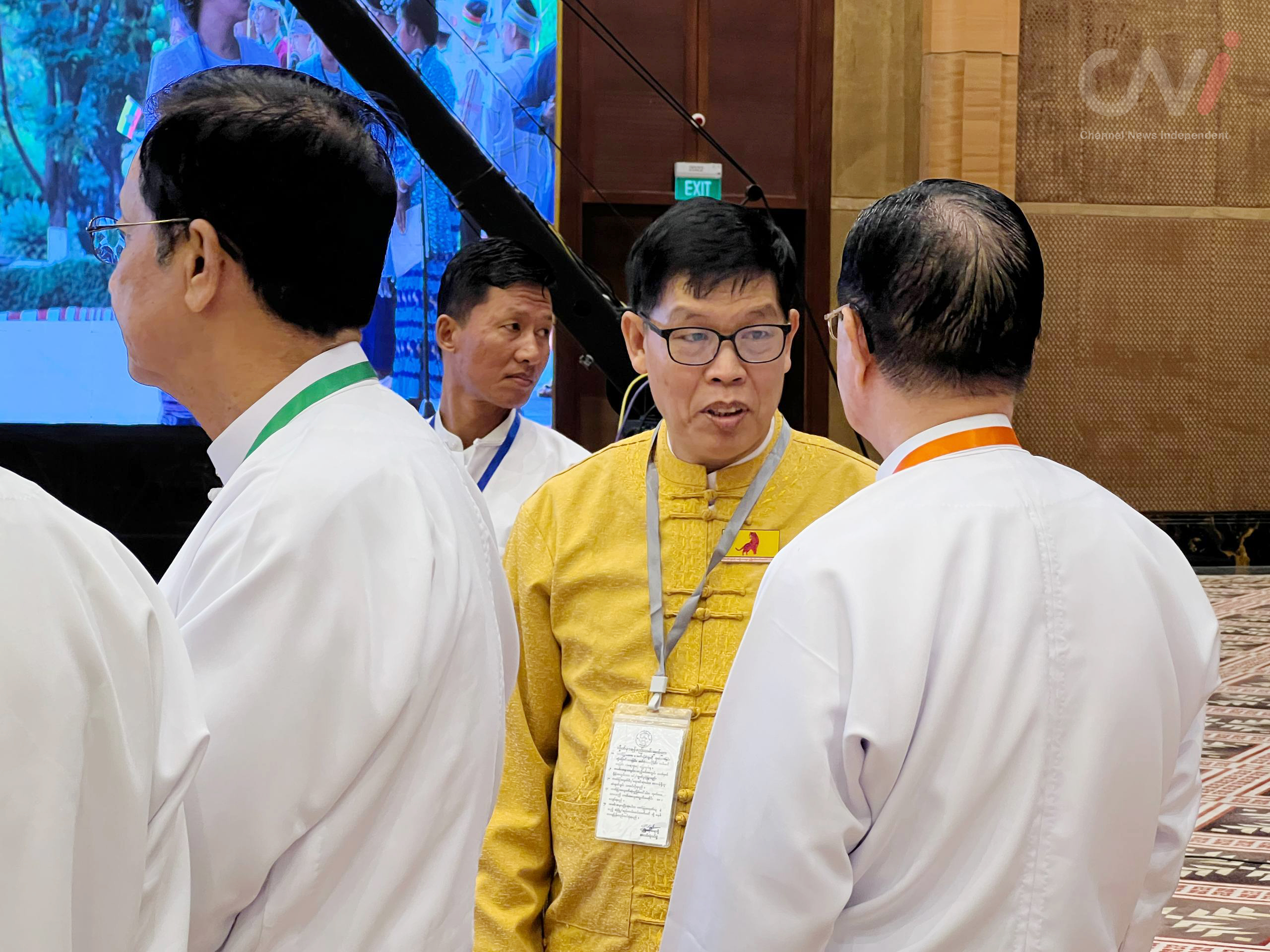
Sai Htay Aung and other representatives at an NCA anniversary event.
"There is talk of negotiating on one hand, but if that fails, the government must be prepared to wage an all-out offensive. Both sides claim to want a democratic federal union; so, can they not negotiate on that? The government should have a clear policy: set a timeframe for talks, and if no agreement is reached, eliminate the threat. This government needs to be both flexible and firm. My view of the current political landscape is that while the government extends an invitation for peace, it will simultaneously apply military pressure. If they don't come to the table, military tensions will likely escalate. We are already seeing this with the KIA completely closing the Hpakant road. I believe if there is no response to the invitation, the government will resort to a military solution." — Sai Htay Aung
He further emphasized that the government must strictly adhere to the frameworks laid out in the NCA to rebuild trust. He noted that deviations from the NCA framework give opposing groups reasons to doubt the government's sincerity, turning the process into what he called a "peace show for the world."
Since February 1, 2021, the armed conflict in Myanmar has expanded significantly, with numerous new groups emerging. While the military and government have lost territory, EAOs have focused on consolidating territorial control. Some groups have moved their aspirations beyond federalism toward confederation or total independence.
Analysts suggest that while the new administration may bring opportunities for dialogue, the military situation remains on a hair-trigger.
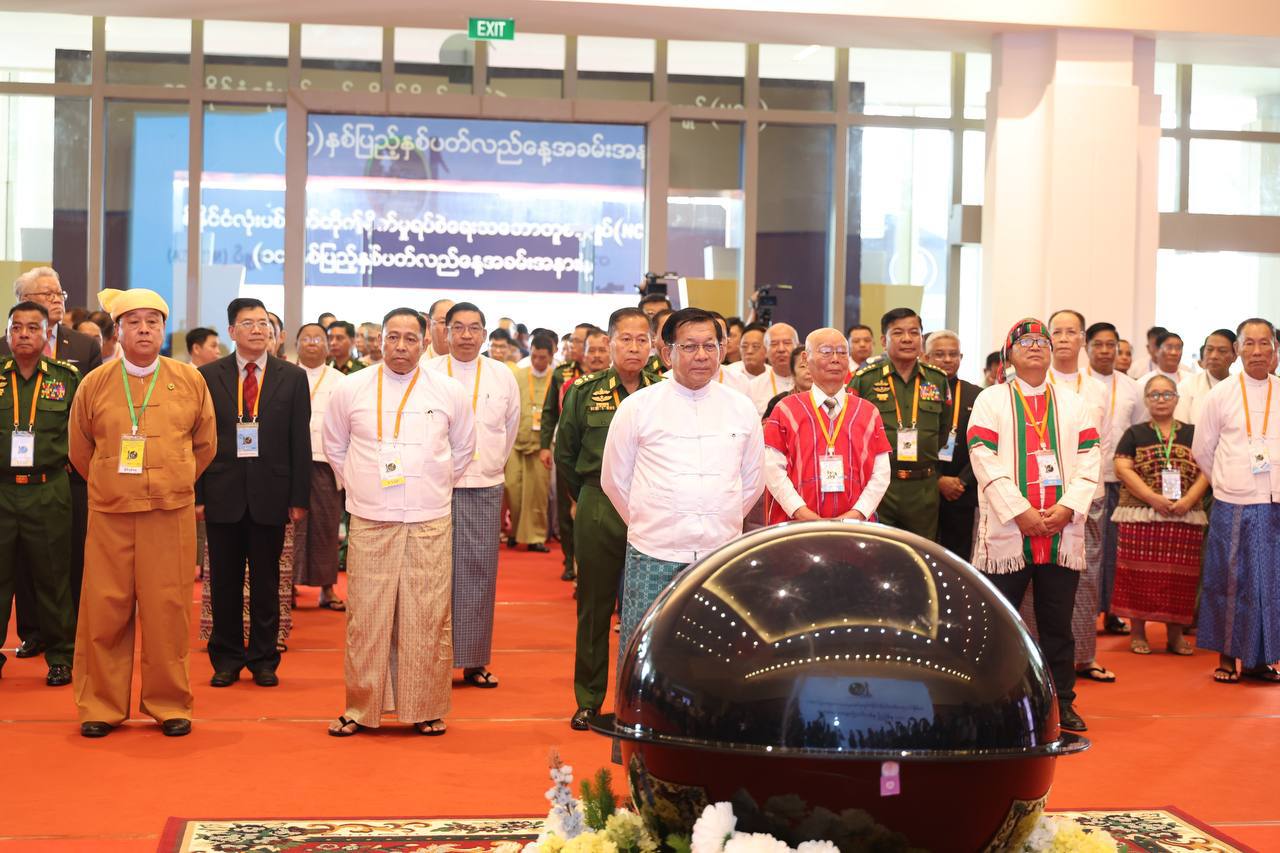
Leaders from various sectors attending an NCA commemoration.
U Khun Sai, a veteran of the peace process, advised CNI News that the talks would be most effective if conducted without rigid preconditions.
"It would be best to meet without prior conditions in the first stage. If conditions must be set, they should be mutually agreed upon. Starting a meeting by demanding the other side accept the 2008 Constitution or the NCA—no matter how legally valid they were in the past—will not work for an initial encounter. During President U Thein Sein's time, he issued an invitation on August 18. No one came in September, and there was only minor movement in October. Negotiations only truly began in November. If it was that difficult then, it will be at least twice as hard and take twice as long now. The government must be prepared for this." — U Khun Sai
Experts conclude that for a truly inclusive peace process to succeed, there must be a restoration of trust and a high level of accountability and responsibility from all parties involved.