
CNI News
April 23, 2026
U Khun Sai, an active participant in the peace process, told CNI News that it will be difficult for the new government led by President U Min Aung Hlaing to secure a new Nationwide Ceasefire Agreement (NCA) within its first 100 days.
However, he noted that the government might have specific internal benchmarks for what level of progress they hope to achieve during this initial period.
"I believe U Min Aung Hlaing himself realizes that obtaining a new NCA within 100 days is not easy. Back during President U Thein Sein’s era, even with only 21 groups involved, it took nearly two years to reach ceasefire agreements. Now, with hundreds of groups, it could take even longer. If conditions are favorable, it might be shortened, but that depends largely on the President’s magnanimity and breadth of vision. He likely knows a total resolution is unlikely in 100 days, but he may have set a specific stage of the process as his goal." — U Khun Sai
President U Min Aung Hlaing’s administration has announced its 100-day plan, which includes a priority on peace negotiations. The government has invited the PDF, NCA signatories, and non-signatory Ethnic Armed Organizations (EAOs) to engage in talks between April 20 and the July 31 deadline.
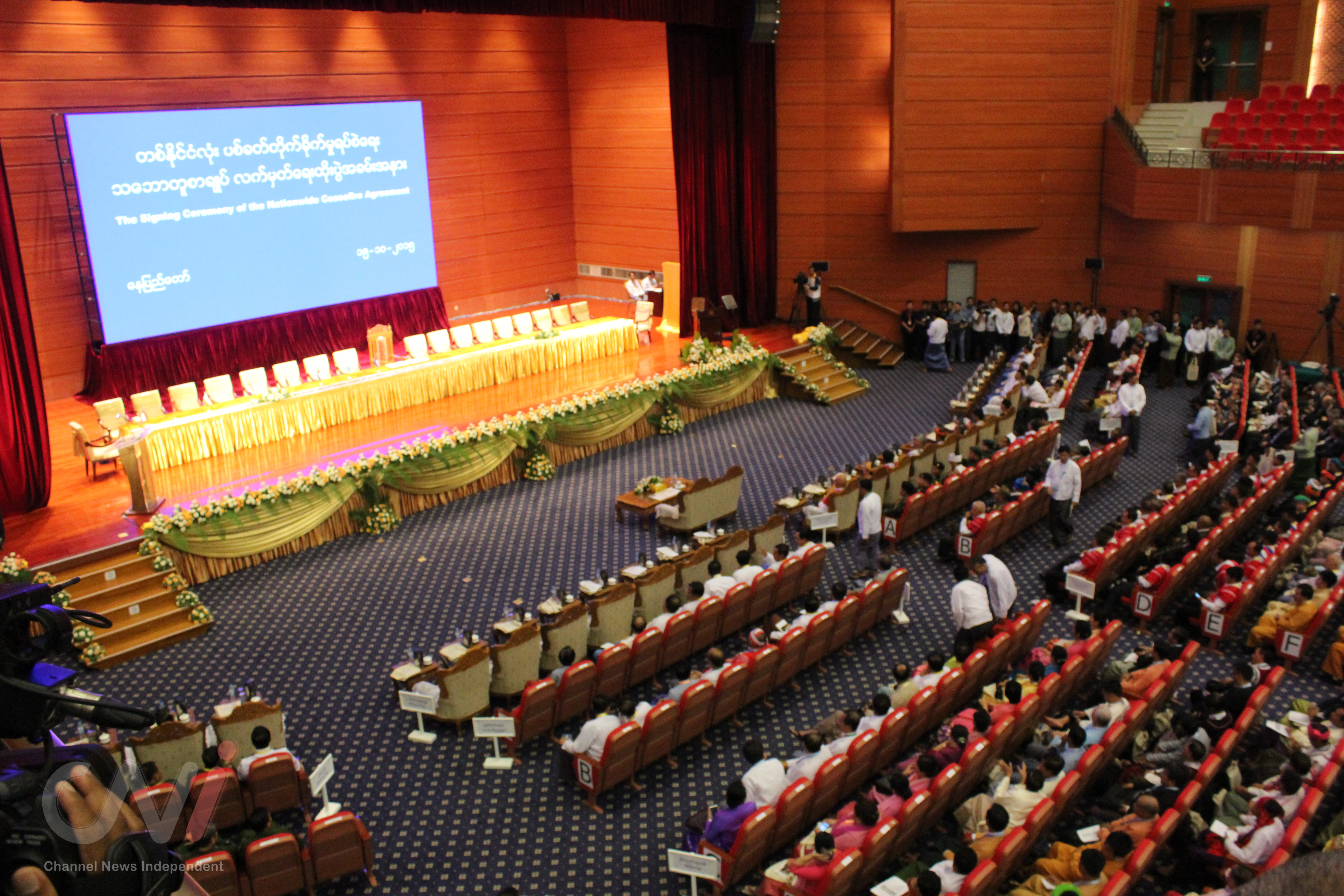
The original signing ceremony of the NCA.
In an April 20 speech, the President emphasized his desire for peace, stating that national development is impossible without stability.
Political analyst Dr. M Kawn La pointed out that several EAOs left out of the original NCA negotiations have since grown significantly in strength. He argued that any successful dialogue must now include these powerful actors.
"The three northern groups that were left out of the original NCA are now very powerful and control their own territories. As the Union government transitions, bargaining and dialogue are inevitable. Whether we call it 'NCA Plus' or something else, achieving an all-inclusive ceasefire requires the participation of everyone. Groups like the AA, TNLA, and MNDAA have reached a status that must be factored into the equation." — Dr. M Kawn La
Since 2021, the political landscape has shifted drastically, with armed conflicts expanding and hundreds of new armed groups emerging. Many established EAOs now hold significant territorial gains.
Colonel Khun Okkar, Chairman of the PNLO (NCA/S), suggested that while the NCA must remain the platform for peace, it requires a "Political Reform" to address those who have left the agreement or were never part of it.
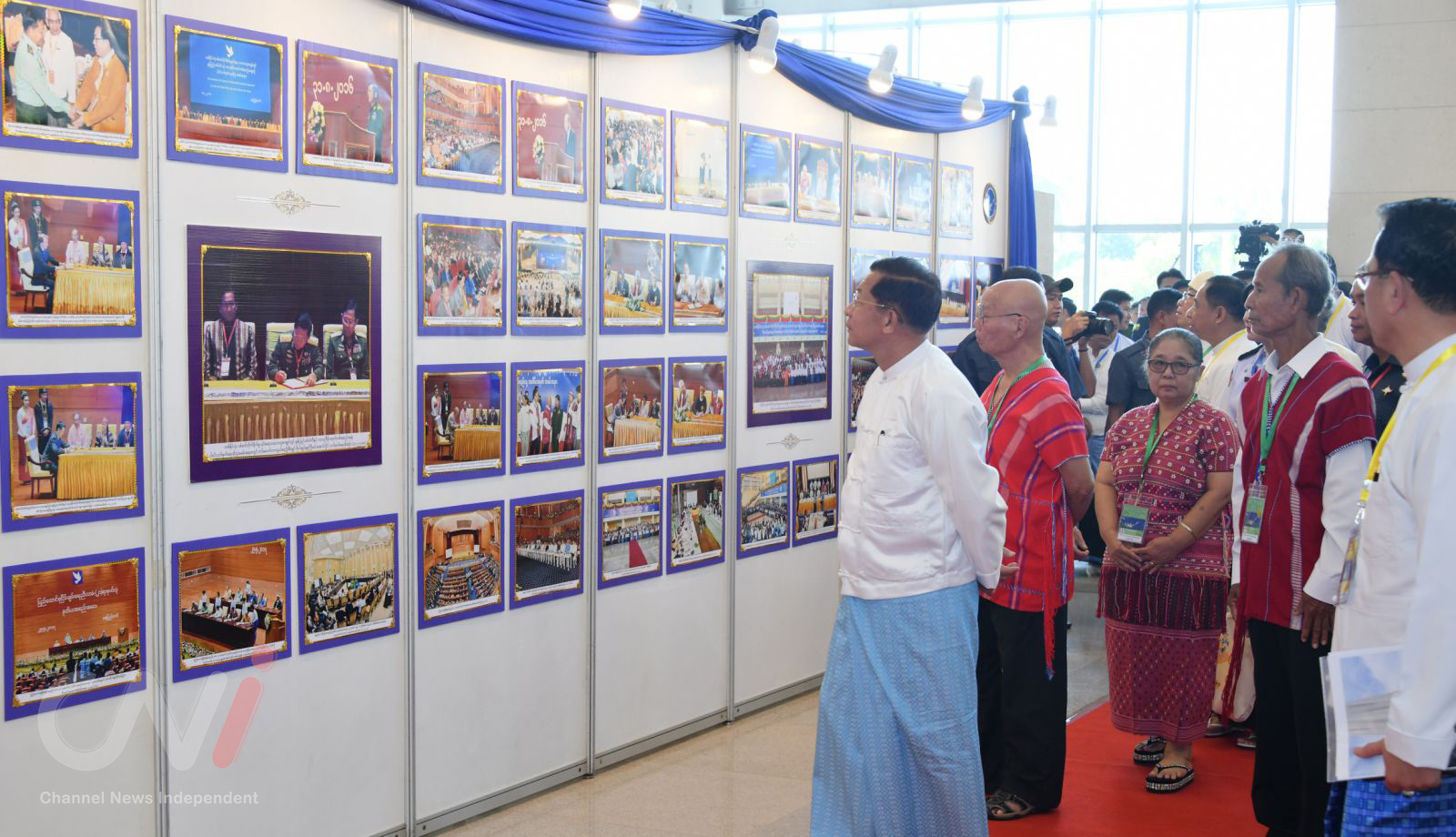
Attendees at a previous NCA anniversary commemoration.
"The NCA route is still the primary platform. We have to go with an 'NCA Plus' model. You can't just discard the NCA; it is legally established, and seven groups still stand by it. The government’s NSPNC (National Solidarity and Peacemaking Negotiation Committee) also remains intact. We need to analyze how to bring back those who walked away and how to invite those who were never involved. This will require political reform, and we must wait and see how they implement those changes." — Colonel Khun Okkar
Original Signatories (Oct 15, 2015): KNU, RCSS, KNU/KNLA-PC, DKBA, ALP, ABSDF, CNF, and PNLO.
Later Signatories (Feb 13, 2018): NMSP and LDU.
Current Status: The KNU, CNF, and ABSDF have effectively withdrawn and are in active combat with the military. The ALP, PNLO, LDU, and NMSP have experienced internal splits.
Non-Signatories & New Groups: Questions remain regarding the peace track for the KIA, SSPP, UWSA, KNPP, NDAA, and groups that gained prominence after 2021, such as the AA, TNLA, MNDAA, SNA, and NSCN.