
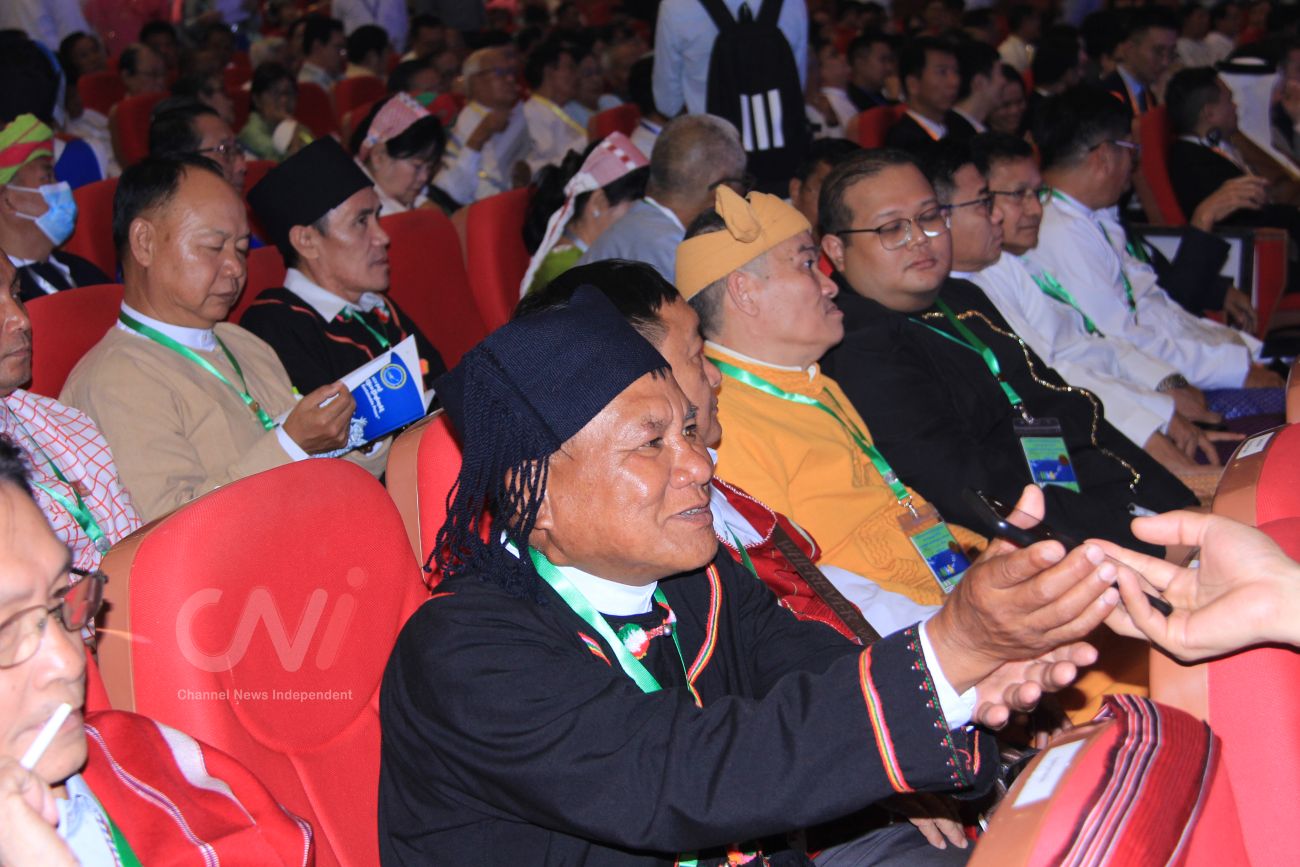
CNI Interview
April 24, 2026
In Myanmar, the President of the new transitional government, U Min Aung Hlaing, offered a peace invitation by designating a 100-day period from April 20 to July 31.
Subsequently, on April 21, 2026, the National Solidarity and Peacemaking Central Committee (NSPCC) issued an announcement inviting ethnic armed organizations (EAOs)—including those that have signed the NCA, those that have not, and those that signed but have not engaged in talks between 2021 and 2025—to participate in peace talks by the July 31 deadline.
CNI News Agency contacted U Khun Sai, an active participant in the peace process, to discuss these developments.
CNI: The period from April 20 to July 31 has been set as a "100-day" window. This includes inviting the PDF to enter the "legal fold," as well as both NCA signatories and non-signatories. What is your view on this?
U Khun Sai: We should welcome it. As he said, when working to develop the country, if the country is not peaceful, development is impossible—this is true. He likely knows this best. I personally welcome this initiative.
However, I see that it will be mostly difficult. This is because four months after President U Thein Sein took office, he issued an announcement on August 18, 2011, inviting Myanmar citizens abroad to return and help rebuild the country, and he invited all revolutionary organizations to come and discuss peace. But at that time, not a single group came.
The groups they eventually met were those that already had existing ceasefire agreements, such as the Wa (UWSA), Kokang (MNDAA), Mong La (NDAA), and DKBA. But among the groups actively engaged in revolutionary armed struggle, not one came. They simply did not trust the process. Consequently, in October, U Aung Min and U Soe Thein were assigned to go to the Thai border. They traveled there to negotiate for peace but were unsuccessful.
Eventually, U Harn Yawnghwe assisted through the National Reconciliation Program, as he maintained contact with all EAOs. Because of his help, five groups eventually agreed. It was only then, in November, that discussions finally took place.
If it was that difficult during U Thein Sein’s time, I think it will be even more difficult in the current situation. Therefore, if the invitation is just "come to where I am," it will not be easy for armed groups to show up. However, if they [the government] go to where the groups are located, the possibility of success is much higher. Even then, they will likely have to work harder than U Aung Min and U Soe Thein did. I pray for their success.
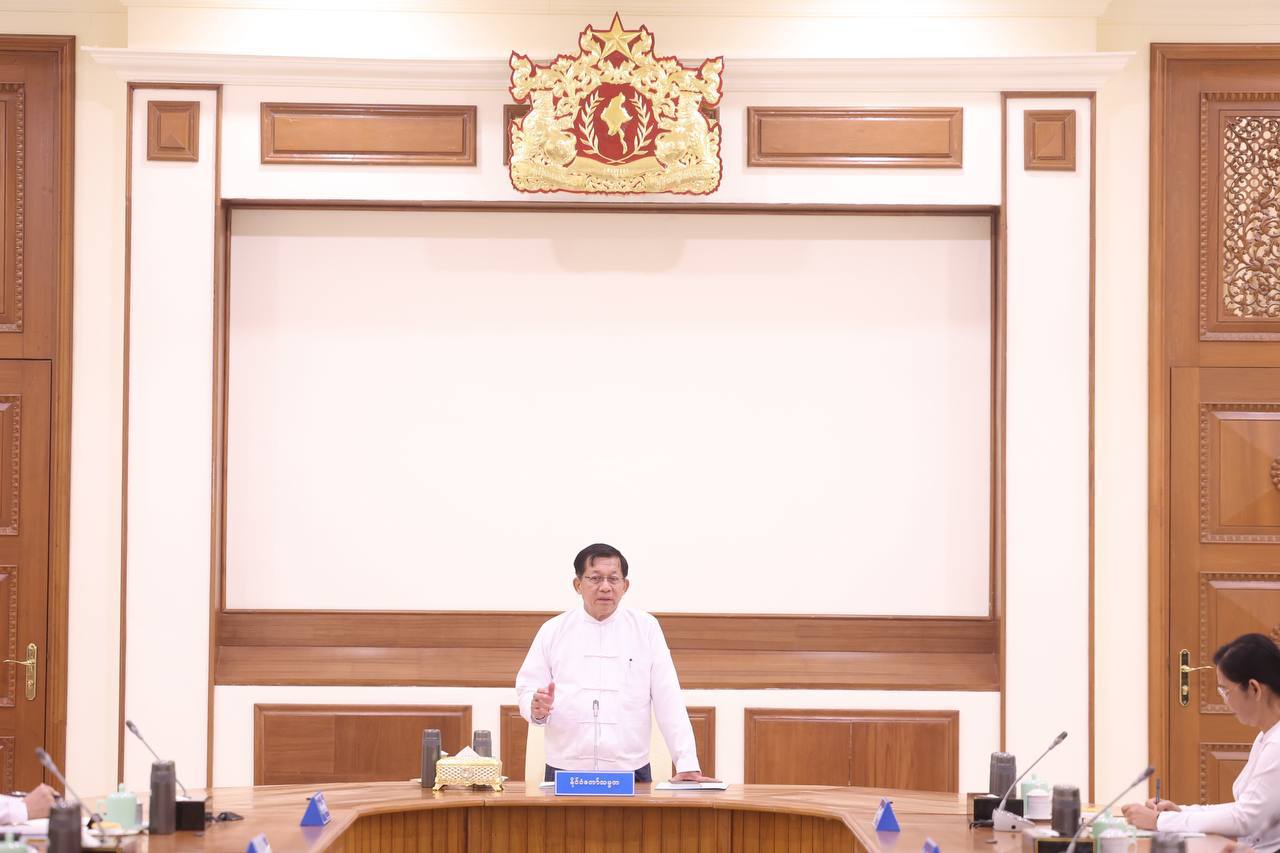
President U Min Aung Hlaing.
CNI: The invitation only mentions "inviting" but doesn't specify how the discussions will happen or how they should come. What is your take on this vague invitation?
U Khun Sai: There might be some differences. During U Thein Sein’s time, there were no immediate pre-conditions. They followed up and negotiated with every group. The first priority was a ceasefire. Step one was the ceasefire; step two was that they could keep their arms but would continue to negotiate. No rigid policies were set initially.
Later, U Thein Sein tried to set some policies—what could and couldn't be done—and the EAOs rejected them. They said they did not accept the 2008 Constitution. We agreed to discuss without basing it on the Constitution, and decided that how to handle the Constitution would be determined later based on our agreements. This led to the NCA (Nationwide Ceasefire Agreement) becoming a reality.
Currently, U Min Aung Hlaing has the NCA framework as a foundation. However, while some people have truly worked on and studied the NCA, there are many others who will say, "I won't accept it just because U Min Aung Hlaing is doing it." There needs to be a very clear and transparent discussion so everyone understands. Specifically, the NCA contains a section on basic and guiding principles: we will establish a federal democratic union and solve political problems through political means. I believe no group can argue against these principles if they are explained properly.
Except for groups wanting total independence or a confederation, I see no reason to reject them. Another thing is that there must be guarantees for those who come to talk—that they can keep their arms, won't be prosecuted, and that previous declarations as "unlawful associations" or "terrorist groups" will be suspended. Without such guarantees, it will be difficult.
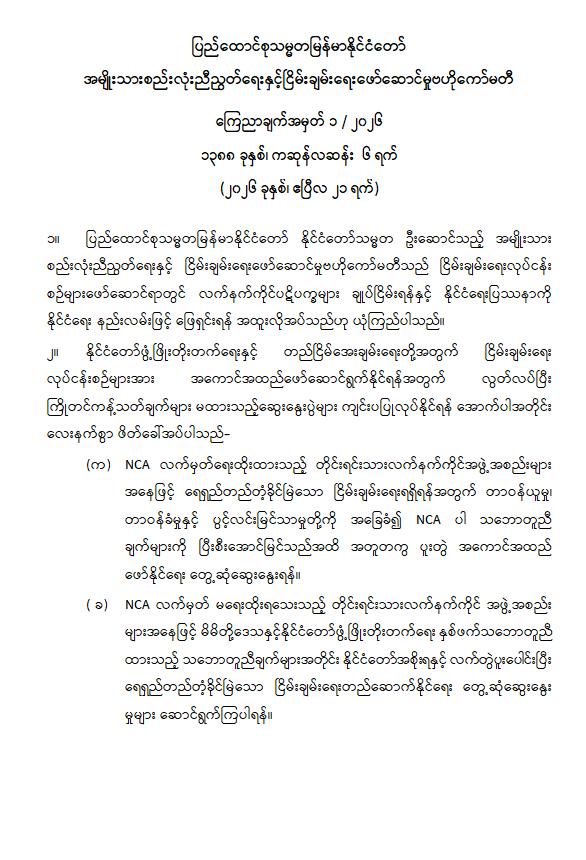
The peace invitation announcement from the NSPCC.
CNI: Most analysts suggest that for the first year or two under the new government, peace talks won't be fully effective due to various crises. Now that the President himself has announced these actions within 100 days, what kind of guarantees do you think allow him to make such a statement?
U Khun Sai: I think U Min Aung Hlaing himself knows that achieving a "new NCA" within 100 days is not easy. During U Thein Sein’s time, when there were only 21 groups, it took about two years just to reach ceasefire agreements. Now that there are hundreds of groups, this could take even more time.
If conditions are favorable, it could be shorter, but that depends heavily on the President. I think it depends on the breadth and greatness of his mindset. He likely knows that finishing everything in 100 days is impossible, but he may have a specific stage or milestone he wants to reach within that time frame.
CNI: Could there be involvement from neighboring countries in these 100-day activities?
U Khun Sai: Neighboring countries want Myanmar to be peaceful. China, India, Thailand, Bangladesh, and Laos all want peace here. I believe they will help in whatever way they can.
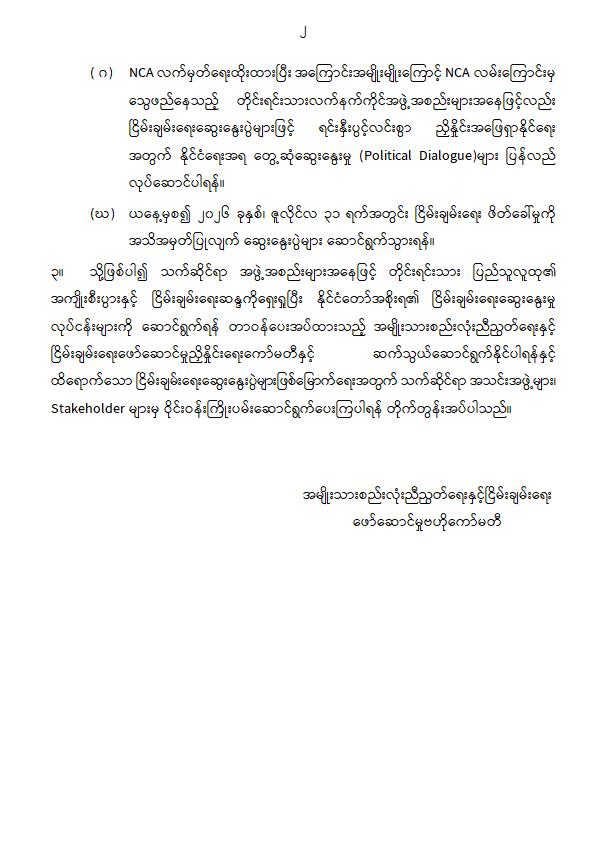
The peace invitation announcement from the NSPCC.
Specifically, during U Thein Sein’s era, representatives probably traveled to Thailand no less than 100 times. Thailand not only allowed the meetings; they also facilitated them to run smoothly. Furthermore, they didn't interfere—they didn't set rules like "negotiate this way" or "that way." It was very convenient. I believe Thailand and other neighbors will continue this approach this time as well.
CNI: The President said the invitation lasts until July 31. Does this imply that there will be no more invitations after that date? How do you interpret that?
U Khun Sai: This is politics. In our experience, once a process starts and reaches a certain point, extending the deadline is common practice. I don't expect a complete cutoff without an extension. If that were to happen, the words the President spoke yesterday would be like "pouring water into the sand" (wasted effort).
CNI: Do you have any final thoughts to add?
U Khun Sai: Peace only has hope when the person making it is peaceful themselves. For example, President U Thein Sein was a very peaceful person, which is why his work was successful.
Similarly, we want President U Min Aung Hlaing to be a peaceful leader like U Thein Sein. If one’s own heart is aflame, it is impossible to go and extinguish other fires—he knows this best himself. Therefore, I pray that U Min Aung Hlaing is peaceful in both mind and body. If he works with a peaceful heart, he will succeed.