
CNI News
April 23, 2026
Military and political analysts are evaluating how the new government, led by President U Min Aung Hlaing, will approach and implement the peace process amidst ongoing armed conflicts.
On April 11, 2026, the government announced the reconstitution of the National Solidarity and Peacemaking Central Committee (NSPCC), the National Solidarity and Peacemaking Working Committee (NSPWC), and the National Solidarity and Peacemaking Negotiation Committee (NSPNC).
Analysts have raised questions regarding the absence of the parliamentary sector in these committees, wondering if this implies that the parliament is no longer considered relevant to peace affairs.
One political analyst told CNI News that while the role of parliament is technically essential because constitutional amendments must be made there, the current parliamentary structure suggests that as long as the Military and the USDP party agree, things move forward. This might be why they feel parliamentary representatives are not strictly necessary in the initial committees.
"In theory, once peace is negotiated, the agreed points must be submitted to parliament to amend the constitution. Therefore, it is necessary to include parliamentary representatives or members of parliamentary peace committees so they can report on progress and agreements. Only then can the parliament—which includes the winning party, ethnic political parties, and military representatives—successfully amend the constitution. However, realistically speaking, under the current structure, if the leaders of the USDP and the Military agree, the representatives will follow orders to support or oppose, regardless of their detailed understanding. They aren't attending NCA discussions or being invited. According to the NCA, constitutional reform is part of the bilateral agreement, so while parliamentary involvement is theoretically vital, the current reality is a 'show of hands' parliament," the analyst said.
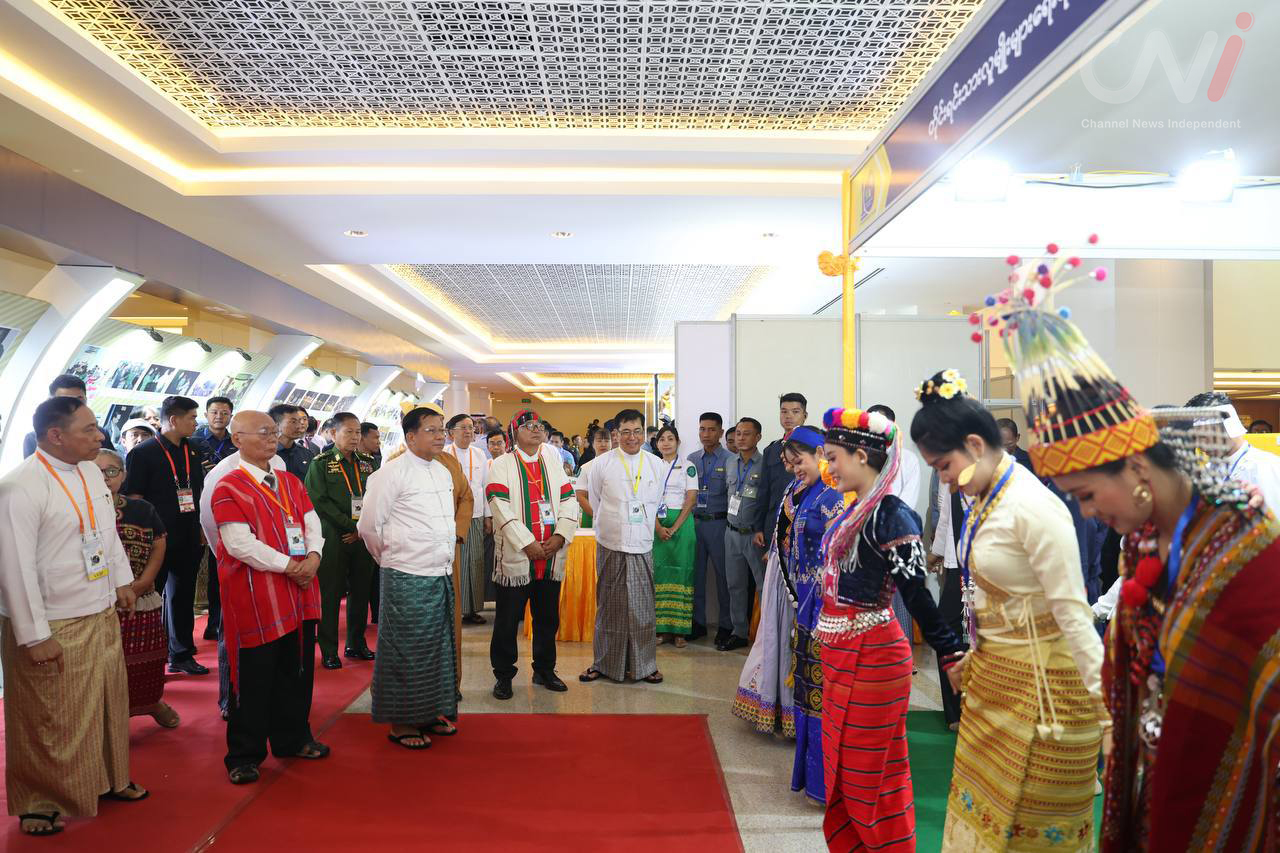
Observers at the NCA anniversary ceremony.
Colonel Saw Kyaw Nyunt, spokesperson for the 7 EAO Alliance, told CNI News that the Military's influence and involvement are likely to persist in the current political landscape, and many challenges remain for the peace process.
"Many people point out that during the previous NCA implementation period, many military leaders were involved. Back then, under the NUCC framework, we were able to organize systematically. Now, the Military's dominance remains. We must meet face-to-face, engage in trade-offs, and build trust to create a framework that aligns with everyone's views. I see that there are still many processes left to do. The challenges are immense, primarily due to the country's instability. Even when the NCA wasn't signed in the past, many ethnic areas didn't have active warfare. This situation is very different. Implementing a peace process under such widespread armed conflict requires much effort. International support will also be key," he stated.
Currently, intense fighting continues between the Myanmar Military and various armed forces, stalling peace efforts. Myanmar’s civil war has persisted since gaining independence on January 4, 1948. Analysts point out that the government and armed groups should negotiate repeatedly and firmly rebuild mutual trust.
U Thein Tun Oo, Director of the Thayninga Institute for Strategic Studies, told CNI News that the results and the momentum of the peace process are more important than who specifically is involved.
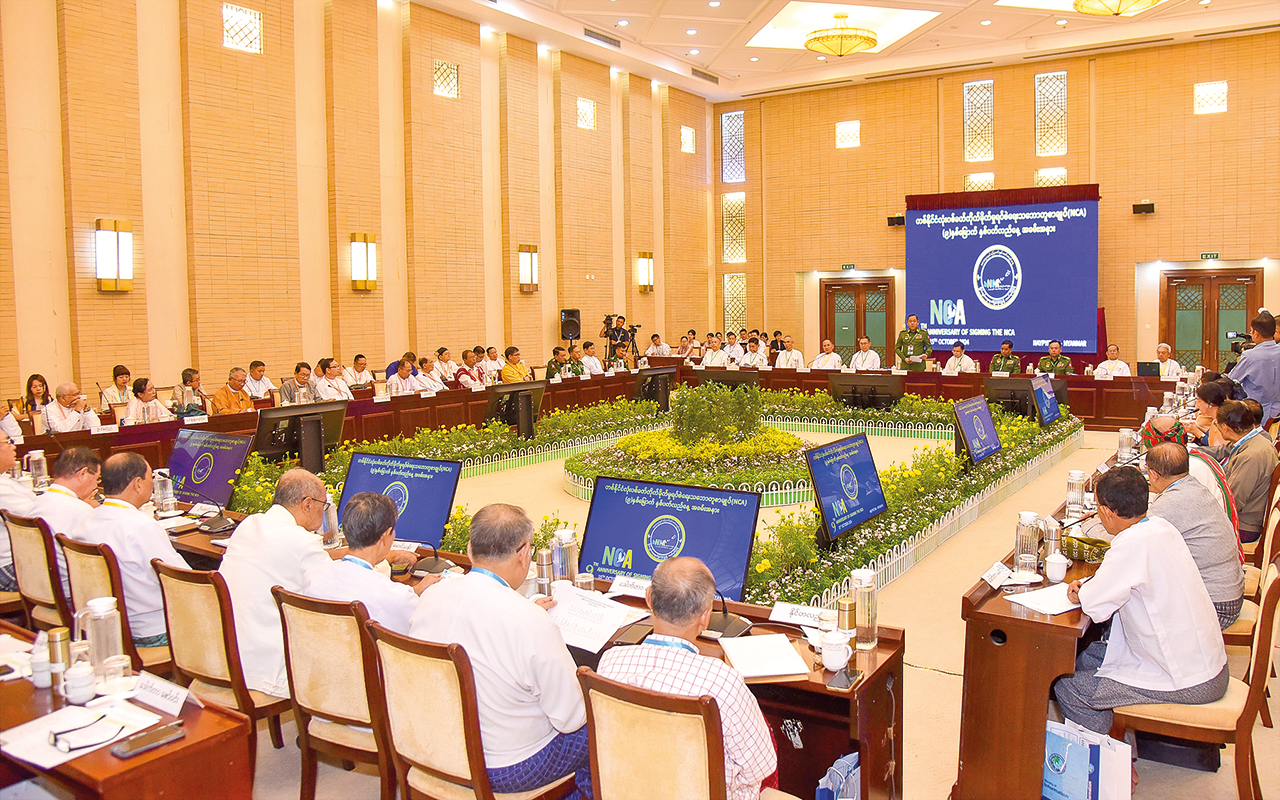
Engaging in peace talks at the NCA anniversary ceremony.
"In building peace, it’s not about who must be there, but how far we can move along the path toward peace. Whether military-led or civilian-led, if there are no results, it’s in vain. We need to see if this new organization can deliver. During the NLD's term, there was a civilian chair, but did those peace movements succeed? The main thing is the result. There have been many invitations and meetings recently, but not as many results as expected. If the current government can follow the momentum of the peace process seen during U Thein Sein’s era, there might be a result," he said.
Analysts also highlight that the peace process will not work unless the root causes of the conflict—such as political convictions, historical backgrounds, and ideological disputes—are taken into account.
Currently, the government led by President U Min Aung Hlaing issued an invitation on April 21, 2026, to both NCA-signatory and non-signatory armed groups to engage in peace talks.