
CNI News
April 6, 2026
Despite efforts by the Myanmar military (Tatmadaw) and the government to end armed conflicts in Myanmar, U Thein Tun Oo, Executive Director of the Thayninga Institute for Strategic Studies, told CNI News that those who believe issues can only be resolved by holding weapons must be dealt with using their own armed methods.
Since gaining independence on January 4, 1948, Myanmar has been embroiled in a civil war that began three months later and remains unresolved to this day. Consequently, there are ongoing urgings to implement peace processes and engage in dialogues to terminate armed conflicts.
U Thein Tun Oo stated that if one truly desires peace, they should not demand impossible terms, and those in a position to give should clearly present what they can offer. He emphasized that those who believe in resolving issues through arms should be dealt with through armed means.
He remarked: "There are groups that want peace and seek to negotiate. On the other hand, for those who do not believe in negotiation but trust only in military means—holding weapons to protect themselves or to get what they want—they must be dealt with via the methods they understand. Adaptability means exactly that. If one wants to resolve things via political means, how will they demand their political desires? Will they form a party compatible with the current political system and enter parliament? Will they negotiate or discuss within the parliament? Those paths are available. However, one cannot expect to get everything they want to proceed. There must be a strong capacity for negotiation. If that can be done, things will go smoothly."
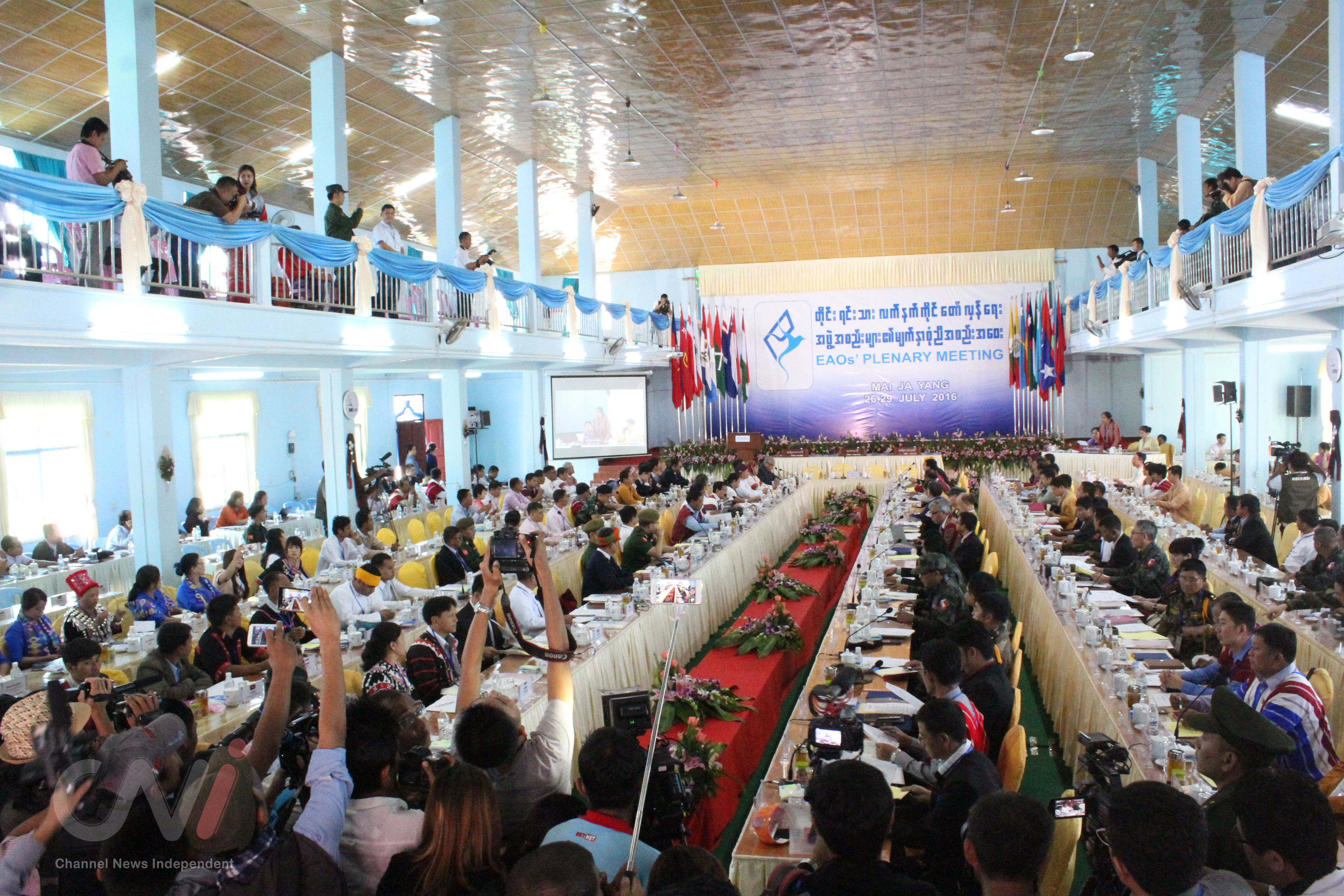
Leaders of armed groups seen
U Thein Tun Oo further suggested that those implementing peace under the upcoming new government should establish and execute policies that are suitable for Myanmar.
He added: "The new government will have to act based on the situation, so it will primarily depend on the collective discussions, negotiations, and decisions of those involved in the new government and those working on peace. Solutions can emerge in various forms. It is difficult to say which is best. Sometimes, certain policies seem good when drafted but face difficulties during practical implementation on the ground. Therefore, regardless of what policy is established, one that aligns with ground realities and is functional is better. If the upcoming new government and peace-making groups can achieve this, it will be successful. While broader perspectives and various analyses may emerge, proceeding with a model that works best in the actual ground situation will be more effective."
U Khun Sai, an individual involved in the peace process, told CNI News that Naypyidaw does not pay much attention to those without weapons and that the general public does not mind how the state is governed as long as there is no fighting.
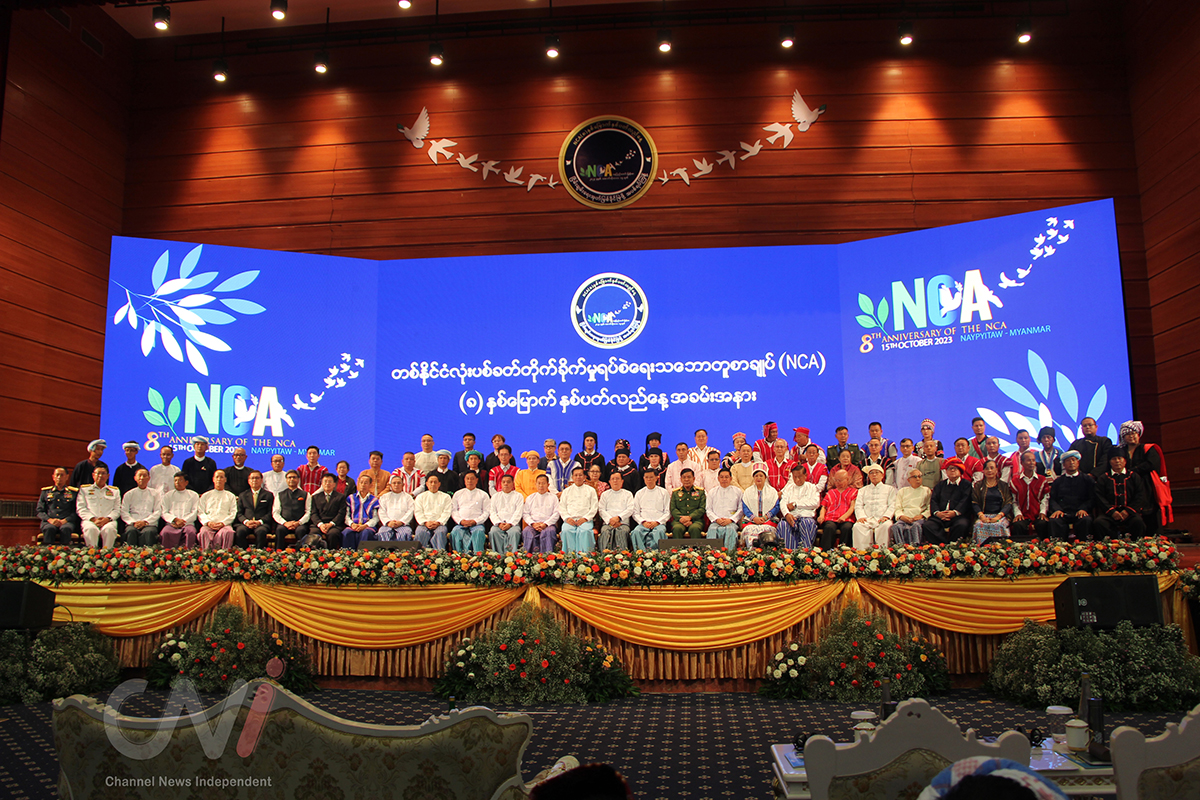
Attendees seen at an NCA (Nationwide Ceasefire Agreement) ceremony.
He stated: "Some are facing Naypyidaw and striving through peaceful means. The recently formed Steering Council for the Emergence of a Federal Democratic Union (SCEF) holds weapons. Naypyidaw doesn't pay much attention to those without weapons, so they feel they must hold them. On the other hand, groups like the Political Coordination Body (PCB) do not follow an armed path; they work toward the common goal of peaceful coexistence, the emergence of federalism, and peace. However, some argue: 'Can’t we fight through peaceful means?' If using peace methods only leads to being looked down upon or oppressed, then they take up arms to protect themselves. If we work separately for our desired goals—peaceful coexistence and a federal union—it will never succeed. But if you ask the public, our people don't care what system governs the country; they just say 'don't fight' and 'discuss whatever the problem is.'"
Political Coordination Body (PCB): Formed on February 20, 2026, by democracy and federalism activists, including Sai Nyunt Lwin (Chairman of SNLD), U Thar Tun Hla (Chairman of ANP), and former '88 generation student leader U Mya Aye. This group approaches the conflict through political dialogue rather than armed means.
Steering Council for the Emergence of a Federal Democratic Union (SCEF): Formed on March 30, 2026, through a collaboration between the National Unity Government (NUG) and armed groups such as the KIA, KNPP, KNU, and CNF. This group approaches political problems through armed struggle.
Other Forces: Numerous other armed forces remain active across Myanmar.