
CNI News
March 30, 2026
Questions and criticisms have been raised by political analysts, tourism operators, and business owners regarding the real-world impacts of the odd-even vehicle restriction system introduced to conserve fuel in Myanmar.
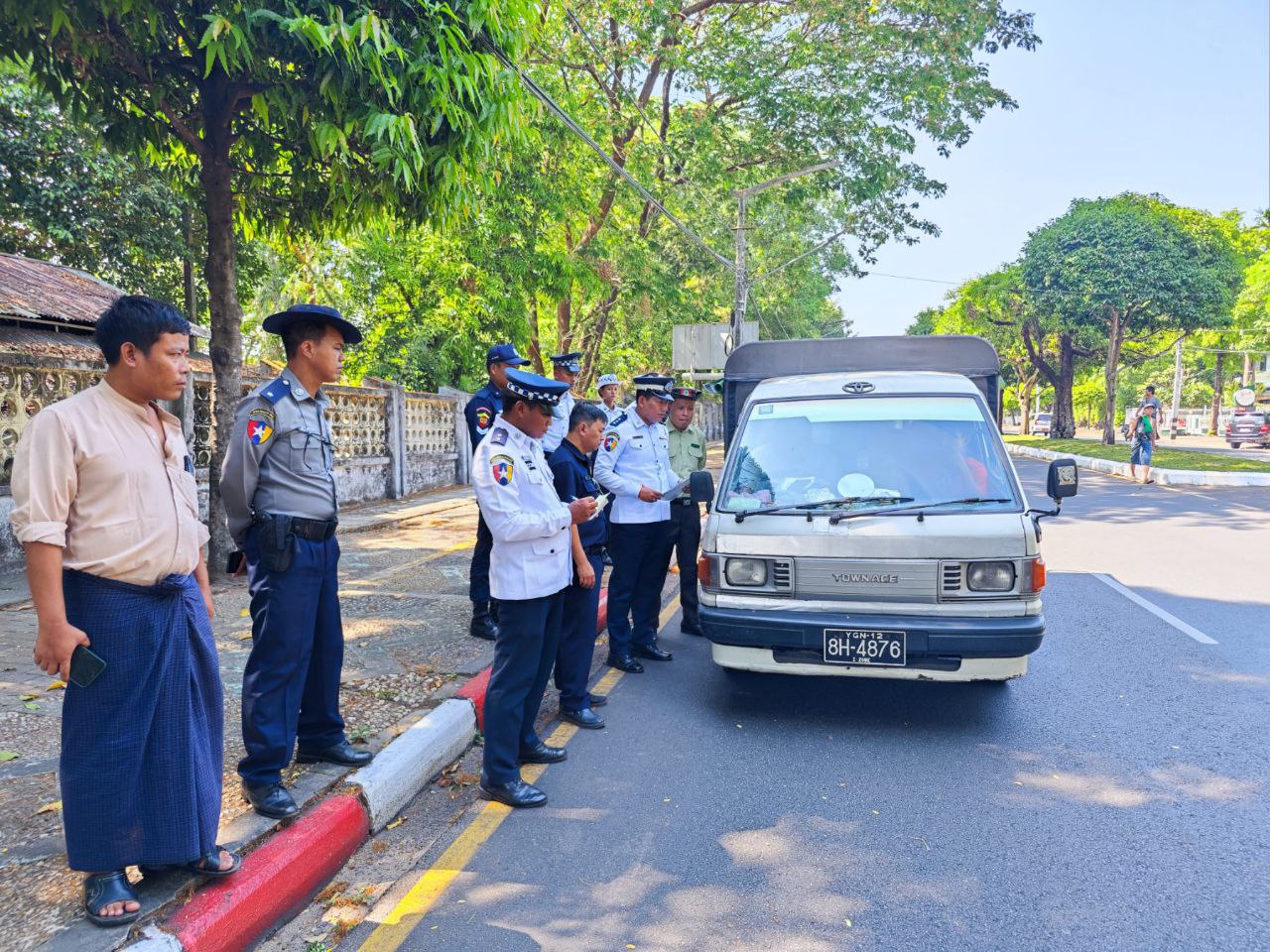
Starting from March 7, 2026, the National Defence and Security Council announced on March 3 that cars and motorcycles would be allowed to operate on alternating “odd” and “even” days based on license plate numbers as part of fuel-saving measures.
Since the implementation of the system, private office workers, students' parents, travelers, and those who rely on daily transportation for business have been facing significant difficulties. Tourism operators and the public have widely stated that the tourism sector has been severely affected.
Similarly, reduced travel has negatively impacted the hotel industry. Labor productivity has declined, manufacturing activities have been disrupted, the flow of goods has slowed significantly, and commodity prices have been rising, according to business owners.
While fuel-saving measures are necessary, business leaders point out that they should be carefully designed to avoid damaging the economy. The odd-even system has already had negative impacts on productive sectors.
Political analyst U Htet Aung Kyaw told CNI News that restricting vehicle usage on alternating days effectively forces people to work one day and rest the next, significantly reducing overall workforce productivity.
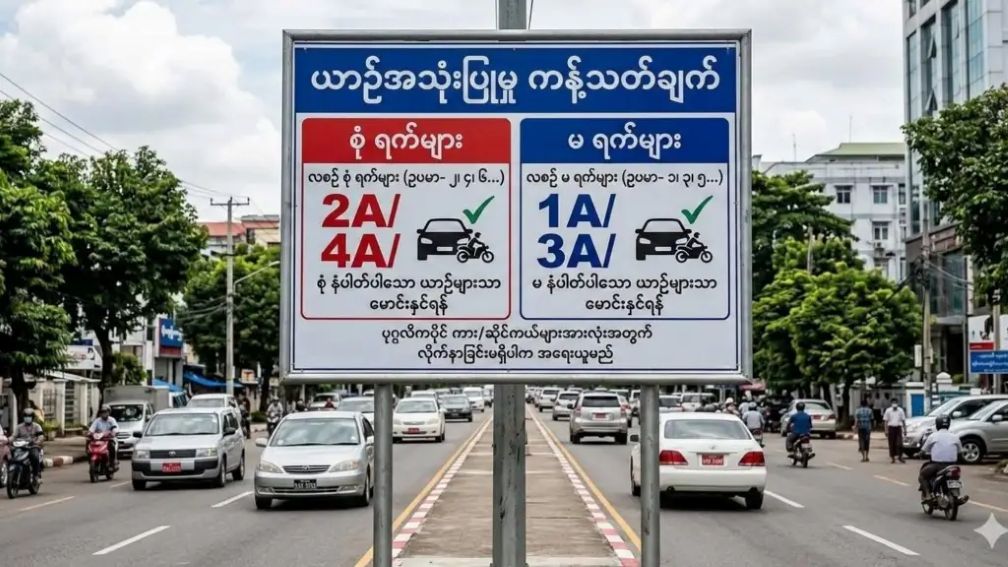
Scene showing the odd-even restriction
He said: “In Myanmar, the number of vehicles is already limited. With the odd-even restriction, people can only go out and work every other day. When you look at it across the whole country, many activities will decline. This must be taken into account. Even on the days people are allowed to go out, fuel purchases are limited to about 54,000 kyats, and they have to queue at fuel stations for three to four hours. This results in a huge waste of time. These consequences will eventually lead to broader impacts.”
He added that such regulations can also encourage corruption, noting that the more laws with penalties are introduced, the more opportunities arise for bribery.
He said: “In Myanmar, when a new law is introduced, it often pushes people toward corruption. Many issues are resolved through negotiation rather than strict enforcement. Government staff also face insufficient salaries. In such conditions, the more punitive laws are introduced, the more likely officials are to abuse them. For example, if someone with an ‘even’ plate needs to go out on an ‘odd’ day and simply pays a fine of 20,000 or 30,000 kyats, the system becomes ineffective. Laws and directives should not create such situations. In practice, negotiating with enforcement officials has become a common norm. So every new law can become another opportunity for bribery.”
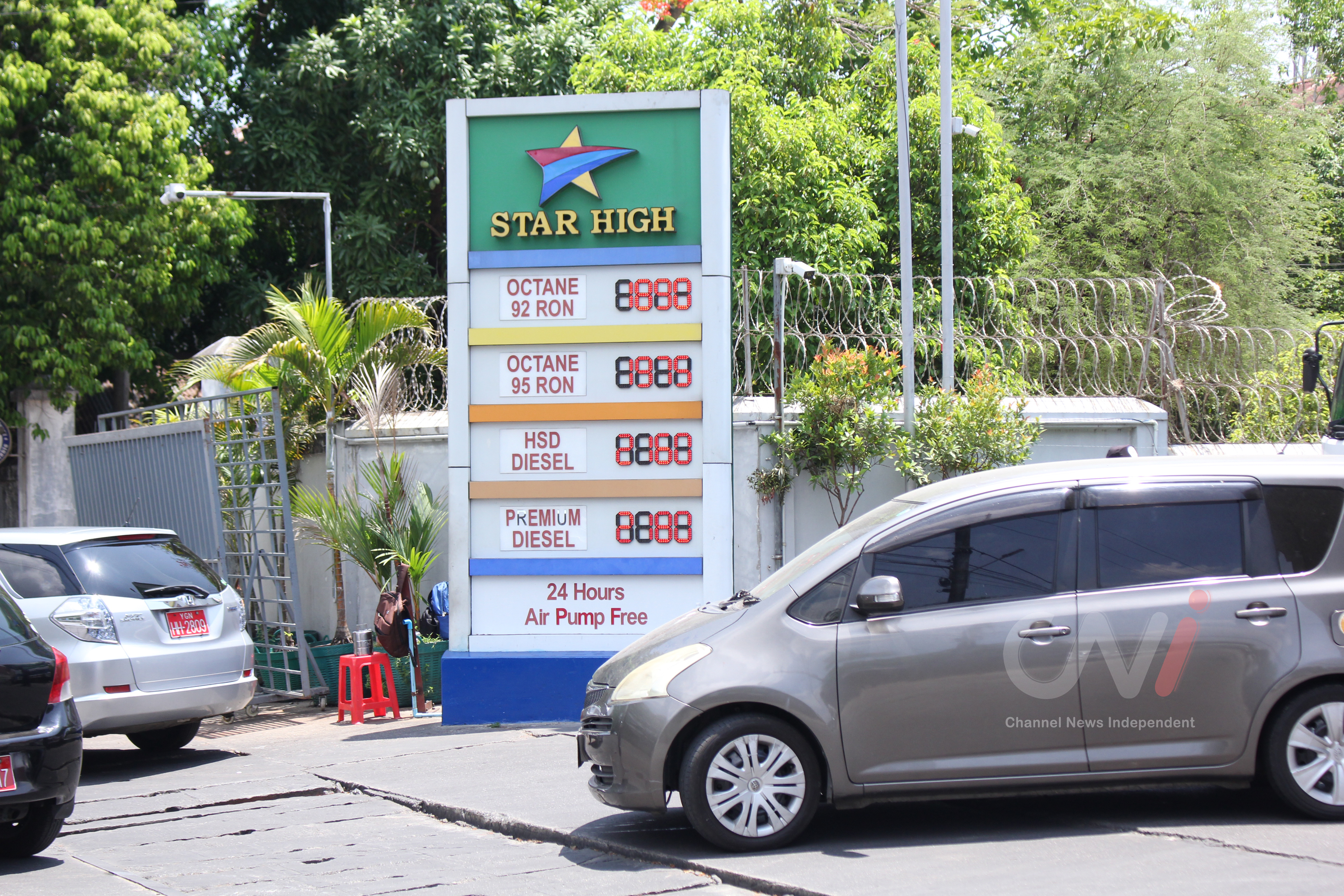
A fuel station
Due to current fuel shortages, a black market for fuel has been expanding, with prices reportedly ranging from 9,000 to 15,000 kyats per liter, according to the public.
Since most people who own vehicles have bought their vehicles for work purposes, the restriction has significantly disrupted commuting and business operations, said Sai Htay Aung, chairman of the Tai-Leng (Shanni) Nationalities Development Party (TNDP).
He said: “I’ll start with the negatives—there aren’t many positives. Most people buy vehicles for business use. While wealthy individuals may own luxury cars, the majority rely on vehicles for their livelihoods. With the odd-even system, commuting to and from work has become very difficult.”
The current odd-even policy has created more hardships for the public and has had direct impacts on production, tourism, hospitality, and the broader socio-economic sector. As a result, many are calling on authorities to revoke the policy.
At the same time, some members of the public suggest that, instead of the odd-even system, fuel distribution should be managed by limiting sales to once or twice per week based on engine power.