
CNI News
March 21, 2026
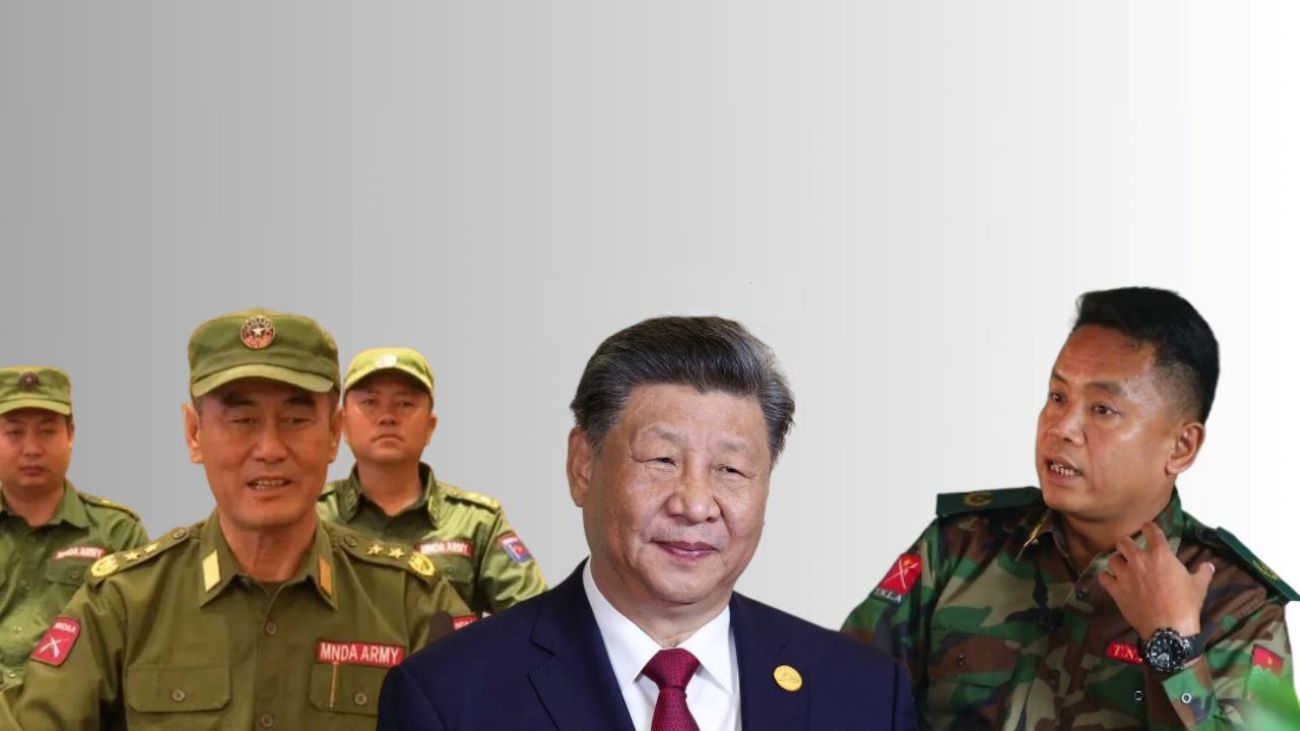
Military and political analysts are weighing in on whether China is attempting to gain full control over Northern Shan State, following the recent military territorial disputes between the Myanmar National Democratic Alliance Army (MNDAA) and the Ta'ang National Liberation Army (TNLA).
The Chinese government wields significant influence over the United Wa State Army (UWSA) and the Three Brotherhood Alliance (AA, TNLA, and MNDAA) operating in Northern Shan State, possessing the power to control and utilize them as needed. Analysts believe China is certainly behind the recent conflict that erupted between the MNDAA and the TNLA.
Political analyst Dr. Ann Kaw La told CNI News that the conflict suggests China is assigning the MNDAA—a group with whom it shares a reliable and good relationship—to take responsibility for and maintain the west bank of the Salween River.
"There are two Ethnic Armed Organizations (EAOs) that are on good terms with China. One is the UWSA. I believe the UWSA is currently responsible for Kengtung on the east bank of the Salween, while the MNDAA is assigned to manage the west bank up to Kutkai and Hsenwi," Dr. Ann Kaw La said. "The Union Highway from Lashio to Mandalay is currently under the control of the government military. However, between Muse and Lashio for the crucial Muse-Kutkai section, it is assumed China has tasked the MNDAA to maintain it. We see it as China entrusting the MNDAA to take charge of that section west of the Salween."
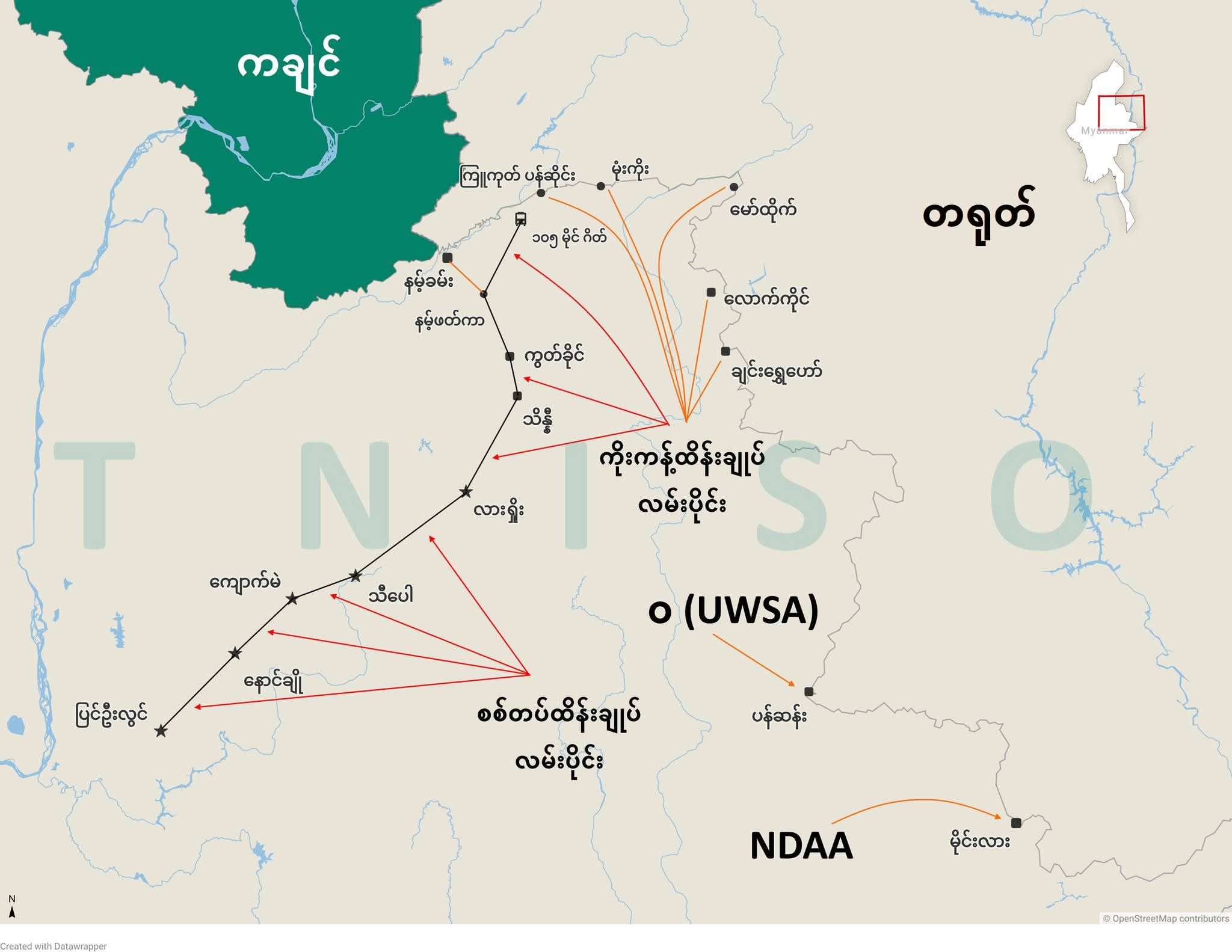
A map illustrating China’s control over Northern Shan State and the Union Highway project
It is reported that while the TNLA sent a letter to China and the Federal Political Negotiation and Consultative Committee (FPNCC) to mediate the conflict with the MNDAA, China instructed the FPNCC not to get involved.
Political analyst Dr. Aung Myo told CNI News that although some claim China is not involved in the MNDAA-TNLA conflict, it is evident that it occurred due to Chinese influence. He noted that while China wishes for peace in Myanmar, it is also "playing" the country for its own interests.
"Our view is that the MNDAA will fight for as much as they can get to open up the border route. Once opened, China will step in as a broker, using the MNDAA as bargaining power. They will position themselves to say, 'I will give this, but you must do this for me,'" Dr. Aung Myo said. "If this continues, a major explosion [of public anger] will eventually occur because no Myanmar citizen will accept it. China wants peace, but they also want to play the country. We don't like that. Neighbors should be honest with each other. Even if they say they aren't involved, we know their influence is there."
Military and political observers point out that the TNLA has been on strained terms with China since 2025 due to its firm stance against returning certain territories to the military (Tatmadaw) when requested. Consequently, China may view the TNLA as an obstacle to its border trade route interests.
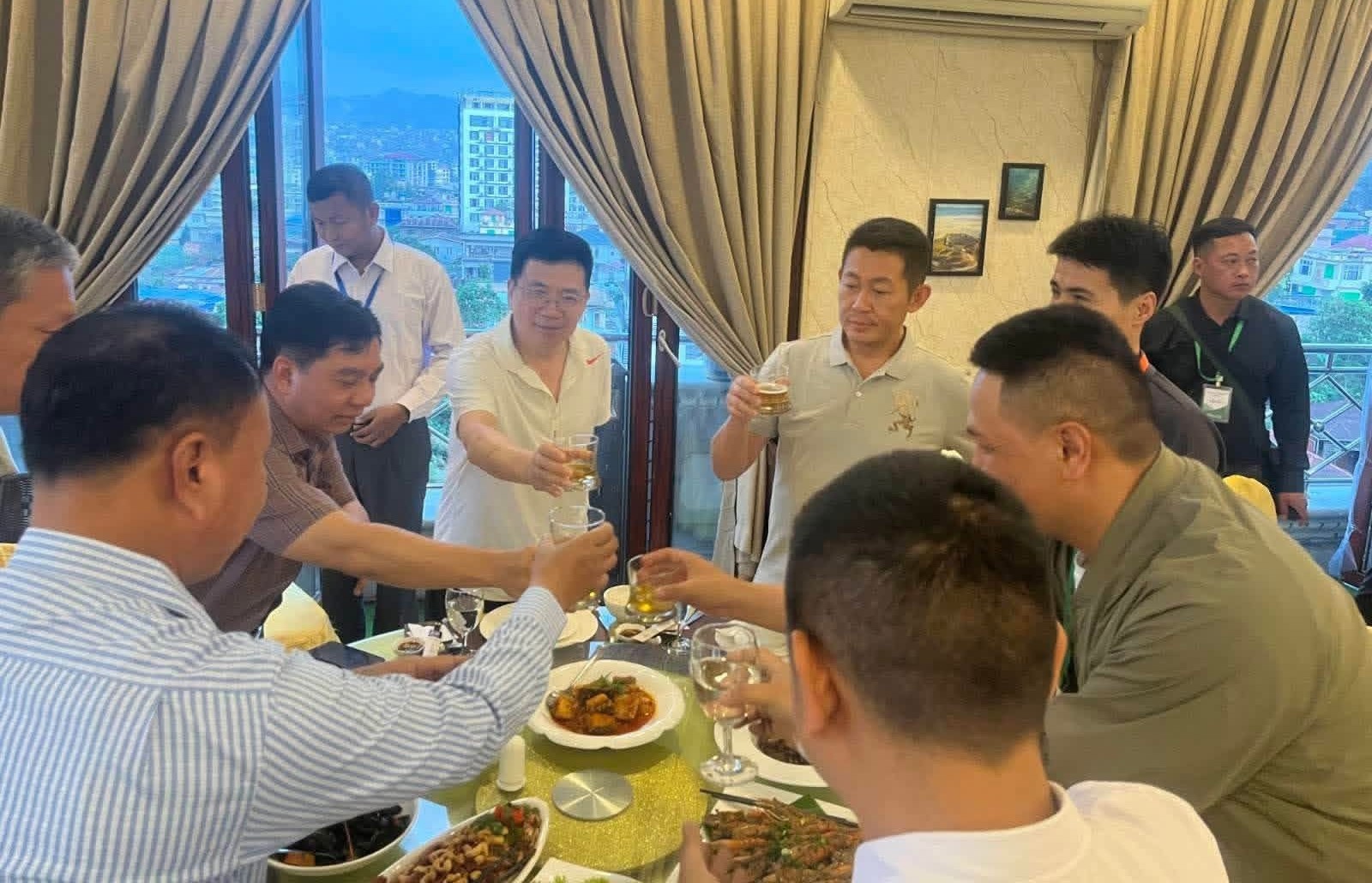
Military representative Lt-Gen Ko Ko Oo, Chinese Special Envoy Deng Xijun, and MNDAA leaders
Another political analyst suggested that China is using the MNDAA—which it controls more fully—to secure border trade routes in Northern Shan State, with indications that the group may even move to seize Namhkam. However, the analyst doubted the TNLA would dare to retake territories lost to the MNDAA, sensing China’s involvement behind the scenes.
"When the military couldn't effectively crack down on the Jia Pian (online scam) operations that were hurting Chinese interests, China helped the Brotherhood Alliance attack the military. I see it as China providing total assistance to ensure a safe route along its BRI (Belt and Road Initiative) path," the analyst said. "However, China does not want the military government to collapse entirely. They calculate that if the military falls, the NUG would come to power, and they don't trust the NUG as much. Because the areas held by the MNDAA, TNLA, and AA are vital for the BRI, China assisted them. Now, regarding the conflict between their 'proxies' (MNDAA and TNLA), China is simply choosing which subordinate is more capable and reliable."
Following the MNDAA's takeover of Kutkai—a town previously held by the TNLA during Operation 1027—the two sides held a meeting in Laukkai. While the TNLA stated as of the morning of March 19 that no final answer had been reached, reports have emerged that the two groups have agreed to a ceasefire.