
CNI News
March 21, 2026
Military and political analysts have pointed out that while there is widespread talk of building a Federal Union in Myanmar, political forces remain divided over the actual "federal design," and a common consensus has yet to be reached.
While ethnic armed organizations (EAOs) and various political parties seek to establish a "Federal Democratic Union," the Government-Military side maintains a stance on building a "Democratic Federal Union." However, the Nationwide Ceasefire Agreement (NCA) specifically stipulates the establishment of a Union based on federalism and democracy.
Political analyst U Htet Aung Kyaw told CNI News that there should be thorough debates involving all ethnic groups and organizations regarding which federal design should be used to build Myanmar, suggesting that a new design unique to the country's needs might even emerge.
"We should have serious debates involving all organizations and ethnic groups on how to build a federal Myanmar. Only after thorough discussion can we decide on the form—which global federal design to adopt," U Htet Aung Kyaw said. "During these debates, one group might like one model while another prefers something else, which could lead to endless arguments. In such a situation, a new design that fits our country could emerge. We must think and act this way. Otherwise, if one side implements what it thinks is right and the other side dislikes it, the country will remain stuck. It is best to discuss thoroughly to reach a consensus on the path forward."
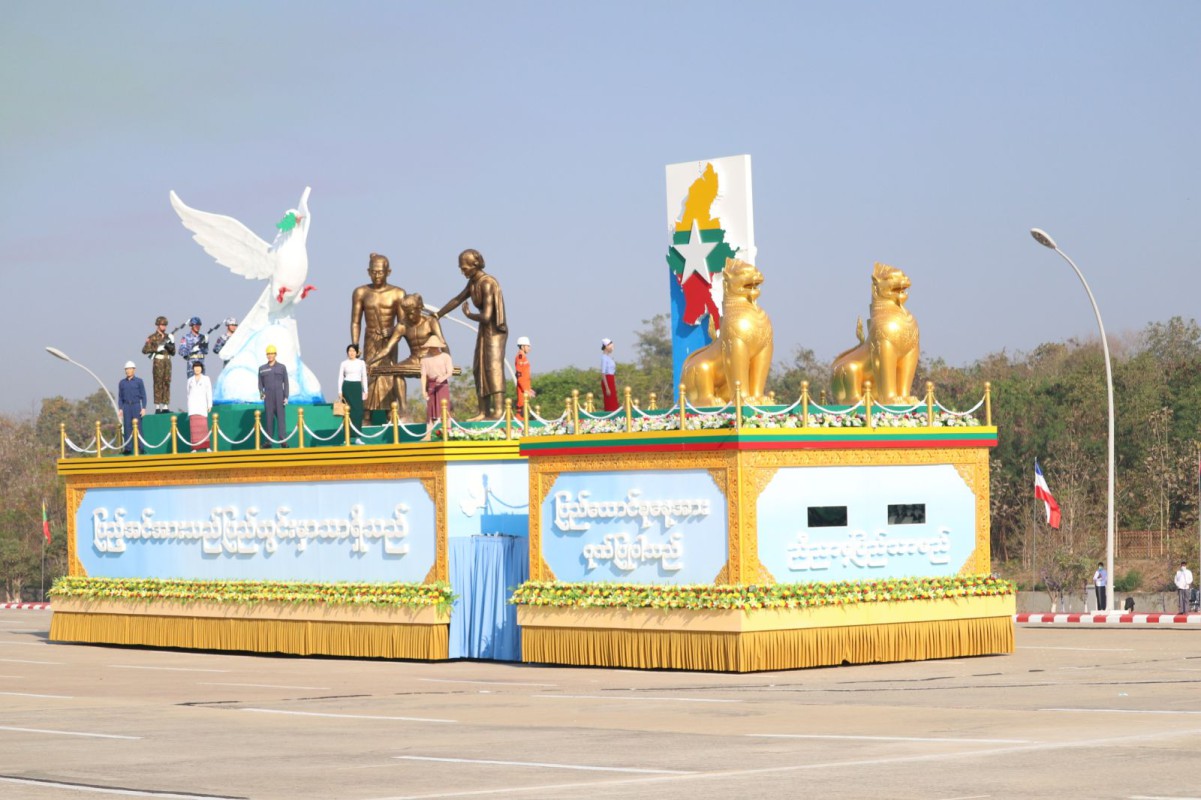
A map representing the Union of Myanmar
Federalism is a political system based on the division of power between the central government and states/regions, ensuring national equality and self-determination to build a genuine Union. For a multi-ethnic country like Myanmar, it is seen as the most suitable system to prevent dictatorship and effectively meet local needs.
U Htet Aung Kyaw further noted that perspectives on federalism have evolved significantly since 2010.
"Since 2010, the word 'federal' is no longer a forbidden term. There is now a general concept that applying it would be good for the country. However, exactly how to apply it remains unclear," he said. "In the past, federalism was portrayed as a path to secession, but now all organizations accept that it is beneficial for Myanmar. This is great progress. Now we must continue discussing the specific form—why it should be applied and what the potential weaknesses are—to move toward a positive outcome."
Currently, 88 countries worldwide—including the United States, Germany, Canada, Switzerland, Australia, Mexico, Nigeria, Spain, India, Nepal, and Sri Lanka—practice various models of federalism.
U Saw Than Myint, Joint Secretary of the Shan and Nationalities Democratic Party (SNDP), told CNI News that a nationally accepted federal design does not yet exist in Myanmar.
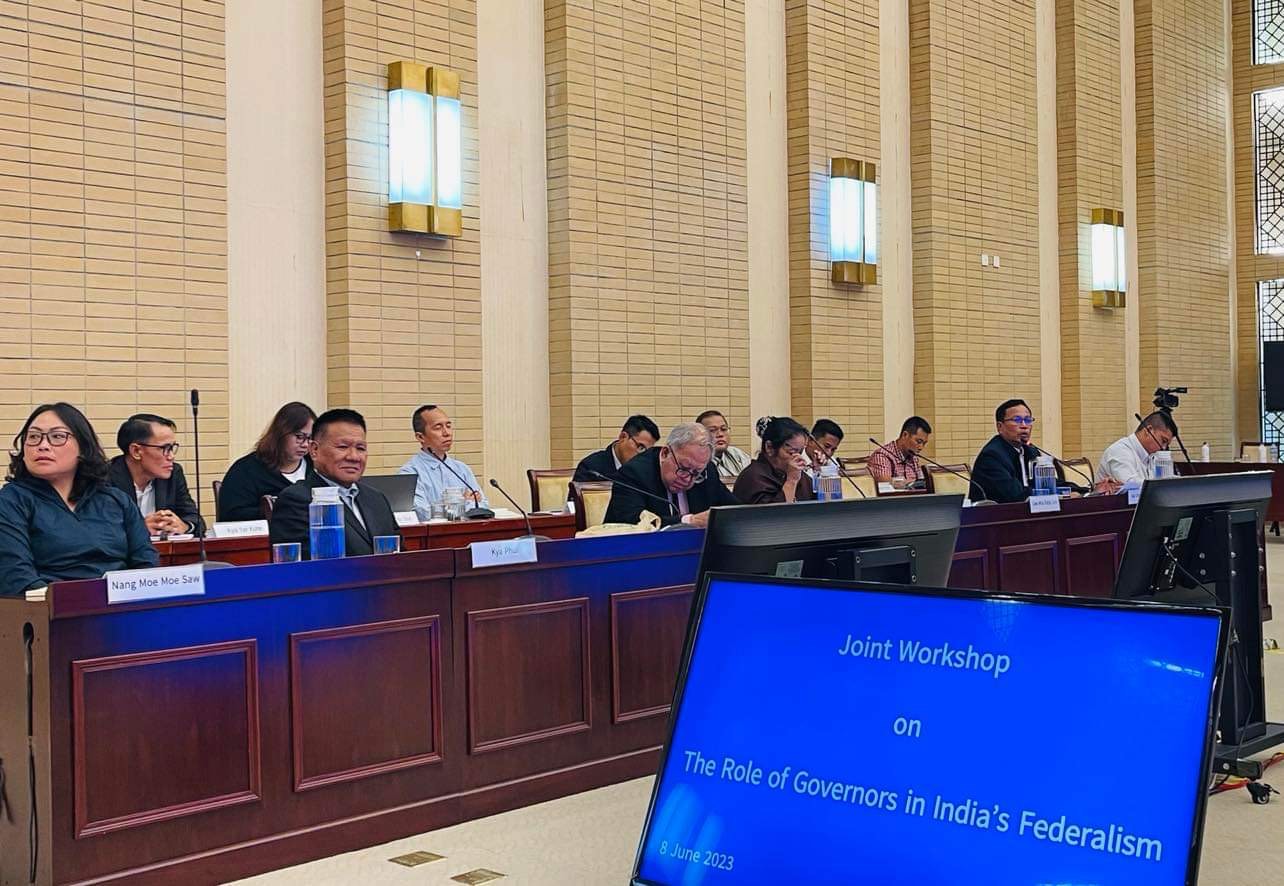
A workshop on federalism in progress
"There is no federally agreed-upon design that the whole country has consented to yet. But federalism concerns everyone—not just a single party or organization. It is simply a system where people manage and govern their own regions and localities," U Saw Than Myint explained. "People in a ward manage their ward; people in a township manage their township. Similarly, people in States and Regions manage their own areas. Broadly speaking, this is federalism. Different regions and states may have different conditions, so they should implement a system that fits their locality, based on the right to manage and govern without violating the Constitution."
Military and political analysts cautioned that when building a Federal Union, it is vital not to confuse "federalism" with "democracy," keeping the two concepts distinct.
They pointed out that the collapse of the Soviet Union was partly due to the entanglement of federal and democratic structures.
Furthermore, observers warned that since the "Burmese Way to Socialism" under General Ne Win failed and led to national ruin, stakeholders should be extremely cautious when attempting to construct a "Burmese Way to Federalism."