
CNI News
March 19, 2026
U Khun Sai, an active participant in the peace process, told CNI News that it is currently difficult to disarm and unify all armed organizations in Myanmar, including the Tatmadaw (the Myanmar military).
World history contains successful examples where various armed groups and state militaries laid down their weapons to form a single national army. Countries such as Sri Lanka, Switzerland, Nepal, Cambodia, and South Africa have successfully integrated their respective military and armed forces into a unified national defense force.
U Khun Sai noted that for this to happen in Myanmar, dialogue must come first. He pointed out that the lack of leaders like Nelson Mandela or Desmond Tutu in the current Myanmar context makes immediate disarmament and unification a daunting task.
"First, we must talk. Secondly, we don't currently have figures or leaders like Nelson Mandela or Desmond Tutu. Without such leadership, immediate disarmament and integration won't be easy in our country. This must be a step-by-step process," U Khun Sai said. "However, because it's a gradual process, we shouldn't be impatient and demand immediate total disarmament. While some might be willing to lead by example, we shouldn't rush. Rushing might cause us to overlook crucial details, making future obstacles even harder to overcome. Regardless, we need to negotiate. Through dialogue, we can find the best method. We should consider how to adapt the Swiss model, the South African model you mentioned, or the methods used in Nepal. We can combine these approaches, but first, there must be an agreement that we will absolutely stop fighting."
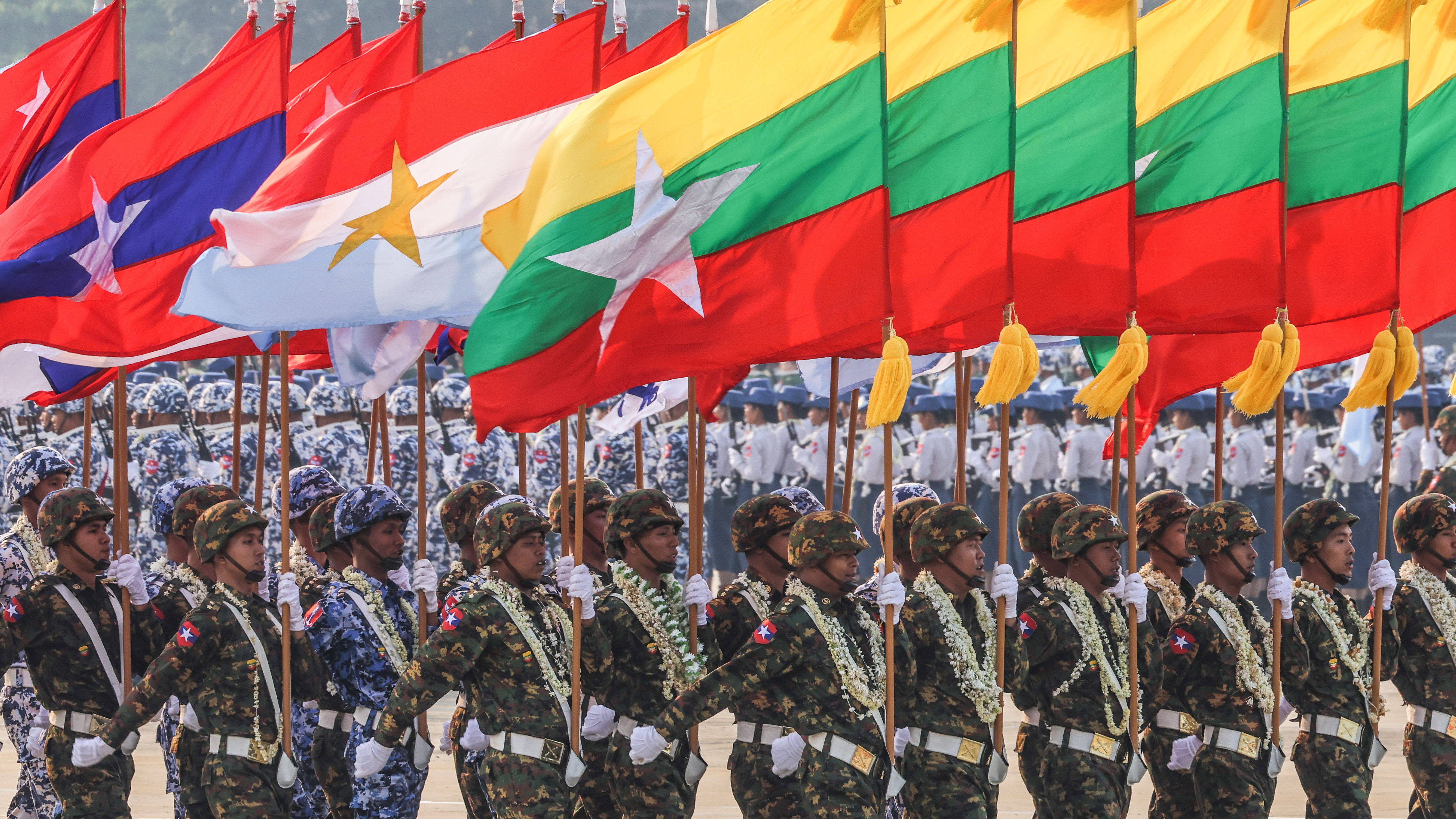
The Myanmar Tatmadaw
Military and political analysts pointed out that while unifying all armed groups under a single military command is not impossible based on Myanmar’s current situation and history, it remains an immensely challenging and complex process.
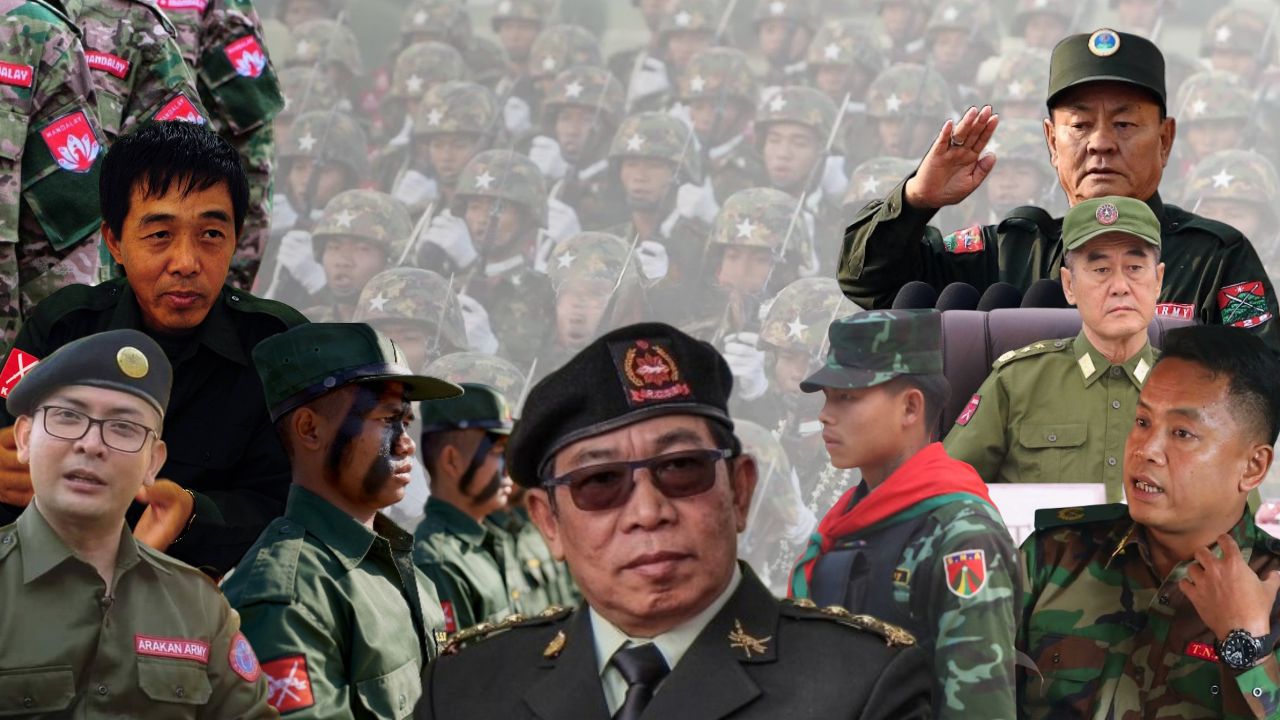
Presently, Myanmar is home to hundreds of armed organizations, including ethnic armed organizations (EAOs), Spring Revolution forces, people's militias, and border guard forces. Despite the presence of so many armed groups, all sides publicly advocate for the flourishing of democracy and the establishment of a federal union.
After more than 70 to nearly 80 years of conflict, building trust between opposing sides is extremely difficult. Previous attempts to integrate groups into the Border Guard Force (BGF) model have largely seen a lack of success. Currently, ethnic armed groups that wish to remain armed are being invited to serve as BGFs alongside the Tatmadaw, but many EAOs reportedly reject this model.
Dr. Nyo Nyo Thin, founder of Yangon Watch, told CNI News that Myanmar's situation is unique and cannot be carbon-copied from other countries. She emphasized that the most important factor is for those holding weapons to sit down and speak openly about the federal union they desire.
Revolutionary forces.
"Myanmar’s situation is different from other nations. You cannot simply copy-paste models from elsewhere. Our history is unique. The interests, mindsets, and historical perceptions of armed groups in Myanmar are completely different from those in other countries," she said. "What is possible, however, is progress through inclusive dialogue. Whether they keep their weapons or set them aside temporarily, they must sit at the table and speak honestly about the federal state and federal union they want, putting aside personal interests. International actors are also calling for everyone to come to the table. Therefore, Myanmar's situation cannot be directly compared to others."
Section 388 of Myanmar's 2008 Constitution stipulates that all armed forces within the state must be under the command of the Tatmadaw.
Consequently, military and political analysts are debating whether peace should be built by incentivizing ethnic armed organizations to transform into "National Guards" or "State Guards" rather than using the existing Border Guard Force or People's Militia models.