
CNI News
March 12, 2026
In the effort to place the military under a civilian government in Myanmar, one should approach the military only after understanding both the theoretical standards and the practical realities, Dr. Nyo Nyo Thin, founder of the Yangon Watch group, told CNI News.
She stated that while democratic standards dictate that a country’s military must be under the administration of a civilian government, this standard is not always met in practice across various global democratic reforms. Dr. Nyo Nyo Thin added that when considering a country’s history, human resources, and practical political conditions, there are countries where the military is not under civilian control at all.
"Therefore, by standard, the military must be under a civilian government. However, in reality, does it happen like that? In many countries, it does not. This might be possible in countries with over 100 or 200 years of democratic experience. But in fragile democracies, it takes a long time for this to happen," she said.
She further explained, "When does the military come under civilian administration? It happens when the citizens' understanding of democratic standards increases, when the level of education in the country rises, and when human resources reach a top-tier level compared to other countries. In such conditions, the military naturally falls under civilian rule. As long as those conditions are absent—for instance, if education is very low, human resources are scarce, and neighboring major powers are not democratic—it is not easy for the military to be under civilian administration."
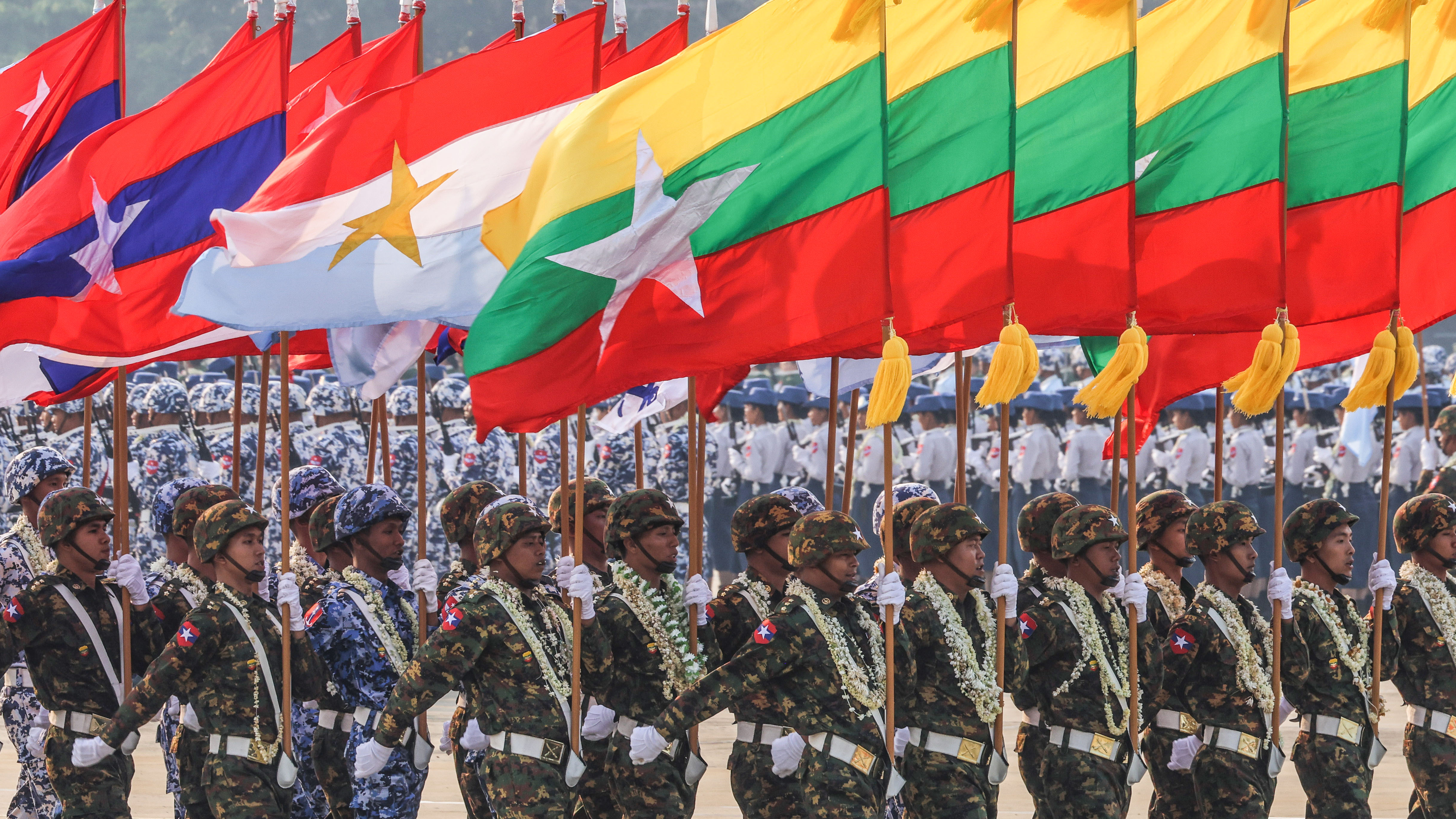
Members of the Myanmar Tatmadaw
There are several countries in the world where the military is not fully under a civilian government, exists as a separate power, or exerts influence over the government:
Pakistan: Despite having an elected government, the military remains the primary decision-maker in foreign policy and security matters and has carried out numerous coups.
Thailand: The military has always played a significant role, with a history of multiple successful coups.
Egypt: The military not only controls the government but also owns a large portion of the country's economy. The current President, Abdel Fattah el-Sisi, is himself a former military chief.
Africa (Mali, Guinea, Burkina Faso): These nations have experienced military coups in recent years and are currently under military rule with no civilian government.
North Korea: The situation is slightly different; while the military is under the leadership of the Party, it remains the lifeblood of the state, and all national resources are prioritized for the military.
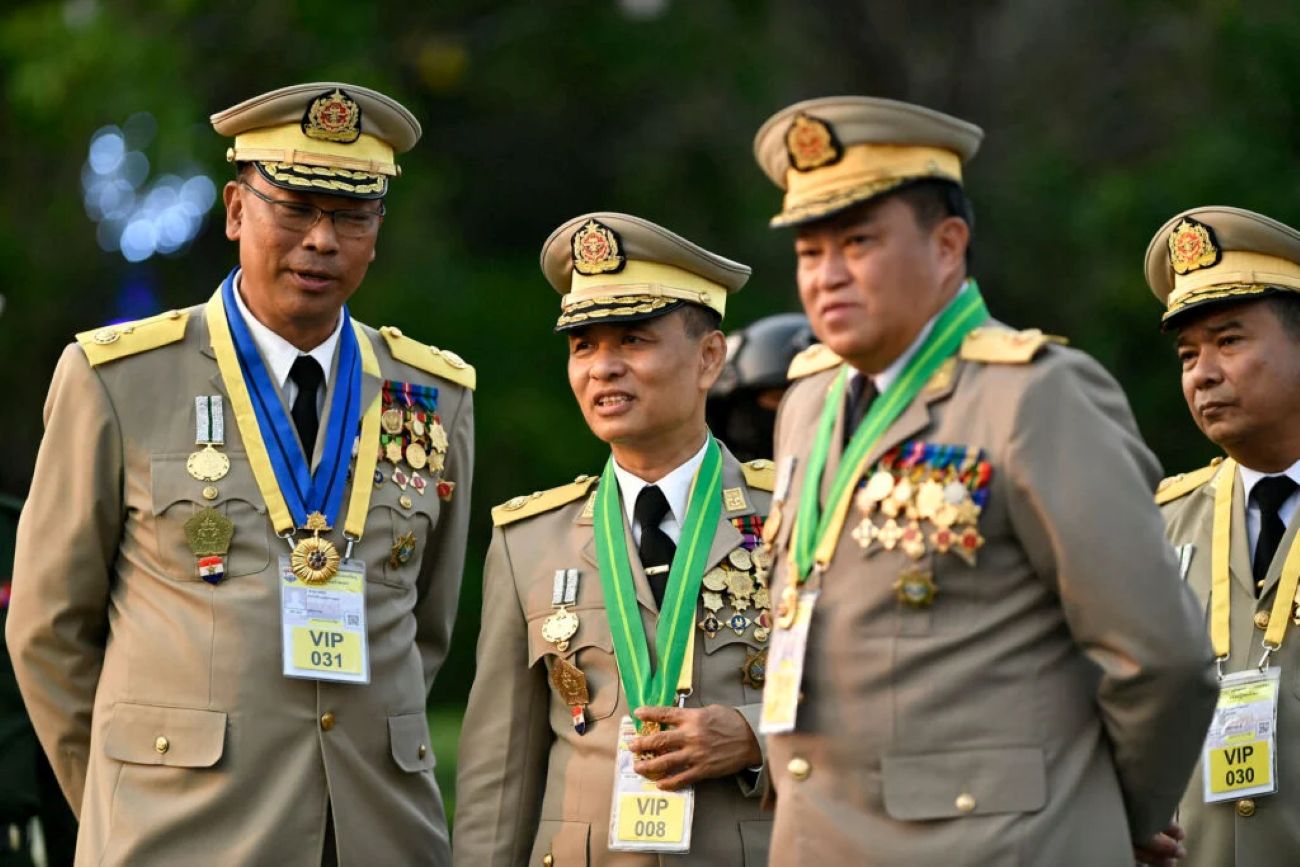
Generals of the Myanmar Tatmadaw
U Khun Sai, who is involved in the peace process, told CNI News that while it is correct that a military should be under a civilian government, there are countries where generals have become presidents. However, when they become president, they should not rule the country like a military organization.
"Even George Washington became a president. I’m not saying it shouldn’t happen here. But when George Washington became president, he did not rule the United States like a military. This should be noted," U Khun Sai said.
He continued, "When the military is not under a civilian government, it is inconsistent with the traditions of our elders and is difficult to sustain in the long run. The main reason our country has reached this state of decline is that the military has maintained a dominant position since 1962. We must not forget that our country went from being very wealthy to being very poor because of this."
In Myanmar, all three phases of the 2025 Multi-party Democratic General Election were completed by January 25, 2026. It has been announced that this March, the third sessions of the Pyithu Hluttaw, Amyotha Hluttaw, and Regional/State Hluttaws will commence to elect Speakers and the President.