
CNI News
March 11, 2026
Criticism is mounting against the "Odd/Even" day vehicle restriction system aimed at solving Myanmar's fuel shortage, with observers pointing out that the policy favors a privileged class while exacerbating hardships for the general public.
On March 3, the National Defense and Security Council announced that, starting March 7, 2026, motor vehicles and motorcycles must operate on an alternating odd/even day schedule to conserve fuel.
Former lawmaker Daw Sandar Min told CNI News that the restriction creates an unfair advantage for EV (Electric Vehicle) users and places an unjust burden on ordinary citizens.
"The goal is to save fuel nationwide, so they split cars into odd and even days. However, EVs are exempt from these restrictions because they don't use fuel. This essentially turns into a promotion to sell EVs," she said. "It makes it seem like only EV owners have the upper hand. Are people with regular cars supposed to go to school or work only every other day? That is simply not fair."
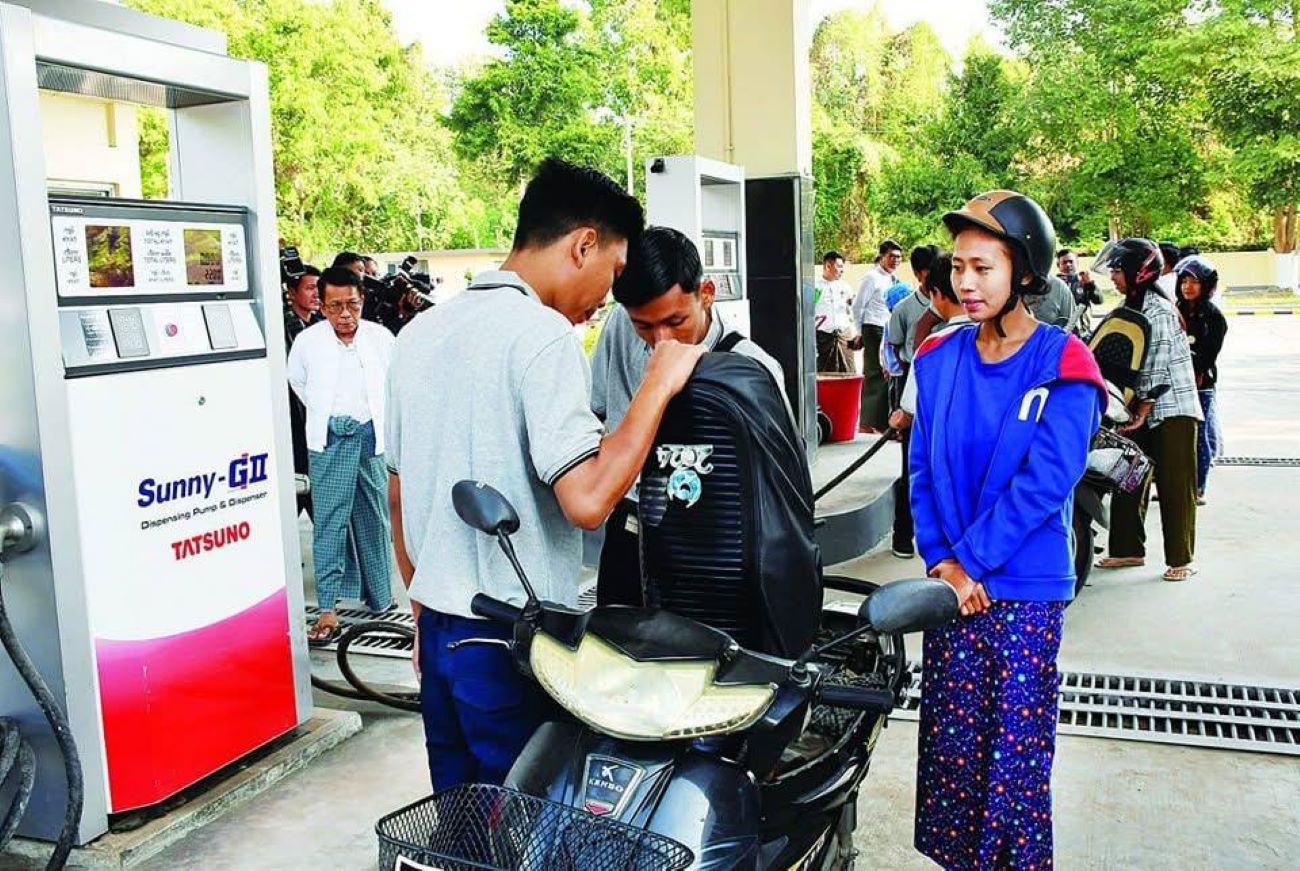
People are seen refueling their vehicles.
Daw Sandar Min further warned that some individuals might exploit these regulations for personal gain.
"Secondly, if the state issues a decree for the sake of fuel conservation, it's disheartening to see people taking advantage of it. Truthfully, many traffic police are not on the streets for safety or traffic flow; about 90% are out there looking for ways to support their own livelihoods [through bribes]. This is not okay. If the goal is to save fuel, they should implement a system that actually addresses fuel conservation without missing the mark so widely," she added.
Violators of the odd/even system will face legal action starting March 14 under Section 188, which carries a penalty of one month in prison, a 20,000 Kyat fine, or both.
Traffic Police Officer Deputy Superintendent Kyaw Soe Lwin posted on social media that specific details regarding the enforcement would be provided before the penalty phase begins.
Dr. Nyo Nyo Thin, founder of the Yangon Watch group, told CNI News that the inclusion of prison sentences is inappropriate and could cause the public to resent the government.

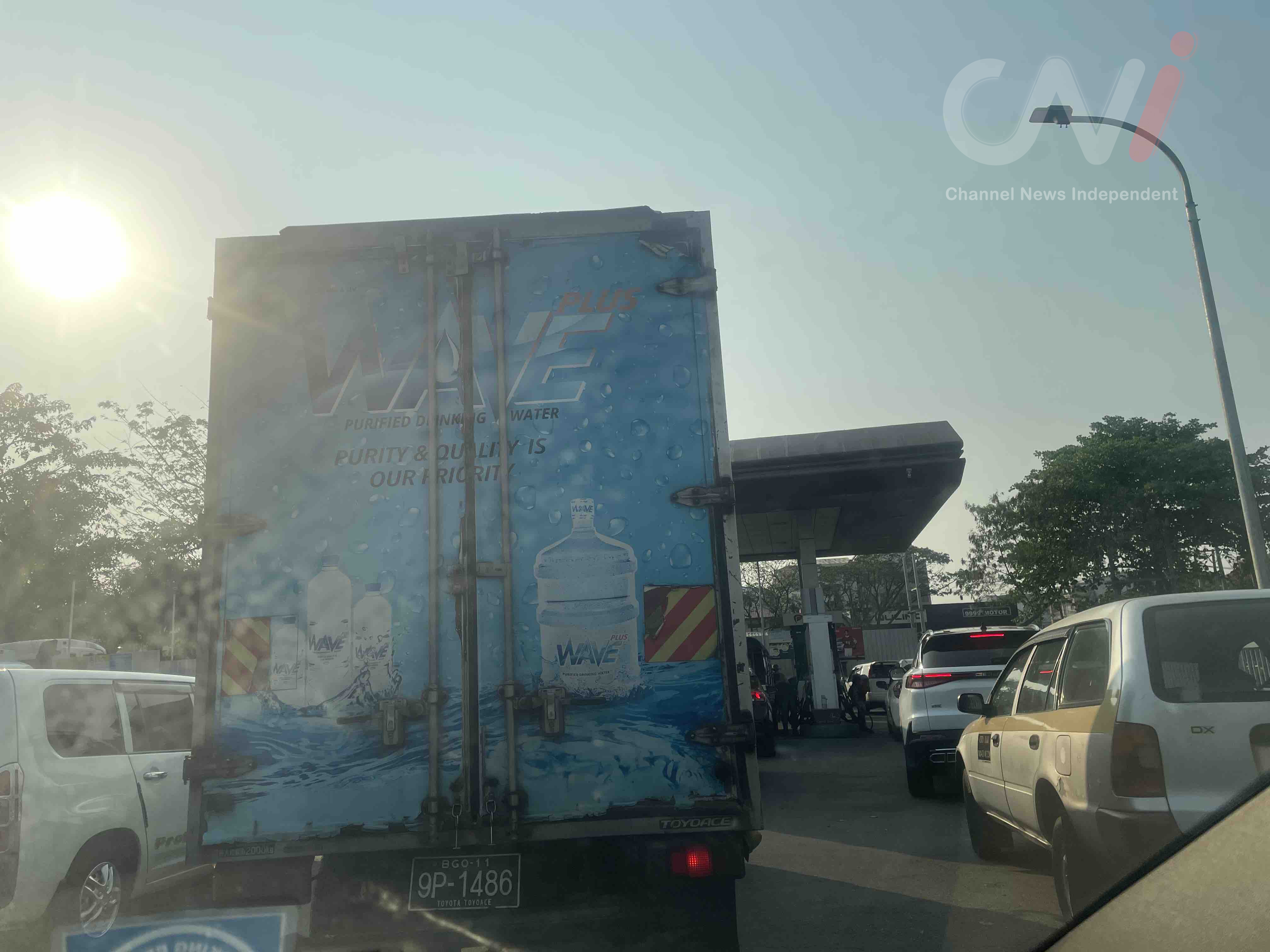
Rows of cars at a petrol station.
"This system isn't entirely bad in theory—it's a suitable measure for air pollution and fuel conservation. However, it isn't a perfect plan because it can lead to corruption among enforcement authorities. This needs systematic control," she said. "Furthermore, if those responsible for law enforcement view this as a way to punish the public, it will be difficult to build a partnership between the government and the people. During this period of national reconstruction, that partnership is vital."
She continued, "I do not support the use of prison sentences. A one-month jail term makes the public misperceive the government's intentions. It feels like there is a strong desire to punish the citizens rather than help them. This is impractical and breeds hatred. The government should reconsider the prison sentence; even if they don't want to revoke the law, those implementing it should choose not to impose jail time."
Currently, private sector employees and parents are facing significant hurdles due to the restrictions, alongside travelers and those whose businesses require daily mobility.
Critics suggest that instead of restricting road access, the government should consider a system where fuel is sold to odd/even license plates on alternating days, which would be a more balanced solution for both parties.