
CNI News
February 20, 2026
Military and political analysts are weighing in on the potential reasons behind the surrender of Bo Nagar (aka Naing Lin), leader of the Burma National Revolutionary Army (BNRA), to the Myanmar military (Tatmadaw).
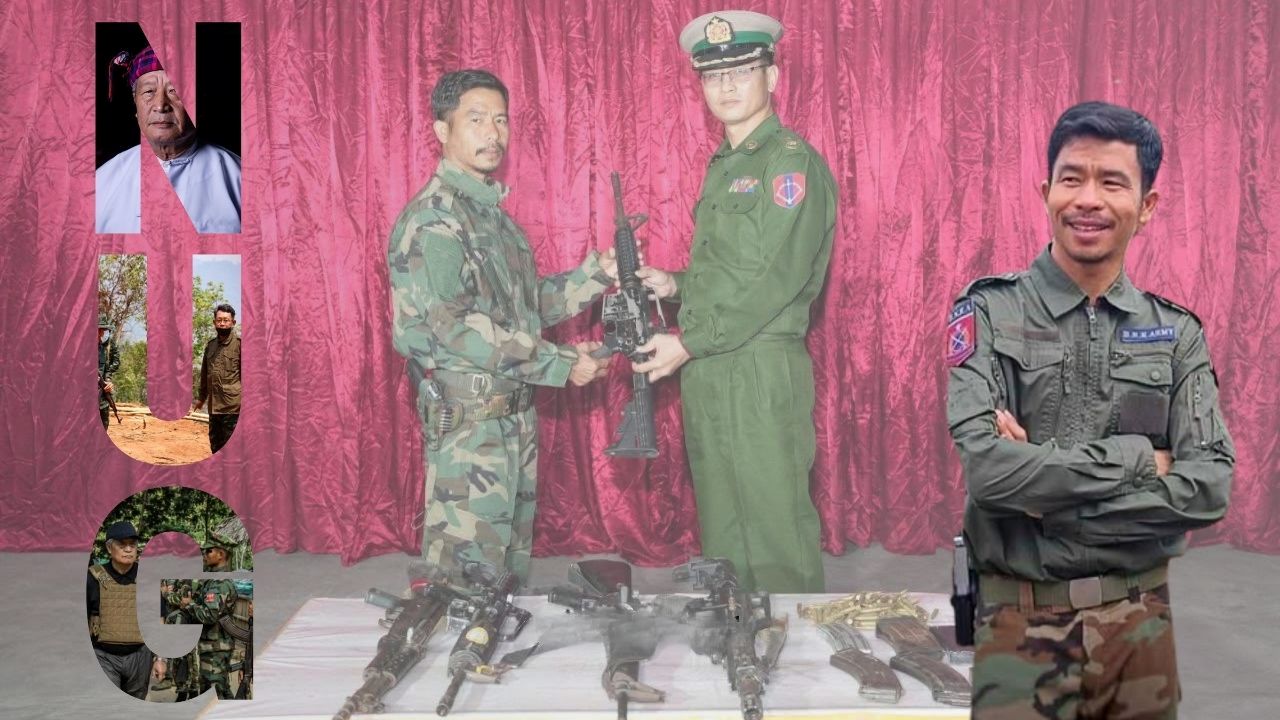
On February 18, 2026, Nay Pyi Taw announced that BNRA leader Naing Lin and his family members had entered the "legal fold" (surrendered) along with weapons and ammunition.
Dr. Hla Kyaw Zaw, an observer of China-Myanmar affairs, told CNI News that Bo Nagar’s surrender indicates a lack of unity among revolutionary organizations and suggests that the National Unity Government (NUG) was weak in its efforts to proactively organize and persuade him.
"We don’t know if Bo Nagar had contact with the military long ago, as some suspect. Revolutionaries must always be alert; the military junta has very successful methods for its survival—specifically, 'divide and rule.' They did the same to our party (the Burma Communist Party). They divide and then succeed," she said.
She further noted that the military targets commanders who may be involved in the drug trade or those whose lifestyles do not align with that of a revolutionary.
"The military has been doing this since the BSPP (Burma Socialist Programme Party) era. They have been quite successful at it. I think the NUG side was weak in taking the initiative to organize and reconcile with Bo Nagar to keep him on their side. When conflicts arise between revolutionary groups, we must try to find solutions through peaceful negotiation. This event shows that our revolutionary organizations are not united. It is a lesson that we need to work harder for unity," Dr. Hla Kyaw Zaw added.
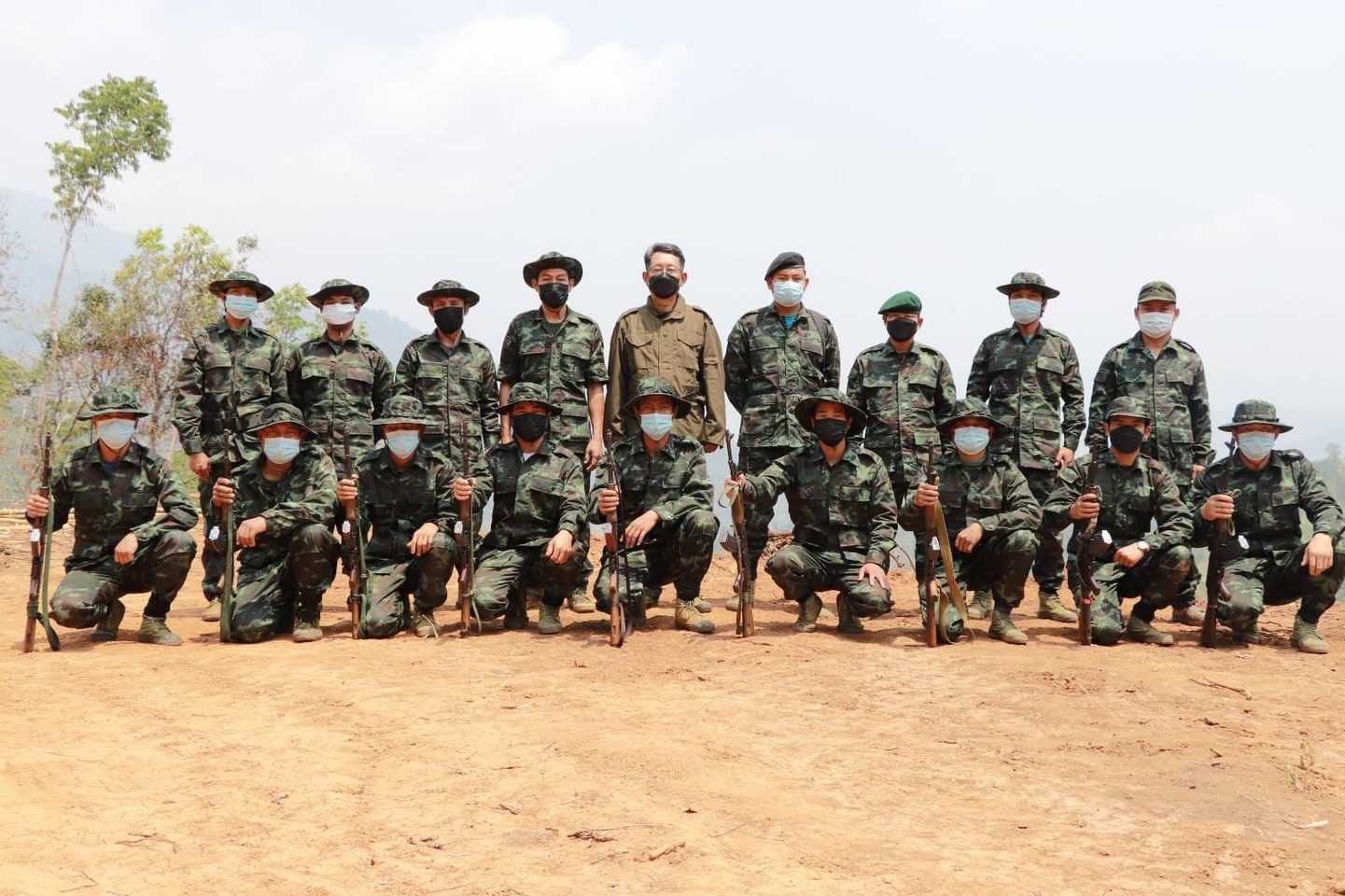
NUG Defense Minister U Yee Mon and PDF members.
The surrender occurred on February 18, 2026, just one day after NUG-affiliated forces raided and attacked three BNRA camps in Pale Township, Sagaing Region, on February 17.
Prior to these events, Bo Nagar had been vocal in his criticism of the NUG. Tensions escalated on January 9, 2026, when NUG-aligned forces raided two BNRA checkpoints in Pale Township. In retaliation, the BNRA raided a checkpoint operated by the NUG’s People’s Defense Organization (PaKaPha) on January 17. These mutual raids led to severe military tensions, culminating in the February 17 attack on the three BNRA camps.
Colonel Khun Okkar, Chairman of the Pa-O National Liberation Organization (PNLO-NCA/S), told CNI News that building unity in a revolution is difficult. He suggested that if an agreement is reached with the military, Bo Nagar might reorganize his forces into a pro-military militia.
"It seems Bo Nagar took an interest in the NCA (Nationwide Ceasefire Agreement) or ceasefire paths. He likely wants to remain in his own territory with his own armed group under a ceasefire agreement. Since he clashed with NUG troops, their positions may have diverged. In a revolution, unity is hard to build; it requires harmony in both ideology and methodology," Colonel Khun Okkar said.
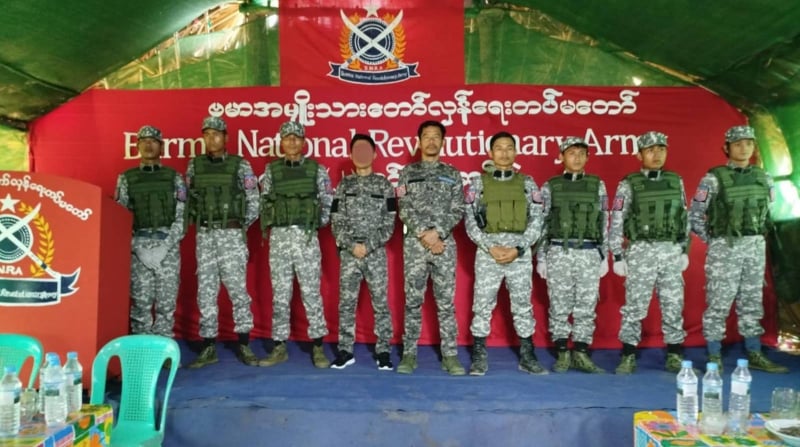
The BNRA led by Bo Nagar.
He added that if the current ruling administration allows Bo Nagar to retain his position by forming a People's Militia or a Border Guard Force (BGF), he might end up like previous NCA signatory groups. "There are many possibilities; we have to wait and see."
Following the 2021 political shift, Bo Nagar led the formation of the Pale Township People's Defense Force, which was renamed the Myanmar Royal Dragon Army (MRDA) in 2022. In 2023, he reorganized the MRDA into the Burma National Revolutionary Army (BNRA). The group operated in Yinmabin District and Pale Township as an independent revolutionary force, not under the command of the NUG.