
CNI News
February 20, 2026
In order to develop the Naga Self-Administered Zone in Sagaing Region, improvements are needed in education, transportation, healthcare services, and the supply of medicines, according to U Shu Maung, Chairman of the Naga National Party (NNP), in an interview with CNI News.
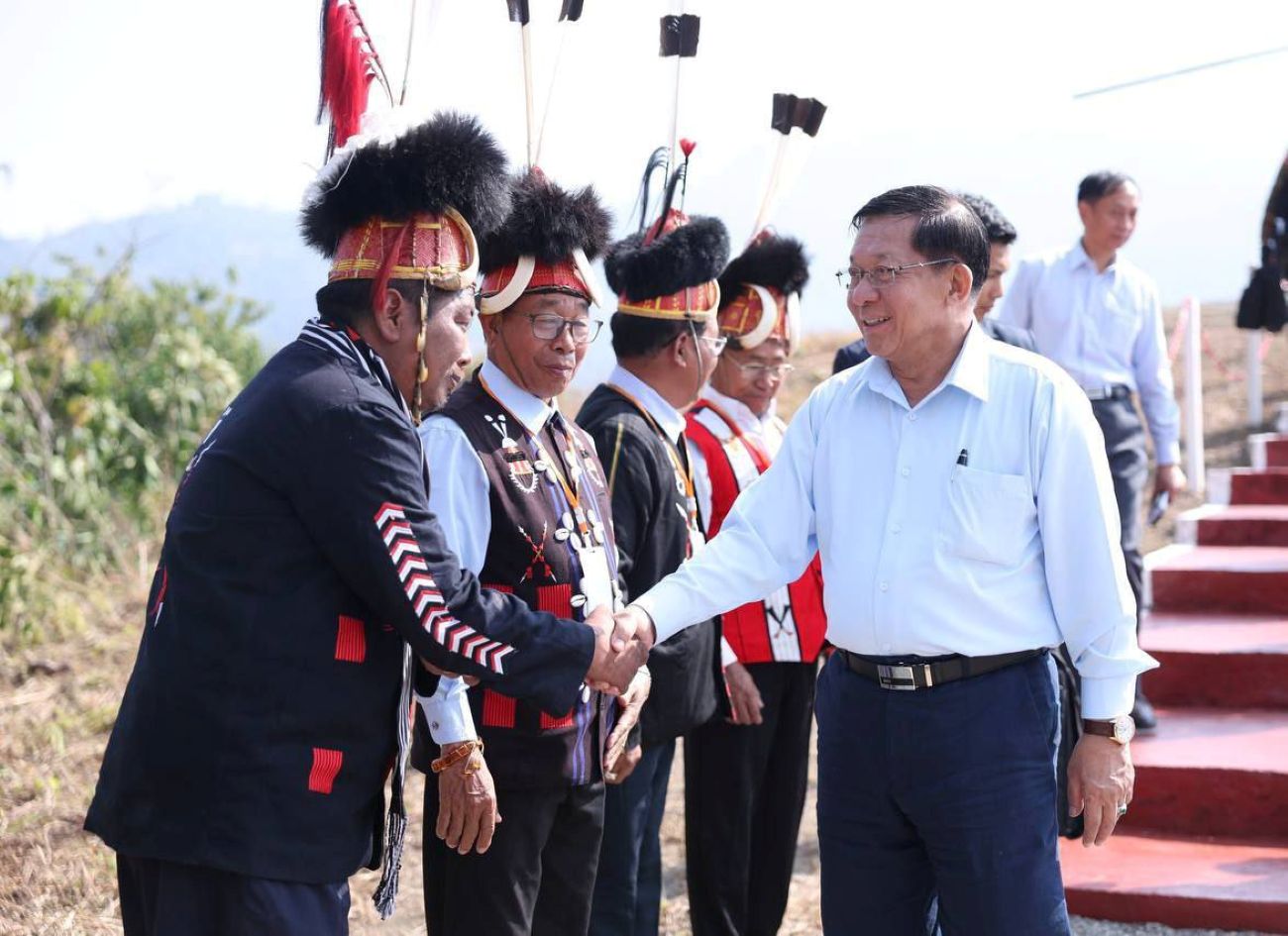
Senior General Min Aung Hlaing, Chairman of the State Security and Peace Commission, said that necessary measures would be undertaken to support development in the Naga Self-Administered Zone of Sagaing Region, one of the least developed areas in Myanmar.
He made the remarks during meetings with departmental officials and local elders in Lahe and Leshi towns on February 16, 2026.
U Shu Maung stated that many tasks remain to be addressed for regional development.
He said: “When it comes to development, there are many issues to talk about. At present, basic development needs are urgent. Healthcare services are critically needed. There is a shortage of healthcare workers. We also need medical supplies and equipment for hospitals and clinics. In our region, we do not have specialists such as ENT (ear, nose, and throat) doctors or ophthalmologists. This creates significant difficulties. Basic healthcare needs, including general medicines, X-ray services, and blood testing, are severely lacking.
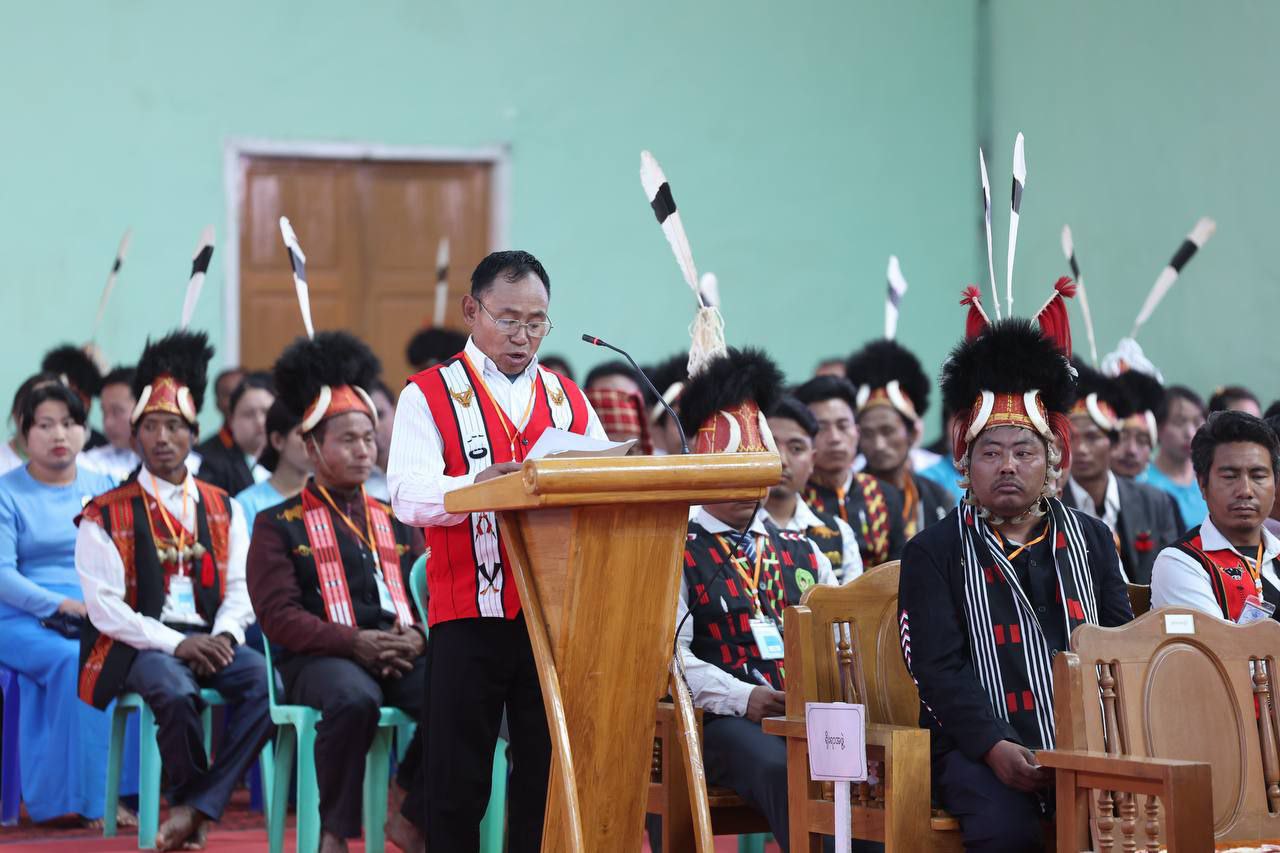
Local residents presenting their concerns during the visit.
Similarly, in the education sector, we need school buildings and educational support. There is still a shortage of teachers. For basic development, roads and bridges are also urgently needed, as the Naga region is geographically challenging.”
The Pangsaung mountain pass route connecting the Naga region with India is a key border trade route. However, poor transportation infrastructure and difficulties in transporting goods via the Monywa–Homalin–Hkamti river route have disrupted the flow of goods and contributed to food shortages.
Although there are expectations that implementing formal border trade would improve livelihoods and facilitate the movement of goods, there are still limitations in officially opening border trade routes.
Regarding regional development, U Shu Maung said that effective management of border trade and coordination between both sides of the border would significantly support development efforts.
He explained: “Our development activities rely heavily on the Chindwin River. During summer, the river route can be blocked due to low water levels. Even when it is open, political instability creates difficulties, as we depend mainly on the river route to Monywa. This causes serious problems with rice, cooking oil, and salt supplies.
We depend heavily on India. If cross-border trade with India could be strengthened with better transportation infrastructure usable year-round, it would greatly improve livelihoods in the Naga region. With proper management and coordination on both sides, improved trade would provide substantial support.”
Education in the Naga Self-Administered Zone (Leshi, Lahe, and Nanyun) has lagged behind due to remoteness and transportation difficulties. However, the government and local communities are working together to promote KG+9 basic education and vocational training. There remains a shortage of teachers and high dropout rates. Efforts are being made to develop human resources through technical and agricultural training programs, according to local residents.
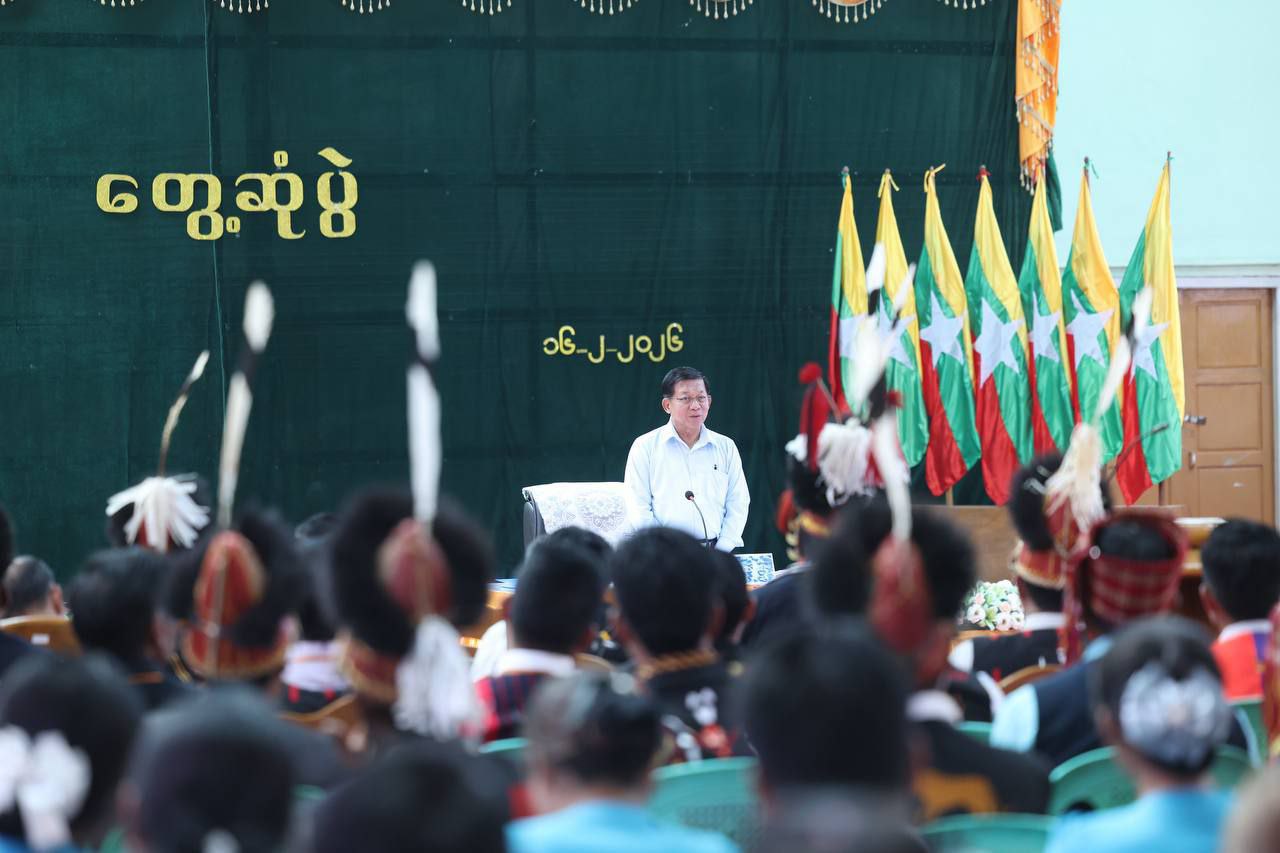
Senior General Min Aung Hlaing
U Sharm Maw, Chairman of the Naga Traditional Cultural Committee in Hkamti Township, told CNI News that education should be the top priority for development.
He said: “Priority number one is education. Number two is healthcare. Number three is roads and bridges. Teachers are severely lacking. There are many villages where schools cannot even open. Some primary schools have only one teacher for the entire school. Even middle schools may have only two or three teachers. Education must be prioritized.
If relations between the governments of India and Myanmar improve and a properly managed economic zone can be implemented, it would be very beneficial.”
Government officials also submitted requests during Senior General Min Aung Hlaing’s visit on February 16, 2026, including:
Expanding departmental offices appropriate to the Naga region’s administrative level. Constructing a town hall for the Naga Self-Administered Zone,Establishing a disaster management department, Improving telecommunications services,Facilitating border trade activities.
Additionally, they requested sufficient electricity supply in parts of Leshi town and surrounding rural areas, construction of an advanced reservoir to ensure adequate water supply for the Matuki hydropower plant, and upgrading the Htamanthi–Leshi–Sumpra road to allow year-round travel.