
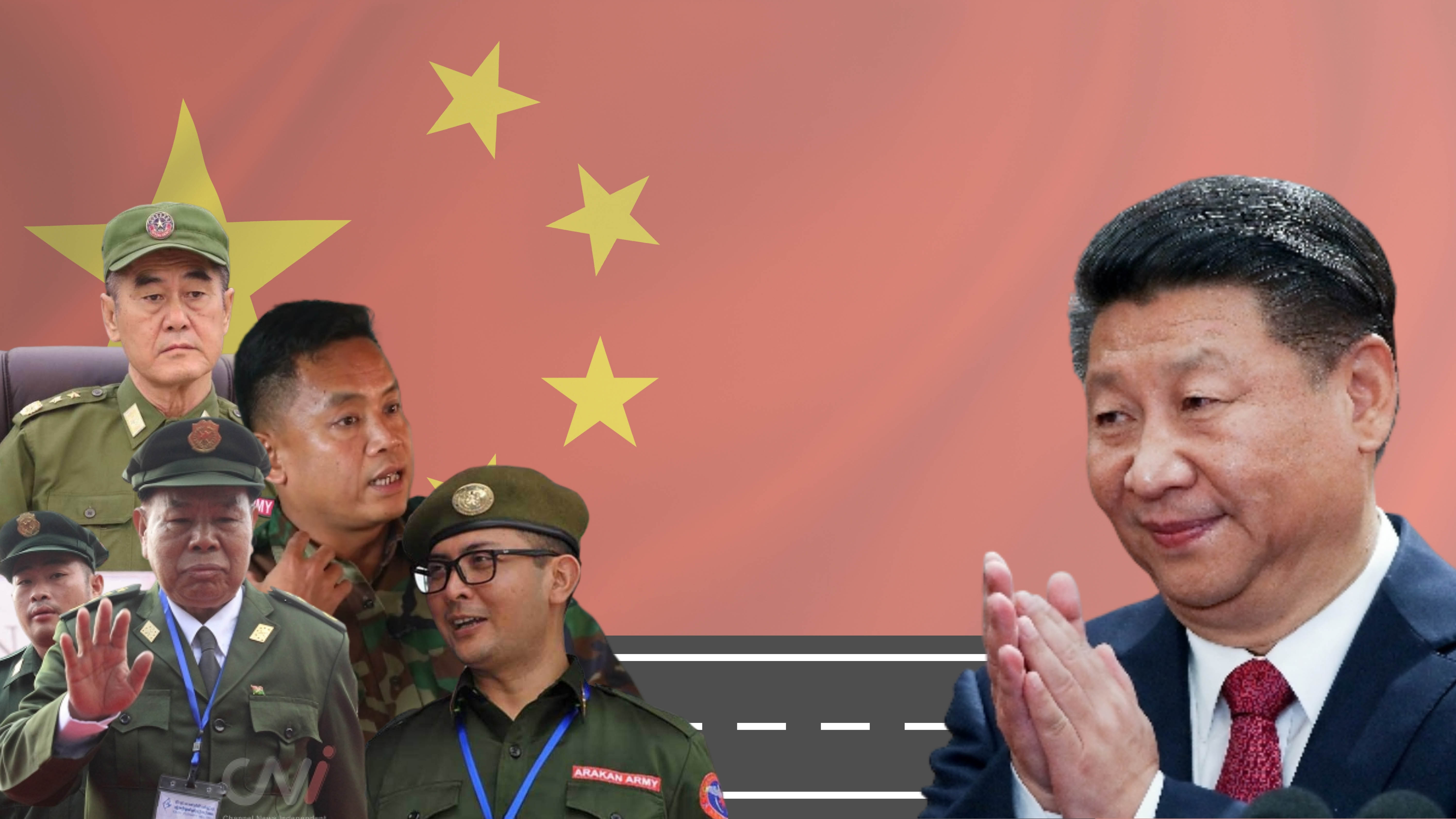
CNI News
6 February 2026
Political analyst U An Kaw La told CNI News Agency that the upcoming new government needs to anticipate the direction China intends to take within Myanmar’s military and political landscape.
He said that China favors strong and stable leadership from the current central government and that it is necessary to consider the forms China seeks to implement in Rakhine State, Kachin State, and northern Shan State.
U An Kaw La said: “We need to anticipate China’s policy. If we can predict how China wants to proceed, handling issues related to Rakhine and Kachin will become much easier. If we do not understand China’s policy, it becomes difficult. China’s stance is that it prefers strong, stable institutions leading from the current central government. Another point is tax autonomy and autonomous trade arrangements that are implemented alongside peace. I believe China favors such models. This is because if we observe the way China has established its footholds along the border areas in the context of current conflicts, we can analyze that such a pattern already exists. Based on that foothold, we need to consider how to approach the peace process.
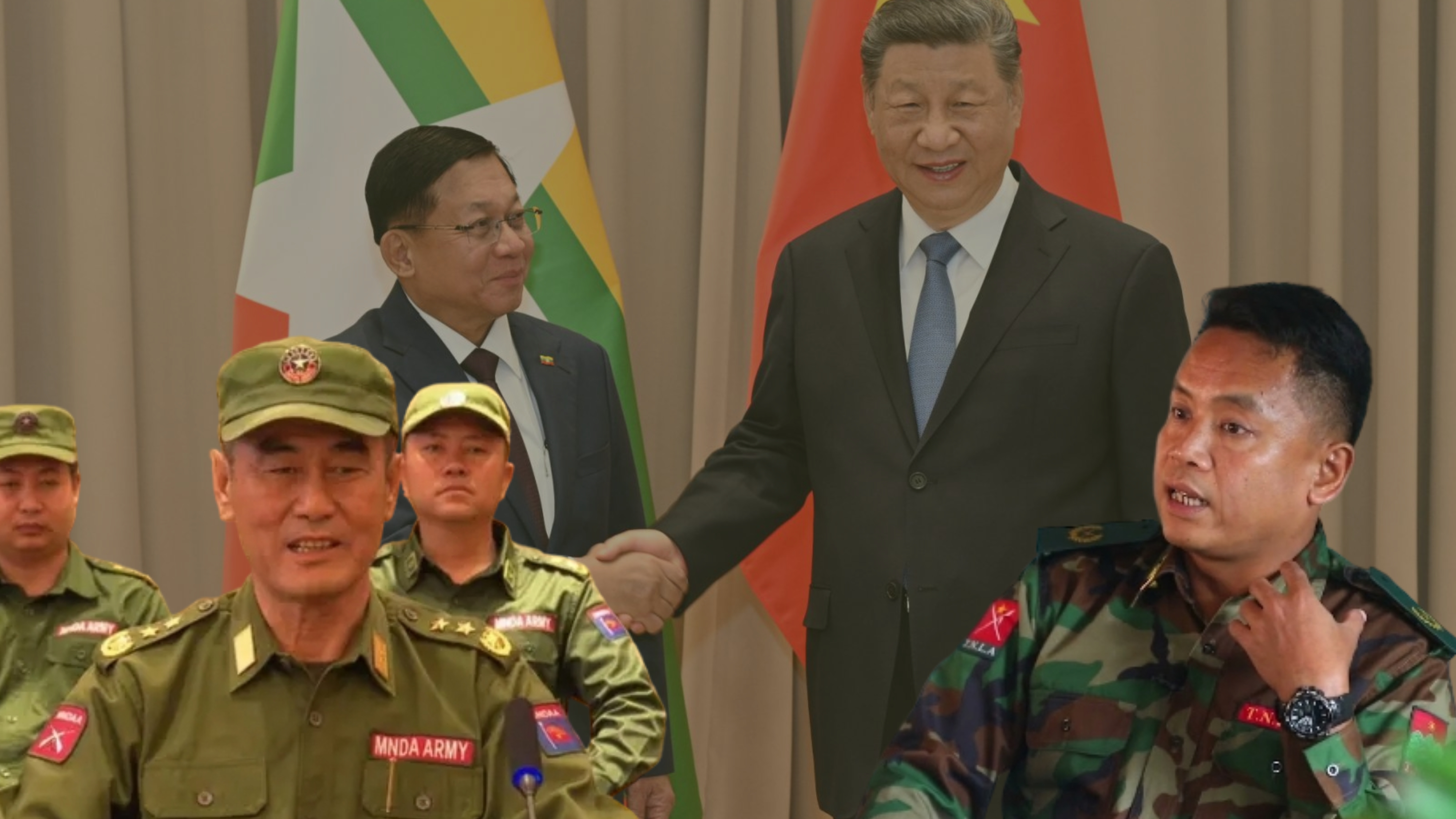
Chinese President Xi Jinping meeting with Senior General Min Aung Hlaing
How issues in Rakhine, northern Shan, and Kachin are implemented follows that same pattern (China’s way of establishing footholds along the border). From our side, we also need to consider introducing a new ideology. This is important for the Union. If we ground our thinking in the principles of preserving the Union, preventing disintegration, and strengthening ethnic unity, and then incorporate a new ideology into that framework, I believe we will come closer to the right answers. This is a major responsibility of the new government.”
China’s Special Envoy for Asian Affairs, Mr. Deng Xijun, stated on December 29, 2025, that holding the 2025 multi-party democratic general election was an agreement reached between Chinese President Xi Jinping and Senior General Min Aung Hlaing.
At present, instead of putting direct pressure on armed groups in Myanmar, China is mainly applying pressure indirectly by urging the “Wa” armed group to withdraw support.
In the current political landscape of Myanmar, although northern armed groups have agreed to ceasefires with the Myanmar military (Tatmadaw), analysts note that the Kachin Independence Army (KIA) and the Arakan Army (AA) are growing stronger and appear increasingly capable of establishing themselves in their respective territories.
Political analyst U An Kaw La told CNI News Agency that in the upcoming government environment, relations among the government, China, India, KIA, and AA will become increasingly important, depending on the positions, policy changes, and movements of China and India.
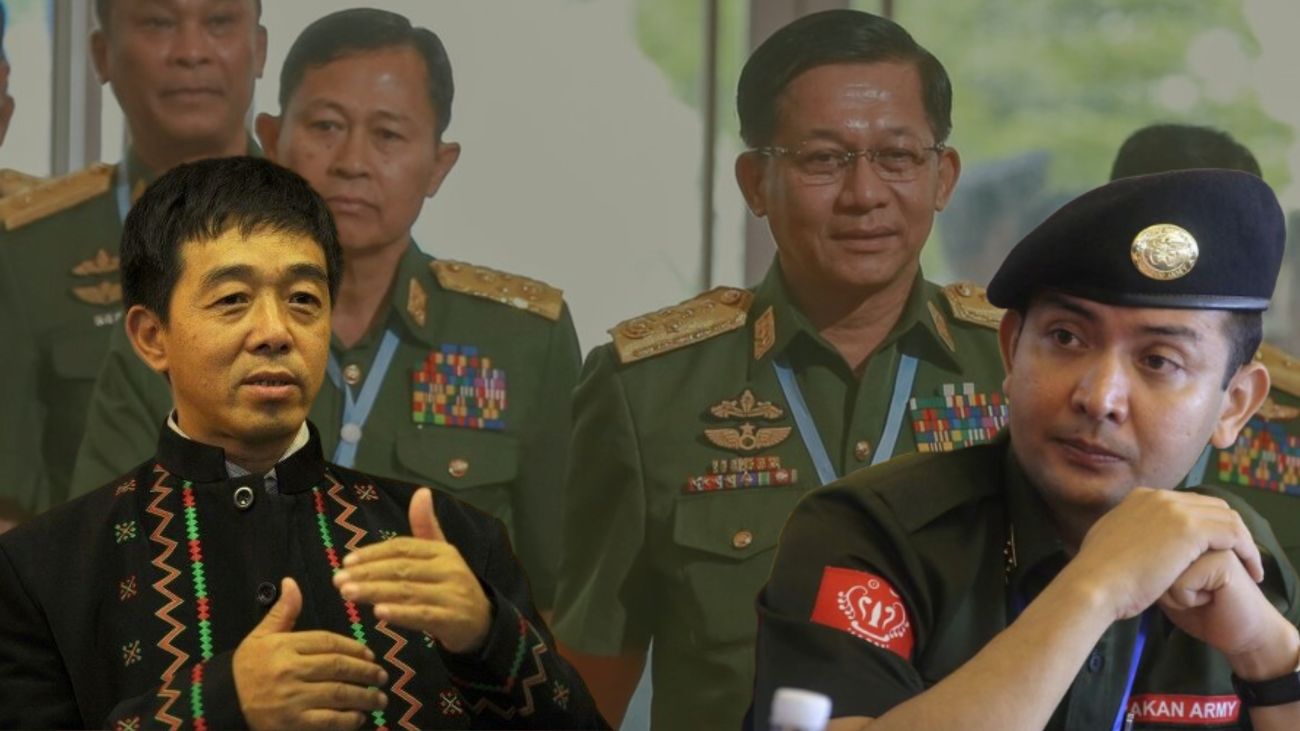
Senior General Min Aung Hlaing and KIA and AA leaders
He said: “In short, geopolitics needs to be analyzed extensively. The positions, policy changes, and movements of China and India are crucial. This is because both KIA and AA maintain relations with both India and China. These are direct interactions along border areas. In my view, neither the Indian nor Chinese governments tend to apply direct pressure through formal diplomacy or border affairs. Instead, they primarily engage through relations that focus on their respective regional states.
Changes in the China–India alliance dynamic became noticeable after Modi and Xi Jinping last met at the SCO Summit. Following that meeting, new conditions emerged, including plans to implement trade routes such as the Pansaung–Kanpaikti road. What the next government will do cannot yet be stated clearly. However, given the trend toward closer relations, the survival and actions of AA and KIA will increasingly depend on the positions of India and China, as well as Myanmar government diplomacy. These factors must be carefully analyzed and addressed. Otherwise, it will be quite difficult.”
China currently has numerous investment projects in Myanmar, including the Kyaukphyu Special Economic Zone, the Myitsone Dam, elevated railway projects, the Kanpaikti Economic Cooperation Zone, the Muse–Mandalay trade road and railway, and the Ruili–Mandalay–Kyaukphyu expressway, among others.