

CNI News
6 February 2026
Political analyst U Kyaw Htet told CNI News that if the ministers appointed to Myanmar's government cabinets are weak, central control will become more dominant.
Domestic and international political observers have analyzed that the upcoming new government is likely to be formed with a focus on national reconciliation. They suggest that if such a government is formed, prominent political leaders may be appointed to lead respective ministries.
U Kyaw Htet noted that the division of ministries will occur only after negotiations between Senior General Min Aung Hlaing and the Union Solidarity and Development Party (USDP), which won the majority of seats in the election and is set to form the government. He emphasized that while the Parliament (Hluttaw) must oversee the government, ministries must also be granted full executive authority.
U Kyaw Htet stated: "If the Parliament cannot provide constructive checks, balances, and discussions on government actions, the political landscape will likely fall under centralized power. If the Parliament can maintain a 'check and balance' system and if ministers are granted independent authority over their respective sectors, progress can be made. Therefore, we hope to see qualified and capable individuals appointed as ministers. Simply put, if ministers are highly competent and sharp in handling state affairs, central control will decrease. Conversely, if ministers are weak, centralized control will regain its strength."
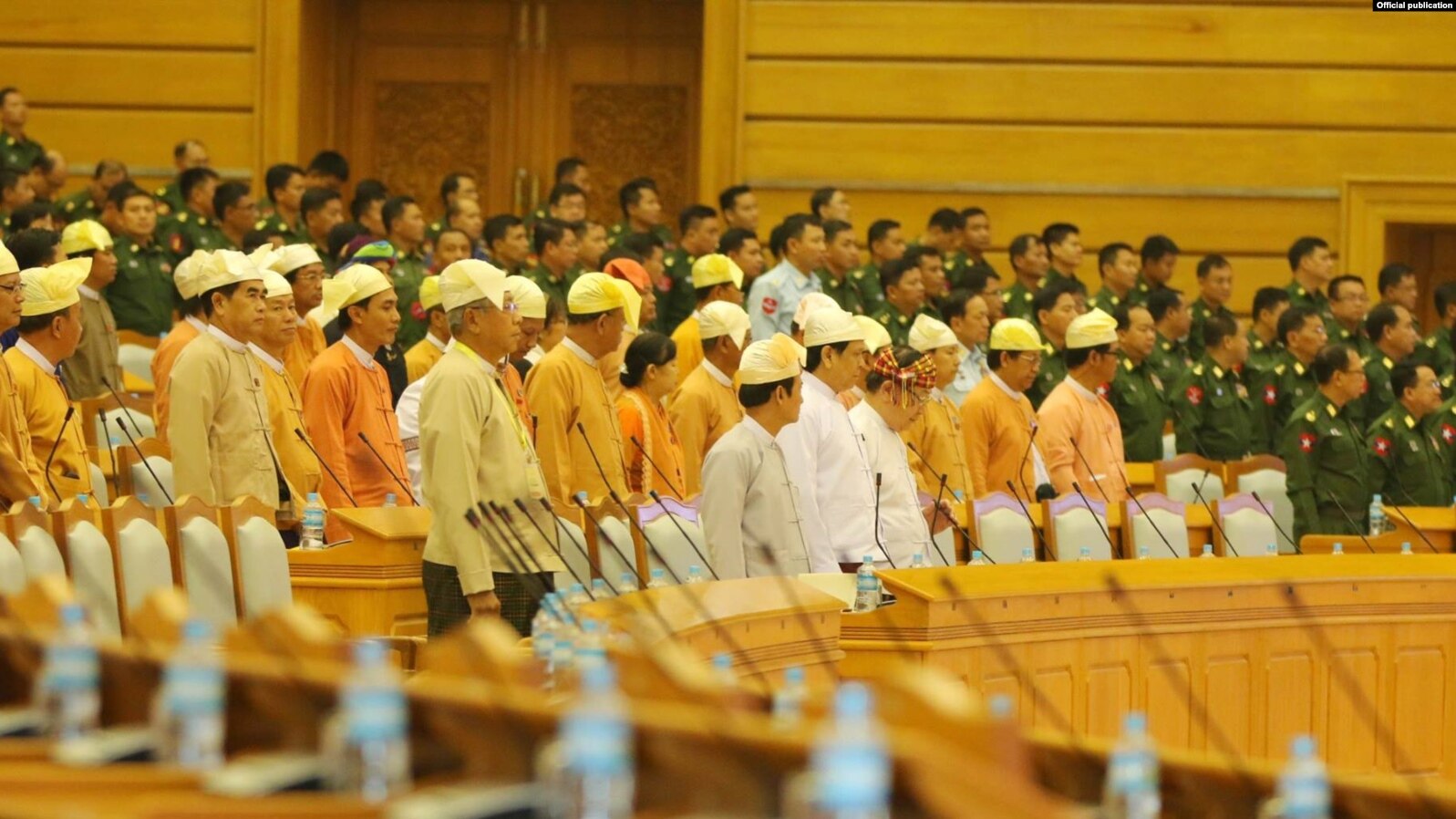
A session of Hluttaw in progress.
Political parties have pointed out that a national unity government is necessary to resolve the current armed conflicts and political crises. The Myanmar military (Tatmadaw) has stated that during its five-year administrative period, it intends to move toward a political system based on democracy and federalism.
Political analyst U An Kaw La told CNI News that while a national reconciliation government would be beneficial, its success depends on the magnanimity of the winning party and the current authorities.
He said: "In a democratic system—and there has been a roadmap toward democracy and federalism since the SAC took over in 2021—the key elements are decentralization and the division of power. The policy exists; the regulations must follow. If implemented, it would be a positive move. The question is the extent of decentralization—whether it will be 'control-based' or true 'autonomy.' These are critical political factors. The magnanimity of the current ruling party and the leading commission is vital. Establishing such a precedent would serve as a model for future peace and trust-building. I believe it is good if it happens, but I will have to study to what extent they actually grant authority."

An illustration depicting the government and justice.
2025-2026 Election Results The multi-party democratic general election in Myanmar was held in three phases, beginning on December 28, 2025, and successfully concluding on January 25, 2026. The Union Election Commission (UEC) released the final list of elected representatives on February 3, 2026.
According to the announcement, the winning seat counts are as follows: Union Solidarity and Development Party (USDP): 739,National Unity Party (NUP): 68, Shan and Nationalities Democratic Party (SNDP/White Tiger): 39,People's Party (PP): 30, People's Pioneer Party (PPP): 20.
Pa-O National Organisation (PNO): 18,Mon Unity Party (MUP): 17,Naga National Party: 12,Arakan Front Party (AFP): 8,Karen National Democratic Party: 7,Zomi Congress for Democracy: 7,Myanmar Farmers' Development Party: 6,Arakan National Party (ANP): 6, Shanni Nationalities Solidarity Party (SNSP): 5,Danu Nationalities Democracy Party: 5, Tai-leng (Shanni) Nationalities Development Party (TNDP): 4,Intha National Organisation: 4, Kayah State People's Party: 3,Kachin State People's Party: 3.