
CNI Interview
11 December 2025
The Myanmar National League for Democracy (NLD) government led by Daw Aung San Suu Kyi was removed by the military (Tatmadaw) on February 1, 2021, after the military alleged that the government attempted to form a government without resolving disputes over the voter list.
After that, protests against the military took place, and armed groups, pro-democracy activists, political parties, NLD leaders, and MPs tried to bring down the military regime.
During this period of armed resistance, the Kachin Independence Army (KIA) provided support by helping form armed groups, giving military training, and supplying weapons and ammunition, attempting to help topple the Myanmar military.
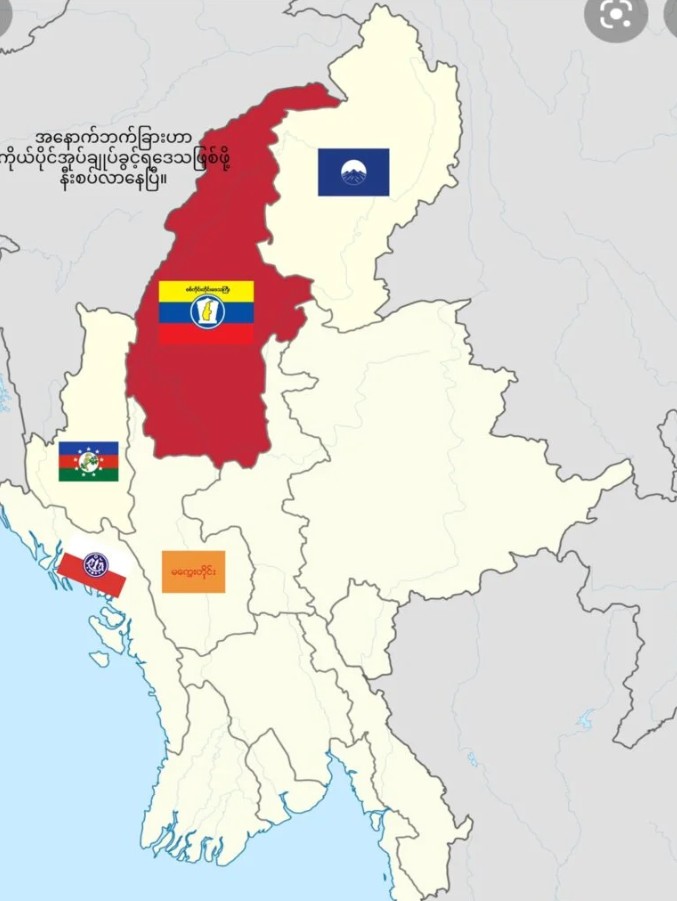
On the other hand, the KIA has also been trying to implement its own objectives of liberation across northern and north-western Myanmar—Kachin State, Sagaing Region, Chin State, and Rakhine State—by conducting operations aiming to control Sagaing Region.
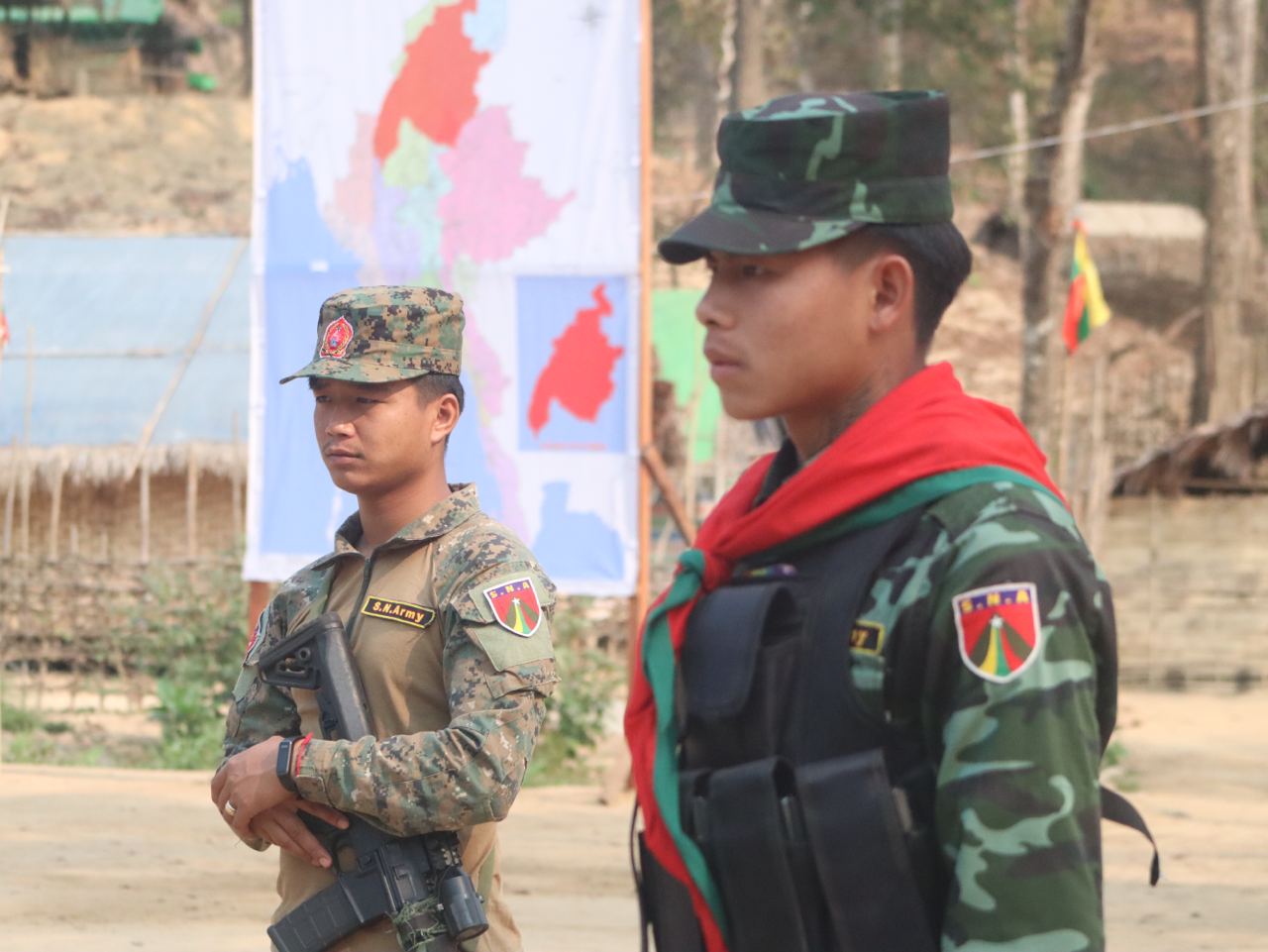
One of the major obstacles to the KIA’s goals is the Shanni (Tai Leng) people and the Shanni Nationalities Army (SNA). The KIA has been launching attacks against Shanni communities and Shanni armed groups.
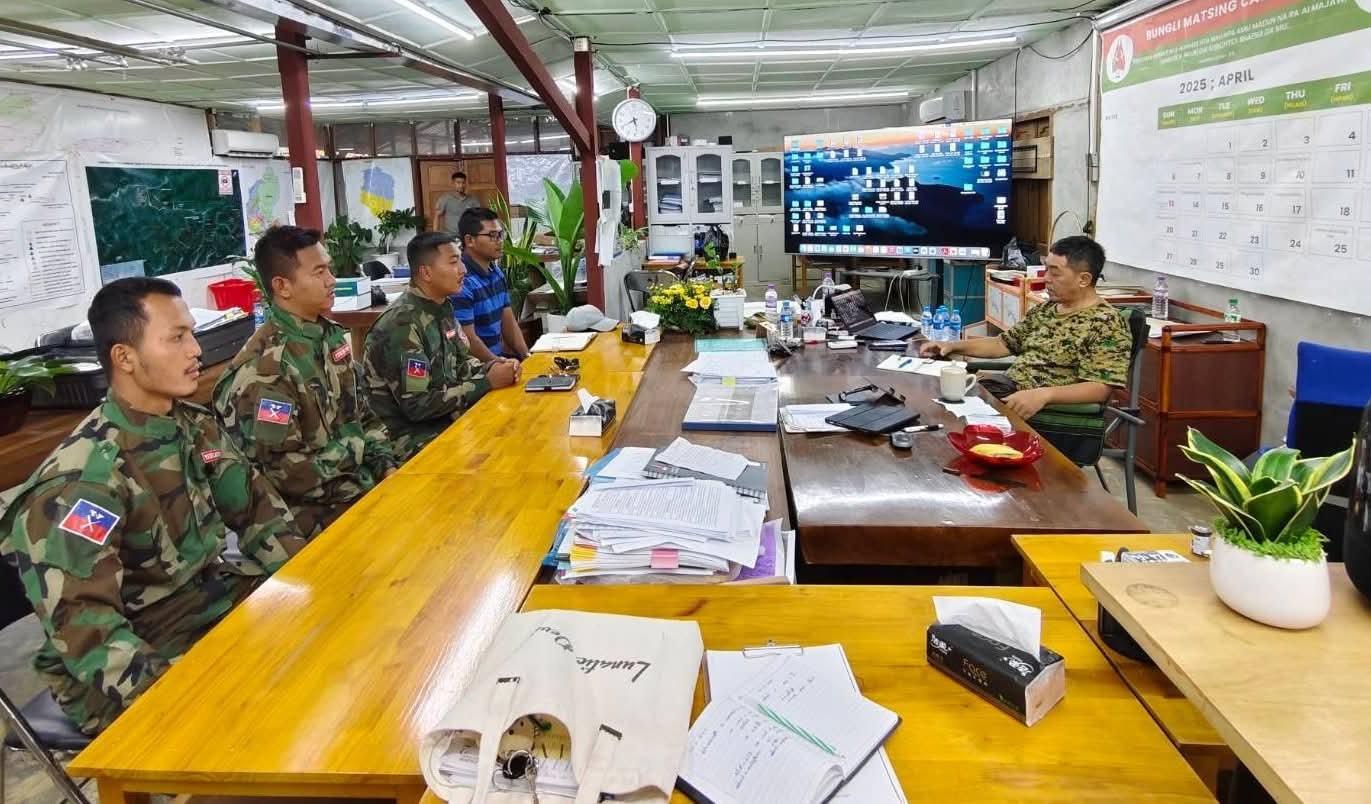
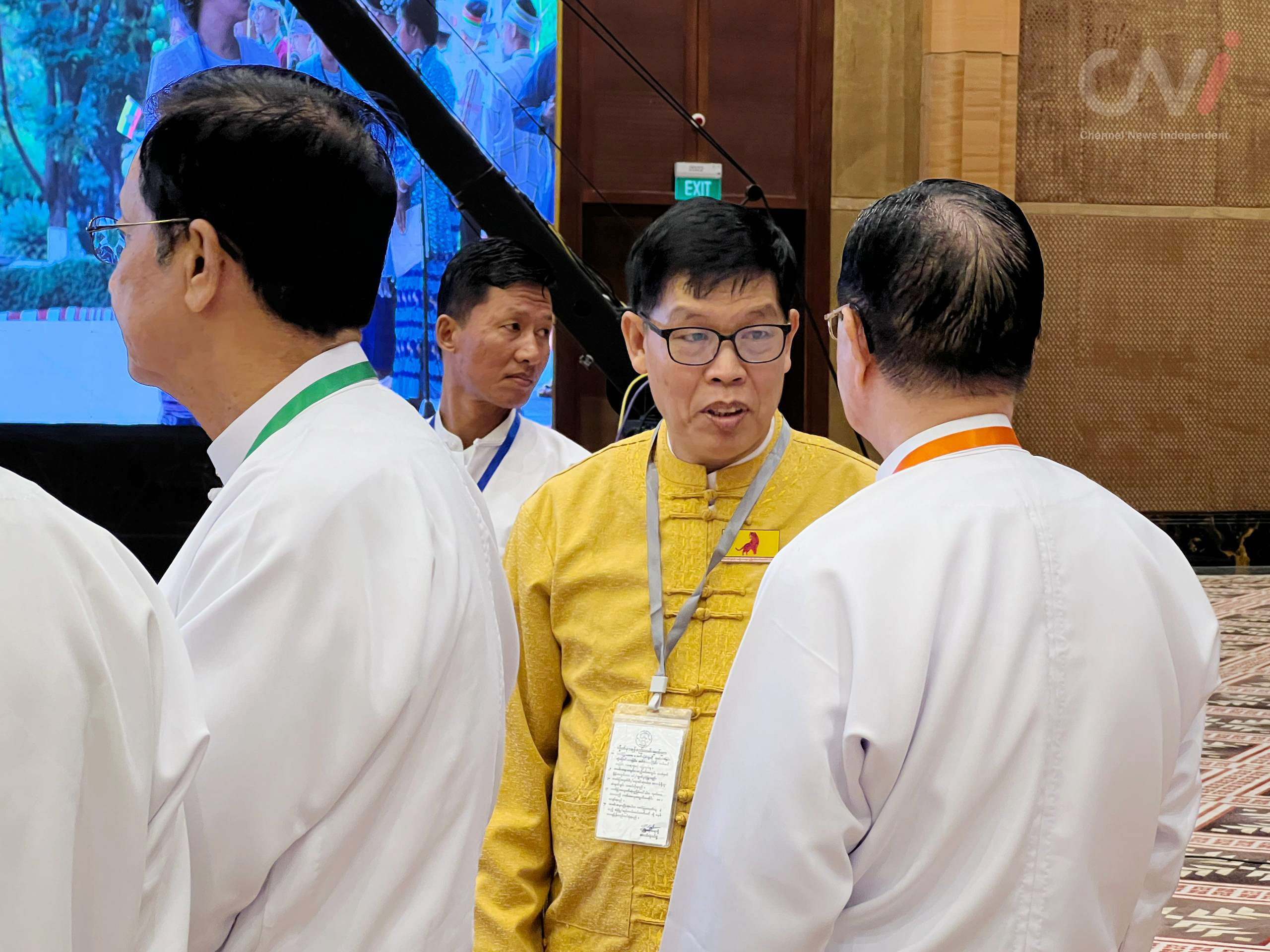
Regarding these issues, CNI News interviewed Sai Htay Aung, Chairman of the Tai Leng (Shanni) Nationalities Development Party (TNDP).
Q: Between overthrowing dictatorship and self-determination, which is more feasible for the EAOs under the current circumstances?
A:These EAOs have been fighting for decades. At this point, they are already well-experienced in revolution. They will act primarily for their own interests.
Even behind the slogan of overthrowing dictatorship, EAOs themselves should do self-reflection. They, too, exercise authoritarian power.
A government operates under the law and commands the military under constitutional authority. But EAOs have no law. They punish and largely execute anyone they consider guilty. In some cases, they are even more frightening dictators than the actual dictatorship. Students experienced the same thing after the 1988 uprising.
Today, students say they will not repeat the mistakes of 1988 in 2021. But what is happening now looks very similar to 1988. Sooner or later, the students and PDFs who are now fighting dictatorship will also be expelled by EAOs.
In 1994, after the KIO/KIA signed a ceasefire with the SLORC government, they expelled the ABSDF North group from their territory in 1996.PDFs today will face the same outcome.
Q: After TNLA entered a ceasefire, revolutionary groups seem to be gravitating toward the KIA. Why can’t the military control the KIA?
A:We heard that the KIA gave jade-mining rights in Hpakant to top leaders of the Spring Revolution groups—AA leaders, CNF, Naga armed groups, etc.
When the KIA grants taxation rights and business concessions, those groups depend on the KIA. If they don't cooperate, they lose their privileges.This is economic and territorial leverage.
Q: Does that mean the KIA is getting stronger?
A:Many Kachin people are fatigued with the KIA’s long war. For example, in the Bhamo battle, many Kachin people died.But the circle of people who benefit from the KIA or work closely with it still supports them.
How strong the KIA becomes depends largely on the current and future governments.
When the KIA is weak, it makes ceasefires. When the KIA grows strong, it attacks the government again.
This has happened repeatedly—five or six times at least.If the government analyzes this properly and can fully disarm the KIA, more than half the country could achieve peace.
Q: If a ceasefire with the KIA cannot be achieved, what situation will the military face?
A: A ceasefire alone won’t solve everything. The fire the KIA started is now burning in Rakhine as well.If negotiations fail, the government must find a military approach.
Q: What is the political and military situation in Kachin areas now?
A:The KIA is skilled at balancing politics and military action. Even if they do not fight directly, they can put pressure on the government in some places using groups they support.
For example, during our election campaigns in Mohnyin and Mogaung, battles frequently break out between PDFs and SNA or the Tatmadaw.This is not unrelated to the KIA’s influence.
Previously, the KIA had not armed PDFs in large numbers. But right before election season, they distributed weapons.
Thus, clashes increased. In recent days, battles broke out near Moekaung’s 8-mile junction and Nanmar. These are forms of intimidation.
Therefore, even if the KIA does not openly obstruct elections, they can still manipulate areas through groups they support.
Q: Why would the KIA arm PDFs?
A:Since the arming happened right before elections, it is clearly election-related.
Usually, when the KIA wants to launch operations, it arms PDFs, and when operations end, it takes the weapons back.
But starting from the 1st of last month, the KIA fully armed PDFs from Nanmar and Moenyin areas, and then battles often broke out..
Q: What is the situation now in the Shanni areas of Sagaing?
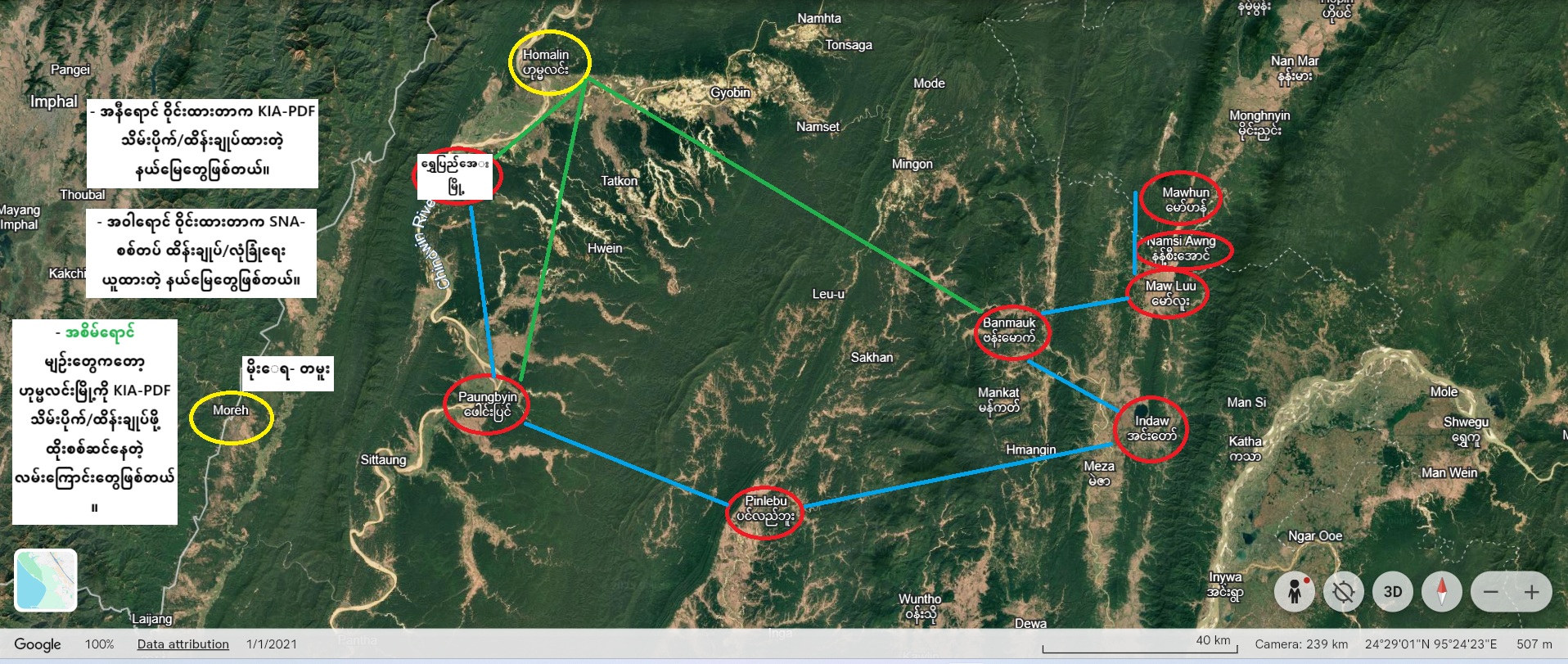
A: In areas without elections like Banmauk, battles continue. We heard the SNA has regained about half of Banmauk town. But the town is burning. PDFs, while retreating, burned houses.
SNA forces reportedly recaptured zones where the hotels are located. But because PDFs retreat and torch houses, people fear Banmauk may turn entirely into ashes.
Q: How should the situation in Banmauk and Shanni areas be handled? Especially regarding security?
A: In Kachin areas, if the KIA reaches political negotiations, the government must control PDFs from Sagaing and Magway through the KIA.
Shanni people have never betrayed the state. They have never acted to destroy the country.
If the state wants to “manage” the KIA, the Shanni people have their own people’s militia and the SNA.
If the state arms the Shanni properly, they can control the KIA militarily and politically.
This was done before the 1994 ceasefire as well, when Shanni forces were armed to pressure the KIA into talks.
Today, the Shanni have grown in strength.What they lack is weapons. If the state arms the Shanni, it would greatly benefit national peace.This is not about instigating ethnic conflict—this is for national peace.
Q: So the current problem is that the SNA cannot match the KIA militarily?
A: That’s correct. It’s a weapons issue. Politically, we can talk to them. But with weapons, we can speak with more authority.
Q: How do you view the role of Daw Aung San Suu Kyi in Myanmar’s political landscape?
A: I don’t really want to criticize Daw Suu’s role too much. Because back during U Thein Sein’s administration, when she also cooperated and participated, Daw Aung San Suu Kyi’s political power was not small at all. A lot will also depend on the next government that the current administration will transfer power to. If she is released and re-enters the political scene, she will again be someone who can speak to and mobilize the whole country. Her political influence is quite significant.
Q: Under U Than Shwe’s rule, Daw Suu was under house arrest. Then during U Thein Sein’s term, she reached an agreement under the 2008 Constitution and re-entered politics through the by-election. Based on the current situation, is there a possibility for Daw Suu to contest elections again under the 2008 Constitution? If the government offers it, do you think she would accept? How do you see it?
A: As I said earlier, it depends heavily on the government that comes in. I think the new government will learn lessons from all the issues that happened during the old SLORC/SPDC era and from the events during U Thein Sein’s time, and will act accordingly.
Q: If that is the case, can Myanmar’s political landscape progress without Daw Aung San Suu Kyi?
A: Even if she is no longer present, there can be gradual changes. The reason is— we already experienced one period of her leadership and participation over those five years. All her actions were based on the people. So if she is no longer in the scene, the momentum may not be as strong, but I expect gradual changes to still happen.
Q: Then how would the international community view a political landscape where Daw Aung San Suu Kyi is absent?
A: The international community will be similar. Even before Daw Aung San Suu Kyi appeared on the scene, our country existed and stood on its own. Now too, after her absence, things will gradually develop. Looking at the SAC, you can see it. At first, the international community imposed full sanctions. But gradually, the government began achieving success in diplomatic engagements. Later, it also gained some political success. In the same way, by continuing step by step, things can progress.