
CNI News
July 7, 2026
Bamar leadership, who have primarily held power under successive governments, are driven by a deeply ingrained habit of refusing to share central power rather than racial discrimination against non-Bamar ethnic minorities, political analyst Dr. Aung Myo told CNI News.
He added that this unwillingness to share power is the root cause of dissatisfaction among non-Bamar ethnic groups.
Dr. Aung Myo stated: "It’s not that the Bamar are looking down on them. They aren't looking down on them or discriminating against them at all. However, there has been a historical tendency to hold onto power. This habit of wanting to control authorities didn't even exist to this extent during the era of the kings. It became particularly prominent with the Caretaker Government in 1958, followed by the Revolutionary Council. It was no different in 1974; even though it became a socialist republic constitutionally, nothing really changed. It grew worse during the SLORC (State Law and Order Restoration Council) and SPDC (State Peace and Development Council) eras. They seem to have a nature that inherently seeks control—a tendency to centralize everything. That is where it's wrong; they do not distribute or share power. Yet, there is no racial discrimination. The ruling class simply has a lingering habit of wanting control, and that habit won't go away. That is why the ethnic minorities are dissatisfied."
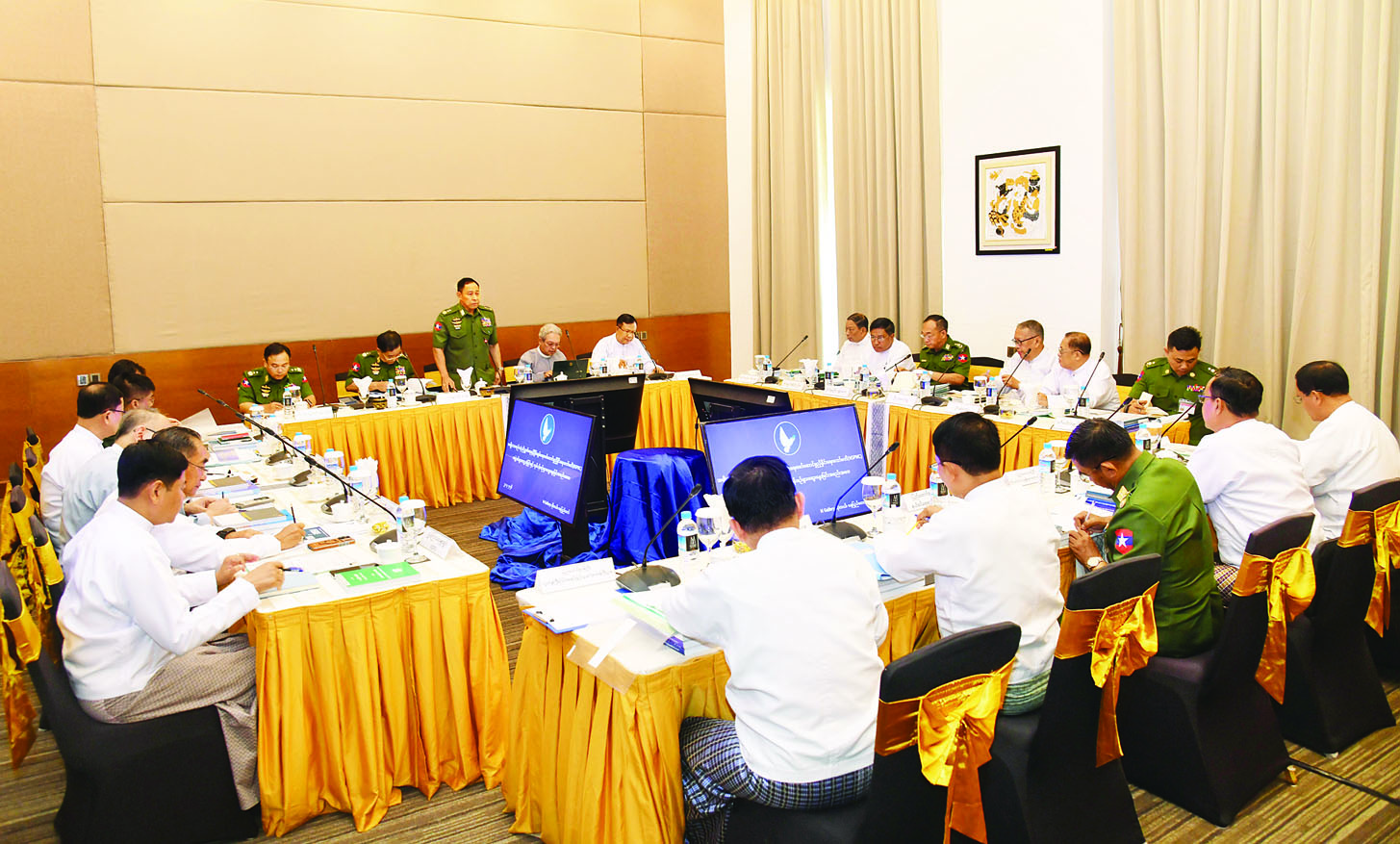
An NSPNC meeting in progress.
Before assuming the presidency, Min Aung Hlaing had previously stated that in practicing democracy and federalism, a federal system suitable for Myanmar would be implemented, and that they would adopt a region-based federal system rather than a people-based one.
Military and political observers point out that the primary desire of ethnic nationalities throughout successive eras has never been to oppose the Bamar people. Instead, regardless of which government takes power, they oppose the "Burman chauvinism" (Burmanization) that absolute centralizes power, as well as the military dictatorship.
Furthermore, analysts highlight that what non-Bamar ethnic groups want is not a textbook version of federalism, but rather practical equality and the right to self-determination.
If a federal principle genuinely emerges, it will no longer be possible for a single ethnic group to dominate, Colonel Khun Okkar, Chairman of the Pa-O National Liberation Organization (PNLO-NCA/S)—a signatory to the Nationwide Ceasefire Agreement (NCA)—told CNI News.
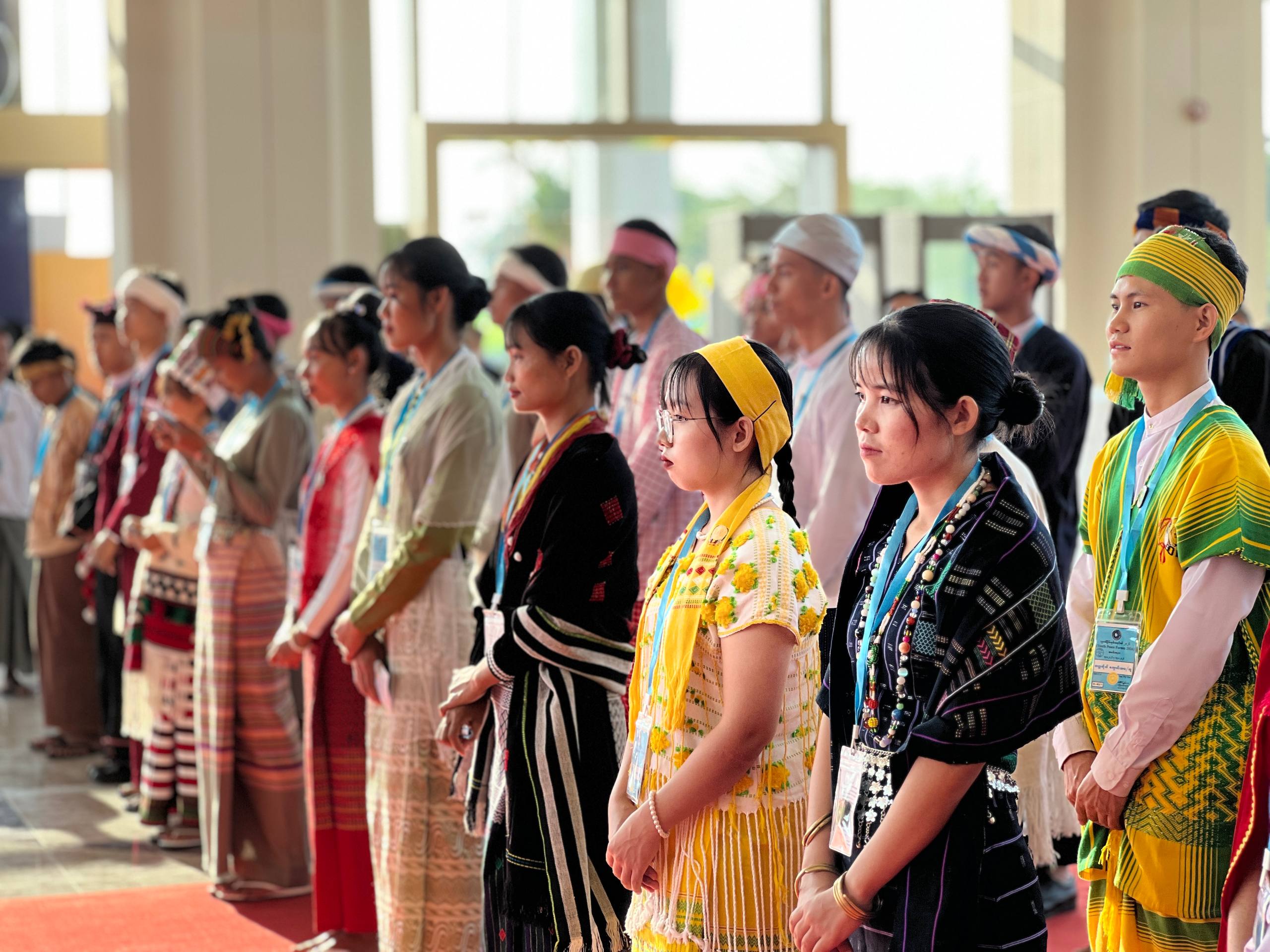
Ethnic nationalities seen together.
Colonel Khun Okkar stated: "Once a federal principle emerges, a single ethnic group can no longer dominate. This is because power-sharing will inevitably come into play under federal principles. If power-sharing can be successfully ironed out, conflicts will decline, and a federal constitution agreed upon by all parties could emerge. We have to wait for that moment."
Looking at current shifting ground realities, ethnic armed organizations such as the Arakan Army (AA) and the Kachin Independence Army (KIA), as well as others, are aiming for and practically building a "Confederate" status on the ground—a status that grants more independence and a higher degree of self-determination than standard federalism.
Similarly, the United Wa State Army (UWSA) and the National Democratic Alliance Army (NDAA) already operate completely free from the central government's control, fully enjoying their own self-determination and self-governance.